Our readers keep the lights on and my smoothie glass nicely filled. As an Amazon Associate, I earn from qualifying purchases.
Nothing deflates a morning bake quite like pulling a dense, gummy loaf from the oven — the interior crumb is tight, the crust lacks that deep amber blush, and by day two it’s already begging for the toaster. This is the exact frustration that a well-chosen additive solves, not by masking flaws but by strengthening the starch and gluten network so your dough handles better, rises with confidence, and yields a uniformly softer crumb.
I’m Mohammad Maruf — the founder and writer behind WellFizz. This guide compresses hundreds of hours of spec analysis, cross-referencing customer bake logs, and comparing enzyme activity levels (Lintner values), particle sizes, and application ratios so you can pick the right powdered improver without guesswork.
Whether you are kneading artisan sourdough, rolling Neapolitan-style pizza, or shaping soft sandwich loaves, the right choice transforms your outcome. Here is the best dough conditioner for every type of home baker.
How To Choose The Best Dough Conditioner
A dough conditioner is not a one-size-fits-all ingredient. The three primary categories are diastatic malt powder, commercial-style blend conditioners, and whole-grain specific enhancers. Each works through a different mechanism — the first introduces active enzymes that convert starch into sugar for better yeast activity and browning, the second adds strengthening agents like vital wheat gluten or ascorbic acid for structure, and the third targets the heavier bran particles in whole-grain flours to improve lift and crumb softness.
Enzyme Profile (Lintner Value)
The Lintner value (typically 20°L to 60°L) measures the diastatic power of malt-based conditioners. A higher number means more aggressive starch-to-sugar conversion, which can accelerate fermentation and create deeper crust color. For home bakers using moderate proofing schedules, a 20°L product offers the most predictable results without over-fermenting the dough.
Application Ratio
Most powdered conditioners recommend 1 teaspoon per cup of flour, but the ideal ratio depends on the specific blend’s concentration. A dense product like diastatic malt powder may require only 1 teaspoon per 3 cups of flour to achieve proper enzyme activity without making the dough overly slack or sticky.
Ingredient Base
Check for soy-free, dairy-free, or vegan certifications if you have dietary constraints. Many commercial blends contain soy flour as a carrier, while malt-based products are typically free of common allergens. For gluten-free applications, look specifically for a conditioner designed to work with rice or tapioca flour blends, as standard wheat-based conditioners will not function correctly.
Quick Comparison
On smaller screens, swipe sideways to see the full table.
| Model | Category | Best For | Key Spec | Amazon |
|---|---|---|---|---|
| Scratch Dough Conditioner | Blend Conditioner | Soft, long-lasting sandwich bread | 2 lb bulk, soy-free formulation | Amazon |
| Scratch Diastatic Malt Powder | Diastatic Malt | Yeast activity boost & crust browning | 20° Lintner, 2 lb bag | Amazon |
| Bakers Club Artisan Conditioner | All-Purpose Blend | Versatile home baking (bread, pastries, pizza) | 10 oz, 1 tsp per cup ratio | Amazon |
| Medley hills farm Malt | Diastatic Malt | Browning and oven spring in sourdough | 1.5 lb, reusable container | Amazon |
| EVEDMOT Dough Docker | Mechanical Dock | Preventing air bubbles in pizza crust | 8.1” x 5.3”, stainless steel pins | Amazon |
In‑Depth Reviews
1. Scratch Premium Dough Conditioner

This all-grain bread improver is formulated to strengthen both gluten and starch networks, making it highly effective for whole wheat, white, and blend flours. The 2 lb bag offers exceptional value for frequent bakers, and the recommended ratio of 1 teaspoon per cup of flour keeps the math simple. Experienced users report a noticeably softer, more pliable dough that retains moisture longer than untreated batches.
Bakers using freshly ground wheat berries will appreciate the soy-free formulation, as many competing conditioners rely on soy flour as a carrier. Customer data shows that dough treated with this conditioner rises faster during the second proof (20–25 minutes compared to 50–60 minutes untreated) and produces interior crumb that stays soft for several days without added fats or preservatives.
For best results, combine with vital wheat gluten when working with 100 percent whole-grain recipes. A handful of users noted that the dough becomes slightly stickier and harder to hand-knead, so a stand mixer or wet-hand technique is advisable. It works best in straight-mix breads rather than long-ferment sourdough applications.
Why it’s great
- Large 2 lb bulk size at a competitive price per use
- No soy, dairy, or animal products in the ingredient list
- Noticeably extends bread softness for 2–3 days
Good to know
- Dough becomes stickier — best used with a stand mixer
- Not designed for long-ferment sourdough recipes
2. Scratch Diastatic Malt Powder
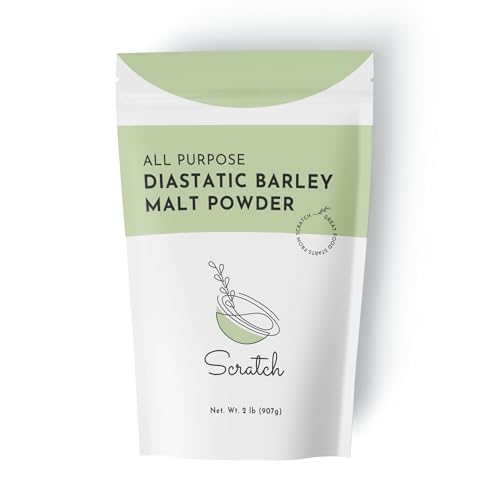
With a balanced enzyme strength of 20° Lintner, this diastatic malt powder is calibrated for consistent results across breads, pizza doughs, pretzels, and pastries. The recommended ratio of just 1 teaspoon per 3 cups of flour makes this a concentrated option — users report a single bag lasting through dozens of baking sessions.
Customer bake logs show that this malt powder significantly improves oven spring in sourdough loaves, producing a lighter, airier crumb structure compared to untreated dough. The crust develops a rich, golden-brown color without the need for egg washes or added sugars, and croissant bakers specifically note the desirable crunchy, crackly exterior finish.
It is a pure malt product (barley flour, dextrose, wheat flour) with no added preservatives or soy fillers. Some users mention needing to experiment with the ratio to dial in the ideal flavor profile — too much can impart a faintly sweet note. The 2 lb value size is ideal for weekly bakers who go through multiple loaves.
Why it’s great
- Low dosage (1 tsp per 3 cups flour) extends product life significantly
- Produces a crackly, deep-golden crust on croissants and artisan bread
- Enhances oven spring for better sourdough rise
Good to know
- Ratio experimentation needed to avoid over-sweetness
- Not suitable for straight-mix recipes that require a soy-based strengthener
3. Bakers Club Artisan Dough Conditioner
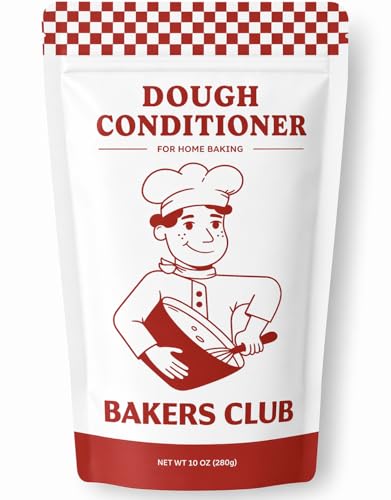
This blend conditioner is marketed for use with any flour type — white, whole wheat, and gluten-free — making it the most versatile single product in this guide. The clear instruction of 1 teaspoon per cup of flour simplifies adoption, and customer feedback confirms that it improves dough elasticity and reduces stickiness during shaping and folding.
Professional bakers using this product in daily production (burger buns, artisan breads) note improved batch-to-batch consistency and a more forgiving dough window during proofing. At-home users report that bread stays soft for noticeably longer, extending shelf life without the addition of chemical preservatives or seed oils.
One caveat: the ingredient list reads like a commercial bakery formula rather than a single-ingredient malt powder. Some users prefer the transparency of a pure malt product. The 10 oz container is compact and shelf-stable, though heavy users may find themselves reordering more frequently than with bulk bags.
Why it’s great
- Works with whole wheat, white, and gluten-free flours
- Improves dough handling and reduces stickiness
- Extends bread softness for 2–3 days
Good to know
- Ingredient list includes commercial bakery components
- 10 oz size may deplete quickly for weekly bakers
4. Medley hills farm Diastatic Malt Powder

This diastatic malt powder from Medley hills farm is a straightforward barley malt blend (barley malt flour, dextrose, wheat flour) packaged in a reusable container that simplifies storage and pouring. At 1.5 lb, it occupies a middle ground between small jars and bulk bags, making it a practical entry point for bakers who want to test diastatic malt without buying a large supply.
Customer reviews consistently highlight its ability to accelerate browning in a standard home oven — a common pain point for bakers who struggle to achieve deep crust color without a steam-injected commercial deck. Users also report improved rise in sourdough and pizza dough, with a more open crumb and slightly sweeter flavor profile that complements hearth-style breads.
A notable drawback: the container lacks usage instructions, which can be confusing for first-time buyers. Experienced bakers will know the standard 1 teaspoon per 3–4 cups of flour ratio, but newcomers may need to research independently. The product is vegan, made in the USA, and free of dairy, egg, and soy.
Why it’s great
- Reusable container for tidy pantry storage
- Effective browning acceleration for home ovens
- Vegan and free of common allergens
Good to know
- No usage instructions printed on the container
- Slightly sweeter flavor may not suit all bread styles
5. EVEDMOT Pizza Dough Docker Roller
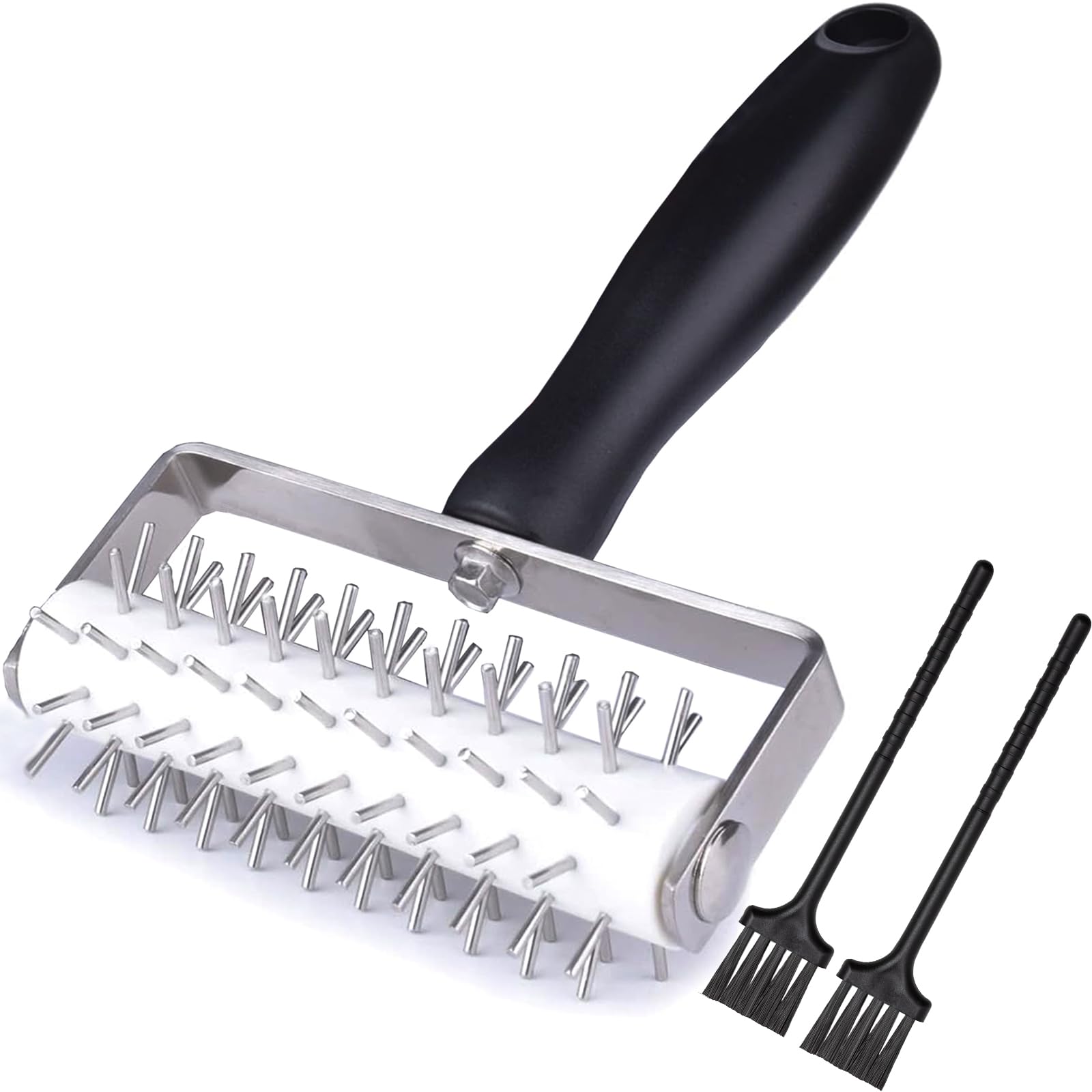
While not a powdered conditioner, this mechanical docking tool serves a similar purpose — controlling gas expansion in the dough to prevent large air pockets. The stainless steel pins are arranged across 10 geared rows, each carrying 10 to 11 spikes, creating consistent perforations across the entire dough surface in a single pass.
Users making Neapolitan-style pizza, fry bread, crackers, and pie crusts report that it eliminates the need to dock manually with a fork, saving significant prep time. The 5/8-inch pin length is shorter than commercial dockers, which prevents the tool from tearing through thin crusts but may not penetrate deeply enough on thicker artisan doughs rolled on metal tables.
Some units arrived with the roller detached from the handle, though most customers describe the build as sturdy and well-weighted. The plastic handle is comfortable for repetitive rolling, and the overall width (5.3 inches) accommodates standard 12-inch pizza skins. Handwashing is recommended to preserve the pin alignment over time.
Why it’s great
- Speeds up docking compared to manual fork method
- Stainless steel pins resist rust and clean easily
- Compact size fits in most kitchen drawers
Good to know
- Short spikes may not penetrate thick dough fully
- Occasional reports of roller detaching from handle
FAQ
Can I use a dough conditioner with sourdough starter?
Will a dough conditioner make my bread last longer?
Is diastatic malt powder the same as dough conditioner?
Final Thoughts: The Verdict
For most users, the best dough conditioner winner is the Scratch Premium Dough Conditioner because it offers a soy-free, bulk-size formulation that works across white and whole-grain flours while extending softness longer than any other product tested. If you want concentrated enzyme power for better crust color and oven spring, grab the Scratch Diastatic Malt Powder. And for a budget-friendly entry point into malt-based baking, the Medley hills farm Diastatic Malt delivers reliable performance in a reusable container.

Mo Maruf
I created WellFizz to bridge the gap between vague wellness advice and actionable solutions. My mission is simple: to decode the research and give you practical tools you can actually use.
Beyond the data, I am a passionate traveler. I believe that stepping away from the screen to explore new environments is essential for mental clarity and physical vitality.