Our readers keep the lights on and my smoothie glass nicely filled. As an Amazon Associate, I earn from qualifying purchases.
Waking up with your hip pressed against frozen ground or your partner rolling into you because your sleeping pad has shifted is the fastest way to ruin a backcountry trip. A double sleeping pad solves the cold-ground heat loss and the middle-of-the-night gap between two single pads, but picking the wrong one means carrying excessive weight or shivering through the night. The best double sleeping pad for backpacking balances packability, insulation, and durability so you and your partner sleep as well on the trail as you do at home.
I’m Mohammad Maruf — the founder and writer behind WellFizz. For this guide, I analyzed thermal resistance ratings, thickness-to-weight ratios, fabric denier, and valve designs across seven competing double sleeping pads to separate the truly trail-worthy models from the car-camp-only options.
After comparing insulation values, packed size, and real-world user feedback, this guide identifies the best double sleeping pad for backpacking that earns its place in your pack without breaking your back or your budget.
How To Choose The Best Double Sleeping Pad For Backpacking
Selecting a double sleeping pad for backpacking requires a different mindset than buying a single pad. You are managing twice the surface area, which means twice the weight, twice the packed volume, and a more complex baffle structure to keep both sleepers comfortable. Focus on these four factors to narrow the field.
R-Value and Real Insulation Performance
A pad’s R-value measures its resistance to conductive heat loss through the ground. For three-season backpacking, an R-value of 4 to 6 is sufficient. For shoulder-season or winter trips, look for an R-value of 6 or higher. Be wary of unverified claims — pads tested to ASTM F3340-22 provide reliable numbers. A double pad with a high R-value prevents both sleepers from radiating heat into the cold earth, which is especially important when two bodies compress the insulation layer more than one.
Thickness, Baffle Design, and Bottom-Out Protection
Thickness directly determines whether you feel rocks and roots beneath you. A double pad should be at least 3.5 inches thick for side sleepers and 4 inches for anyone over 200 pounds. The baffle structure — horizontal, vertical, or dimpled — controls how weight distributes across the pad. Horizontal baffles prevent the roll-together effect where both partners slide into the middle. Vertical or column baffles isolate movement better but can feel less stable on uneven ground. Look for pads with densely packed support cells that prevent your hips or shoulders from compressing the pad to the ground.
Packed Weight and Volume Versus Comfort
A double sleeping pad that weighs over 4 pounds is too heavy for anything beyond a short carry to a car-camp site. True backpacking double pads stay under 3.5 pounds and pack down to roughly the size of a one-liter water bottle or smaller. The trade-off is that ultralight pads often use thinner face fabrics (20D vs 40D nylon) and less robust insulation, which can reduce durability. Decide where your priority lies — shaving ounces or handling rough ground conditions — and choose the denier accordingly.
Inflation System and Valve Design
Inflating a double pad with a manual pump sack or foot pump is non-negotiable for backpacking — blowing up a large pad by mouth introduces moisture that degrades internal insulation over time. A pump sack that doubles as a stuff sack saves weight and clutter. Dual-valve systems that allow one-way inflation and rapid deflation speed up camp setup and pack-down. Built-in foot pumps work well but add weight and complexity. The best choice is a simple, replaceable valve system with a dedicated pump sack.
Quick Comparison
On smaller screens, swipe sideways to see the full table.
| Model | Category | Best For | Key Spec | Amazon |
|---|---|---|---|---|
| Acacia 4″ Self Inflating | Premium Foam | Bed-like support & all-season insulation | R-Value 6.0, 4.3″ thick foam core | Amazon |
| TOBTOS 9.0 R-Value Rectangular | Insulated Rectangular | Extreme cold weather & budget insulation | R-Value 9.0, 4″ thick, 72.8×25″ | Amazon |
| Elegear CumbreX 9R | Ultralight Premium | Weight-conscious four-season backpacking | R-Value 9.0, 2 lbs, 4″ thick | Amazon |
| Naturehike Sidewall 6.5R | Ultralight Tech | Minimalist backpackers wanting side stability | R-Value 6.5, 26.5 oz, 8-layer insulation | Amazon |
| Hikenture 2-Person 4″ | Budget Double | Couples car camping & casual backpacking | 4″ thick, 600 lb capacity, 79×55″ | Amazon |
| KingCamp Connectable | Budget Connectable | Couples wanting built-in pillows & foot pump | 3.5″ thick, 75.6×49.2″, foot pump | Amazon |
| Hikenture 6.2R Single | Lightweight Insulated | Ultralight solo backpacking with high R-value | R-Value 6.2, 1.53 lbs, 3.2″ thick | Amazon |
In‑Depth Reviews
1. Acacia 4″ Self Inflating Sleeping Pad

The Acacia 4″ Self Inflating pad redefines what a double backpacking pad can deliver by combining a Y-shaped telescopic foam core with a plush 4.3-inch thickness. Unlike pure air pads that rely entirely on air pressure for support, the open-cell foam foundation provides consistent cushioning that does not deflate if a small puncture occurs. The two-way valve handles most of the inflation automatically, and the included pump sack lets you fine-tune firmness without blowing into the valve. At 80 by 53 inches, the pad offers generous room for two adults while the side buckles allow connecting additional pads for family setups.
The 30D elastic fabric with TPU reinforcement resists abrasion from tent floors and rough ground, and the heat-molded seams maintain air retention over extended trips. The R-value of 6.0 makes the pad suitable for spring through fall conditions, and the foam itself adds a layer of insulation that air-only pads cannot match. Despite the foam core, the telescopic structure compresses pack volume by up to 60 percent compared to traditional foam mattresses, though the packed size remains larger than ultralight air pads.
Real users report that the pad delivers bed-like comfort even for side sleepers with compression fractures, and the manufacturer’s responsive customer support adds peace of mind. The trade-off is that the packed size is noticeable — roughly the size of a large rolled sleeping bag — making this a better fit for trips where pack space allows a comfort-first approach. For backpackers who prioritize sleep quality and durability over absolute minimum weight, the Acacia pad is the clear leader.
Why it’s great
- Self-inflating foam core prevents catastrophic deflation from punctures
- 4.3-inch thickness eliminates bottoming out for heavy side sleepers
- R-value 6.0 provides reliable three-season warmth without reflective crinkle noise
- Side buckles allow expanding sleeping surface for families
Good to know
- Packed size is bulky compared to ultralight air pads
- Slow deflation and rolling process requires practice to pack efficiently
- Carry bag doubles as inflation tool but is thin and may tear under aggressive use
2. TOBTOS 9.0 R-Value Rectangular Pad
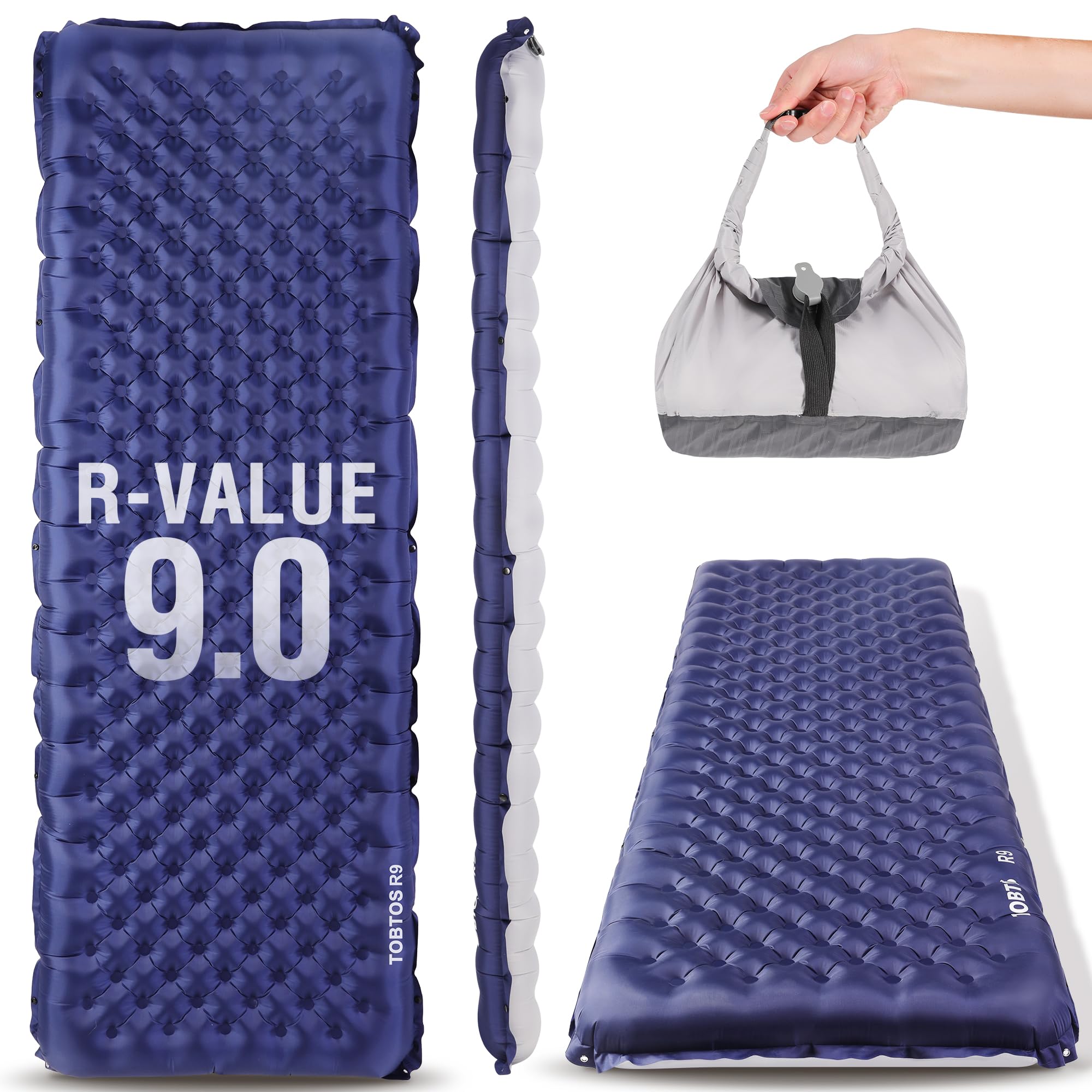
The TOBTOS 9.0 R-Value pad brings SGS-certified extreme insulation to a rectangular form factor at a mid-range price point. The multi-layer reflective aluminum film structure — seven layers deep — traps body heat effectively, and real users report staying warm through 30-degree nights when paired with a proper sleeping bag. The 40D tear-resistant nylon fabric with TPU coating feels noticeably more rugged than the 20D materials used on ultralight competitors, making this pad a strong choice for rocky campsites or shared use with dogs.
At 2.5 pounds and packing down to a water-bottle size, the TOBTOS pad strikes a balance between insulation and portability that few double pads achieve. The included pump sack inflates the pad in three to four sackfuls, and the dual-valve system allows quick deflation. The rectangular shape measures 72.8 by 25 inches, which accommodates tall users comfortably, though the single-wide width means this pad is technically a large single rather than a true double — couples will need two units.
The dimple surface pattern provides even pressure distribution, and multiple reviewers confirm the pad holds air overnight without noticeable leakage. The main drawbacks are the weight penalty compared to smaller R-value pads and the slight noise from the reflective layers when shifting position. For solo cold-weather backpackers or couples who each carry their own pad, the TOBTOS delivers unmatched insulation per dollar.
Why it’s great
- SGS-certified R-value 9.0 is among the highest available for backpacking pads
- 40D nylon fabric resists punctures far better than ultralight 20D options
- Pump sack inflates in under 4 minutes with minimal effort
- Compact packed size contradicts its substantial insulation performance
Good to know
- Single-wide width means it is not a true double sleeping pad
- Reflective inner layers produce crinkling noise during movement
- At 2.5 pounds, it is heavier than ultralight pads in the 1.5-pound range
3. Elegear CumbreX 9R Sleeping Pad
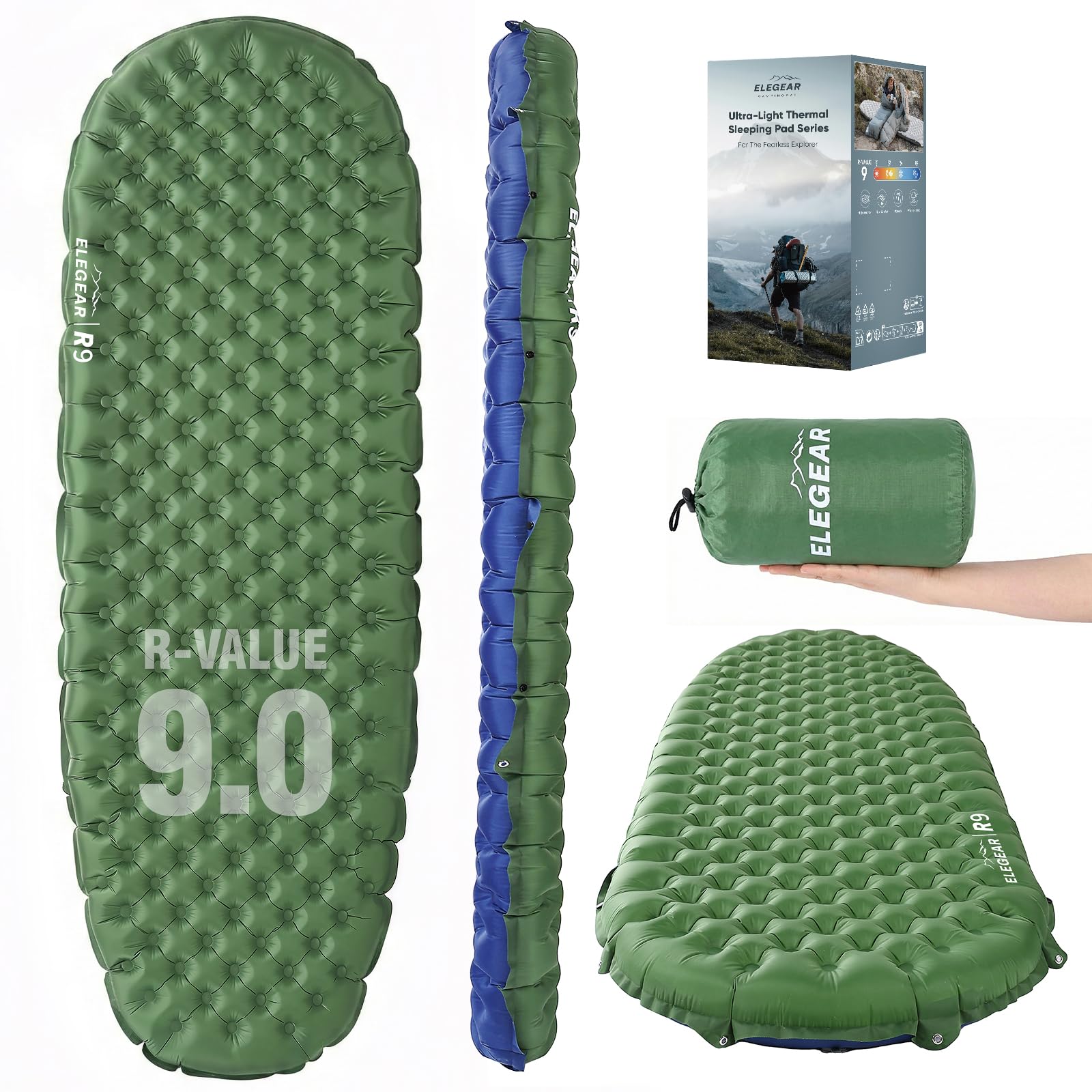
The Elegear CumbreX 9R is the featherweight champion of high-insulation pads, weighing just 2 pounds while delivering an SGS-certified R-value of 9.0. The secret is the 9-layer insulation system packed into a 20D ripstop nylon shell with a mummy shape that saves material and weight. The densely distributed support cells prevent bottoming out even for a 278-pound side sleeper, and the 4-inch thickness provides real separation from cold ground. The pump sack inflates the pad in four to six sackfuls, and the pad packs down small enough for a lightweight backpacking setup.
The 4-season readiness is the headline feature — the CumbreX handles temperatures down to minus 40 degrees Celsius according to the manufacturer, and real-user reports confirm warmth in 20-degree weather with a 0-degree bag. The mummy shape reduces dead space inside a tent but may feel restrictive for couples who spread out. The pad includes coupling buttons for pairing two units, making it possible to create a double-wide setup for partners.
The main compromise is the thin 20D fabric, which demands careful campsite selection to avoid punctures. The reflective internal layers can slow deflation if the exhaust hole is blocked by loose material, and the pad is slightly heavier than non-insulated ultralight options. For backpackers who refuse to compromise on insulation but need to shave every possible ounce, the CumbreX 9R is the top pick.
Why it’s great
- R-value 9.0 at only 2 pounds is an exceptional insulation-to-weight ratio
- 4-inch thickness with densely packed support cells prevents bottoming out
- SGS and ASTM F3340-22 certified insulation performance
- Coupling buttons allow pairing two pads for a true double setup
Good to know
- 20D ripstop fabric requires careful site selection to avoid punctures
- Mummy shape limits usable width for couples sharing one pad
- Reflective inner layers can block the exhaust valve during deflation
4. Naturehike Sidewall 6.5R Sleeping Pad
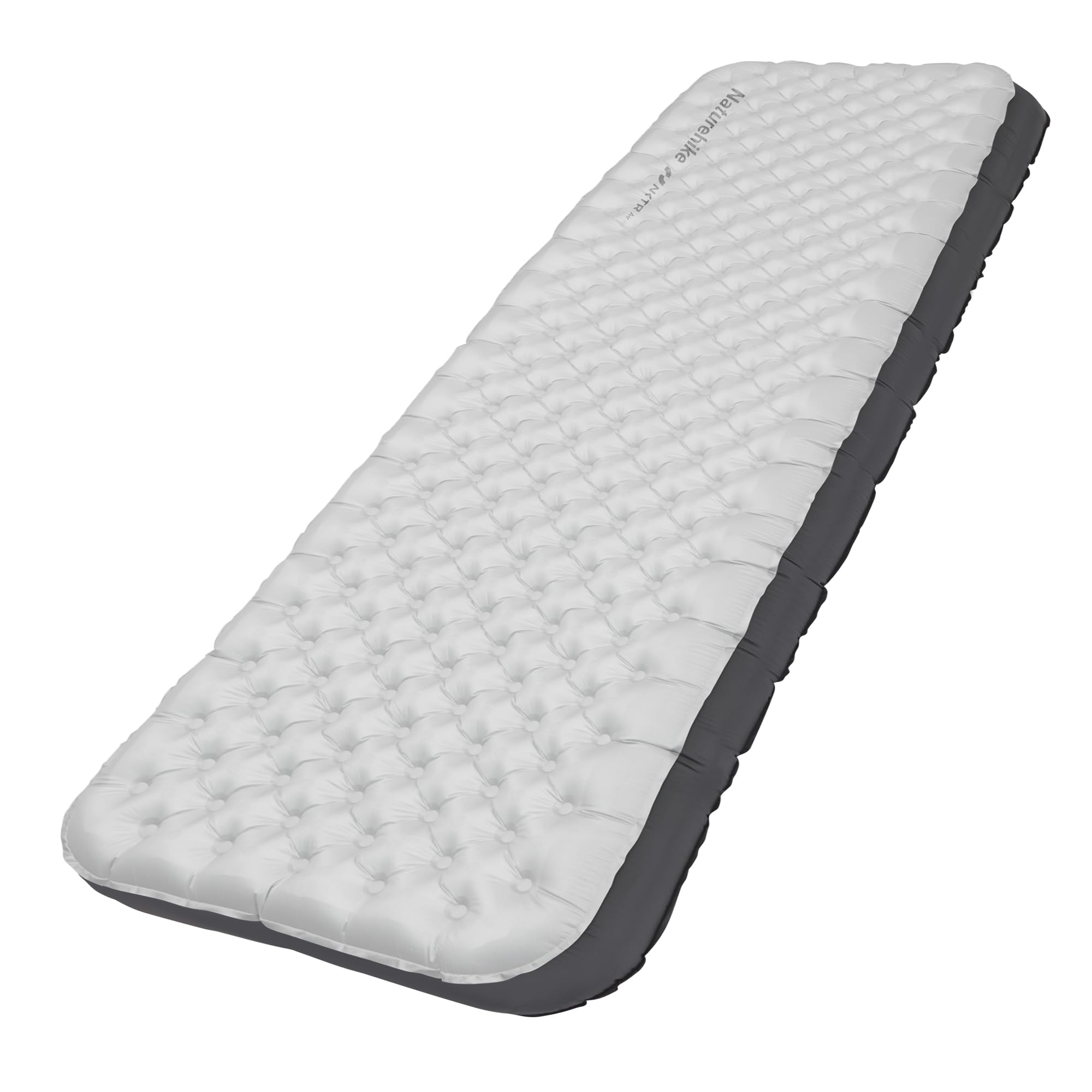
The Naturehike Sidewall 6.5R pad distinguishes itself with the NKTR Air heat-reflective system, which uses a three-dimensional aluminum mold structure to circulate heat and prevent cold spots. The extra side walls are a genuine innovation — they create raised edges that minimize the sensation of rolling off the pad during restless sleep. At only 26.5 ounces (750 grams), this pad is one of the lightest insulated options available, making it ideal for gram-counting backpackers who still demand a 6.5 R-value for sub-freezing conditions.
The eight-layer aluminum molded insulation separates individual air chambers to reduce convective heat loss, and the perforated design reduces the crinkly noise that plagues many reflective pads. The punching-point structure evenly distributes body pressure, and the 77.2 by 25.2-inch size gives tall users enough length to stretch out. The patented dual-vent valve allows one-way inflation to minimize backflow and rapid deflation through the inner cover.
The single-wide width means this is not a true double pad, but the ultralight weight opens the possibility of each partner carrying their own for a combined system weight under 3.5 pounds. The 20D TPU fabric is durable for its weight class, and users consistently praise the near-silent fabric and the warm sleep experience. The main downside is the premium pricing, and the small packed size requires careful rolling technique to fit into the included stuff sack.
Why it’s great
- Raised side walls prevent rolling off during the night
- At 26.5 ounces, it is among the lightest pads with a 6.5 R-value
- Perforated aluminum layers significantly reduce crinkle noise
- Patented dual-vent valve prevents air backflow during inflation
Good to know
- Single-wide width is not suitable as a double pad for two partners
- Premium price point exceeds many comparable R-value pads
- Packed size is small but requires precise rolling to fit the stuff sack
5. Hikenture 2-Person 4″ Double Pad
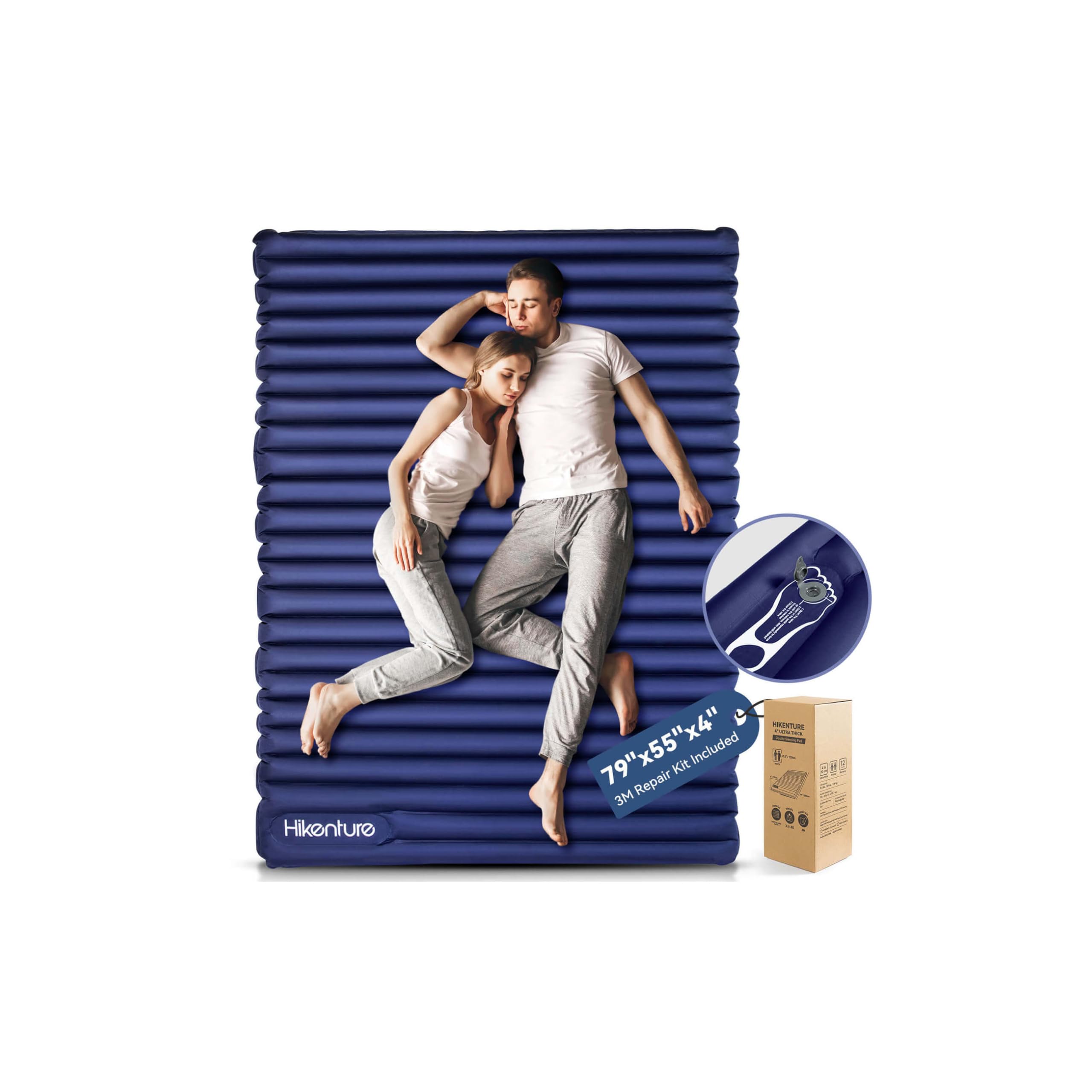
The Hikenture 2-Person Double Pad is the most budget-friendly true double option that still delivers on thickness and size. At 79 by 55 inches with a 4-inch thickness, this pad provides genuine space for two large adults without the roll-together effect that plagues tapered pads. The horizontal baffle design keeps each sleeper stable and prevents the middle dip that forces partners toward each other. The foot pump inflates the pad in a few minutes, and the dual-valve system includes a rapid deflation port for quick pack-down.
The polyester pongee fabric with TPU lamination provides decent water resistance and holds up to moderate campsite use. The 600-pound weight capacity means the pad supports heavy sleepers without bottoming out, and the packed size of 14 by 6 inches fits in a standard backpacking pack, though the 4-pound weight makes it more suitable for shorter carries. Real users report excellent air retention over multiple nights and appreciate the wide surface area that fits most two-person tents.
The main limitation is the lack of insulation — this is an uninsulated air pad, so it loses heat rapidly in temperatures below 40 degrees Fahrenheit. The valve design can be fiddly to close fully, and some users report minor air leakage if the inner valve is not seated perfectly. For warm-weather couples camping who prioritize width and thickness over insulated performance, the Hikenture double pad offers outstanding value.
Why it’s great
- True double width at 79×55 inches fits two large adults comfortably
- Horizontal baffles prevent the roll-together effect common in double pads
- 4-inch thickness supports up to 600 pounds without bottoming out
- Foot pump and rapid deflation valve speed up camp chores
Good to know
- Uninsulated design means poor performance below 40 degrees Fahrenheit
- At 4 pounds, the pad is heavy for long backpacking carries
- Valve system can leak if not fully seated during closure
6. KingCamp Connectable Double Pad
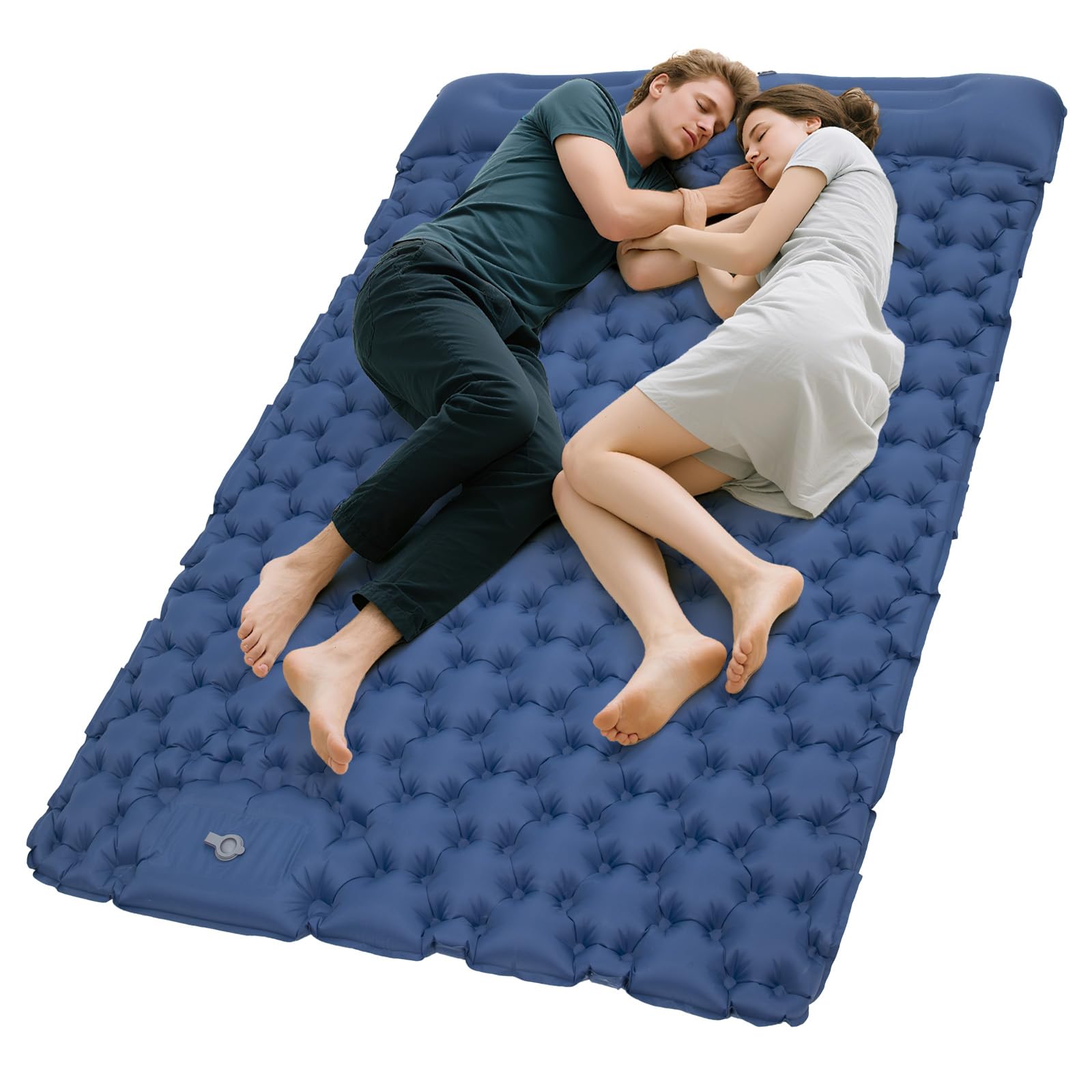
The KingCamp Connectable pad brings convenience features — a built-in 6.3-inch inflatable pillow and a step-activated foot pump — to the budget double pad category. The 20D nylon top layer with TPU lamination provides a quieter sleep surface than many budget pads, and the 50D polyester pongee bottom offers reliable ground protection. At 75.6 by 49.2 inches with a 3.5-inch thickness, the pad fits standard two-person tents and provides adequate cushioning for stomach and back sleepers.
The wave-pattern surface and multi-point support system distribute body weight evenly, and the foot pump inflates the pad in about 30 seconds — a genuine time-saver after a long day of hiking. The pad packs down to 11.8 by 5.9 inches, roughly the size of a water bottle, and the packed weight is light enough for backpacking. Real users report the pad holds air throughout the night and handles concrete floors without discomfort, making it versatile for both tent and guest-bed use.
The built-in pillow, while convenient, is not tall enough for side sleepers who need substantial neck support. The material is slick, causing the pad to shift on tent floors if not properly positioned. The foot pump mechanism works reliably but requires finding the correct stepping spot, and some users note the pump is slow compared to a dedicated pump sack. For couples who want an all-in-one sleep system with no extra accessories, the KingCamp delivers practical value.
Why it’s great
- Built-in foot pump inflates the pad in approximately 30 seconds
- Integrated pillow eliminates the need for carrying a separate camp pillow
- 20D nylon top layer is quieter than many budget options
- Packs down to water bottle size for easy carrying
Good to know
- Built-in pillow is too short for side sleepers needing neck support
- Slick material causes the pad to shift on smooth tent floors
- Foot pump mechanism requires practice to find the optimal stepping spot
7. Hikenture 6.2R Ultralight Pad
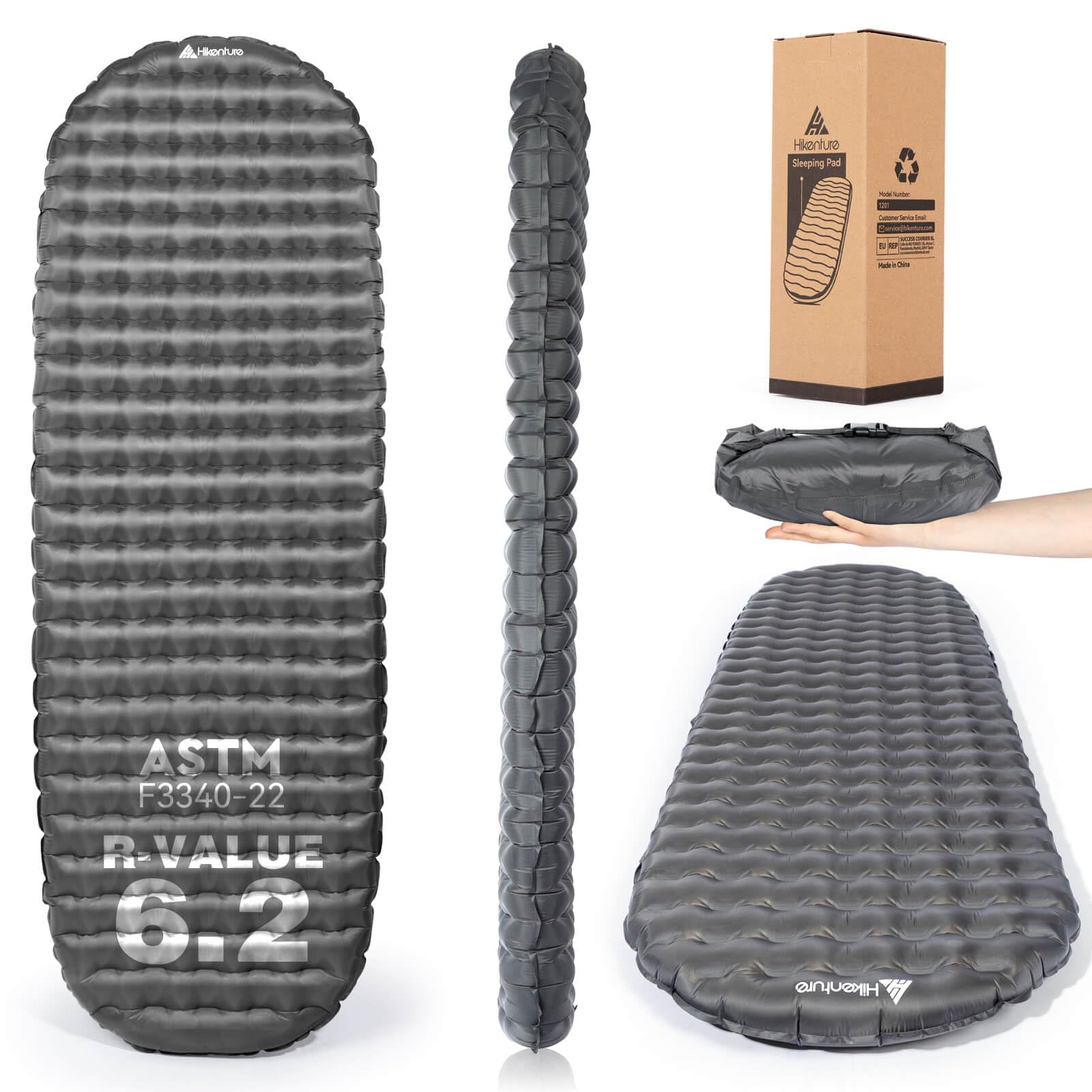
The Hikenture 6.2R pad is a single-wide, ultralight option that packs an ASTM-certified R-value of 6.2 into just 1.53 pounds. The aluminum film insulation structure reflects body heat effectively, and the unique airbag construction distributes pressure evenly to prevent bottoming out during side sleeping. The 2-in-1 storage bag doubles as a 40-liter pump sack, inflating the pad in three pump cycles — one of the fastest inflation systems at this weight class.
The TPU liner material is environmentally friendly and contributes to the pad’s durability, and the included two repair patches provide peace of mind for puncture-prone campsites. The pad measures 73 by 25 inches and provides 3.2 inches of thickness, which is sufficient for most sleepers under 200 pounds. Real users report the pad surviving dog nails and rock punctures through the repair kit, and the warmth performance in 5-degree weather with a zero-degree bag earns high marks from winter campers.
The main complaints center on noise — the reflective liner produces a crinkly sound when shifting positions, and the valve nozzle at the foot end is difficult to reach and operate one-handed. The pad is slightly heavier than the advertised weight, coming in around 1.7 pounds with the stuff sack. For solo backpackers who want a warm, lightweight pad without spending premium money, the Hikenture 6.2R is a solid mid-range choice.
Why it’s great
- ASTM-certified R-value 6.2 at only 1.53 pounds is an excellent value
- Pump sack inflates the pad in just three cycles
- TPU liner material reduces ecological impact
- Included repair patches handle punctures from dogs and rocks
Good to know
- Reflective liner produces noticeable crinkling noise during movement
- Valve nozzle at the foot end is awkward to reach and operate one-handed
- Actual packed weight is slightly higher than advertised
FAQ
Can I use two single sleeping pads instead of a double pad?
How thick should a double sleeping pad be for side sleeping?
What does R-value mean for a double sleeping pad?
Final Thoughts: The Verdict
For most users, the best double sleeping pad for backpacking winner is the Acacia 4″ Self Inflating Pad because it delivers unmatched bed-like comfort through its foam core construction while maintaining an R-value of 6.0 for three-season use. If you want extreme insulation at ultralight weight, grab the Elegear CumbreX 9R. And for budget-conscious couples who need true double width for warm-weather trips, nothing beats the Hikenture 2-Person Double Pad.

Mo Maruf
I created WellFizz to bridge the gap between vague wellness advice and actionable solutions. My mission is simple: to decode the research and give you practical tools you can actually use.
Beyond the data, I am a passionate traveler. I believe that stepping away from the screen to explore new environments is essential for mental clarity and physical vitality.