Our readers keep the lights on and my smoothie glass nicely filled. As an Amazon Associate, I earn from qualifying purchases.
For the hunter who lives for the sound of cupped wings dropping into the decoys, a double reed duck call is the difference between a silent marsh and a limit of greenheads. These calls trade the raw, aggressive power of a single reed for a softer, more realistic rasp that sounds like a live hen coaxing her flock down from the clouds. It’s a tool built for finesse, not volume, and mastering it changes how you hunt timber, potholes, and open water.
I’m Mohammad Maruf — the founder and writer behind WellFizz. My buying guides are built on hours of cross-referencing user reports, real-world field conditions, and the specific acoustic physics that make or break a call when a bird is circling just outside range.
The decisions come down to tuning stability, moisture resistance, and toneboard design. Here we break down the most effective options to help you find the best double reed duck call that fits your hunting style and skill level.
How To Choose The Best Double Reed Duck Call
Double reed calls excel at producing the low, raspy notes and the subtle feed chuckle that single reeds struggle to replicate. But not every double reed is built to handle wet decoy spreads or the frozen mornings of late season. These are the core factors that separate a call you’ll reach for every hunt from one that stays in the blind bag.
Toneboard Tuning and Moisture Control
The toneboard — the ramp the reed vibrates against — determines how easily the call “sticks” when condensation builds. Models with a Spit-Tech toneboard or a floating wedge allow moisture to drain between notes, preventing the reeds from freezing shut in sub‑30° weather. Without this feature, even a premium double reed can lock up after twenty minutes of heavy calling.
Material: Polycarbonate vs. Wood vs. Acrylic
Polycarbonate calls are nearly indestructible in a coat pocket and resist cracking if stepped on; they’re ideal for thick cover and early season abuse. Wood calls, like the Diamonwood Timbers, produce a warmer, more resonant tone that carries well in still timber but require careful drying after each hunt. Acrylic sits in between — durable but less forgiving in extreme cold. For a double reed’s intended close-in work, wood or high‑grade polycarbonate is the sweet spot.
Range and Back Pressure
Double reed designs naturally generate more back pressure than single reeds, which means you can produce a convincing quack with less air. That’s a blessing for beginners but can limit the call’s reach in open water when you need a hail call. Look for a model with adjustable tuning — usually a wedge or a set screw — that lets you dial in the back pressure for the day’s wind and cover conditions.
Quick Comparison
On smaller screens, swipe sideways to see the full table.
| Model | Category | Best For | Key Spec | Amazon |
|---|---|---|---|---|
| Buck Gardner BGC Double Nasty Combo | Combo Kit | Timber & marsh versatility | Spit-Tech toneboard, 2-call kit | Amazon |
| Echo Diamonwood Timbers Double Reed | Wood | Close-in timber calling | Hand-tuned wood toneboard | Amazon |
| Echo Timber Poly Double Reed | Polycarbonate | All-conditions hunting | Polished aluminum band | Amazon |
| Buck Gardner Double Nasty Poly | Polycarbonate | Budget-friendly entry | Intermediate skill level | Amazon |
| Haydel’s DR-85 Deceiver | Plastic | Affordable practice call | Floating wedge tuning | Amazon |
In‑Depth Reviews
1. Buck Gardner BGC Double Nasty Duck Call & Wood Duck Call Combo

Buck Gardner’s Timber Pack Combo gives you two purpose-built calls in one kit: the Double Nasty mallard call with Spit-Tech toneboard and a dedicated wood duck whistle. The double reed mallard call produces a raspy hail call that carries across open water, then softens into a convincing feed chuckle when birds work close. The Spit-Tech design actively prevents reed lock when temperatures drop and condensation builds — a feature that separates this kit from most mid-range options costing the same.
User reports confirm the Double Nasty delivers loud, non-stick performance even after repeated use in wet decoy spreads. The polycarbonate body holds up to being knocked around in a blind bag without cracking. One reviewer noted that the wood duck whistle produces the high-pitched whines and squeals needed for wood ducks and teal, making this a versatile all-season kit for hunters who chase multiple species.
The only complaint that surfaces is that the Double Nasty can still freeze in extreme cold if condensation is allowed to sit on the toneboard, though tapping the call against a shotgun receiver clears it quickly. For the combination of durability, moisture resistance, and two-call value, this kit deserves the top spot on any double reed shortlist.
Why it’s great
- Spit-Tech toneboard resists moisture lock in cold weather
- Includes both mallard and wood duck calls for species flexibility
- Loud, raspy hail with soft feed control for close work
Good to know
- Can freeze temporarily in extreme sub‑freezing wet conditions
- Wood duck whistle may be too loud for pressured birds
2. Echo Diamonwood Timbers Double Reed Duck Call

The Echo Diamonwood Timbers is designed for the hunter who spends most of their season working birds inside of thirty yards in flooded timber. Its natural wood body produces a warm, resonant tone that carries a soft, almost organic quack that poly calls struggle to match. The double reed design is tuned for close-in calling, generating a natural-sounding feed chuckle that reviewers consistently rank above calls costing two to three times as much.
Multiple user reviews highlight the call’s ability to produce both low, guttural notes and clear, high-end quacks without breaking up. Guides and serious duck hunters on public land praise its durability and the warranty that backs it. The wood barrel provides a comfortable grip even with cold, wet hands, and the toneboard remains responsive across a wide humidity range.
The trade‑off is that this call cannot hit the highest, piercing notes that some open‑water hail scenarios require. Under heavy pressure, when dozens of calls are competing, the Diamonwood’s softer timber voice can get lost. But for green timber, roost shoots, and close potholes, it’s among the finest double reeds you can buy.
Why it’s great
- Warm, natural wood tone preferred by guides and experienced callers
- Exceptional feed chuckle that sounds like a live hen
- Outstanding build quality with a strong manufacturer warranty
Good to know
- Not loud enough for high‑pressure open‑water hail contests
- Wood requires careful drying to prevent swelling over seasons
3. Echo Timber Poly Double Reed Duck Call

The Echo Timber Poly Double Reed bridges the gap between budget plastic calls and high-end wood models. Its polycarbonate body is virtually indestructible in the field, yet the polished aluminum band gives it a finished feel that doesn’t scream “entry level.” The double reed is tuned specifically for close-in calling situations — green timber, backwater sloughs, and small potholes — where a softer, more realistic tone turns birds instead of spooking them.
User reviews consistently note that this call performs as well as models costing three times its price. Hunters report it remains responsive across a wide temperature swing, from warm early season mornings to icy late‑December afternoons, without the reeds locking up. The call produces a loud enough hail to reach birds in open water, but its real strength is the subtle control it offers when birds are circling inside twenty yards.
Some users report that after extended calling sessions the reed can stick slightly, though a quick tap against a gun stock resolves the issue. The call’s range suffers slightly compared to high-end acrylic calls, but for the hunter who needs one reliable tool for varied conditions, this Echo delivers consistent, ducky sound that brings birds into gun range.
Why it’s great
- Excellent all-weather performance without reed lockup
- Versatile range from loud hail to soft feed calls
- Built from durable polycarbonate that resists cracking
Good to know
- May stick slightly after prolonged use in very cold wet conditions
- Not as loud as premium acrylic models for extreme open water
4. Buck Gardner Double Nasty Poly Double Reed Duck Call
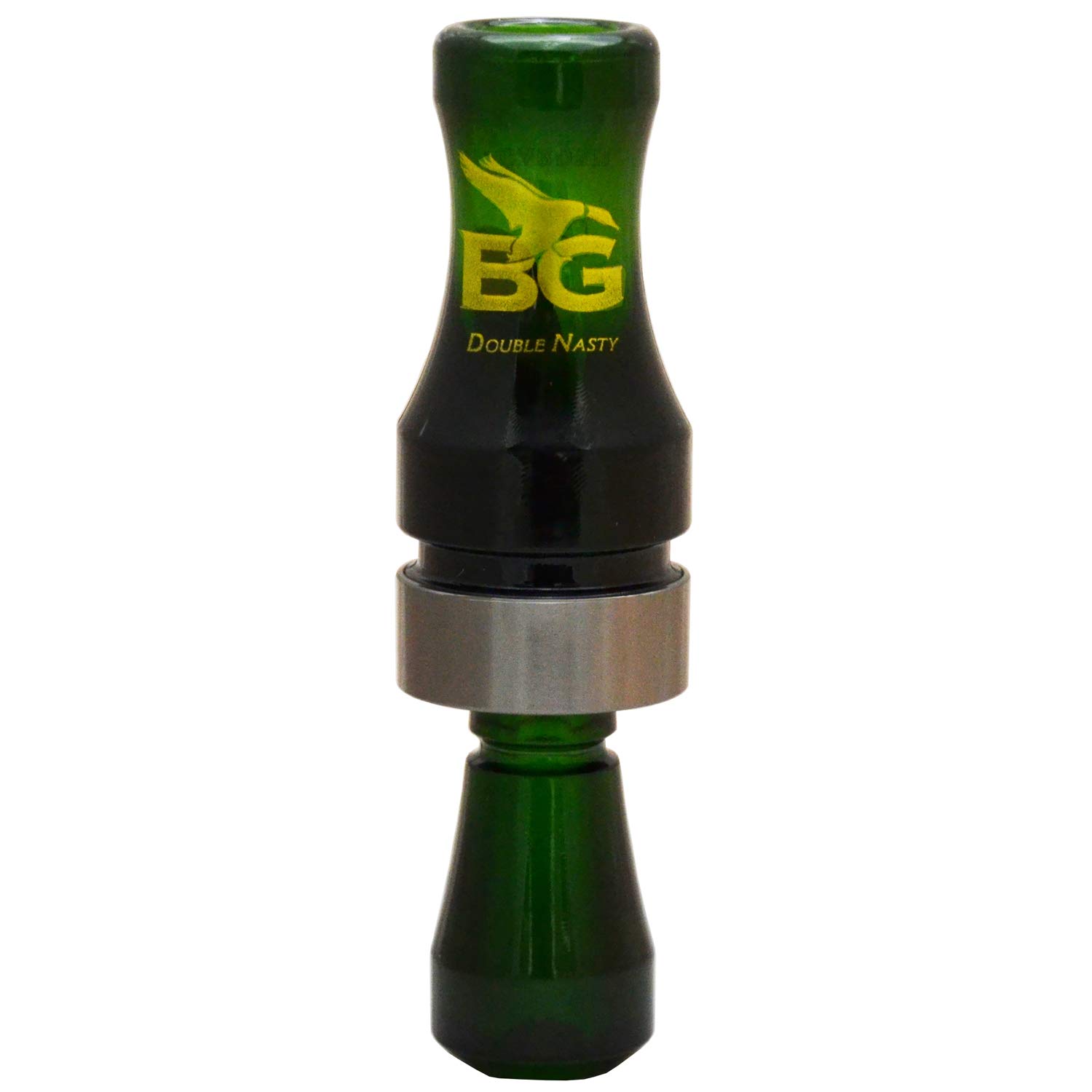
The Buck Gardner Double Nasty Poly is a straightforward double reed call built for hunters who want reliable performance without overcomplicating their setup. The polycarbonate body is lightweight and tough enough to survive being stepped on in a muddy boat, and the camo green finish blends into any marsh environment. It’s rated for intermediate skill levels, but the forgiving back pressure makes it surprisingly easy for beginners to produce a convincing quack on the first try.
Reviews praise the realistic sound quality and ease of use. Hunters report that the Double Nasty produces consistent, raspy notes across a wide range, from excited hail calls to low, coaxing murmurs. One reviewer noted that Russian-made poly calls at the same price burst after a single season, while this Buck Gardner held up through multiple seasons. The call’s main weakness appears when reeds get wet in cold weather — they can stick together and require a quick cleaning during a lull in the action.
For the hunter on a tighter budget who still demands a call that sounds like a real hen, this Double Nasty delivers more than enough performance to justify its place in any blind bag. It won’t compete with high-end wood or acrylic calls in a loud hail contest, but for everyday marsh and pond hunting, it gets the job done without breaking the bank.
Why it’s great
- Realistic sound that fools birds consistently for the price
- Durable polycarbonate body that resists cracking
- Easy to blow, great for beginners and intermediate hunters
Good to know
- Reeds can stick together when wet in cold weather
- Not as loud as premium tier calls for open water hails
5. Haydel’s Game Calls DR-85 Mallard Duck Call

Haydel’s DR-85 Deceiver has been a staple in the duck hunting world for years, earning its nickname by fooling birds across every flyway. The floating wedge design allows the user to adjust the back pressure by loosening or tightening the wedge screw, which means you can tune the call to match your personal blowing style and the wind conditions of the day. It’s hand-tuned by professional callers, and it even operates effectively when wet — a feature that saves hunts when a call gets dunked.
Customer feedback is overwhelmingly positive regarding its ease of use. Beginners find they can produce a solid, consistent quack within minutes, while experienced callers appreciate the nuance the floating wedge provides for varying volume and rasp. The call produces a nice solid quack that carries across the marsh without the reed locking up. Reviewers also note it works well for attracting animal attention in photography settings, not just hunting.
The primary drawback is the thin plastic barrel, which feels less substantial than polycarbonate or wood builds. A few users mention that the sticker on the barrel begins to peel after a few hunts, though this doesn’t affect performance. For the price, the DR-85 offers exceptional value as a backup or training call that punches well above its weight in sound quality and reliability.
Why it’s great
- Floating wedge allows full tuning for back pressure and volume
- Hand-tuned by professionals for consistent, realistic quacks
- Works well even when wet, saving hunts in rain or splash
Good to know
- Thin plastic barrel feels less durable than poly or wood calls
- Sticker on barrel may peel off after field use
FAQ
Why do double reed calls sound more realistic than single reeds?
How do I prevent my double reed call from freezing in cold weather?
Can a beginner use a double reed call effectively?
Final Thoughts: The Verdict
For most hunters, the best double reed duck call is the Buck Gardner BGC Double Nasty Combo because it combines moisture-resistant Spit-Tech toneboard technology with two dedicated calls for mallards and wood ducks in one durable kit. If you want the warm, natural wood tone that guides rely on in flooded timber, grab the Echo Diamonwood Timbers Double Reed. And for a budget-friendly entry point that still sounds like a real hen, nothing beats the Buck Gardner Double Nasty Poly.

Mo Maruf
I created WellFizz to bridge the gap between vague wellness advice and actionable solutions. My mission is simple: to decode the research and give you practical tools you can actually use.
Beyond the data, I am a passionate traveler. I believe that stepping away from the screen to explore new environments is essential for mental clarity and physical vitality.