Our readers keep the lights on and my smoothie glass nicely filled. As an Amazon Associate, I earn from qualifying purchases.
The search for a double breast pump that balances hospital-grade suction with the freedom to move around your home—or your life—is a hunt for a device that understands your body, not just your schedule. Too many wearable pumps trade raw power for convenience, leaving mothers with clogged ducts or insufficient output, while traditional corded models tether you to a wall socket, making multitasking nearly impossible. The right pump must deliver consistent, gentle suction, a secure and comfortable fit, and the quiet discretion needed for a middle-of-the-night session or a conference call.
I’m Mohammad Maruf — the founder and writer behind WellFizz. My approach to evaluating these pumps goes beyond marketing claims, focusing on the measurable vacuum strengths, battery capacities, flange compatibility, and the real-world feedback from hundreds of pumping sessions that reveal what actually works for different body types and milk production patterns.
Whether you are an exclusive pumper, a parent returning to work, or someone managing a low supply, the best double breast pump is the one that empties you efficiently, fits your body without leaks, and lets you reclaim time from a process that can consume hours of your day.
How To Choose The Best Double Breast Pump
Selecting a double breast pump requires filtering through claims of “hospital-grade” and “app-enabled” to find the specifications that actually affect your daily pumping experience. Your body, your milk storage capacity, and your lifestyle all dictate which features are essential and which are just nice to have. Below are the critical factors that separate a workhorse pump from a frustrating disappointment.
Vacuum Strength and Cycle Adjustability
The vacuum, measured in mmHg (millimeters of mercury), is the raw force behind milk extraction. Look for a pump with a maximum vacuum of at least 250 mmHg, with premium models reaching 300 mmHg. More important than the maximum is the range of customizable cycles and levels. A pump that offers both stimulation and expression modes, with the ability to fine-tune the speed (cycles per minute) and strength independently, allows you to mimic your baby’s natural nursing rhythm. Without this adjustability, you risk either ineffective draining (leading to low supply) or painful over-suction that damages delicate breast tissue.
Flange Fit and Material
An incorrectly sized flange is the number one cause of nipple pain, reduced output, and clogged ducts. The standard 24mm flange included in most pumps is not one-size-fits-all. Look for a pump that includes multiple flange sizes (21mm, 24mm, 28mm) or is compatible with aftermarket inserts. The material matters too: soft silicone flanges tend to be more comfortable and adaptable to different breast shapes, while rigid plastic flanges provide more structure but can be harder to size correctly. A pump with interchangeable flange options shows a commitment to accommodating the wide range of human anatomy.
Wearable vs. Traditional (Corded) Design
This is the fundamental architectural choice. Wearable pumps place the motor directly into a cup that sits inside your bra, offering total freedom of movement but often with smaller motors that produce less suction and smaller milk collection capacities (typically 5-8 ounces per side). Traditional pumps use an external motor unit connected to flanges via tubing; they offer superior vacuum power and larger collection capacity (up to 10+ ounces), but tether you to the motor. Some “hybrid” pumps bridge this gap by using wearable collection cups that connect to a lightweight external motor via thin tubing, offering a compromise between power and mobility.
Closed System and Ease of Cleaning
Hygiene is non-negotiable. A closed system pump prevents milk from entering the tubing and motor, protecting the machine from damage and preventing bacterial growth. This is a must-have, not a luxury. Equally critical is the number of parts that require cleaning after each session. Pumps with fewer than six parts that are dishwasher-safe save you hours each week. Look for smooth, seamless surfaces on the collection cups where milk pools, as crevices and ridges can trap bacteria and make cleaning a daily chore.
Quick Comparison
On smaller screens, swipe sideways to see the full table.
| Model | Category | Best For | Key Spec | Amazon |
|---|---|---|---|---|
| eufy S1 Heated Pump | Heated Wearable | Clog prevention & comfort | 300 mmHg / HeatFlow tech | Amazon |
| Medela Sonata Smart | Hospital-Grade Portable | Exclusive pumping / high supply | Hospital-grade vacuum / rechargeable | Amazon |
| Spectra S1 Plus Premier | Hospital-Grade Portable | Supply building & comfort | Natural Nursing Technology / long battery | Amazon |
| Elvie Stride 2 | Wearable Hybrid | Discreet wearable power | 300 mmHg / app-controlled | Amazon |
| Philips Avent Double | Traditional Electric | Gentle hospital-strength suction | 270 mmHg / Natural Motion | Amazon |
| Medela Pump in Style MaxFlow | Traditional w/ Wearable Cups | Hospital-grade performance on the go | 2-Phase MaxFlow / 105° shield | Amazon |
| eufy E20 Heated Pump | Heated Wearable | Value heated pumping | 300 mmHg / 3 heat levels | Amazon |
| Momcozy S12 Pro | Wearable | Budget-friendly hands-free | 292 mmHg / 240 min battery | Amazon |
| Willow Go | Wearable | Discreet on-the-go pumping | 9 levels suction / app enabled | Amazon |
In‑Depth Reviews
1. eufy Security Heated Breast Pump S1
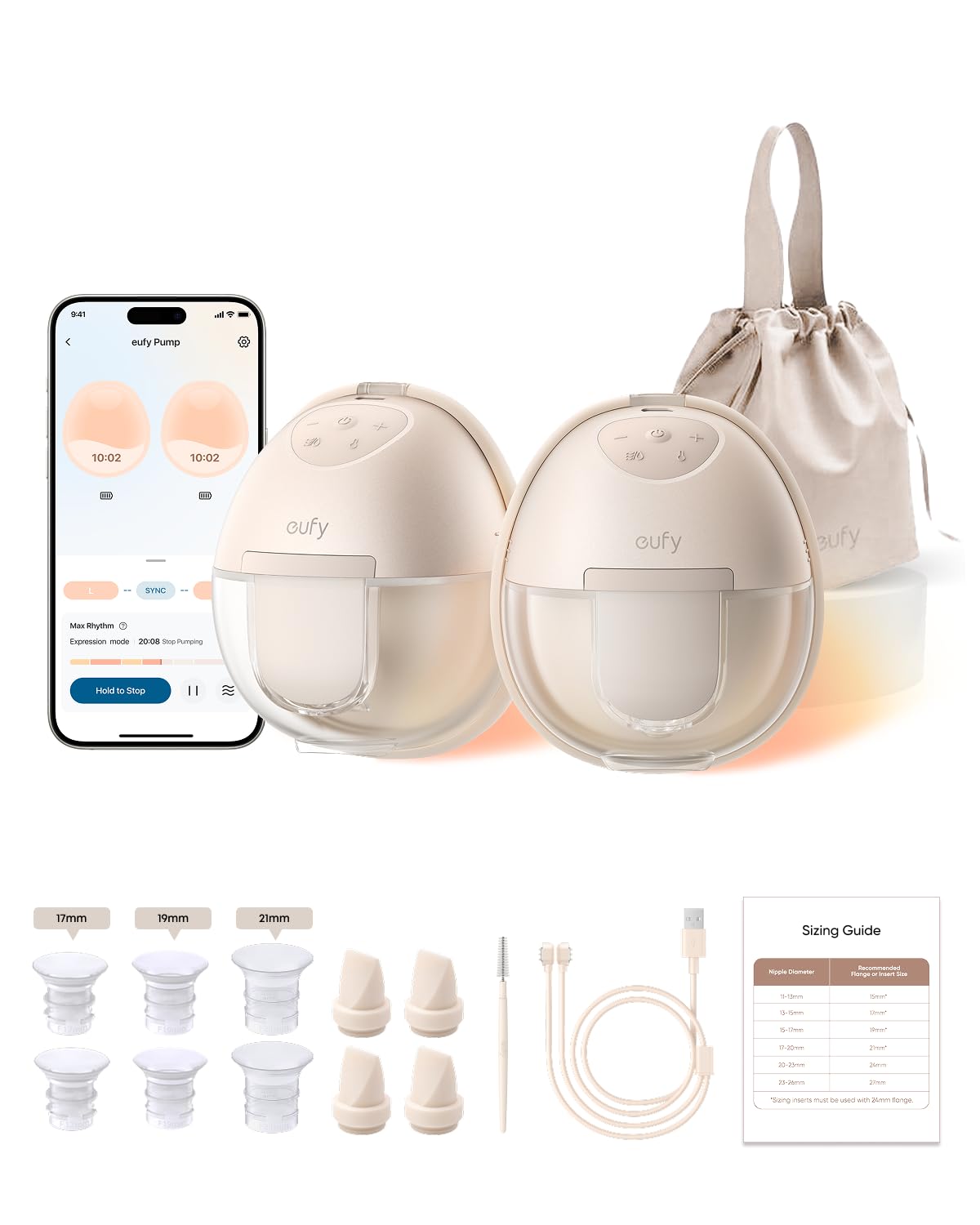
The eufy S1 is the most thoughtfully engineered wearable pump for mothers who struggle with slow letdown or recurring clogged ducts. Its HeatFlow technology warms the flange to a spa-like temperature, which directly stimulates blood flow and milk ejection, a feature confirmed by user feedback reporting a significant 30% boost in output. This is not a gimmick; the warmth genuinely relaxes the breast tissue, making each session feel less like a chore and more like self-care, and it is particularly effective for mothers managing oversupply or DMER (Dysphoric Milk Ejection Reflex) because the heat seems to reduce the anxiety associated with letdown.
The pump delivers a strong 300 mmHg vacuum with app-controlled OptiRhythm technology that allows you to create custom pumping sessions using expert-recommended patterns. The 105° ergonomic curvature, combined with soft silicone flanges, ensures a leak-free seal for a wide range of body types, and the pump includes flanges from 17mm to 24mm to fit nearly any nipple size. The ultra-slim, compact motor unit is whisper-quiet at 46 dB and fits discreetly in any nursing bra, while the secure double seal and reinforced lower half prevent the catastrophic leaks that plague many other wearable designs.
The battery lasts through about five full pumping sessions on a single charge even with the heat feature active, and the USB-C charging makes it easy to top off. The app is functional but not essential; you can control the pump directly from the on-unit buttons. The only real limitation is the collection capacity—the cups hold enough for most sessions, but heavy producers may need to empty them mid-pump. Some users report minor app glitches, but the core pumping experience remains consistently excellent.
Why it’s great
- HeatFlow technology effectively prevents clogs and eases letdown anxiety.
- Strong 300 mmHg suction with fully customizable cycles via the app.
- Exceptional leak-proof design; includes a wide range of flange sizes (17-24mm).
Good to know
- Collection cups are on the smaller side for very high-output sessions.
- The heat function is time-limited to 15-minute bursts and must be manually restarted.
2. Medela Sonata Smart Double Electric Breastpump
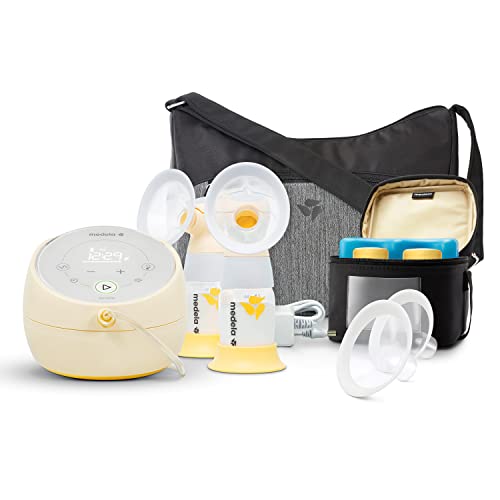
The Medela Sonata is the closest you can get to the Medela Symphony hospital pump in a portable, rechargeable package. Its vacuum strength is comparable to the Symphony’s, and the responsive technology adjusts the suction automatically to maintain consistent milk flow, preventing the vacuum from dropping off when you have a strong letdown. This makes it the gold standard for mothers who are exclusively pumping or who have a low supply and need the most reliable, powerful motor available outside of a hospital setting.
Weighing under 2.5 pounds with a built-in handle, the Sonata is genuinely portable, and its rechargeable battery provides enough juice for roughly two full pumping sessions, which is sufficient for a day out of the house. The Flex breast shields are anatomically designed with a 105° opening and softer silicone rim, reducing breast compression during pumping compared to traditional hard plastic flanges. The closed system with overflow protection ensures that milk never enters the tubing, making hygiene management simple and the machine more durable.
The pump is whisper-quiet, a major advantage for pumping while a baby sleeps nearby. The touchscreen display is intuitive, though some users have reported occasional “CALL” error glitches that require resetting the unit. The app connectivity is underwhelming and largely unnecessary; the pump works perfectly as a standalone device. While the Sonata is not a wearable pump—you are connected to the motor via tubing—the freedom of the rechargeable battery and its small footprint make it far more manageable than a traditional wall-mounted unit.
Why it’s great
- Hospital-grade suction that consistently matches the performance of the Medela Symphony.
- Compact, lightweight design with a rechargeable battery that frees you from the wall.
- Very quiet motor operation suitable for use near a sleeping baby.
Good to know
- Occasional system glitches (“CALL” error) may require a reset.
- The connecting app is limited in functionality and not essential for operation.
3. Spectra S1 Plus Premier Rechargeable Breast Pump

The Spectra S1 is the undisputed champion for mothers focused exclusively on maximizing milk supply and comfort without requiring a wearable form factor. Its “Natural Nursing Technology” uses a unique cycle pattern that cycles between a faster, shallower stimulation phase and a slower, deeper expression phase, closely mimicking a baby’s suckling rhythm. This pump has a cult following for a reason: it consistently empties breasts more completely than most competitors, and its adjustable massage mode before expression helps trigger letdown in mothers who struggle with that critical first step.
The S1 is a rechargeable version of the popular S2, and its battery life is exceptional—holding a charge for several days of regular use. The motor is surprisingly quiet for its power, and the built-in night light is a thoughtful touch for middle-of-the-night pumping sessions. The pump comes with a premium accessory kit and a grey tote bag that is large enough to carry the pump, bottles, and a laptop, making it a practical travel companion for the working parent. It is compatible with aftermarket wearable cups that attach to the tubing, giving you the option of hands-free pumping while retaining the S1’s powerful motor.
The pump comes with 24mm and 28mm flanges, but many mothers find they need smaller sizes (20mm or 21mm), which are not included. The design is not truly portable like a wearable; the motor unit is the size of a large lunchbox and must sit on a table or be carried by its handle. The only significant complaint is the lack of a true wearable experience, but if pumping output and comfort are your absolute priorities, the Spectra S1 remains the benchmark that other pumps are measured against.
Why it’s great
- Industry-leading cycle technology for effective and comfortable milk removal.
- Exceptional battery life that lasts multiple days on a single charge.
- Very quiet motor and useful built-in night light for nighttime pumping.
Good to know
- Requires purchasing separate smaller flange inserts for most users (standard 24mm and 28mm are included).
- Bulkier motor unit is not wearable; it must be placed on a surface.
4. Elvie Stride 2 Hospital-Grade Wearable Pump
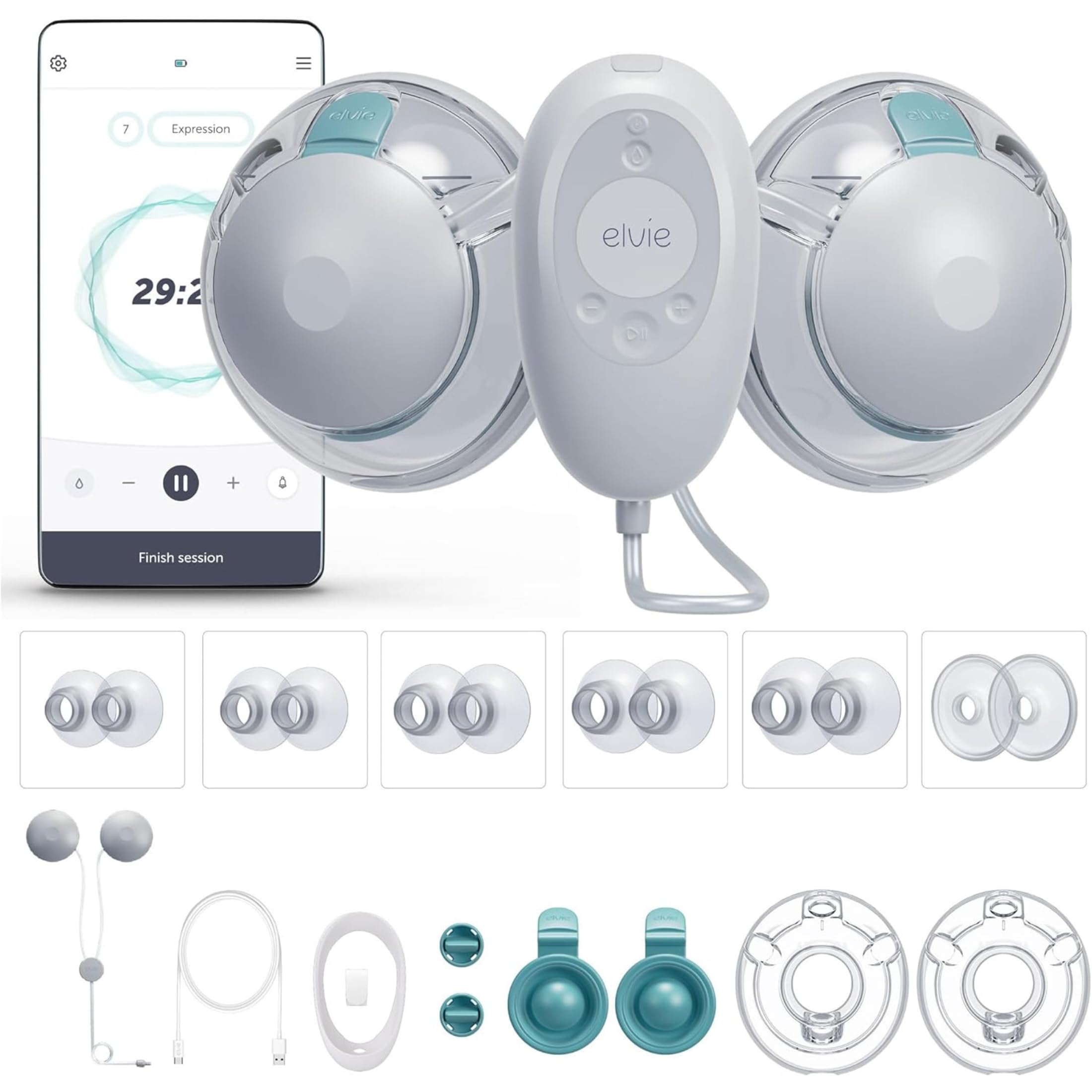
The Elvie Stride 2 represents a smart middle ground in the wearable pump landscape: it uses an external motor connected to ultra-thin, lightweight collection cups via tubing, giving you the freedom of a wearable form factor with the motor power of a traditional pump. The cups weigh just 158 grams each and are the most discreet in this roundup, lying completely flat against the chest under clothing. The motor delivers up to 300 mmHg of suction, which rivals many hospital-grade pumps, and the app provides granular control over intensity and cycle speed, as well as tracking your pumping history.
The pump is designed to accommodate 99% of nipple sizes out of the box, which is a meaningful achievement in a market where flange fit is a constant struggle. The ultra-soft silicone cups hug the natural curve of the breast, creating a leak-free seal that is comfortable enough for all-day wear. The pump is also impressively quiet, with noise reduction technology that makes it one of the most discreet pumps available—a crucial feature for pumping during meetings or in public.
The critical flaw with the Elvie Stride 2 is the lack of available replacement parts. Since its launch, customers have reported that silicone parts break down after a few months of heavy use and that the manufacturer has not made replacements available for purchase. This means the pump has a finite lifespan that may not extend beyond one child’s needs. For mothers who pump exclusively for only a few months, this may not be a dealbreaker, but for those planning to use the pump for a year or more, it is a significant risk. The pump is also best for mothers who produce smaller volumes per session (up to about 5 ounces per side), as the cup capacity is limited.
Why it’s great
- Exceptionally lightweight and discreet cups that are comfortable for all-day wear.
- Strong 300 mmHg motor power paired with a wearable form factor.
- Comprehensive app control with history tracking and customizable cycles.
Good to know
- Replacement parts are not currently available, limiting the pump’s long-term lifespan.
- Best suited for mothers with average to lower milk output per session due to cup capacity.
5. Philips Avent Double Electric Breast Pump

The Philips Avent Double Electric delivers hospital-strength suction (up to 270 mmHg) with a signature “Natural Motion” technology that combines suction with gentle nipple stimulation, mimicking the combination of suckling and massage that triggers a strong letdown. The result is a pump that is fast and remarkably gentle on sensitive nipples, a major advantage for mothers who experience pain or discomfort with other powerful pumps. The soft silicone flange shield adapts to the shape of the breast, creating a comfortable seal that reduces the need for precise flange sizing.
One of its standout features is the design that lets you pump in a comfortable, upright position without leaning forward. This seemingly small detail makes a huge difference during long sessions, preventing back and neck strain. The pump offers 8 stimulation levels and 16 expression levels, giving you a broad range of customization. The closed system is hygienic, ensuring milk never backs up into the tubing, and the pump is easy to assemble and clean with very few parts.
The main limitation is that this pump must remain plugged into a wall outlet during use—it has no built-in rechargeable battery. This tethers you to a specific location, which may not suit mothers who need to move around the house or pump in a car. The pump also has a slightly larger motor unit than some other traditional pumps, and the included travel bag does not come with a battery pack, making it less portable than the Spectra S1 or Medela Sonata. For at-home pumping at a desk or bedside, its performance and comfort are superb.
Why it’s great
- Extremely gentle suction thanks to the Natural Motion technology, ideal for sensitive nipples.
- Soft silicone flange adapts to breast shape, reducing the need for multiple flange sizes.
- Allows upright pumping without leaning forward, preventing back strain.
Good to know
- Must be plugged into a wall outlet during use; no rechargeable battery option.
- Motor unit is larger than some competitors, making it less portable.
6. Medela Pump in Style MaxFlow Double Electric
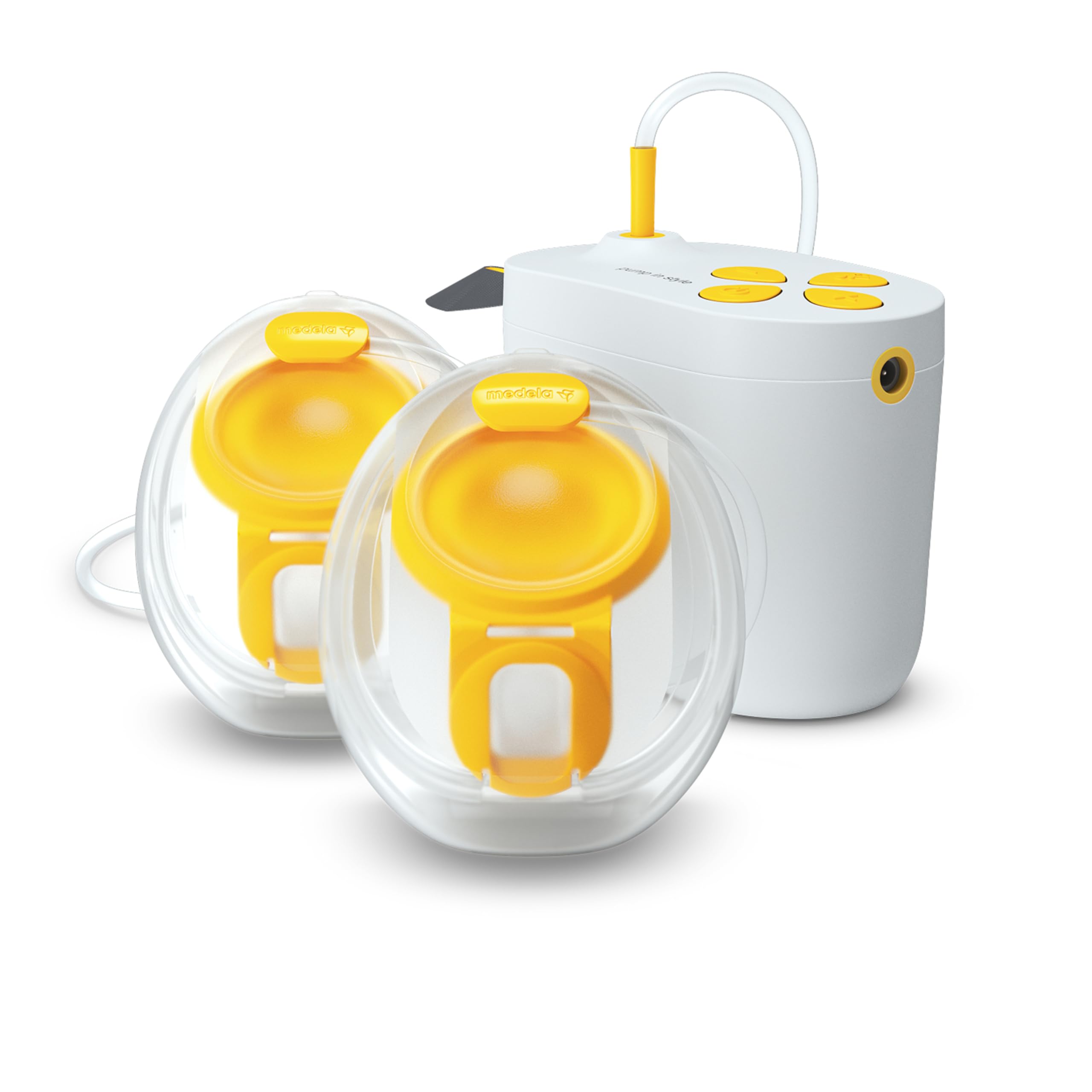
The Medela Pump in Style MaxFlow is a traditional hospital-grade pump that includes hands-free wearable collection cups, making it a hybrid solution for mothers who want the power of a corded motor with the flexibility of wearability. The MaxFlow feature uses microvibrations to enhance milk expression, and Medela’s 2-Phase technology mimics a baby’s natural nursing rhythm, starting with a fast, light stimulation phase before switching to a slower, deeper expression phase. The anatomically designed shields feature a 105° opening that reduces breast compression, leading to an 11.8% increase in milk output compared to standard Medela shields.
The wearable collection cups are a highlight: they are dishwasher-safe, stand upright to prevent spills, and have an easy pour spout for transferring milk to storage bags or bottles. The pump comes with both 21mm and 24mm breast shields, offering a better fit range than many competitors out of the box. The pump is also surprisingly easy to assemble and clean with only three parts per cup, making it a low-fuss option for busy mothers.
The pump’s Achilles’ heel is the reliability of its battery pack and the fragility of the plastic cup components. Multiple user reports indicate that the battery pack can fail within the first few weeks, requiring the pump to be plugged in, which defeats the purpose of the wearable cups. The plastic locking mechanism on the cups is also prone to cracking after a month or two of use. The motor itself is effective when it works, but the build quality of the accessories raises concerns about long-term durability.
Why it’s great
- Includes both traditional shields and wearable collection cups for flexibility.
- MaxFlow microvibrations and 105° shield design enhance comfort and output.
- Very easy to clean with only three main parts per cup.
Good to know
- Battery pack has a high rate of early failure, often requiring AC power.
- Plastic cup components are prone to cracking at the locking point.
7. eufy Security Heated Breast Pump E20
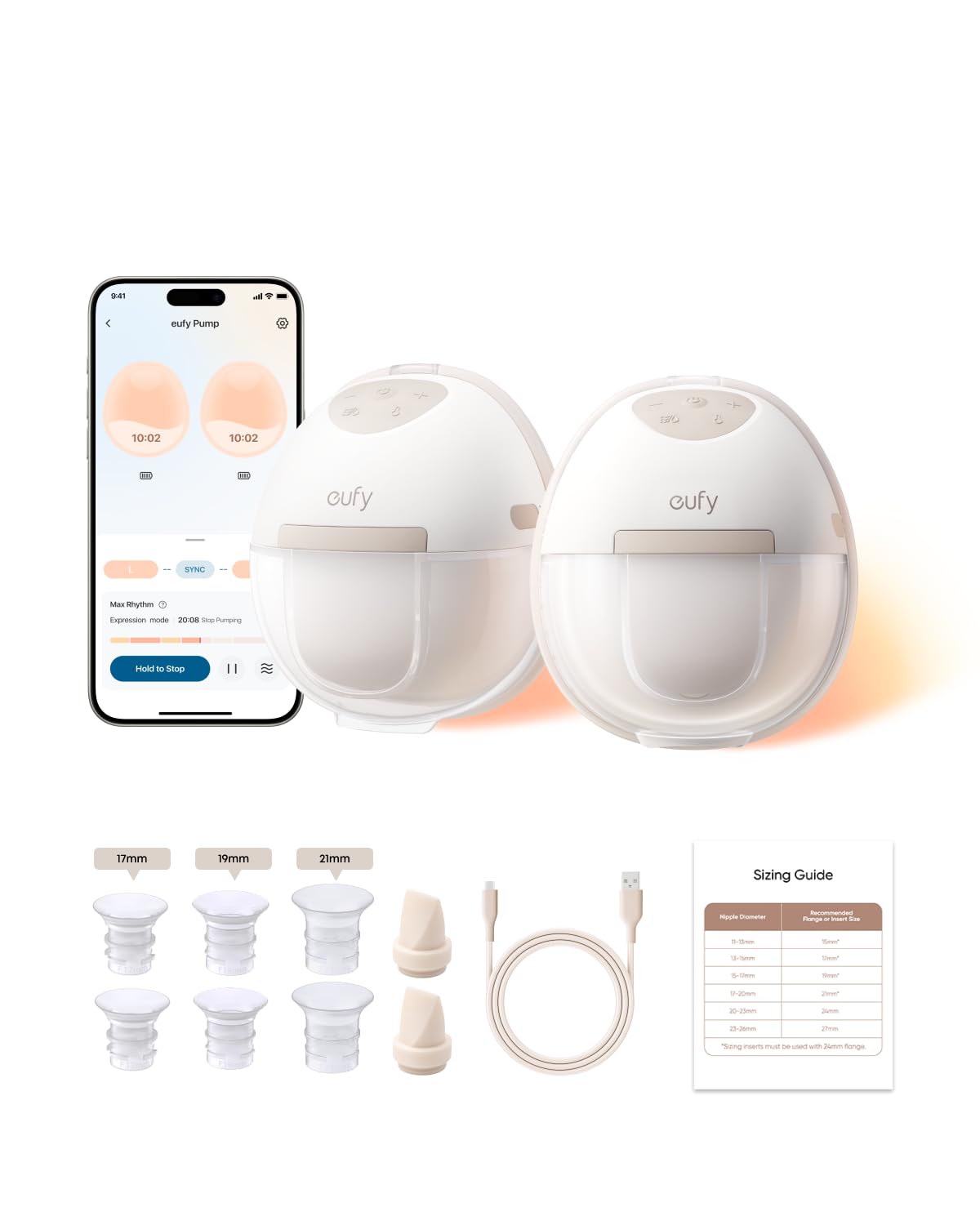
The eufy E20 is the more budget-friendly entry point into eufy’s heated pumping ecosystem, offering the same HeatFlow technology as the premium S1 but in a slightly more streamlined package. The HeatFlow feature warms the flange to 95°F within 30 seconds, which directly helps prevent clogged ducts and significantly increases milk output—users report a 30% boost on average. This is not just a comfort feature; it is a functional tool for mothers with chronic engorgement or a history of mastitis. The pump delivers a strong 300 mmHg vacuum and is app-controllable, allowing you to set custom rhythms and monitor your output.
The pump is ultra-slim and lightweight, fitting discreetly into a nursing bra, and operates at a whisper-quiet 46 dB. The leakproof design features a secure double seal and a reinforced lower half, so you can bend over or move around without worrying about spills. The E20 includes a wider range of flange sizes (17mm, 19mm, and 21mm are commonly mentioned) than many pumps in its price tier, which is a significant advantage for achieving the correct fit. The USB-C charging is convenient, and the battery lasts for about five 30-minute pumping sessions with heat on maximum.
The primary differences from the premium S1 are a slightly less robust app interface and a design that some users find a bit bulkier in the cup. The heat function, while effective, requires the cup to be assembled perfectly; if the small silicone connector is not fully pushed in, the heat will not activate. For mothers on a tighter budget who still want the game-changing benefit of a heated pump, the E20 offers nearly the same core pumping experience as its more expensive sibling.
Why it’s great
- HeatFlow technology provides a proven boost in output and prevents clogs.
- Strong 300 mmHg suction with app-based custom rhythm control.
- Wide range of included flange sizes for a better out-of-the-box fit.
Good to know
- The heat function is finicky and requires perfectly sealed assembly to activate.
- The cup design is slightly bulkier than the premium eufy S1 model.
8. Momcozy Breast Pump S12 Pro
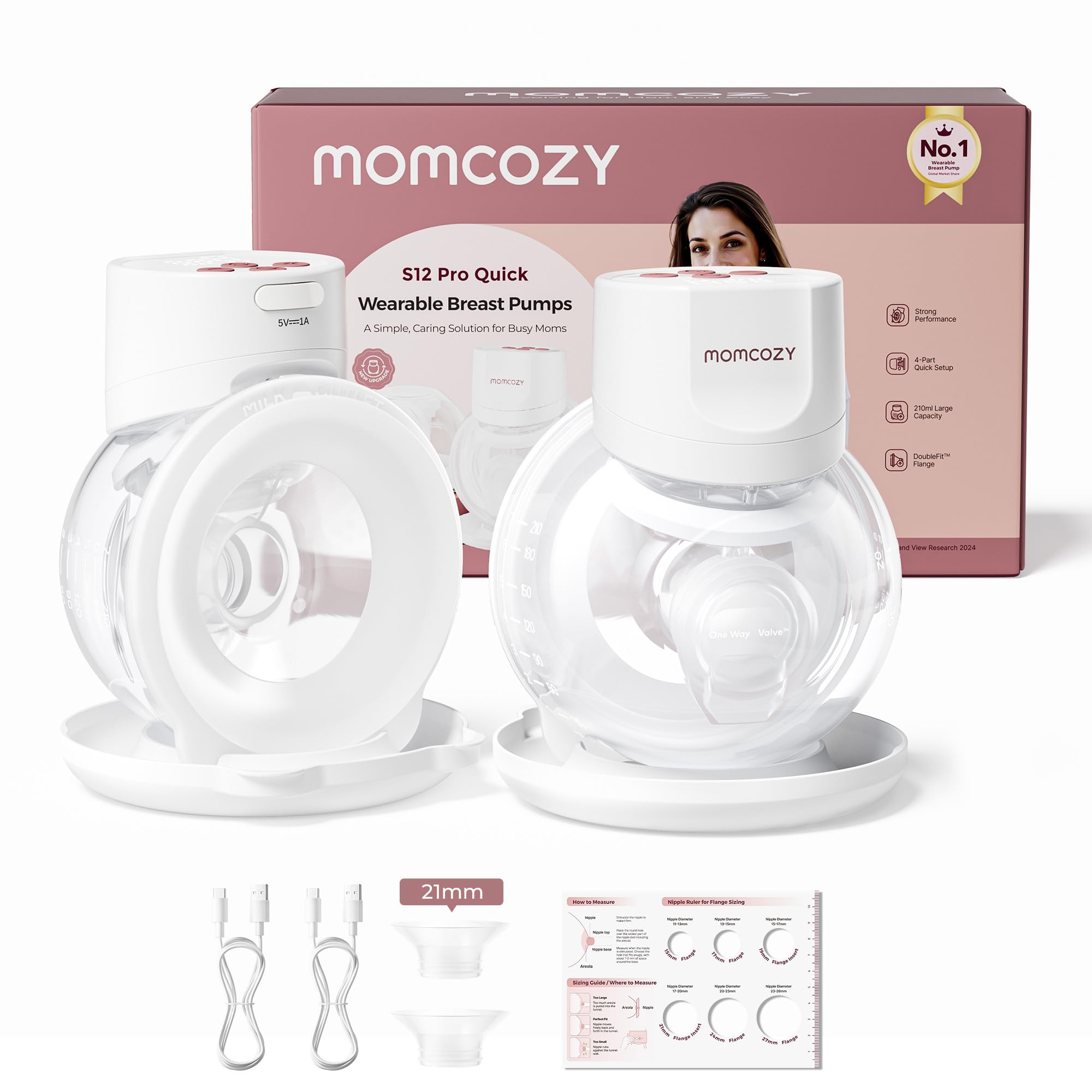
The Momcozy S12 Pro punches well above its price tier, delivering a powerful 292 mmHg suction in a fully wearable, wireless form factor that rivals pumps costing twice as much. Its “DoubleFit Hybrid Flange” combines a soft silicone inner rim with a firm polypropylene outer shell, creating a leak-free seal that is comfortable for extended wear. The pump is remarkably fast and efficient, with Momcozy’s lab data showing it achieves 28.2% faster pumping and 6% more milk output than its predecessor. The three modes and nine suction levels provide enough customization for most users to find their ideal setting.
The S12 Pro is very easy to live with: it has only four main parts for quick assembly and cleaning, and the one-piece funnel design rinses clean easily. The 1,350 mAh battery supports up to eight pumping sessions (240 minutes) on a single charge, making it one of the longest-lasting wearable pumps available. The motor is whisper-quiet at ≤46 dB, and the pump includes a digital screen that shows mode, level, and battery life clearly. The ergonomic grip tabs and dual-use flange cover make handling and pouring convenient.
The main caveat with the S12 Pro is that it seems to struggle with very large or very full breasts, with some users reporting consistent leakage and poor suction if the flange does not achieve a perfect seal. The included 24mm and 21mm inserts are a good start, but mothers outside that range will need to purchase aftermarket inserts. The pump is also not compatible with the same level of aftermarket support as the Elvie or Willow, so replacement parts are a consideration for very long-term use.
Why it’s great
- Exceptional value: near-premium suction and battery life at a budget-friendly price.
- Very long 240-minute battery life supports multiple days of pumping between charges.
- Easy to clean with only 4 parts and a smooth funnel design.
Good to know
- May not achieve a good seal for very large breasts; inconsistent performance reported.
- Requires aftermarket inserts for nipple sizes outside the standard 21mm-24mm range.
9. Willow Go Wearable Breast Pump
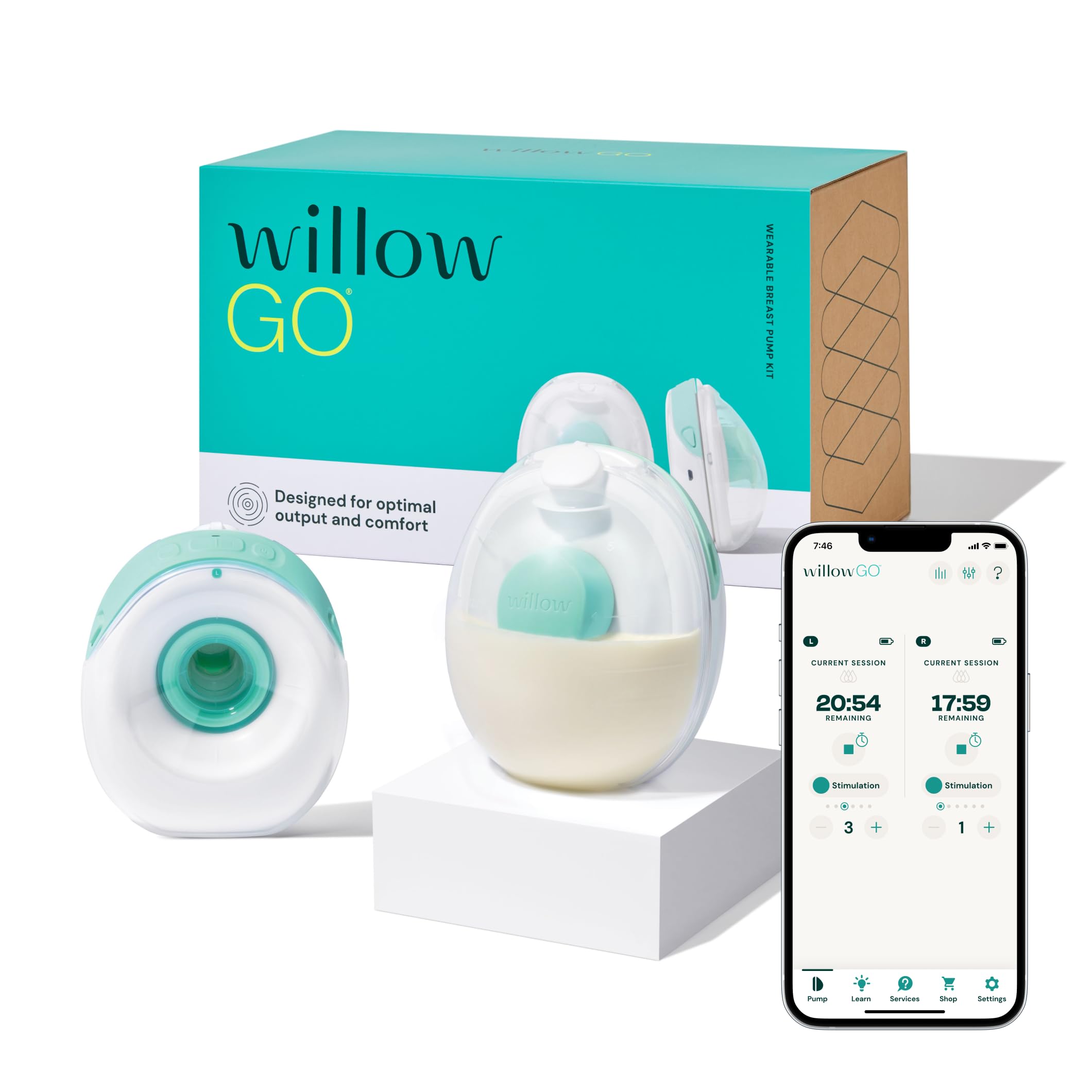
The Willow Go is a fully wearable, in-bra pump that has been a popular choice for mothers who value discretion and app connectivity above all else. Its hospital-grade suction offers 9 levels of intensity, and the app provides convenient start/stop control, output tracking, and access to expert content. The pump fits completely in the bra with no external tubes or motor, making it one of the most discreet options on the market. The 5-ounce reusable containers are large enough for most sessions, and the pump is dishwasher safe for easy cleaning.
The Go is designed for on-the-go lifestyles: the rechargeable battery lasts through about three full pumping sessions, which is enough for a full workday of pumping. The pump is relatively easy to assemble and the app is more polished than most, offering reliable Bluetooth connectivity. The 24mm and 21mm flanges provide two common size options out of the box. For mothers who produce moderate volumes and prioritize absolute discretion, the Willow Go is a solid performer.
The drawbacks are significant and well-documented. The pump has a history of reliability issues: the charging ports can be finicky, the battery may not hold a charge if the pump is stored unused for extended periods, and the suction can be inconsistent, sometimes losing power mid-session. The pump is also prone to spilling from two different locations (the seal and the reservoir), and it does not empty the breast as thoroughly as more powerful competitors like the eufy S1 or the Spectra S1. Many users report it is better suited as a secondary, occasional-use pump rather than a primary daily driver.
Why it’s great
- Extremely discreet, fully in-bra design with no external tubes or motor.
- Polished app with reliable Bluetooth control and output tracking.
- Dishwasher-safe components make for easy cleaning.
Good to know
- Notorious for reliability issues: finicky charging ports, battery drain, and inconsistent suction.
- Prone to leaking from multiple points and does not empty the breast as thoroughly as top competitors.
FAQ
What does “hospital-grade” mean for a double breast pump?
How do I know which flange size is right for me?
Should I get a wearable or a traditional pump as my primary pump?
Final Thoughts: The Verdict
For most users, the best double breast pump winner is the eufy S1 Heated Pump because its HeatFlow technology genuinely boosts output and prevents clogs while providing hospital-grade suction in a truly wearable, discreet form factor. If you want a proven, portable hospital-grade motor that you can rely on for years of exclusive pumping, grab the Medela Sonata Smart. And for the unbeatable combination of powerful suction and long battery life at a budget-friendly price, nothing beats the Momcozy S12 Pro as a secondary or primary wearable pump.

Mo Maruf
I created WellFizz to bridge the gap between vague wellness advice and actionable solutions. My mission is simple: to decode the research and give you practical tools you can actually use.
Beyond the data, I am a passionate traveler. I believe that stepping away from the screen to explore new environments is essential for mental clarity and physical vitality.