Our readers keep the lights on and my smoothie glass nicely filled. As an Amazon Associate, I earn from qualifying purchases.
Whether you’re framing a deck, trimming out crown molding, or cutting metal studs, a double bevel miter saw is the tool that turns angled cuts from a math problem into a one-motion operation. The ability to tilt the blade left and right without flipping the workpiece saves time and eliminates guesswork, making it the go‑to for serious finish carpenters and demanding DIYers alike.
I’m Mohammad Maruf — the founder and writer behind WellFizz. I’ve spent hundreds of hours analyzing motor specs, rail systems, bevel ranges, and dust collection performance to separate the saws that hold their calibration from the ones that drift after a few cuts.
This guide cuts through the noise to help you find the best double bevel miter saw for your workshop, budget, and project type — whether you prioritize cordless portability, metal‑cutting capability, or a compact footprint that fits a crowded bench.
How To Choose The Best Double Bevel Miter Saw
Not all dual‑bevel miter saws are built the same. The key differences lie in the slide mechanism, motor performance, fence design, and how the saw handles repeated bevel adjustments. Knowing what to check before you buy will save you frustration on your first trim job.
Slide System: Rails vs. Axial‑Glide
Traditional sliding miter saws use exposed rails that require rear clearance. Axial‑glide systems, like the Bosch CM10GD, replace rails with articulated arms — creating zero rear overhang and dramatically smoother travel. If your workspace is tight, a front‑slide or axial‑glide design is worth the premium. Traditional rails offer broader cut capacity for a lower price but demand bench space behind the saw.
Motor Power and Blade Speed
Nearly every 10‑inch and 12‑inch saw in this category draws 15 amps. The difference is RPM — 3,800 to 4,800 — and how quickly the saw reaches speed under load. A high‑torque motor that holds 4,000+ RPM through oak or pressure‑treated lumber will produce cleaner cuts and less burning. Check soft‑start features too; they prevent tripping breakers and reduce startup lurch.
Cutting Capacity and Fence Design
The “2×12 at 90 degrees” spec tells you cross‑cut capacity, but nested crown molding requires tall fences. Look for fences that slide outward to support wide stock and don’t interfere with the blade at extreme bevel angles. Sliding fences that leave a gap behind the workpiece can cause small offcuts to snag — a detail experienced trim carpenters check immediately.
Bevel Stops and Detent Plate Quality
Positive bevel stops at 0°, 22.5°, 33.9°, and 45° speed up compound work. Stainless steel detent plates resist wear better than stamped steel; if the detents feel mushy out of the box, you’ll fight alignment on every miter. A cam‑lock miter handle with detent override gives you fine control when you’re working a half‑degree off a common angle.
Dust Collection and Visibility
A shadow‑line LED is more accurate than a laser because it eliminates parallax. For dust collection, no miter saw is perfect — but a 2‑inch dust port that connects to a shop vac is vastly better than a flimsy bag. Some saws, like the Delta 26‑2241, create impressive dust blowout despite a good port; a dedicated dust separator makes a bigger difference than you’d expect.
Quick Comparison
On smaller screens, swipe sideways to see the full table.
| Model | Category | Best For | Key Spec | Amazon |
|---|---|---|---|---|
| BOSCH CM10GD | Axial‑Glide | Compact precision workshops | Axial‑Glide system, 64 lbs | Amazon |
| DEWALT DWS716 | 12″ Sliding | Professional trim work | 14‑stop stainless detent plate | Amazon |
| Metabo HPT C12RSH3 | 12″ Sliding | Value‑minded pros | Xact Cut Shadow Line, 53.6 lbs | Amazon |
| DEWALT DCS714WW1 | 10″ Cordless | Job‑site portability | 20V MAX, 434 cuts per charge | Amazon |
| Delta 26‑2241 | 10″ Front‑Slide | Space‑saving DIY/semi‑pro | LED shadow guide, belt‑drive | Amazon |
| Evolution R255SMS‑DB+ | 10″ Multi‑Material | Cutting metal and wood | Multi‑material TCT blade, 44.8 lbs | Amazon |
| WEN MM1215 | 12″ Front‑Slide | Budget large‑capacity cuts | 13.25″ cross‑cut, 24.25 kg | Amazon |
| SKIL MS6305‑00 | 10″ Sliding | Entry‑level DIY | LED shadow line, 39.4 lbs | Amazon |
| Einhell TC‑SM 2534/1 | 10″ Dual Sliding | Occasional home use | Dual sliding rails, 14.89 kg | Amazon |
In‑Depth Reviews
1. BOSCH CM10GD Compact Miter Saw

The Bosch CM10GD replaces traditional sliding rails with its Axial‑Glide system — articulated arms that deliver zero rear overhang and glass‑smooth travel. This 10‑inch saw gives you a 90‑degree cutting angle range, dual bevel left and right, and a 60‑tooth carbide blade that stays accurate out of the box. The upfront metal bevel controls and SquareLock precision fences make adjustments fast without reaching around the back.
Weighing 64 pounds, this is a heavy saw, but the weight pays off in vibration damping. Large, form‑fitting trigger handle with soft grip reduces fatigue during extended trim sessions. The clear lower guard keeps the cut line visible, and the dust collection chute connects to a vacuum adapter for cleanup. Setup is straightforward, and the included side extensions support long workpieces without sag.
The only real trade‑off is the lack of a soft‑start — the saw jumps slightly on startup. Also, the OEM dust nozzle is undersized; some users fabricate a deeper replacement. For compact workshops where bench space is measured in inches, this saw’s footprint is unbeatable. It’s the gold standard for any double‑bevel miter saw guide.
Why it’s great
- Axial‑Glide system saves 10 inches of rear clearance vs. rail saws
- Front bevel and miter controls for quick adjustments
- Large fence supports crown and base molding with no interference
Good to know
- No soft‑start — motor lurches on power‑up
- Dust bag is minimal; a vacuum adapter is required for serious use
2. DEWALT DWS716 12‑Inch Double‑Bevel Miter Saw

The DWS716 is DEWALT’s 12‑inch workhorse — a non‑sliding double‑bevel saw built for job‑site durability. Stainless steel miter detent plate with 14 positive stops delivers repeatable accuracy that pros trust for crown and base molding. The tall sliding fences support material up to 6‑5/8 inches nested and 6‑1/2 inches vertical, handling wide trim without shimming.
The 15‑amp motor spins at a consistent 4,000 RPM, and the cam‑lock miter handle with detent override allows fine‑tuning without fighting indexed stops. Double‑bevel capability covers 0° to 48° left and right with positives at 0°, 22.5°, 33.9°, and 45°. The 0° to 50° miter range left and right gives flexibility for non‑standard angles. Many users report it arrives accurate out of the box, though a full alignment tune‑up takes about an hour.
Dust collection works well when connected to a shop vac, but the included bag is best for clean‑up only. The included carbide blade is decent but upgrading to a 60‑tooth Diablo will noticeably improve cut finish. If you need a fixed‑head 12‑inch saw with pro‑grade accuracy and don’t require a sliding mechanism, this is the reference standard.
Why it’s great
- Stainless steel detent plate with 14 positive stops for repeatable angles
- Tall sliding fences support crown and base molding up to 6‑5/8 inches
- Cam‑lock handle with detent override for fine miter adjustments
Good to know
- No sliding mechanism; limited to the blade’s cross‑cut width
- Requires 60‑90 minutes of alignment to reach maximum accuracy
3. Metabo HPT C12RSH3 12‑Inch Dual Bevel Sliding Miter Saw
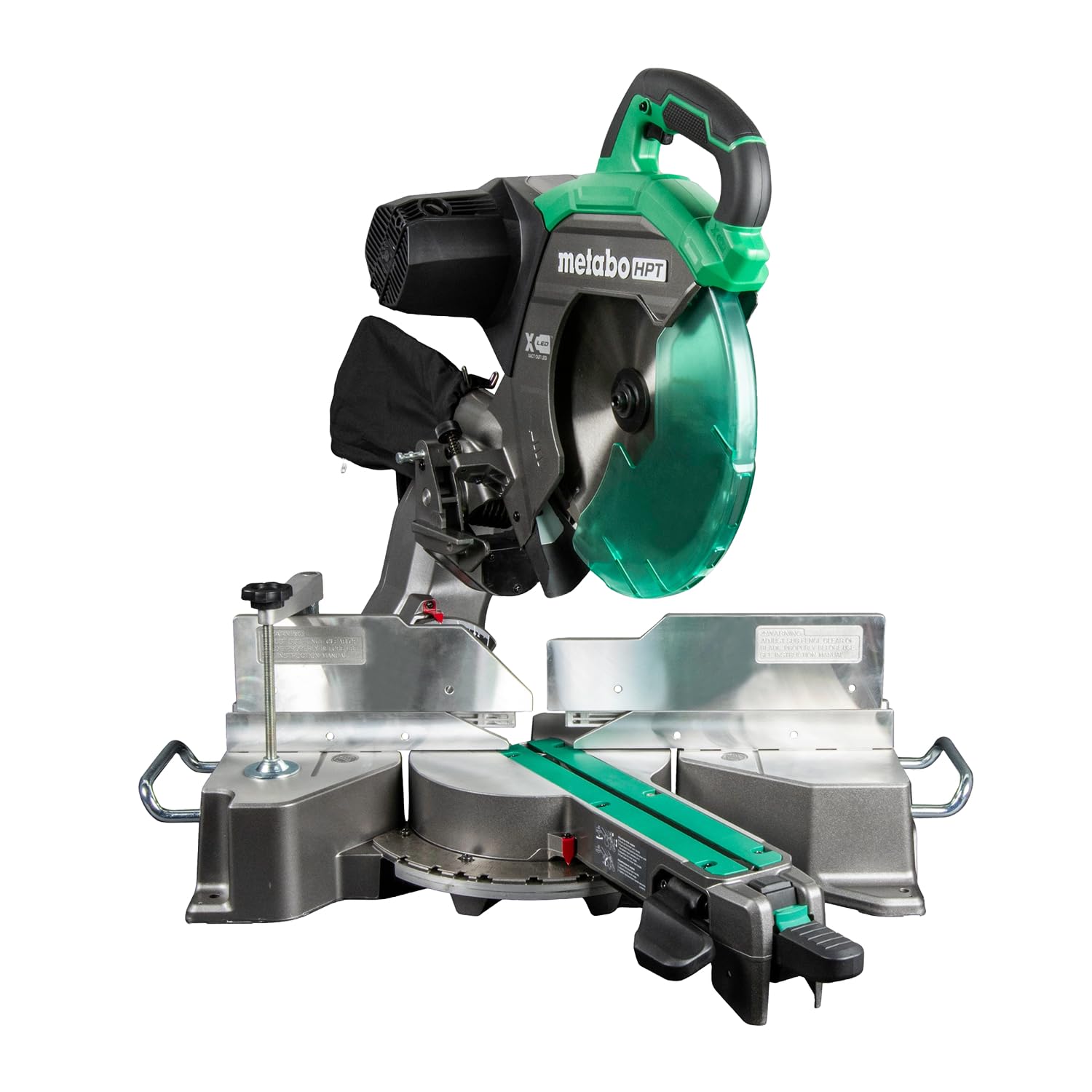
The Metabo HPT C12RSH3 (formerly Hitachi) brings Japanese‑engineered precision at a mid‑range price that undercuts most 12‑inch dual‑bevel competitors. The forward‑mounted rails allow wall‑hugging placement, and the Xact Cut Shadow Line projects a crisp, parallax‑free cut indicator right at the blade edge. A 5‑year warranty backs the build, which is reassuring for daily shop use.
The 15‑amp motor delivers 4,000 RPM no‑load speed, and the one‑touch bevel and miter locks simplify angle changes. Nine miter detent stops cover common angles, and the bevel range spans 45° left and right. Out‑of‑the‑box accuracy is solid, though most users report a short calibration session improves squareness. The sliding mechanism uses bushings rather than bearings, which can feel slightly sticky on the first few cuts — a few cycles loosen it up.
Dust collection is mediocre; expect to connect a shop vac and still wipe down the bench after heavy use. The included blade is functional but not exceptional — upgrading to a higher‑tooth‑count blade improves finish cut quality significantly. For the money, this saw competes directly with the DEWALT DWS716 while adding sliding capability at a lower price point.
Why it’s great
- Forward rails fit tight against the wall, saving bench depth
- Xact Cut Shadow Line is accurate in all lighting conditions
- 5‑year warranty for professional‑grade reliability
Good to know
- Sliding bushing system not as smooth as bearing‑based competitors
- Dust collection is below average even with a shop vacuum
4. DEWALT DCS714WW1 20V MAX XR 10″ Double Bevel Miter Saw Kit
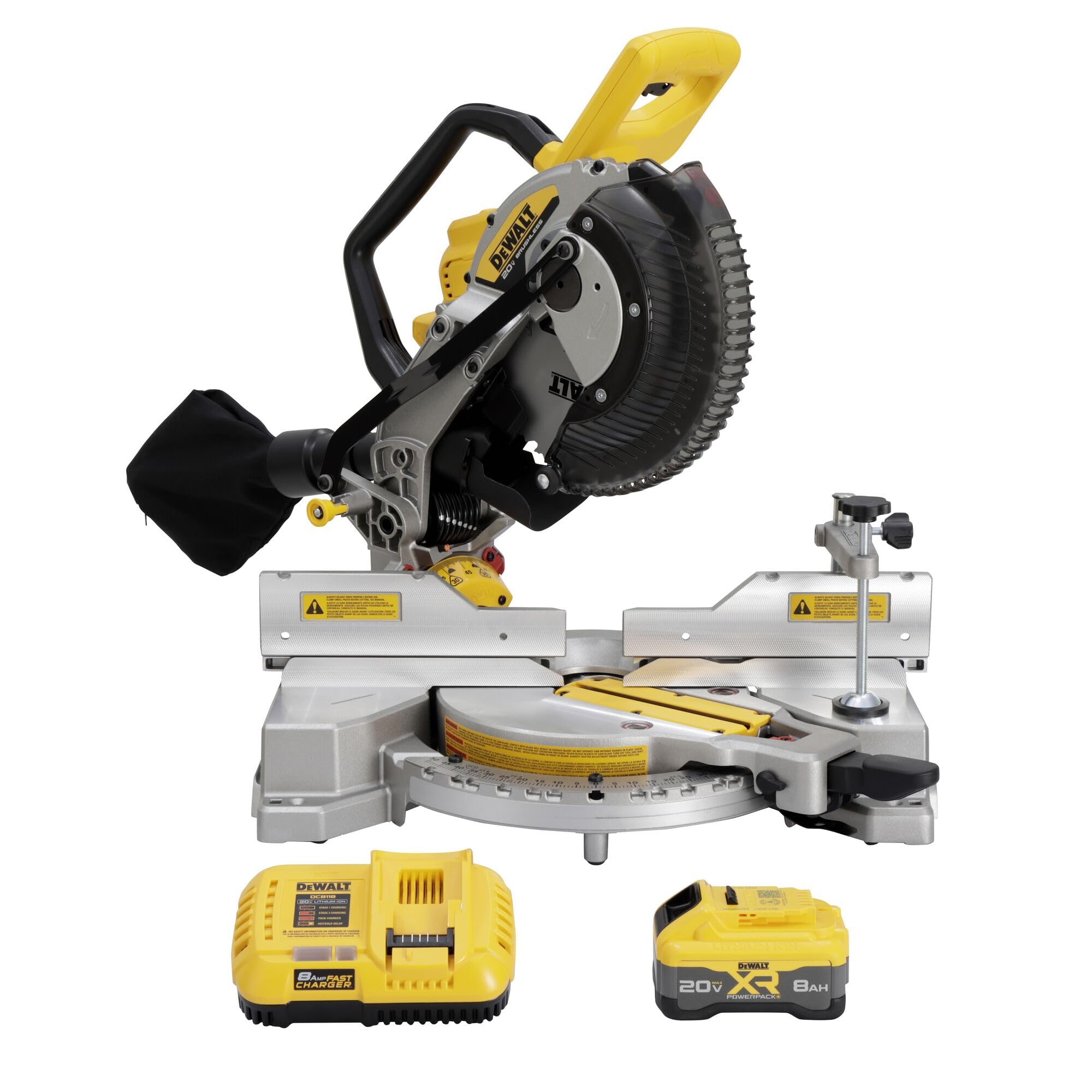
The DCS714WW1 is DEWALT’s most powerful 20V MAX compact miter saw — capable of up to 434 cuts in 3‑1/4‑inch MDF base molding or 311 cuts in 2×4 SPF on a single charge. The bevel‑gear transmission maximizes runtime by minimizing power loss, and the saw is compatible with all DEWALT 20V MAX and FLEXVOLT batteries. It captures up to 97% of dust during cutting, which is exceptional for a cordless saw.
Cut capacity reaches 6 inches horizontally, 5‑1/4 inches vertical for baseboard, and the same for nested crown. The double‑bevel capability is full left and right, and the shadow‑line cut indicator is clever — it projects a sharp line directly from the blade path. The included kit comes with a battery, charger, dust bag, and non‑airlock vacuum adapter, making it truly ready to work out of the box.
A few caveats: the saw requires 4Ah or higher batteries — smaller packs won’t deliver full power. The vertical clamp feels slightly flimsy for the price point. Alignment may be off by a few degrees out of the box, but adjustment is straightforward. For a second saw on a job site or a contractor who needs to cut without hauling extension cords, this cordless setup is a game‑changer.
Why it’s great
- Up to 434 cuts per charge with 20V MAX battery system
- 97% dust capture — best in class for cordless saws
- Compatible with DEWALT FLEXVOLT batteries for extended runtime
Good to know
- Requires 4Ah batteries; smaller packs won’t deliver full power
- May need calibration out of the box for perfect square cuts
5. Delta 26‑2241 10″ Sliding Compound Miter Saw

The Delta 26‑2241 uses a belt‑driven motor and a compact front‑slide design that eliminates rear overhang. The LED shadow guide projects a consistent cut line, and the one‑hand front miter controls with push‑button detent override make angle changes intuitive. Dual bevel covers 45° left and 45° right with 7 positive bevel stops at the most popular angles. Miter capacity extends 50° left and 60° right with 10 detents.
Out‑of‑the‑box accuracy is outstanding — many users report it cuts square without any adjustment. The belt drive also contributes to a smoother, quieter operation compared to direct‑drive saws. The 15‑amp motor delivers 4,000 RPM, and the blade brake stops the blade quickly for safety. The included clamp and side extensions work well for framing and shelving projects.
Dust collection is this saw’s glaring weakness. Even with a 2‑inch port, the saw showers the workpiece and bench in sawdust. A dedicated dust separator helps but won’t eliminate the problem. Also, the robot‑arm slide, while smooth, can exhibit slight flex on cuts wider than 6 inches if you push too fast. For DIYers and semi‑pros who prioritize compact storage and accuracy, this is a strong contender.
Why it’s great
- Belt‑drive motor runs quieter and smoother than direct drive
- Front‑slide design fits flush against the wall — zero rear clearance
- Excellent out‑of‑the‑box accuracy; minimal calibration required
Good to know
- Dust collection is poor — expect significant sawdust on your bench
- Arm flex can affect cut quality on wide stock if push speed is too fast
6. Evolution R255SMS‑DB+ 10‑Inch Dual Bevel Sliding Miter Saw

The Evolution R255SMS‑DB+ is designed to cut wood, wood with embedded nails, composite decking, mild steel, aluminum, and plastic with a single blade — and it delivers on that promise. The included multi‑material TCT blade produces virtually no sparks when cutting steel, and the finish is cool to the touch with no burrs. Dual bevel spans 45° left and right, and the miter capacity reaches 50° in both directions.
The 15‑amp motor has a soft‑start that reduces breaker trips, though it also causes a 2‑second spin‑up delay before the blade reaches full speed. Setup is simple, and the saw holds calibration well for framing and light finish work. The 3‑year warranty is a confidence builder, and Evolution’s support is known for responsive replacement parts if anything goes wrong.
There are two trade‑offs: the included blade dulls faster than expected when cutting mild steel tubing repeatedly — upgrading to a dedicated steel‑cutting blade is recommended for heavy metal work. The sliding fence extensions also create a small gap behind the workpiece that can catch small offcuts. For a single‑tool solution that switches between wood and metal on the same day, this is the most versatile option available.
Why it’s great
- Cuts wood, metal, plastic, and composites with one blade
- Virtually no sparks when cutting mild steel
- Soft‑start reduces breaker tripping on job sites
Good to know
- Included blade dulls quickly on heavy steel — upgrade recommended
- Sliding fence extensions leave a small gap behind the workpiece
7. WEN MM1215 12‑Inch Dual Bevel Sliding Compound Miter Saw

The WEN MM1215 punches above its price tier with a 15‑amp motor, 12‑inch blade, and a unique dual‑rail front‑slide system that eliminates rear overhang. Cross‑cut capacity reaches 13.25 inches wide and 4.5 inches thick — enough for 2×12 lumber at 90 degrees. Dual bevel covers 45° in both directions with 9 miter stops, and the LED cutline guide is hardwired (no batteries) for consistent visibility.
The saw includes an 80‑tooth carbide‑tipped blade (model BL1280), two quick‑lock table extension arms, adjustable support fences, a clamp, and a dust port. The motor runs quietly and stops quickly via the blade brake. For general building trades like deck framing and rough carpentry, this saw delivers satisfactory power and cut quality right out of the box.
Long‑term accuracy is the main concern. Over time, the bevel indicators (stickers, not engraved) can peel, and the miter detent mechanism may drift. Fine woodworkers report deflection on cuts longer than 8 inches and difficulty maintaining repeatable bevel settings. If your work demands 1/64th‑inch precision for cabinetry, this isn’t the saw. But for the DIYer building a deck or pergola, the value proposition is tough to beat.
Why it’s great
- Front‑slide rails save rear bench space — compact footprint
- 80‑tooth carbide blade included — ready for fine cuts
- Quiet motor with fast blade stop for improved safety
Good to know
- Bevel indicators are sticker‑based and can peel with age
- Not suitable for fine woodworking requiring high repeatable accuracy
8. SKIL MS6305‑00 10″ Dual Bevel Sliding Miter Saw

The SKIL MS6305‑00 brings dual‑bevel capability to a lightweight, affordable package. At 39.4 pounds, it’s one of the lightest saws in this guide, making it easy to lift onto a bench or load into a truck bed. The 15‑amp motor delivers 4,800 RPM — the highest blade speed in this lineup — with an LED shadow line that many users prefer over laser guides for its accuracy and lack of parallax error.
Dual bevel hits four positive stop positions at 48° and 45° left, 0°, and 45° right, which covers the most common compound‑cut angles for crown molding and baseboard. Cross‑cut capacity handles 2×12 at 90 degrees and 2×8 at 45 degrees. The included hold‑down clamp prevents kickback, and the dust bag captures enough for light yard‑work cleanup. Many owners report the saw arrives well‑calibrated out of the box.
The miter detent mechanism is the weakest point — it feels flimsy and can shift out of alignment if you use the detent pin aggressively. A simple workaround is to keep the detent pin disengaged and lock the angle manually. For a homeowner replacing baseboards or building garage shelves, this saw offers exceptional value without the weight penalty of a 12‑inch model.
Why it’s great
- Lightest saw in this guide at 39.4 lbs — easy to transport
- 4,800 RPM motor cuts quickly through dense lumber
- LED shadow line is more accurate than a laser with no parallax
Good to know
- Miter detent mechanism is light‑duty and can misalign
- Sliding fence extensions have a small gap behind the workpiece
9. Einhell TC‑SM 2534/1 Dual Sliding Mitre Saw
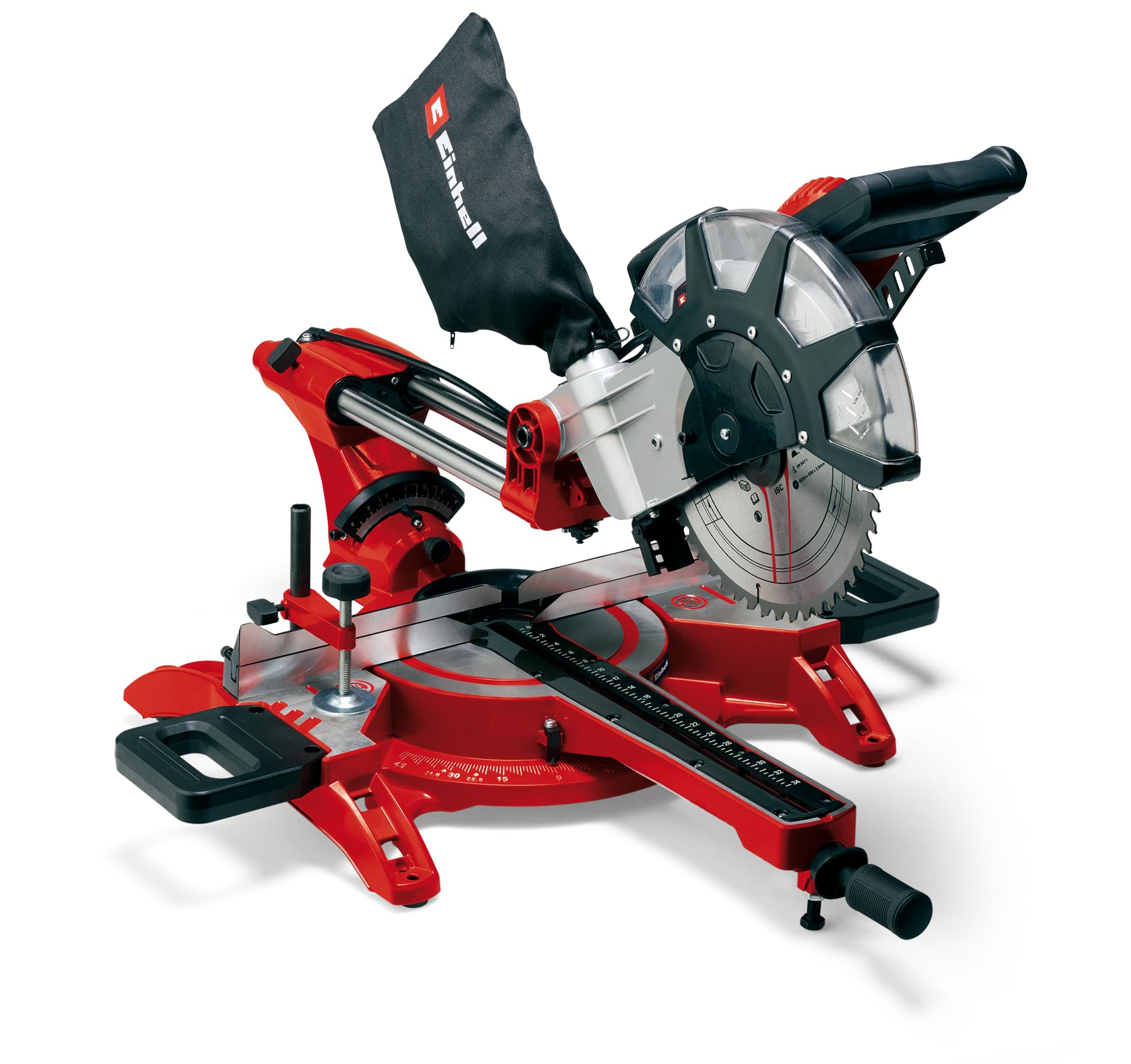
The Einhell TC‑SM 2534/1 is a dual‑sliding miter saw aimed at the occasional home user who needs to cut wide boards and doesn’t want to spend premium money. The sliding rails extend to handle wider stock, and the dual‑bevel capability lets you cut both left and right compound angles without flipping the material. It includes a 24‑tooth blade suitable for rough framing cuts.
Setup requires patience — reviewers report the saw arrives needing adjustment in every direction to achieve square cuts. The locking lever can feel stiff out of the box, and the included blade produces a slightly frayed edge on cross‑grain cuts, which is typical for a budget blade. The dust collection is functional but will leave debris on the bench.
This saw is best understood as an entry‑level tool for the hobbyist who cuts a few pieces of lumber per month. The build quality and long‑term accuracy won’t satisfy a trim carpenter, but for building a garden shed, cutting shelving, or occasional furniture projects, it offers dual‑bevel capability at the lowest entry point. If budget is the primary constraint, the Einhell gets the job done.
Why it’s great
- Dual sliding rails provide wide cross‑cut capacity
- Dual bevel for left and right compound cuts without moving the workpiece
- Most affordable double‑bevel option for occasional use
Good to know
- Requires significant calibration out of the box
- Included blade leaves frayed edges on cross‑grain cuts
FAQ
Do I need a sliding or a fixed double‑bevel miter saw?
What is the difference between a shadow line and a laser guide?
Can a double bevel saw cut crown molding lying flat?
Why does my miter saw not cut square out of the box?
Is a 12‑inch miter saw always better than a 10‑inch?
Final Thoughts: The Verdict
For most users, the best double bevel miter saw winner is the BOSCH CM10GD because its Axial‑Glide system combines compact bench footprint with silky‑smooth sliding action and professional‑level accuracy. If you need a 12‑inch fixed saw with pro‑grade repeatable angles, grab the DEWALT DWS716. And for cutting wood and metal with a single tool, nothing beats the Evolution R255SMS‑DB+.

Mo Maruf
I created WellFizz to bridge the gap between vague wellness advice and actionable solutions. My mission is simple: to decode the research and give you practical tools you can actually use.
Beyond the data, I am a passionate traveler. I believe that stepping away from the screen to explore new environments is essential for mental clarity and physical vitality.