Our readers keep the lights on and my smoothie glass nicely filled. As an Amazon Associate, I earn from qualifying purchases.
A smart doorbell that drops offline every afternoon, a mechanical chime that hums through the walls, a video feed that flickers when the HVAC kicks on — these are the symptoms of an underpowered doorbell transformer struggling to keep up with modern demands. The tiny metal box tucked inside your junction box is often the weakest link in a smart home setup, and a simple swap to a higher-rated unit can turn an unreliable doorbell into a rock-solid system.
I’m Mohammad Maruf — the founder and writer behind WellFizz. I spend hours analyzing the electrical specifications, real-world user feedback, and compatibility data for residential power accessories to help you cut through the spec-sheet noise and find the component that actually fixes your problem.
Whether you are troubleshooting a Ring doorbell that keeps rebooting or upgrading a 1950s-era unit to power a modern video doorbell and chime, this guide walks through the five top-rated options. After reviewing dozens of multimeter readings and installation reports, these represent the best doorbell transformer choices available right now.
How To Choose The Best Doorbell Transformer
The key to a reliable doorbell system is matching the transformer’s output voltage and VA (volt-amp) rating to the load from your doorbell, chime, and any additional smart devices. Overshoot or undershoot these numbers and you will face humming, rebooting, or premature failure.
Voltage (8V, 16V, or 24V)
Standard mechanical chimes typically use 16V. Many smart video doorbells — especially Ring Pro and Nest Hello — require 24V to run their cameras and Wi-Fi radios without dropping offline. Tri-volt models let you pick the output with a simple switch, giving you flexibility if you change doorbells later.
VA Rating (10VA, 20VA, 30VA, or 40VA)
VA (volt-amps) measures how much power the transformer can deliver. A basic mechanical doorbell and chime might only need 10VA. A smart doorbell with a camera, night vision, and two-way audio pulls closer to 20-30VA. If you run two doorbells plus a chime, 40VA is the safe bet. An underpowered transformer will heat up, sag voltage, and cause rebooting.
UL Certification and Heat Dissipation
Transformers generate heat as they step down voltage. UL certification means the unit has passed safety tests for thermal limits and short-circuit protection. Never install a transformer inside a wall cavity — it needs air circulation to shed heat, or it will age quickly and could create a fire risk.
Quick Comparison
On smaller screens, swipe sideways to see the full table.
| Model | Category | Best For | Key Spec | Amazon |
|---|---|---|---|---|
| Newhouse Hardware 40TR | Premium 24V | Multiple smart doorbells + chime | 24V / 40VA / UL Certified | Amazon |
| Newhouse Hardware 3TRAN | Tri-Volt | Flexible voltage selection | 8V/10VA, 16V/10VA, 24V/20VA | Amazon |
| Endurance Pro EP4011MT | 24V 40VA | Thermostat + doorbell combo | 24V / 40VA / UL/CSA Listed | Amazon |
| GIVEUBED 24V 40VA | Fixed 24V | Budget-friendly 24V upgrade | 24V / 40VA / ETL Listed | Amazon |
| GIVEUBED 16V 30VA | 16V 30VA | Classic 16V mechanical chimes | 16V / 30VA / ETL/UL Listed | Amazon |
In‑Depth Reviews
1. Newhouse Hardware 40TR (24V 40VA)
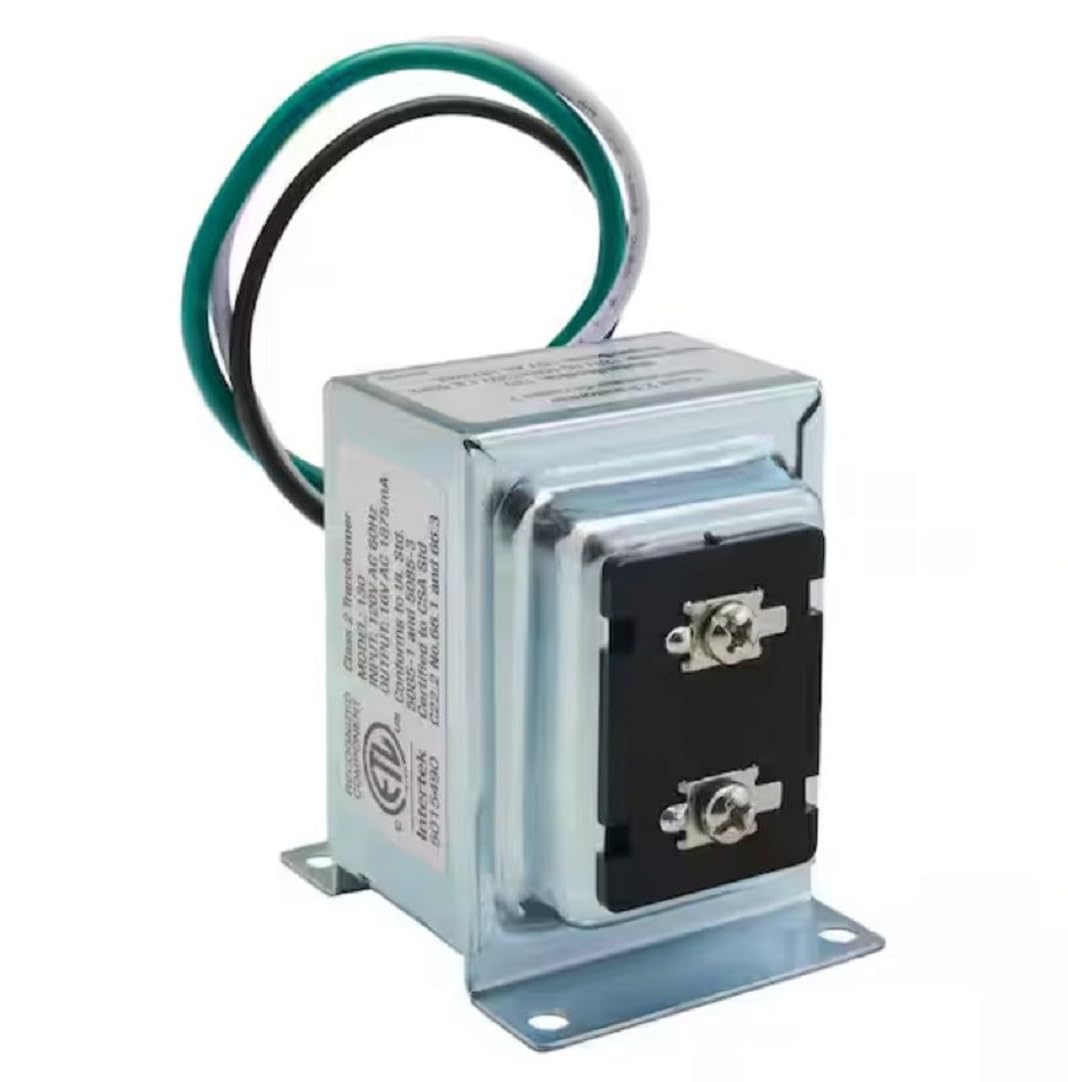
The Newhouse Hardware 40TR delivers a full 24V at 40VA through a threaded hub mount that bolts directly onto a standard junction box. This is the option to choose when you need to power two Ring Pro doorbells simultaneously or run a Nest Hello alongside a mechanical chime — multiple users report that the 40TR eliminated voltage drops below 16V that had been causing constant rebooting on their earlier 16V units.
UL certification and a 0.78kg (1.7lb) core weight hint at the internal copper winding quality that keeps this transformer running cool even under continuous load. The pigtail wiring with clearly labeled leads makes swapping with an existing unit a straightforward process for anyone familiar with basic 120V residential wiring. A small subset of users received units that were dead on arrival, which is a risk with any mass-produced electrical component, but the overwhelming majority report flawless performance over years of service.
If your existing transformer is humming, your doorbell camera keeps flickering, or you simply want a single transformer that can handle two smart doorbells and a thermostat, this is the one to reach for. The 24V 40VA output is future-proof for any current or next-gen video doorbell on the market.
Why it’s great
- Runs two Ring Pro doorbells plus chimes without needing a power injector
- UL certified for safety and thermal management
- Threaded hub mount provides a clean, secure installation to a junction box
Good to know
- A small batch of units shipped with no output voltage — inspect immediately after wiring
- Must be mounted outside of a wall cavity for proper ventilation
2. Newhouse Hardware 3TRAN Tri-Volt

The 3TRAN stands out because it gives you three output options in a single unit: 8V at 10VA, 16V at 10VA, and 24V at 20VA. This tri-volt design means you can match the transformer to your existing doorbell without buying a new unit if you upgrade from a standard chime to a video doorbell later. The switch adjustment takes seconds and the mounting footprint is compact at 2.25 inches tall.
Real-world reports show this unit outputting a steady 28.66V on the 24V tap when measured with a multimeter under no load, which is well within spec for modern video doorbells. Users running Eufy E340 and 2nd Gen Nest doorbells confirm that the 24V setting resolves humming and keeps the camera powered consistently. The unit runs slightly warm to the touch but stays within safe thermal limits, as expected from a UL-certified product.
The main limitation is the VA ceiling — the 24V tap caps at 20VA, which is adequate for a single video doorbell plus chime but insufficient for running two power-hungry doorbells or additional smart devices. For a single-doorbell home that wants voltage flexibility, this is an excellent choice.
Why it’s great
- Three voltage outputs in one unit for future flexibility
- Compact 2.25-inch height fits tight spaces
- Verified UL certification with stable voltage output
Good to know
- 24V tap limited to 20VA — not enough for dual smart doorbells
- Runs warm under continuous load, requires ventilation
3. Endurance Pro EP4011MT (24V 40VA)

The Endurance Pro EP4011MT is built for the hybrid household that runs both smart thermostats and smart doorbells from the same transformer. With 24V at 40VA on tap, it can simultaneously power a Nest thermostat, a Ring Video Doorbell, and a mechanical chime without sagging. The screw-down and thread clamps provide a solid mechanical connection to the electrical box, which reduces the risk of loose wires causing intermittent power loss.
User reports highlight that this transformer fixed the “Ring Pro offline” problem that plagued older 16V installations — the extra 8V and 30VA headroom keep the camera, Wi-Fi radio, and IR LEDs running without voltage collapse. The UL/CSA dual listing gives confidence that the unit meets both US and Canadian safety standards. One recurring detail in reviews is that the included mounting screws are soft and strip easily; using your own #8-32 machine screws during installation is a good workaround.
A single report of failure after three years of continuous use in a barn fan application (a non-standard, always-on duty cycle) suggests the unit has a long service life in normal doorbell use. It is a solid mid-range option when you need 40VA of clean 24V power.
Why it’s great
- Sufficient VA to run smart thermostats and doorbells simultaneously
- UL and CSA listed for North American electrical safety
- Thread clamp wiring system creates a secure, vibration-resistant connection
Good to know
- Larger chassis can be tricky to fit in tight furnace spaces
- Included screws are soft and prone to stripping
4. GIVEUBED 24V 40VA

This GIVEUBED model delivers the same core spec — 24V at 40VA — as the premium options but at a lower entry point. The no-load output voltage measures around 27V AC, which provides a comfortable margin above the 24V requirement for smart doorbells. Multiple users successfully swapped out transformers from the 1950s and 1960s with this unit, powering dual Eufy cameras and Nest doorbells without issues.
The plate-mount design and included screws make installation straightforward for basic DIY electrical work. ETL listing indicates independent testing to UL standards, so safety and thermal protection are covered. A handful of users report the transformer running noticeably warm, which is normal for a 40VA unit under load, but one reviewer noted the unit runs cooler than their previous 1950s-era transformer.
Where this unit saves money is in the build details — the case feels lighter than the Newhouse 40TR, and the mounting plate is more basic. For a single video doorbell installation where you need 24V at 40VA without paying for extra chassis heft, this is a capable and cost-effective choice.
Why it’s great
- Delivers 24V at 40VA for a reliable smart doorbell power source
- Simple plate-mount design is easy to install
- ETL listed to UL standards for safety
Good to know
- Lighter build quality compared to premium alternatives
- Can run warm under sustained load — ensure proper ventilation
5. GIVEUBED 16V 30VA

For homes with traditional mechanical chimes or entry-level video doorbells that specify 16V input, this GIVEUBED model provides a solid upgrade from the anemic 10VA transformers often found in older homes. At 16V and 30VA, it has triple the power headroom of a basic 16V 10VA unit, which means it can handle the load from a Wyze or Arlo doorbell camera while still ringing the mechanical chime loudly.
Installation reports consistently mention a five-minute swap using standard green, white, and black US wiring. Users with Nest thermostats in the same circuit confirm the 30VA output is enough to share between a thermostat and a doorbell without issues. The ETL and UL dual listing is a strong safety indicator at this price tier.
The most significant risk is a small but real failure rate — a few reports of units failing after a week of use. The manufacturer does offer refunds for these cases, but it adds uncertainty. If your doorbell system runs on 16V and you need more VA than a basic 10VA unit, this transformer delivers the power — just keep the receipt and test immediately after installation.
Why it’s great
- 30VA provides triple the power of a standard 10VA 16V transformer
- ETL and UL listed for safety compliance
- Simple wiring makes for a fast DIY swap
Good to know
- Small chance of early failure — test voltage immediately after install
- Fixed 16V output means it cannot be used with 24V doorbells
FAQ
Can I use a 24V transformer with a doorbell that originally ran on 16V?
Why does my new transformer hum loudly after installation?
How do I test if my doorbell transformer is bad?
Can I install a doorbell transformer myself?
Final Thoughts: The Verdict
For most users, the doorbell transformer winner is the Newhouse Hardware 40TR because its 24V 40VA output drives even two smart doorbells and a chime without voltage sag, and the threaded hub mount makes installation clean. If you want tri-volt flexibility to switch between 8V, 16V, and 24V in the future, grab the Newhouse Hardware 3TRAN. And for a pure budget-friendly 24V upgrade that gets the job done for a single video doorbell, nothing beats the GIVEUBED 24V 40VA.

Mo Maruf
I created WellFizz to bridge the gap between vague wellness advice and actionable solutions. My mission is simple: to decode the research and give you practical tools you can actually use.
Beyond the data, I am a passionate traveler. I believe that stepping away from the screen to explore new environments is essential for mental clarity and physical vitality.