Our readers keep the lights on and my smoothie glass nicely filled. As an Amazon Associate, I earn from qualifying purchases.
A standard doorbell’s two-note chime is an invisible barrier for anyone with hearing loss — visitors arrive, packages get left, and family members miss each other entirely. The solution isn’t just a louder ringer; it’s a multi-sensory alert system that combines sound, light, and vibration to ensure no one gets left in the dark. These specialized devices transform a simple door press into an unmistakable signal that cuts through the noise of daily life.
I’m Mohammad Maruf — the founder and writer behind WellFizz. I’ve spent countless hours analyzing hardware specs and customer feedback on alerting devices, focusing on the measurable differences in decibel output, strobe brightness, and wireless range that separate a helpful gadget from a life-changing tool for the deaf and hard of hearing.
This guide breaks down the core features that actually matter — from adjustable strobe colors to vibrating receivers — so you can confidently pick the best doorbell for hearing impaired users that fits your home and lifestyle.
How To Choose The Best Doorbell For Hearing Impaired
Not all doorbells labeled for the hearing impaired are created equal. The best choice hinges on a few specific specs that directly impact how effectively the device alerts someone who cannot rely on sound alone. Here’s what to look for.
Flash Type and Brightness
The visual alert is the cornerstone of any hearing-impaired doorbell. Look for models that offer a strobe flash or a multi-colored LED light. A strobe is a single bright white flash, while a multi-color LED cycles through colors like red, blue, green, and purple, making it easier to catch peripheral vision. The flash duration is also critical — some lights only illuminate for a few seconds, while others flash for 15 to 30 seconds, giving the user a much wider window to notice it.
Alert Modes: Sound, Flash, and Vibration
The most versatile systems offer three independent alert modes: sound only, flash only, and sound plus flash. The best units add a silent vibrating mode, where the receiver buzzes or shakes. This is essential for situations where the user is asleep, the TV is loud, or the receiver is tucked in a pocket. The ability to mix and match these modes across different receivers in the same kit is a powerful feature.
Wireless Range and Receiver Count
Maximum wireless range is usually advertised in an open-field scenario (600 to 1300 feet), but real-world performance through walls, floors, and metal appliances will be significantly less. For a single-story home, 600 feet of open-air range is usually adequate. For a multi-story house or a workshop, look for 1000+ feet and a kit with at least three receivers so you can place one on each floor. More receivers mean fewer blind spots.
Volume Control and Decibel Ceiling
A single max volume number like 110 dB is less useful than a system with adjustable volume levels. A 5-level volume scale allows you to set a gentle chime for everyday use and crank it up to 110 dB only when the user is in a noisy environment or in a distant room. A mute or silent mode is also valuable to avoid disturbing others while still receiving a visual alert.
Quick Comparison
On smaller screens, swipe sideways to see the full table.
| Model | Category | Best For | Key Spec | Amazon |
|---|---|---|---|---|
| PHYSEN 2 Buttons 4 Receivers | Premium | Whole-home coverage with multiple floors | 4 plug-in receivers, 1300-ft range | Amazon |
| LRA-EX1000S Extender | Premium | Converting existing wired doorbell | Wired-to-wireless extender, 1000-ft range | Amazon |
| Security2020 WC180 | Mid-Range | Simple strobe and loud chime | 92 dB strobe receiver, 600-ft range | Amazon |
| JSIEEM 2 Buttons 3 Receivers | Mid-Range | Budget multi-receiver system | 3 receivers, 110 dB, 1200-ft range | Amazon |
| CallToU Battery Operated | Mid-Range | Portable receivers with vibration | Portable receivers, vibration mode, 1000-ft range | Amazon |
| SURFOU 2 Buttons 3 Receivers | Mid-Range | Customizable tones at high volume | 55 chimes, 5 volume levels, 110 dB max | Amazon |
| HSYIJIA 7-Color Flash | Budget | Visually striking color flashes | 7-color rotating LED, 600-ft range | Amazon |
In‑Depth Reviews
1. PHYSEN Wireless Doorbell 2 Buttons 4 Receivers
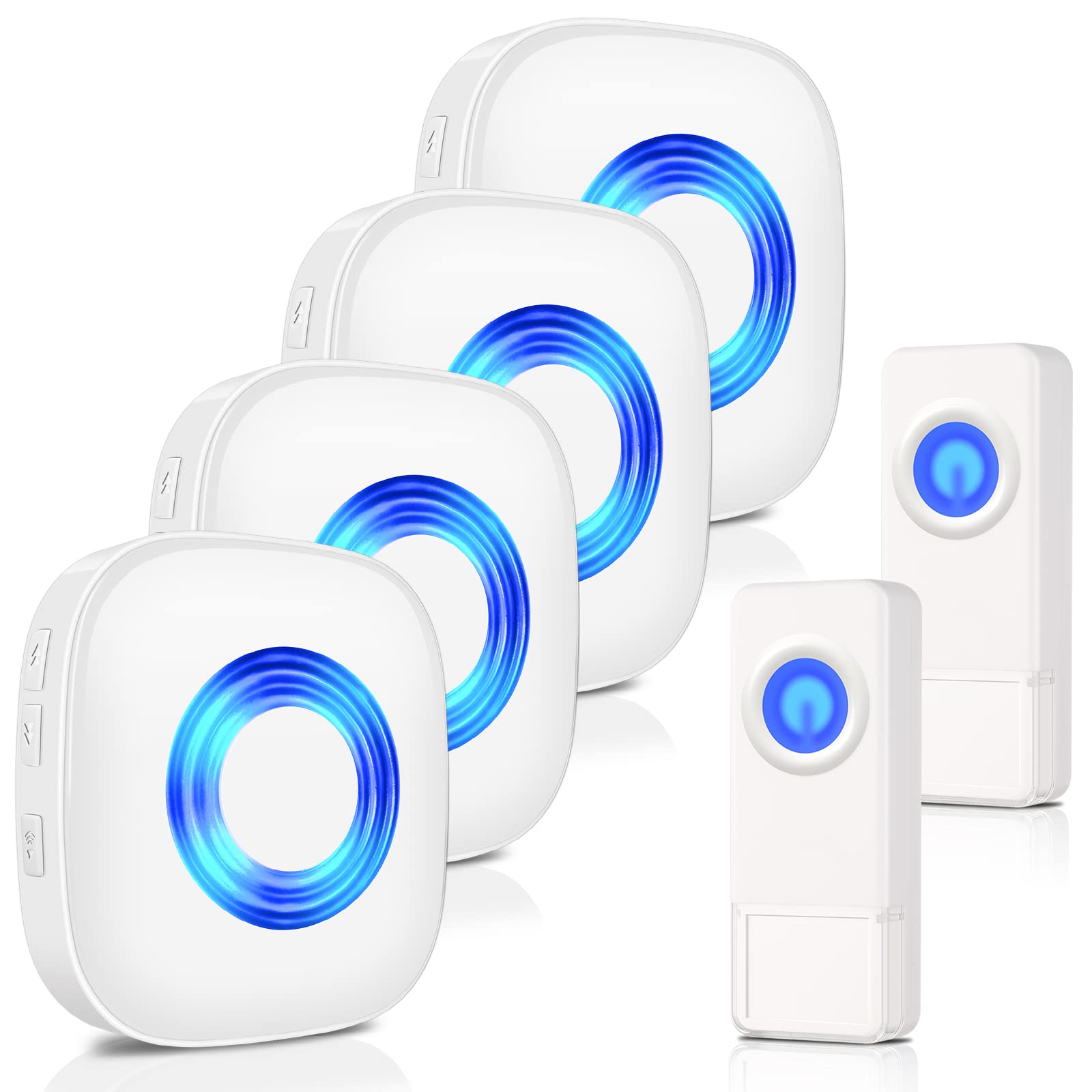
The PHYSEN system provides the most comprehensive coverage of any kit in this lineup, pairing two waterproof push buttons with four plug-in receivers. This allows you to place a receiver in the living room, bedroom, kitchen, and basement — or, as one reviewer demonstrated, in a workshop, barn, and entryway — ensuring no corner of the home is left without an alert. The 1300-foot open-air range gives you substantial headroom for real-world signal penetration through walls and floors.
With 58 melodies and five volume levels reaching up to 110 dB, you can assign a distinct tune for the front door versus the back door. The bright LED flash on each receiver provides the visual cue essential for those with hearing loss. Users consistently report that the system is easy to install, with simple plug-and-play receivers and a self-adhesive or screw-in transmitter. The smart memory feature retains your chosen melody and volume even after a power outage, so you don’t have to re-program it.
One reviewer with a 1.5-year ownership period confirmed the system works perfectly over the long term. The only minor complaint is a desire for an even louder option, though most find the 110 dB maximum sufficient for large homes. The expandable nature of the system means you can add more receivers later if your needs grow.
Why it’s great
- Four receivers provide near-total home coverage without blind spots.
- Assignable ringtones for front and back door help identify visitor location.
- Long-term reliability confirmed by multiple long-time users.
Good to know
- Batteries for the transmitters are not included.
- Receiver plugs into outlet, limiting placement to where an outlet is available.
2. LRA-EX1000S Wireless Doorbell Extender Kit

This is a fundamentally different product — it does not replace your existing wired doorbell but extends its reach by converting the wired chime’s signal into a wireless one. The transmitter wires directly into your current doorbell system, and it sends a signal up to 1000 feet to a plug-in receiver that features a bright strobe flash and adjustable volume up to 95 dB. This is ideal for homeowners who want to keep their existing wired system but need an extra alert in a distant bedroom, workshop, or basement where the original chime cannot be heard.
The receiver offers multiple melody options and supports separate signals for front and back doors. The strobe flash lasts for about 15 seconds, giving the user ample time to notice it from another room. One reviewer successfully used it for a 104-year-old with poor hearing, praising the 15-second song verse combined with the strobe. Another user in a two-floor home confirmed it works at the advertised distance through walls.
Installation requires basic wiring knowledge, as you must connect the transmitter to the doorbell’s internal terminals. The instructions contain a notable typo: the black wire is common (transformer), not the white wire. Users who have wired it correctly report reliable performance. The receiver’s chime has a slightly “tinny” sound, but the combination of volume and strobe ensures it is effective.
Why it’s great
- Converts any existing wired system into a wireless extender.
- Strobe flash and loud chime are effective for severe hearing loss.
- Unlimited expandability allows adding multiple receivers.
Good to know
- Requires wiring knowledge and careful reading of corrected instructions.
- Chime sound quality described as “tinny” by some users.
3. Security2020 WC180 Wireless Door Chime with Flashing Strobe Light

The WC180 is a veteran of the hearing-impaired doorbell market, having been on the market since 2009. It focuses on a simple, reliable formula: a bright strobe flash and a loud 92 dB chime from the plug-in receiver. The strobe can be set to flash alone without sound, which makes it ideal for use in a bedroom where a sleeping partner might not want to be disturbed. The push button is weather-resistant, and the range is listed at 600 feet in an open environment.
This model is UL Listed, a certification that indicates it has been tested for safety and performance standards. It includes 58 selectable melodies, which is a generous number for a device of this age. Reviewers consistently cite its ease of use and effectiveness, with one user noting it solved the problem for a deaf mother living in an independent facility who missed visitors because she could not hear the standard chime over the TV.
The receiver plugs directly into a wall outlet, which means its placement is limited by outlet locations. The strobe is a single white flash, not a multi-color rotating LED, so it may be slightly easier to miss if the user is not facing the receiver.
Why it’s great
- UL Listed for safety and performance assurance.
- Strobe-only mode prevents any sound disturbance.
- Long track record of reliability since 2009.
Good to know
- Single white strobe may be less noticeable than multi-color LEDs.
- Receiver is outlet-dependent, reducing placement flexibility.
4. JSIEEM Wireless Doorbell 2 Buttons 3 Receivers

The JSIEEM kit delivers a compelling value proposition: two push buttons and three plug-in receivers with an impressive 1200-foot open-air range and a maximum volume of 110 dB. It offers 36 melodies and four volume levels, including a silent mode where the receiver flashes without any sound. The three receivers can each be set to a different ringtone, allowing you to distinguish between the front and back door.
One critical detail many buyers miss is the tiny black switch inside the transmitter that activates the battery. The installation instructions do not prominently highlight this, causing initial confusion. Once discovered, pairing is straightforward. Users report that the kit works well for deaf and hard-of-hearing individuals, with the multi-colored flash providing the needed visual cue. The IP44 rating on the button ensures it withstands rain and dust.
Some users noted that the flashing lights could be brighter for better visibility. There is also a report of the device not staying on the selected melody after power cycling, though this appears to be an intermittent issue rather than a widespread defect. For the price, the JSIEEM offers an excellent entry point for a multi-receiver system.
Why it’s great
- Three receivers offer broad coverage at a very competitive price.
- Silent flash mode is useful for bedside or library settings.
- Works reliably for users with moderate to severe hearing loss.
Good to know
- Battery activation switch is poorly documented in manual.
- Flash brightness may be insufficient for some users.
5. CallToU Hearing Impaired Doorbell 1000FT 2 Call Buttons 2 Portable Receivers
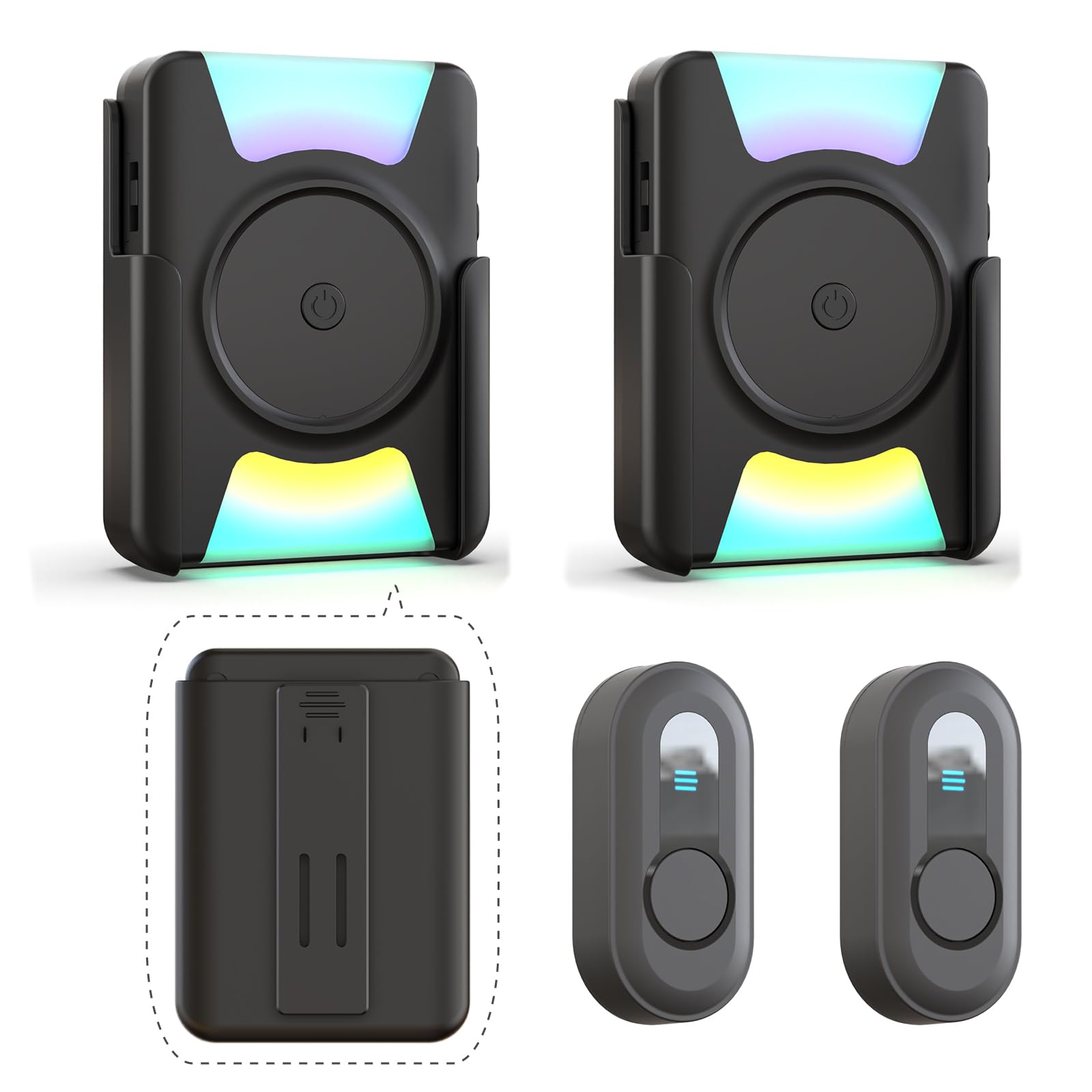
The CallToU system differentiates itself with portable battery-operated receivers that feature a belt clip. This means the user can carry a receiver in their pocket or attach it to a belt loop, ensuring they never miss an alert even if they move from room to room. This is a game-changer for someone who lives alone or who frequently moves between the house and the garage. The receivers use two AAA batteries each, and they are included in the box.
The unit offers four alert modes: ringing plus vibration, ringing plus flashing light, ringing plus vibration plus flashing light, or flashing light only. The vibration mode is particularly useful for those who are profoundly deaf, as it provides a tactile cue that is independent of both sound and sight. The volume is adjustable across five levels up to 110 dB, and the range is listed at 1000 feet in an open environment.
Users consistently rate this product highly for its ease of setup and the independence it provides. One reviewer described it as the “Best Invention Ever,” noting that the combination of flash, ring, and vibration eliminated the need for family members to yell through the house. The only long-term concern is that battery-operated receivers may need periodic battery changes, but the included alkaline batteries provide a good starting lifespan.
Why it’s great
- Portable receivers with belt clips allow on-the-go alerts anywhere in the home.
- Vibration mode provides a tactile cue for profoundly deaf users.
- Four mode combinations allow highly customized alerting.
Good to know
- Receivers require AAA batteries, adding a recurring consumable cost.
- Only two receivers included, limiting coverage in larger homes.
6. SURFOU Doorbell 2 Push Buttons 3 Receivers

The SURFOU kit impresses with its combination of 55 selectable melodies and five volume levels that go from 0 dB to 110 dB. This gives you fine-grained control over the sound signature of your alert. The IP55 rating on the transmitter means it can handle rain and dust without issue, and the operating temperature range of -22°F to 158°F makes it suitable for extreme climates. The package includes three plug-in receivers and two push buttons, along with all necessary mounting hardware and batteries.
One of the standout features is the system’s memory retention: it remembers your last selected melody and volume setting even after a power outage, so you don’t have to re-program it. The flashing LED on each receiver provides the essential visual component. Users with elderly family members report that the volume adjustment is granular enough to find a perfect level, with one reviewer noting it was loud enough for a 97-year-old with significant hearing loss.
The only friction point reported is that the transmitter cover can be difficult to open to access the battery compartment. Once set up, the system is praised for its modern look and reliability, with one user confirming it works flawlessly even after extended use. The expandable nature allows adding more SURFOU receivers and transmitters of the same model if needed.
Why it’s great
- Extensive 55-chime library allows highly personalized alerts.
- Memory retention survives power outages without re-programming.
- IP55 rating and extreme temperature tolerance suit outdoor use.
Good to know
- Transmitter cover is difficult to pry open for battery access.
- Receiver plugs into outlet, limiting placement options.
7. HSYIJIA Loud Flash Doorbell 7 Colors of Bright Light

The HSYIJIA system takes a visually bold approach with its seven-color rotating LED light. Instead of a single white strobe, this unit cycles through red, blue, green, purple, and other colors, making it much harder to ignore from peripheral vision. The kit includes one transmitter and two battery-operated receivers, each requiring three AA batteries. The transmitter uses a single AA battery. The range is listed at 600 feet in an open environment.
The audio side offers 8 musical choices and four adjustable volume levels. The receivers are compact and can be placed on a tabletop or mounted on a wall using the included adhesive tape or screws. Users report that the doorbell effectively alerts their deaf or hard-of-hearing family members, with one reviewer noting that a deaf brother now reliably comes to the door when the bell rings because of the bright flashing light.
There are notable downsides. The flash duration is reported to be less than 30 seconds, which may not be long enough if the user is in another room and not looking at the receiver. Some users also felt the overall brightness and volume were not as strong as competing models in this category. The receivers are battery-powered, which adds a recurring replacement cost, and the system uses a total of seven AA batteries at once, which is higher than average.
Why it’s great
- Seven-color rotating LED is very attention-grabbing and visible from peripheral vision.
- Compact receivers can be tabletop placed or wall-mounted.
- Effective for hard-of-hearing users who respond to color changes.
Good to know
- Flash duration is short, lasting less than 30 seconds.
- Uses seven AA batteries total, creating higher ongoing cost.
FAQ
Can I use a hearing impaired doorbell with a video doorbell like Ring or Nest?
What is the difference between a strobe flash and a multi-color LED flash?
How many receivers do I need for a two-story home?
Is a vibration mode better than a flashing light?
Final Thoughts: The Verdict
For most users, the best doorbell for hearing impaired winner is the PHYSEN 2 Button 4 Receiver system because its four receivers provide whole-home coverage, its volume and flash are powerful enough for significant hearing loss, and its expandability future-proofs the investment. If you need portable receivers that move with the user, grab the CallToU battery-operated kit with its vibration mode and belt clips. And for converting an existing wired doorbell without replacing it, nothing beats the LRA-EX1000S Extender.

Mo Maruf
I created WellFizz to bridge the gap between vague wellness advice and actionable solutions. My mission is simple: to decode the research and give you practical tools you can actually use.
Beyond the data, I am a passionate traveler. I believe that stepping away from the screen to explore new environments is essential for mental clarity and physical vitality.