Our readers keep the lights on and my smoothie glass nicely filled. As an Amazon Associate, I earn from qualifying purchases.
Every time someone steps through your front door, they bring in a layer of grit, mud, grass clippings, and sidewalk grime that lands directly on your floors. A well-chosen scraper mat stops that debris at the threshold before it ever reaches your hardwood, tile, or carpet. The difference between a mat that works and one that just looks good comes down to bristle density, backing grip, and thickness — three specs that determine whether your entryway stays clean or becomes a dirt distribution center.
I’m Mohammad Maruf — the founder and writer behind WellFizz. I’ve spent hundreds of hours analyzing outdoor mat construction, reading verified buyer reports on scraping effectiveness and durability, and comparing natural coir versus rubber and synthetic materials across dozens of models.
This guide breaks down the five best performers in the category, from heavy-duty coir scrapers to all-weather rubber drainage mats, so you can find the right best door mats for your home without second-guessing the specs.
How To Choose The Best Door Mats
Picking the wrong door mat means either it slides around after two days, it fills up with dirt and can’t be cleaned, or the bristles flatten out within a month. Focus on three things — material type, backing grip, and thickness — to avoid those failures.
Material: Coir, Rubber, or Synthetic?
Coir (coconut husk fiber) is the gold standard for scraping dry mud, sand, and grass clippings. The stiff bristles catch debris and trap it below the shoe surface. Rubber mats with drainage holes work better in rainy or snowy climates because water falls through instead of pooling, but they don’t scrape as aggressively. Flat rubber loop mats are quieter underfoot but lack the scraping bite of coir.
Backing Grip: PVC vs. Vinyl vs. Natural Rubber
A mat that slides every time someone steps on it becomes a tripping hazard and stops scraping effectively. Vinyl and PVC backings grip smooth surfaces like tile and hardwood well. Natural rubber backings provide the strongest hold on concrete and wood porch floors but can leave a temporary odor during the first few days in hot weather. Avoid mats with thin felt or foam backings — they shift constantly and wear out fast.
Thickness and Profile for Door Clearance
Most inward-swinging and storm doors clear a mat that is 0.5 inches or thinner. A 0.6-inch coir mat provides more debris-trapping space but may catch under a low-clearance door. Measure the gap between your door bottom and the floor before buying. If you have an exterior door that opens inward with less than a 0.5-inch gap, go with a low-profile rubber mat.
Quick Comparison
On smaller screens, swipe sideways to see the full table.
| Model | Category | Best For | Key Spec | Amazon |
|---|---|---|---|---|
| Rubber-Cal Herringbone Outdoor Scraper | Coir scraper | High-traffic scraping with easy hose cleaning | 0.6″ thick coir, 3.85 lbs | Amazon |
| Yesland Rubber Drainage Mat 36×24 | Drainage rubber | Wet climates, snow, slush, and mud runoff | 0.5″ thick, 7.21 lbs, drainage holes | Amazon |
| Ecomills Coco Coir Doormat 24×36 | Large coir mat | Wide front doors needing maximum coverage | 0.5″ thick, vinyl non-slip backing | Amazon |
| DWKKX Dragonfly Welcome Mat 17×30 | Decorative rubber | Colorful design with reliable grip and easy cleaning | 0.4″ thick, 4.96 lbs, stain resistant | Amazon |
| AMARU DOOR MATS Natural Coir 17×29 | Low-shed coir | Covered entries where minimal fiber shedding matters | 0.6″ thick, PVC non-slip backing | Amazon |
In‑Depth Reviews
1. Rubber-Cal Herringbone Outdoor Scraper Door Mat

The Rubber-Cal Herringbone mat uses dense coir bristles arranged in a classic herringbone pattern that aggressively scrapes mud, sand, seed hulls, and grass off shoe soles. At 0.6 inches thick and weighing 3.85 pounds, it stays planted on the porch even when a Great Dane puppy or a heavy rainstorm hits it. Multiple verified buyers report that it traps a half-gallon of sand outside before needing a hose rinse, and that the bristles remain stiff after repeated washing.
The rubber backing provides solid grip on concrete and wood surfaces, and the open-weave coir construction allows debris to fall through the mat instead of sitting on top. Unlike flat rubber loop mats, the natural fiber bristles dig into caked-on mud and break it loose with one or two steps. The herringbone pattern also adds a subtle textural accent that works with farmhouse, modern, or traditional entryway styles.
One buyer noted that the mat is prickly on bare feet, which is typical of coir but worth knowing if kids or pets frequently walk barefoot past the front door. Cleaning is straightforward: shake it out, sweep it, or hose it down and let it dry in the sun. The coir does not rust, and the rubber backing holds up through freeze-thaw cycles without cracking.
Why it’s great
- Thick 0.6″ coir bristles scrape mud and sand effectively
- Rubber backing keeps mat stable on porch surfaces
- Easy to clean with a hose or broom
- Herringbone pattern adds visual appeal without fading
Good to know
- Coir is prickly on bare feet — not ideal for barefoot entryways
- May shed small amounts of fiber during the first few days
2. Yesland Rubber Door Mat 36 x 24 Inches

The Yesland rubber drainage mat is built for front doors that face rain, snow, slush, and melting ice. It measures 35 by 23 inches with a 0.5-inch thickness and weighs 7.21 pounds — heavy enough to stay put in Colorado-level winds without curling or blowing away. The perforated design uses a grid of holes that let water, snowmelt, and mud fall through to the ground below, keeping the top surface relatively dry and reducing the amount of moisture tracked indoors.
Small pins on the bottom elevate the mat slightly off the floor, creating a drainage gap that prevents standing water from pooling underneath — critical for wood porches that can rot with prolonged moisture exposure. The natural and recycled rubber construction is weather-resistant and does not absorb water, so it won’t become soggy or heavy after a storm. Several buyers purchased multiple mats to use at both front and back doors and in garages.
The trade-off is that the rubber surface does not scrape dry mud as aggressively as coir. It works best for wet conditions where water drainage is the priority, or for areas where coir would stay damp and degrade. The mat lies flat after a break-in period of 12 to 18 months, but can be flipped occasionally to even out wear. Hose cleaning with a brush and detergent restores it to like-new condition.
Why it’s great
- Drainage holes prevent water pooling and keep surface drier
- Heavy 7.21 lbs resists wind movement and curling
- Made from long-lasting natural and recycled rubber
- Excellent for high-moisture climates and snow regions
Good to know
- Rubber may have a temporary smell in hot weather initially
- Not as effective as coir for scraping dry mud and sand
3. Ecomills Coco Coir Doormat 24 x 36 Inches
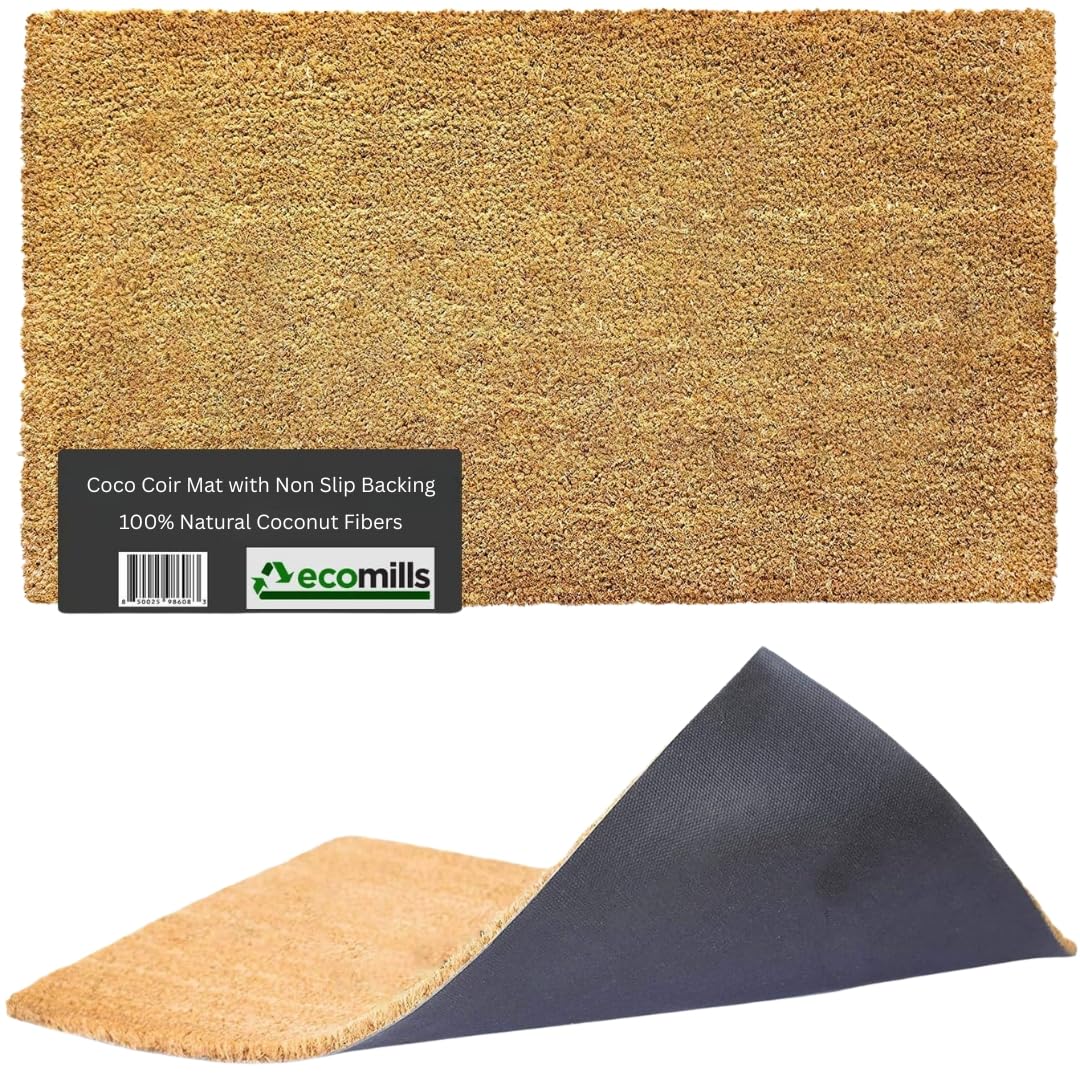
The Ecomills coir mat covers a wide 24-by-36-inch area, making it one of the largest standard sizes available for residential front doors. The dense natural coconut fiber bristles scrape grass clippings, dirt, and sand off shoe soles effectively, as reported by buyers who use it for removing lawn debris before entering. The reinforced vinyl backing grips tile, hardwood, laminate, and concrete surfaces without sliding, bunching, or requiring rug tape underneath.
At 0.5 inches thick, the mat clears most inward-swinging and storm doors without catching, while still providing enough bristle depth to trap loose grit below the shoe level. Reviewers noted that the mat stays flat even in strong winds and lies flush with the ground from day one — no curling at the corners. The coir sheds minimally compared to some other natural fiber mats, especially after the first few days of use.
Cleaning involves shaking or vacuuming the surface to lift trapped dirt. The mat is not water-resistant, so it should be placed in a covered or sheltered spot rather than directly in the rain. Buyers who used it on uncovered porches found that the coir absorbed moisture and took longer to dry, which can reduce lifespan. For exposed entries, pairing it with a rubber drainage mat underneath is a practical solution.
Why it’s great
- Large 24×36 size covers wide doorways and catches multiple steps
- Vinyl backing grips strongly without sliding
- Low shedding after initial break-in period
- Stays flat with no curling or bunching out of the box
Good to know
- Not water-resistant — needs a covered or sheltered location
- Harder to clean out fine debris like dog hair and sand
4. DWKKX Dragonfly Welcome Mat 17 x 30 Inches

The DWKKX Dragonfly mat combines a cheerful printed design with the practical benefits of a heavy-duty rubber construction. It measures 17 by 30 inches with a 0.4-inch thickness and weighs nearly 5 pounds, giving it enough heft to resist sliding and wind movement. The rubber material is stain-resistant and designed not to fade or wear after prolonged sun exposure, which buyers confirmed after multiple rainstorms and months of outdoor use.
The grooved surface removes debris from shoe soles effectively, though the scraping action is gentler than coir. Buyers praised the muted sunflower and dragonfly colors as matching brick, stone, and painted porch surfaces while staying cheerful and welcoming. The non-slip backing keeps the mat firmly anchored on tile, hardwood, and concrete, reducing the risk of slips or tripping.
At 0.4 inches thick, this mat is thinner than the coir options, which means it clears low-clearance doors more easily but traps less debris overall. Cleaning is simple — a broom, vacuum, or garden hose rinse restores the surface quickly. The design element makes it a strong choice for homeowners who want their entryway to make a visual statement without sacrificing functional scraping performance.
Why it’s great
- Attractive printed design that does not fade in sunlight
- Stain-resistant rubber material holds up to rain and mud
- Thin 0.4″ profile clears low-clearance doors easily
- Non-slip backing keeps mat stable on multiple surfaces
Good to know
- 0.4″ thickness traps less debris than thicker coir mats
- Rubber surface provides gentler scraping than natural bristles
5. AMARU DOOR MATS Natural Coir Welcome Mat 17 x 29 Inches

The AMARU DOOR MATS coir mat stands out because it sheds far fewer coconut fibers than typical natural bristle mats. Multiple verified buyers specifically called out the minimal shedding as the reason they chose it over other coir options — the fibers stay locked into the mat rather than drifting across the porch. At 0.6 inches thick with a PVC non-slip backing, it provides the same aggressive scraping power as other thick coir mats without the mess of loose fiber tufts on the doorstep.
The 17-by-29-inch size fits standard residential front doors well, and the welcome letter print offers a classic front-door aesthetic that matches brick, siding, and painted trim. The PVC backing grips concrete, tile, and wood floors securely, preventing the mat from sliding when someone steps on it. Buyers noted that the mat remains flat and durable after weeks of regular use, with no curling or bunching at the edges.
One drawback is that the mat is slightly smaller than expected for some buyers who measured their space inaccurately — verify your doorway width before purchasing. The natural coir is not water-resistant, so it performs best under a covered porch or awning. Cleaning is straightforward: shake it out or vacuum it to remove trapped dirt. The minimal shedding makes it a cleaner, more polished option for entryways where fiber debris would be a nuisance.
Why it’s great
- Very low shedding compared to standard coir mats
- 0.6″ thick bristles scrape mud and sand aggressively
- PVC non-slip backing stays anchored on hard surfaces
- Classic welcome print fits traditional entryway styles
Good to know
- Not water-resistant — best for covered or sheltered entries
- Size runs slightly smaller than some buyers expect
FAQ
How often should I clean a coir door mat?
Can I use a coir mat on an uncovered porch in the rain?
Why does my new coir mat shed fibers everywhere?
Final Thoughts: The Verdict
For most users, the best door mats winner is the Rubber-Cal Herringbone Outdoor Scraper because its 0.6-inch coir bristles provide aggressive scraping performance for dry mud and sand, the rubber backing keeps it stable in wind, and hose cleaning makes maintenance simple. If you live in a rainy or snowy climate, grab the Yesland Rubber Drainage Mat for its perforated design that prevents water pooling. And for wide front doors needing maximum coverage, nothing beats the Ecomills Coco Coir Doormat 24×36 for its oversized footprint and vinyl non-slip backing.

Mo Maruf
I created WellFizz to bridge the gap between vague wellness advice and actionable solutions. My mission is simple: to decode the research and give you practical tools you can actually use.
Beyond the data, I am a passionate traveler. I believe that stepping away from the screen to explore new environments is essential for mental clarity and physical vitality.