Our readers keep the lights on and my smoothie glass nicely filled. As an Amazon Associate, I earn from qualifying purchases.
That thin, lifeless sound from your phone’s headphone jack isn’t a hardware limitation — it’s a power and decoding bottleneck. A dedicated dongle DAC bypasses your device’s noisy internal circuitry, replacing it with a clean analog signal path and enough amplification to actually wake up demanding IEMs and full-size headphones.
I’m Mohammad Maruf — the founder and writer behind WellFizz. I’ve spent hundreds of hours cross-referencing DAC chip implementations, output impedance measurements, and real-world compatibility reports to separate the dongles that genuinely upgrade your listening experience from the ones that just add bulk to your pocket.
The goal is to cut through the marketing noise and find the best dongle dac that matches your specific gear, whether you need balanced output for high-impedance headphones or a compact design that won’t interfere with your phone case.
How To Choose The Best Dongle DAC
Not all dongle DACs are created equal. A cheap adapter might give you a headphone jack, but a proper DAC dongle delivers real decoding, amplification, and a clean signal path. Here’s what separates a good investment from a wasted one.
DAC Chip and Decoding Capabilities
The DAC chip (digital-to-analog converter) is the heart of the dongle. Chips like the Cirrus Logic CS43131 or CS43198 are widely regarded as the gold standard for portable use, offering low noise floors and high dynamic range. Look for support for PCM up to 32-bit/384kHz and DSD256 or higher — these specs ensure the dongle can handle high-resolution audio files from services like Tidal Master or local FLAC libraries without downsampling.
Output Power and Amplification
Output power measured in milliwatts (mW) tells you how loud the dongle can drive your headphones. For sensitive IEMs, even 30-40mW is enough. But for high-impedance headphones like the Sennheiser HD 600 (300 ohms) or planar magnetic models like the Hifiman Edition XS, you’ll want at least 200mW into 32 ohms. Balanced 4.4mm outputs typically double the power compared to 3.5mm single-ended, making them essential for demanding full-size cans.
THD+N and Signal-to-Noise Ratio
Total Harmonic Distortion plus Noise (THD+N) and Signal-to-Noise Ratio (SNR) measure signal purity. A THD+N of 0.001% or lower ensures you hear the music, not the electronics. SNR above 120dB means the background is dead silent — no hiss, no hum, no electronic artifacts. These specs matter most if you listen to quiet acoustic passages or use highly sensitive multi-driver IEMs that can expose every imperfection in the signal chain.
Quick Comparison
On smaller screens, swipe sideways to see the full table.
| Model | Category | Best For | Key Spec | Amazon |
|---|---|---|---|---|
| FiiO KA15 | Premium | High-impedance headphones with desktop-class power | 560mW+560mW balanced, 4.4mm output | Amazon |
| Fosi Audio DS2 | Premium | Clean neutral sound with dual CS43131 chips | 130dB SNR, 0.0001% THD+N | Amazon |
| MOONDROP Dawn PRO 2 | Mid-Range | App-based PEQ tuning and balanced output | 4Vrms output, 100-level volume control | Amazon |
| HiBy FC4 | Mid-Range | On-device screen, PEQ, and gaming console support | Dual CS43131, MQA 8X unfolding | Amazon |
| FiiO JadeAudio KA1 | Mid-Range | Ultra-compact all-metal MQA-ready dongle | MQA 8x rendering, DSD512 decoding | Amazon |
| FiiO KA11 | Budget | Entry-level HiFi with strong PS5/Switch compatibility | 245mW @ 16Ω, 125dB SNR | Amazon |
| Linsoul Kiwi Ears Allegro Mini | Budget | Ultra-portable dual output (3.5mm + 4.4mm) for IEMs | 0.004% THD+N, aluminum alloy body | Amazon |
In‑Depth Reviews
1. FiiO KA15
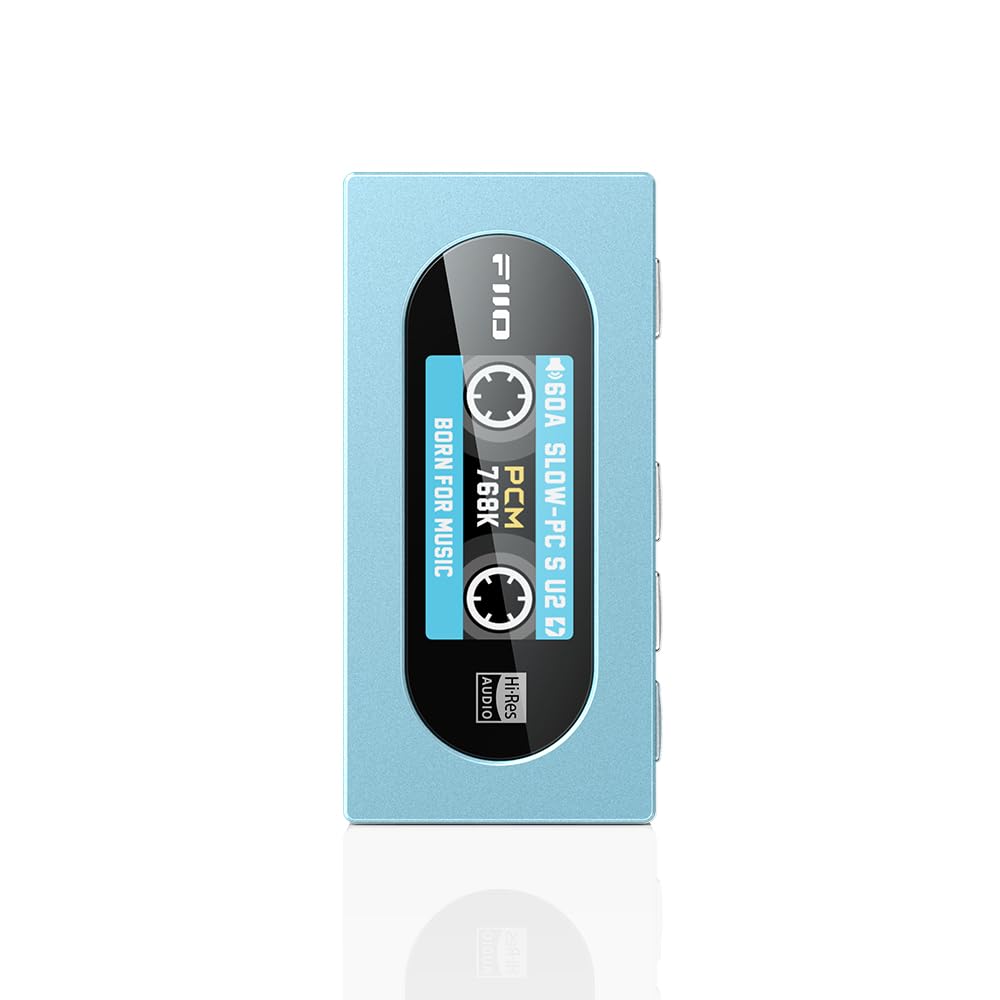
The FiiO KA15 is a genuine powerhouse in a compact shell. Its dual CS43198 DAC chips and SGM8262 op-amps deliver a staggering 560mW per channel on the 4.4mm balanced output — enough to drive high-impedance headphones like the Sennheiser HD 600 or planars like the Hifiman Edition XS with authority. The 0.96-inch IPS color screen adds a retro tape-deck aesthetic while providing intuitive access to settings like gain, EQ, and UAC mode.
What sets the KA15 apart is its patented Desktop Mode, which unlocks the full power output and makes it a genuine alternative to a dedicated desktop amplifier. The detachable USB cable adds versatility, and the app-based PEQ (10-band, lossless) lets you fine-tune the sound signature for any headphone. Real-time power monitoring intelligently adjusts consumption, so battery drain on your phone is surprisingly modest during normal listening.
A few quirks exist — some users report that the unit sometimes needs a button toggle to power on, and the stiff stock cable can strain phone USB ports. But the sheer power, excellent sound quality, and feature depth make the KA15 the most versatile dongle DAC on this list.
Why it’s great
- Desktop-level balanced output (560mW per channel)
- IPS color screen with intuitive controls and retro UI
- 10-band lossless PEQ via FiiO Control app
- Detachable USB cable supports multiple devices and UAC 1.0
Good to know
- Stiff stock cable may stress phone USB ports
- Occasional power-on glitch requires a button press
- Some users report audio delay on non-music apps
2. Fosi Audio DS2

The Fosi Audio DS2 is built around dual Cirrus Logic CS43131 DAC chips, and the numbers tell the story — a noise floor of just 1µV, THD+N of 0.0001%, and SNR of 130dB. In plain terms, this means the signal is so clean that you hear only the recording, not the electronics. The DS2 delivers 170mW per channel into 32 ohms, which is ample for most IEMs and efficient over-ear headphones via the 4.4mm balanced output.
The all-metal CNC-machined housing feels dense and premium, and the independent 60-step volume buttons with memory function give you precise level control without tapping your phone screen. Compatibility spans iPhone 15, Android, PS5, and PC — it’s a true universal companion. Reviewers consistently note that the DS2 makes streaming services like Spotify sound nearly indistinguishable from high-res FLAC files, a testament to its transparent presentation.
The included USB-C cable is a weak point — it’s short and feels cheap compared to the dongle’s build quality. Replacing it with a higher-quality OTG cable improves both durability and connection stability.
Why it’s great
- Ultra-low noise floor (1µV) and THD+N (0.0001%)
- Premium CNC-machined metal housing
- Independent 60-step volume buttons with memory
- Works seamlessly with iPhone, Android, PS5, and PC
Good to know
- Included USB-C cable is noticeably cheap
- Significant battery drain on phones (up to 16% per 2 hours)
- App-based EQ (via HiBy app) can be buggy
3. MOONDROP Dawn PRO 2
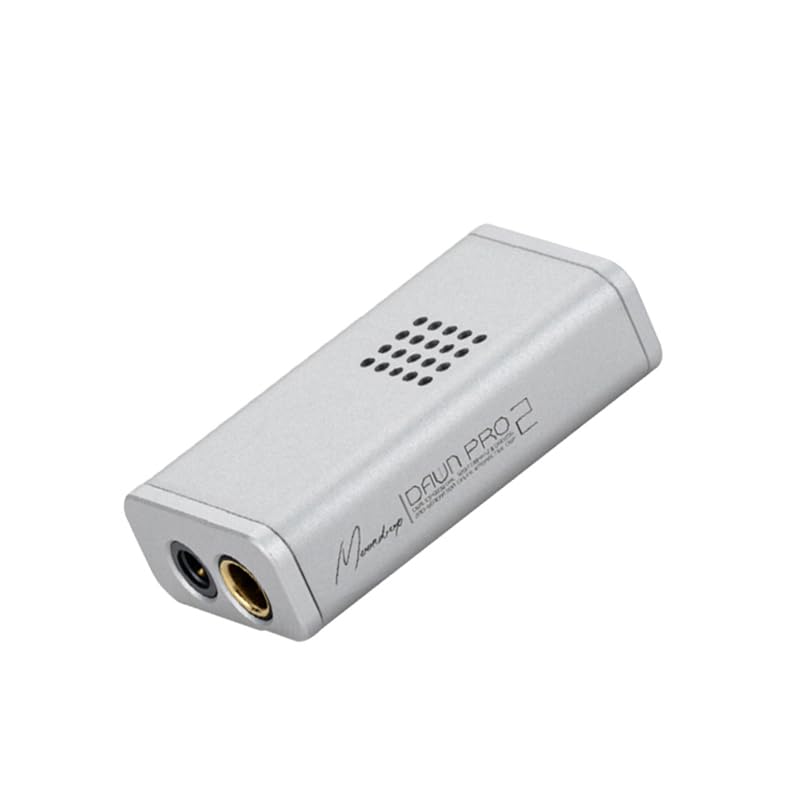
MOONDROP’s Dawn PRO 2 uses dual flagship CS43198 DAC chips with three independent LDO power regulators to isolate the digital and analog stages. The result is a 4Vrms output voltage that delivers 124mW per channel into the 4.4mm balanced jack — enough to power demanding IEMs like the Moondrop S8 or full-size headphones like the Focal Clear with authority. The aviation-grade aluminum alloy housing with vented heat dissipation keeps thermals in check, even during extended listening sessions.
The standout feature is the MOONDROP Link app, which provides a professional-grade parametric equalizer interface. You can adjust filter type, frequency, gain, and Q value with precision, and access a community headphone frequency response database for reference tuning. The 100-level DAC volume control operates independently from your phone, preserving dynamic range at lower listening levels — a subtle but meaningful advantage over phone-controlled volume.
A common gripe is that the EQ resets to factory defaults every time the dongle is unplugged, which can be frustrating if you rely on custom tunings. Some units also exhibit a finicky 4.4mm connection where the cable needs to be slightly pulled back to seat properly — an annoyance that points to QC inconsistency.
Why it’s great
- Professional-grade PEQ via MOONDROP Link app with community database
- 100-level independent DAC volume control preserves dynamics
- 4Vrms output voltage drives demanding headphones
- Heat-dissipating vented aluminum chassis
Good to know
- EQ resets to factory settings each time you unplug
- 4.4mm connection can be finicky on some units
- QA consistency reported as variable by some buyers
4. HiBy FC4
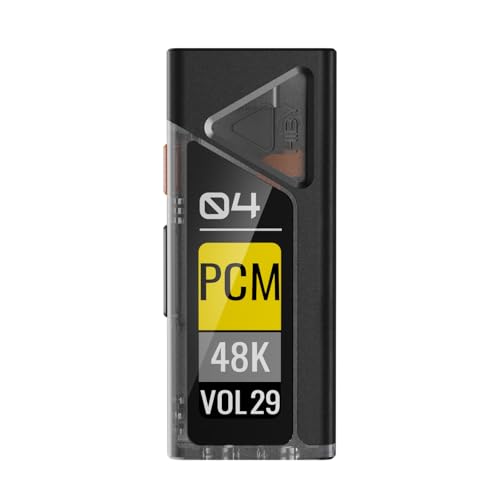
The HiBy FC4 packs dual CS43131 DACs, MQA 8X unfolding, and a 1.1-inch color OLED screen into a 21-gram package — one of the most feature-dense dongles at this price point. The screen displays sample rate, volume level, gain setting, and even a basic menu for switching between the eight built-in EQ presets or the fully customizable parametric EQ. The combination of aluminum alloy and translucent PC materials gives it a cyber-mechanical aesthetic that stands out visually.
Support for UAC 1.0 and UAC 2.0 means it works with PlayStation consoles, Nintendo Switch, and legacy equipment — a rare combination in a dongle this small. The 3.5mm single-ended and 4.4mm balanced outputs cover all headphone types, and the dual femtosecond-grade crystal oscillators (45.1584MHz and 49.152MHz) minimize jitter for sample-accurate timing. Users driving DT990 250 ohm or HD 660S report ample headroom on balanced output.
The FC4 has some quirks — it doesn’t play well with Sony’s Android-based Walkmans (A306), and the on-screen interface, while functional, feels a bit cramped due to the small screen size. But for mobile, PC, and console use, it’s a versatile, well-priced option with genuine tuning flexibility.
Why it’s great
- Integrated OLED screen for real-time status and menu navigation
- MQA 8X unfolding for Tidal Master subscribers
- UAC 1.0 support for PS5, Switch, and legacy gaming
- Built-in PEQ and eight EQ presets from HiBy’s tuning team
Good to know
- Known compatibility issues with Sony A306 and certain DAPs
- Small screen interface can feel cramped
- Sound quality comparable to cheaper alternatives without tuning features
5. FiiO JadeAudio KA1

The FiiO KA1 is remarkably small — 43mm long and just 10 grams — but it punches well above its weight class. It supports MQA 8x rendering, PCM up to 32-bit/384kHz, and DSD512 decoding, making it a fully capable hi-res USB dongle for streaming Tidal Masters or playing local DSD files. The all-metal aluminum chassis feels premium and helps dissipate heat, which is important since the KA1 runs warm — especially at higher sample rates.
Sound quality is clean and balanced, with a noticeable improvement in soundstage width and instrument separation compared to standard phone dongles. It drives the Audio-Technica ATH-M50x and Sennheiser HD 560S with ample volume — you won’t need to max out the volume slider even with 150-ohm headphones. The included braided USB-C cable is a nice touch, though it’s attached permanently, which limits replacement options.
The main downside is the cable’s durability — several reviews note that the cable lacks proper strain relief and can fail after a few months of daily pocket carry. The FiiO Control app is also essentially useless, offering minimal functionality and a dated interface, but the dongle works perfectly without it.
Why it’s great
- Ultra-compact form factor (43mm, 10g) for zero-bulk carry
- Full MQA 8x rendering and DSD512 support
- All-metal construction dissipates heat well
- Clean, neutral sound with improved soundstage over phone jacks
Good to know
- Attached cable lacks strain relief, prone to failure
- FiiO Control app is poorly designed and nearly useless
- Runs warm, especially during high-resolution playback
6. FiiO KA11

The FiiO KA11 is the entry-level champion of this list. Powered by a single CS43131 DAC chip, it delivers 245mW into 16 ohms and 200mW into 32 ohms — enough to drive the Hifiman Edition XS and Sennheiser HD 560S well past comfortable listening levels. The THD+N of less than 0.0006% and SNR of 125dB ensure a clean, noise-free background that makes the most of budget IEMs like the Moondrop Chu II or 7Hz Zero.
A key feature for gamers is UAC 1.0 support, which you can toggle via the FiiO Control app. This makes the KA11 plug-and-play with the Nintendo Switch and PS5 — a rare feature at this price point. The build is solid, with a matte finish and a lightweight 8.5-gram body that barely adds weight to your phone. Many users report that the KA11 sounds nearly as good as the more expensive KA13, with even higher volume output in some cases.
Reliability is the elephant in the room. Several reports indicate that units can fail after 2-3 months due to loose internal wiring connections. The always-on blue LED is also a complaint — it’s bright enough to be annoying in a dark room and cannot be disabled.
Why it’s great
- Excellent power output for its size and price tier
- UAC 1.0 support for Switch, PS5, and gaming consoles
- Clean, neutral sound with low noise floor
- Lightweight and compact at just 8.5 grams
Good to know
- Reported reliability issues — some units fail after months of use
- Always-on blue LED is bright and cannot be turned off
- Could benefit from a replaceable cable design
7. Linsoul Kiwi Ears Allegro Mini
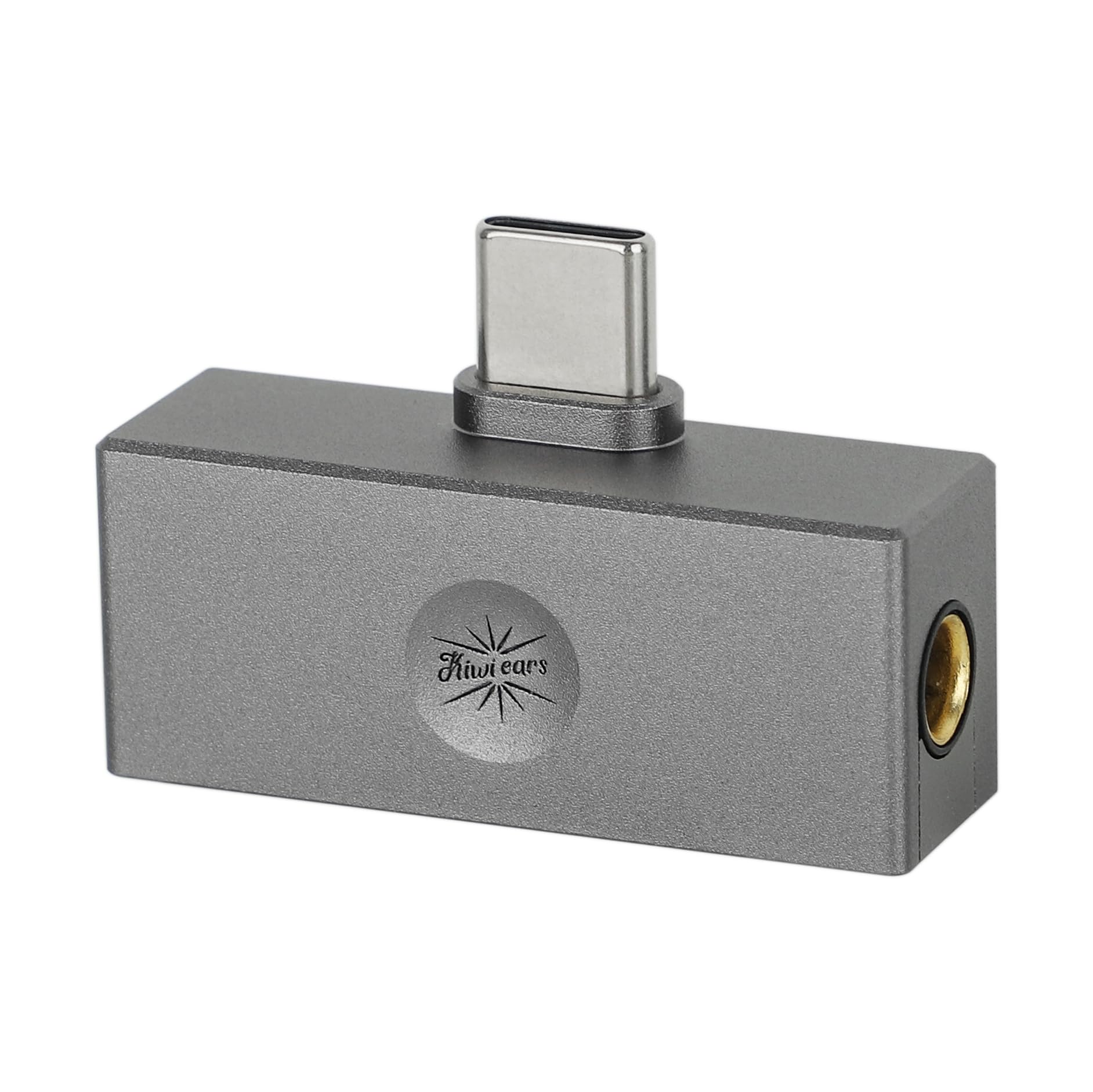
The Kiwi Ears Allegro Mini is one of the most affordable dongles to offer both 3.5mm single-ended and 4.4mm balanced outputs in a single unit. The aluminum alloy body feels dense and durable, and the total absence of a pigtail wire — the USB-C connector is rigidly attached to the body — eliminates the most common point of failure in dongle DACs. It supports PCM up to 32-bit/384kHz and DSD128, which covers most high-resolution streaming needs.
Measured THD+N of 0.004% at 32 ohms is respectable for the price tier — not as vanishingly low as the Fosi DS2 or FiiO KA15, but well below audibility thresholds. The sound signature is transparent with adequate power for IEMs and moderately efficient over-ears. Users report that it drives the Moondrop Chu II, 7Hz Zero, and even the Sennheiser HD 599 with enough headroom for comfortable listening. The compact size (no wider than a standard USB-C plug) fits easily into medium phone cases without blocking adjacent ports.
The lack of an integrated cable is a design trade-off — while it avoids cable failure, it also means the dongle protrudes straight out, which can interfere with one-handed phone use or pocket storage. Some users also note that it offers no audible improvement over their phone’s existing 3.5mm jack, meaning its value depends entirely on having a phone without a built-in headphone jack.
Why it’s great
- Dual 3.5mm and 4.4mm outputs at an entry-level price
- Rigid no-pigtail design eliminates cable failure
- Compact size fits easily into phone cases with USB-C cutouts
- Solid aluminum alloy construction
Good to know
- Not a meaningful upgrade if your phone has a decent 3.5mm jack
- Straight rigid design can interfere with one-handed phone grip
- Power output is modest compared to similarly priced competitors
FAQ
Will a dongle DAC improve sound quality on my phone?
What is the difference between 3.5mm single-ended and 4.4mm balanced output on a dongle?
Is MQA support still relevant for a dongle DAC in 2025?
Does a dongle DAC drain a phone’s battery significantly?
Final Thoughts: The Verdict
For most users, the best dongle dac winner is the FiiO KA15 because it combines desktop-level power, a feature-rich app with lossless PEQ, and a compact design that doesn’t compromise on audio quality. If you want the cleanest signal path with vanishingly low distortion, grab the Fosi Audio DS2. And for a budget-friendly entry point with dual outputs and a no-pigtail design, nothing beats the Linsoul Kiwi Ears Allegro Mini.

Mo Maruf
I created WellFizz to bridge the gap between vague wellness advice and actionable solutions. My mission is simple: to decode the research and give you practical tools you can actually use.
Beyond the data, I am a passionate traveler. I believe that stepping away from the screen to explore new environments is essential for mental clarity and physical vitality.