Our readers keep the lights on and my smoothie glass nicely filled. As an Amazon Associate, I earn from qualifying purchases.
Forget the plastic-lined electric rice cooker sitting on your counter. A true donabe rice cooker uses porous clay to circulate steam, producing individual grains with a firm bite and a nutty aroma that no machine can replicate. The direct-fire heat toasts the bottom layer into a delicate golden crust called okoge, transforming a basic side dish into the centerpiece of the meal.
I’m Mohammad Maruf — the founder and writer behind WellFizz. I’ve spent countless hours cross-referencing Banko-yaki and Tokoname-yaki certifications, measuring actual capacity against stated specs, and reading customer feedback on heat retention and durability across dozens of clay pot models.
This guide breaks down the seven most compelling options on Amazon, from single-serving lapis-glazed pots to family-sized double-lid cookers, helping you find the best donabe rice cooker for your kitchen habits and stovetop setup.
How To Choose The Best Donabe Rice Cooker
A donabe is not a set-it-and-forget-it appliance. The clay body absorbs water during soaking and releases steam during cooking, which means material quality, lid design, and capacity all directly affect the final texture of your rice. Focus on these three factors before you buy.
Capacity and Serving Size
Donabe sizes are traditionally measured in go (roughly 180 mL), where one go equals one cup of uncooked rice. A No. 6 size (0.89 L) handles 1 cup of raw rice — perfect for singles or a couple. A No. 9 size (3.2 L) serves 4–5 people. Buying a pot that is too large leaves excess air space that disrupts steam circulation, leading to uneven cooking. Match the pot to your typical batch, not your maximum need.
Glaze Type and Lid Configuration
A fully glazed interior is easier to clean but does not allow the clay to breathe or absorb moisture, which reduces the classic fluffy texture. A semi-glazed or unglazed interior provides better moisture management at the cost of more careful cleaning — you must dry it thoroughly to avoid mold. Double-lid designs (an inner lid that sits directly on the rice and an outer lid) trap steam more efficiently, producing a texture closer to a pressure cooker without the metal parts.
Heat Source Compatibility
Almost all donabe pots are designed for direct flame — gas stoves only. Very few are induction-compatible because the clay body lacks the ferrous metal needed for magnetic coupling. If you have an induction cooktop, you must either use a gas flame adaptor plate or choose a pot explicitly labeled for induction. Oven-safe ratings apply mostly to low-temperature holding, not high-heat baking.
Quick Comparison
On smaller screens, swipe sideways to see the full table.
| Model | Category | Best For | Key Spec | Amazon |
|---|---|---|---|---|
| Ginpo Chrysanthemum Double Lid | Premium | Best Overall Rice Texture | Double-lid design / 1.8 L capacity | Amazon |
| Ginpo Chrysanthemum Single Pot | Mid-range | Solo Living / Microwave Meals | 0.89 L / Lapis glaze | Amazon |
| TIKUSAN Banko Ware | Mid-range | Authentic Hot Pot & Rice | 30 fl oz / 997 g weight | Amazon |
| Ginpo Hanamishima Deep Pot | Mid-range | Family Hot Pot & Soups | 3.2 L / 4–5 servings | Amazon |
| JapanBargain Donabe | Budget-friendly | Entry-level / 1–2 People | 9.25 in diameter / 5 lb water | Amazon |
| lake tian Green Pot | Mid-range | Stovetop Stews & Hotpot | 2.1 QT / Anti-spill rim | Amazon |
| lake tian Flower Pot | Budget-friendly | Large Batch / Decorative | 3.4 QT / Flower pattern | Amazon |
In‑Depth Reviews
1. Ginpo Pottery Chrysanthemum Double Lid Rice Pot

This is the setup that serious rice cooks gravitate toward. The double-lid system — a solid ceramic inner lid that presses directly onto the grains and a domed outer lid — traps steam so effectively that the rice steams rather than boils, producing individual grains that separate cleanly without turning mushy. The 1.8-liter capacity (roughly 3 cups raw rice) hits the sweet spot for two to four servings, and the deep lapis-blue glaze makes it a table-ready serving vessel.
Customers consistently report that the learning curve is real — you need to dial in your flame height and resting time — but once you do, the texture rivals high-end IH electric cookers. The inner lid prevents boil-over, a common frustration with single-lid donabe. Made from Banko-yaki ceramic, the pot handles direct gas flame without cracking, though it is not induction-compatible.
Several users noted the missing English manual as a minor inconvenience, and the glazed interior means you lose some of the moisture-wicking benefits of unglazed clay. But for pure rice performance in a beautiful package, this double-lid design is the definitive choice.
Why it’s great
- Double-lid design produces consistently fluffy, separate grains.
- Banko-yaki ceramic resists thermal shock on gas stoves.
- 1.8 L capacity suits couples and small families.
Good to know
- No English manual included — requires trial-and-error flame timing.
- Full glaze makes cleaning easy but reduces clay breathability.
- Not compatible with induction cooktops.
2. Ginpo Pottery Chrysanthemum Single Pot (No. 6)

At 0.89 liters, this No. 6 pot is tailor-made for the solo diner or the first-time donabe buyer. The lapis-blue glaze is striking — a translucent cobalt that shifts in the light — and the wide, shallow shape allows rice to cook evenly in about 30 minutes from start to table. The simple “kill the heat when you see steam” method means you do not need a timer or a thermometer.
What elevates this pot beyond a basic clay bowl is its microwave compatibility. Customers report using it to reheat frozen meals, steam vegetables, and even prepare single-serving soups directly on the stovetop. The glazed interior rinses clean with minimal effort, and the lead-free certification removes a common health concern with imported ceramics.
The trade-off is capacity — you cannot cook more than one cup of raw rice, and the single lid offers no pressure-like steam retention. Some early batches showed variations in glaze thickness, but recent production appears consistent. For anyone cooking for one, this is an ideal entry point.
Why it’s great
- Perfect single-serving size — 1 cup raw rice in 30 minutes.
- Microwave-safe for reheating and steaming versatility.
- Lead- and cadmium-free certification for health safety.
Good to know
- Single lid lacks the steam-trapping efficiency of double-lid models.
- Limited to one serving — not practical for guests.
- Some units have minor glaze inconsistencies.
3. TIKUSAN Donabe Japanese Hot Pot Banko Ware (6 go)

TIKUSAN specializes in authentic Banko-yaki pottery from Yokkaichi, Mie Prefecture, and this 6-go (30 fl oz) donabe reflects that heritage. The matte gray ceramic feels substantial — 998 grams — without being cumbersome. The 7.5-inch diameter and 6.7-inch height make it a natural fit for tabletop hot pot sessions where the pot stays on a portable burner.
Customer feedback centers on two strengths: heat retention and versatility. The thick walls hold temperature long after the flame is off, making it excellent for simmered dishes like nabemono or braised root vegetables. For rice, the wide opening allows easy access for stirring, though the single lid means you must watch for boil-over more carefully than with a double-lid design.
The hard no here is induction compatibility — this pot is gas-only, and the painted finish may show minor crazing over time with aggressive heat cycling. The fully glazed interior is easy to clean, and the handmade nature means slight asymmetry is normal, not a defect.
Why it’s great
- Thick Banko-yaki walls provide excellent heat retention after cooking.
- Lightweight 998 g makes filling and serving easy.
- Versatile size for rice, hot pot, and winter stews.
Good to know
- Only compatible with gas stoves — not induction safe.
- Single lid design requires closer monitoring during rice cooking.
- Painted finish may develop hairline cracks over time.
4. Ginpo Hanamishima Earthenware Deep Pot (No. 9)

At 11 inches wide and 6.5 inches tall, the Hanamishima No. 9 is a heavy-duty vessel built for family-scale meals. The 3.2-liter capacity comfortably handles 4–5 servings of rice, congee, or hot pot, and the textured gray ceramic exterior hides stains better than glossy glazes. Ginpo’s 90-year legacy in Banko-yaki production is evident in the even wall thickness and secure-fitting lid.
Buyers consistently praise this pot for soup and stew applications, noting that the deep shape prevents splattering and that the heat-retaining ceramic keeps food piping hot at the table for 20 minutes after the flame is off. For rice, the wide surface area distributes heat evenly, though users report that food can stick to the bottom if the flame is too high — a common trait of clay pots.
Durability concerns surfaced in a minority of reviews, with a few users reporting small pinholes developing after several months. The heavy 2.72 kg weight requires two hands when full, and like most Banko yaki, it requires a gas flame — induction is not supported.
Why it’s great
- Large 3.2 L capacity serves 4-5 people comfortably.
- Ginpo’s Banko-yaki ceramic offers proven durability.
- Deep shape excels for family hot pot and soup meals.
Good to know
- Heavy at 2.72 kg — awkward to move when full.
- Some units reported developing pinholes over extended use.
- Requires a gas flame; induction and electric cooktops not compatible.
5. JapanBargain Donabe Clay Pot (No. 8)
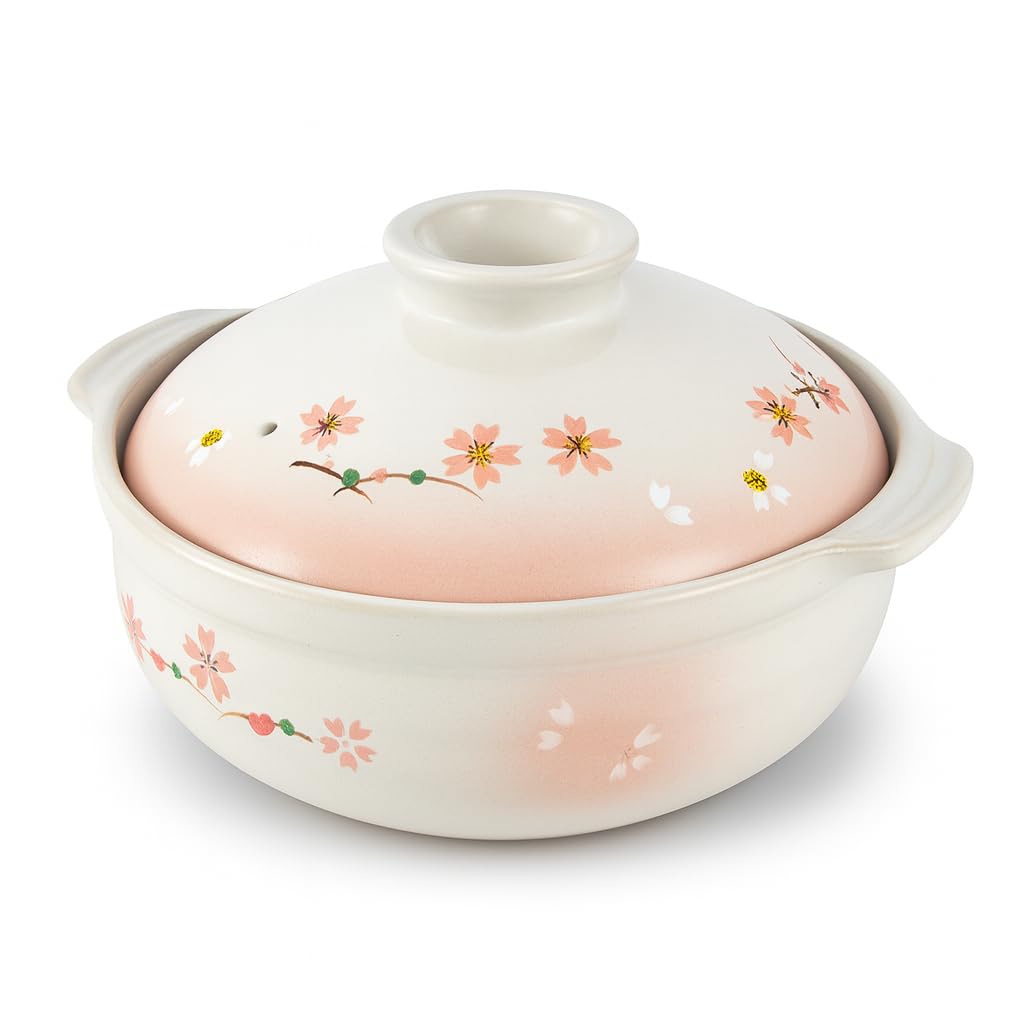
The JapanBargain donabe is a no-frills clay pot built for value-conscious buyers. At 9.25 inches inner diameter, it holds roughly 5 pounds of liquid, making it suitable for one to two servings of rice or hot pot. The unglazed clay body — a rarity at this price point — allows the pot to absorb moisture during soaking and release it during cooking, producing better steam circulation than fully glazed alternatives.
Long-term owners report using this same pot for a decade, noting that the clay develops a creamy pink patina over time. The dishwasher-safe claim is a practical advantage for daily use, though seasoned donabe users generally recommend hand washing to preserve the clay’s porous nature. Performance on electric stoves is surprisingly good, with even heat distribution across the flat base.
The catch is country of origin — the “JapanBargain” branding implies Japanese manufacture, but the pot is actually made in China. Some customers deduct stars for this misleading labeling. The unfinished rim may also be prone to chipping if handled roughly.
Why it’s great
- Unglazed clay interior provides superior steam circulation.
- Exceptional longevity — owners report 10+ years of use.
- Works on both gas and electric stovetops.
Good to know
- Made in China despite “JapanBargain” brand name.
- Unfinished rim can chip if mishandled.
- Small 1-2 person capacity limits batch cooking.
6. lake tian Green Ceramic Cooking Pot (2.1 QT)
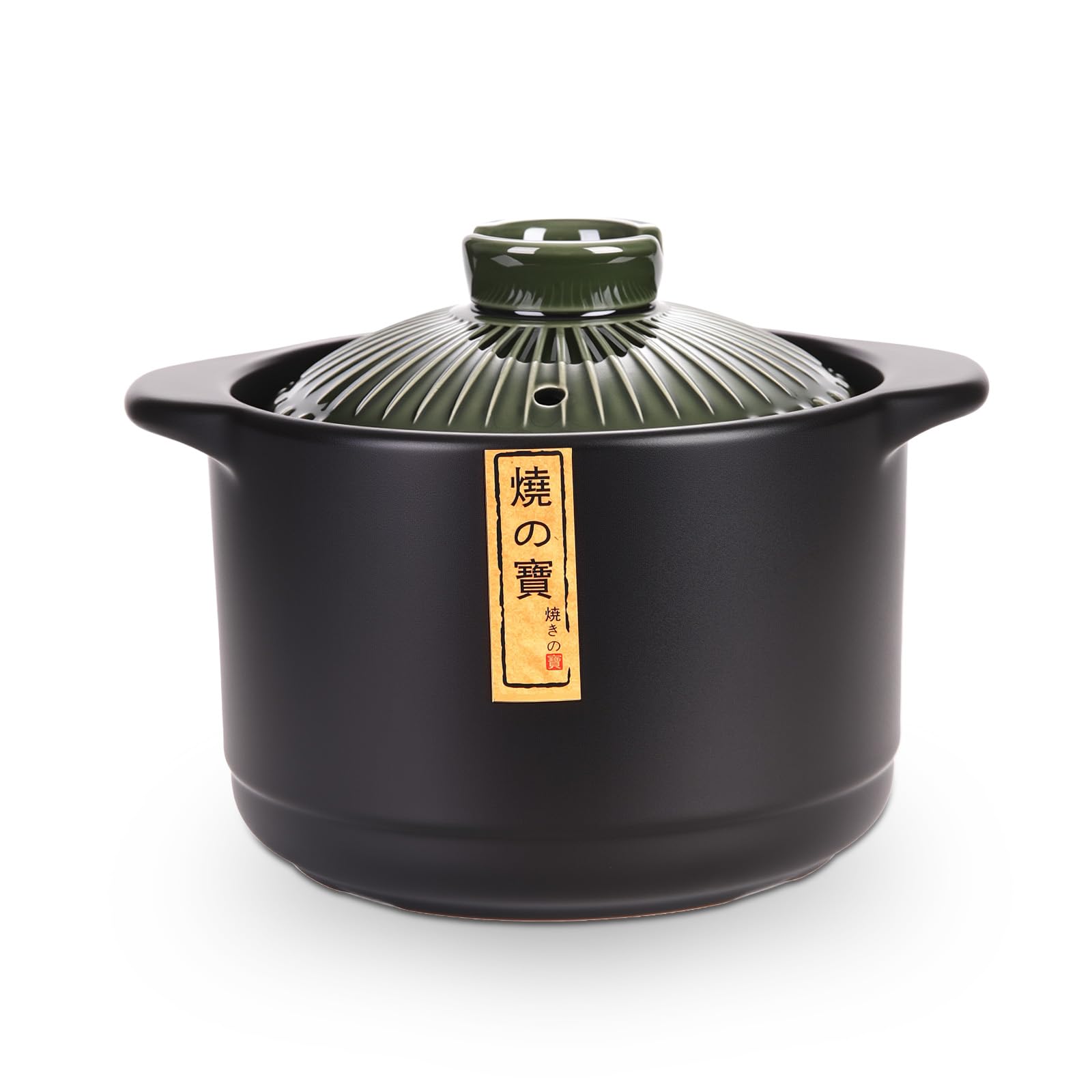
This lake tian pot brings a contemporary twist to the traditional donabe. The 2.1-quart capacity is a practical middle ground — large enough for a small family stew but compact enough for a rice batch for two. The green glaze is smooth and modern, and the anti-spill lid rim with a steam hole prevents the bubbling over that plagues many clay pots during rice cooking.
Customers highlight two standout behaviors: the pot retains heat significantly longer than stainless steel, and the non-stick glaze makes cleanup nearly effortless. Several users successfully used it on campfire grills and open flames without cracking, which speaks to the thermal shock resistance of the ceramic body. The lid stays cool enough to handle without a mitt during simmering.
The internal height is on the shorter side, which limits deep-fry or tall-roast applications. A minority of buyers reported cracking after repeated use, so gradual heating is still recommended. The “lake tian” brand is a newer entrant, so long-term reliability data is limited compared to legacy Japanese makers.
Why it’s great
- Anti-spill lid design prevents rice water from boiling over.
- Smooth glaze is genuinely non-stick and easy to clean.
- Survives direct campfire and grill heat without cracking.
Good to know
- Shorter internal height limits tall stew or fry applications.
- Newer brand with limited long-term customer feedback.
- Gradual heat-up still required to prevent thermal shock damage.
7. lake tian Flower Ceramic Casserole (3.4 QT)
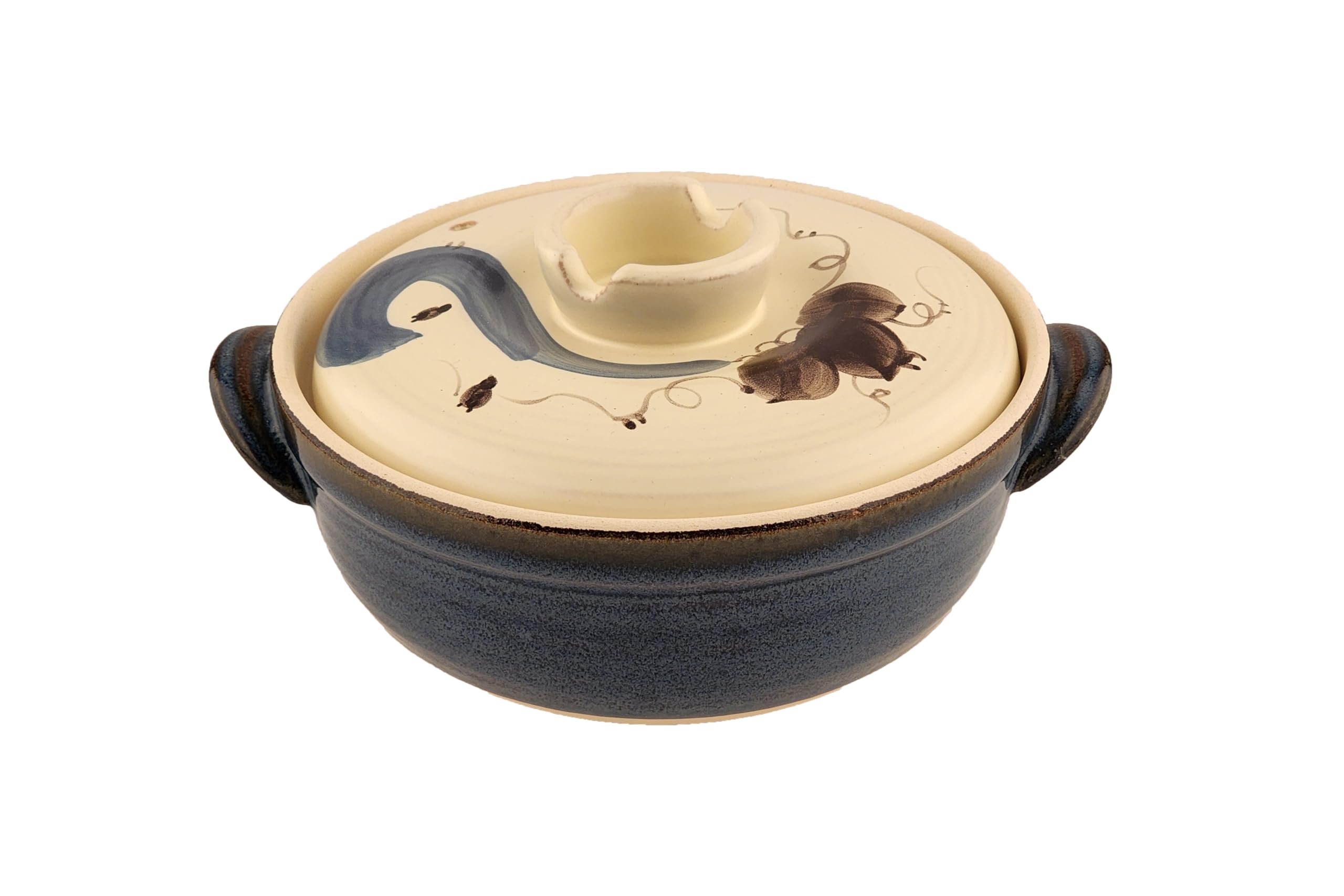
The lake tian Flower Casserole scales up to 3.4 quarts, making it the largest pot in this lineup. The floral painted pattern and stainless steel lid knob give it a decorative identity that works for serving directly at the table. The ceramic body is lead-free and non-toxic, and the wide, round shape provides an even cooking surface for large rice batches or multi-ingredient hot pots.
Buyers consistently call out the generous size — it accommodates a whole chicken for braising or a full family’s worth of soup. The ceramic walls are lighter than cast iron but still retain heat effectively for at-table serving. The pot works on gas, electric, ceramic, and glass cooktops, and it is both oven and refrigerator safe, which adds flexibility for meal prep.
The painted floral pattern is purely cosmetic and may fade or scratch with abrasive cleaning. Despite being labeled “dishwasher safe,” hand washing is prudent to preserve the artwork. A few customers noted that the lid does not seat as snugly as traditional donabe lids, which can allow steam to escape faster during rice cooking.
Why it’s great
- Large 3.4 QT capacity handles whole chickens and large batches.
- Lightweight relative to cast iron with good heat retention.
- Multi-cooktop compatible — gas, electric, ceramic, glass.
Good to know
- Painted floral design may wear over time with scrubbing.
- Lid fit is less snug than traditional donabe models.
- Hand washing recommended despite dishwasher-safe claim.
FAQ
Can I use a donabe rice cooker on an induction cooktop?
How do I season a new donabe rice cooker before first use?
Why does my rice stick to the bottom of the donabe?
How do I clean a donabe without damaging it?
Is a fully glazed or unglazed donabe better for rice?
Final Thoughts: The Verdict
For most users, the best donabe rice cooker winner is the Ginpo Chrysanthemum Double Lid because the dual-lid system delivers consistently fluffy, separate grains with minimal monitoring once you learn the flame pattern. If you want a pot that doubles as a versatile family stew vessel, grab the Ginpo Hanamishima No. 9. And for budget-conscious solo cooks who need a lightweight tool for rice and microwave meals, nothing beats the Ginpo Chrysanthemum Single Pot.

Mo Maruf
I created WellFizz to bridge the gap between vague wellness advice and actionable solutions. My mission is simple: to decode the research and give you practical tools you can actually use.
Beyond the data, I am a passionate traveler. I believe that stepping away from the screen to explore new environments is essential for mental clarity and physical vitality.