Our readers keep the lights on and my smoothie glass nicely filled. As an Amazon Associate, I earn from qualifying purchases.
Dialogue that cuts through explosions, bass that rattles your couch, and overhead effects that make you flinch at a rainstorm — that’s the promise of a properly configured soundbar. But most models fail to deliver the true height channel separation that Dolby Atmos demands, leaving you with a flat, front-heavy stage instead of the 3D bubble of sound the format was designed for.
I’m Mohammad Maruf — the founder and writer behind WellFizz. I’ve spent hundreds of hours analyzing speaker configurations, amplifier power, driver sizes, and room-correction software to separate real Atmos performance from marketing hype in this guide.
Whether you’re upgrading from a TV’s built-in speakers or replacing a legacy 5.1 system, finding the best dolby atmos soundbar means balancing channel count, subwoofer output, and dialogue clarity to match your room size and listening habits.
How To Choose The Best Dolby Atmos Soundbar
Dolby Atmos adds a height dimension to surround sound, but not every soundbar implements it the same way. Some bounce sound off the ceiling using up-firing drivers, while others rely on psychoacoustic processing to simulate overhead effects. Choosing the right one depends on your ceiling height, room layout, and whether you’re willing to add rear satellite speakers for true 360-degree immersion.
Channel Configuration and Driver Layout
The first number in a soundbar’s channel spec (e.g., 5.1.2) refers to the number of ear-level channels. The last number is the height channels. A 5.1.2 setup includes two up-firing or side-firing drivers for Atmos height effects, while an 11.1.4 system has four height channels and significantly wider soundstage. More channels generally deliver better object placement, but only if your room allows the sound waves to reflect properly off flat, low ceilings.
Subwoofer Performance and Integration
Dolby Atmos relies on .1 LFE (low-frequency effects) to add physical weight to explosions and rumbles. An 8-inch subwoofer can satisfy smaller rooms, while a 10-inch or larger driver is necessary for open-concept living spaces. Pay attention to whether the sub is ported or sealed — ported subs play louder but can sound boomy, while sealed subs deliver tighter, more controlled bass. Wireless connectivity for the sub simplifies placement, but wired connections often provide more reliable latency-free performance.
Dialogue Enhancement Technology
Clear speech is the most common reason people upgrade from TV speakers. Look for soundbars with a dedicated center channel and AI-driven dialogue boost features. Polk’s VoiceAdjust, Sony’s Voice Zoom 3, and JBL’s PureVoice 2.0 process the center channel in real time to elevate vocal frequencies without affecting background effects. This matters most during action sequences where loud soundtracks can bury quieter conversations.
Room Correction and Calibration
Automatic room correction adjusts the soundbar’s output to compensate for furniture placement, wall reflections, and carpet absorption. Basic systems use a built-in microphone to measure test tones, while advanced options like Klipsch’s Dirac Live or Samsung’s SpaceFit Sound Pro analyze the entire room and optimize each channel individually. A soundbar with good room correction will outperform a higher-channel model with none, especially in irregularly shaped rooms.
Quick Comparison
On smaller screens, swipe sideways to see the full table.
| Model | Category | Best For | Key Spec | Amazon |
|---|---|---|---|---|
| Samsung Q990D | Premium | Full home theater immersion | 11.1.4 channels / 4 up-firing drivers | Amazon |
| Sonos Arc Ultra | Premium | Music-first audiophile clarity | 9.1.4 channels / Sound Motion woofer | Amazon |
| Klipsch Flexus CORE 300 | Premium | Room-corrected accuracy | 5.1.2 channels / Dirac Live calibration | Amazon |
| JBL Bar 500MK2 | Mid-Range | Powerful bass without rear speakers | 5.1 channel / 10-inch subwoofer / 750W | Amazon |
| Bose Smart Ultra | Premium | Dialogue clarity and spatial effects | Virtual Atmos / AI Dialogue Mode | Amazon |
| Polk Audio MagniFi Max AX | Mid-Range | Certified Dolby Atmos on a budget | 5.1.2 channels / 10-inch wireless sub | Amazon |
| Sony BRAVIA Theater System 6 | Mid-Range | BRAVIA TV pairing and multi-stereo | 5.1 channel / dedicated center speaker | Amazon |
| ULTIMEA Skywave X50 | Entry Level | Budget-friendly 5.1.4 Atmos | 5.1.4 ch / 28Hz sub / GaN amplifier | Amazon |
| Amazon Fire TV Soundbar Plus | Entry Level | Fire TV ecosystem and small spaces | 5.1 channel / dedicated center driver | Amazon |
In‑Depth Reviews
1. Samsung Q990D

The Samsung Q990D delivers an 11.1.4-channel configuration with four dedicated up-firing drivers, creating a genuinely immersive overhead soundstage that few competitors match. The included rear satellite speakers each contain forward, side, and ceiling-firing drivers, which means you get true 360-degree object placement without buying additional components.
Its Q-Symphony feature syncs with compatible Samsung TVs to use the TV’s own speakers alongside the soundbar, widening the sound field even further. SpaceFit Sound Pro automatically adjusts equalization based on room acoustics, while Adaptive Sound analyzes content in real time to prioritize dialogue or effects depending on the scene. Game Mode Pro enables 3D optimized audio for console gaming without manual switching.
The wireless Dolby Atmos capability lets you transmit lossy Atmos signals without HDMI cables, though purists will want to use eARC for uncompressed audio. Some users report random audio dropouts when using eARC with certain TV brands, particularly LG OLEDs, so a firmware check or switching to standard ARC may be necessary for stability.
Why it’s great
- True 11.1.4 channel array with physical height drivers in rears
- Wireless Dolby Atmos and Q-Symphony for seamless Samsung integration
- SpaceFit Sound Pro provides automatic room-specific calibration
Good to know
- Random audio dropouts reported on eARC with some TVs
- Lip-sync adjustment may be needed depending on TV model
2. Sonos Arc Ultra

Sonos Arc Ultra uses a new Sound Motion architecture that packs a dedicated woofer into the slender soundbar chassis, delivering deeper bass than the original Arc without needing a separate subwoofer in smaller rooms. The 9.1.4 spatial audio array includes upward-firing drivers for Dolby Atmos height effects, and AI-driven Speech Enhancement processes the human voice in real time to keep dialogue crisp regardless of background noise.
Trueplay tuning uses your iOS device’s microphone to measure room geometry and adjust the frequency response for accurate sound staging. The Sonos ecosystem allows seamless multi-room expansion, and the optional Sub Gen 4 plus Era 300 rear speakers elevate the system to a true 7.1.4 surround setup. Control is available through the Sonos app, TV remote via HDMI CEC, Sonos Voice Control, or Amazon Alexa.
The reliance on Wi-Fi for multi-room streaming means the initial setup via the Sonos app can feel heavy compared to plug-and-play competitors. At its standalone price, the Arc Ultra excels for music reproduction and spatial audio, but to unlock its full home theater potential—especially for rear-channel presence—you’ll need to invest in additional Sonos components.
Why it’s great
- Sound Motion woofer provides surprising bass depth in a single bar
- AI Speech Enhancement delivers some of the clearest dialogue available
- Trueplay room calibration adapts to any living space
Good to know
- Optimal surround experience requires expensive add-on speakers and sub
- App-dependent setup process can be frustrating for non-tech users
3. Klipsch Flexus CORE 300
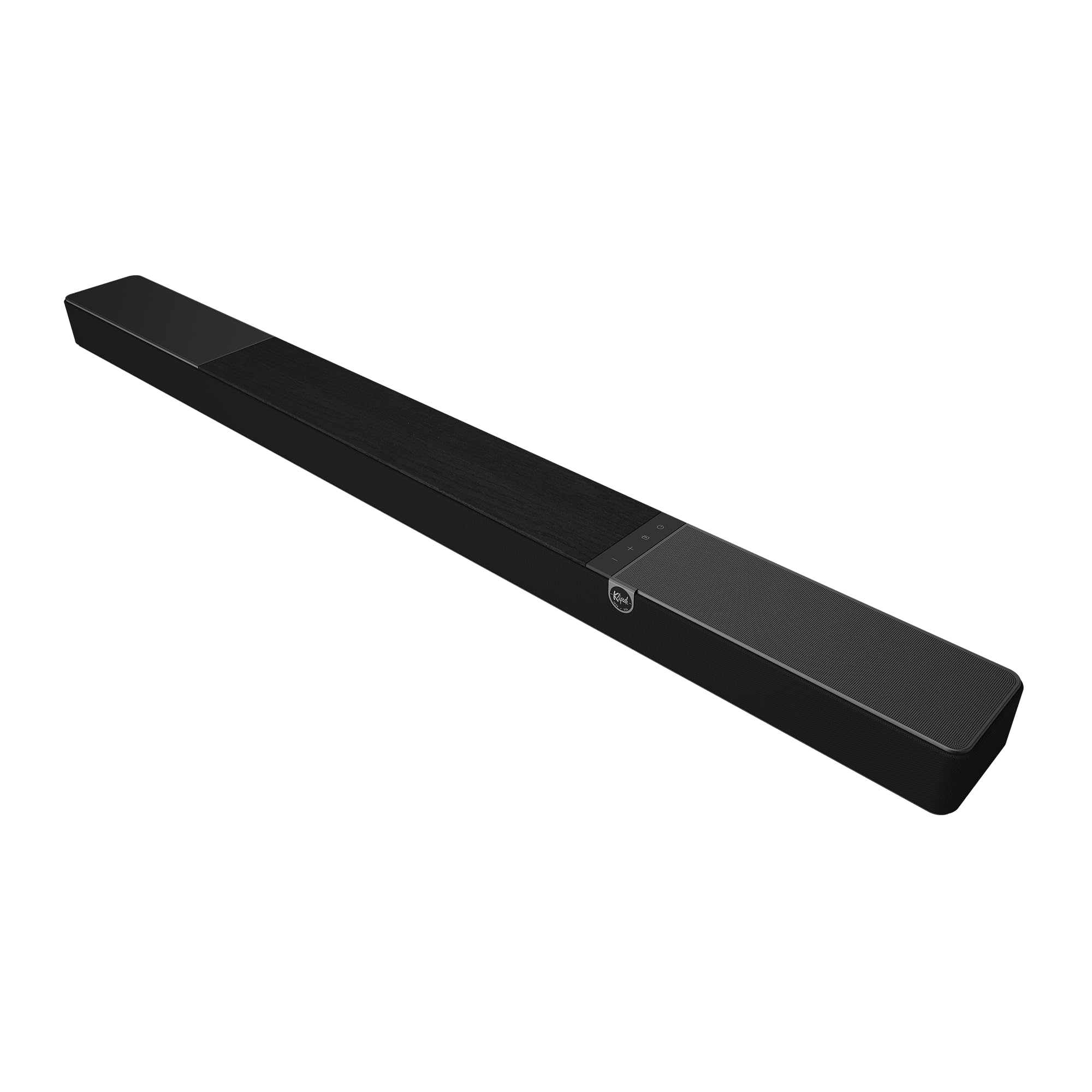
The Klipsch Flexus CORE 300 is the first soundbar to integrate Dirac Live room correction, a system that analyzes your listening space and applies filters to fix frequency response anomalies caused by furniture, wall reflections, and room geometry. The 5.1.2 channel array includes two 2.254-inch upward-firing elevation drivers and side-firing speakers, creating a wide soundstage with genuine overhead separation.
Powered by Onkyo engineering, the CORE 300 delivers 200W RMS and supports a wired subwoofer output, a rare feature that gives you the flexibility to use your own powered sub instead of being locked into a proprietary wireless unit. The built-in dual passive radiators provide surprising low-end extension down to around 50 Hz, though adding a dedicated sub is recommended for full LFE impact during action movies.
The Klipsch Connect Plus app handles setup and firmware updates, and the bar supports both HDMI eARC and optical input. Dirac Live’s basic license corrects frequencies below 500 Hz, while the full license unlocks full-range correction. The wood and metal enclosure gives the bar a premium feel, but the absence of bundled rear speakers means true surround requires the separate Flexus SURROUND 300 kit.
Why it’s great
- Dirac Live room correction provides best-in-class acoustic tuning
- Wired subwoofer output offers flexibility to use aftermarket subs
- Wood and metal build feels premium and durable
Good to know
- Atmos overhead effects are subtle without rear up-firing speakers
- Full-range Dirac license costs extra after purchase
4. JBL Bar 500MK2
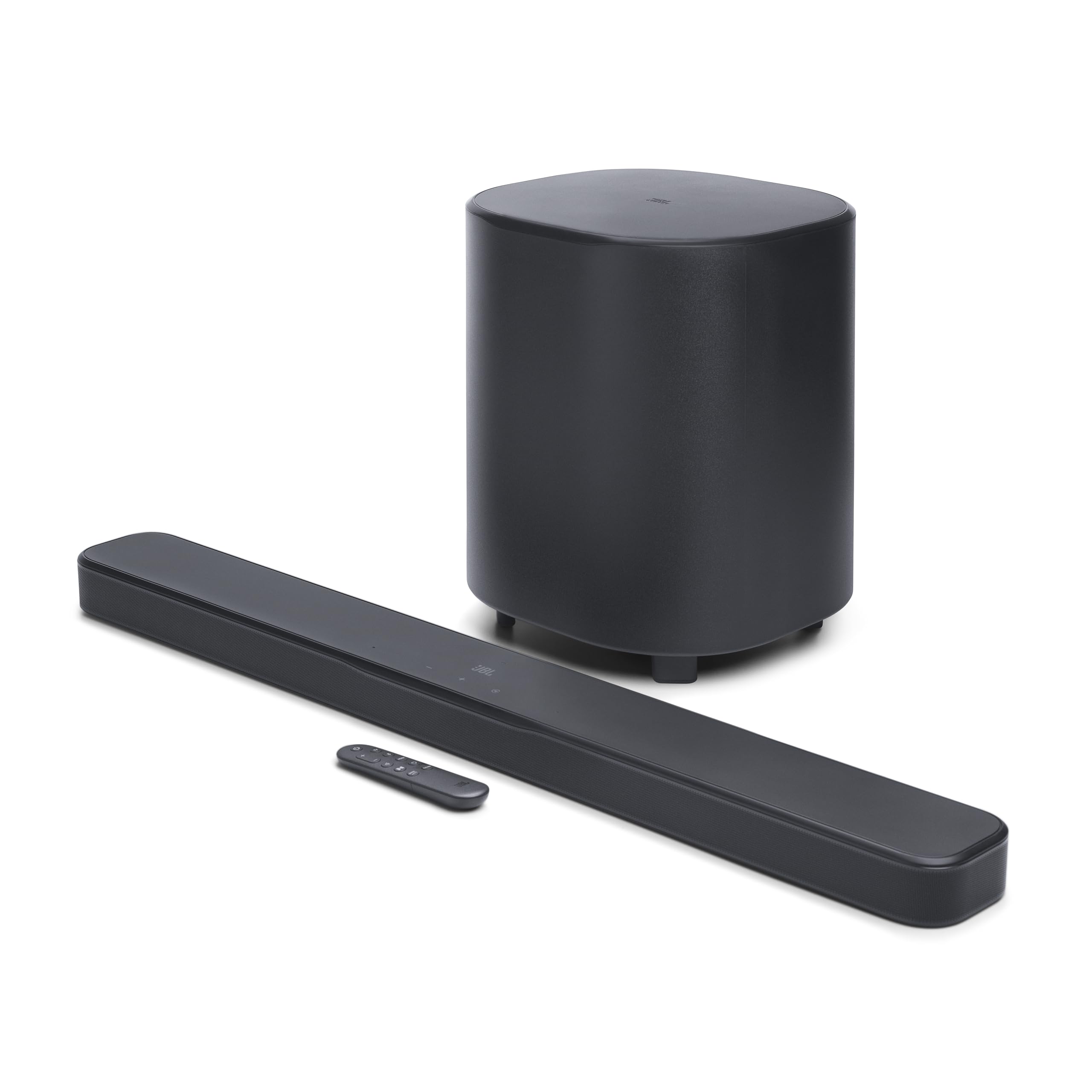
The JBL Bar 500MK2 packs a 10-inch wireless subwoofer and a total system power of 750W peak, delivering chest-thumping bass that fills medium to large rooms without distortion. MultiBeam 3.0 technology uses an array of transducers to create a wide, cinema-like soundstage from a single soundbar unit, simulating surround effects without requiring rear satellite speakers.
PureVoice 2.0 automatically adjusts dialogue levels based on ambient noise and the bar’s current volume, ensuring whispers remain audible even during loud action sequences. The HDMI eARC connection supports uncompressed Dolby Atmos and 4K Dolby Vision passthrough, while Wi-Fi connectivity enables AirPlay 2, Google Cast, Spotify Connect, Tidal Connect, and Roon Ready for high-resolution music streaming. The JBL ONE app provides a detailed equalizer for fine-tuning.
The automatic room calibration uses the bar’s built-in microphone to measure acoustic reflections from walls and furniture, optimizing the 3D surround effect for your specific space. However, at higher volumes the sound can become slightly harsh, and the simulated height effects lack the precision of a system with physical up-firing rear speakers.
Why it’s great
- Massive 10-inch subwoofer provides deep, distortion-free bass
- MultiBeam 3.0 creates convincing surround without rear speakers
- Supports AirPlay 2, Google Cast, and Spotify Connect natively
Good to know
- Sound can become slightly harsh at maximum volume
- No dedicated up-firing rear speakers for true Atmos height
5. Bose Smart Ultra

Bose’s Smart Ultra Soundbar uses six transducers—including two custom-engineered upward-firing dipole speakers—combined with TrueSpace technology to create a wide, immersive sound field that projects height effects without requiring ceiling reflectors. The AI Dialogue Mode processes speech in real time to keep conversations crisp and clear even during complex audio mixes, often eliminating the need for subtitles.
The Bose Music app guides setup with AdaptIQ room tuning, which uses a headset or your phone’s microphone to calibrate the bar’s output to your specific room. Built-in Amazon Alexa and Voice4Video allow voice control of the soundbar and connected TV devices. Bose SimpleSync lets you pair the bar with select Bose headphones for private listening or with other Bose speakers for whole-home audio.
While the Bose Smart Ultra produces impressive spatial effects for its compact size, the 180W max output power is lower than many competitors, and larger rooms will benefit significantly from adding a Bose Bass Module 700 and Surround Speakers 700. The initial setup process is heavily app-dependent and has been reported to be unreliable with iOS devices due to platform security restrictions.
Why it’s great
- AI Dialogue Mode delivers exceptional speech clarity without manual tweaking
- TrueSpace technology creates convincing spatial effects from a single bar
- Bose SimpleSync enables easy headphone or multi-room pairing
Good to know
- Setup is app-dependent and can be problematic with iPhones
- 180W power may feel underpowered in large, open-concept rooms
6. Polk Audio MagniFi Max AX

The Polk Audio MagniFi Max AX is one of the most affordable soundbars with certified Dolby Atmos and DTS:X support, featuring an 11-driver array with two dedicated up-firing drivers for height effects. The 10-inch down-firing wireless subwoofer provides deep, room-filling bass that belies its compact footprint, while Polk’s patented SDA 3D audio technology widens the soundstage for a more enveloping experience.
VoiceAdjust technology enhances the dedicated center channel speaker to bring up dialogue levels without affecting the soundtrack, making it easy to hear conversations during quiet scenes or loud action sequences. The bar includes three HDMI inputs, one HDMI eARC output, and supports Wi-Fi streaming via Chromecast, Apple AirPlay 2, and Spotify Connect. The included remote is intuitive, and an All-Stereo mode works well for music and sports.
While the up-firing drivers provide noticeable height effects in rooms with flat, low ceilings, the effect is less pronounced in rooms with vaulted or textured ceilings. The SR2 rear speaker kit is sold separately, but when added, the system transforms into a genuinely immersive 5.1.2 setup. Some users find the subwoofer’s default bass level needs adjustment to avoid overwhelming the rest of the mix.
Why it’s great
- Certified Dolby Atmos and DTS:X at a very competitive price point
- VoiceAdjust improves dialogue clarity without remote fiddling
- Multiple HDMI inputs and eARC simplify source management
Good to know
- Up-firing height effects are noticeable only with flat, low ceilings
- Rear speaker kit sold separately for full surround immersion
7. Sony BRAVIA Theater System 6

The Sony BRAVIA Theater System 6 is a 5.1-channel home theater system that includes a soundbar, wireless subwoofer, and two wired rear speakers with a separate wireless amp box. The dedicated center channel speaker ensures dialogue remains anchored to the screen, and when paired with a compatible BRAVIA TV, Voice Zoom 3 technology enhances speech frequencies to make dialogue more intelligible without raising overall volume.
Multi Stereo mode plays the same sound through all five speakers to create a room-filling boost, which is useful for parties or casual listening. The BRAVIA Connect app gives you granular control over sound profiles, equalization, and advanced settings. Dolby Atmos and DTS:X decoding ensures compatibility with modern streaming services and Blu-ray content.
The rear speakers are wired to a wireless amp box that must be plugged into power, which can be a tripping hazard depending on your room layout. The subwoofer also requires a wired connection to the main soundbar, limiting placement flexibility. Some users report HDMI connectivity issues with certain streaming devices, and switching to optical may be necessary for stable audio.
Why it’s great
- Dedicated center channel and Voice Zoom 3 for exceptional dialogue clarity
- Includes wired rear speakers for true 5.1 surround sound
- BRAVIA Connect app offers deep control and EQ adjustments
Good to know
- Subwoofer must be wired to the soundbar, limiting placement
- HDMI connectivity can be unstable with some streaming devices
8. ULTIMEA Skywave X50
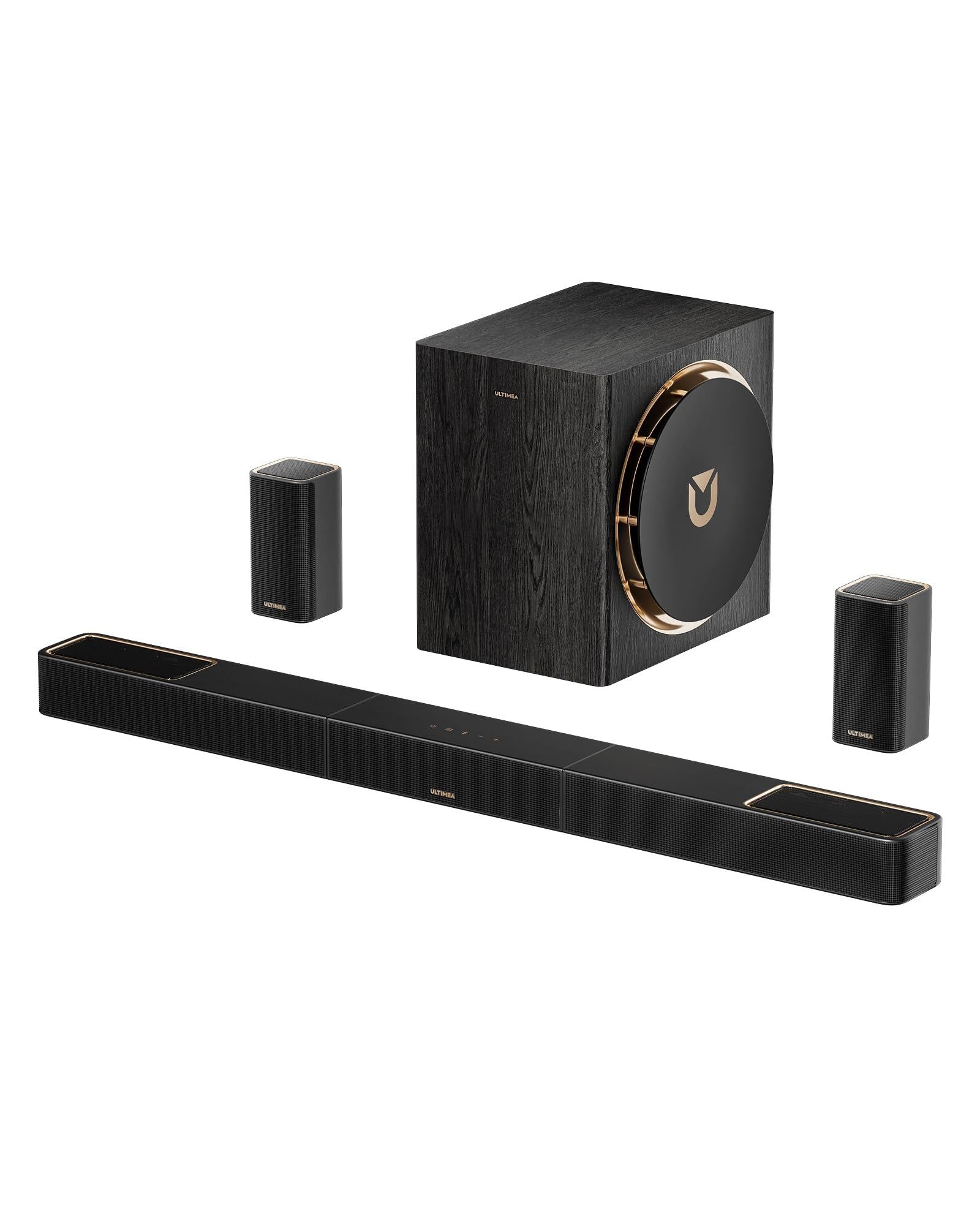
The ULTIMEA Skywave X50 delivers a 5.1.4-channel configuration with two wireless rear speakers and an 8-inch subwoofer—making it one of the most affordable ways to get both surround and height channels in a single box. The GaN amplifier provides up to 98% efficiency with less heat generation than traditional silicon amps, supporting a total peak power of 760W for clean, distortion-free output.
Gravus Ultra-Linear Bass Technology uses an oversized waveguide and precision-engineered acoustic chamber to maintain strong sub-bass down to 28Hz, even at high volumes. The NEURACORE multi-channel audio engine processes audio at 24-bit/192kHz with less than 0.5% distortion, and the system supports 4K HDR pass-through via HDMI eARC. Dual 5GHz wireless transmission ensures stable connectivity for the rear speakers and subwoofer.
While the Skywave X50 offers an impressive feature set for its price tier, the 8-inch subwoofer cannot match the low-end authority of 10-inch or larger drivers found in premium systems. The wireless rear speakers are compact and subtle in their output, working well for ambient effects like rain or background foley but less convincing for discrete directional cues.
Why it’s great
- Affordable 5.1.4 Atmos with wireless rear speakers included
- GaN amplifier provides high efficiency and clean power output
- Gravus bass technology extends low frequencies to 28Hz
Good to know
- 8-inch subwoofer lacks the deep bass punch of larger drivers
- Rear speakers are subtle and best for ambient effects
9. Amazon Fire TV Soundbar Plus

The Amazon Fire TV Soundbar Plus is a 5.1-channel system that bundles a soundbar, wireless subwoofer, and two wireless surround speakers for a complete home theater experience at an entry-level price point. The dedicated center channel dialogue driver sharpens vocal clarity, and support for both Dolby Atmos and DTS:X ensures compatibility with modern streaming content.
Fire TV integration allows you to control the soundbar and your TV with a single remote, and the audio can be customized via Fire TV settings on compatible devices. Movie, Music, Sports, and Night modes optimize the sound profile for different content types, while Bluetooth streaming lets you play music from your phone or tablet. Setup is straightforward—the subwoofer and rear speakers pair automatically with the main bar via HDMI ARC.
The surround speakers lack up-firing drivers, so Atmos height effects are simulated rather than physically projected, which means the overhead sensation is subtle at best. The subwoofer placement is somewhat restrictive due to power cord length, and the system’s overall output is best suited for small to medium-sized rooms. The build quality feels adequate but not premium, reflecting its entry-level positioning.
Why it’s great
- Complete 5.1 system with wireless sub and rears out of the box
- Dedicated center channel improves dialogue clarity significantly
- Fire TV integration allows single-remote control of TV and audio
Good to know
- No up-firing drivers means Atmos height effects are simulated
- Subwoofer placement is limited by a short power cord
FAQ
Can I get Dolby Atmos without ceiling speakers?
Do I need rear speakers for Dolby Atmos?
What is the difference between Dolby Atmos and DTS:X?
Will a soundbar work with any TV?
Final Thoughts: The Verdict
For most users, the best dolby atmos soundbar winner is the Samsung Q990D because its 11.1.4-channel configuration with included rear speakers and wireless Dolby Atmos delivers a complete, room-filling home theater experience without requiring additional purchases. If you want studio-grade room correction and the ability to use your own subwoofer, grab the Klipsch Flexus CORE 300. And for a compact setup with unbeatable dialogue clarity and seamless music streaming, nothing beats the Sonos Arc Ultra when paired with its ecosystem.

Mo Maruf
I created WellFizz to bridge the gap between vague wellness advice and actionable solutions. My mission is simple: to decode the research and give you practical tools you can actually use.
Beyond the data, I am a passionate traveler. I believe that stepping away from the screen to explore new environments is essential for mental clarity and physical vitality.