Our readers keep the lights on and my smoothie glass nicely filled. As an Amazon Associate, I earn from qualifying purchases.
Nothing breaks the flow of a competitive match like an enemy sneaking up from behind because your headset failed to render that one footstep cue. A proper spatial audio solution doesn’t just sound good—it places every reload, whisper, and gunshot in a precise 3D space, turning audio into a tactical weapon.
I’m Mohammad Maruf — the founder and writer behind WellFizz. My buying guides focus on deep hardware analysis and real-world feature comparisons to separate genuine performance from marketing claims in the gaming audio space.
After comparing drivers, wireless codecs, microphone architectures, and battery systems across the latest models, this roundup of the best dolby atmos gaming headset models delivers clear picks for every type of player and budget tier.
How To Choose The Best Dolby Atmos Gaming Headset
Not every headset labeled with spatial audio support delivers the same kind of positional accuracy. The difference lies in the driver design, the audio processing pipeline, and how well the headset integrates with Dolby Atmos on your platform. Here are the three specs that separate a solid pick from a forgettable one.
Driver Size and Diaphragm Material
The physical driver is the first indicator of sound quality. Larger 50mm or 60mm neodymium magnets can move more air, producing fuller bass without distorting the mids. Titanium-coated diaphragms, like those in the Razer BlackShark V3 Pro, improve transient response for sharper footstep reproduction. Standard mylar diaphragms sound fine for casual play but tend to blur rapid, layered audio cues during intense firefights. If your primary use is competitive FPS titles, prioritize driver designs with rigid or coated diaphragm materials for cleaner separation between foreground and background sounds.
Wireless Protocol and Latency
Dolby Atmos spatial rendering adds a small processing overhead to every audio frame, so the wireless connection must be fast enough to avoid desync between image and sound. Proprietary 2.4GHz links like Razer HyperSpeed and Logitech Lightspeed offer latency below 20 milliseconds, which is nearly imperceptible. Bluetooth-only connections introduce noticeable delay, especially during action sequences. The best pick for competitive Dolby Atmos gaming uses a dedicated low-latency wireless dongle, with Bluetooth kept as a secondary channel for voice chat or mobile audio.
Microphone Quality and Noise Rejection
Spatial audio helps you hear enemies, but a muddy microphone makes your callouts useless to teammates. Look for wideband or super-wideband mics with a frequency response reaching above 8 kHz—these capture vocal detail without making you sound tinny. AI-powered noise cancellation, like the algorithm in the Sony INZONE H9 II or SteelSeries Nova Pro, filters out keyboard clatter and fan hum on the transmission side. A detachable or retractable boom design also adds flexibility for switching between gaming and casual use without wearing a microphone you don’t need.
Quick Comparison
On smaller screens, swipe sideways to see the full table.
| Model | Category | Best For | Key Spec | Amazon |
|---|---|---|---|---|
| Turtle Beach Stealth Pro II | Premium | Multi-platform with hot-swap batteries | 60mm Eclipse Dual Drivers | Amazon |
| Sony INZONE H9 II | Premium | High-end ANC with FPS EQ presets | WH-1000XM6 driver / 260g | Amazon |
| JBL Quantum 910 | Premium | Head-tracking spatial audio on PC | 50mm Neodymium / DTS v2.0 | Amazon |
| SteelSeries Nova Pro Wireless | Premium | Hot-swap base station with multi-system | OLED Base Station / Dual Battery | Amazon |
| Corsair Void v2 MAX | Mid-Range | Long battery with Dolby Atmos included | 50mm Dynamic / 70hr Battery | Amazon |
| Logitech G522 Lightspeed | Mid-Range | Lightspeed wireless with Blue VO!CE mic | PRO-G 48kHz/24bit audio | Amazon |
| Razer BlackShark V3 | Mid-Range | All-day comfort with Xbox Dolby Atmos | Triforce Titanium 50mm Gen-2 | Amazon |
In‑Depth Reviews
1. Turtle Beach Stealth Pro II
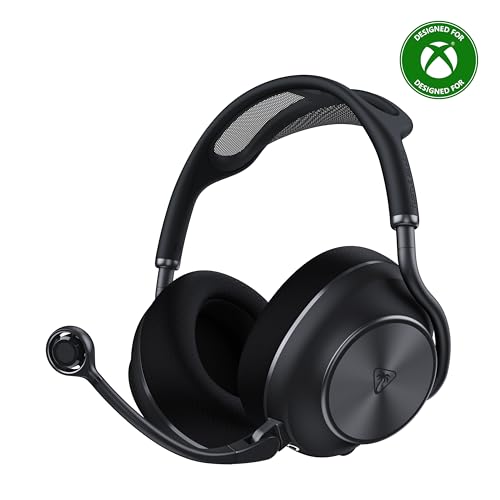
The Stealth Pro II sits at the top of the pile because it packs the largest driver in this roundup—60mm Eclipse Dual Drivers—which deliver noticeably richer bass and wider soundstage than any 50mm alternative. The Dolby Atmos license is built into the hardware license, so you don’t need a separate app purchase to unlock full spatial rendering on Xbox or PC. Anodized aluminum construction adds durability without making the frame feel heavy on the crown.
Battery management is solved with two swappable cells and a compact charging dock, providing up to 80 hours of combined runtime. The 9mm floating microphone uses AI-based noise reduction that effectively strips out room echo and mechanical keyboard noise during voice chat. CrossPlay 2.0 lets you switch wirelessly between up to four connected sources, which is rare in this segment.
Some users with larger head shapes report the headband clamp can feel tight during marathon sessions, and the earcups trap warmth after a few hours. The ANC system introduces very faint artifacts when the noise floor drops suddenly, though most players won’t notice this during active gameplay. It’s the most complete Dolby Atmos package for those who refuse to compromise on audio foundation.
Why it’s great
- 60mm drivers deliver best-in-class bass and spatial separation
- Hot-swappable batteries with dock eliminate downtime
- AI-powered mic effectively cancels background noise
Good to know
- Clamp force may feel tight for very large head sizes
- Firmware updates have been slow to arrive post-launch
2. Sony INZONE H9 II
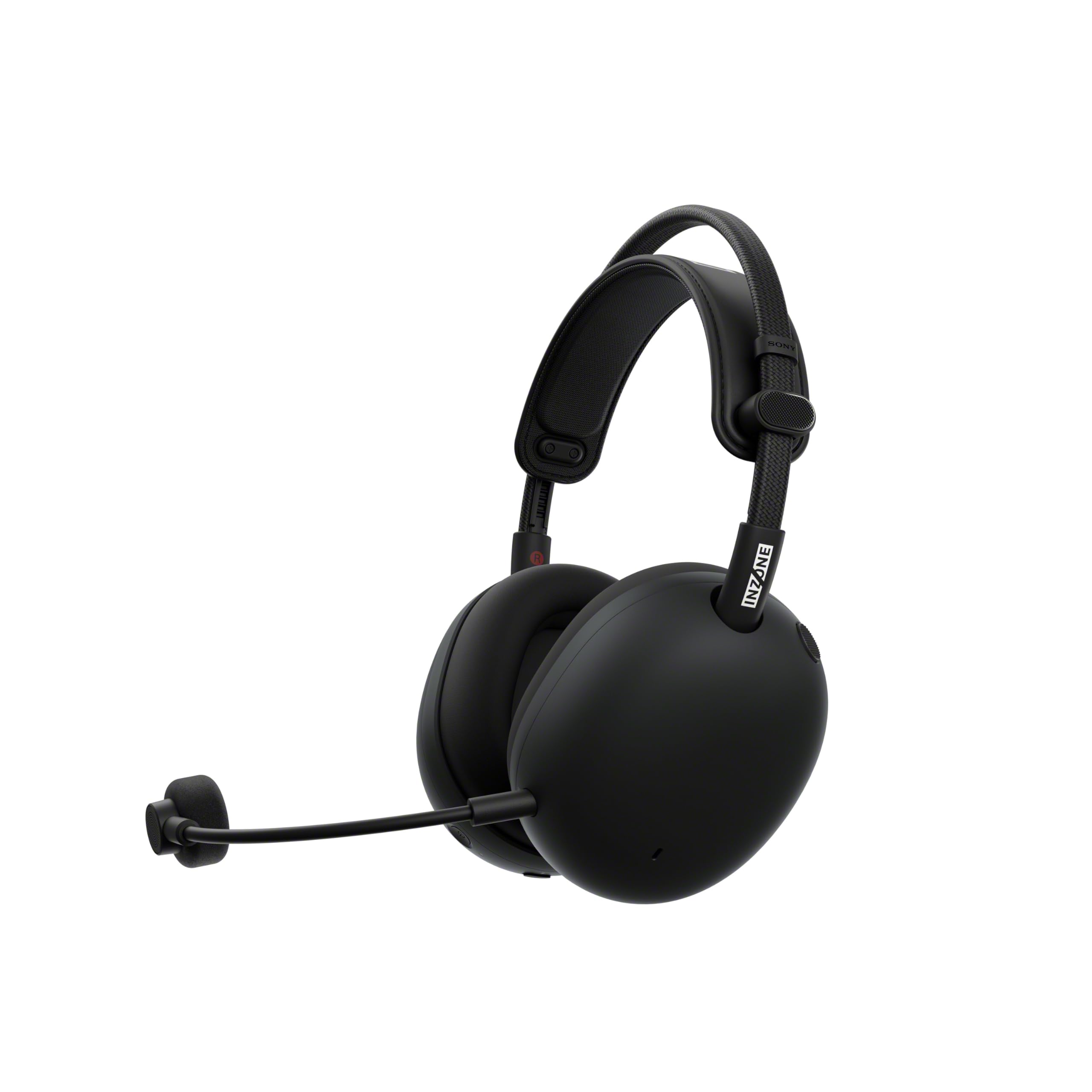
Sony brought its acclaimed WH-1000XM6 driver technology into a gaming form factor, and the result is a headset that delivers studio-grade frequency response without the typical gaming V-shaped EQ bias. The INZONE algorithm customizes 360 Spatial Sound to your individual ear shape using a calibration photo, creating a truly personalized Dolby Atmos experience that adapts to your unique anatomy.
At 260 grams including the mic, this is the lightest premium wireless headset in the comparison, reducing fatigue during extended sessions. The detachable cardioid mic uses AI processing for vocal clarity, and the physical design was fine-tuned with Fnatic esports players, which shows in the FPS-specific EQ presets accessible through the INZONE Hub software. The soft pouch makes transportation easy without a bulky case.
Battery life sits around 30 hours, which is lower than the competition, but a 5-minute quick charge delivers an hour of playtime. The 2.4GHz range drops significantly past 20 feet with walls between, and there is no native macOS software for EQ adjustments. It’s an audiophile-first pick that prioritizes neutrality over raw volume, making it ideal for single-player immersion and competitive FPS alike.
Why it’s great
- Driver technology borrowed from flagship Sony headphones delivers superb clarity
- Custom ear-shape calibration for personalized spatial audio
- Lightest premium wireless headset at 260g
Good to know
- Only 30-hour battery life with ANC active
- Wireless range weakens beyond 20 feet through walls
3. JBL Quantum 910

The Quantum 910 stands apart with its integrated head-tracking sensor that creates a fixed independent soundscape on PC. When you turn your head, the audio panorama stays anchored in virtual space, simulating a real-world listening environment where footsteps and gunfire maintain their original coordinates. This is especially useful in VR-adjacent setups or ultra-wide monitor configurations where head movement is natural.
JBL QuantumSOUND Signature uses Hi-Res certified 50mm neodymium drivers tuned specifically for competitive gaming, emphasizing the mid-high frequencies where environmental cues live. The low-latency 2.4GHz wireless system keeps audio perfectly synced with on-screen action, and simultaneous Bluetooth allows mixing of Discord calls with game audio through a single connection. ANC for gaming environments handles consistent hums like AC units and PC fans effectively.
The software setup for head-tracking calibration can be finicky—some users report the spatial zero position drifts after extended play and requires recalibration. The microphone, while clear, lacks the noise rejection sophistication found on the Sony and Turtle Beach models. For PC players who want the absolute sharpest spatial positioning and are willing to tweak settings, this is a uniquely capable device.
Why it’s great
- Head-tracking creates a fixed spatial reference point for immersive gameplay
- Hi-Res certified 50mm neodymium drivers with signature gaming tuning
- Simultaneous 2.4GHz and Bluetooth audio mixing
Good to know
- Head-tracking calibration can drift and needs resetting
- Microphone noise rejection is average for the price tier
4. SteelSeries Arctis Nova Pro Wireless

The Nova Pro Wireless solves the battery problem differently: the included OLED base station charges a spare battery while you wear the active one, creating a mathematically infinite power loop. Dual USB ports let you plug a PC and a PlayStation into the same base station and swap between them with a single button press, while the OLED screen handles EQ adjustments and ChatMix without alt-tabbing. Premium High Fidelity Drivers deliver excellent detail retrieval for both competitive spatial cues and cinematic single-player audio.
The ClearCast Gen 2 microphone retracts fully into the earcup, giving the headset a clean, non-gaming look when you’re not using the boom. Sonar software provides a full parametric EQ—rare at any price—that lets you fine-tune frequency bands to match your hearing profile. The ANC uses a 4-mic hybrid system that is decent for blocking low-frequency drone but struggles with sudden sharp noises.
This is a renewed model, so buyers should check the seller’s return policy for base station reliability. Multiple user reports indicate the RF transceiver in the base station can fail after extended use, rendering the wireless function unusable. When it works, it’s arguably the most versatile wireless Dolby Atmos headset on the market for multi-platform owners.
Why it’s great
- Hot-swap battery system with OLED base station enables non-stop gaming
- Full parametric EQ via Sonar software for precise tuning
- Retractable mic design transitions seamlessly between gaming and everyday use
Good to know
- Base station RF transceiver has reported long-term reliability issues
- Renewed condition means inspecting unit quality is essential
5. Corsair Void v2 MAX
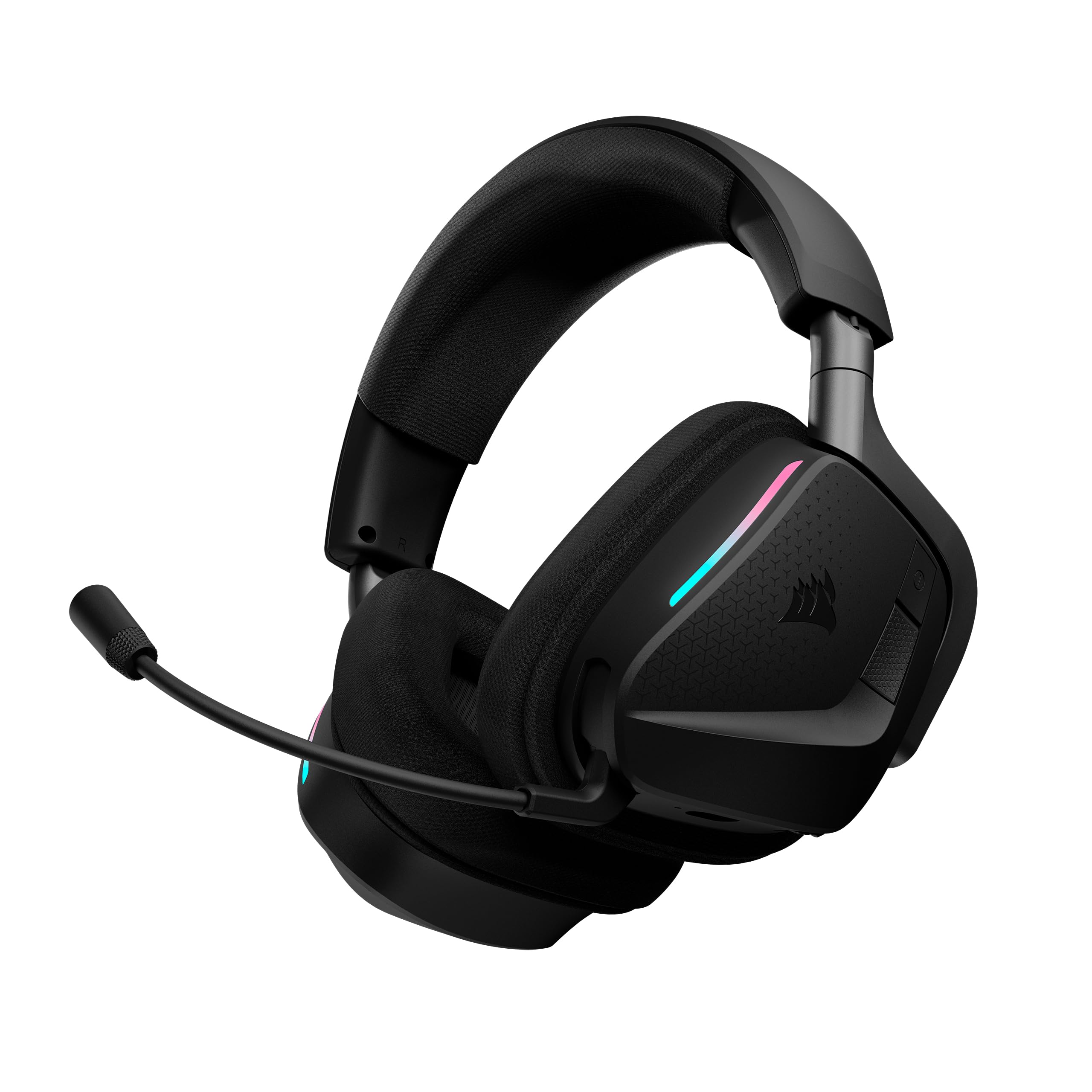
The Void v2 MAX offers the longest raw battery life in this list at 70 hours over 2.4GHz with RGB disabled, making it the pick for players who hate plugging in after every session. Custom-tuned 50mm dynamic drivers deliver a balanced soundscape, while Dolby Atmos spatial audio is supported natively through PC and Xbox. The simultaneous 2.4GHz and Bluetooth connectivity allows you to maintain a Discord call on your phone while gaming on your PC without missing audio from either source.
Sonarworks SoundID technology, accessible through iCUE software, builds a personalized EQ profile based on your hearing perception rather than generic presets. The flip-to-mute microphone is intuitive, and the fast charging feature gives 6 hours of playtime from a 15-minute charge. The earpads are generously padded with a breathable mesh that reduces heat buildup compared to leather alternatives.
Dolby Atmos is not enabled out of the box—you need to install the Dolby Access app and activate it, which adds an extra step for less technical users. The microphone, while clear enough for team chat, does not match the voice detail of wideband mics on the Stealth Pro or INZONE. It’s a strong mid-range option for players who prioritize battery endurance and comfort over absolute microphone fidelity.
Why it’s great
- 70-hour battery life dominates the wireless category
- Sonarworks SoundID creates a personalized hearing-based EQ
- Simultaneous 2.4GHz and Bluetooth for dual audio streaming
Good to know
- Dolby Atmos requires manual activation through the Dolby Access app
- Microphone clarity is serviceable but not competitive-grade
6. Logitech G522 Lightspeed

The G522 uses Logitech’s PRO-G dynamic drivers, which deliver 48kHz/24-bit synchronized audio for low distortion and rich bass response. The full-bandwidth 48kHz/16-bit microphone with Blue VO!CE technology provides broadcast-quality voice capture that outclasses most integrated mics in this tier. LIGHTSYNC RGB is tastefully implemented as side-facing lighting rather than aggressive glowing earcups, keeping the aesthetic understated while still customizable.
Tri-connectivity—Lightspeed wireless for PC, Bluetooth for mobile, and wired USB-C for uninterrupted play—covers every platform without compromise. The 60-hour battery life with lighting off is competitive, and the lightweight 280-gram build with a washable suspension band ensures long-session comfort. G HUB software gives deep EQ and voice processing controls without feeling bloated.
Audio output volume is lower than some rivals, and the sound signature leans neutral rather than punchy, which can feel underpowered for bass-heavy music listening. The ear cushions, while breathable, are slightly shallow for larger ears. It’s a fantastic wireless headset for gamers who also need professional-grade voice quality for streaming or remote meetings.
Why it’s great
- Blue VO!CE microphone technology delivers exceptional voice clarity
- Tri-connectivity covers PC, mobile, and wired modes smoothly
- Lightweight suspension band design reduces pressure points
Good to know
- Maximum volume is lower than competing gaming headsets
- Shallow earcups may be uncomfortable for larger ears
7. Razer BlackShark V3
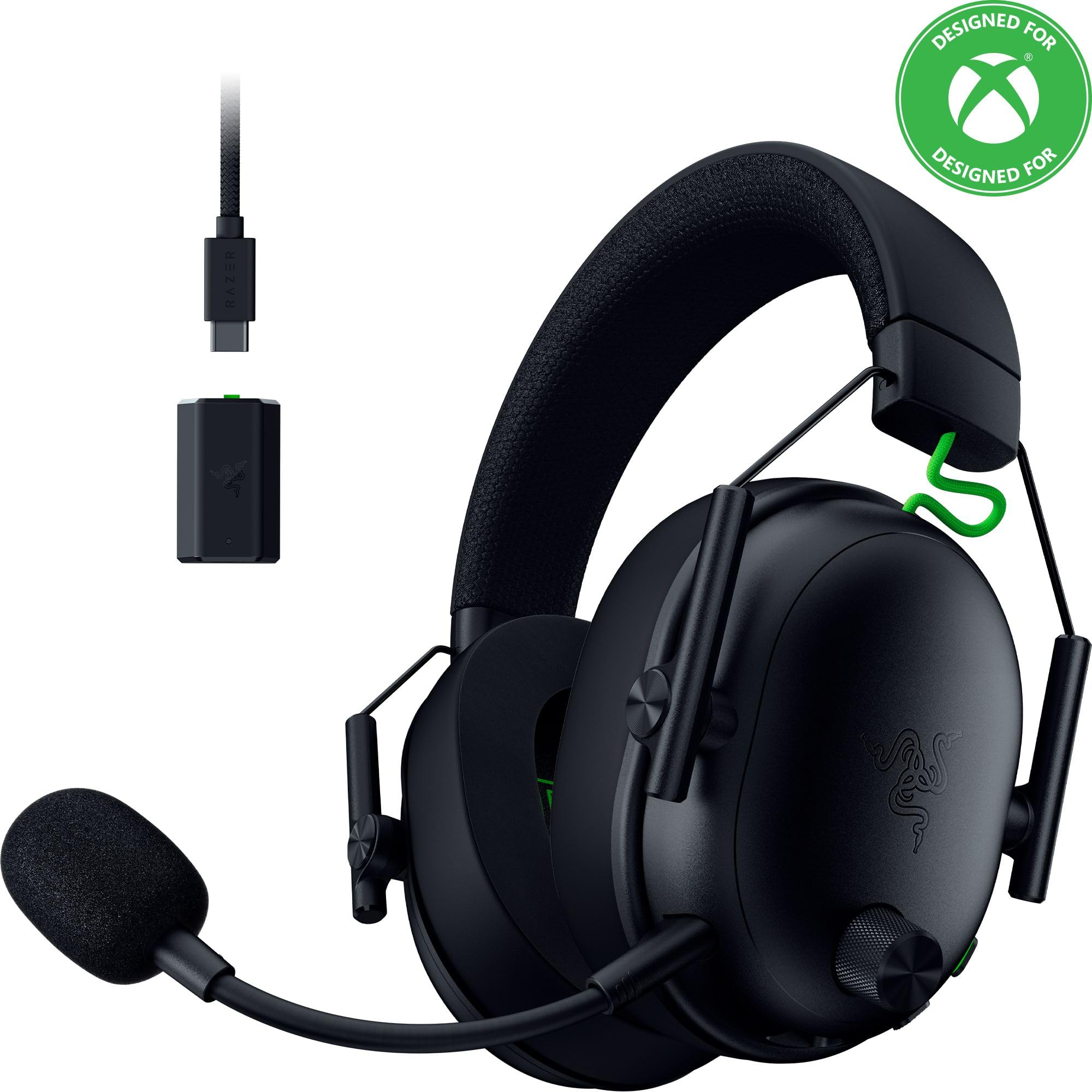
The BlackShark V3 punches above its mid-range price by borrowing the Triforce Titanium 50mm driver from Razer’s higher-tier models. The titanium-coated diaphragm improves transient response significantly, making footsteps and reloads sound crisp and separated rather than muddy. Hyperspeed Wireless Gen-2 achieves latency as low as 10 milliseconds, which is among the fastest in this comparison and critical for Dolby Atmos positional accuracy.
The detachable HyperClear Super Wideband 9.9mm microphone captures a wider frequency range of your voice than standard gaming mics, producing rich, natural-sounding callouts. On Xbox, the headset supports native Dolby Atmos with an expanded soundstage; on PC, you can unlock 7.1.4 surround sound through the THX Spatial Audio app. Battery life exceeds 70 hours, and simultaneous 2.4GHz and Bluetooth mixing works flawlessly across two devices.
The build uses more plastic than the aluminum competitors, and the ear cushions, while comfortable, attract dust and hair visibly. Setup requires some attention—the USB dongle is small and easy to mistake for packaging debris, and some users need a USB-C to USB-A adapter for older consoles. For the price, it delivers performance that rivals headsets costing twice as much.
Why it’s great
- Titanium-coated 50mm drivers provide excellent positional audio resolution
- 10ms Hyperspeed wireless latency is class-leading for competitive play
- Super Wideband microphone captures voice detail beyond standard mics
Good to know
- Build is mostly plastic compared to aluminum frame competitors
- Initial setup can be confusing due to tiny dongle placement
FAQ
Do I need a Dolby Atmos license on top of buying the headset?
Can I use Dolby Atmos on PlayStation 5 with any of these headsets?
Why does my wireless headset make a hissing sound during quiet game moments?
Do larger drivers always mean better Dolby Atmos performance?
Final Thoughts: The Verdict
For most users, the best dolby atmos gaming headset winner is the Turtle Beach Stealth Pro II because its 60mm drivers, hot-swappable battery system, and included Dolby Atmos support create a complete package without compromises. If you want absolute sound clarity and lightweight comfort, grab the Sony INZONE H9 II. And for competitive FPS players who value the fastest wireless latency and precise spatial audio at a mid-range price, nothing beats the Razer BlackShark V3.

Mo Maruf
I created WellFizz to bridge the gap between vague wellness advice and actionable solutions. My mission is simple: to decode the research and give you practical tools you can actually use.
Beyond the data, I am a passionate traveler. I believe that stepping away from the screen to explore new environments is essential for mental clarity and physical vitality.