Our readers keep the lights on and my smoothie glass nicely filled. As an Amazon Associate, I earn from qualifying purchases.
Rain, snow, extreme heat, or a schedule that simply won’t bend—every dog owner hits that wall where the daily walk feels impossible, and the guilt piles up alongside your dog’s restless energy. A purpose-built indoor running machine bridges that gap, turning a cramped living room into a controlled, safe exercise zone that burns off the destructive chewing, anxious pacing, and stubborn weight gain that come from too many days stuck inside.
I’m Mohammad Maruf — the founder and writer behind WellFizz. For this guide, I pored over motor specs, safety mechanisms, track materials, and real owner experiences across nine distinct models to separate the machines that deliver consistent daily use from those that frustrate both human and hound.
Whether your pup is a high-energy herder or a small senior needing gentle movement, this breakdown of the dog treadmill market helps you match the right platform to your dog’s size, temperament, and fitness goals.
How To Choose The Best Dog Treadmill
Selecting the right canine running machine means moving beyond human treadmill logic. Dogs don’t care about calorie counters or interval programs—they need a stable, safe surface that matches their stride length, weight, and natural gait. The wrong pick can lead to joint stress, fear of the machine, or mechanical failure under daily use. Focus on these three pillars before clicking buy.
Belt Dimensions and Weight Capacity
Running surface length and width are the first deal-breakers. A Corgi with a 20-inch stride needs at least 36 inches of belt to move naturally without clipping the front roller. Large breeds like German Shepherds require decks of 45 inches or more. The weight ceiling matters just as much — a machine rated for 220 pounds may feel wobbly under a 70-pound dog who runs hard, because dynamic forces spike during sprints and direction changes. Always check the manufacturer’s recommended dog weight, not just the absolute maximum load.
Motor Type vs. Self-Powered Design
Motorized treadmills offer consistent speed control and preset programs, which helps dogs that need structured pace training or have owners who want remote adjustments from across the room. The downside is speed anxiety — some dogs freeze when the belt moves without their input. Non-motorized slat mills let the dog dictate the pace entirely, which builds confidence and feels more like natural outdoor running. Slat mills generally need more assembly and have a louder track noise, but they also eliminate motor failure risk and electricity costs.
Safety Systems Specific to Canines
Side rails or panels prevent paws from slipping off the belt into moving parts — this is non-negotiable for any motorized unit. A magnetic safety key that cuts power when the dog pulls away or jumps off is the closest thing to a kill switch you can get. Manual slat mills rely on brake handles or adjustable resistance to slow the track, which requires active supervision. For both types, a front crossbar with a leash attachment point lets you guide nervous dogs through their first sessions without bending down.
Quick Comparison
On smaller screens, swipe sideways to see the full table.
| Model | Category | Best For | Key Spec | Amazon |
|---|---|---|---|---|
| FLIMDER (Model 01) | Motorized | Medium active breeds needing speed range | 2.5 HP motor / 6.0 mph top speed | Amazon |
| HotFeed Slat Mill | Self-Powered | Multi-dog homes with varied fitness | 70″L x 25″W running track | Amazon |
| Kolmmeo Slat Mill | Self-Powered | Large breeds needing durable track | 5-level incline / brake handle | Amazon |
| PawPaw’s Slat Mill | Self-Powered | Owners wanting manual simplicity | Solid wood track / 330 lbs capacity | Amazon |
| CIIHI Treadmill | Motorized | Small to medium dogs / 2-in-1 use | 1.5 HP motor / 265 lbs capacity | Amazon |
| Petbobi Treadmill | Motorized | Quiet apartment use | <55 dB noise / foldable frame | Amazon |
| REDLIRO Treadmill | Motorized | Senior dogs / gentle pace work | 0.5-4.0 mph / foldable design | Amazon |
| FINEHORSE Walking Pad | Motorized | Owner and dog shared use | 6-level incline / 330 lbs capacity | Amazon |
| THERUN Treadmill | Motorized | Owner-run fitness + dog training | 3.5 HP motor / 15% auto incline | Amazon |
In‑Depth Reviews
1. FLIMDER Dog Treadmill (Model 01)
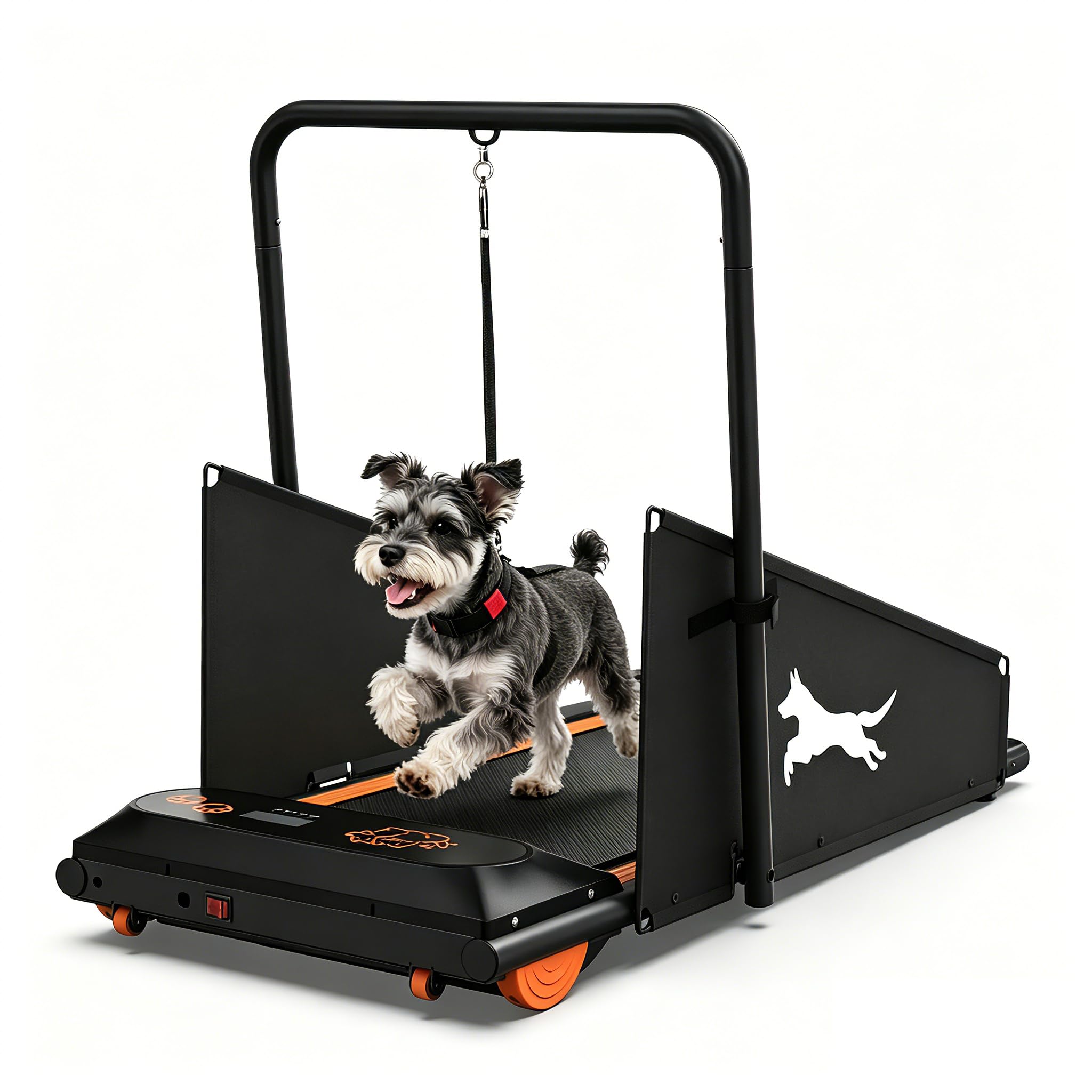
The FLIMDER strikes the hardest balance between motor muscle and breed flexibility. Its 2.5 HP motor delivers a speed range from a gentle 0.5 mph crawl up to 6.0 mph for sprinters, which covers everything from a senior Beagle’s wobbly walk to a high-energy Border Collie’s interval work. The 265-pound weight ceiling and 44.33-inch deck length give medium breeds enough room to extend their stride without stepping on the front roller.
Twelve built-in training programs add variety without forcing you to memorize button sequences, and the LED display tracks time, speed, and distance clearly. The low side rails guide the dog visually without feeling like a cage, and the alloy steel frame stays planted even at higher speeds. Assembly is minimal enough that most owners have the belt moving within an hour of unboxing.
Some users report the unit feels heavy when moving on carpet, and the power cord detached from the motor housing on a small number of units after extended use. The seller’s warranty response has been inconsistent in those cases, so check the return window closely. For the majority of medium-breed owners, however, the combination of power, program variety, and belt size makes this the most versatile single pick.
Why it’s great
- Wide 0.5-6.0 mph range fits puppies to sprinters
- 12 preset programs keep workouts engaging
- 265-pound capacity supports medium to large dogs
Good to know
- Heavier than some competitors at 42 lbs
- Some reports of power cord detachment after a month
- Side rails are low — very nervous dogs may step off
2. HotFeed Dog Slat Mill
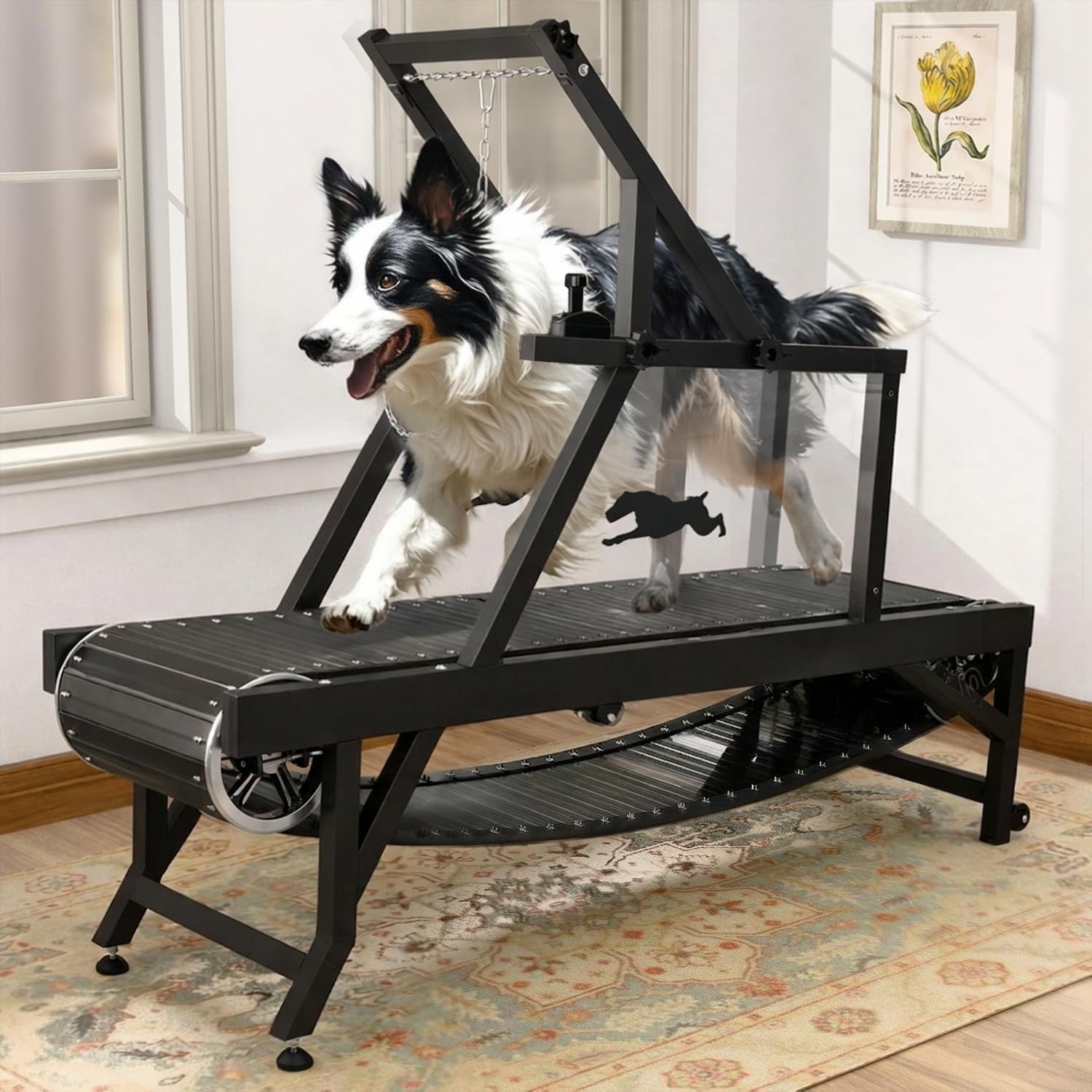
The HotFeed slat mill strips away the motor in favor of a self-powered fiberglass track that lets the dog dictate every step of the pace. The 3-level adjustable braking system provides customizable resistance so a novice dog feels a gentle cradle while a conditioned athlete gets a legitimate workout. The carbon steel frame weighs 120 pounds and sits rock-solid during sprints, which matters when a 70-pound Pit Bull hits full stride.
Clear acrylic side panels give you full visibility of paw placement without obstructing the dog’s peripheral awareness, and the aluminum rollers with shock-absorbing silent wheels keep the track noise lower than traditional wooden slat mills. The adjustable forward-tilt frame lets you increase resistance by shifting the dog’s center of gravity slightly uphill — a feature that mimics natural terrain changes without requiring electricity.
Assembly is the main friction point: hooking up the belt track is a two-person job that can take an evening, and some owners report the plastic side panels cracked within two months of daily use. The brake handle slows the track but doesn’t lock it fully, so you still need to supervise actively. Multi-dog households appreciate that each animal can work at its own speed without waiting for a belt to reset.
Why it’s great
- Dog controls pace — no speed anxiety
- Fiberglass track is splinter-free and durable
- Adjustable incline for progressive resistance
Good to know
- Assembly is difficult without a second person
- Plastic side panels may crack over time
- Brake slows but does not fully stop the track
3. Kolmmeo Non-Motorized Dog Treadmill

The Kolmmeo slat mill brings a handbrake-assisted braking system to the self-powered category, giving owners instant manual slowdown capability without touching the track itself. The 5-level incline lets you graduate a dog from flat conditioning to hill-style resistance over weeks, and the environmentally friendly polyethylene slats are lighter than wood, easier to clean, and friendlier to paw pads than synthetic planks that heat up in summer.
A built-in pedometer records exercise duration and speed data on a small LED display, so you can track progress without a separate wearable. The 67-inch track length accommodates larger breeds like German Shepherds and Belgian Malinois, and the 104-pound frame stays grounded during hard sprints. The wheel hub protective cover prevents loose clothing or tails from catching on rotating parts.
The track joining process during assembly is widely described as the most frustrating part of the experience — ratchet straps are almost mandatory to align the belt correctly, and even then some misalignment can occur. The plastic slats are quieter than wood but still produce a moderate rumble that may be audible through floors in apartment buildings. Owners who push through the setup report a machine that handles daily high-mileage sessions without mechanical degradation.
Why it’s great
- Handbrake provides instant speed control
- Polyethylene slats are paw-friendly and easy to clean
- Digital pedometer tracks session data
Good to know
- Track assembly is very difficult solo
- Moderate noise — may transfer through floors
- LED display is not backlit, hard to read in dim light
4. CIIHI Dog Treadmill
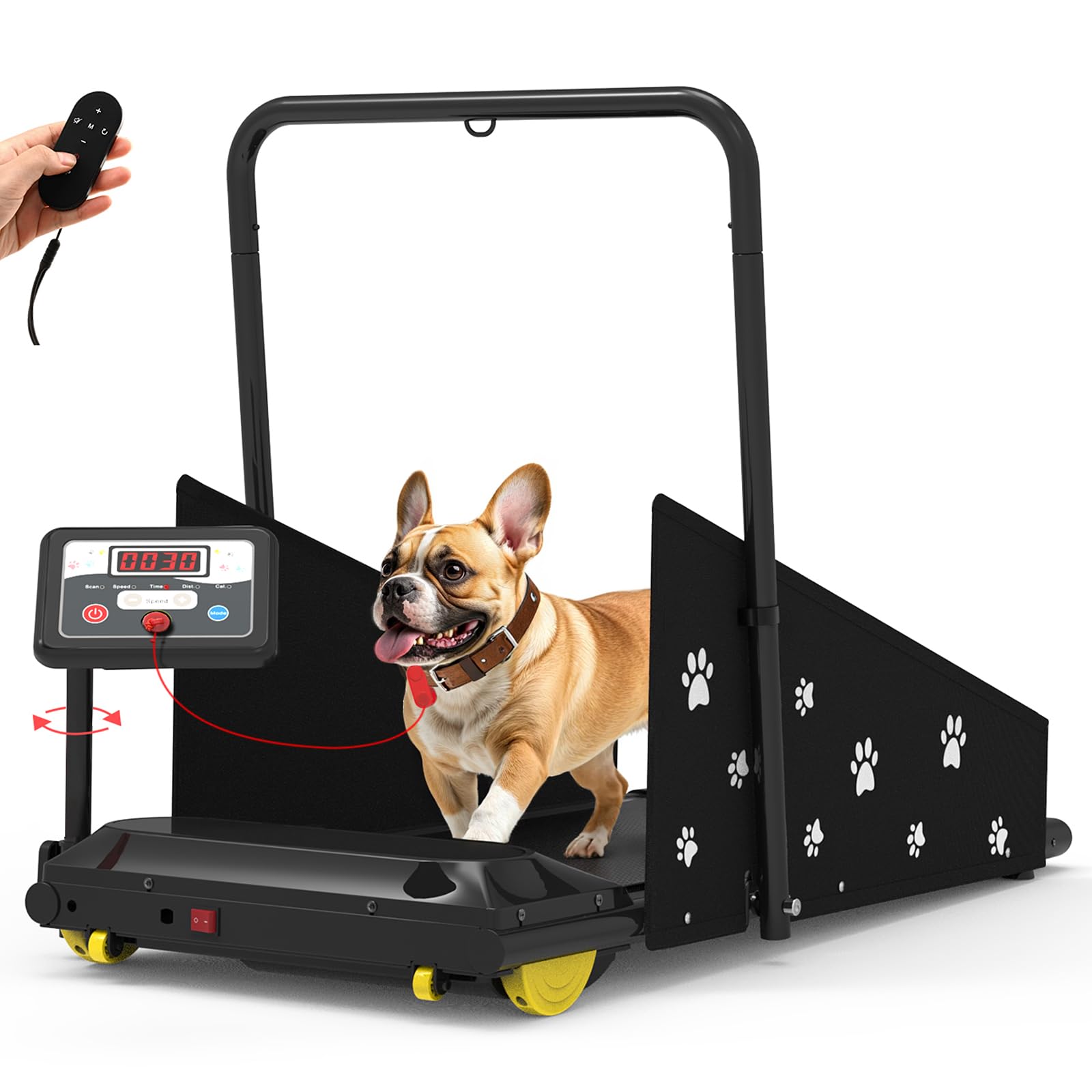
The CIIHI packs a 1.5 HP motor into a compact frame that doubles as a human walking pad once you remove the side panels and armrests. The 360-degree rotatable display means you can read speed and time from any position in the room — no walking to the front panel mid-session. The 265-pound weight capacity and 36.22-inch belt length fit small to medium breeds like Corgis, Beagles, and Miniature Poodles with room to spare.
Safety gets covered by enclosed side panels that prevent paw drift and a magnetic safety key that cuts power the moment the leash or dog detaches. The remote includes a mute button that silences the beeping sounds that often spook sensitive dogs during speed changes. Two built-in wheels let you tilt and roll the 42-pound unit under a sofa or bed when not in use.
A small number of units arrive with an “ERR” code on the display right out of the box, which suggests potential quality control gaps in the electronics. The 1.5 HP motor is adequate for walking and light jogging but struggles to sustain higher speeds for longer sessions. Owners who need a budget-friendly entry point for a sub-40-pound dog find the CIIHI delivers solid daily value.
Why it’s great
- 2-in-1 design works for both dog and owner
- Rotatable display visible from any angle
- Remote with mute button reduces noise anxiety
Good to know
- Some units show error codes on first power-up
- 1.5 HP motor lags at sustained high speeds
- Best suited for dogs under 40 pounds
5. Petbobi Dog Treadmill
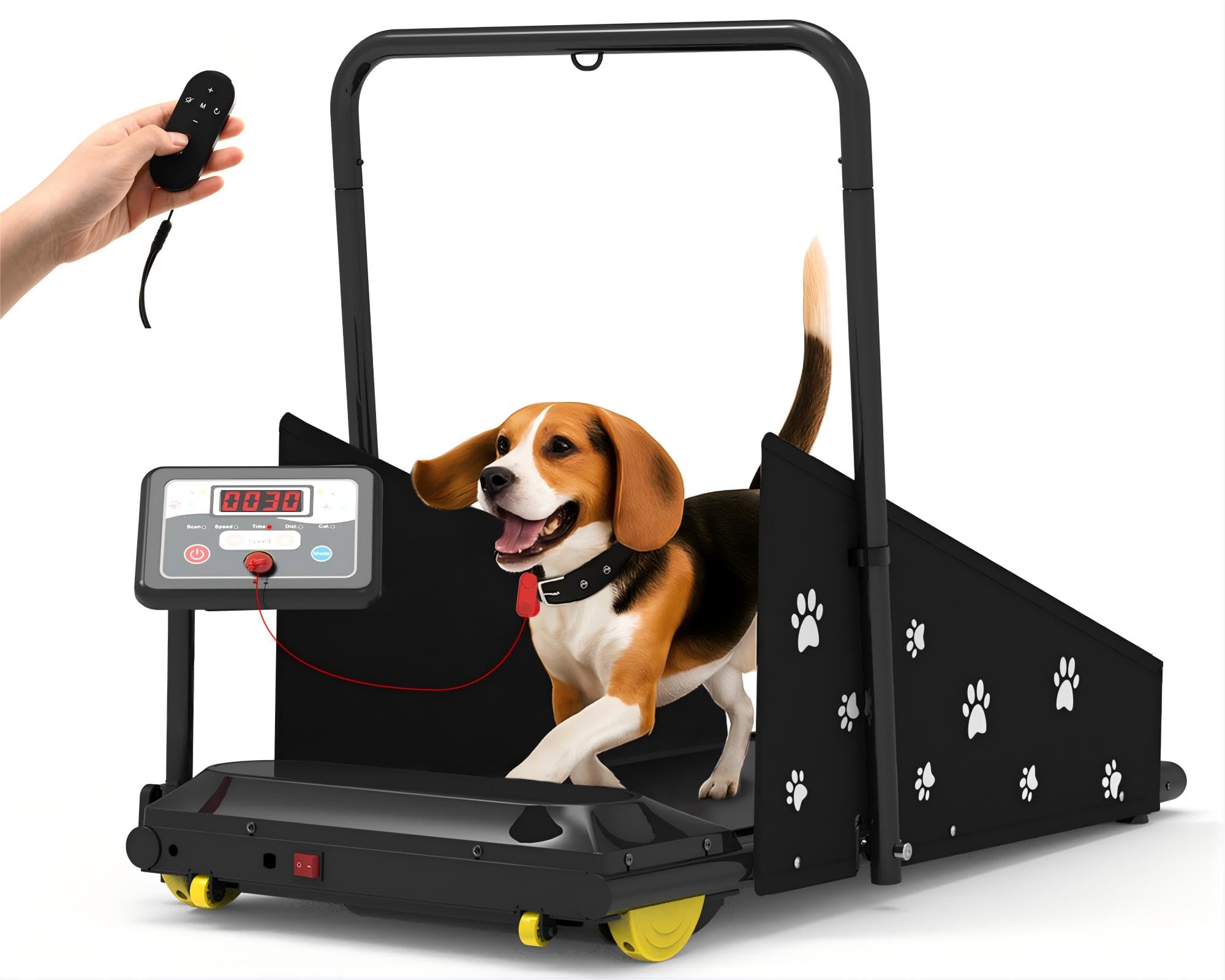
The Petbobi differentiates itself through acoustic refinement — its motor operates below 55 decibels, which is quieter than a normal conversation and dramatically less jarring for sound-sensitive breeds like Whippets or anxious rescues. The 360-degree rotatable LCD screen and remote control mirror the CIIHI’s layout, but the Petbobi folds down to a 7.28-inch height, making it one of the thinnest storage profiles in this segment.
Enclosed side panels, a magnetic safety key, and a top leash ring provide three independent safety layers. The 36.2-inch belt supports dogs up to 80 pounds per the manufacturer’s recommendation, though longer-bodied dogs like Border Collies may find the stride length restrictive at higher speeds. The alloy steel frame weighs 42 pounds and includes front wheels for tilting and rolling.
Assembly is genuinely tool-free out of the box — just unfold and plug in, which removes the friction point that frustrates owners of other models. Some early adopters noted that the belt width feels tight for dogs with broad chests like Bulldogs or Boston Terriers. The 12-month warranty is standard, but the brand’s customer service response time varies based on recent reports.
Why it’s great
- Exceptionally quiet <55 dB motor
- Zero-tool assembly — unfold and use
- Ultra-thin folded profile for storage
Good to know
- Belt is narrow for broad-chested breeds
- Best for dogs under 25-30 lbs per user reports
- Customer support response can be slow
6. REDLIRO Dog Treadmill
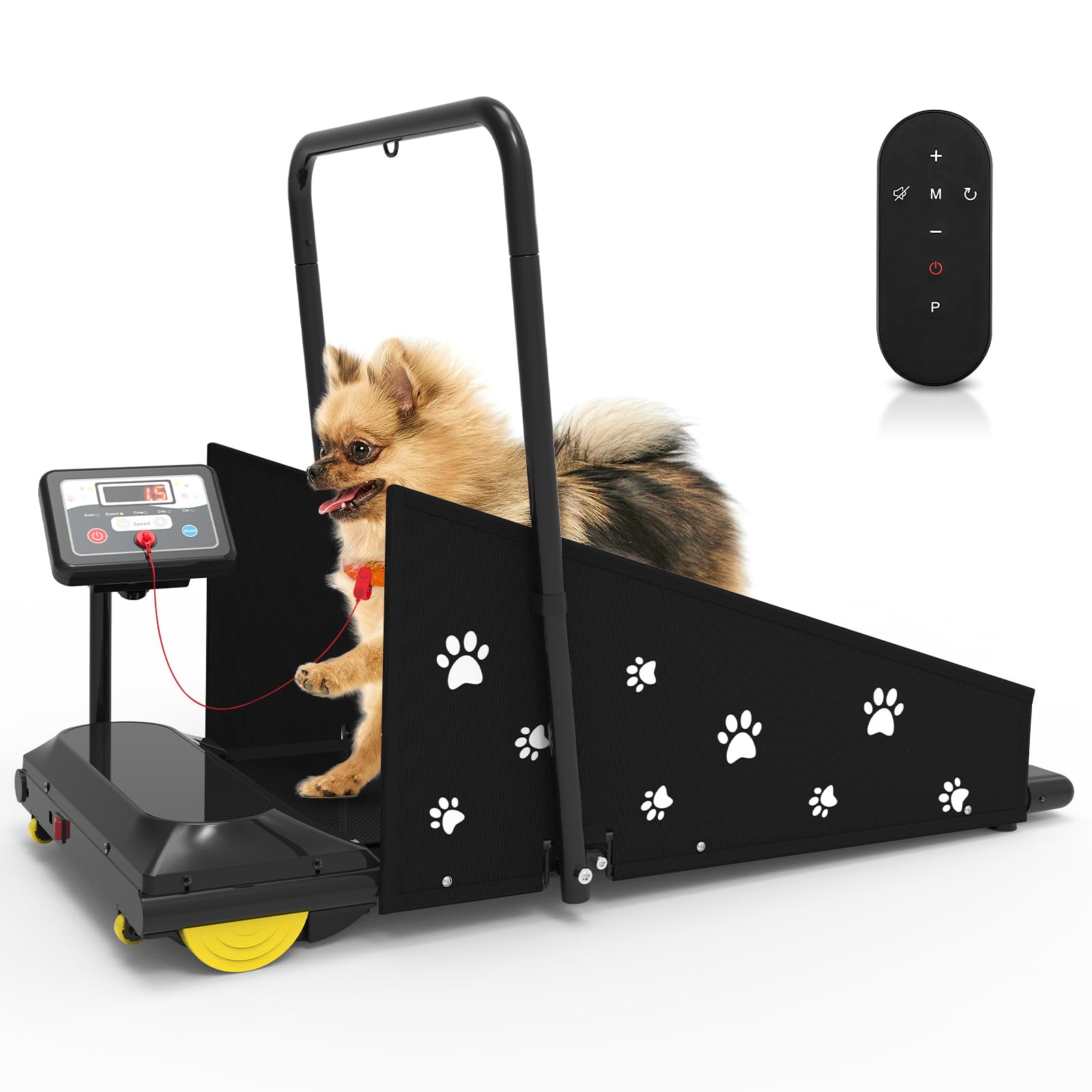
The REDLIRO focuses on gentle, consistent movement perfect for senior dogs, post-surgery recovery, or overweight pets starting a weight management program. The 0.5 to 4.0 mph speed range keeps the pace low enough that an older dog with arthritis can walk without joint stress while still providing enough resistance to build muscle over weeks. The low running platform lets dogs step on and off without a high climb.
Dual side safety rails block visual distractions and prevent paw drift, while the front crossbar offers a leash attachment point for guiding nervous first-timers. The foldable frame with built-in wheels slides under most beds, and the 42-pound weight makes it manageable to reposition between rooms. The LCD remote display tracks time, speed, and estimated calorie burn.
The 4.0 mph speed ceiling limits this machine to walking and light jogging—it won’t satisfy a high-energy breed that needs sprint work. Multiple users reported that the motor failed within the first few uses, suggesting batch-level reliability issues. The 47.83-inch length seems generous until you account for the fact that a 40-pound puppy with a longer body may find the belt too short for a natural gait.
Why it’s great
- Low platform makes entry easy for seniors
- Foldable frame stores compactly under furniture
- Gentle speed range ideal for weight loss programs
Good to know
- Motor reliability is inconsistent across units
- 4.0 mph max speed too slow for high-energy dogs
- Belt length may be short for long-bodied breeds
7. THERUN Incline Treadmill
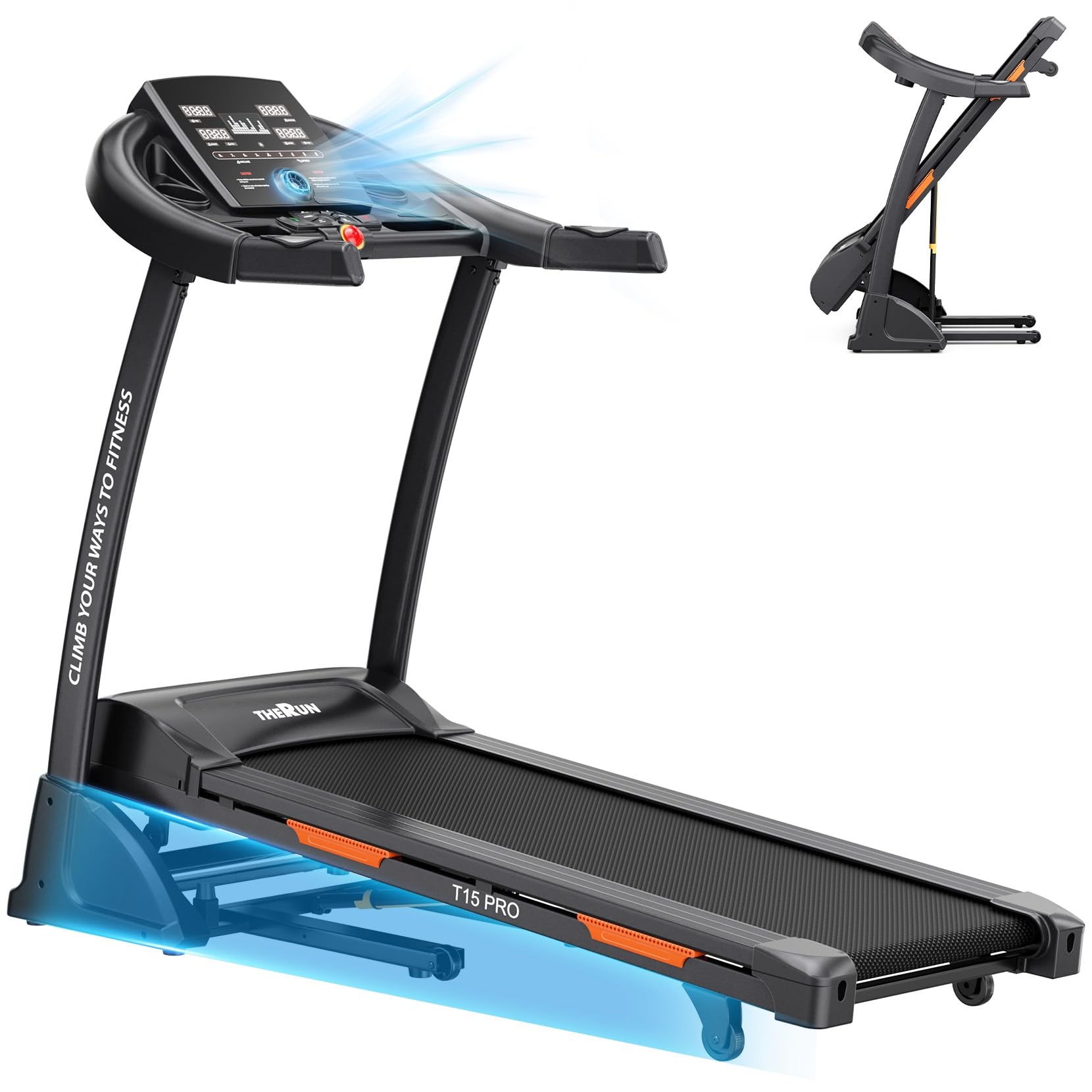
The THERUN is primarily a human treadmill, but its 3.5 HP motor, 17-inch wide belt, and 0 to 15 percent auto incline make it equally viable for owners who want to train alongside their dog. The 47.2-inch deck gives tall humans a full stride while also leaving room for a large-breed dog to trot at the owner’s side. The five-layer textured belt provides enough grip for fast sprints and steep inclines without slipping.
Bluetooth connectivity with FitShow, Kinomap, and Zwift adds virtual trail running scenarios that keep both you and your dog mentally engaged during indoor sessions. The built-in cooling fan lowers body temperature during high-intensity work, which matters when a heavy-coated breed like a Husky runs indoors. The folding frame with transport wheels makes it possible to store upright in a closet despite its 60-inch length.
The THERUN is expensive compared to purpose-built dog treadmills, and its upright computer console and side rails are designed for human biomechanics, not canine safety. A dog running off-center could step onto the edge of the belt where the deck support changes. This machine works best for owners who will use it primarily for their own fitness while occasionally walking their dog on a flat, slow setting under direct supervision.
Why it’s great
- 3.5 HP motor handles sustained high-speed running
- 17-inch wide belt provides ample lateral space
- App connectivity adds virtual trail variety
Good to know
- Designed for humans first — no canine-specific safety panels
- Heavy unit at over 100 pounds
- Not a dedicated dog treadmill — supervision is essential
8. PawPaw’s Dog Treadmill
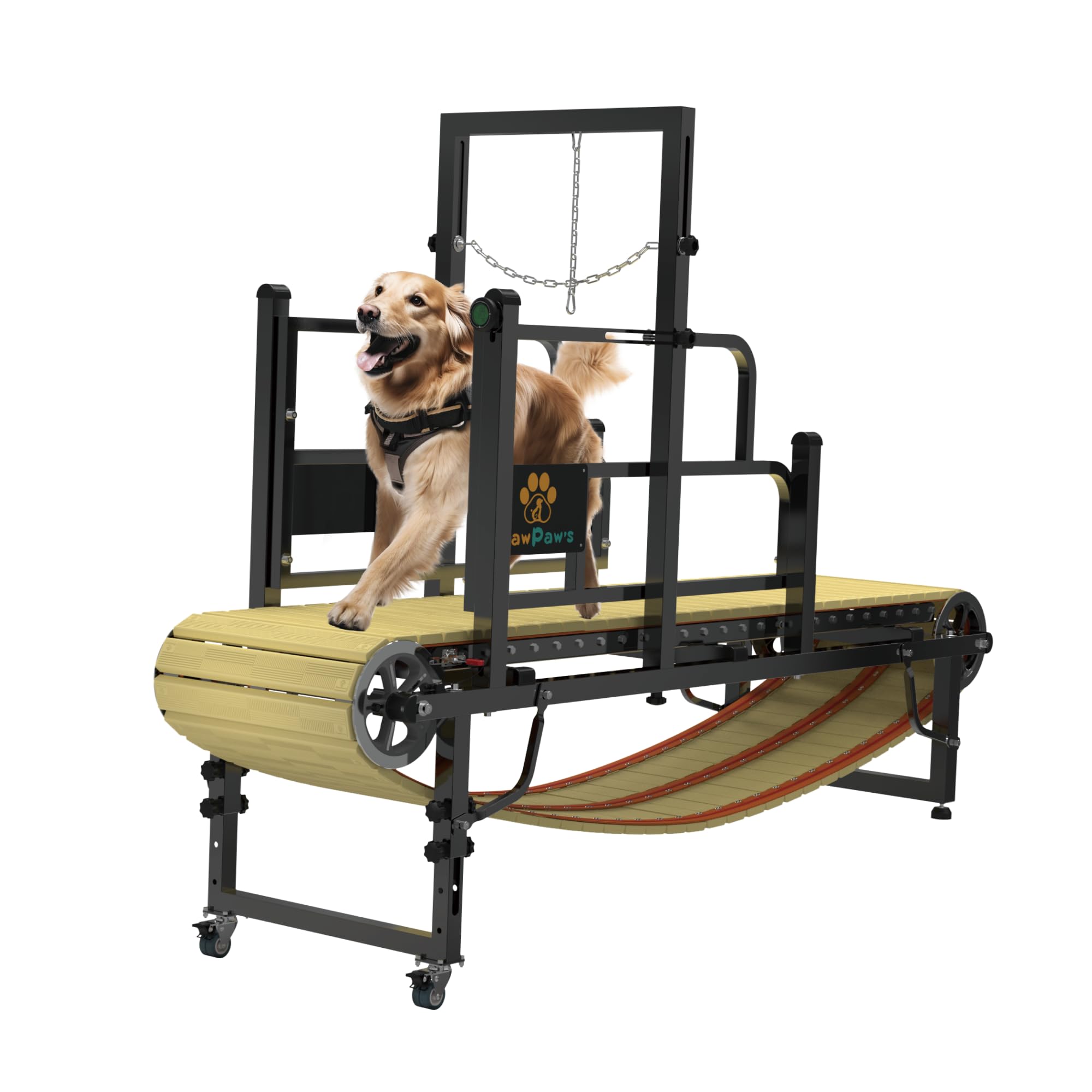
PawPaw’s returns to the fundamentals with a non-electric slat mill built from a carbon steel frame, solid wood track, and aluminum rollers. The 330-pound weight capacity and 69-inch track length accommodate the largest working breeds like Mastiffs and Great Danes, and the manual design means zero motor noise or electrical failure risk. The dog sets the pace naturally, which eliminates the “frozen-on-the-belt” anxiety that motorized units trigger in timid dogs.
The solid wood slats provide a natural running surface that doesn’t get slippery when wet, and the adjustable height allows the frame to align with different dog wither heights. Owners report that their dogs — from 15-pound Yorkies to 85-pound shepherds — adapt quickly because the movement mimics outdoor running more closely than a motorized belt. An active 45-pound Lab mix logged over 300 minutes in the first week without hesitation.
The absence of a brake means you must manually stop the track with your hand or foot, which requires constant supervision and a quick reaction time. Some units arrived with broken slats during shipping, and the belt assembly process involves bending metal parts to fit, which indicates inconsistent manufacturing tolerances. The Medium model is too small for a standard 50-pound dog — most buyers recommend sizing up to the Large model immediately.
Why it’s great
- Massive 330-pound capacity for huge breeds
- Solid wood track feels natural under paw
- Zero electricity cost or motor maintenance
Good to know
- No brake — requires active manual stopping
- Some units arrive with broken slats in transit
- Medium size is too small for standard dogs
9. FINEHORSE Walking Pad Treadmill
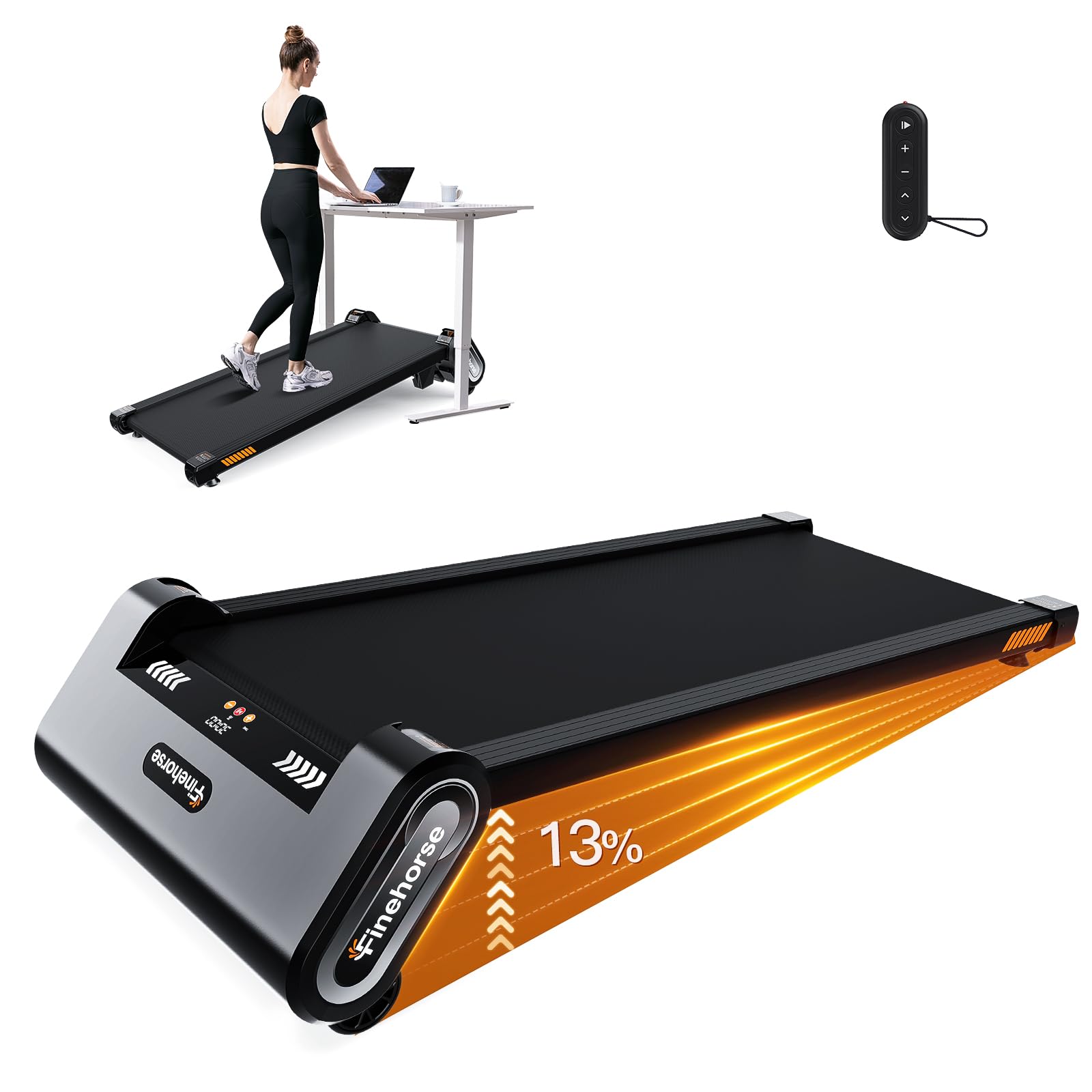
The FINEHORSE is a human walking pad first, but its 2.5 HP motor, 6-level auto incline, and 330-pound capacity make it a dual-purpose option for owners who want to walk while their dog walks beside them. The 39.4-inch belt length and 15.7-inch width provide enough room for a medium dog to trot alongside you on flat ground, and the incline adds terrain variety for the human without forcing the dog to work uphill.
The motor cover folds up to activate the incline, which creates a slight ramp that you can use to increase your own workout intensity while the dog walks on the flat portion. Four shock absorbers and ten shock-absorbing pads reduce noise transfer to the floor below, making this unit viable for apartment dwellers who need to stay quiet. The LED display tracks speed, distance, time, and calories, and the remote control clips to your wrist for hands-free adjustment.
This is not a dedicated dog treadmill — there are no side panels, no leash attachment point, and no safety key designed for canine use. A dog can step off the edges easily, and the belt surface is standard textured PVC, which may feel unfamiliar under paw compared to a slat mill or carpeted track. Some units developed a ticking noise within a week of use, though the manufacturer replaced those units under warranty. It works best as a shared fitness solution where the dog walks calmly on leash beside you at low speed.
Why it’s great
- Dual-purpose for owner and dog to walk together
- Six incline levels add human workout variety
- Quiet motor and shock absorption suite
Good to know
- No canine safety panels or leash attachment point
- Belt surface is PVC — different feel than slat mill
- Some units develop mechanical noise within weeks
FAQ
How long does it take to train a dog to use a treadmill?
Can a dog treadmill replace daily outdoor walks entirely?
What is the ideal speed range for a beginning dog?
How do I measure my dog for treadmill belt fit?
Do manual slat mills need regular maintenance?
Final Thoughts: The Verdict
For most owners, the dog treadmill winner is the FLIMDER (Model 01) because its 2.5 HP motor, 0.5-6.0 mph speed range, and 12 preset programs offer the flexibility to grow with your dog from beginner walks to advanced sprints without buying a second machine. If you prefer a self-powered setup that lets your dog set the pace naturally and avoids motor failures entirely, the HotFeed Slat Mill delivers a bombproof carbon steel frame with adjustable resistance for multi-dog households. And for owners of giant breeds or those who need a handbrake-assisted track with integrated activity tracking, the Kolmmeo Slat Mill brings the most refined safety and monitoring package at the premium end of the market.

Mo Maruf
I created WellFizz to bridge the gap between vague wellness advice and actionable solutions. My mission is simple: to decode the research and give you practical tools you can actually use.
Beyond the data, I am a passionate traveler. I believe that stepping away from the screen to explore new environments is essential for mental clarity and physical vitality.