Our readers keep the lights on and my smoothie glass nicely filled. As an Amazon Associate, I earn from qualifying purchases.
A Labrador puppy’s jaw develops fast, and those needle-sharp baby teeth will find something to gnaw on — your baseboards, shoelaces, or furniture legs if you don’t provide a better outlet. The right toy for this stage needs to survive a teething storm while being soft enough for 28 baby teeth that are still learning bite inhibition. The difference between a toy that lasts a week and one that gets tossed aside after an hour comes down to rubber density, nylon hardness, and whether the design actually engages a puppy’s short attention span.
I’m Mohammad Maruf — the founder and writer behind WellFizz. I analyze hundreds of hours of customer feedback and compare material science specs across the pet toy market to identify which designs hold up under real puppy conditions and which ones simply look good on a shelf.
This guide breaks down the specific material formulations, sound features, and sizing considerations that matter most for a growing Lab. Read on for my top picks in the dog toys for lab puppies category to keep your pup busy and your home intact.
How To Choose The Best Dog Toys For Lab Puppies
Labrador puppies have a unique combination of high energy, strong jaws, and a natural desire to carry objects in their mouths. The wrong toy can lead to destructive chewing or worse — intestinal blockages from torn pieces. Focus on these three factors before buying anything.
Material Hardness and Puppy Safety
Puppy teeth are sharper but weaker than adult dog teeth. A toy that is too hard — like solid nylon meant for adult power chewers — can fracture those baby teeth or cause gum injury. Look for natural rubber formulations labeled specifically for puppies, which offer enough resistance to satisfy the chew drive without risking dental damage. The KONG Puppy rubber is a benchmark here because it flexes under pressure rather than resisting rigidly.
Size and Swallowing Risk
A Lab puppy grows fast, but at 8–16 weeks a toy that fits entirely inside the mouth poses a choking hazard. The general rule is that the smallest dimension of the toy should be larger than the width of the puppy’s open mouth. For a Lab puppy, this means toys around 4–5 inches in their narrowest dimension. Avoid toys with small appendages like tails or legs that can be chewed off and swallowed — unless you plan to supervise every play session.
Engagement Features vs. Obsessive Behavior
Squeakers, crinkle paper, and giggle tubes are effective at grabbing a puppy’s attention, but some pups become fixated on destroying the sound source. If your puppy is a determined chewer, choose toys where the sound mechanism is embedded deep inside thick rubber or reinforced fabric. For puppies that get anxious, a stuffable toy that holds frozen peanut butter or kibble provides longer mental stimulation without encouraging destructive disassembly.
Quick Comparison
On smaller screens, swipe sideways to see the full table.
| Model | Category | Best For | Key Spec | Amazon |
|---|---|---|---|---|
| KONG Puppy Toy | Mid-Range | Teething relief & crate training | Soft puppy rubber, 10.43″ length | Amazon |
| Kseroo 3-Pack Nylon Bones | Mid-Range | Aggressive chewers 25–90 lbs | Rock-hard nylon, bacon flavored | Amazon |
| Clifford Plush Toy | Premium | Comfort, crinkle & squeak play | 20″ plush with crinkle ears & tail | Amazon |
| Wobble Wag Giggle Ball | Budget-Friendly | Interactive sound enrichment | 5.5″ cube, phthalate-free vinyl | Amazon |
| Nocciola 4-Pack Ocean Toys | Premium | Multi-dog households & variety | 4 plush toys with ropes & squeakers | Amazon |
In‑Depth Reviews
1. KONG Puppy Toy
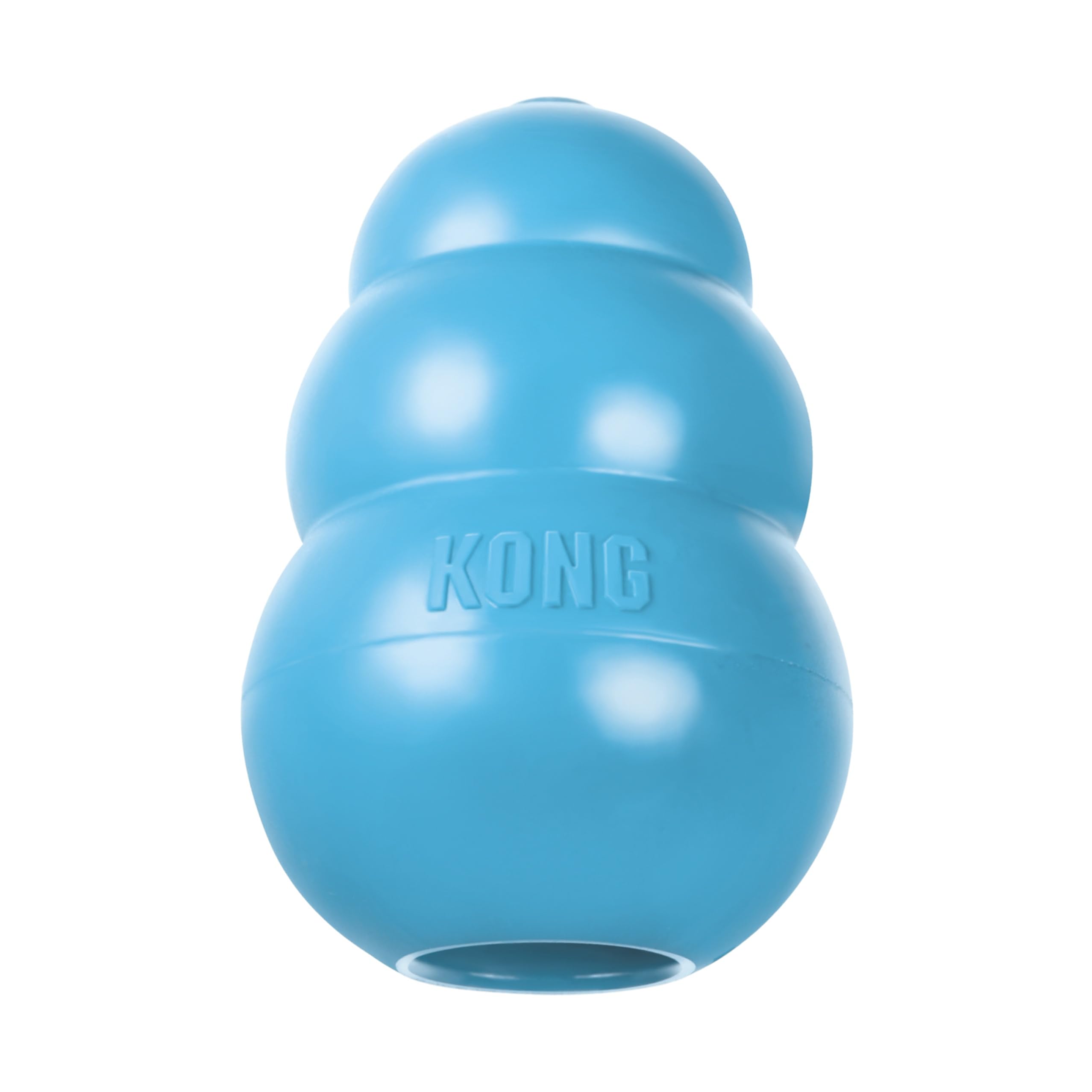
The KONG Puppy is the gold standard for teething Lab puppies because its natural rubber compound is formulated specifically for the 28 baby teeth stage. At 10.43 inches long and 200 grams, it is large enough to prevent accidental swallowing while light enough for a young pup to carry and fetch. The egg shape provides a satisfying bounce that encourages chasing, and the hollow center is designed to be stuffed with kibble, peanut butter, or yogurt to extend crate training sessions.
The rubber durometer here is softer than the classic red KONG designed for adult dogs, which means it flexes under pressure rather than resisting rigidly. That matters because a Lab puppy’s jaw strength develops faster than its bite inhibition. Owners report that freezing the stuffed toy adds another 15–20 minutes of occupied chewing time, which is critical during the 8–16 week window when destructive chewing peaks.
Durability reviews show it holds up well against non-super chewers, but owners of power chewers should note that no dog toy is truly indestructible. The material is dishwasher safe for easy cleaning, and the variance in color (blue or red depending on stock) does not affect performance. This is the one toy that belongs in every Lab puppy starter kit.
Why it’s great
- Perfect rubber softness for baby teeth without being too hard or too flimsy
- Stuffable core turns chew time into a mental enrichment activity
- Bounces unpredictably to engage natural chasing instincts
Good to know
- Not intended for adult power chewers who will shred the softer rubber
- Size may look small in product photos; measure against your puppy’s mouth before ordering
2. Kseroo 3-Pack Indestructible Dog Chew Toys
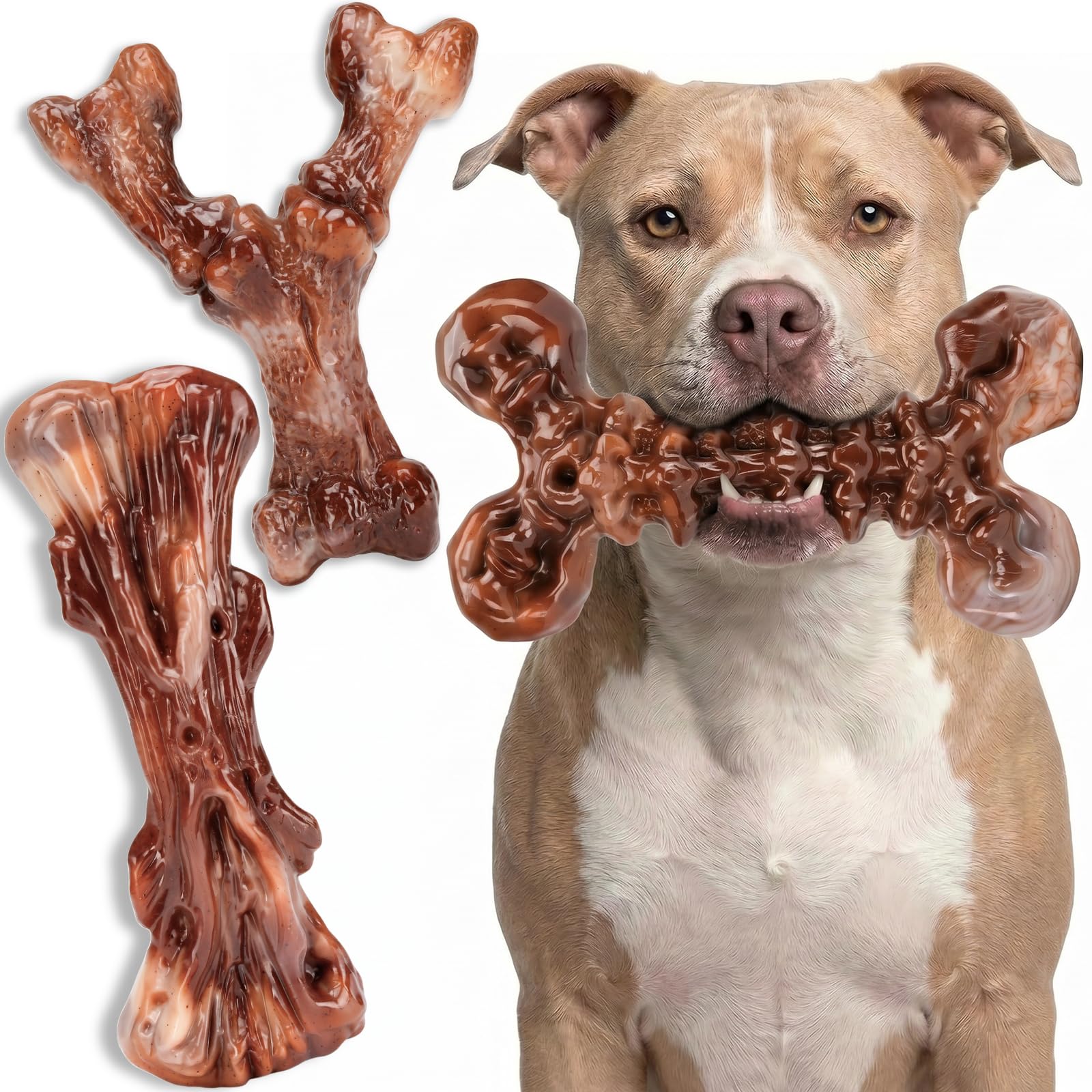
The Kseroo nylon bones are built for the Lab puppy that chews through everything in under an hour. Each bone is made from a high-density nylon formulation that is significantly harder than the KONG rubber, making it suitable for pups already transitioning to adult chewing patterns. The bacon flavor is infused into the material rather than coated on, so the scent doesn’t fade after a few uses — a critical detail because a Lab will lose interest in an unflavored nylon block almost immediately.
At 6 inches long and weighing 0.61 kilograms per pack of three, these bones have textured ridges and grooves designed to provide mild tartar control while the dog gnaws. The three different shapes vary the chewing experience — rounded edges for gentle gnawing and ridged sections for firmer bite resistance. This variety matters for a breed that gets bored with monotony. Multiple owners report that aggressive chewers from Labradors to Pit Bulls to Belgian Malinois have not broken these bones apart, with some lasting several weeks of daily use.
However, the rock-hard nylon construction means this is not a toy for very young puppies with fragile baby teeth. Use the KONG Puppy first, then graduate to these bones once the adult teeth start coming in around 4–6 months. The hard surface can also be loud when dropped on tile or hardwood floors. A few picky dogs found the bacon scent insufficient — if your puppy ignores them, try smearing a small amount of peanut butter into the grooves to build initial interest.
Why it’s great
- Dense nylon resists chunking even under sustained pressure from strong jaws
- Infused bacon flavor maintains appeal longer than surface-coated alternatives
- Three-piece set provides variety and backup when one bone is inevitably lost under the couch
Good to know
- Too hard for 8–16 week old puppies with baby teeth — wait until adult teeth emerge
- Some dogs are indifferent to the bacon scent; may require initial flavor coaxing
3. Clifford the Big Red Dog Plush Toy
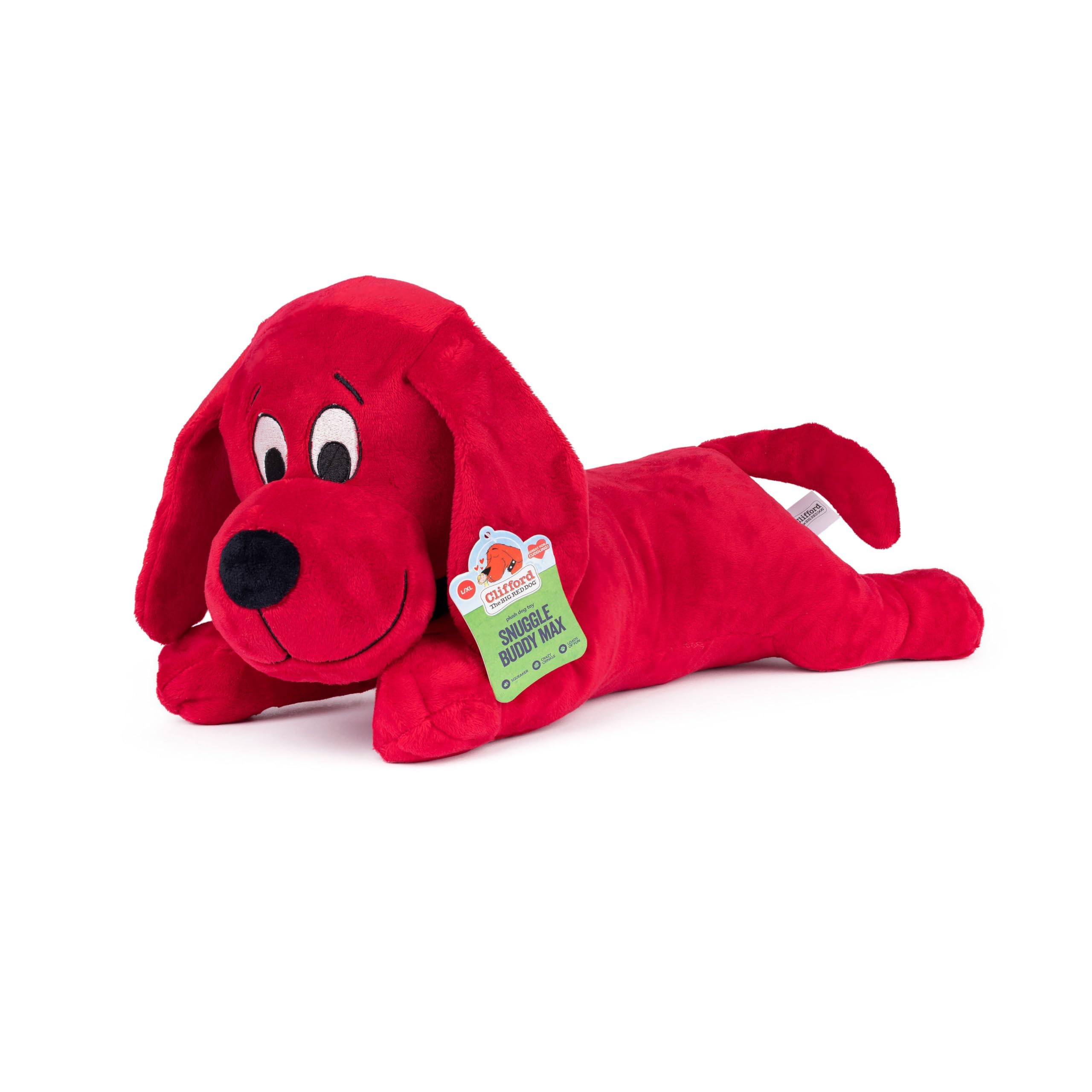
The Clifford plush toy serves a different purpose than the rubber and nylon options — it is designed for comfort, carrying, and light interactive play rather than sustained destruction. At 20 inches long, it is large enough that a Lab puppy cannot fit the entire toy in its mouth, which discourages shake-and-kill behavior. The crinkle material in the ears, paws, and tail provides auditory stimulation without the sharp poke of a hard plastic squeaker.
This toy works best for puppies in the 8–14 week range who are still learning what is appropriate to chew. The polyester fill is soft enough to be a nap companion, and the non-toxic materials pass the safety test for mouthing behavior. Owners of smaller breeds report that even Chihuahuas treat it as a friend rather than a chew target, while Lab owners note that the crinkle sounds keep their pups engaged during quiet indoor play without escalating into manic tearing.
The durability floor is lower here — puppies that are determined to disassemble will eventually rip seams, and the tails are the first casualty in many households. The Clifford branding and licensed design drive the cost slightly above generic plush toys of similar size. This is a supervised play and snuggle toy, not a chew toy. If your Lab puppy is already in the heavy-chewing phase, stick to the rubber or nylon options above.
Why it’s great
- Crinkle ears, paws, and tail provide three separate sound zones to explore
- Large size prevents swallowing and promotes carrying behavior rather than shredding
- Soft polyester material makes it suitable for naptime comfort as well as play
Good to know
- Not designed for aggressive chewers; seams will fail under determined gnawing
- Licensed character design commands a premium over generic plush toys
4. Wobble Wag Giggle Ball

The Wobble Wag Giggle Ball uses an entirely different engagement mechanic — internal tubes that produce a giggling sound when the ball rolls or shakes, without requiring batteries. For a Lab puppy that gets bored with silent toys, this auditory feedback creates a cause-and-effect loop that keeps them chasing and bumping the ball around. The 5.5-inch cube shape prevents it from rolling in a straight line, adding unpredictability that matches a puppy’s short attention span.
The material is phthalate-free vinyl, which is softer than hard plastic but still too large for most Lab puppies to fit entirely in their mouth. The six clutch pockets around the surface allow the dog to pick up and carry the ball, which satisfies the retriever instinct Labs are bred for. Owners report that puppies in the 10–20 pound range find the size engaging without being frustrating, and the sound is loud enough to be heard across a living room but not shrill enough to annoy humans.
Durability is the main variable here — some units hold up for years, while others develop cracks within hours of play. The vinyl construction does not withstand the sustained pressure of a determined Lab puppy who treats the ball as a chew target rather than a chase object. If your puppy is a dedicated chewer, limit play to supervised sessions and remove the ball at the first sign of surface damage to prevent ingestion of vinyl shards.
Why it’s great
- Giggle sound motivates movement without requiring batteries or charging
- Erratic rolling pattern keeps puppies engaged longer than a standard ball
- Clutch pockets satisfy the natural retrieving and carrying instinct
Good to know
- Vinyl shell can crack under aggressive chewing; not a chew toy
- Sound quality may diminish if the internal tubes shift or get blocked
5. Nocciola 4-Pack Crinkle Squeaky Dog Toys

The Nocciola ocean-themed pack gives you four distinct plush toys — an octopus, salmon, hermit crab, and sea shell — each with multiple fabrics, squeakers, crinkle paper, and rope attachments. For a Lab puppy that loves variety, rotating through these different textures and shapes prevents the boredom that leads to destructive behavior. The rope elements serve double duty as tug toys and dental cleaning tools during interactive play.
Each toy is constructed with six different fabric types to simulate lifelike textures, which appeals to a Lab’s curious mouthing behavior. The squeakers are embedded in each toy, so even if one fails, the others remain functional. Multiple owners in multi-dog households report that these toys survive tug-of-war between Labradors and bulldogs, though the fish design showed seam separation on day one in a few cases. The 0.4 kilogram total weight means the entire set is light enough for a puppy to carry around the house.
The most serious concern here is the internal crinkle material — one verified owner found clear plastic wrap inside, which poses an intestinal obstruction risk if ingested. While this appears to be an outlier based on the broader review pool, it warrants close supervision during the first few play sessions. If your puppy is a disassembler rather than a gentle chewer, these toys will not survive long-term use. For supervised play in a multi-toy rotation, the variety at this price point is hard to beat.
Why it’s great
- Four different shapes and fabric textures prevent playtime boredom
- Rope elements add tug-of-war functionality and dental cleaning action
- Multiple squeakers per toy maintain interest even if one fails
Good to know
- Some units contain clear plastic crinkle material that requires removal
- Durability varies by toy shape; fish bottom is the weakest seam
FAQ
At what age can a Lab puppy start using hard nylon chew toys?
Can I leave my Lab puppy unsupervised with a plush squeaky toy?
How do I clean rubber chew toys between uses?
Why does my Lab puppy ignore a toy that other dogs love?
Final Thoughts: The Verdict
For most users, the dog toys for lab puppies winner is the KONG Puppy Toy because its soft rubber formulation is specifically designed for teething puppies, it can be stuffed and frozen for extended crate training sessions, and its bounce encourages the chasing and retrieving behavior that Labs are genetically programmed to love. If you need heavy-duty nylon bones that survive a power chewer, grab the Kseroo 3-Pack. And for supervised variety that keeps boredom at bay, the Nocciola 4-Pack Ocean Toys offers the best rotation of textures and sounds for a growing puppy.

Mo Maruf
I created WellFizz to bridge the gap between vague wellness advice and actionable solutions. My mission is simple: to decode the research and give you practical tools you can actually use.
Beyond the data, I am a passionate traveler. I believe that stepping away from the screen to explore new environments is essential for mental clarity and physical vitality.