Our readers keep the lights on and my smoothie glass nicely filled. As an Amazon Associate, I earn from qualifying purchases.
That musty, sweet, bread-like odor radiating from your dog’s coat isn’t just unpleasant — it’s a clear signal of a yeast overgrowth (Malassezia dermatitis) taking hold. The constant scratching, head shaking, and paw licking can turn a happy companion into a restless, uncomfortable pet, while the greasy, flaky skin and darkened patches make you feel helpless. Getting the right wash is the single most effective intervention, but with so many “natural” washes on the shelf that do nothing against fungal colonies, picking a treatment that actually penetrates the biofilm and restores the skin barrier is critical.
I’m Mohammad Maruf — the founder and writer behind WellFizz. I’ve spent hundreds of hours analyzing veterinary dermatology papers, cross-referencing active ingredient concentrations (chlorhexidine, ketoconazole, miconazole, benzoyl peroxide), and parsing real owner reports to separate fungal-targeting formulas from general-purpose deodorizers.
This guide cuts through the marketing noise to highlight treatments that deliver measurable relief from the itch, odor, and flaking associated with yeast dermatitis. You’ll find a focused, data-backed look at the best dog shampoo for yeast based on active ingredient strength, contact time requirements, and real-world results.
How To Choose The Best Dog Shampoo for Yeast
Yeast dermatitis is stubborn because Malassezia thrives in the warm, moist microclimate of the skin surface, protected by a biofilm that simple washes can’t penetrate. Choosing a shampoo requires matching the active ingredient to the severity of the infection, the sensitivity of your dog’s skin, and your willingness to follow the required contact time. Here are the three critical factors to evaluate.
Active Ingredients: The Antifungal Arsenal
The three most effective agents against canine yeast are chlorhexidine (typically 2-4%), ketoconazole (1%), and miconazole. Chlorhexidine offers broad antibacterial *and* antifungal coverage, making it ideal when yeast and bacteria co-exist. Ketoconazole specifically disrupts the fungal cell membrane, stopping reproduction. Miconazole is a gentler azole antifungal, often used in combination with chlorhexidine. Benzoyl peroxide (3%), while better known for follicular flushing and degreasing, also has antifungal properties and is useful for deep-seated infections in oily coats.
Contact Time: The Non-Negotiable Step
You cannot rinse-and-wipe with an antifungal shampoo and expect results. The active ingredients need a minimum of 5 to 10 minutes of wet contact time on the skin to penetrate the biofilm and kill the yeast cells. A shampoo that lathers heavily and rinses off quickly, regardless of the ingredients listed, will underperform every time. The best fungal shampoos are soap-free, low-sudsing formulas designed to stay in contact with the skin rather than bubble away.
Skin Barrier Integrity: Soap-Free Matters
Harsh detergents strip the skin’s natural oils and damage the stratum corneum, the outermost barrier that normally keeps yeast in check. A damaged barrier allows Malassezia to proliferate even faster in the days following a bath. Look for shampoos labeled “soap-free,” “sulfate-free,” or “low-lather” — these are formulated to treat the infection without creating a rebound flare-up. Ingredients like aloe vera, lactic acid, and Ophytrium can help soothe and repair the skin during treatment.
Quick Comparison
On smaller screens, swipe sideways to see the full table.
| Model | Category | Best For | Key Spec | Amazon |
|---|---|---|---|---|
| Vetnique Dermabliss | Dual-Action | Yeast & Bacteria Combo | 2% Chlorhexidine / 1% Ketoconazole | Amazon |
| Douxo S3 SEB | Seboregulating | Oily, Flaky Skin & Dandruff | 0.5% Ophytrium | Amazon |
| Miracle Vet Medicated | Anti-Yeast | Yeast, Hot Spots & Allergies | Hydrocortisone & Antifungals | Amazon |
| Nootie Medicated | Vet-Trusted | Chronic Skin Issues & Itch Relief | Ketoconazole & Chlorhexidine | Amazon |
| Vetoquinol BPO-3 | Deep Cleaning | Follicular Flushing & Greasy Coats | 3% Benzoyl Peroxide | Amazon |
In‑Depth Reviews
1. Vetnique Dermabliss Medicated Dog Shampoo
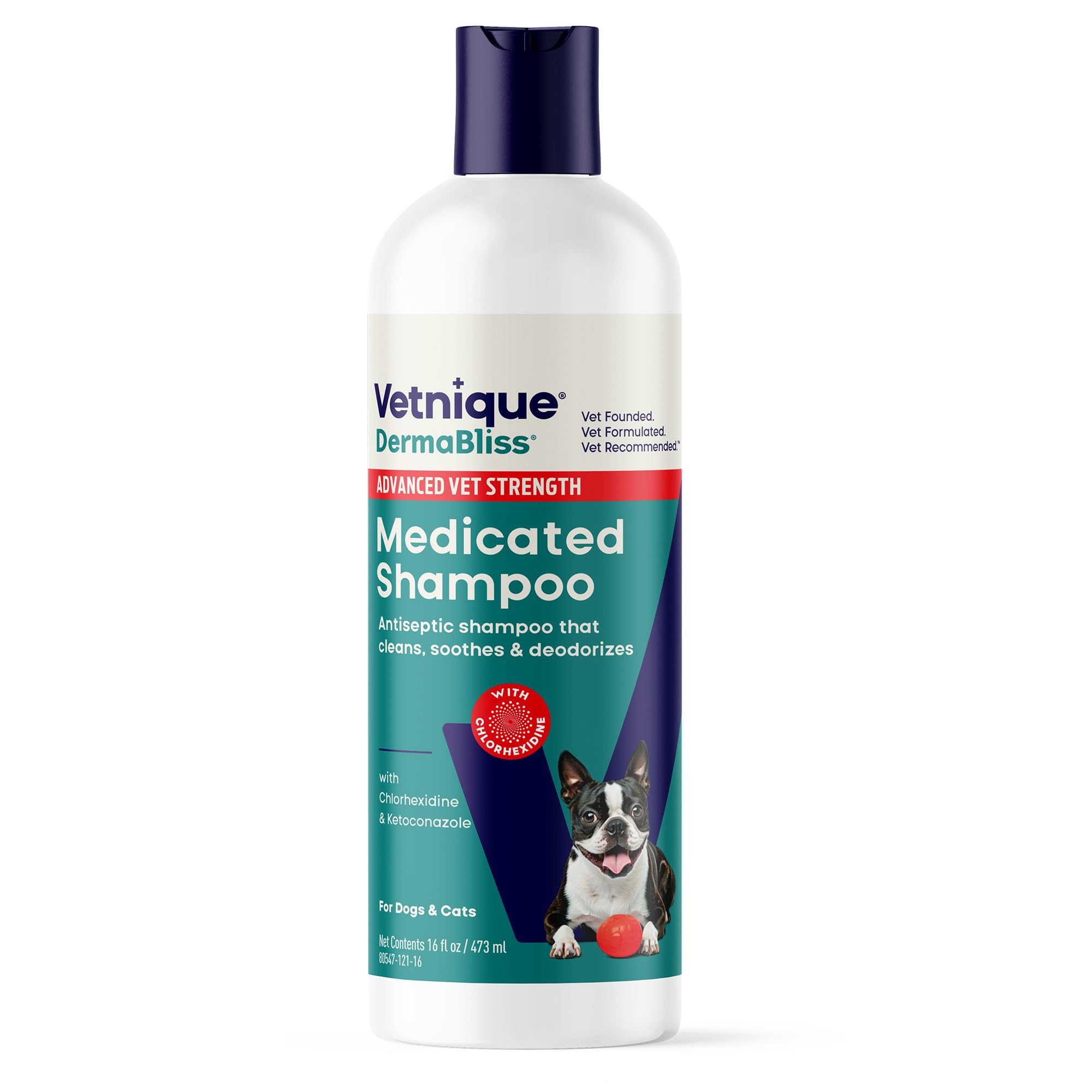
The Dermabliss formula pairs 2% chlorhexidine with 1% ketoconazole, creating a dual-action assault that covers both Malassezia yeast and the Staphylococcus bacteria that often co-infect yeast-damaged skin. This combination means one bottle handles the musty odor, the red inflamed patches, and the greasy flakes without needing a separate antibacterial wash. The lactic acid component lifts away dead skin cells, allowing the actives to reach the living epidermis where the yeast resides.
Designed as a soap-free, low-lathering clinical rinse, this shampoo requires proper contact time — wet the coat, work in a light lather, then leave it on for 5 to 10 minutes before rinsing. Users report noticeable reduction in scratching after a single wash, with complete clearing of stubborn rashes within three baths. The aloe vera helps prevent the skin from drying out, which is critical because a damaged barrier invites yeast regrowth within days.
The formula is safe for both dogs and cats of all ages, and the light clean scent avoids the medicinal odor that some antifungal shampoos carry. For multi-pet households managing chronic skin issues across breeds like Bulldogs, Frenchies, and Labradors, this dual-action approach delivers the most reliable results without needing to rotate multiple products.
Why it’s great
- Dual chlorhexidine/ketoconazole treats yeast and bacteria simultaneously
- Soap-free, low-lather design protects the skin barrier during treatment
- Safe for both dogs and cats across all life stages
- Concentrated formula — a small amount goes a long way per bath
Good to know
- Requires full 5-10 minute contact time for effectiveness — not a quick wash
- Low-lather texture may feel unusual to owners accustomed to sudsy shampoos
2. Douxo S3 SEB Dog Seboregulating Shampoo
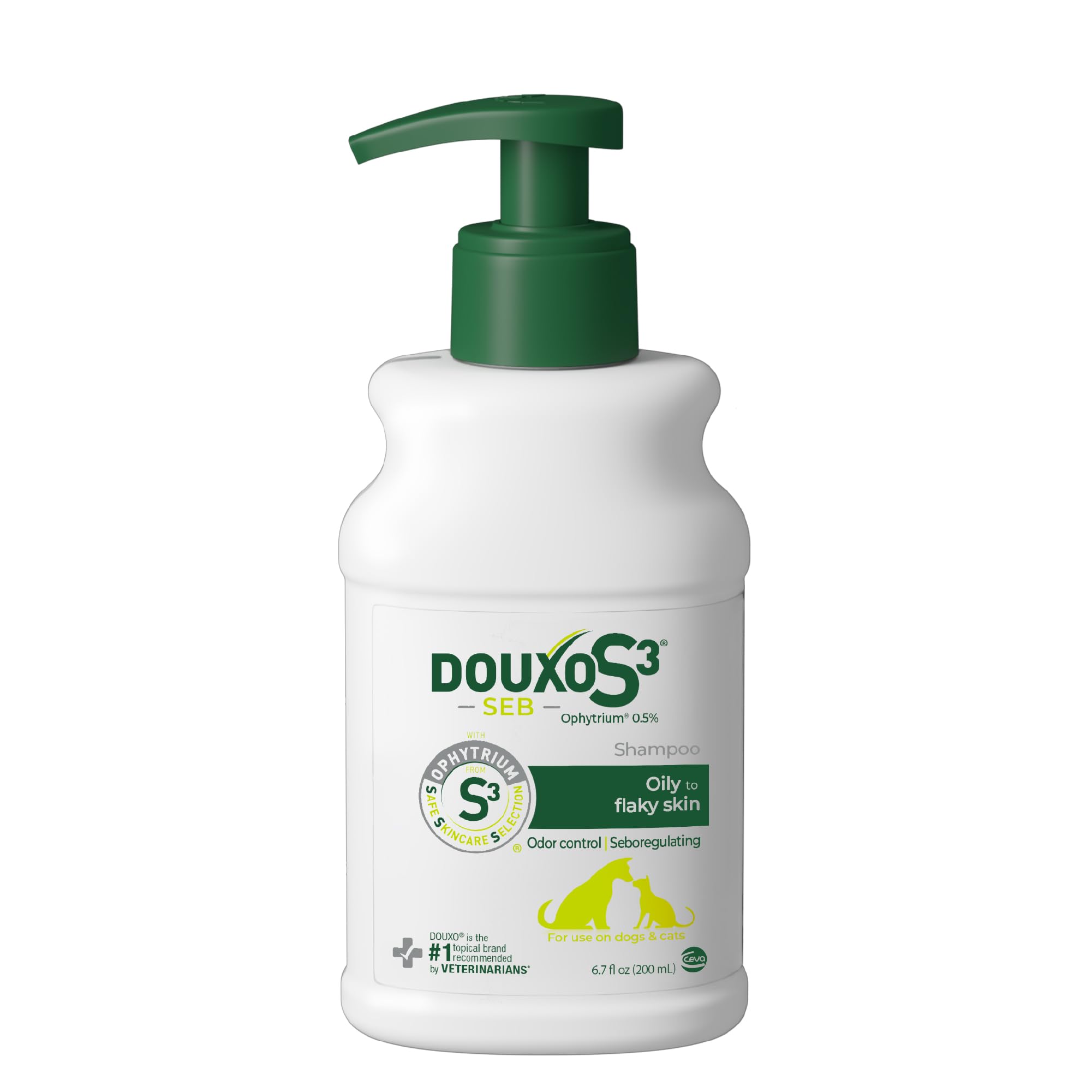
Douxo S3 SEB takes a different approach than direct antifungal shampoos by normalizing sebum production, the underlying cause of the greasy, flaky skin that provides a perfect breeding ground for yeast. The active ingredient, Ophytrium, is a purified natural compound that soothes irritation and supports skin hydration at the cellular level. This makes it particularly effective for dogs with chronic seborrhea where the skin is both oily and flaky in different patches.
Unlike chlorhexidine-based formulas, this shampoo does not contain a broad-spectrum antifungal, so it works best for dogs whose yeast overgrowth is secondary to sebum dysregulation rather than a primary infection. Owners of breeds prone to seborrhea, such as Cocker Spaniels and West Highland White Terriers, report visible reduction in dandruff, greasiness, and the characteristic oily odor within one to two washes. The formula is free of soaps, sulfates, parabens, and colorants, making it suitable for dogs with multiple chemical sensitivities.
For best results, the manufacturer recommends pairing this shampoo with the Douxo S3 SEB mousse for maintenance between baths. Clinically proven results can appear in as little as seven days when used correctly, with the 5-minute contact time being essential. The fresh, sweet scent is light and pleasant, a relief for owners who find medicinal smells overwhelming during frequent bathing routines.
Why it’s great
- Addresses the root cause of yeast-prone skin by normalizing sebum production
- Clinically proven results visible within seven days
- Free from soaps, sulfates, parabens, and colorants — ideal for sensitive dogs
- Light, pleasant scent compared to strong medicinal alternatives
Good to know
- Not a broad-spectrum antifungal — may not resolve active yeast infections alone
- Requires consistent paired use with the mousse for maintenance
- Higher price per ounce compared to chlorhexidine-based options
3. Miracle Vet Medicated Dog Shampoo for Itchy Skin Relief
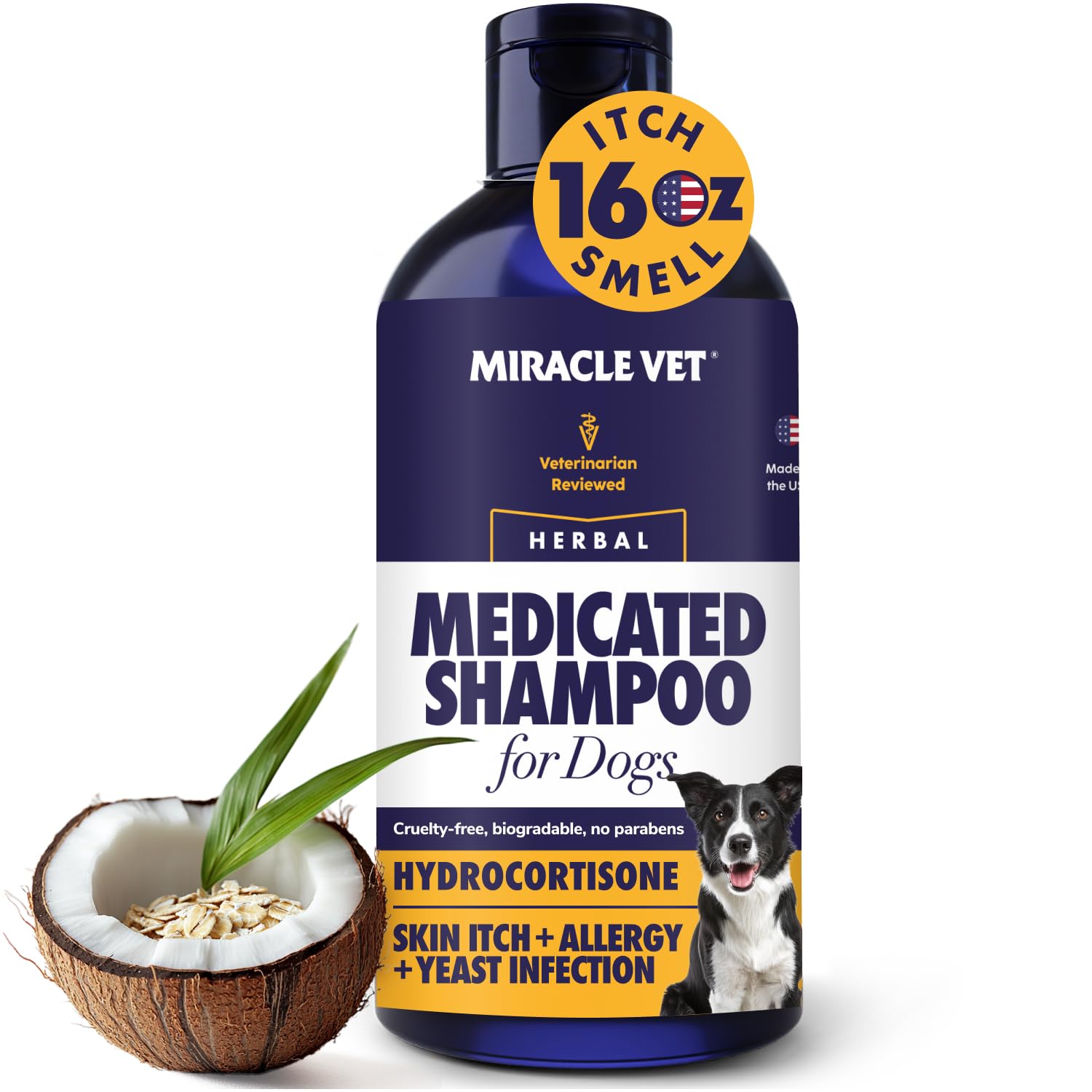
Miracle Vet combines antifungal and antibacterial agents with hydrocortisone, offering rapid relief from the intense itching that accompanies yeast infections. The hydrocortisone component provides immediate anti-inflammatory action, reducing redness and calming the urge to scratch within the first bath, while the antifungal ingredients work to eliminate the underlying fungal overgrowth. This dual-mechanism approach is particularly useful for dogs that have scratched themselves raw before a diagnosis is made.
The formula includes oatmeal and moisturizing agents to counteract the drying effect of medicated washes, supporting skin barrier repair even as the active ingredients do their work. Owners report that the pleasant herbal scent lingers for days on the coat, a welcome change from the musty yeast odor. The gel-like consistency lathers well when diluted, and users find the bottle lasts through multiple baths on medium-sized dogs.
Designed for dogs with allergies and sensitivities, this shampoo also targets environmental and food-related dermatitis that can trigger yeast flares. The comprehensive coverage — antifungal, antibacterial, anti-itch, and moisturizing — makes it a strong all-in-one option for owners managing multiple skin issues simultaneously. The manufacturer confirms it is safe for puppies as young as eight weeks old.
Why it’s great
- Hydrocortisone provides fast, noticeable anti-itch relief during the first bath
- Comprehensive coverage: antifungal, antibacterial, anti-itch, and moisturizing
- Pleasant herbal scent that masks yeast odor effectively
- Safe for young puppies starting at eight weeks
Good to know
- Hydrocortisone may not be suitable for dogs with Cushing’s disease or other endocrine conditions
- Gel consistency requires thorough mixing with water to distribute evenly
4. Nootie Medicated Pet Shampoo
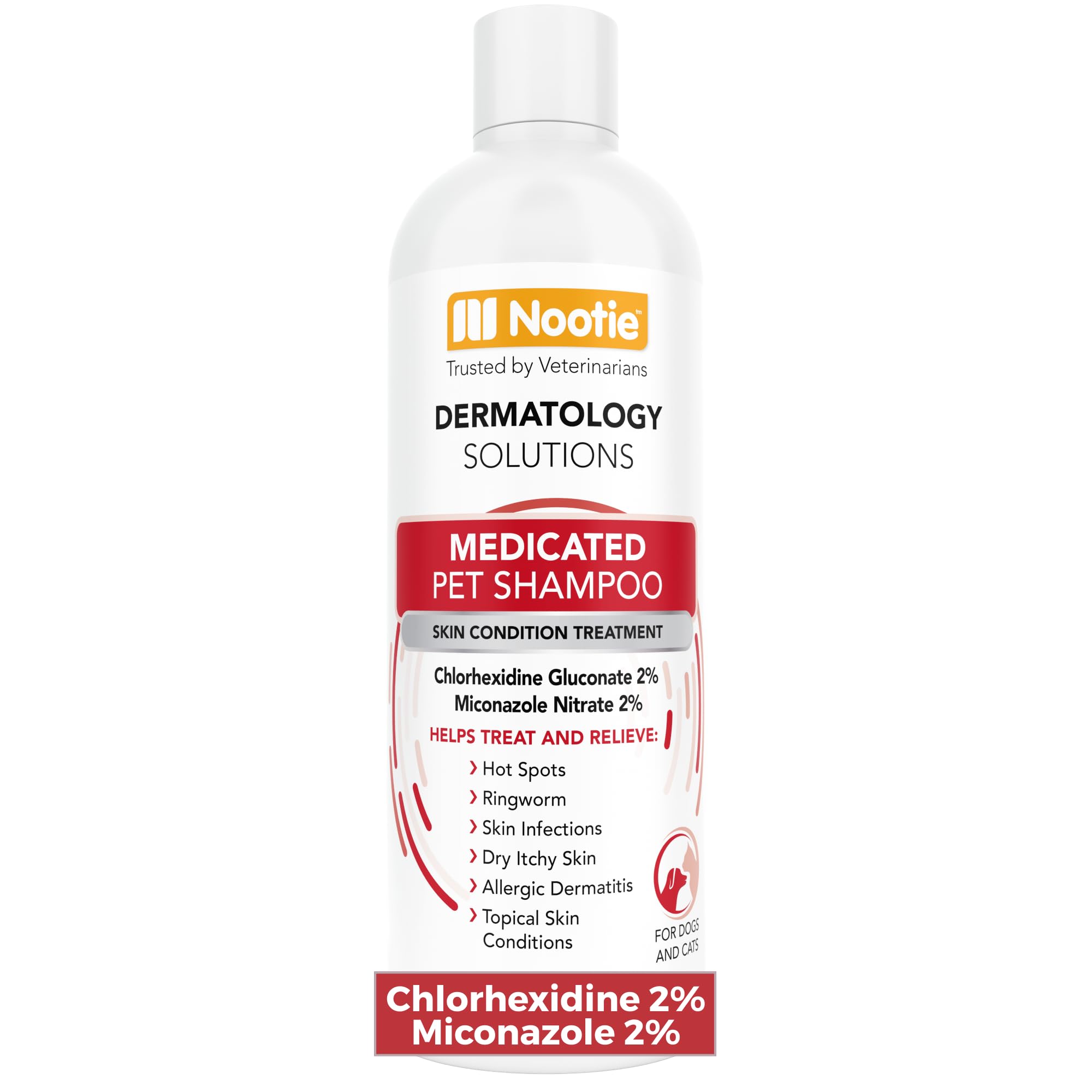
Nootie is one of the most widely trusted medicated pet shampoos in veterinary clinics — sold in over 10,000 clinics and pet stores globally — and its formulation reflects this clinical pedigree. Combining ketoconazole and chlorhexidine, it provides the same dual antifungal-antibacterial coverage as the top performers, but with a specific emphasis on moisturizing and non-irritating cleansing. The soap-free, sulfate-free, and dye-free formula makes it a go-to for dogs with chronically inflamed skin that reacts badly to harsher products.
Where Nootie differentiates itself is in its application texture: it is thick and sticky when applied directly, which helps it cling to the coat rather than run off, maximizing contact with the skin during the required 5-to-20-minute soak. Owners of large breeds with thick double coats, like German Shepherds, report that a single bottle yields four to five baths, significantly reducing oiliness and eliminating the characteristic “doggy odor” for up to a week. The Lilly Passion scent is clean and botanical, leaving the coat smelling fresh without a medicinal overlay.
For chronic skin conditions that require long-term management — such as recurrent yeast infections in breeds predisposed to seborrhea — veterinarians often recommend Nootie as part of a rotating protocol. The manufacturer produces it in small batches in an FDA-registered facility in the USA, ensuring quality control that aligns with clinical standards.
Why it’s great
- Trusted by thousands of veterinary clinics — proven clinical reliability
- Thick, clinging texture maximizes skin contact during required soak time
- Eliminates yeast odor for up to a week with proper application
- Produced in small batches in an FDA-registered facility
Good to know
- Thick consistency may need dilution with water for easier distribution
- Higher cost per bottle — 16 oz yields 4-5 baths on large breeds
5. Vetoquinol BPO-3 Shampoo
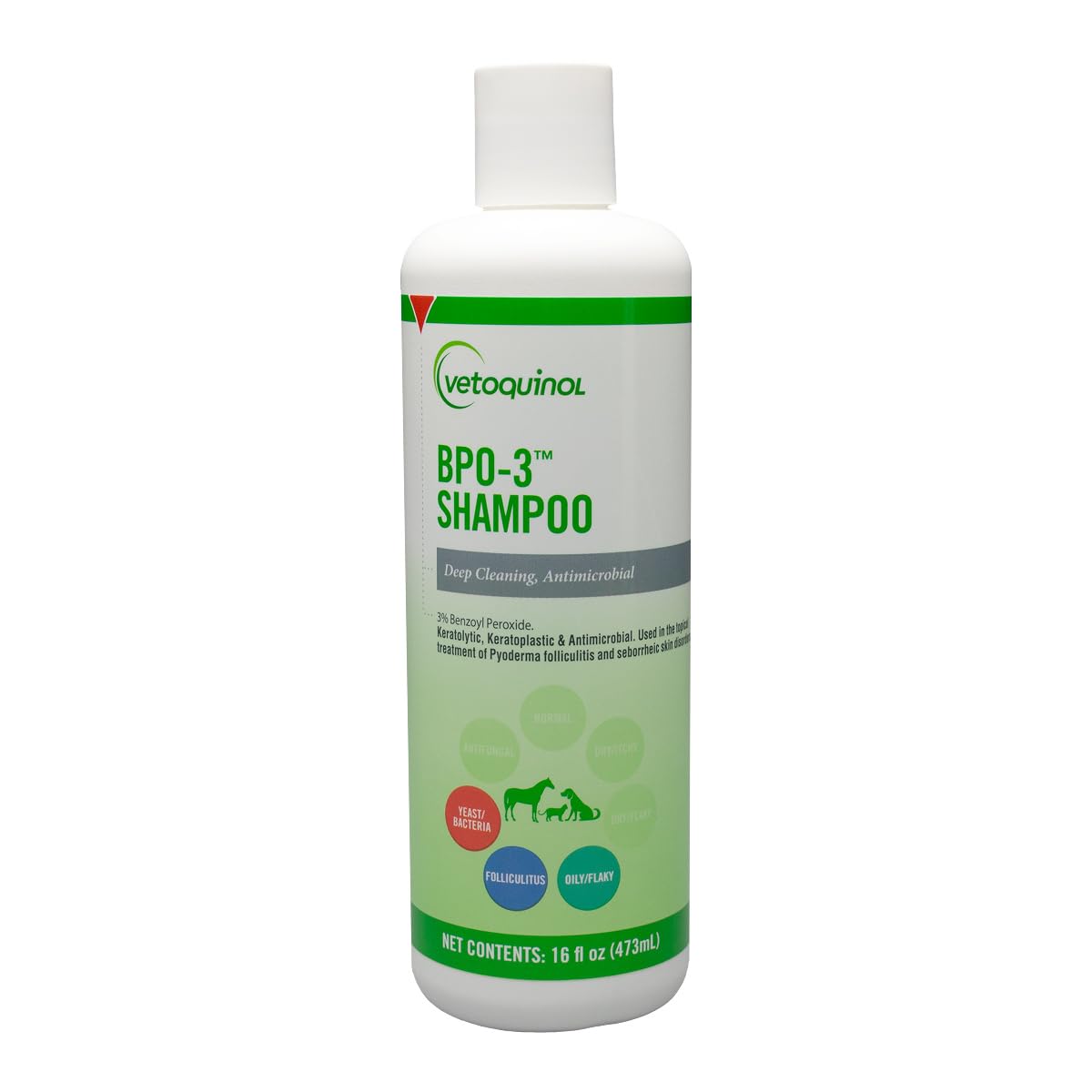
Vetoquinol BPO-3 takes a fundamentally different approach to yeast management by using 3% benzoyl peroxide to chemically open and flush hair follicles. Benzoyl peroxide is a powerful degreaser that removes the thick, waxy sebum that traps yeast cells deep in the follicle, and it releases oxygen into the environment, which is directly toxic to Malassezia. This makes it particularly effective for dogs with seborrhea oleosa (the greasy form) where the coat feels sticky and the skin has a rancid odor.
This shampoo is not a gentle daily wash — it is a treatment soak designed for deep-seated infections, pyoderma, and body mites. The medicated scent is strong, and the formula produces very little lather, requiring owners to use a generous amount (up to half a bottle for a large dog) to ensure full coverage. However, the results speak for themselves: users report complete clearing of folliculitis, reduction in body mites, and elimination of musty odor after two to three treatments.
Dermatologists often prescribe BPO-3 for conditions like pyoderma folliculitis where yeast and bacteria co-exist in the follicle. Because benzoyl peroxide flushes the follicle from within, it reaches areas that surface-applied antifungals cannot. This shampoo is safe for dogs, cats, and horses when used as directed, and it does not require a prescription, making it accessible for owners managing long-term skin maintenance under veterinary guidance.
Why it’s great
- Chemically flushes hair follicles, removing trapped yeast and bacteria
- Powerful degreasing action for excessively oily, waxy coats
- Effective against deep-seated folliculitis and body mites
- No prescription required — accessible for long-term maintenance
Good to know
- Can be drying — may require a follow-up conditioner for skin barrier support
- Strong medicated scent that some owners find unpleasant
- Poor lather requires a larger volume per bath
FAQ
How do I know if my dog has a yeast infection versus a bacterial infection?
Can I use an antifungal dog shampoo more than once a week?
Final Thoughts: The Verdict
For most users, the best dog shampoo for yeast winner is the Vetnique Dermabliss because its 2% chlorhexidine and 1% ketoconazole dual-action formula reliably clears both yeast and bacterial co-infections with proper contact time. If you want a seboregulating approach for chronic oily skin and dandruff, grab the Douxo S3 SEB. And for deep follicular flushing in excessively greasy coats where yeast hides in the follicles, nothing beats the Vetoquinol BPO-3.

Mo Maruf
I created WellFizz to bridge the gap between vague wellness advice and actionable solutions. My mission is simple: to decode the research and give you practical tools you can actually use.
Beyond the data, I am a passionate traveler. I believe that stepping away from the screen to explore new environments is essential for mental clarity and physical vitality.