Our readers keep the lights on and my smoothie glass nicely filled. As an Amazon Associate, I earn from qualifying purchases.
That musty, corn-chip smell radiating from your dog’s skin, paired with relentless scratching and red, greasy patches, signals a yeast overgrowth that standard grooming shampoos cannot touch. Treating a yeast infection requires a medicated formula with targeted antifungal agents that penetrate the skin barrier and rebalance the microbiome rather than just masking the odor.
I’m Mohammad Maruf — the founder and writer behind WellFizz. I’ve spent hundreds of hours analyzing veterinary dermatology protocols and comparing the active ingredient concentrations, contact-time requirements, and safety profiles of medicated canine shampoos to separate real clinical solutions from cosmetic washes.
This guide breaks down the active ingredients, dilution ratios, and evidence-backed application methods that define an effective dog shampoo for yeast infection, helping you choose a product that addresses the root cause of the overgrowth rather than temporarily soothing symptoms.
How To Choose The Best Dog Shampoo for Yeast Infection
Yeast infections in dogs — most commonly caused by Malassezia pachydermatis — require a shampoo that delivers measurable concentrations of antifungal agents and stays on the skin long enough to work. Cosmetic washes and oatmeal-based formulas lack the active ingredients needed to break the yeast reproduction cycle.
Active Ingredient Profile
The most effective clinical shampoos pair an antifungal (ketoconazole or miconazole) with an antibacterial (chlorhexidine). Yeast infections often coexist with bacterial pyoderma, so a dual-action formula treats both without requiring separate baths. Benzoyl peroxide works well for follicular flushing but is less targeted for yeast than ketoconazole.
Contact Time Requirement
A medicated shampoo must remain on the wet coat for a full 5 to 10 minutes before rinsing. This contact time allows the antifungal molecules to penetrate the stratum corneum and reach the yeast cells living in the superficial skin layers. Rinsing too early renders even the strongest active ingredients ineffective.
Soap-Free and Sulfate-Free Base
Heavy suds strip the skin’s natural lipid barrier, worsening the dryness and irritation that yeast infections create. Look for low-lathering, soap-free formulas that keep active ingredients on the skin rather than washing them away in foam. A gentle base also allows for more frequent bathing during the initial treatment phase.
Quick Comparison
On smaller screens, swipe sideways to see the full table.
| Model | Category | Best For | Key Spec | Amazon |
|---|---|---|---|---|
| Vetnique Dermabliss | Dual-Action | Chronic yeast & bacterial flare-ups | 2% Chlorhexidine + 1% Ketoconazole | Amazon |
| KetoWELL Topical Shampoo | Ketoconazole | Pure yeast overgrowth without bacteria | Ketoconazole only formula | Amazon |
| Douxo S3 SEB | Seboregulating | Oily, flaky seborrhea with odor | 0.5% Ophytrium + Seboregulating | Amazon |
| Vetoquinol BPO-3 | Follicle Flush | Folliculitis and deep skin infections | 3% Benzoyl Peroxide | Amazon |
| Miracle Vet Medicated | Hydrocortisone | Itch relief with yeast management | Hydrocortisone + Antifungal | Amazon |
In‑Depth Reviews
1. Vetnique Dermabliss Medicated Dog Shampoo
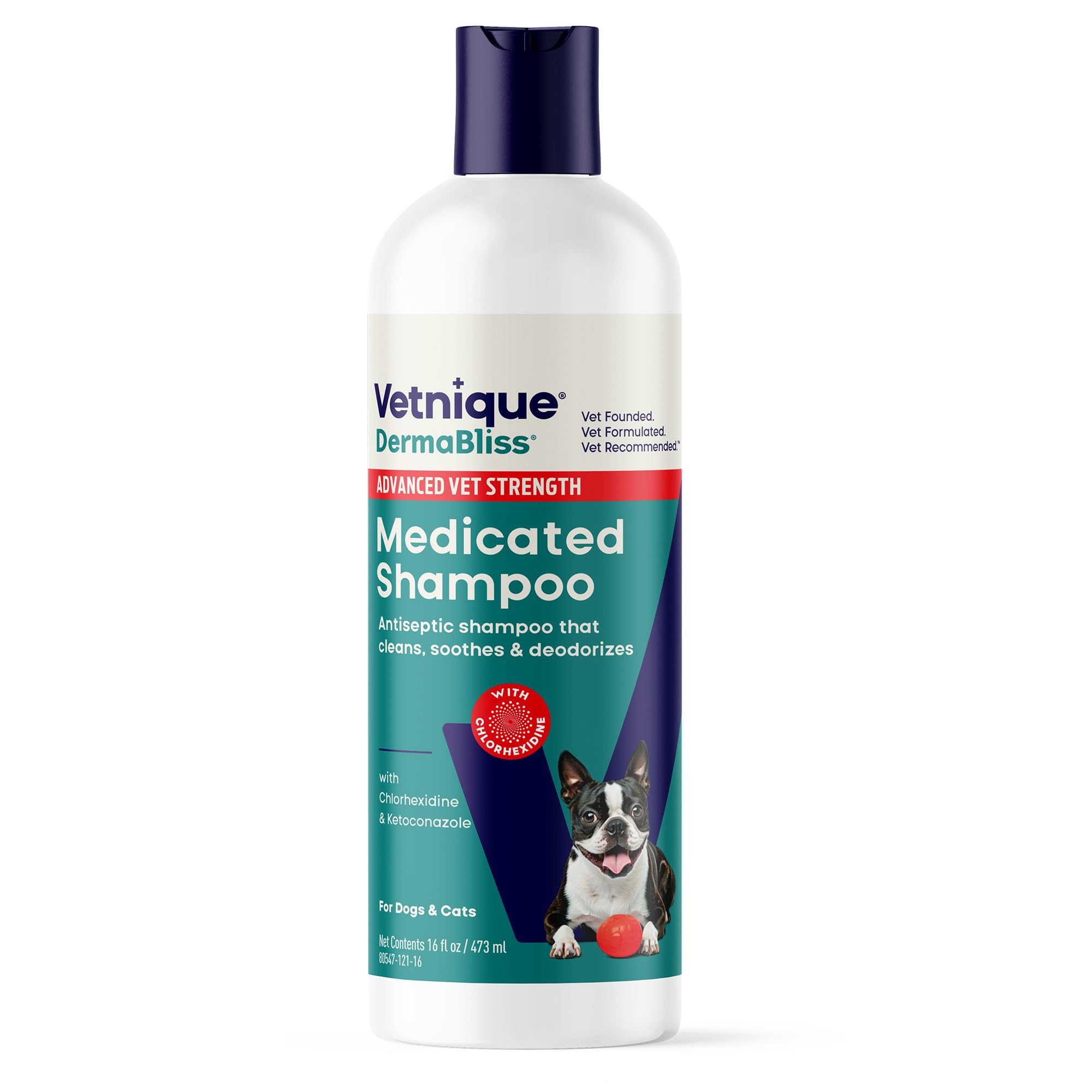
Vetnique Dermabliss combines 2% chlorhexidine with 1% ketoconazole in a soap-free, low-suds formula that stays on the skin rather than lathering away. This dual-action approach treats both the bacterial component (chlorhexidine) and the yeast overgrowth (ketoconazole) in a single bath, a critical feature because Malassezia infections rarely occur in isolation — bacterial pyoderma is a common co-pathogen. The lactic acid gently exfoliates dead skin and flakes while aloe vera soothes the underlying irritation, making it suitable for the frequent bathing schedule often required during the first two weeks of treatment.
Users report noticeable improvement after just two washes, with redness subsiding, flaking eliminated, and that musty yeasty odor disappearing entirely. The 5 to 10 minute contact time is non-negotiable with this formula — the active ingredients need that window to penetrate the skin barrier and reach the yeast colonies living in the superficial layers. Owners of allergy-prone breeds like Bulldogs, Frenchies, and Labrador Retrievers see the most dramatic results because these breeds are genetically predisposed to both yeast and bacterial skin issues.
The cream-like consistency spreads easily across short and medium coats, and owners find that a small amount covers a 70-pound dog for 4 to 5 baths, extending the value considerably. The light, clean scent lacks the medicinal punch of older veterinary formulas, and the soap-free base means the coat feels conditioned rather than stripped after rinsing. For multi-pet households with both dogs and cats, the formula is safe across species, eliminating the need to stock separate medicated shampoos.
Why it’s great
- Veterinary-strength dual antifungal and antibacterial action
- Soap and sulfate-free formula preserves skin barrier during frequent bathing
- Concentrated; a single bottle lasts multiple washes for large dogs
Good to know
- Low-suds texture may feel unusual for owners accustomed to foaming washes
- Light scent may not mask strong odors during the first application
2. KetoWELL Topical Shampoo for Dogs, Cats and Horses

KetoWELL uses ketoconazole as its primary antifungal agent, making it a targeted option for dogs whose yeast overgrowth has been confirmed without a secondary bacterial infection. The formula is paraben-free and designed as a gentle cleanse that reaches hard-to-access areas such as skin folds, between paw pads, and along the ventral abdomen where yeast thrives in warm, moist environments. Owners report that the shampoo stops hot spots and scabby patches from progressing, which is critical because yeast lesions can spread rapidly across the body if left unchecked.
Real-world results from pit bulls and basset hounds — breeds with high rates of yeast dermatitis — show complete resolution of itching, hair loss, and red spots after three washes spaced two to three days apart. The key protocol involves applying a second wash during the same bath and letting it sit for 5 to 10 minutes before rinsing, a step that ensures the ketoconazole reaches the deeper skin layers. After two weeks, owners describe the affected skin as baby-soft with full fur regrowth and zero odor.
The 16-ounce bottle is suitable for medium to large dogs, though owners of heavy-coated breeds should expect to use more product per bath to achieve full saturation. The shampoo leaves the coat soft and shiny with a mild scent that disappears quickly after rinsing. For dogs with flea allergies or environmental sensitivities that trigger yeast flare-ups, KetoWELL can be used weekly as a maintenance wash to keep the skin microbiome in balance without causing dryness.
Why it’s great
- Single-ingredient antifungal targets yeast without unnecessary additives
- Safe for cats and horses as well as dogs across all life stages
- Rapid visible improvement in itching and odor after first application
Good to know
- Does not contain chlorhexidine for concurrent bacterial coverage
- Shipping issues occasionally result in loose caps and product leakage
3. Douxo S3 SEB Dog Seboregulating Shampoo
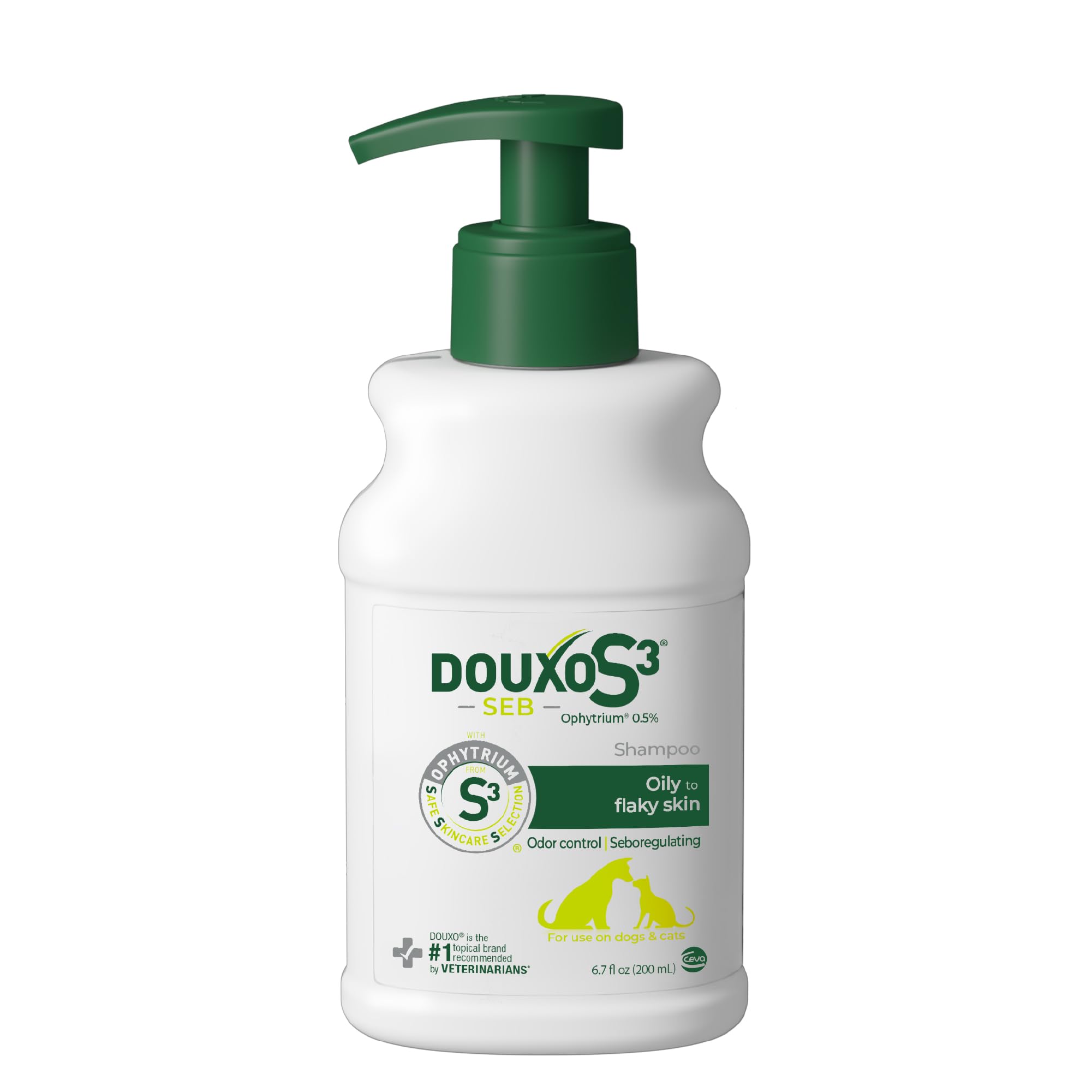
Douxo S3 SEB approaches yeast-related skin issues through seboregulation rather than direct antifungal action, making it an excellent choice for dogs whose yeast infections are driven by seborrhea — a condition of abnormal sebum production that creates the oily, flaky environment yeast needs to flourish. The formula contains 0.5% Ophytrium, a purified natural ingredient that soothes irritated skin and supports hydration while normalizing sebum output. Clinically proven results appear within seven days, with owners reporting a visible reduction in greasy residue, dandruff, and that sour odor that accompanies yeast overgrowth on oily coats.
The hypoallergenic formulation is free from soaps, sulfates, parabens, colorants, nanoparticles, and phthalates, so it suits dogs with multiple concurrent sensitivities. Owners of short-haired breeds with slick coats — such as boxers and pit bulls — see the most dramatic improvement because the shampoo’s light texture penetrates their dense, flat hair shafts without leaving residue. The recommended protocol pairs the shampoo with the Douxo S3 SEB mousse for between-bath maintenance, creating a complete sebum-management routine that 90% of owners found satisfactory in clinical trials.
The fresh, sweet scent is mild and fades quickly, making it tolerable for dogs that are sensitive to strong fragrances. The 200-milliliter bottle is smaller than the standard 16-ounce competitors, so owners of large or giant breeds should expect to repurchase more frequently, especially during the initial twice-weekly treatment phase. For cats with dry skin and severe dandruff, the formula also works well — a single 5-minute application resolved feline dander for two weeks in documented cases, though it is primarily marketed for dogs.
Why it’s great
- Addresses the root sebum imbalance that fuels yeast growth
- Clinically proven results within 7 days with proper contact time
- Free from 7 common irritants including sulfates and parabens
Good to know
- Smaller bottle size requires more frequent repurchases for large dogs
- May leave a greasy residue on fine-haired cats
4. Vetoquinol BPO-3 Shampoo for Dogs, Cats & Horses
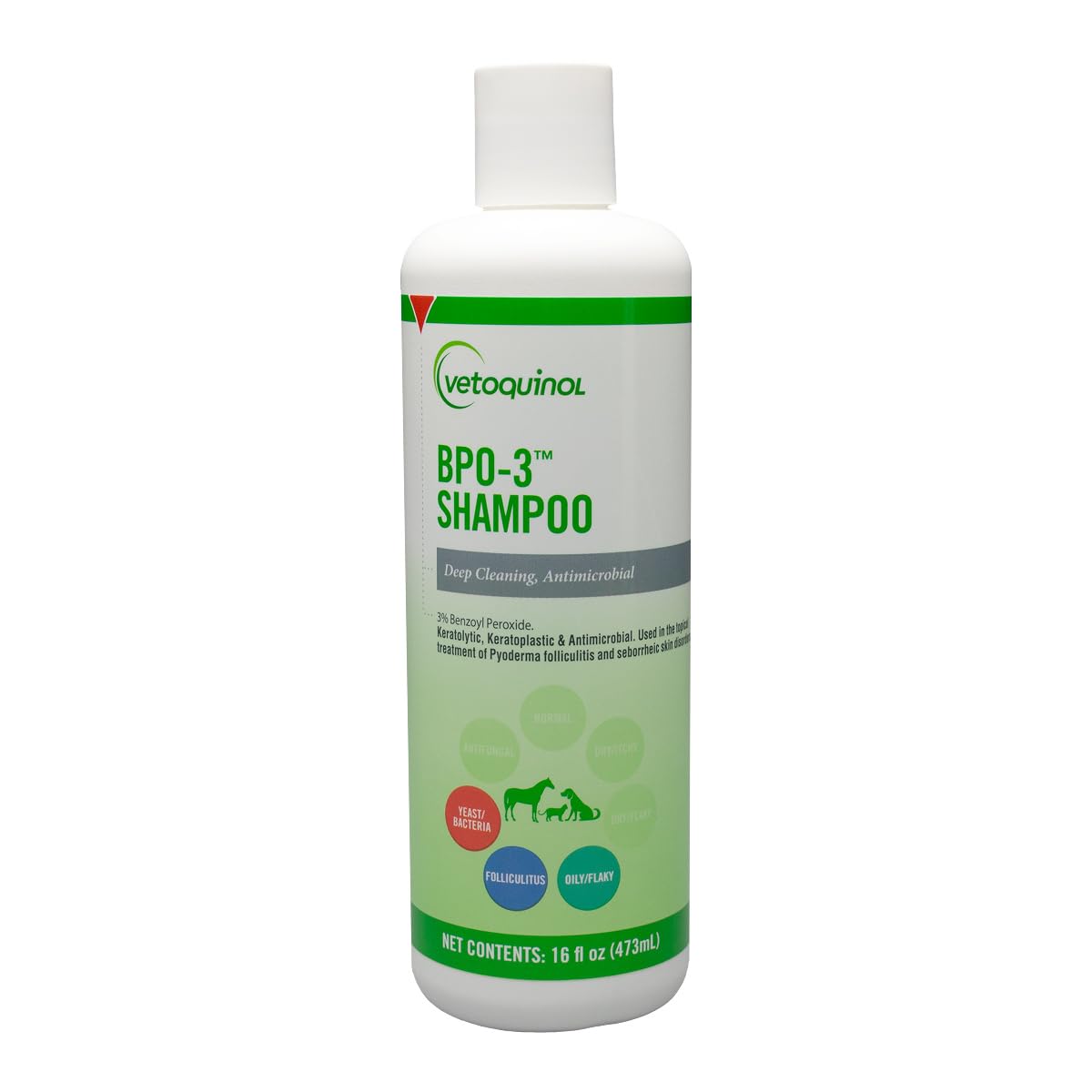
Vetoquinol BPO-3 uses 3% benzoyl peroxide as its active ingredient, a compound that opens and flushes hair follicles to remove debris, excess sebum, and microbial colonies living deep within the follicle. While benzoyl peroxide is primarily antibacterial and degreasing rather than directly antifungal, it is highly effective for dogs whose yeast infection is secondary to folliculitis or pyoderma — conditions where the yeast is trapped inside blocked follicles that need mechanical cleaning. The formula also contains natural soothing agents and moisturizers that prevent the drying effect typically associated with peroxide-based washes.
Veterinarians commonly prescribe BPO-3 for pyoderma folliculitis, a condition where the hair follicles fill with pus and bacteria. The foaming action is minimal — users note that the shampoo produces very little lather, and a full bath for a large dog can use half the bottle per session. The unscented formula lacks any masking fragrance, so the coat smells clean rather than perfumed after rinsing. Owners of dogs with seborrhea and musty odor report that the deep flush effect clears the smell at the source by removing the oily buildup where yeast proliferates.
The 16-ounce bottle covers horses as well as dogs and cats, making it a practical multi-species option for rural households. The benzoyl peroxide concentration is strong enough that frequent use — more than once every 5 to 7 days — may cause dryness, so owners should rotate with a moisturizing conditioner between treatments. Dogs with chronic, lifelong recurrence of folliculitis may need adjunctive oral antibiotics alongside the shampoo, and the product is not intended as a standalone treatment for systemic yeast infections.
Why it’s great
- Flushes hair follicles to remove trapped debris and microbial colonies
- Effective against musty odor and flaky, scaly skin
- Safe for use on dogs, cats, and horses
Good to know
- Poor lather requires larger volume per bath for full coverage
- Can cause dryness if used more than once weekly without conditioner
5. Miracle Vet Medicated Dog Shampoo
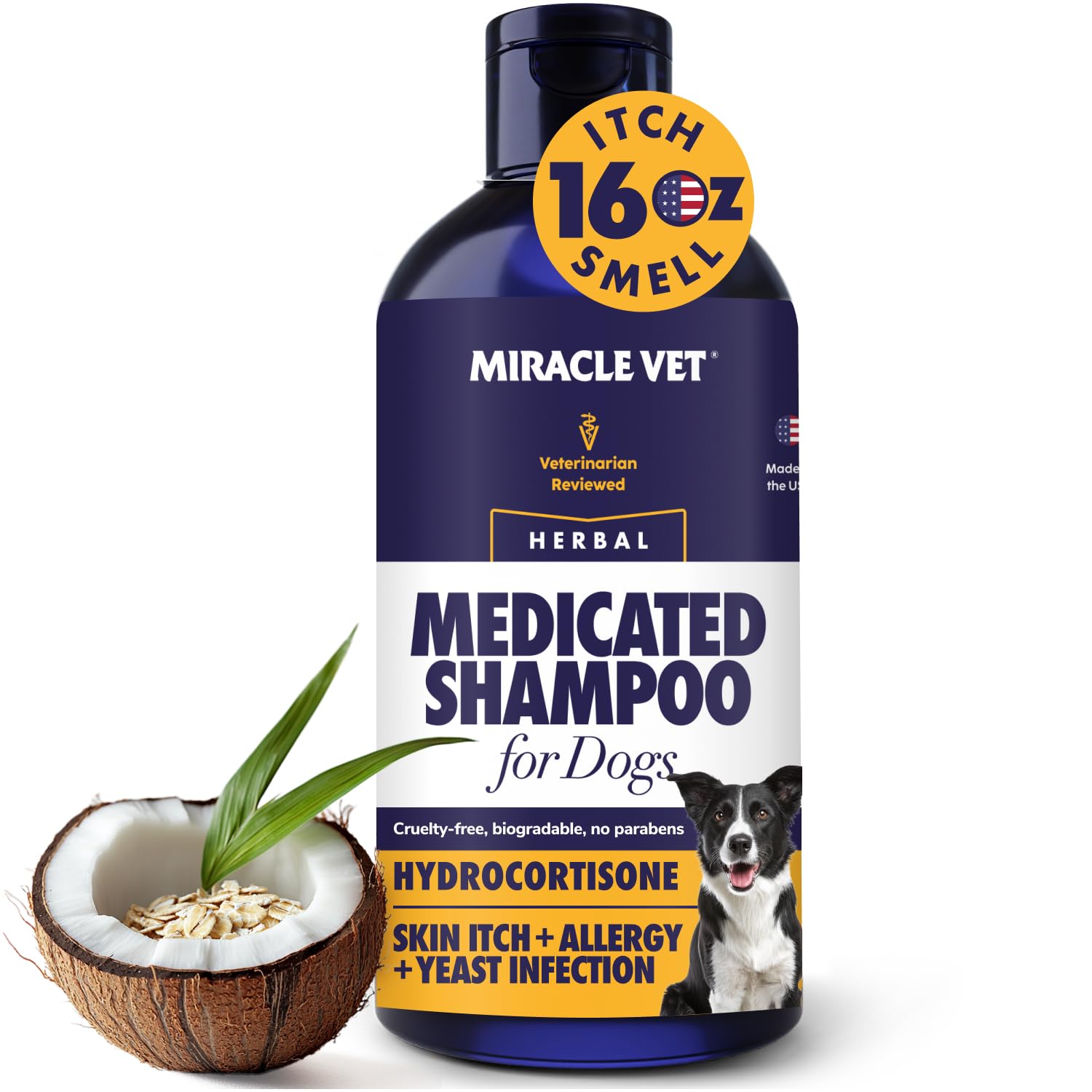
Miracle Vet combines hydrocortisone with antifungal and antibacterial agents in a single formula that addresses both the yeast infection and the intense itching it causes. Hydrocortisone provides fast-acting relief from the cycle of scratching and skin damage that often compounds yeast dermatitis, while the antimicrobial components work on the underlying overgrowth. The oatmeal base adds moisturizing properties that counteract the drying effects of frequent medicated bathing, making this a gentler option for dogs with sensitive skin that cannot tolerate harsher clinical washes.
Owners of breeds prone to seasonal hot spots — such as Chihuahua mixes and other small, allergy-prone dogs — find that the shampoo dries up inflamed areas after the first application and reduces the urge to scratch significantly. The herbal scent is noticeable but not overpowering, and it persists on the coat for days after rinsing, which helps mask the yeasty odor between baths. The formula is dye-free and paraben-free, and the manufacturer confirms safety for puppies as young as eight weeks, which is rare among medicated shampoos that often carry age restrictions.
The gel-like consistency lathers nicely compared to the low-suds clinical shampoos, making it feel more familiar to owners accustomed to standard grooming products. However, the hydrocortisone component means it is not ideal for daily use over extended periods — owners should aim for weekly or bi-weekly baths during the active treatment phase and transition to a non-steroidal maintenance shampoo once symptoms resolve. For dogs with food-related allergies that manifest as yeast infections, the shampoo manages the secondary flare-ups but does not eliminate the need for dietary changes.
Why it’s great
- Hydrocortisone provides immediate itch relief to break the scratch cycle
- Oatmeal base moisturizes and prevents dryness from frequent bathing
- Safe for puppies as young as 8 weeks
Good to know
- Hydrocortisone limits suitability for long-term continuous use
- Does not replace dietary management for food-triggered yeast overgrowth
FAQ
How often should I bathe my dog with a medicated yeast shampoo?
Can I use a medicated yeast shampoo on my cat?
Will a medicated shampoo cure my dog’s yeast infection without other treatments?
What should I look for in the ingredient list of a yeast infection shampoo?
Final Thoughts: The Verdict
For most users, the dog shampoo for yeast infection winner is the Vetnique Dermabliss Medicated Dog Shampoo because its dual 2% chlorhexidine and 1% ketoconazole formula treats both the yeast and the bacterial co-infection in a single bath, with a soap-free base that supports the frequent washing schedule yeast management requires. If you want a pure antifungal option without antibacterial agents, grab the KetoWELL Topical Shampoo. And for seborrhea-driven yeast issues where sebum normalization is the priority, nothing beats the Douxo S3 SEB Shampoo.

Mo Maruf
I created WellFizz to bridge the gap between vague wellness advice and actionable solutions. My mission is simple: to decode the research and give you practical tools you can actually use.
Beyond the data, I am a passionate traveler. I believe that stepping away from the screen to explore new environments is essential for mental clarity and physical vitality.