Our readers keep the lights on and my smoothie glass nicely filled. As an Amazon Associate, I earn from qualifying purchases.
The lingering scent of dog breath after a slobbery kiss, the yellowish buildup on their back molars you notice when they yawn — plaque is more than cosmetic; it’s a quiet threat to your dog’s organ health. Finding a solution that doesn’t end in a wrestling match on the living room floor is the real challenge.
I’m Mohammad Maruf — the founder and writer behind WellFizz. I’ve spent countless hours cross-referencing veterinary research, analyzing ingredient safety sheets, and reading thousands of real-world pet owner testimonials to separate the effective remedies from the marketing fluff in this narrow dental category.
To help you navigate the options, I’ve evaluated formulations, delivery methods, and clinical efficacy to compile this guide to the best dog plaque remover for your pup’s specific needs and temperament.
How To Choose The Best Dog Plaque Remover
Plaque is a sticky biofilm of bacteria that mineralizes into hard tartar within 24-48 hours. The right remover must either mechanically disrupt this film or chemically break it down before it calcifies. Your choice hinges on your dog’s daily tolerance level and your own commitment to a routine.
Understand the Three Delivery Methods
Powders and sprays offer a hands-off approach — you sprinkle on food or spray directly onto teeth. These rely on enzymatic or ionic agents to soften plaque so chewing and saliva can wash it away. Kits with brushes or vibrational tools provide direct physical abrasion, which is more immediately effective but requires training and patience. Dental wipes balance the two, offering tactile scrubbing without the intimidating handle of a brush.
Match the Active Ingredient to the Problem
Enzymatic toothpaste (glucose oxidase, lactoperoxidase) breaks down bacterial cell walls. USDA organic sea kelp provides natural iodine and minerals that alter saliva pH to discourage plaque mineralization. Colloidal silver carries a broad antimicrobial charge, while mechanical tools like the 40KHz ultrasonic scaler chip away at existing calculus. Never use human toothpaste — the foaming agents and fluoride are toxic to dogs.
Evaluate Your Dog’s Anatomy and Temperament
A Chihuahua with a tiny jaw will react poorly to a triple-sided brush designed for a Labrador’s mouth. A skittish rescue may shut down at the sound of a vibrating tool. Dogs with heart conditions, senior dogs with loose teeth, and brachycephalic breeds (pugs, bulldogs) with shallow mouths all require gentler, less invasive options like food additives or sprays. Measure your dog’s muzzle size and trial a single dose before committing to a full bottle or kit.
Quick Comparison
On smaller screens, swipe sideways to see the full table.
| Model | Category | Best For | Key Spec | Amazon |
|---|---|---|---|---|
| Vet’s Best Dental Kit | Brushing Kit | Owners starting a daily brush routine | Triple-sided brush + enzyme toothpaste | Amazon |
| Nature Nerds Electric Toothbrush | Vibrational Tool | Breaking off stubborn tartar at home | 40KHz vibration, IPX6 waterproof, 5 modes | Amazon |
| SILVER GRADE Breath Spray | Spray | Pets that resist mouth handling | Colloidal silver + deionized water, 4 oz | Amazon |
| Vetradent Dental Spray | Spray | No-routine daily maintenance | Zinc chloride anti-odor formula, 2 oz | Amazon |
| NuLife Kelp Powder | Food Additive | Picky eaters or surgery-ineligible dogs | USDA organic Icelandic sea kelp, 6 oz | Amazon |
In‑Depth Reviews
1. Vet’s Best Dog Toothpaste & Dog Toothbrush Dental Kit
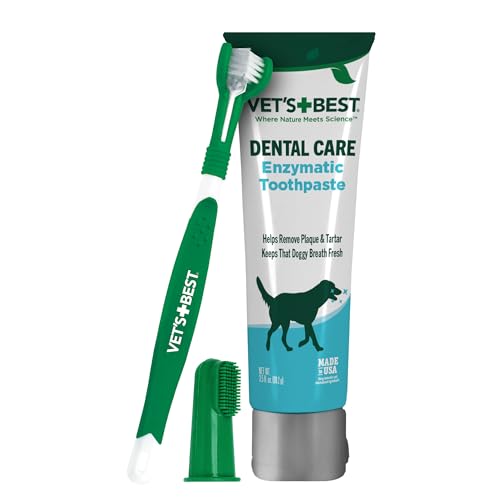
Vet’s Best combines a veterinarian-formulated enzymatic toothpaste with a clever triple-sided brush head that cleans three tooth surfaces simultaneously. The paste relies on aloe, neem oil, grapefruit seed extract, and baking soda rather than harsh abrasives, so it’s safe if swallowed. The clear gel texture and mild natural flavors help mask the application, though the kit’s practicality depends heavily on your dog’s tooth size — the triple head works beautifully on medium to large breeds but can be unwieldy for tiny muzzles.
Owners of German Shepherds and Labs report visible shrinkage of stubborn tartar stains within weeks of daily use, and the finger brush included in the kit provides a gentler entry point for dogs nervous about a plastic handle. The toothpaste alone doubles as a standalone breath freshener when applied with a finger, making the kit useful even if you eventually abandon the brush. The baking soda content adds mild whitening without the toxicity concerns of human whitening agents.
Consistency is the real variable here — some picky dogs reject the neem-oil flavor on first contact, requiring gradual desensitization. The triple brush also requires regular cleaning between uses to prevent bacterial buildup in the bristle clusters. Nonetheless, for owners ready to commit to a mechanical brushing routine, this kit offers the most complete balance of safety, efficacy, and ergonomic design at a fair entry point.
Why it’s great
- Triple-sided brush cleans upper, lower, and side surfaces in one pass.
- Enzyme paste with neem and aloe supports gum health without foaming agents.
- Finger brush included for gradual training and sensitive mouths.
Good to know
- Triple head is too bulky for toy breeds and puppies under 5 pounds.
- Neem oil taste may be rejected by highly picky dogs on first try.
2. Nature Nerds Plaque Remover for Teeth with LED Light

This electric cleaner uses 40KHz high-frequency vibration — that’s 2 million pulses per minute — to chip away hardened calculus without scraping enamel. The intelligent gum protection stops vibration the instant the metal tip touches soft tissue, which provides a critical safety margin for fidgety dogs. The kit includes four replacement heads, a double-ended dental probe, a scaler, and a stain remover, making it a complete at-home scaling station that can replace multiple professional cleanings over a year.
The five vibration modes range from Soft (for desensitization) to Super Strong (for thick brown tartar). Owners of standard poodles and senior dogs with heavy buildup report that plaque breaks off in visible sheets after several 5-10 minute sessions, revealing white enamel underneath. The IPX6 waterproof rating means you can rinse the head directly under the faucet without damage, and the Type-C charging yields 120 minutes of operation from a two-hour charge, which translates to weeks of short daily sessions.
The learning curve is real — the angled head is awkward for bottom and back molars, and some dogs remain wary after their first session. The USB-C charging tip is unusually long and has broken on a small number of units, rendering the tool unusable until replaced. This tool demands patient conditioning with treats and short sessions; it is not for the impatient owner. But for those willing to invest the time, it delivers professional-grade results at a fraction of the veterinary cost.
Why it’s great
- 40KHz ultrasonic vibration removes hardened tartar mechanically without chemicals.
- Gum-safe technology stops on contact with soft tissue, preventing injury.
- Five modes plus IPX6 waterproof housing suit multiple breed sizes and cleaning styles.
Good to know
- Angled tip design makes lower and back molars difficult to reach.
- USB-C charging tip has a narrow neck prone to breakage after repeated plugging.
3. SILVER GRADE Teeth & Gum Dog Breath Spray
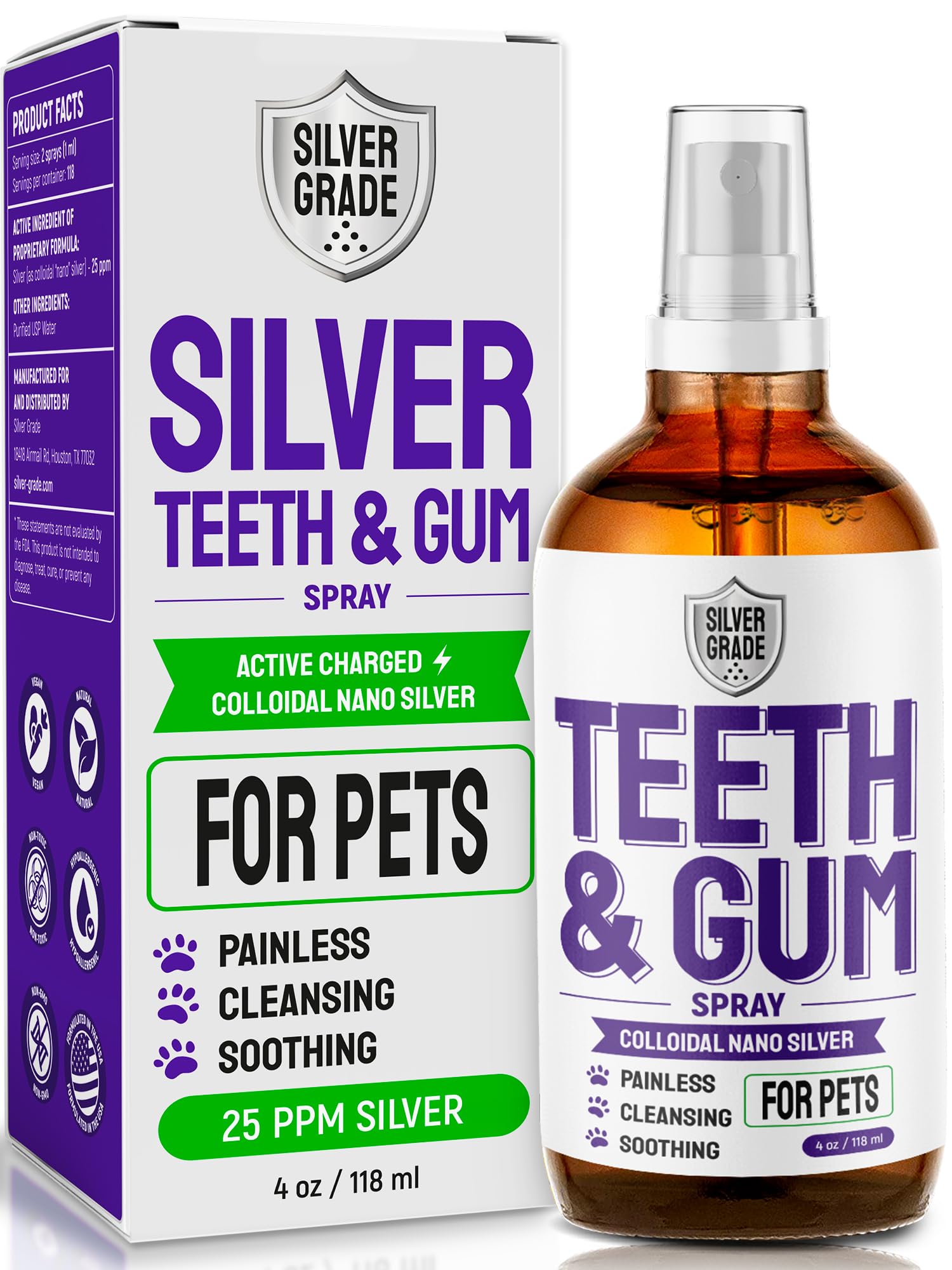
SILVER GRADE uses colloidal silver as its primary active — a suspension of microscopic silver particles that carry a positive charge, binding to bacterial cell walls and disrupting their metabolism. The formula is stripped of additives, artificial colorants, and GMOs, making it one of the cleanest options on the market for pets with chemical sensitivities. A 4-ounce bottle delivers roughly 200 sprays, translating to 50 days of twice-daily use for a medium dog.
Owners of elderly small breeds (10lb dogs with bad teeth from debris accumulation) report that consistent daily spraying over 3-4 months stopped further tooth loss and maintained the dog’s ability to eat kibble comfortably. The spray reduced bad breath significantly within the first week in most cases, though actual tartar removal is gradual — it softens plaque rather than chipping it off. The dog mouthwash label also covers cats, horses, and rabbits, making it a multi-pet household solution.
The pump nozzle delivers a mist, but some users note the spray sound startles nervous dogs and the nozzle can dispense uneven droplets rather than a strong stream, making it tricky to coat the back teeth of a squirming cat or small dog. The initial resistance from pets fades as they associate the vanilla-like flavor with a treat reward. For owners seeking a zero-handling, no-chemical-overload daily maintenance spray that supports gum health between vet visits, this is a strong, gentle contender.
Why it’s great
- Colloidal silver provides broad antimicrobial action without antibiotics.
- Four-ounce bottle offers long-term value with minimal daily effort.
- Additive- and GMO-free formula suits chemically sensitive pets.
Good to know
- Spray nozzle can sputter or mist unevenly, making targeted application difficult.
- Requires daily consistency over months for noticeable tartar reduction.
4. Vetradent Dental Spray, 2 oz

Vetradent’s formulation from Dechra Veterinary Products uses patented Biotrate technology, which targets the biofilm matrix that plaque bacteria secrete to protect themselves. Combined with zinc chloride to neutralize volatile sulfur compounds responsible for bad breath, this spray aims to interrupt the plaque lifecycle without requiring any scrubbing. The clear liquid carries a mild vanilla flavor that almost all dogs accept without resistance, including picky Bichons and senior dogs with sensitive gums.
The directions are straightforward — lift the lip, spray once on each side for dogs under 20 pounds, twice for larger dogs, twice daily. Users of the companion dental wipes (same Biotrate formula) report even better mechanical results: the large textured wipe wraps around the finger, providing gentle friction alongside the chemical action. Owners of elderly dogs who can no longer tolerate a brush have successfully shifted breath from offensive to neutral within a week using the spray alone.
The 2-ounce bottle is small — roughly 60-80 sprays depending on dog size — and relatively expensive per spray compared to other liquid options. The spray nozzle has been flagged by multiple users for poor quality, dispensing droplets instead of a fine mist, which makes coating the back teeth less efficient. The formula is xylitol-free, alcohol-free, and chlorhexidine-free, which is reassuring for owners worried about toxicity, but the small volume means you’ll reorder frequently for multi-dog households.
Why it’s great
- Biotrate technology targets the bacterial biofilm rather than just masking odor.
- Vanilla flavor is accepted by nearly all dogs, even picky eaters.
- Xylitol-, alcohol-, and chlorhexidine-free for safe daily use.
Good to know
- Small 2-ounce bottle runs out quickly with twice-daily application.
- Nozzle quality is inconsistent and may dispense droplets rather than a spray.
5. NuLife Natural Pet Health Dog Teeth Cleaning Powder
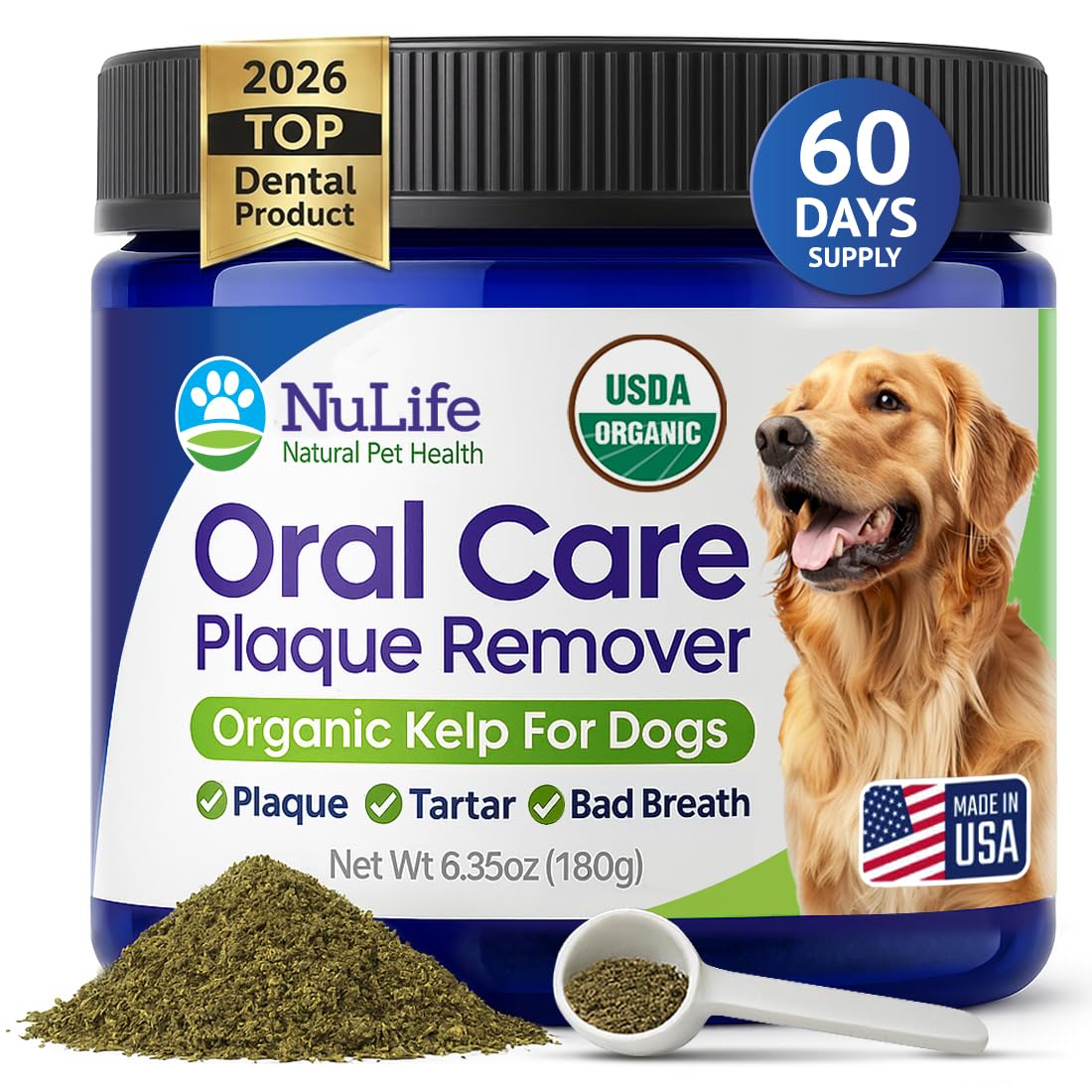
This powder is pure USDA organic Icelandic sea kelp — nothing else. The mechanism is indirect but biologically sound: kelp’s high iodine content and mineral profile help shift the pH of your dog’s saliva, making the oral environment less hospitable to plaque-forming bacteria. You simply sprinkle the recommended dose onto wet or dry food daily, and the kelp granules dissolve during eating, reaching hard-to-brush spots at the back of the mouth without any training or handling.
Owners of Morkies with heart conditions — dogs who cannot undergo surgical dental cleaning — have reported that dark plaque buildup almost completely disappeared after several months of daily use. Picky eaters, including small breeds who reject most additives, accepted the powder without hesitation when mixed into wet food. Many users note that front teeth appear visibly whiter within two months, and the bad breath reduction is noticeable within the first two weeks of consistent use.
The 6-ounce pouch lasts roughly 2-3 months for a single small-to-medium dog, making it one of the most affordable long-term options. The powder is not a quick fix — it works slowly by altering the oral microbiome rather than physically scrubbing existing calculus. Results vary: roughly 15-20% of users report minimal breath improvement even after finishing the entire pouch. For owners of dogs who cannot tolerate brushing, surgery, or any mouth handling, this is the least invasive option available, but patience and consistent daily dosing are non-negotiable.
Why it’s great
- Zero handling required — just sprinkle on food and let the dog eat.
- USDA organic single-ingredient formula is safe for dogs with heart conditions or surgery restrictions.
- Affordable per-dose cost for long-term daily maintenance.
Good to know
- Works slowly over weeks to months; not effective for immediate tartar removal.
- Results vary significantly — a minority of dogs see no breath improvement at all.
FAQ
Can I use human toothpaste on my dog?
How often should I brush my dog’s teeth for plaque control?
Will a plaque remover spray work on existing hard tartar?
Final Thoughts: The Verdict
For most users, the best dog plaque remover winner is the Vet’s Best Dental Kit because the triple-sided brush and enzymatic toothpaste provide the most complete approach to daily oral hygiene without the steep learning curve of ultrasonic tools. If you want a no-handling solution, grab the NuLife Kelp Powder. And for breaking off stubborn existing tartar at home, nothing beats the Nature Nerds Electric Toothbrush with its 40KHz vibration mode.

Mo Maruf
I created WellFizz to bridge the gap between vague wellness advice and actionable solutions. My mission is simple: to decode the research and give you practical tools you can actually use.
Beyond the data, I am a passionate traveler. I believe that stepping away from the screen to explore new environments is essential for mental clarity and physical vitality.