Our readers keep the lights on and my smoothie glass nicely filled. As an Amazon Associate, I earn from qualifying purchases.
That familiar ammonia punch when you walk through the door—the silent announcement that a spot was missed. It’s the cycle of cleaning, sniffing, and re-marking that exhausts so many dog owners. An effective deterrent spray breaks this loop, not by masking odor but by removing the chemical signal that tells your dog to return. Choosing the right one means understanding enzyme action versus simple repellent scents, and knowing which formula fits your specific mess.
I’m Mohammad Maruf — the founder and writer behind WellFizz. I’ve poured hours into analyzing the chemical compositions, user-reported success rates, and application mechanics of this specific category to separate marketing claims from real-world results.
This guide covers the top-rated formulas for redirecting your dog’s bathroom habits, with details on how each one works so you can pick the most effective dog pee deterrent spray for your home.
How To Choose The Best Dog Pee Deterrent Spray
Not all sprays work the same way. Some break down the urine proteins that attract a dog back to a spot, while others simply smell unpleasant enough to create an aversion. Selecting the wrong type usually means wasted money and continued accidents. Focus on three factors.
Enzymatic vs. Scent Repellent
Enzymatic sprays use live bacteria and enzymes to digest the organic compounds in urine. This removes the odor at a molecular level, which stops the dog’s instinct to re-mark the area. Scent repellent sprays rely on smells dogs naturally dislike, like citrus, lemongrass, or bitter agents. Enzymatic formulas are more effective for set-in stains, while scent repellents work better as a daily training reminder on clean surfaces.
Safety of Ingredients
Check the formula against your dog’s grooming habits. Sprays left on carpets or furniture can transfer to paws and then into a dog’s mouth during licking. Plant-based oils, water-based bittering agents, and alcohol-free options are generally safer. Avoid strong chemical fragrances that may cause respiratory irritation in small spaces.
Bottle Volume and Nozzle Quality
A 32-ounce bottle covers more square footage than an 8-ounce bottle, but the spray nozzle dictates whether you waste product. A stream nozzle forces you to soak a smaller area rather than misting it, leading to uneven coverage. Look for a nozzle that delivers a fine mist for carpets or a targeted stream for furniture corners.
Quick Comparison
On smaller screens, swipe sideways to see the full table.
| Model | Category | Best For | Key Spec | Amazon |
|---|---|---|---|---|
| Nature’s Miracle Advanced | Enzymatic | Severe set-in stains & odors | 32 oz, fresh scent | Amazon |
| Only Natural Pet No Marking | Plant-Based Repellent | Discouraging re-marking indoors/outdoors | 32 oz, lemongrass scent | Amazon |
| Bodhi Dog Not Here Spray | Scent Repellent | Puppy potty training & redirecting | 8 oz, for indoor & outdoor use | Amazon |
| Vet Classics Yuck! No-Chew | Bitter Taste Aversion | Stopping chewing, not urination | 8 oz, unscented water-based | Amazon |
| So Phresh Go Right Here | Attractant | Directing dogs to a designated potty spot | 16 oz, concentrated formula | Amazon |
In‑Depth Reviews
1. Nature’s Miracle Advanced Stain and Odor Eliminator

The core advantage of this spray lies in its enzymatic action. The formula uses live bacteria that continue digesting organic material as long as any bio-based mess is present—urine, vomit, and diarrhea. This active breakdown removes the ammonia and urea markers that drive a dog back to the same spot, making it a true deterrent rather than a simple cover-up.
Real users report that it works best with full saturation and a long dwell time. For older, set-in stains on carpet or upholstery, soaking the area and letting it sit for several hours yields complete odor elimination. The light fresh scent dissipates quickly, which is a plus for households sensitive to heavy perfumes. It’s also safe for use on hard floors, with several owners noting it outperforms all-purpose cleaners on tile and wood sealing.
The 32-ounce bottle provides good value for frequent accidents, though the spray nozzle can be a weak point. A few buyers mention that the nozzle produces a stream rather than a mist, which can waste product on wide areas. Pre-wetting a cloth or upgrading to a separate sprayer solves this without sacrificing the formula’s effectiveness.
Why it’s great
- Enzymatic formula actively digests odor proteins
- Works on tough, set-in stains across multiple surfaces
- Large 32 oz bottle covers many accidents
Good to know
- Spray nozzle delivers a stream, not a mist
- Requires full saturation for best results
2. Only Natural Pet No Marking Deterrent Spray
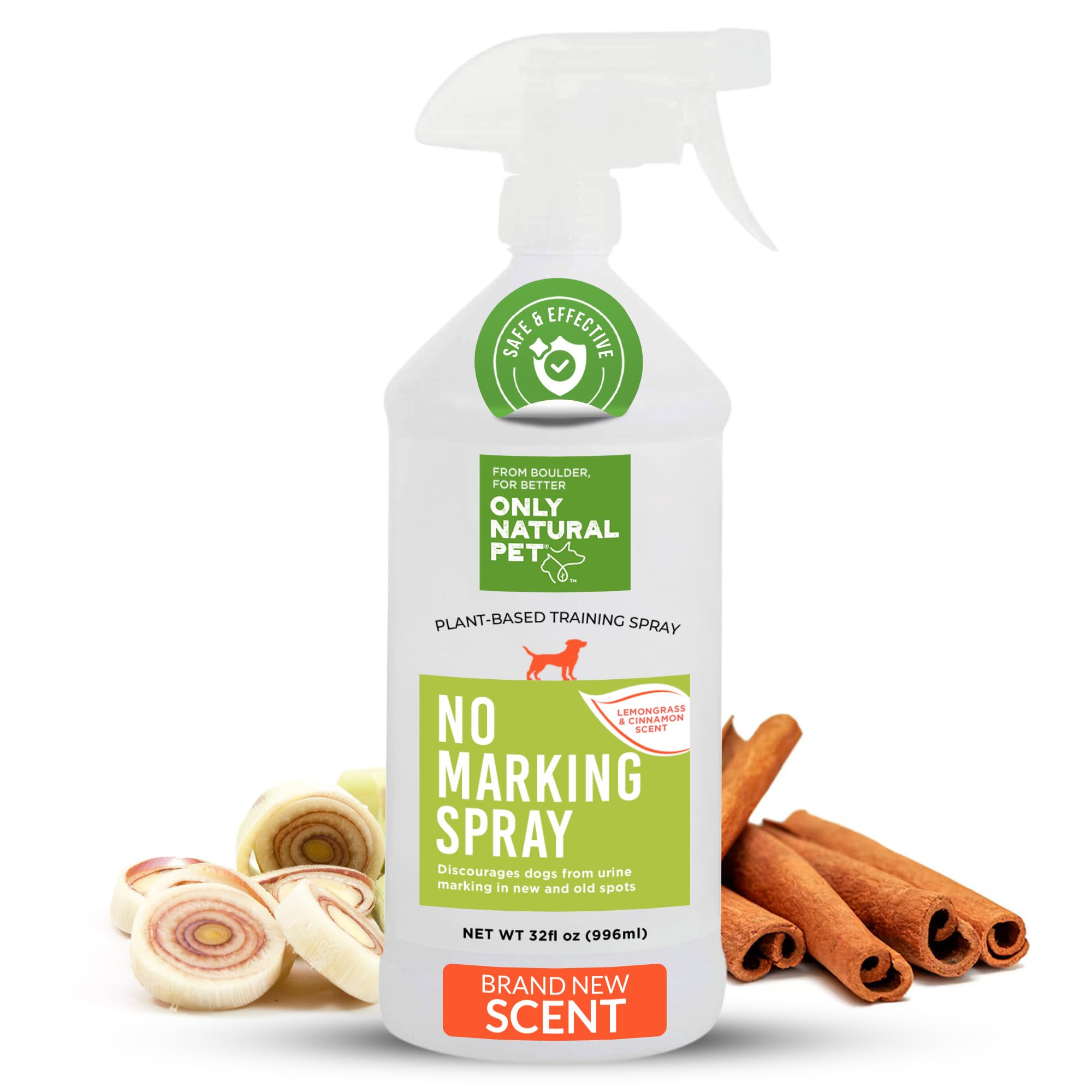
This spray tackles the marking problem with plant-based essential oils that dogs instinctively avoid. The lemongrass scent acts as a clear sensory signal that an area is off-limits, masking the lingering urine markers that encourage repeated marking. It’s designed for both indoor carpets, rugs, and outdoor lawn spots where dogs tend to return.
User experiences are mixed but informative. Several owners report that consistent application significantly reduced their dog’s marking behavior, especially when used in combination with a regular cleaning routine. The 32-ounce bottle is the largest among the repellent-only options, allowing broad coverage across multiple rooms or an entire yard. The formula is non-toxic and uses naturally derived ingredients, making it suitable for homes with puppies or dogs that lick surfaces.
The main drawback is that it can leave an oily residue on certain fabrics and surfaces, and the scent strength is noticeable. Some users described it as “smelly” but tolerable. For dogs with deeply ingrained marking habits, the repellent effect can fade once the scent dries, requiring reapplication more frequently than enzymatic cleaners.
Why it’s great
- Large 32 oz bottle for broad coverage
- Made with plant-based essential oils
- Safe for indoor and outdoor use
Good to know
- May leave an oily residue on some surfaces
- Effectiveness can diminish as scent fades
3. Bodhi Dog Not Here Spray

This smaller bottle packs a focused deterrent for indoor and outdoor use. The formula is designed to remove the attractive scent markers that draw dogs back to previous accident sites, acting as a gentle reminder rather than a punishment. It’s non-staining on wood floors and fabrics, and the scent—described as similar to tea tree oil or bug spray—fades quickly after application.
Positive reviews highlight its effectiveness as a training supplement during early potty training, particularly with puppies. One user saw zero accidents within 24 hours of spraying all surfaces. The key to success appears to be thorough cleaning of the original urine spot before applying the spray; if any residue remains, the dog may not be deterred. The bottle is small, which makes it easy to carry to different rooms or outdoors, but the 8-ounce volume runs out quickly for homes with multiple trouble spots.
The primary limitation is that it doesn’t work for every dog, especially older animals with well-established marking patterns. Several reviewers reported that their dogs urinated on the treated area once the spray dried, indicating that the deterrent effect is short-lived. The spray nozzle can also be inconsistent, spraying at an angle rather than straight.
Why it’s great
- Non-staining and safe on wood floors & fabrics
- Works well as part of a puppy potty training plan
- Portable 8 oz bottle
Good to know
- Small bottle needs frequent replacement
- Not effective for all older dogs with established habits
4. Vet Classics Pet Deterrent Spray (Yuck! No-Chew)

Note: This is not a pee deterrent spray—it is a chew deterrent. The formula uses a water-based bittering agent that creates an unappealing taste to stop dogs from chewing furniture, bandages, sores, and their own paws. It contains no enzymes or repellent scents designed to stop urination or marking. I’m including it here because owners often confuse the two categories and need a clear distinction.
The spray is alcohol-free and non-stinging, so it won’t irritate a dog’s skin or open wounds. It can be applied over topical medications and used on washable surfaces. For the specific job of stopping surface chewing, some users find it works well initially, though the effect may not last for extended periods. The taste is reported as extremely unpleasant to humans, which underscores its aversive nature.
The major limitation is that it is ineffective for determined chewers, particularly breeds like Bull Terriers. The formula also does not address urine-related behaviors. If you are dealing with urine marking, you need an enzymatic or scent-repellent product, not a taste deterrent. Purchasing this for a urination problem will not produce the desired outcome.
Why it’s great
- Water-based and safe on bandages, sores, and furniture
- Alcohol-free and non-stinging
- Veterinarian-formulated
Good to know
- Not designed to stop urination or marking
- Effectiveness varies significantly by dog breed and determination
5. So Phresh Go Right Here Potty Training Spray

This product operates on the opposite principle of a deterrent. Instead of repelling a dog, the concentrated formula attracts them to a specific location—such as a puppy pad or a fire hydrant—making it a useful tool for directing where you want your dog to potty, not for stopping them from going somewhere else. It’s designed for dogs of all ages and can be used both indoors and outdoors.
The reviews are polarized. A small number of users report it “works wonders” for training an elderly dog to use a pad, while the majority of feedback describes it as ineffective or a waste of money. Several buyers mentioned that their dogs would sniff the treated area and then proceed to eliminate elsewhere, suggesting the attractant signal is too weak to override existing habits or other scent markers.
Given that this is an attractant, not a deterrent, it is the wrong tool for preventing urination in unwanted areas. If your goal is to stop your dog from peeing on a carpet or furniture, this spray will not help. For those trying to establish a designated potty zone, it may be worth testing, but results appear inconsistent across different dogs.
Why it’s great
- Concentrated formula for attracting dogs to a spot
- Can be used indoors or outdoors
- Helps with directing elderly dogs to potty pads
Good to know
- Not a deterrent; will not stop unwanted urination
- Inconsistent results reported across different dogs
FAQ
How long does an enzymatic dog pee spray take to work?
Can I use a chew deterrent spray to stop my dog from peeing indoors?
Are plant-based deterrent sprays safe for puppies and small dogs?
Why does my dog still pee on the area after I’ve sprayed a deterrent?
Can I use a deterrent spray on my outdoor lawn?
Final Thoughts: The Verdict
For most users, the dog pee deterrent spray winner is the Nature’s Miracle Advanced because its enzymatic formula actively digests urine proteins rather than masking them, making it effective for both fresh and set-in stains. If you want a plant-based repellent for maintenance training, grab the Only Natural Pet No Marking. For redirecting a puppy during early potty training, nothing beats the convenience of the Bodhi Dog Not Here Spray.

Mo Maruf
I created WellFizz to bridge the gap between vague wellness advice and actionable solutions. My mission is simple: to decode the research and give you practical tools you can actually use.
Beyond the data, I am a passionate traveler. I believe that stepping away from the screen to explore new environments is essential for mental clarity and physical vitality.