Our readers keep the lights on and my smoothie glass nicely filled. As an Amazon Associate, I earn from qualifying purchases.
Managing canine diabetes is a 24/7 responsibility, and the most stressful part is often the blood draw. Between the yelps, the struggle, and the guilt, getting an accurate reading can feel like a battle. A specialized monitoring tool changes that dynamic, turning a traumatic event into a quick, almost unnoticed procedure for both you and your furry companion.
I’m Mohammad Maruf — the founder and writer behind WellFizz. I’ve spent hundreds of hours combing through veterinary research, comparing medical-grade hardware specifications from vacuum-lancing depth control to AI-driven vital sign algorithms, to bring you a guide that cuts through the marketing noise.
After weeks of analyzing real-world data and customer experiences, I have identified the tools that consistently deliver reliable readings and reduce stress, culminating in this definitive guide to the best dog glucose monitor for at-home care.
How To Choose The Best Dog Glucose Monitor
Selecting the right monitor involves understanding your pet’s temperament, the severity of their condition, and your own comfort with medical devices. A system that works for a calm 70-pound Labrador may be completely wrong for a nervous 8-pound cat or toy breed.
Vacuum vs. Standard Lancing
Standard lancets rely on a quick, deep puncture to get blood, which can cause pain and bruising. Vacuum-assisted devices use gentle suction to bring blood to the surface before lancing, requiring a much shallower puncture. This technology is the single largest factor in reducing pain and achieving a usable blood drop on the first try, minimizing the need for multiple pokes.
Sample Size and Speed
A monitor that requires a very small blood volume (measured in microliters, such as 0.3 mcL) is a huge advantage. Smaller sample needs mean less blood to draw, leading to quicker success. Fast reading times (5 seconds or less) keep the interaction brief, which helps keep an anxious dog still and reduces the chance of the blood drop smearing before the strip can absorb it.
Depth Adjustment and Contact Tips
Not all dogs have the same skin thickness or tolerance. Look for lancing devices that offer multiple depth levels and interchangeable contact tips. This allows you to fine-tune the experience—using a smaller contact tip and a shallower lancet setting on a sensitive, thin-skinned area like the inner lip, and a larger setup on a tougher area like the callus near the tail.
Quick Comparison
On smaller screens, swipe sideways to see the full table.
| Model | Category | Best For | Key Spec | Amazon |
|---|---|---|---|---|
| PetTest Painless Kit | Starter Kit | New to home testing | Vacuum lancing + 50 strips | Amazon |
| PetTest Genteel Lancing Device | Lancing Only | Upgrading existing kit | 12 depth combinations | Amazon |
| PetPace Health Collar V3.0 | Smart Collar | 24/7 health surveillance | HR / RR / Temp / GPS | Amazon |
| DAWEI HM10 Vital Signs Monitor | Multi-Parameter | In-depth home clinic | 12.1″ ECG + SpO2 + NIBP | Amazon |
| Pepultech AM6200 Vet Monitor | Portable 6-in-1 | Travel & quick checks | Wireless + Bluetooth App | Amazon |
| SunTech Vet20 BP Monitor | Clinical BP | Gold-standard BP tracking | Veterinary-specific algorithm | Amazon |
| Pepultech Pet BP Monitor | Home BP | Budget BP monitoring | 5 cuffs, silent operation | Amazon |
| Anton Paar SmartRef | Urine Analysis | USG & kidney health | ±0.001 USG accuracy | Amazon |
| Fi Series 3+ Tracker | Activity GPS | General health & escape | GPS + AI behavior analysis | Amazon |
In‑Depth Reviews
1. PetTest Painless Glucose Monitoring Kit

This all-in-one kit is the gold standard for transitioning from stressful pricks to calm, reliable testing. The included Genteel lancing device uses a vacuum chamber to draw a precise blood drop using a shallow puncture, which dramatically reduces the pain and panic often seen with standard lancets. The kit comes with 50 individually foil-wrapped test strips, each requiring just 0.3 microliters of blood and returning a reading in 5 seconds.
The meter itself is no-coding and includes a phone app to track trends over time, which is invaluable for adjusting insulin doses with your vet. Users consistently report that the vacuum seal holds the skin steady, preventing the splatter that ruins strips on traditional devices. The carrying case keeps everything organized for travel, making daily management less of a production.
Some users have noted a learning curve with holding the device for the full 5-second vacuum count after pressing the button. A small number of owners with very small dogs or cats under 10 pounds found the device too large for ideal positioning. Despite this, the package represents massive savings compared to buying the lancing device and strips separately.
Why it’s great
- Pain-free vacuum lancing gets usable blood without deep pokes
- Complete system: meter, 50 strips, lancet device, and lancets
- Individual foil wraps keep test strips fresh and accurate
Good to know
- Vacuum hold time requires 5 seconds of patience after the click
- Some users report difficulty getting enough blood from small breeds
2. PetPace Dog Health Monitor V3.0
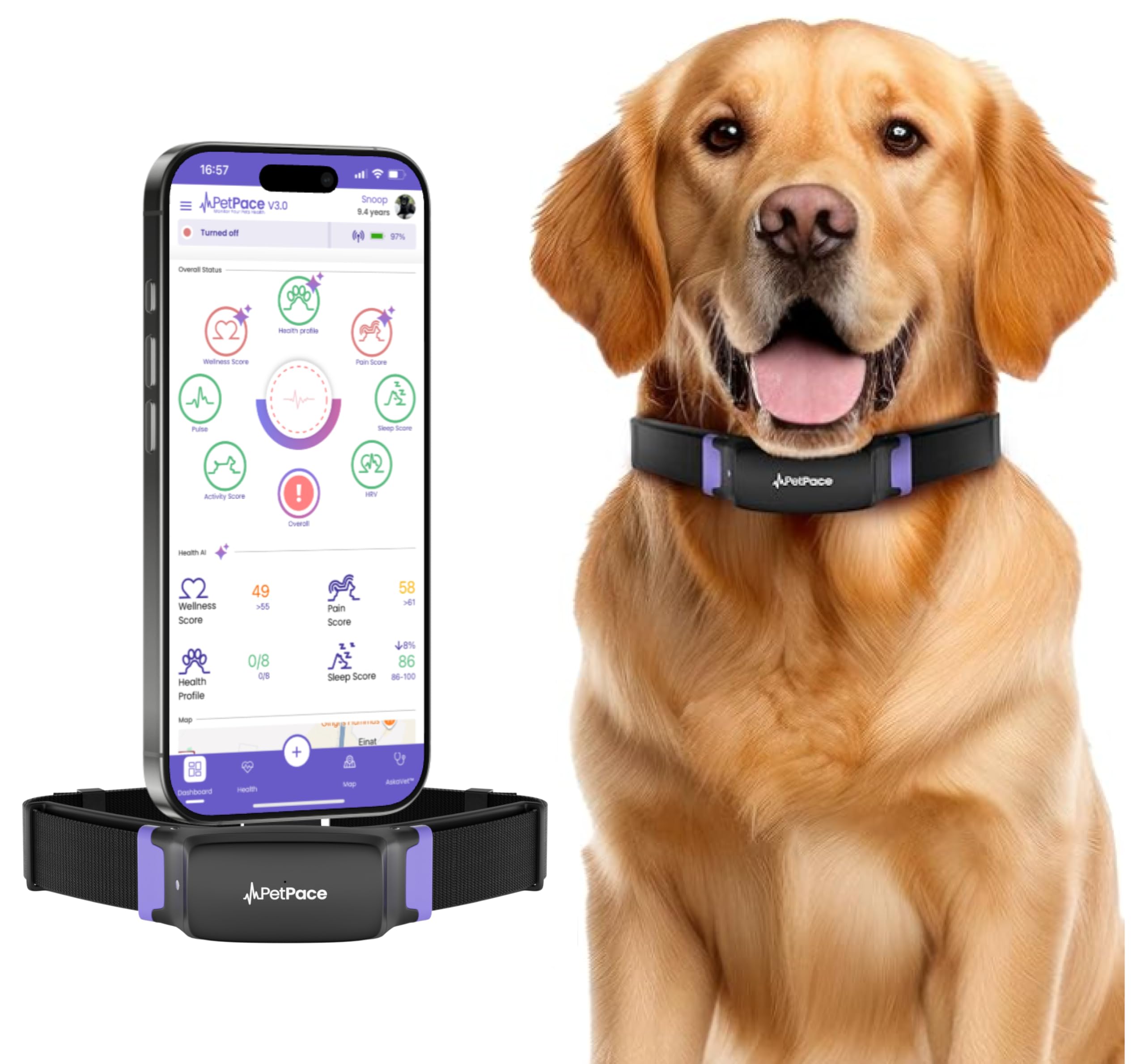
While not a glucometer, the PetPace V3.0 collar is the ultimate companion tool for managing a diabetic dog. It tracks heart rate, respiratory rate, temperature, HRV, and activity every two minutes. For a diabetic dog, a sudden drop in temperature or a spike in resting heart rate can signal hypoglycemia or a developing infection before visible symptoms appear, giving you a crucial window to intervene.
The AI analyzes these metrics to detect patterns related to pain, stress, and abnormal behavior, which can directly correlate with how a diabetic dog is responding to treatment. The built-in GPS provides peace of mind for escape-prone pets. The subscription service (/mo) includes 24/7 ask-a-vet telehealth, which can be a lifesaver for diabetic emergencies when your regular vet is closed.
The collar is waterproof (IP68) and has a battery life of up to three weeks using Wi-Fi, though heavy cellular use can reduce this. Some users in areas with poor cellular service experienced intermittent GPS and health alert failures. The subscription cost is an ongoing commitment, but for owners of unstable diabetics, the depth of data is unmatched.
Why it’s great
- AI detects early signs of hypoglycemia and stress patterns
- Includes 24/7 Telehealth access to licensed vets
- Continuous monitoring with GPS tracking for escape alerts
Good to know
- Requires ongoing paid subscription (/year)
- GPS and health alerts can be unreliable in poor cellular areas
3. PetTest Genteel Pain-Free Lancing Device

If you already own a reliable meter but dread the lancing step, this standalone device is the solution. The Genteel uses precision depth control with six interchangeable contact tips and two lancet sizes (standard and butterfly) to create 12 unique depth combinations. This allows you to use a tiny, nearly painless puncture on sensitive sites and a slightly deeper one on tougher skin.
The advanced vacuum technology eliminates the need to squeeze the puncture site, which is the primary cause of bruising and pain in traditional testing. Users simply press firmly, click the button, hold the vacuum seal for 5 seconds, and remove the device to reveal a perfect blood drop. This consistency is critical for reducing wasted test strips and minimizing the number of pokes per session.
A common complaint is that the plunger mechanism creates a loud click that can startle skittish pets. The device also requires careful positioning and a steady hand to maintain the vacuum seal. For cats and very small dogs under 10 pounds, the size of the device can make it challenging to get a good seal on a small hip or ear.
Why it’s great
- 12 depth combinations allow fine-tuning for different dog sizes
- Vacuum draws blood without squeezing, preventing bruising
- Includes multiple contact tips and lancets for immediate use
Good to know
- Loud plunger click can scare anxious pets
- Requires practice to get reliable vacuum seal on tiny dogs
4. DAWEI HM10 Veterinary Vital Signs Monitor

This is a serious piece of medical equipment for owners who need a full picture of their pet’s health beyond just glucose. The HM10 monitors ECG, SpO2, non-invasive blood pressure, respiration, and temperature, with animal-specific algorithms for dogs and cats. The 12.1-inch color display makes it easy to read waveforms and trends, which is helpful when monitoring a recovering diabetic with comorbidities.
The wide heart rate detection range of 20–500 bpm ensures it works accurately from a Great Dane to a kitten. It stores alarm records and measurement history, allowing you to track changes over time. The fast startup of under six seconds means you can get a reading quickly during stressful moments. It includes accessories like tongue-type SpO2 sensors and multiple BP cuffs.
SpO2 readings on the tongue can sometimes be finicky on dogs and cats; some users found the probe worked better clipped to the ear or a paw pad. The unit is heavy at just over 11 pounds, making it a stationary home device rather than a portable one. A small number of users reported that the device locked without the original password, preventing customization.
Why it’s great
- Comprehensive 5-parameter monitoring with animal algorithms
- Large 12.1″ screen for easy reading of waveforms
- Stores alarm and measurement history for trend analysis
Good to know
- Some SpO2 probes require specific placement for accuracy
- Heavy unit (11 lbs) is not designed for travel
5. Pepultech AM6200 Vet Monitor
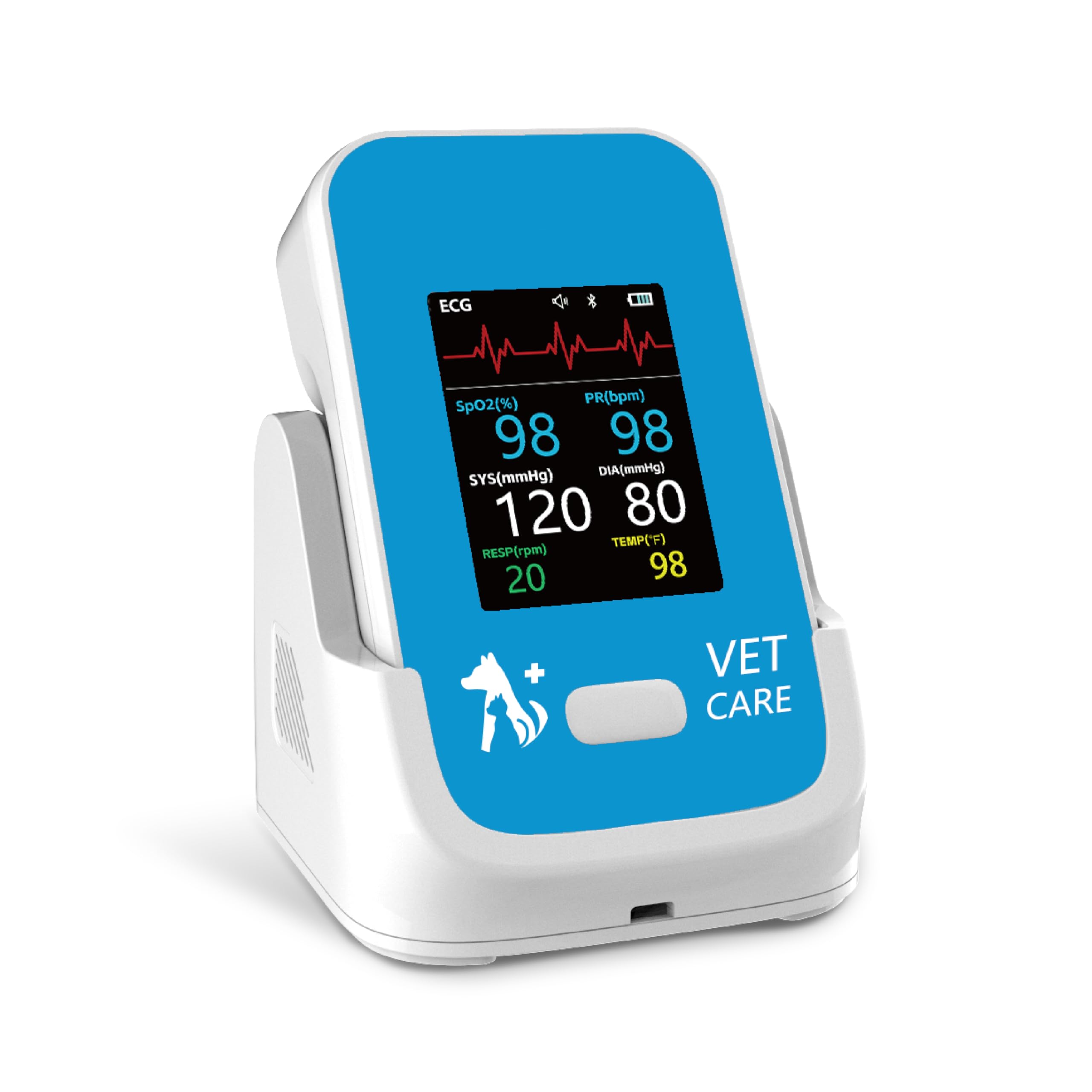
The AM6200 packs six vital sign parameters—ECG, HR, NIBP, SpO2, PR, and TEMP—into a handheld unit that is just 10.6 ounces. This is a fantastic option for owners who travel with their dog or need to take quick readings in different rooms. The 2.8-inch color LCD shows waveform graphs and data clearly, and the single-button operation makes it simple to start a reading.
Wireless connectivity is a standout feature here. It supports Bluetooth 5.0 and pairs with the Berry Health app (iOS/Android) and PC software to store graphic records and trends. This allows you to share a detailed report with your vet remote. The 1800mAh battery lasts up to 12 hours on a full charge and supports both USB-C and wireless charging.
The biggest point of failure is the Bluetooth pairing; a significant number of customers report the Bluetooth simply does not work on their devices, rendering the data-sharing feature useless. The device also does not come with detailed instructions, requiring prior knowledge to position the BP cuff correctly over the dorsal pedal artery and to shave for proper SpO2 contact.
Why it’s great
- Six vital sign parameters in a lightweight handheld design
- Bluetooth app allows for data trending and vet sharing
- USB-C and wireless charging offer flexible power options
Good to know
- Bluetooth pairing is unreliable for many users
- No instructions included; requires some veterinary knowledge
6. SunTech Vet20 Blood Pressure Monitor

For diabetic dogs, hypertension is a common comorbidity that must be managed alongside blood sugar. The Vet20 is the clinical reference standard for home use, using a BP algorithm developed specifically for companion animals at a leading veterinary school. It includes cuffs sized 1–6, covering everything from a cat’s leg to a large dog’s tail.
The touch screen interface is simple and intuitive, and the device takes readings quickly and quietly, which reduces white-coat syndrome in nervous pets. It records up to 50 readings and allows for automatic averaging, which is essential for obtaining a true baseline BP since a single reading can be skewed by stress. It also measures Mean Arterial Pressure (MAP), a critical metric that cheaper monitors often omit.
The price point is significantly higher than any other monitor on this list, making it a serious investment. Some users reported accuracy issues where the Vet20 consistently showed lower readings than their vet’s clinic device, though this is often due to user positioning error. The AA battery operation is a minor inconvenience for a device at this premium level.
Why it’s great
- Veterinary-specific BP algorithm for accurate readings
- 6 cuffs cover all companion animal sizes
- Measures MAP and averages multiple readings
Good to know
- Premium price is the highest on this list
- Requires correct cuff placement for accuracy
7. Pepultech Veterinary Blood Pressure Monitor
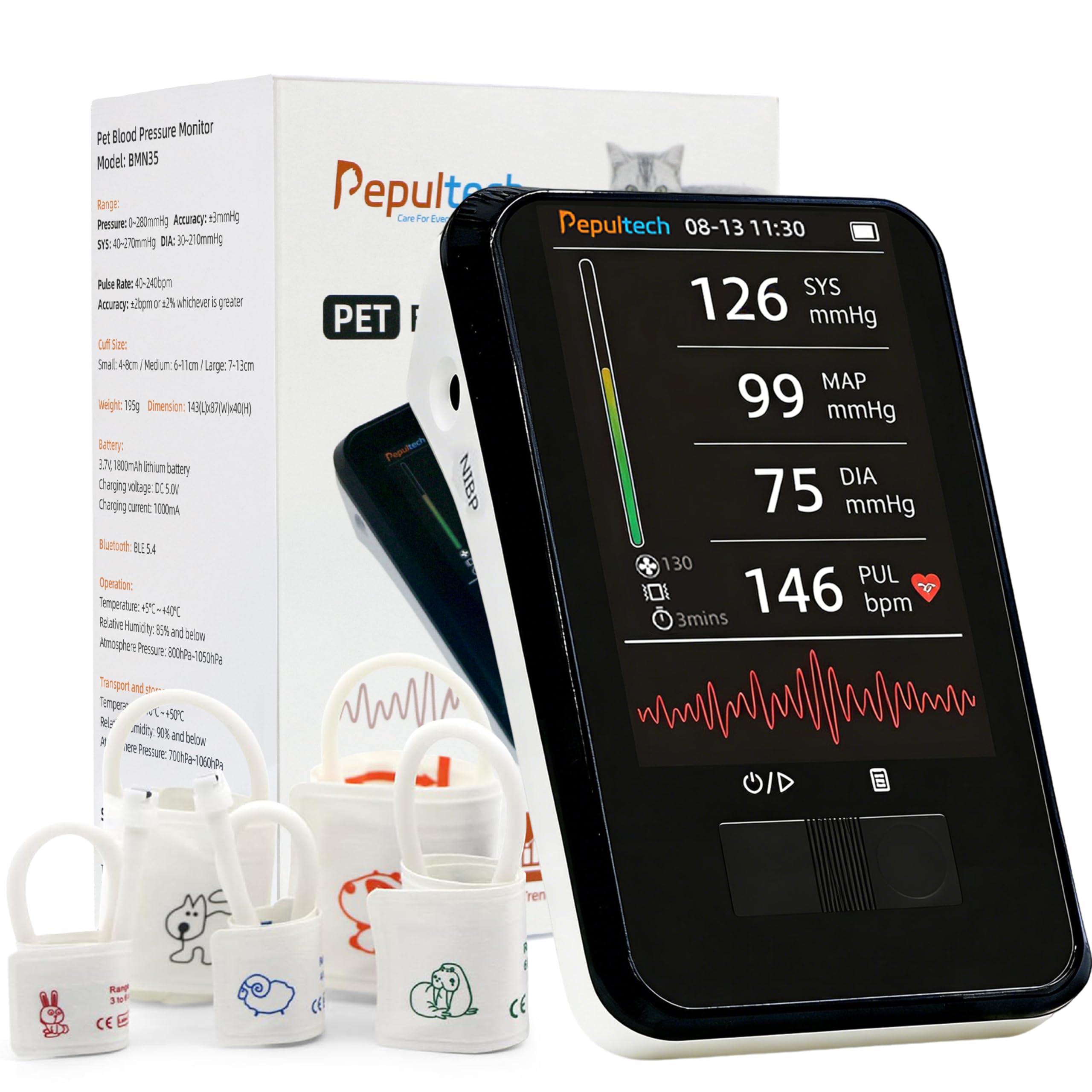
This is a no-frills blood pressure monitor that fills the gap for owners who want to track BP without spending clinic-level money. It comes with five different cuff sizes designed for dogs and cats, covering most common family pet sizes. The device operates silently, which is critical for getting a calm reading, and automatically reports errors if the pet moves too much.
The 1800mAh rechargeable battery provides over 8 hours of runtime, and the large LED screen with bold fonts is easy to read. It can store up to 1000 sets of data, including SYS, DIA, MAP, and Pulse Rate, with automatic averaging of the last 10 readings. This is a functional tool for tracking whether medication adjustments are keeping BP in a safe range.
Accuracy is the primary concern here, as multiple users have reported readings that were significantly different from their vet’s device. It is best used to track relative changes (trends) rather than relying on it for absolute numbers. The learning curve involves finding the correct artery, and the cuff can be tricky to position correctly on wiggly pets.
Why it’s great
- Includes 5 cuff sizes for various pet sizes
- Silent operation helps maintain a calm environment
- Rechargeable battery with 8+ hours of runtime
Good to know
- Absolute accuracy can be inconsistent
- Best for tracking trends, not for absolute numbers
8. Anton Paar SmartRef Digital Refractometer
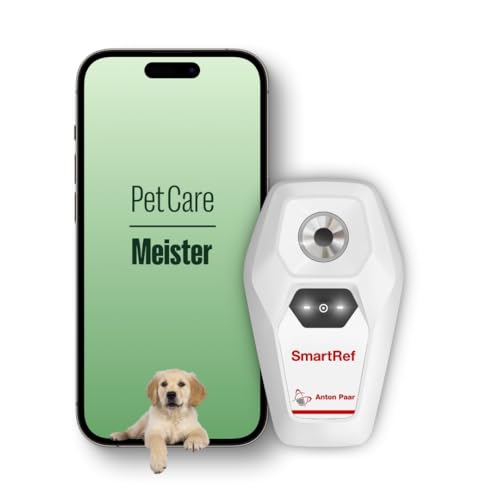
For diabetic management, monitoring urine specific gravity is a powerful way to catch early kidney stress and dehydration. The SmartRef by Anton Paar is a premium digital refractometer that measures USG with ±0.001 accuracy. It requires only a few drops of urine, which can be collected from a clean catch or a mid-stream sample, making the process stress-free.
The device delivers instant readings and has automatic temperature compensation, ensuring accuracy regardless of ambient conditions. The Pet Care Meister mobile app integrates seamlessly to store and visualize results over time. This data can be shared with your vet to adjust fluid intake or insulin dosing. The device is built to last with an IP66 rating, making it dust-tight and resistant to powerful water jets.
The primary use case here is narrow; if you only need blood glucose, this device won’t replace a glucometer. Some customers who bought it for non-urine applications (like measuring honey or kefir) were satisfied, but those who needed it specifically for pet health found the app support lacking. There have also been isolated reports of units arriving faulty with no post-purchase support.
Why it’s great
- Laboratory-grade USG accuracy for early kidney health detection
- Minutes blood sample prevents stress during collection
- App integration for tracking trends and sharing with vet
Good to know
- Niche tool for urine analysis, not a general glucose monitor
- Customer support reported as lacking by some users
9. Fi New Series 3+ Smart Dog Tracker Collar
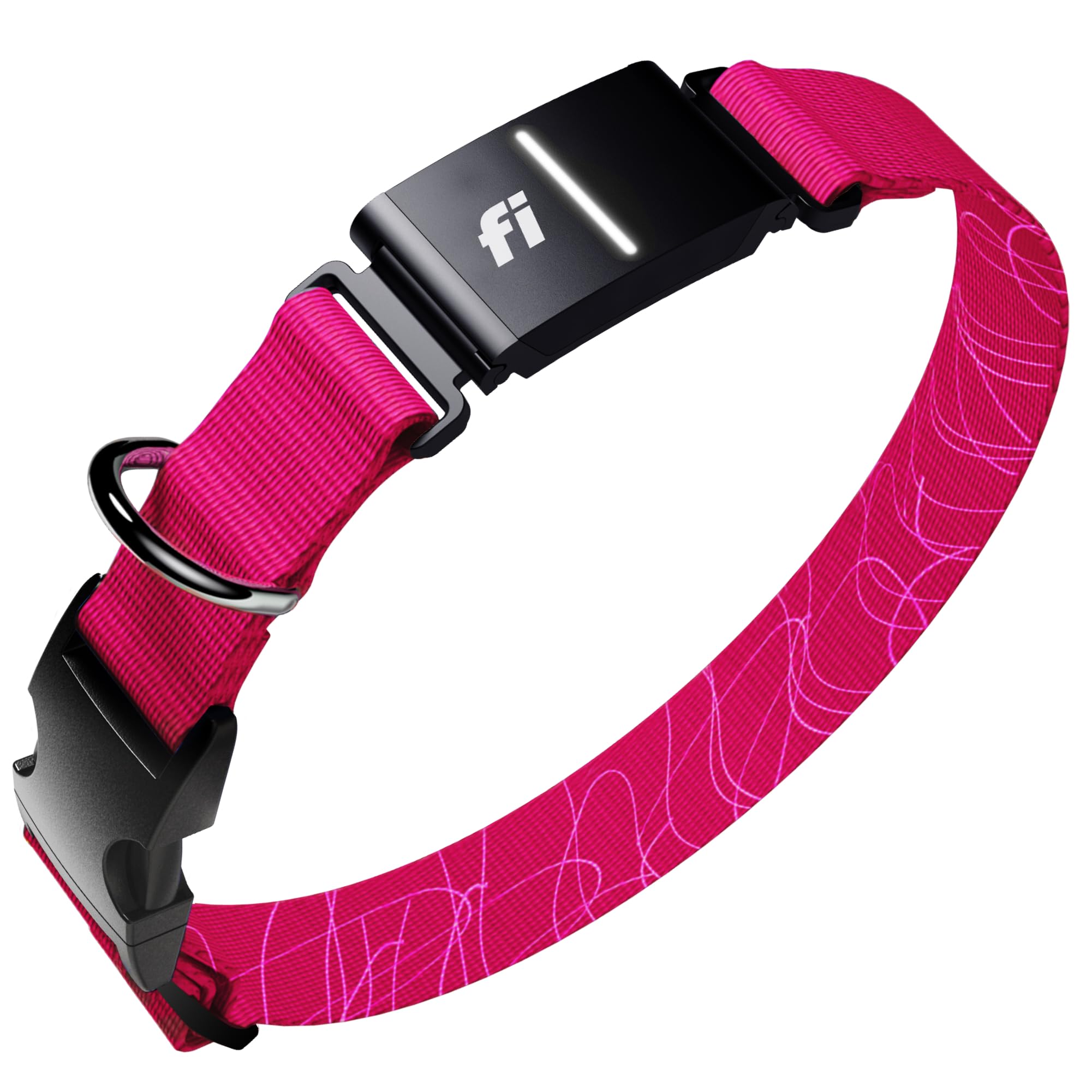
The Fi Series 3+ is a smart collar focused on GPS location and AI-powered health and behavior tracking. For a diabetic dog, the ability to monitor activity, rest, scratching, eating, and drinking patterns can provide early clues about how they are feeling. A sudden drop in activity or an increase in drinking can be a sign of fluctuating glucose levels.
The escape alerts are a vital safety feature for a diabetic dog that might wander off in a confused state. The AI companion analyzes raw data to give you a picture of your dog’s well-being, and it integrates with Apple Watch for quick views. The battery life is a strong point, lasting over a week on a full charge even with regular GPS use.
The monthly membership ( for 6 months included) is required for full functionality, similar to the PetPace. The initial setup process has been a major pain point for many users, with issues connecting the charging base to Wi-Fi and pairing the collar. The proprietary collar design means you cannot use a standard collar if you lose the included one, and replacements are not cheap.
Why it’s great
- AI analyzes eating and drinking changes that may signal glucose issues
- Excellent battery life (7+ days) with active GPS use
- Real-time escape alerts for diabetic dogs prone to wandering
Good to know
- Initial setup can be very frustrating and time-consuming
- Proprietary collar design limits replacement options
FAQ
Can I use a human glucose meter on my dog?
What is the best spot on a dog to draw blood for glucose?
Why do I need a subscription for some dog health collars?
How often should I check my diabetic dog’s blood sugar?
Final Thoughts: The Verdict
For most users, the best dog glucose monitor winner is the PetTest Painless Glucose Monitoring Kit because it combines a proven vacuum lancing system with a reliable meter and sufficient test strips, all at a reasonable entry point that drastically reduces the pain of daily testing. If you want continuous, 24/7 surveillance that includes GPS and early illness detection, grab the PetPace Health Collar V3.0. And for owners who already have a meter and just want to eliminate the pain of the stick, nothing beats the standalone PetTest Genteel Lancing Device.

Mo Maruf
I created WellFizz to bridge the gap between vague wellness advice and actionable solutions. My mission is simple: to decode the research and give you practical tools you can actually use.
Beyond the data, I am a passionate traveler. I believe that stepping away from the screen to explore new environments is essential for mental clarity and physical vitality.