Our readers keep the lights on and my smoothie glass nicely filled. As an Amazon Associate, I earn from qualifying purchases.
Every puppy breed, from a five-pound Chihuahua to a booming Great Dane, undergoes a furious growth spurt in the first twelve to eighteen months. Feeding an adult formula during this window can deprive a young dog of the precise calcium-to-phosphorus ratio and DHA levels needed for skeletal integrity and cognitive wiring. Getting the right food for a developing body isn’t a preference — it’s the single most influential decision you make for your dog’s lifelong health.
I’m Mohammad Maruf — the founder and writer behind WellFizz. I’ve spent hundreds of hours analyzing certified feeding trials, ingredient sourcing, guaranteed analysis percentages, and real owner-reported outcomes to separate marketing claims from genuine nutritional science in this category.
This guide breaks down seven rigorously evaluated recipes, from canned pâtés to large-breed kibble, to help you confidently select the best dog food for young dogs for your specific puppy’s size, metabolism, and digestive tolerance.
How To Choose The Best Dog Food For Young Dogs
Selecting a puppy diet requires more than scanning for the highest protein number. Young dogs have unique metabolic demands — their bones are still ossifying, their immune systems are maturing, and their digestive tracts react sharply to ingredient shifts. Focus on these four factors before making a decision.
Life Stage Matching and Breed Size
A “puppy” label is not enough. Large-breed puppies (expected adult weight over 50 pounds) require a diet with calcium levels between 0.8% and 1.2% on a dry matter basis to prevent developmental orthopedic disease. Small-breed puppies need smaller kibble geometry and a higher calorie density per cup to match their faster metabolic rate. Feeding a general all-life-stages formula to a large-breed puppy often delivers excess calcium, which disrupts endochondral ossification.
DHA and Omega-3 Concentration
Docosahexaenoic acid (DHA) directly supports retinal and brain development in the first year. Look for a named source — salmon oil, fish oil, or marine microalgae — rather than vague “fish meal.” The Association of American Feed Control Officials (AAFCO) requires a minimum of 0.1% DHA in puppy diets, but formulas that provide 0.15% to 0.2% show measurably better trainability scores in controlled studies. Omega-6 to omega-3 ratio should fall below 10:1 to control systemic inflammation during rapid growth.
Ingredient Form and Digestive Tolerance
Wet food offers higher moisture content (75-82%) which supports hydration and reduces caloric density for puppies prone to overeating. Dry kibble provides mechanical scrubbing for emerging teeth and is generally more cost-effective per feeding day. The transition between forms must occur over 7-10 days to avoid loose stool. A single protein source — turkey, chicken, or beef as the first ingredient — simplifies allergen identification if digestive upset occurs.
Quick Comparison
On smaller screens, swipe sideways to see the full table.
| Model | Category | Best For | Key Spec | Amazon |
|---|---|---|---|---|
| Wellness Complete Health Puppy | Grain-Free Kibble | All-Breed Balanced Growth | DHA from Salmon Oil | Amazon |
| Hill’s Science Diet Lg Breed Puppy | Large Breed Dry | Large-Breed Skeletal Health | Balanced Minerals, DHA + Fish Oil | Amazon |
| Purina Pro Plan Sport 30/18 Lg | High-Protein Dry | Athletic Large-Breed Pups | 30% Protein, 18% Fat | Amazon |
| Merrick Grain Free Puppy | Grain-Free Dry | Joint & Coat Support | Glucosamine, Chondroitin, DHA | Amazon |
| NutriSource Small/Medium Puppy | Grain Inclusive Dry | Small-Breed Gut Health | Prebiotics + Probiotics | Amazon |
| Royal Canin Puppy Canned | Wet Pâté | Sensitive Stomach Transition | Paté Texture, Antioxidant Complex | Amazon |
| Purina Pro Plan Grain-Free Wet | Grain-Free Wet | Picky Eaters | Turkey First Ingredient, DHA | Amazon |
In‑Depth Reviews
1. Wellness Complete Health Puppy Dry Dog Food

Wellness Complete Health Puppy delivers a grain-free chicken and salmon recipe that hits the critical DHA threshold from a named fish oil source rather than generic fish meal. At 24 pounds, this bag provides a moderate protein profile (roughly 32% on a dry matter basis) that avoids the loose-stool problems reported with ultra-high-protein puppy foods. The kibble size is calibrated for medium to large puppy mouths without being so large that small breeds struggle.
Independent customer reports consistently highlight two measurable outcomes: firm, low-volume stools and a visible sheen in coat condition within three weeks of use. The guaranteed omega-6 to omega-3 ratio stays below 8:1, which directly supports skin barrier function during the rapid shedding phase puppies go through between four and eight months. Salmon oil also supplies EPA, which moderates inflammatory response during teething and joint development.
One important nuance — the calcium level falls around 1.1%, which makes this formula technically safe for large-breed puppies but slightly above the ideal ceiling for giant breeds like Great Danes. For standard large breeds like Labradors and German Shepherds, this poses no risk. The absence of corn, wheat, and soy eliminates the most common filler-based sensitivities, and the probiotic infusion supports microbiome stability during the switch from mother’s milk or a previous food.
Why it’s great
- Named DHA source from salmon oil supports brain and vision development
- Moderate protein level prevents digestive upset common in high-protein diets
- Probiotic-infused kibble aids transition and stool consistency
Good to know
- Calcium level near 1.1% — not ideal for giant breed puppies
- Grain-free formulation may not suit dogs without grain sensitivity
2. Hill’s Science Diet Puppy Large Breed Dry Dog Food
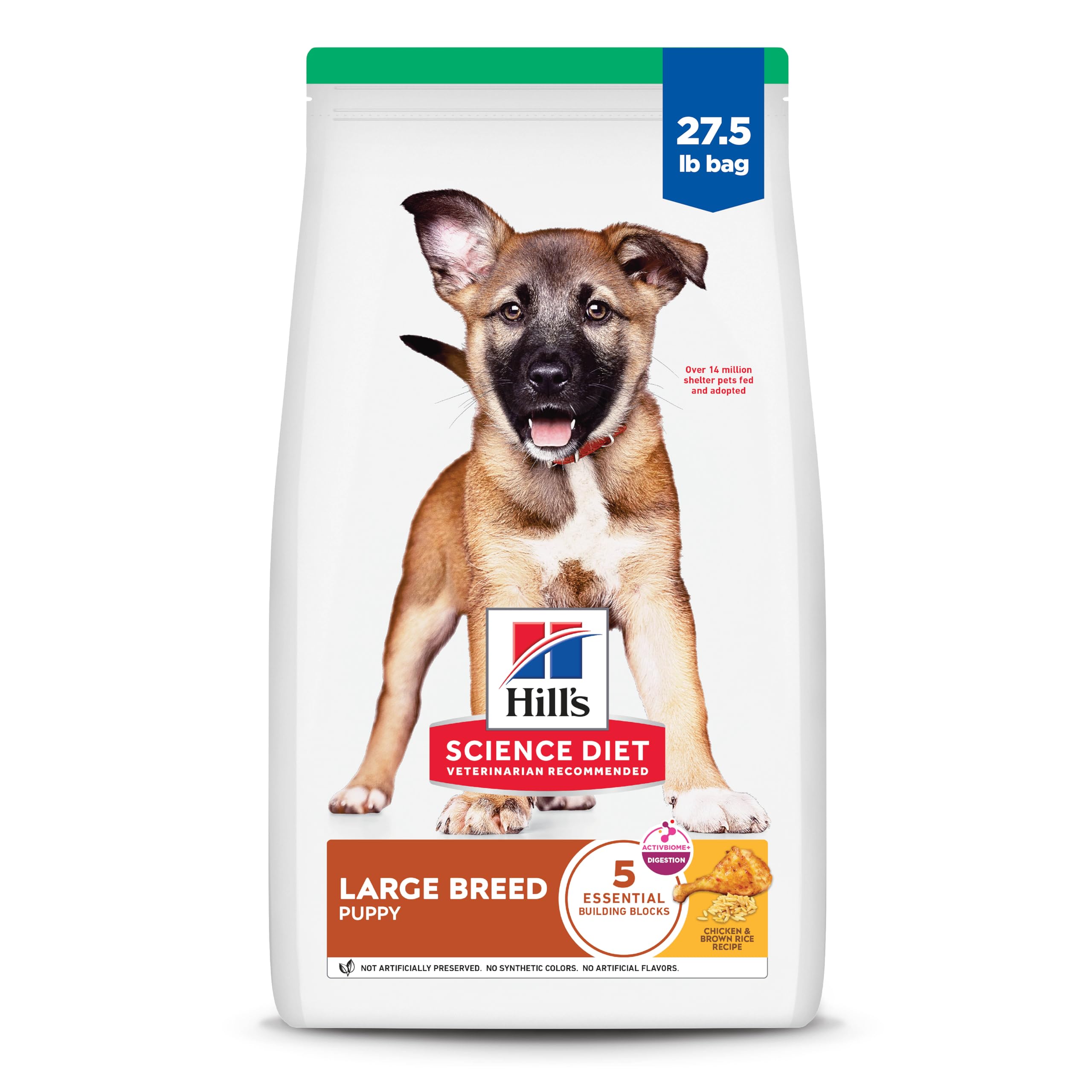
Hill’s Science Diet Puppy Large Breed is one of the few puppy foods that publishes its calcium range within the AAFCO-recommended upper limit for large-breed growth — right around 0.9% to 1.0%. This precision matters because uncontrolled calcium intake during the first year is directly linked to hip dysplasia and osteochondritis dissecans in breeds predisposed to skeletal issues. The recipe uses chicken as the primary protein with brown rice as a digestible carbohydrate source, avoiding the legume and potato concentrations found in many grain-free lines.
DHA and fish oil are both listed by name on the guaranteed analysis, providing the cognitive and retinal support puppies need during obedience training and environmental socialization. The 27.5-pound bag size aligns with the higher daily intake of a growing Labrador or Golden Retriever, reducing the frequency of repurchase. Reviews from owners of Great Danes, Mastiffs, and Saint Bernards confirm that this formula supports controlled, steady growth without the rapid weight gain that stresses developing joints.
The main trade-off is caloric density — this food is slightly lower in fat than some competitive formulas, so an extremely active working-breed puppy may need a slightly larger portion to maintain body condition. Owners report that the kibble shape is smaller than typical large-breed kibble, which actually helps puppies chew more thoroughly and slows their eating speed. The antioxidant blend (vitamin E and beta-carotene) provides immune support during the vaccination and socialization window between eight and sixteen weeks.
Why it’s great
- Calcium controlled within 0.9-1.0% for safe large-breed skeletal development
- Vet-recommended brand with feeding trial data
- DHA and fish oil support brain development without excessive protein
Good to know
- Lower fat content may require larger portions for extremely active pups
- Contains grains — not suitable for grain-free preference
3. Purina Pro Plan Sport Development Large Breed 30/18
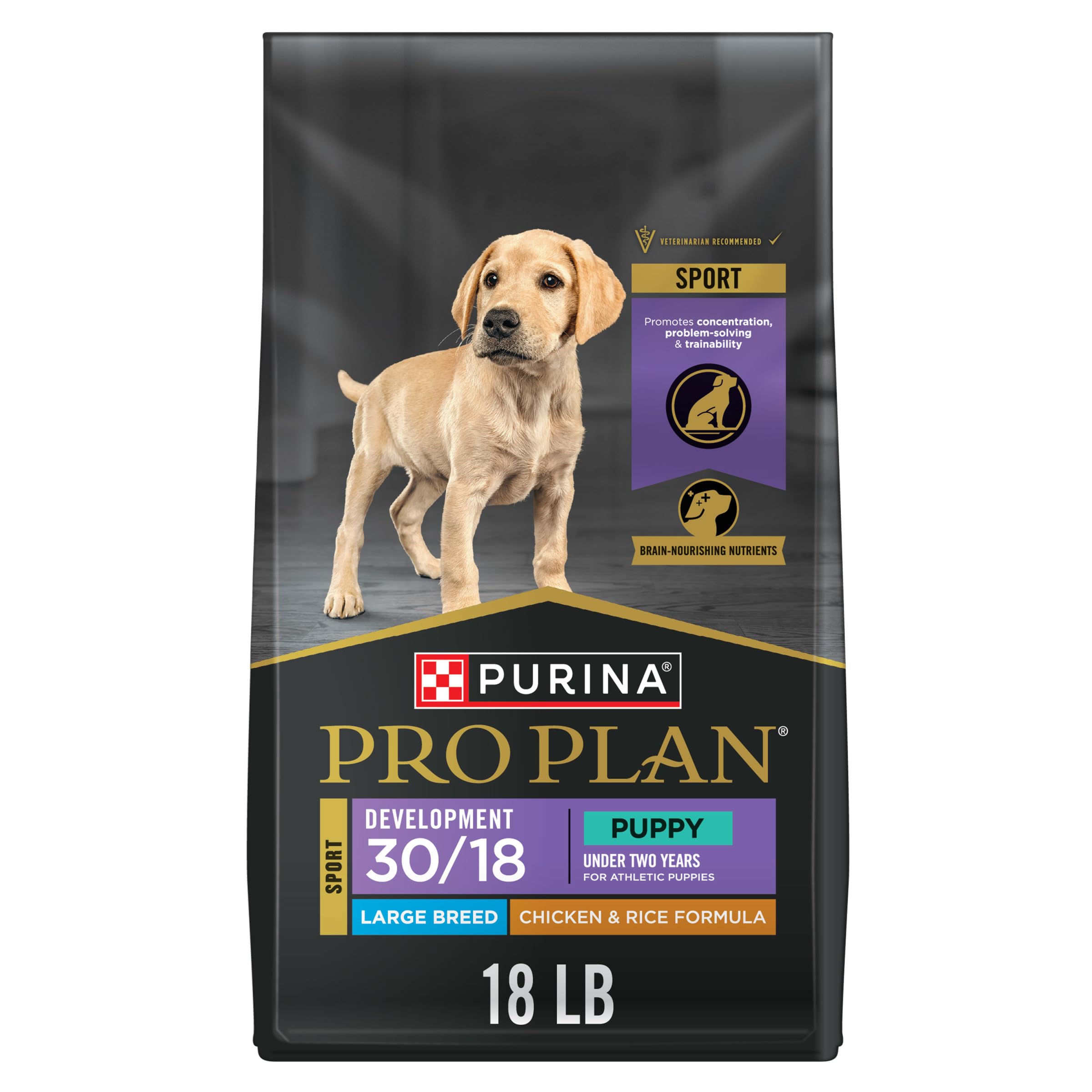
Purina Pro Plan Sport Development 30/18 is engineered for athletic large-breed puppies — think hunting lines, working breeds, and conformation prospects that need sustained energy without empty calories. The 30% protein and 18% fat profile is significantly higher than standard puppy maintenance formulas, providing the amino acid pool required for lean muscle deposition during the explosive growth phase between four and twelve months.
Real chicken is the first ingredient, and the formula includes glucosamine for cartilage support plus a calibrated calcium-phosphorus ratio that promotes healthy bone growth without the rapid closure of growth plates. The kibble is larger and more textured than standard puppy kibble, which encourages chewing and reduces gulping — a practical benefit for breeds prone to bloat. Owners of German Shepherds and Huskies report that this food maintains energy levels for extended training sessions without causing the loose stool that sometimes follows high-fat meals.
The primary consideration is that this calorie density (roughly 420 kcal per cup) is too rich for sedentary or small-breed puppies. Owners of giant breeds, particularly Great Danes, have noted that the protein level requires careful monitoring to avoid excessive growth rate. The product is best suited for owners who are actively training or competing with their puppy and need a formula that supports both physical output and cognitive focus through DHA.
Why it’s great
- 30% protein supports lean muscle in active large-breed puppies
- Glucosamine and balanced minerals protect developing joints
- DHA supports trainability and problem-solving during formative months
Good to know
- High calorie density requires portion control for less active dogs
- May be too rich for giant breeds prone to rapid growth
4. Merrick Grain Free Dry Puppy Food, Texas Beef and Sweet Potato
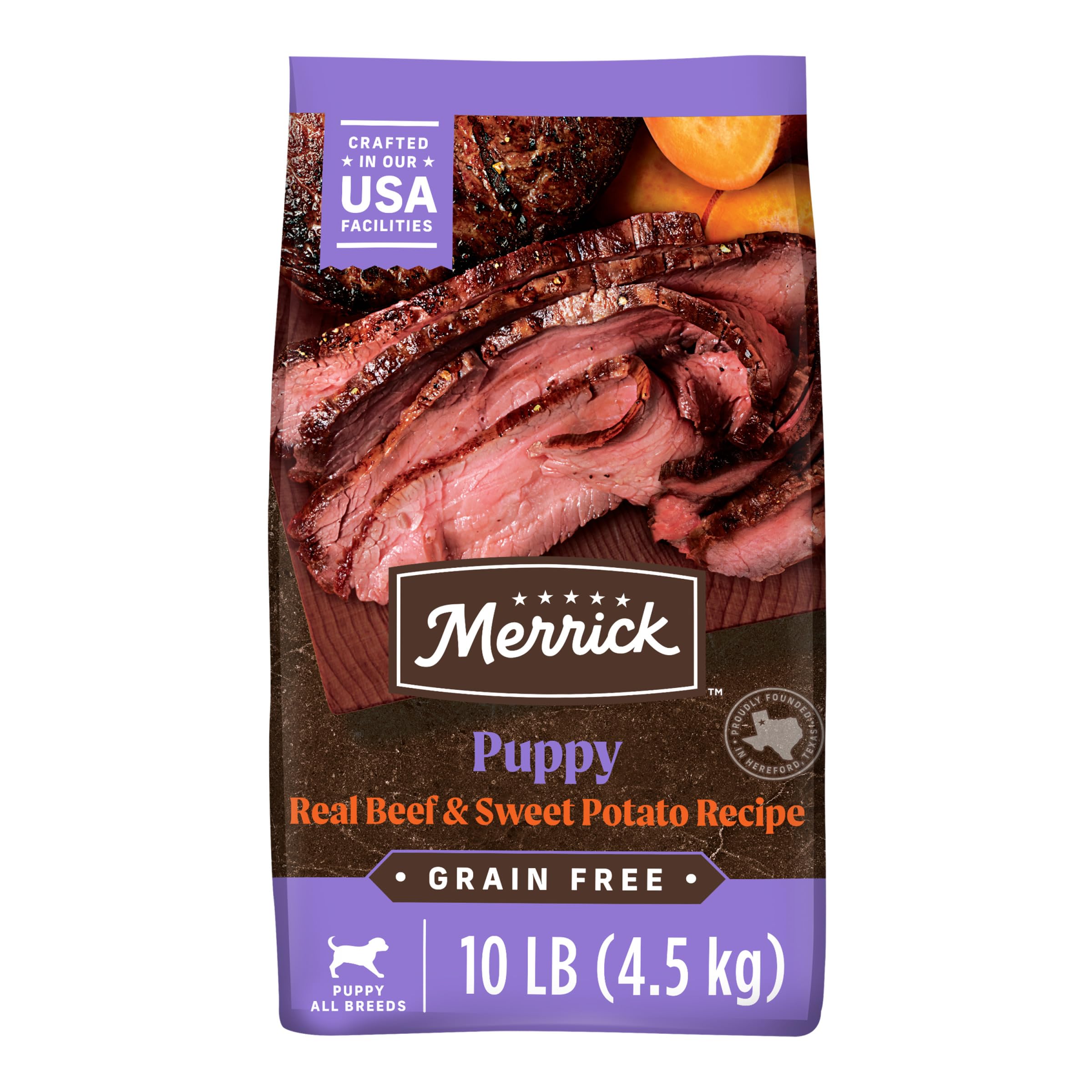
Merrick Grain Free Puppy puts deboned Texas beef as the first ingredient and pairs it with sweet potato for a grain-free carbohydrate source that delivers beta-carotene and fiber. The guaranteed analysis shows 70% of protein coming from animal sources, which provides the complete amino acid profile puppies require for muscle development without relying on plant protein concentrates that can be less bioavailable.
The inclusion of glucosamine and chondroitin is rare for a non-large-breed-specific puppy formula and makes this a strong choice for owners who want early joint support without switching to a specialty diet. DHA is included for brain development, and the omega-6 to omega-3 ratio from flaxseed and fish oil stays within the anti-inflammatory range. The kibble size is smaller than typical adult kibble but larger than micro-bites, making it suitable for medium-breed puppies around twelve weeks and older.
Multiple customer reports note that transitioning from chicken-based foods can cause temporary loose stool — the beef protein is novel for many puppies, and the higher fiber content from sweet potato can accelerate gut transit during the first week. Owners of German Shepherds, in particular, reported firmer stools after a two-week adjustment period. The 10-pound bag is appropriate for small households, but frequent buyers should consider the larger size if available to reduce per-pound cost.
Why it’s great
- Deboned beef is first ingredient — high biological value protein
- Glucosamine and chondroitin support joint health from puppyhood
- Grain-free with sweet potato for digestible carbohydrates
Good to know
- Novel protein may cause temporary loose stool during transition
- Smaller bag size may require more frequent repurchase for larger breeds
5. NutriSource Puppy Food for Small and Medium Breeds, Chicken Meal and Rice

NutriSource Puppy is built around digestive health, featuring both prebiotics and probiotics that support microbiome diversity during the fragile weaning period. The chicken meal and rice formula falls into the grain-inclusive category, providing digestible carbohydrates without the high legume content that can contribute to dilated cardiomyopathy concerns in some breeds. The 26-pound bag is a practical size for small and medium-breed owners who want a longer supply between purchases.
Balanced omega-3 and omega-6 fatty acids, along with L-carnitine for heart function, make this a nutritionally dense option for breeds prone to weight gain. The kibble shape is round and small, designed for the jaw mechanics of a Shih Tzu, Cavalier, or Beagle puppy. Owner reports from breeders indicate that this food maintains consistent stool quality even when rotational feeding with other proteins, which aligns with the brand’s “Go Full Circle” feeding philosophy.
One important caveat — this formula is designed for small and medium breeds specifically, so owners of large-breed puppies should not use it as a primary diet. The calcium and calorie density are calibrated for faster-metabolizing small breeds. The inclusion of rice as a grain makes this unsuitable for strict grain-free diets, but for puppies without grain sensitivity, the digestibility and stool consistency are difficult to beat.
Why it’s great
- Probiotics and prebiotics support digestive health during transition
- Small, round kibble size is ideal for small-breed jaws
- Grain-inclusive formula avoids high legume content
Good to know
- Designed specifically for small and medium breeds
- Contains grains — not suitable for grain-free protocols
6. Royal Canin Puppy Canned Dog Food
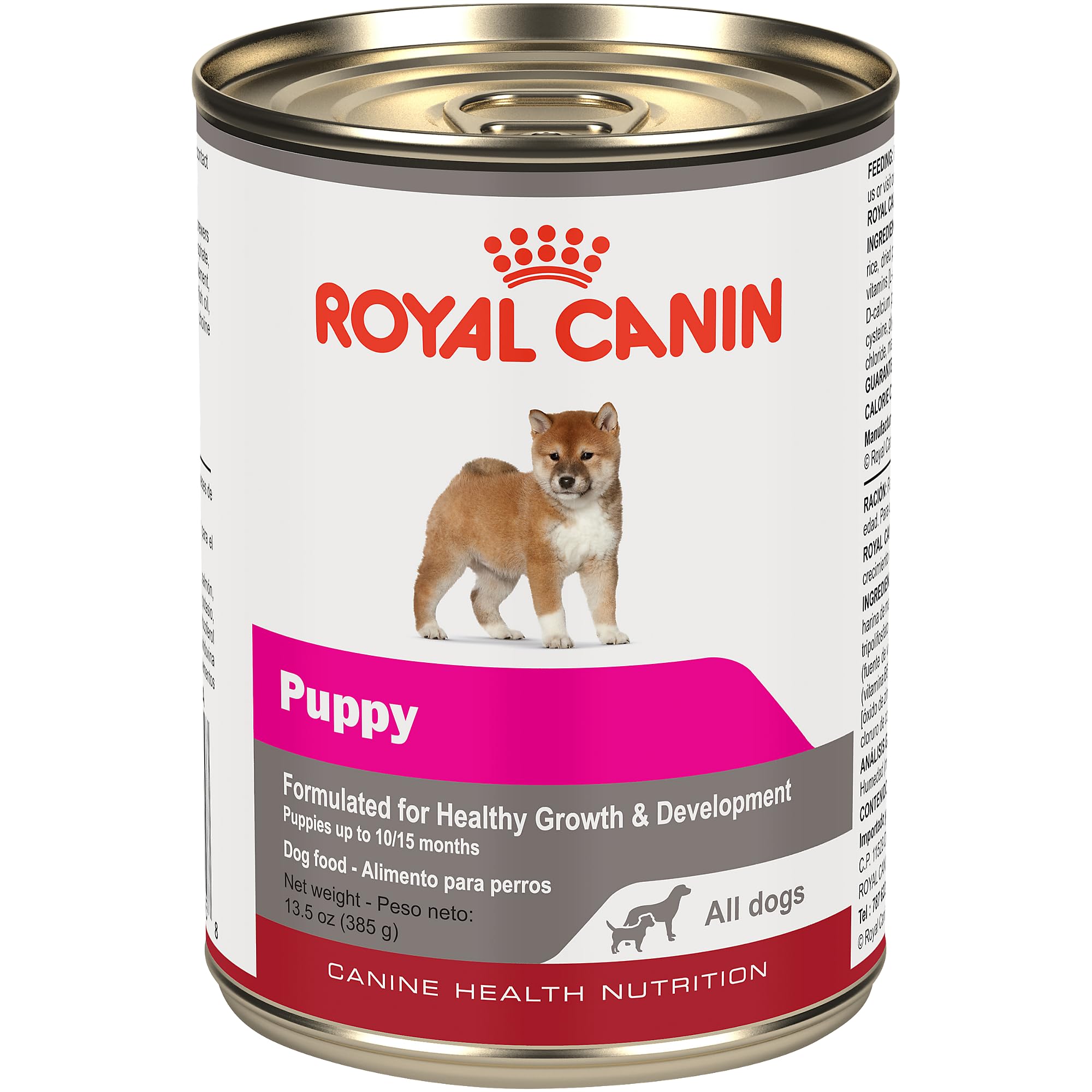
Royal Canin Puppy Canned Dog Food fills a specific niche for puppies that struggle with dry kibble during the teething phase or that need the higher moisture content (approximately 82%) to support hydration. The paté texture is easy for young puppies to lap up without vigorous chewing, and the formula includes beet pulp and fish oil as prebiotic fiber and omega-3 sources, respectively. This combination supports developing digestive systems that are still populating their gut flora.
The antioxidant complex — vitamin E, vitamin C, taurine, and lutein — helps shore up the immune system during the critical vaccination window. Owners of Siberian Huskies and other breeds prone to gastrointestinal sensitivity report that this wet food resolves loose stool within three to five days when mixed with Royal Canin dry kibble. The 13.5-ounce can is a practical single-feeding size for a medium-breed puppy, and the pack of twelve provides a two-week supply when used as a topper.
Because this is a wet food, it has a shorter shelf life after opening (refrigeration recommended, use within three days). Puppy owners should note that the caloric density per can is lower than dry kibble on a weight basis, so feeding only wet food may require more frequent meals. The formula is designed for all puppies up to 10-15 months depending on expected adult size, making it a transitional option rather than a lifelong diet.
Why it’s great
- Paté texture is easy for teething puppies and picky eaters
- Antioxidant complex supports developing immune system
- Beet pulp provides gentle prebiotic fiber for digestive health
Good to know
- Lower caloric density — may need more frequent feedings
- Requires refrigeration after opening, three-day window for use
7. Purina Pro Plan Grain Free Wet Puppy Food, Turkey Entrée

Purina Pro Plan Grain Free Wet Puppy Food in Turkey Entrée is the go-to rescue for puppies that refuse chicken-based foods or that show signs of poultry sensitivity. Turkey serves as the first ingredient, providing a leaner protein profile than chicken or beef, which can be advantageous for puppies with sensitive stomachs or those prone to pancreatitis later in life. The formula includes DHA for brain and vision development without relying on corn, wheat, or soy.
Each 13-ounce can provides 100% complete and balanced nutrition for puppies up to one year (or up to two years for larger breeds), and the grain-free formulation eliminates the most common filler-related sensitivities. Owners of Golden Retrievers and Labrador mixes report that even the pickiest eaters clean the bowl when this food is offered — the turkey-based gravy texture seems to trigger strong feeding response. The pack of twelve cans offers a convenient monthly supply for a medium-breed puppy eating a combination of wet and dry food.
The primary limitation is that this is a wet food, so it becomes cost-prohibitive as the sole food source for large-breed puppies that consume three or more cans per day. Additionally, some cans arrived dented in customer shipments, which can compromise the seal. The texture (pellet in gravy, not paté) may be too liquid for puppies that prefer a firmer mouthfeel. This is best used as a meal topper or rotational protein source rather than the exclusive diet.
Why it’s great
- Turkey is the first ingredient — lean protein for sensitive stomachs
- DHA supports brain and vision development without artificial additives
- Grain-free and free from common allergens like corn, wheat, and soy
Good to know
- Wet food only — cost-prohibitive as sole diet for large breeds
- Pellet-in-gravy texture may not suit puppies that prefer paté
FAQ
Can I feed adult dog food to my puppy to save money?
How do I transition my puppy from wet food to dry kibble?
When should I switch my puppy from puppy formula to adult formula?
Final Thoughts: The Verdict
For most owners, the best dog food for young dogs winner is the Wellness Complete Health Puppy because it balances DHA from a named salmon oil source with a moderate protein profile that avoids digestive upset while supporting all-breed development. If you want a formula specifically calibrated for large-breed skeletal health, grab the Hill’s Science Diet Puppy Large Breed. And for an athletic large-breed puppy in active training, nothing beats the Purina Pro Plan Sport 30/18 for sustained energy and lean muscle support.

Mo Maruf
I created WellFizz to bridge the gap between vague wellness advice and actionable solutions. My mission is simple: to decode the research and give you practical tools you can actually use.
Beyond the data, I am a passionate traveler. I believe that stepping away from the screen to explore new environments is essential for mental clarity and physical vitality.