Our readers keep the lights on and my smoothie glass nicely filled. As an Amazon Associate, I earn from qualifying purchases.
A Schnauzer’s wiry double coat and predisposition to pancreatitis mean generic kibble is a gamble. The wrong protein-to-fat ratio can trigger digestive upset, while oversized pellets may go uneaten by your discriminating small breed. Selecting a recipe that is both biologically appropriate and breed-conscious is the first step toward a healthier, happier companion.
I’m Mohammad Maruf — the founder and writer behind WellFizz. I’ve spent countless hours cross-referencing ingredient panels, guaranteed analysis levels, and breed-specific feeding trials to build this guide around the unique metabolic and dental needs of Schnauzers.
Every formula reviewed here prioritizes moderate fat content, a single or limited protein source, and a kibble dimension that respects the Schnauzer’s small jaw structure, making this the definitive dog food for schnauzer resource you can trust.
How To Choose The Best Dog Food For Schnauzer
Schnauzers, particularly Miniatures, carry a genetic predisposition for hyperlipidemia and pancreatitis, making fat content the single most important filter when selecting a diet. Beyond fat, you need to evaluate protein source novelty, kibble geometry, and life-stage appropriateness to truly match the breed’s physiology.
Prioritize Moderate Fat Content
Look for guaranteed analysis showing 12% crude fat or lower for adult maintenance. Anything above 15% elevates the risk of triggering an episode in a susceptible Schnauzer. Premium recipes that pair a lean protein (turkey, lamb, salmon) with controlled fat from named sources rather than generic animal fat are ideal.
Kibble Size and Texture Matter
The Schnauzer’s small mouth and pronounced underbite benefit from kibble measuring 6–9mm in diameter. Oversized pellets encourage gulping and reduce chewing, which diminishes the mechanical tartar control that small, textured shapes provide. Look for breed-specific formulas or small-breed blends that prioritize a rehydratable or porous surface to scrape plaque.
Pick a Single or Limited Protein Source
Environmental allergies and food sensitivities are common in the breed. A limited-ingredient diet (one animal protein, one carbohydrate) or a formula built around a novel protein like duck, salmon, or lamb reduces the chance of chronic itching, ear infections, and loose stools. Avoid chicken and beef when possible, as these are the most frequent triggers.
Quick Comparison
On smaller screens, swipe sideways to see the full table.
| Model | Category | Best For | Key Spec | Amazon |
|---|---|---|---|---|
| Purina Pro Plan Sensitive Skin & Stomach Salmon & Rice | Premium | Allergies & Senior Digestion | 29% Protein / 12% Fat | Amazon |
| Now Fresh Small Breed Senior | Premium | Senior Joint & Weight Support | 6 lb bag / Tiny Kibble | Amazon |
| The Honest Kitchen Whole Food Clusters Small Breed Beef | Premium | Human-Grade Purity | Cold-Pressed / 4.1 lb | Amazon |
| Orijen Small Breed Puppy Recipe | Mid-Range | Puppy Muscle & Brain Development | 6–7 mm Kibble / High Protein | Amazon |
| Open Farm Senior Chicken & Turkey | Mid-Range | Sustainable Senior Mobility | Green Lipped Mussel / 4 lb | Amazon |
| Nutro Limited Ingredient Lamb & Sweet Potato | Budget-Friendly | Sensitive Stomach / Single Protein | 10 Key Ingredients / Lamb | Amazon |
| Royal Canin Yorkshire Terrier Senior | Budget-Friendly | Senior Small Jaw / Tartar Control | 2.5 lb / Rehydratable Kibble | Amazon |
In‑Depth Reviews
1. Purina Pro Plan Sensitive Skin and Stomach Salmon & Rice

This senior-focused formula places salmon as the number one ingredient and keeps crude fat at a Schnauzer-safe 12 percent, making it one of the safest bets for breeds prone to pancreatitis. The inclusion of oatmeal and rice provides easily digestible carbohydrates that rarely trigger the loose stools common in sensitive terriers.
Beyond the fat profile, the glucosamine and EPA content directly supports the joint health that aging Schnauzers need, while the natural prebiotic fiber helps maintain regular, firm stools. The 24-pound bag also offers an notably lower cost-per-serving than many boutique senior blends without sacrificing ingredient transparency.
Owners of Schnauzers with chronic food allergies report dramatic reductions in ear infections and paw chewing after switching to this recipe. The kibble size (roughly 9–10mm) is appropriate for most Miniature and Standard Schnauzers, though very small seniors may need a slight soak to soften the pellet.
Why it’s great
- Salmon is the first ingredient and provides natural omega-3s for coat health.
- Fat content at 12 percent is safe for pancreatitis-prone breeds.
- Large bag size offers exceptional value for a senior sensitive formula.
Good to know
- Kibble size may be slightly large for toy-breed Schnauzers.
- Some bags arrive with packaging damage during shipping.
2. Now Fresh Small Breed Senior Turkey, Salmon & Duck

With fresh deboned turkey, salmon, and duck as its foundation, this grain-free recipe delivers a trio of novel proteins that reduce the likelihood of triggering food sensitivities common in Schnauzers. The absence of chicken is a deliberate advantage, as poultry is a frequent allergen for small terriers.
The kibble is engineered specifically for extra-small and small breeds, measuring around 7mm — a diameter that encourages chewing and helps slow down fast eaters. L-carnitine supports healthy fat metabolism, which is particularly valuable for a breed that struggles with weight management and lipid disorders.
Glucosamine and chondroitin are added at levels that support hip and joint cartilage repair in senior dogs, while probiotics and fiber from pumpkin and sweet potato promote digestive regularity. Owners switching from higher-fat foods often notice firmer stools within a week and improved energy in older dogs.
Why it’s great
- Triple novel protein blend (turkey, salmon, duck) lowers allergy risk.
- Tiny kibble diameter is ideal for Miniature Schnauzer jaws.
- L-carnitine supports healthy fat metabolism and weight control.
Good to know
- Some picky eaters may initially reject the multi-protein taste.
- Premium pricing per pound is higher than grain-inclusive alternatives.
3. The Honest Kitchen Whole Food Clusters Small Breed Beef
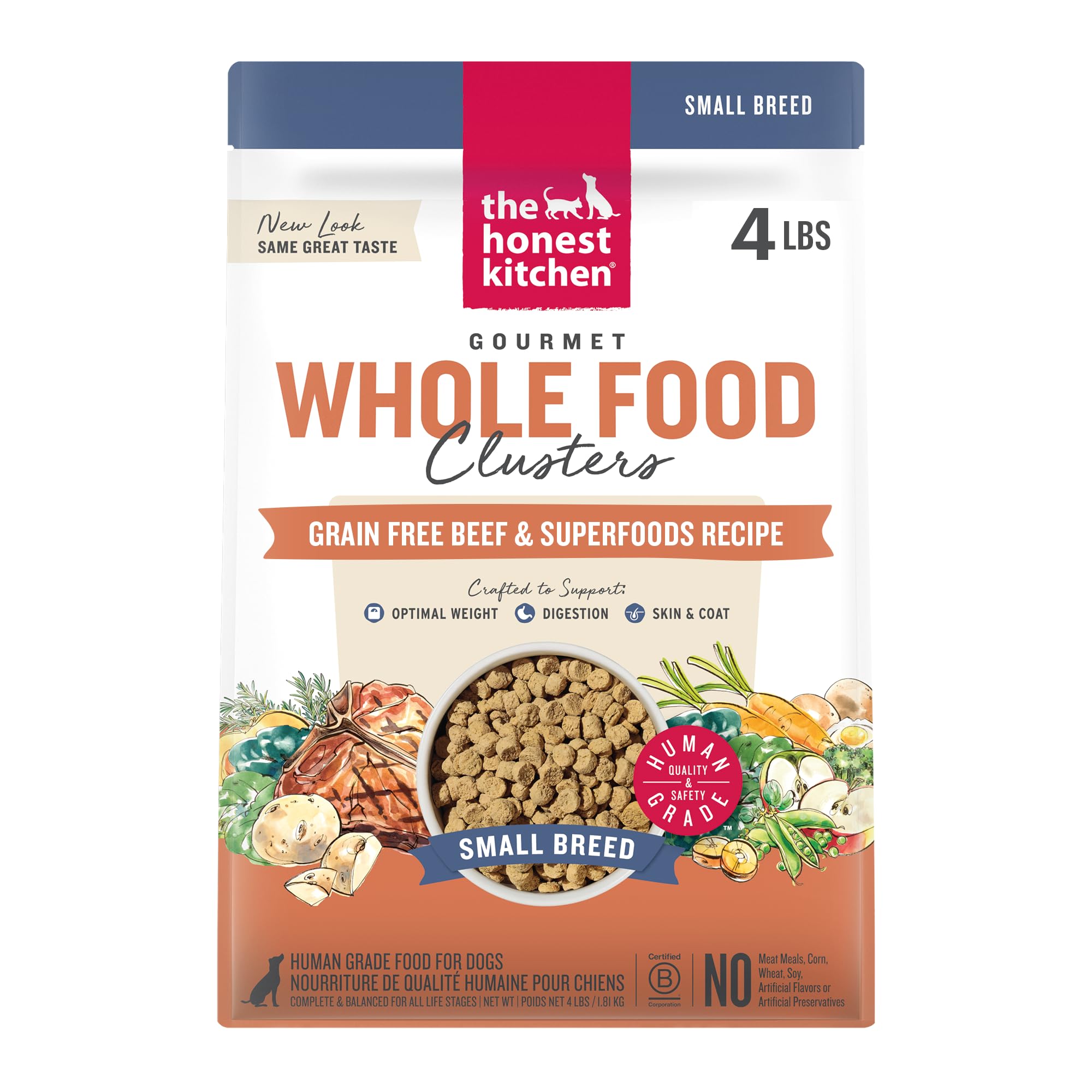
This is the only human-grade dry food on the list, meaning every ingredient — from the beef muscle meat and liver to the lentils and flaxseed — meets safety standards fit for your own kitchen. The cold-pressing process avoids high-temperature extrusion, preserving more natural enzymes and omega fatty acids that benefit the Schnauzer’s wiry coat.
The clusters are small, crunchy, and rehydrate quickly when warm water is added, creating a broth-like texture that appeals to picky small breeds. The recipe contains no feed-grade ingredients, no meat meals, and no GMO components, offering uncompromising transparency for owners who want complete control over what enters their dog’s bowl.
L-Carnitine is added to support healthy metabolism, while live probiotics aid digestion in sensitive stomachs. Owners of Schnauzers with chronic soft stools often report that the whole-food matrix firms up bowel movements within days, and the salmon oil provides a visible shine to the coat within two weeks of feeding.
Why it’s great
- 100 percent human-grade ingredients produced in a human food facility.
- Cold-pressed clusters retain more nutrients than extruded kibble.
- Rehydrates to a gravy consistency that picky Schnauzers love.
Good to know
- Premium cost per pound is among the highest in this guide.
- Bag often contains a significant amount of crumb dust at the bottom.
4. Orijen Small Breed Puppy Recipe
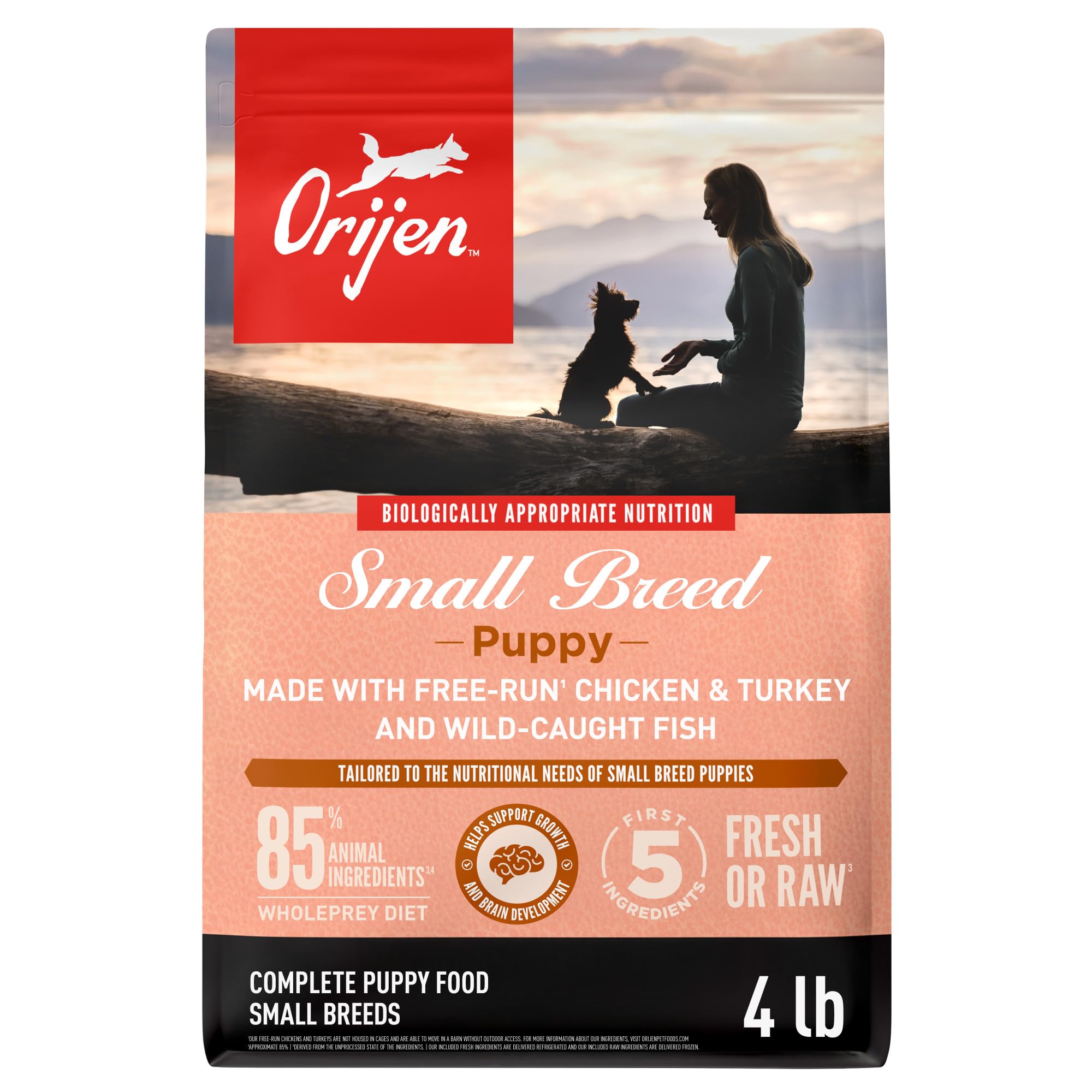
Built on Orijen’s WholePrey philosophy, this puppy formula uses poultry, fish, and organs to mirror the nutrient profile a wild canine would consume. The kibble is a precise 6–7mm square — small enough for a 8-week-old Schnauzer puppy to pick up without frustration and textured enough to encourage chewing that helps reduce tartar buildup from the very first meal.
The protein content is notably high for a small-breed puppy food, delivering EPA and DHA from salmon, whiting, haddock, and pollock oil to support rapid brain development during the critical first year. Prebiotics and probiotics are woven into the formula to maintain digestive stability while the puppy’s microbiome matures.
Every ingredient is free from corn, wheat, soy, and grains, and the company provides full traceability for all protein sources. Owners frequently report shinier coats and more consistent energy levels compared to grain-inclusive puppy foods, though the higher protein density means portion control is essential to prevent overly rapid growth in Schnauzer puppies.
Why it’s great
- WholePrey formula includes organs and fish for species-appropriate nutrition.
- Kibble size (6–7mm) is perfect for small puppy mouths.
- High EPA/DHA levels support brain and vision development.
Good to know
- High protein content may be too rich for some sensitive puppy stomachs.
- Transition period of 7–10 days is recommended to avoid loose stools.
5. Open Farm Senior Chicken & Turkey

Open Farm’s Senior recipe is formulated specifically for aging dogs that need joint and mobility support, making it a strong match for an older Schnauzer starting to slow down. The inclusion of green-lipped mussel — a natural source of omega-3s and chondroitin — provides targeted hip and joint nutrition without relying on synthetic supplements.
The kibble pellet is intentionally small, which helps older Schnauzers with dental sensitivity maintain proper chewing mechanics. Pumpkin, sweet potato, and coconut oil deliver fiber and healthy fats in a digestible package, while the absence of corn, wheat, and soy reduces the chance of gastric upset in senior dogs with declining digestive efficiency.
Every ingredient in the bag is traceable via a lot code on the package, giving owners peace of mind about sourcing and handling. Older Schnauzers that were previously reluctant to eat their meals often show renewed enthusiasm for this recipe, and owners note improved stool quality and firmer consistency within a few days of transitioning.
Why it’s great
- Green-lipped mussel provides natural joint-supporting chondroitin and omega-3s.
- Traceability system lets you verify every ingredient’s origin.
- Small kibble and gentle fiber blend support senior digestion.
Good to know
- Chicken-based protein may trigger sensitivities in some Schnauzers.
- 4-pound bag size means frequent repurchasing for multi-dog households.
6. Nutro Limited Ingredient Diet Lamb & Sweet Potato
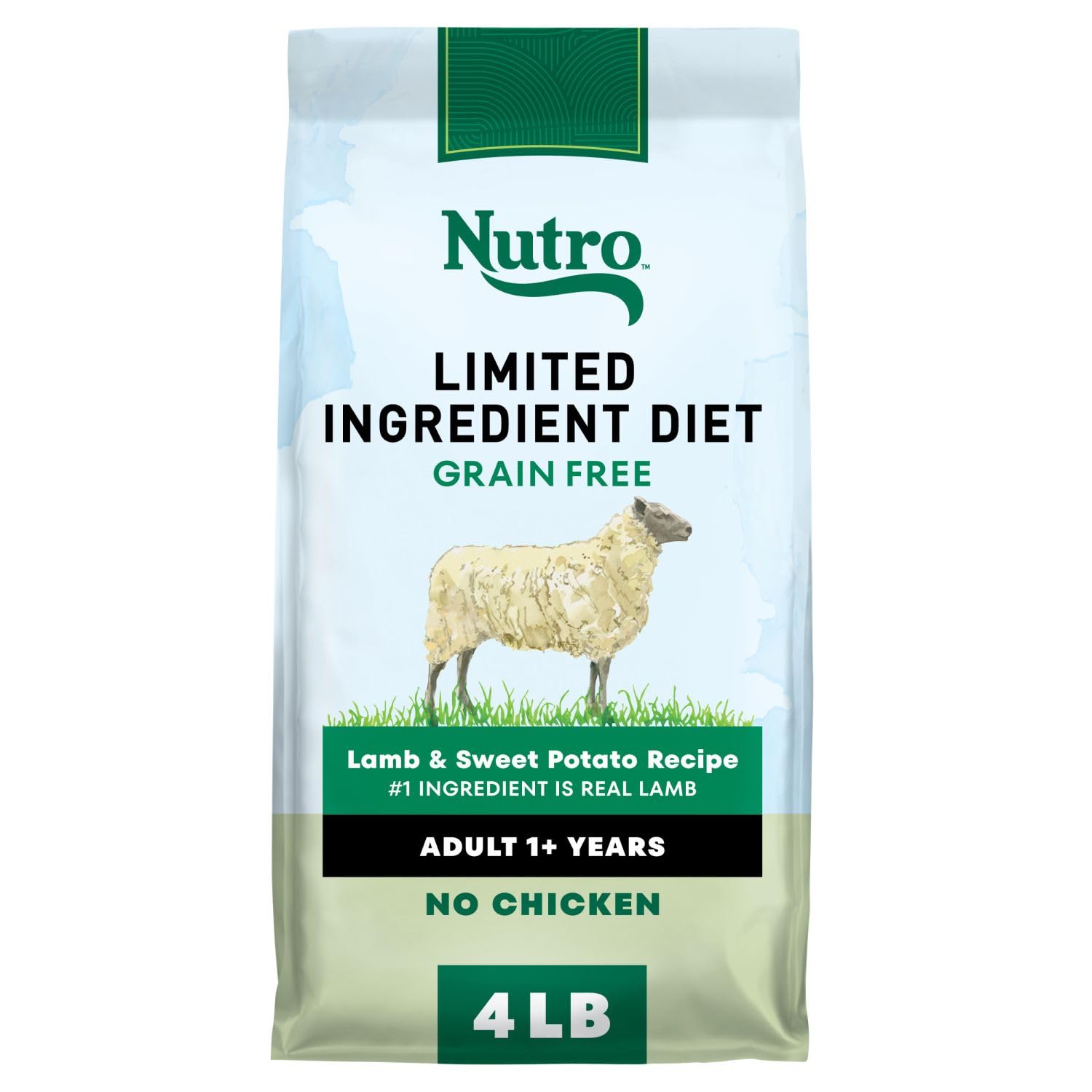
When a Schnauzer presents with chronic itching, recurrent ear infections, or unexplained digestive upset, a limited-ingredient diet is often the first intervention. This Nutro formula uses exactly 10 key ingredients or fewer, with lamb as the single animal protein and sweet potato as the carbohydrate — eliminating common triggers such as chicken, beef, corn, wheat, soy, and dairy protein.
The grain-free kibble is reinforced with omega-3 and omega-6 fatty acids sourced from natural oils, which support the skin barrier and help restore a healthy coat in dogs suffering from environmental or food allergies. The small pellet size is appropriate for Miniature and Standard Schnauzers, though toy varieties may prefer a slightly smaller shape.
Owners transitioning from chicken-based diets report a significant reduction in scratching and paw licking within two weeks. The formula also tends to produce firmer, less odorous stools compared to many grain-inclusive blends, a sign that the limited ingredient approach reduces gastrointestinal fermentation and irritation.
Why it’s great
- Single animal protein (lamb) minimizes food allergy triggers.
- Omega fatty acids improve skin barrier and coat condition.
- No chicken, beef, corn, wheat, or soy in the ingredient list.
Good to know
- Contains pumpkin which some dogs find unpalatable.
- Price per pound is higher than standard chicken-based diets.
7. Royal Canin Yorkshire Terrier Senior Dry Dog Food

Although designed for Yorkshire Terriers, this breed-specific senior formula shares the exact same dental and digestive requirements as many aging Schnauzers. The kibble shape is ultra-small and rehydratable — meaning it softens quickly when moisture is added — making it an excellent choice for senior dogs with missing teeth or gum sensitivity.
The formula delivers 15 percent lower phosphorus than the adult version, reducing kidney workload in older dogs. An exclusive antioxidant blend supports cellular health, while omega-3 and omega-6 fatty acids plus biotin target the luxurious coat that both Yorkies and Schnauzers are prized for.
For Schnauzer owners whose dogs struggle with large, hard kibble, this 2.5-pound bag offers a practical trial size. The unique shape is engineered to slow eating and encourage chewing, which mechanically reduces tartar formation — a feature that benefits the Schnauzer’s dental health over the long term. Many owners report their senior dogs maintain healthy energy levels, good digestion, and stable weight on this formula.
Why it’s great
- Rehydratable kibble softens easily for senior dogs with dental issues.
- Lower phosphorus formulation supports aging kidney function.
- Unique shape encourages chewing and reduces tartar buildup.
Good to know
- Chicken-based recipe may not suit Schnauzers with poultry allergies.
- Small bag size (2.5 lb) requires frequent repurchasing.
FAQ
Can a Schnauzer eat chicken-based food without problems?
How many cups per day should a Miniature Schnauzer eat?
Is grain-free food safer for Schnauzers with sensitive stomachs?
Final Thoughts: The Verdict
For most Schnauzer owners, the dog food for schnauzer winner is the Purina Pro Plan Sensitive Skin and Stomach Salmon & Rice because its 12 percent fat content is safe for pancreatitis-prone breeds, salmon provides excellent coat nutrition, and the large bag offers long-term value without cutting corners on ingredient quality. If you prefer a human-grade, cold-pressed option that fully controls every ingredient, grab the The Honest Kitchen Whole Food Clusters Small Breed Beef. And for a Schnauzer puppy needing high DHA levels and a precise 6–7mm kibble, nothing beats the Orijen Small Breed Puppy Recipe.

Mo Maruf
I created WellFizz to bridge the gap between vague wellness advice and actionable solutions. My mission is simple: to decode the research and give you practical tools you can actually use.
Beyond the data, I am a passionate traveler. I believe that stepping away from the screen to explore new environments is essential for mental clarity and physical vitality.