Our readers keep the lights on and my smoothie glass nicely filled. As an Amazon Associate, I earn from qualifying purchases.
Feeding a pug puppy is a delicate balancing act — you need a formula that supports rapid growth without overwhelming a sensitive digestive system. The wrong kibble size or protein level can lead to gas, loose stools, or even bloat in these flat-faced little ones.
I’m Mohammad Maruf — the founder and writer behind WellFizz. I’ve spent countless hours researching canine nutrition, analyzing ingredient lists, and cross-referencing feeding trials to identify the dry kibble formulas that meet the unique needs of brachycephalic small breed puppies.
This guide presents the seven formulas that passed my nutritional and structural review for dog food for pug puppies that minimizes digestive upset while supporting healthy bone and brain development during their critical first year.
How To Choose The Best Dog Food For Pug Puppies
Pug puppies aren’t just small dogs with big appetites — their flat faces, compact airways, and sensitive stomachs demand a formula that prioritizes digestibility, kibble geometry, and balanced bone nutrients. Here are the three factors I weigh most heavily.
Kibble Size and Shape
The ideal kibble for a pug puppy is a small, rounded pellet approximately 6–8 mm in diameter. Oversized or irregularly shaped pieces encourage gulping without chewing, which introduces excess air into the digestive tract and leads to flatulence or regurgitation. A small, uniform kibble also reduces the risk of choking in a breed with a shortened muzzle.
Calcium and Phosphorus Balance
Rapidly growing small breeds like pugs are prone to orthopedic issues if calcium levels exceed 1.2 percent on a dry matter basis. The calcium-to-phosphorus ratio should sit between 1.1:1 and 1.4:1 to support healthy bone mineralization without overshooting. Formulas that list calcium sources (like ground bone or dicalcium phosphate) and include the guaranteed analysis on the bag earn extra trust here.
Digestive Support and Protein Source
Pug puppies often have a lower tolerance for rich, exotic proteins and high-fat content. A single, novel protein source — lamb, turkey, or chicken — combined with prebiotic fiber and a certified probiotic strain will stabilize stool quality and reduce the gas that plagues this breed. Avoid excessive legume starches (pea protein, potato starch) that can ferment and bloat a sensitive belly.
Quick Comparison
On smaller screens, swipe sideways to see the full table.
| Model | Category | Best For | Key Spec | Amazon |
|---|---|---|---|---|
| Farmina Mini Puppy Lamb & Blueberry | Premium | Highest ingredient quality | Lamb first ingredient, 5.5 lb bag | Amazon |
| Farmina Mini Lamb & Blueberry (Adult) | Premium | Transition to adult diet | Grain-free, 2.5 kg bag | Amazon |
| NutriSource Puppy Small/Medium Breed | Premium | Grain-inclusive heart health | 12 lb bag, balanced Omega-3 & 6 | Amazon |
| ORIJEN Small Breed Puppy | Mid-Range | WholePrey ancestral diet | 6-7 mm square kibble, 4 lb bag | Amazon |
| Nulo Freestyle Puppy Turkey & Sweet Potato | Mid-Range | High-protein muscle support | 85% animal protein, 6 lb bag | Amazon |
| Nulo Small Breed Salmon & Red Lentils | Mid-Range | Small breed weight management | Smaller kibble, 4.5 lb bag | Amazon |
| Royal Canin Small Puppy | Budget-Friendly | Breeder-recommended standard | Small kibble, 4 lb bag | Amazon |
In-Depth Reviews
1. Farmina Dry Mini Puppy Food, Lamb, Pumpkin and Blueberry Recipe
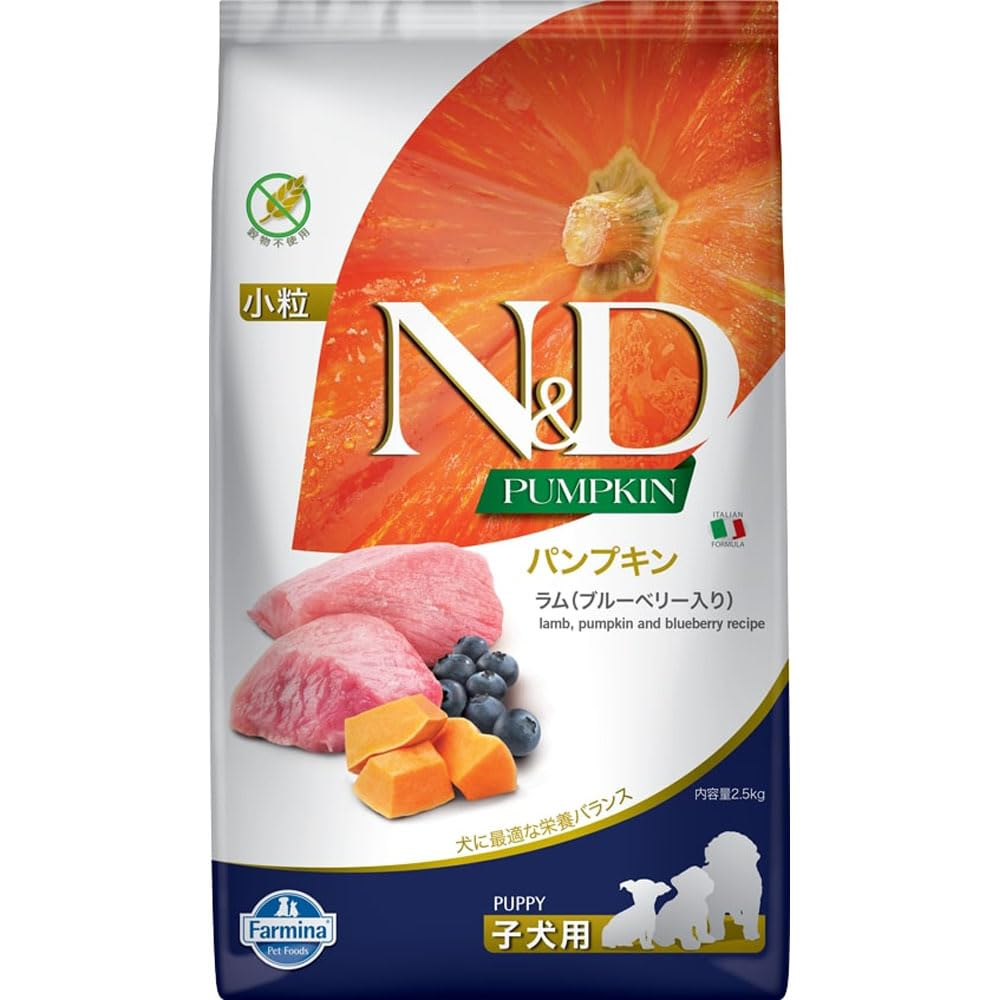
Farmina’s Mini Puppy formula leads the list because it checks every structural box for a brachycephalic puppy: the kibble is compact enough for a pug’s shallow jaw, the first ingredient is fresh grass-fed lamb (not a meal), and the guaranteed analysis shows a calcium level that stays safely below the 1.2 percent upper threshold. The inclusion of pumpkin and blueberry provides natural prebiotic fiber that stabilizes stool firmness — a direct benefit for the notoriously gassy pug digestive tract.
This is an Italian-manufactured food that adheres to the stricter European Union pet food regulations, which means preservatives like BHA, BHT, and ethoxyquin are absent. The crude protein sits at around 30 percent — sufficient for growth without overtaxing the kidneys, and the fat content is moderate enough to prevent rapid weight gain in a puppy that will mature to a compact adult frame. Every ingredient is traceable through the supply chain, and the brand lists the exact percentages of DHA and EPA from fish oil, which directly support retinal and brain development in the first year.
Customer reports consistently mention improved coat shine, reduced stool volume, and a noticeable decrease in flatulence compared to previous foods. The only friction point is the bag size: at 5.5 pounds, it depletes quickly for a multi-puppy household, and the price per pound is the highest in this selection.
Why it’s great
- Fresh lamb is the #1 ingredient — not a rendered meal
- Guaranteed calcium level stays below 1.2% for safe bone growth
- Pumpkin and blueberry provide natural prebiotic support for sensitive stomachs
Good to know
- Small 5.5 lb bag requires frequent reordering
- Premium pricing places it above mid-range formulas
2. Farmina Mini Lamb & Blueberry Grain Free Pumpkin Dog Food (Adult)

Though labeled for adult mini breeds, this Farmina recipe is often used by breeders as a transition food after the puppy formula because the ingredient philosophy remains identical: grass-fed lamb as the sole animal protein, zero legumes or peas, and a low-glycemic carbohydrate load from pumpkin and spelt. For a pug puppy approaching the 10-month mark, this food offers a clean swap that avoids the digestive reset typically caused by switching brands. The kibble diameter measures under 8 mm, making it safe for the same brachycephalic bite geometry.
The addition of glucosamine and chondroitin is a strategic advantage for pugs, a breed prone to hip dysplasia and patellar luxation. These joint-supporting compounds are often neglected in standard adult maintenance formulas, but they provide a preventative buffer during the last growth phase when cartilage is still developing. The crude fiber level is held to 1.8 percent, which prevents the bloating and gas that high-fiber formulas can trigger in flat-faced breeds. The bag is a 5.5-pound size, identical to the puppy version, and the same European sourcing standards apply.
Owner feedback highlights that picky pug puppies accept this lamb flavor eagerly, and the stool quality tends to stay firm and low-odor. The main consideration is that this formula is an adult maintenance diet, so it should only be used after the puppy stage is fully complete around 12 months — do not rush the transition before the growth plates close.
Why it’s great
- Glucosamine and chondroitin support pug hip and joint health
- Low 1.8% crude fiber reduces gas and bloating
- Single animal protein minimizes allergy triggers
Good to know
- Adult formula — not for puppies under 10-12 months
- 5.5 lb bag is the only size available
3. NutriSource Puppy Food for Small and Medium Breeds, Chicken Meal and Rice

NutriSource breaks from the grain-free trend with a chicken meal and rice formula that includes prebiotics and probiotics as standard, not as an afterthought. For a pug puppy stomach, the inclusion of whole grains like brown rice provides a slower energy release compared to rapid-spiking starches, which helps maintain stable blood sugar and prevents the mid-day energy crashes that can manifest as irritability in young puppies. The kibble size is rounded and smaller than 10 mm, appropriate for a pug’s bite.
The 12-pound bag represents the best value-to-nutrition ratio in this guide — you get a full 12 pounds of food that meets AAFCO guidelines for all life stages, with a guaranteed calcium-to-phosphorus ratio that fits the safe zone for small-breed skeletal development. The brand also adds L-Carnitine and taurine, nutrients that support heart function in a breed where cardiac issues can surface later in life. The fat content is moderate at 16 percent, which helps prevent the rapid weight gain that pug puppies are notorious for.
Breeder reviews are consistently strong, with many reporting that NutriSource is the food they recommend for clients who want a premium nutritional profile without the premium price. The only limitation is the chicken-based protein: while chicken is not a common allergen for pugs, it is less novel than lamb or turkey, and some puppies may develop a sensitivity over time.
Why it’s great
- 12 lb bag delivers the lowest cost per pound in this guide
- Grain-inclusive formula with prebiotics supports stable digestion
- Added L-Carnitine and taurine for long-term heart health
Good to know
- Chicken protein is less novel than lamb or fish options
- Kibble size is slightly larger than ultra-small options
4. ORIJEN Grain Free High Protein Dry Dog Food Small Breed Puppy Recipe
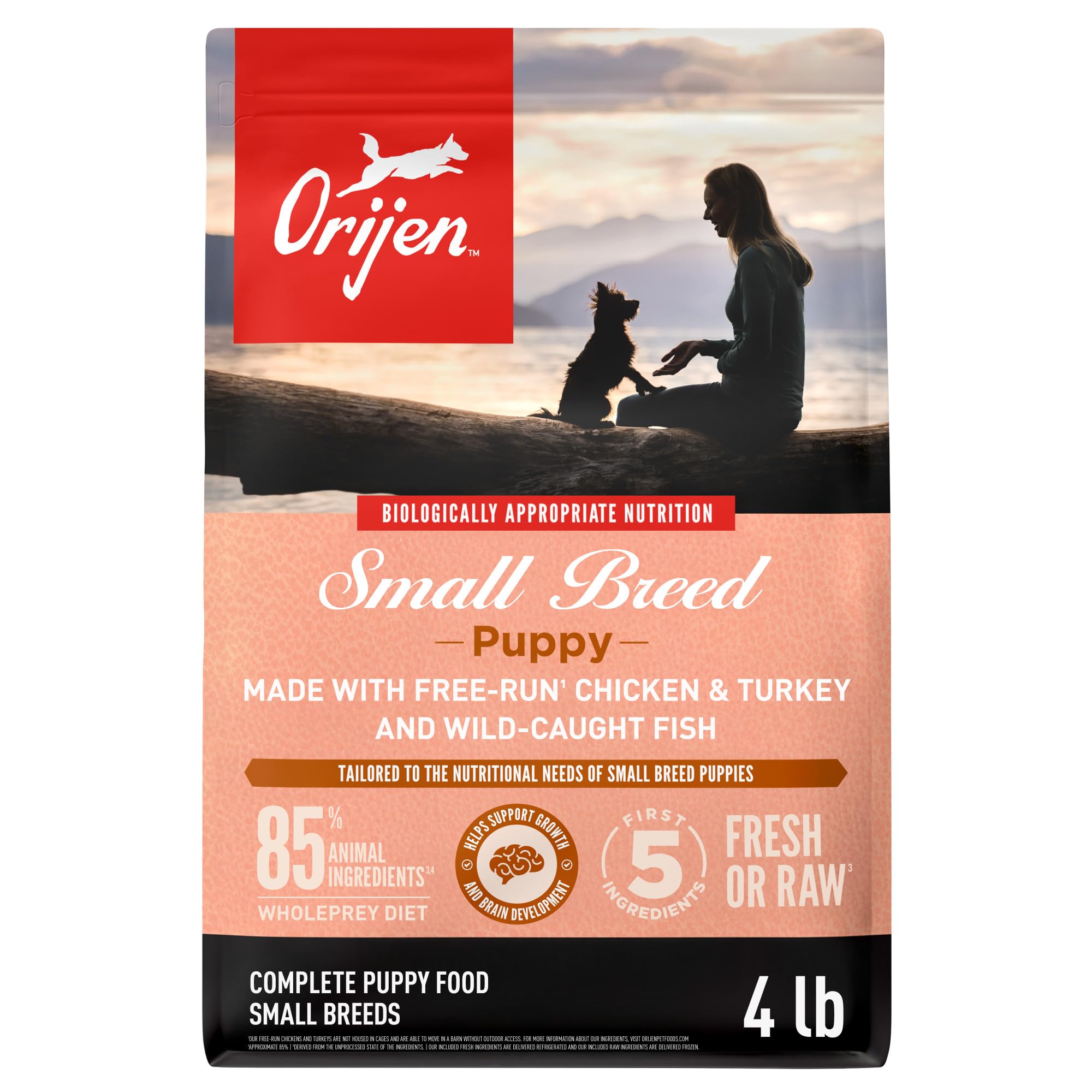
ORIJEN’s WholePrey philosophy means this small breed puppy recipe includes poultry, fish, and organs (liver, heart, kidney) to simulate the nutrient profile of a prey animal. For a pug puppy, this translates to a high-protein load of around 38 percent — higher than most competitors — which fuels rapid muscle and bone development during the first six months. The kibble is a square shape measuring 6-7 mm, which is close to the ideal geometry for a brachycephalic mouth and encourages lateral chewing rather than gulping.
The formula delivers DHA and EPA from salmon, whiting, haddock, and pollock oil, which directly supports brain development during the socialization window. The inclusion of freeze-dried liver coating increases palatability, which is useful for pug puppies that are picky about texture. The guaranteed analysis shows a calcium level of 1.1 percent and a phosphorus level of 0.9 percent, creating a ratio of 1.22:1 — within the safe zone for small breed orthopedic health. The fiber blend from pumpkin and chicory root supports digestive regularity without over-fermenting.
Customers report that puppies transition easily without diarrhea and that coat condition improves significantly within three weeks. The 4-pound bag size is the primary constraint: high protein means less food by volume is needed per serving, but the bag still empties faster than larger bags. This is a mid-range pricing option with a premium ingredient philosophy.
Why it’s great
- WholePrey inclusion of organs mimics ancestral nutrition
- Calcium-to-phosphorus ratio sits at 1.22:1 for safe bone growth
- Freeze-dried coating boosts palatability for picky puppies
Good to know
- High 38% protein may be too rich for some sensitive stomachs
- 4 lb bag requires frequent reordering
5. Nulo Freestyle Puppy Food – Turkey & Sweet Potato, Grain Free

Nulo Freestyle is built on a high-protein, low-carb architecture with deboned turkey as the single source of animal protein. The formulation runs at roughly 85 percent animal-based protein, which is significant for a pug puppy because it means amino acid requirements are met with less overall food volume — ideal for a breed that can easily overeat. The kibble is small and rounded, typically measuring 7–8 mm, and the absence of white potato and tapioca reduces the glycemic load that can contribute to rapid weight gain.
The patented BC30 probiotic strain (Bacillus coagulans) is a key differentiator: this spore-forming bacteria survives the high-heat kibble extrusion process and arrives alive in the gut, where it helps crowd out gas-producing bacteria. For a pug puppy, this translates to noticeably less flatulence compared to foods that use weaker probiotic strains. The DHA content comes from real trout, not synthetic supplements, and the omega-3/omega-6 ratio is optimized for skin barrier health — a critical factor for the pug’s facial fold dermatitis risk.
Customer responses confirm that puppies maintain steady energy levels without the post-meal bloating that plagues this breed. A minority of reports mention that the turkey flavor is less appealing than chicken or lamb, but mixing with a small amount of wet food resolves this. The 6-pound bag offers a solid balance of capacity and freshness.
Why it’s great
- BC30 spore-forming probiotic survives extrusion and reduces gas
- 85% animal protein supports lean muscle with less total food
- Low glycemic load helps prevent pug puppy weight gain
Good to know
- Turkey flavor may require a transition period for picky eaters
- Not suitable for puppies with poultry sensitivity
6. Nulo Small Breed Dry Dog Food – Salmon and Red Lentils Recipe

This Nulo formula is specifically tailored for small breed maintenance, but it works well as a transition diet for a pug puppy that graduates from a high-growth puppy formula around 10–12 months. The salmon protein is a novel option for puppies that have developed a sensitivity to chicken or turkey, and the red lentils provide a low-glycemic carbohydrate matrix that avoids the blood sugar spikes associated with white rice or potato. The kibble is intentionally smaller than standard Nulo sizes, which is appropriate for the pug’s bite mechanics.
The fat content is capped at around 15 percent, which helps prevent the rapid weight creep that commonly occurs when pugs transition from puppy to adult food. L-Carnitine supplementation directly supports fat metabolism, and the Miscanthus grass fiber adds bulk without fermenting into gas. The calcium-to-phosphorus ratio is balanced for adult maintenance (around 1.2:1), making it safe for long-term feeding once the growth plates have closed. The 4.5-pound bag is a practical size for a single small breed dog.
Owners report that this food stabilizes stool consistency in dogs that have struggled with soft stool on other adult foods. The salmon flavor is widely accepted, and the firm stool output reduces the mess associated with pug digestion. It is an adult formula, so it should not be fed to puppies under 10 months old.
Why it’s great
- Salmon provides a novel protein for poultry-sensitive puppies
- Low 15% fat content helps prevent weight gain during transition
- L-Carnitine supports fat metabolism in small breeds
Good to know
- Adult formula — not suitable for rapid-growth puppy stage
- 4.5 lb bag is a relatively small volume
7. Royal Canin Size Health Nutrition Small Puppy Dry Dog Food

Royal Canin’s Small Puppy formula is the most commonly recommended food by pug breeders, and for good reason: the kibble is designed to match the jaw size of small-breed puppies under 22 pounds adult weight, and the texture is crunchy without being brittle — it encourages chewing rather than gulping. The protein source is chicken, and the formula includes a precise blend of prebiotics (including FOS) and antioxidants (vitamins C and E) that support immune function during the vaccination window. The crude fiber is kept low at around 3.4 percent to minimize intestinal gas.
The nutritional profile is calibrated for small-breed puppies aged 2 to 10 months, with a calcium level of 1.0 percent and phosphorus at 0.8 percent — a 1.25:1 ratio that stays within the safe range for brachycephalic skeletal development. The inclusion of DHA from fish oil supports cognitive development, which is particularly important during the critical socialization period. The formula is built around the concept of precise nutrition, meaning every nutrient level is adjusted for the specific metabolic rate of a small breed puppy rather than scaled down from a larger breed formula.
Owners consistently report excellent stool quality, no vomiting, and easy transition from the breeder’s original feeding protocol. The 4-pound bag is the smallest in this guide, which limits the per-serving cost efficiency but guarantees freshness, as the food is consumed within two to three weeks. The primary trade-off is the price per pound, which is higher than competitor mid-range options.
Why it’s great
- Designed specifically for small breed jaw geometry
- 1.0% calcium and 0.8% phosphorus — safe ratio for bone growth
- Prebiotic FOS and antioxidants support developing immune systems
Good to know
- Small 4 lb bag limits value for multi-puppy households
- Chicken-based formula may lose novelty over time
FAQ
Should I feed grain-free or grain-inclusive kibble to my pug puppy?
How much food should a pug puppy eat per day?
When should I switch my pug puppy from puppy food to adult food?
What ingredients should I avoid in pug puppy food?
Final Thoughts: The Verdict
For most owners, the dog food for pug puppies winner is the Farmina Mini Puppy Lamb & Blueberry because it combines a single novel protein, a safe calcium-to-phosphorus ratio, and natural prebiotic fiber from pumpkin and blueberry that directly addresses the flatulence and stool issues common in the breed. If you want the best value per pound, grab the NutriSource Puppy Small/Medium Breed — the 12-pound bag and grain-inclusive formula deliver quality without the premium price. And for a breeder-endorsed option that nearly every pug puppy will accept, nothing beats the Royal Canin Small Puppy for guaranteed digestive stability.

Mo Maruf
I created WellFizz to bridge the gap between vague wellness advice and actionable solutions. My mission is simple: to decode the research and give you practical tools you can actually use.
Beyond the data, I am a passionate traveler. I believe that stepping away from the screen to explore new environments is essential for mental clarity and physical vitality.