Our readers keep the lights on and my smoothie glass nicely filled. As an Amazon Associate, I earn from qualifying purchases.
Specs are compiled from manufacturer listings and verified buyer reviews and can change over time — please confirm the key details on the product page before buying.
When your dog gets a liver disease diagnosis, everything changes — including what goes in the bowl. The wrong kibble can worsen copper accumulation or add stress to an already struggling organ, while the right veterinary diet becomes the single most powerful tool you have at home. This guide focuses on two prescription-grade dry foods that are formulated to do exactly that: support liver function while managing copper levels and delivering highly digestible protein.
I’m Mohammad Maruf — the founder and writer behind WellFizz. This guide is built by comparing the manufacturers’ published specifications and the patterns across verified customer reviews, so you get each pick’s real strengths and trade-offs instead of marketing spin.
Whether your dog was diagnosed with copper storage disease, a liver shunt, or general hepatic insufficiency, a vet-recommended dog food for liver disease is essential to managing symptoms and maintaining their quality of life.
Quick Picks
- Royal Canin Veterinary Diet Canine Hepatic — Best Overall
- Hill’s Prescription Diet l/d Liver Care Dry Dog — Top Performer
How To Choose The Best Dog Food For Liver Disease
Picking the right food for a dog with liver disease depends on three things: how much copper is in the kibble, whether the protein source is easy for the liver to process, and what your dog will actually eat when they feel unwell. Prescription diets are not interchangeable — the copper level alone can make or break the right choice for a dog with copper storage disease.
Copper Content Is The Deciding Factor
Not all liver support diets have the same copper level. For dogs with copper-associated hepatitis or copper storage disease, a low copper formula is the entire point of the diet — it minimizes further accumulation in the liver cells. If your dog’s diagnosis involves copper, you want the bag that explicitly states a low copper level on the label. If the issue is a liver shunt or general hepatic insufficiency, a controlled copper level still helps, but you have more flexibility between the two options.
Digestible Protein Eases The Workload
The liver processes protein into energy, and when it is damaged, too much or the wrong kind of protein can produce toxins that worsen symptoms. Both of these veterinary diets use highly digestible protein sources — meaning your dog absorbs what they need without leaving waste products that strain the liver. The trade-off is that these are not high-protein foods, which is exactly the point for this condition.
Quick Comparison
In‑Depth Reviews
1. Royal Canin Veterinary Diet Canine Hepatic Adult Dry Dog Food, 6 lb Bag
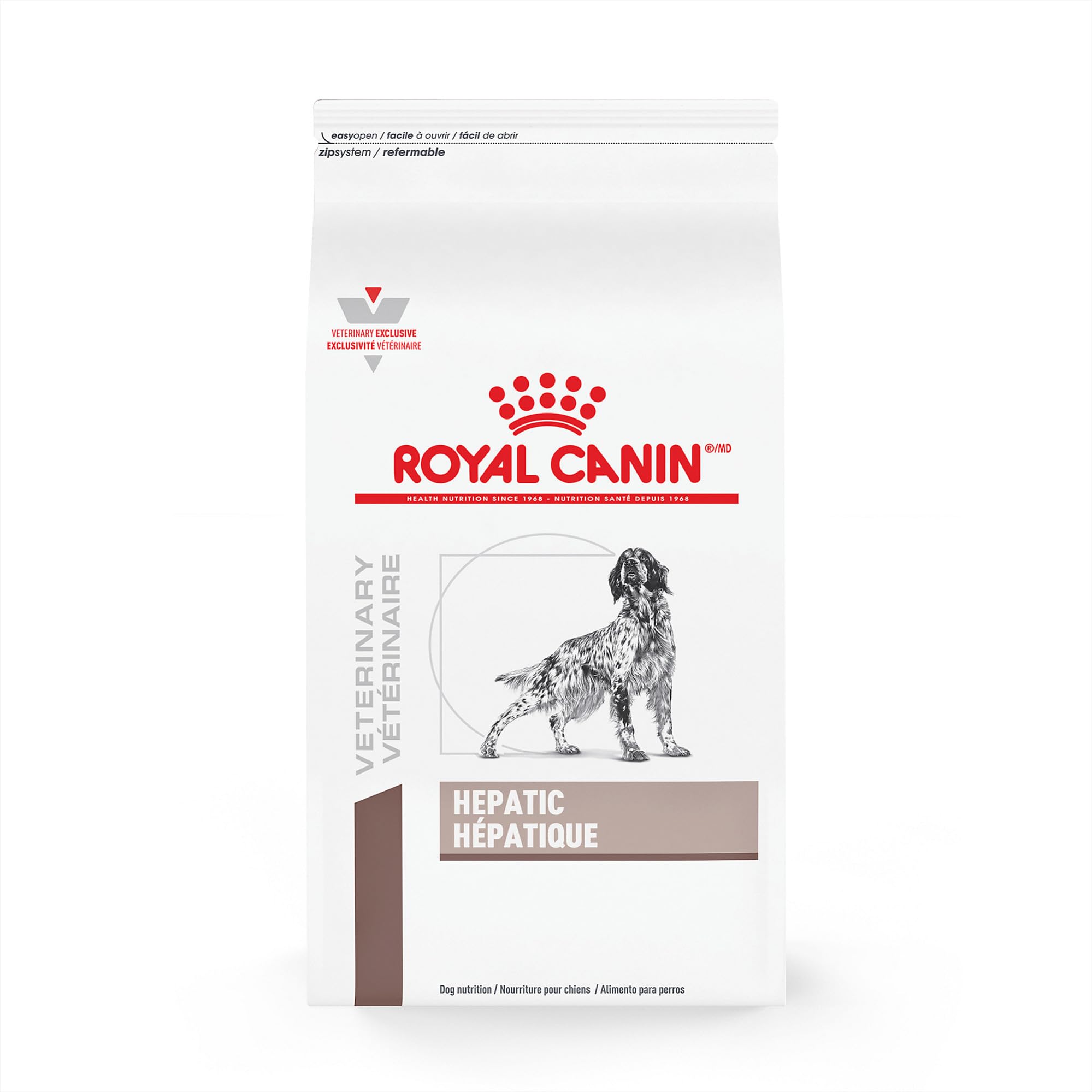
The copper-safe choice that small picky eaters actually clean their bowl for.
This 6-pound bag from Royal Canin is the crowd favorite for a very specific reason: it is explicitly formulated to be low in copper, which is non-negotiable for dogs diagnosed with copper storage disease. A key buyer point — buyers report that switching from other prescription diets to this one made a measurable difference because Hill’s Prescription Diet l/d has a higher copper level, while this Royal Canin Hepatic formula keeps the accumulation risk minimal. The protein here comes from highly digestible vegetable sources, which means the liver has less work to do breaking it down, and the prebiotics in the blend support the gut microbiome — a connected system that matters when digestion is stressed.
The kibble is small and the taste is a real draw. Multiple owners say their dogs are “obsessed” with this food, a welcome relief when a sick pet has lost their appetite. At 6 pounds compared to the Hill’s 17.6-pound bag, it is an easier commitment for small breeds or for owners who want to test palatability before buying bigger. The 4.7-star rating from hundreds of owners confirms that dogs with fatty liver, copper toxicosis, and general hepatic issues maintain stability and show increased energy.
The catch is that for bigger dogs, the 6-pound bag disappears fast, and veterinary diets carry a premium per-pound cost regardless of bag size. If you have a 60-pound lab, you will be reordering frequently. But for small and medium breeds — or any dog whose liver issue is tied to copper — this is the formula that vets and owners keep coming back to.
Clean-bowl proof: Owners consistently report that their dogs actively love the taste of this kibble, which matters immensely when a sick dog’s appetite is unreliable. The low copper level is the trump card for copper storage cases.
One real trade-off: The 6-pound bag is a small denomination for larger breeds — expect frequent repurchases if your dog weighs over 40 pounds.
Reach for this if: Your dog has copper storage disease, a fatty liver, or needs the absolute lowest copper option — and you have a small-to-medium breed that needs to actually enjoy eating.
Look elsewhere if: You have a large-breed dog and want a bigger bag to reduce reorder frequency, or if your vet specifically recommends a chicken-protein-based hepatic diet over a vegetable-protein one.
2. Hill’s Prescription Diet l/d Liver Care Dry Dog Food, Chicken, 17.6 lb. Bag

The heavyweight bag that turned one dog’s weekly sickness into a rare event.
Owners praise the measured clinical outcome: improved liver health and quality, better lab work, and stable long-term management. The kibble size runs about 5-7mm in diameter, which is a standard medium-sized piece. However, a recurring note from owners of very small breeds (under 15 pounds) is that the 17.6-pound bag is a massive commitment — both financially and in terms of storage. A few little dogs went off the food after the first taste, leaving owners with a nearly full bag they could not return.
The straight talk here is that this is a premium product. The honest value-for-money feedback from owners is negative — they acknowledge the food works but find the price steep, especially given the bag size. If your dog is a medium-to-large breed and tolerates chicken-based protein well, the per-pound economics of this giant bag work in your favor. Just confirm your vet is on board with the copper level for your dog’s specific condition before buying.
What owners praise most
- Dogs with liver shunts show dramatic improvements: reduced vomiting, better digestion, and normal energy.
- The 17.6 lb bag provides good value for medium-to-large breed owners despite the premium price.
What to know before buying
- The high cost is the most-mentioned negative — owners find it very expensive.
- Some small-breed dogs lose interest after initial taste, leaving a large bag they will not eat.
- Copper level is low but owners of copper-storage dogs should compare with Royal Canin’s lower-copper spec before committing.
Best fit: Medium-to-large dogs with liver shunts, hepatic insufficiency, or copper toxicosis where the bigger bag size keeps you stocked for weeks.
Consider the alternative if: Your dog is a small breed under 15 pounds, or your primary concern is minimizing copper content — the Royal Canin Hepatic formula tests lower on that spec.
Understanding the Specs
Low Copper — What It Means For Your Dog
Copper is an essential mineral, but a damaged liver cannot regulate it properly, and excess copper builds up in the liver cells themselves — causing further damage. Veterinary hepatic diets are formulated with a “low copper” level (both picks here carry that claim) to stop that accumulation cycle. If your dog has a confirmed copper storage disease, this is the single most important spec on the bag; even a modest copper difference between two prescription diets can matter over months of feeding.
Highly Digestible Protein — Less Work For The Liver
The liver is responsible for metabolizing protein into usable energy. When it is damaged, poorly digestible protein leaves behind ammonia and other toxins that worsen neurological symptoms and nausea. Both Royal Canin and Hill’s use highly digestible protein sources (vegetable protein in the Royal Canin, controlled chicken protein in the Hill’s) so your dog gets the nutrition they need without producing excess waste that the struggling liver has to process.
FAQ
Can I switch between Royal Canin Hepatic and Hill’s l/d if my dog stops eating one?
How long does a 6 lb bag of Royal Canin Hepatic last for a small dog?
Is Hill’s l/d Liver Care suitable for dogs with copper storage disease?
Will my dog still need medication if they eat a hepatic diet?
Why are these foods so expensive compared to regular dog food?
Can I feed a hepatic diet to a healthy dog as a preventive measure?
Both bags say “chicken flavor” — does that mean real chicken protein?
How do I transition my dog from their old food to a hepatic diet?
Final Thoughts: The Verdict
For most owners managing liver disease, the dog food for liver disease winner is the Royal Canin Veterinary Diet Canine Hepatic Adult Dry Dog Food because it combines the lowest copper level with a taste that dogs actively enjoy — critical for sick pets who go off their food. If you have a medium-to-large breed with a liver shunt or prefer a chicken-protein-based formula with a bigger bag, reach for the Hill’s Prescription Diet l/d Liver Care. Between the two, you have the liver-support coverage: low copper and highly digestible protein, wrapped in kibble that dogs actually eat.
How We Picked
We do not accept paid placement. Every pick is matched to a real buyer and a real use-case; we do not hands-on test units.
Sources & Methodology
Specifications: manufacturer listings and product documentation. Review insights: verified customer reviews, as of July 2026. Pricing: not shown on this page (it changes often); check the current price via the retailer link.
As an Amazon Associate, WellFizz earns from qualifying purchases. This does not affect which products we feature.
Related Guides

Mo Maruf
I created WellFizz to bridge the gap between vague wellness advice and actionable solutions. My mission is simple: to decode the research and give you practical tools you can actually use.
Beyond the data, I am a passionate traveler. I believe that stepping away from the screen to explore new environments is essential for mental clarity and physical vitality.