Our readers keep the lights on and my smoothie glass nicely filled. As an Amazon Associate, I earn from qualifying purchases.
Specs are compiled from manufacturer listings and verified buyer reviews and can change over time — please confirm the key details on the product page before buying.
A lactating dog’s body converts everything she eats into milk for her puppies. Choosing a food with enough calories, protein, and fat without upsetting her stomach is the most important thing you can do for her and her litter. This guide compares five formulas built for that exact job — each verified to meet the high demands of a nursing mother.
I’m Mohammad Maruf — the founder and writer behind WellFizz. This guide is built by comparing the manufacturers’ published specifications and the patterns across verified customer reviews, so you get each pick’s real strengths and trade-offs instead of marketing spin.
Whether you are feeding a new mother for the first time or looking for a more effective option after a rough litter, the right dog food for lactating dogs must deliver dense nutrition in a form she will actually eat while her appetite may be unpredictable.
Our Picks at a Glance

How To Choose The Best Dog Food For Lactating Dogs
The wrong food for a nursing dog either underfeeds her energy needs or upsets her digestion, and both hurt her ability to produce milk. A few straightforward numbers tell you everything you need to know before you buy.
Check the protein and fat numbers first
Look for a protein content around 30% and a fat content around 20% or higher. That combination gives her the fuel to produce calorie-rich milk without needing to eat enormous portions. A formula below those numbers will leave her losing weight even as she eats.
Calorie density changes how much she eats
A nursing dog can burn three to four times her normal energy. A food with a higher calorie count per cup means she gets more fuel in fewer bites — critical when her appetite is low. Lower-calorie foods force her to eat more volume, which can be uncomfortable when her abdomen is already under pressure from the puppies.
All Life Stages labeling is the shortcut
A bag labeled “All Life Stages” means it meets AAFCO standards for growth and reproduction, which covers pregnancy and lactation. Not every adult dog food qualifies. If it says “adult maintenance” only, it is not enough for a nursing mother.
Texture matters during nursing
Some nursing dogs go off their food entirely. A soft mousse or pellet that is easier to chew and swallow can be the difference between her eating and her refusing the bowl. Dry kibble is fine, but having a wet option handy is a smart backup for the pickiest days.
Quick Comparison
| Model | Best For | Protein | Fat | Calories Per Cup | Amazon |
|---|---|---|---|---|---|
| VICTOR Hi-Pro Plus★ Best Overall | High protein for active mothers | 30% | 20% | — | Amazon |
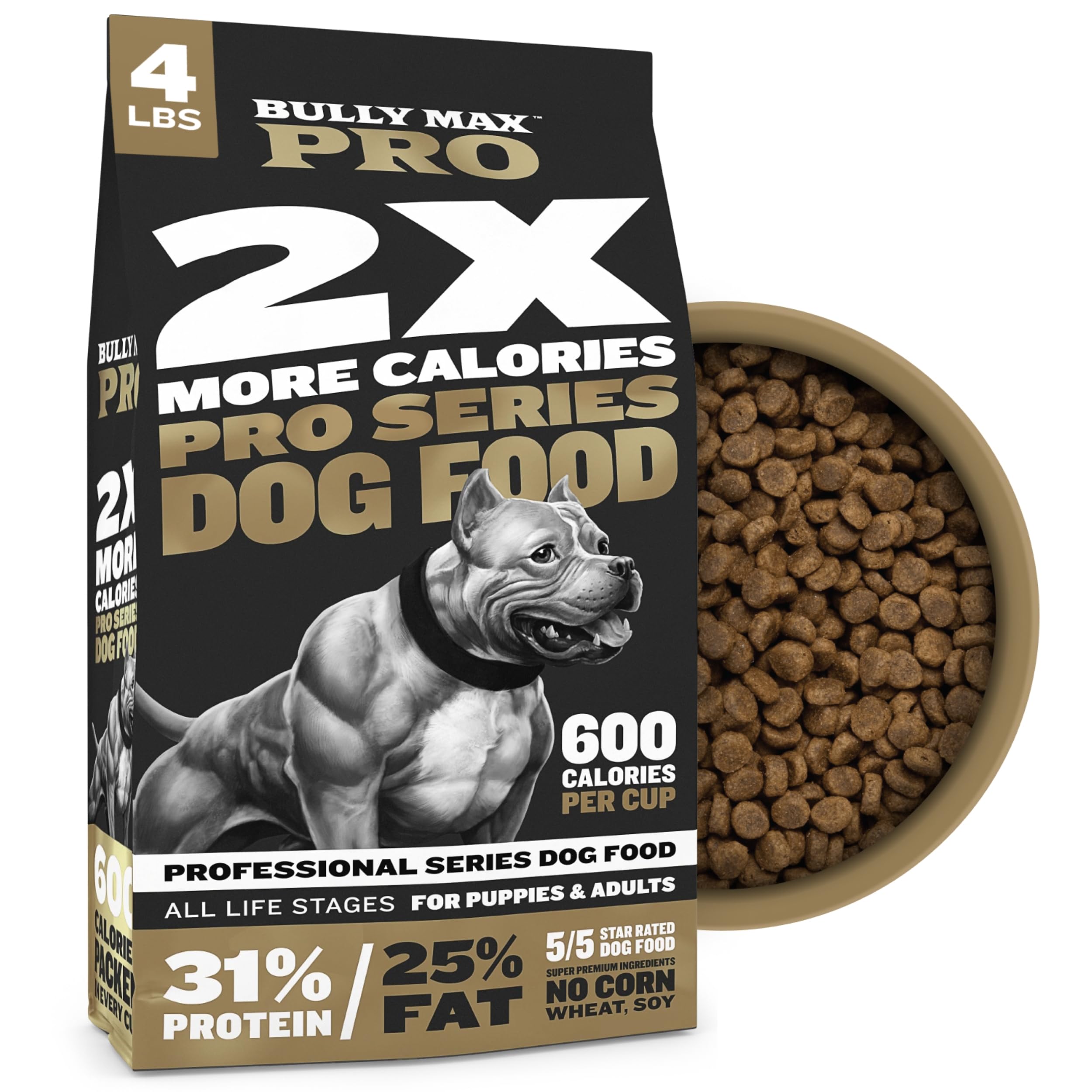
| Bully Max Pro 2XAlso Great | Maximum calorie density | 31% | 25% | 600 | Amazon |
| Royal Canin Starter Mousse | Soft, wet food for picky moms | — | — | — | Amazon |
| Doc’s Choice Puppy | Veterinarian-developed formula | — | — | — | Amazon |
| Diamond Puppy 31/20 | Budget-friendly starter | 31% | 20% | — | Amazon |
In‑Depth Reviews
1. VICTOR Super Premium Dog Food – Hi-Pro Plus Dry Kibble
Our pick — 4.5★ from 10,000+ verified ratings; the strongest balance of quality and price.
A reliable 30-pound bag of high-protein kibble built for active and nursing dogs
The VICTOR Hi-Pro Plus delivers 30% protein and 20% fat, formulated with a multi-meat blend of beef, chicken, pork, and fish meals. It is labeled “All Life Stages” and meets AAFCO nutrient profiles for growth and reproduction, which explicitly covers pregnant and lactating females. At 30 pounds, the bag is the same size as the Diamond Puppy but with a more diverse protein source mix. The proprietary VPRO Blend of supplements, vitamins, and minerals is designed to support genetic potential across all activity levels, which matters for a mother who is simultaneously recovering from birth and producing milk.
All ingredients are sourced predominantly from within a day’s drive of the Texas-based facility, so the supply chain is tight. Customers note that the kibble size works well for medium to large breed mothers, and that the formula produces firm, consistent stools even during the digestive stress of lactation. The downside is that the bag does not list the calorie-per-cup count on the available data, so you have to estimate portion sizes yourself.
Solid all-around performer
- 30 pounds in one bag provides excellent value per feeding
- Multi-meat protein blend supports variety in the mother’s diet
- Made in a single Texas facility with local ingredient sourcing
What is missing
- No calorie-per-cup figure published in the product data
- 20% fat is lower than the 25% in the Bully Max option
The volume pick: Grab this bag for a medium-to-large breed mother who will eat through 30 pounds over a full lactation cycle.
Watch for: If your dog needs extreme calorie density because she is eating less, the 20% fat may require you to supplement or feed larger portions.
2. Bully Max Pro 2X High Calorie & High Protein Dry Dog Food
600 calories per cup so a nursing mom gets a full meal in fewer bites
This is the calorie-dense powerhouse on the list. That extra fat is exactly what a lactating dog needs to produce energy-rich milk for her puppies without draining her own body weight. The 600 calories per cup also means you feed her up to 60% less volume than standard foods, which is a real advantage when her stomach is pressed by a full uterus and she does not feel like eating a huge bowl.
It is suitable for dogs from 4 weeks old, and the manufacturer specifically lists pregnant and nursing dogs as a primary use case. The formula is free from corn, wheat, soy, and artificial colors or preservatives. Buyers report that even finicky mothers who usually turn their nose up at kibble will eat this one, and that the reduced gas is a noticeable relief for a dog already uncomfortable from nursing. The trade-off is a 64-ounce bag, which is small compared to the 30 or 35-pound bags of other picks — at 122.4 ounces, the Royal Canin Starter Mousse is nearly double the total weight, so you will be reordering this one more frequently.
What makes it the top pick
- Highest fat content (25%) for serious milk production support
- 600 calories per cup means less food volume per feeding
- Free of corn, wheat, soy, and artificial additives
One real limitation
- Small bag size (64 ounces) means frequent reordering
- Higher price per pound than larger bags of other brands
Your hardest-working pick: This is for the nursing mother who needs maximum energy density in minimal food, especially if she is eating less than usual.
Reality check: The 64-ounce bag will not last a full weaning period for a large litter, so factor in the reorder frequency before committing.
3. Royal Canin Size Health Nutrition Starter Mother & Babydog Mousse in Sauce

A soft mousse that bridges the gap between nursing and solid food for mom and pups
When a lactating dog refuses kibble — and many do during the first week after birth — this mousse-in-sauce texture is the reliable backup. At 122.4 ounces total (a pack of 24 cans), it is the heaviest product on this list by a 1.9x margin over the Bully Max Pro 2X, so you get substantial volume. The formula includes a proprietary nutritional complex with prebiotics and highly digestible proteins to support digestive health, plus clinically proven antioxidants like vitamins E and C that support the immune system development of the puppies through the mother’s milk.
The palatable soft texture is designed to help transition puppies from nursing to eating solid food, which means one can serves both the mother during lactation and the litter during weaning. Royal Canin labels it for all breed sizes. The catch is that unlike the dry kibble options, the exact protein and fat percentages are not listed on the packaging data provided, so you cannot directly compare the macronutrient profile to the 31% protein of the Bully Max. Owners mention that the cans open easily and the mousse is consistently eaten even by dogs who have gone off dry food entirely.
Texture is the trump card: If your nursing dog has gone off dry food, this mousse is the best chance of getting calories into her during that critical first week.
The nutritional unknown: With no published protein or fat percentage in the product data, you cannot confirm it matches the 30-31% protein levels of the kibble competitors.
Go here for picky eaters: This is the ideal food for the first few days post-whelp when a mother may refuse everything else.
One limitation: You will need a second food source if you want guaranteed high protein and fat numbers that the dry kibble options provide.
4. Doc’s Choice Premium Chicken Puppy Food
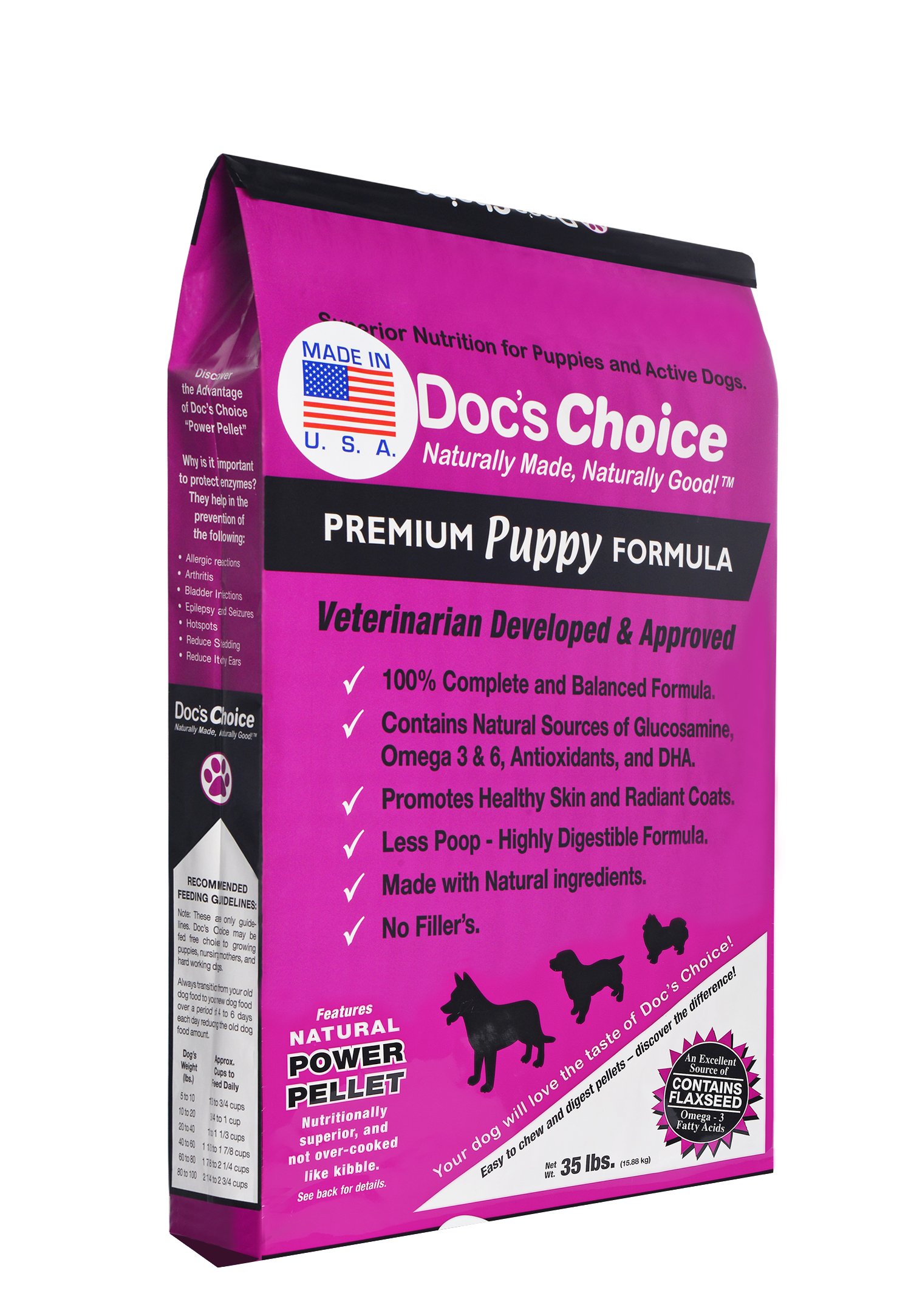
A pellet form that preserves heat-sensitive nutrients better than standard kibble
Doc’s Choice uses what they call a “Power Pellet” process, which exposes ingredients to fewer heat cycles and lower temperatures than traditional kibbling. The idea is that heat-sensitive vitamins, proteins, amino acids, and enzymes survive the cooking process more intact. At 35 pounds, it is 17% heavier than the VICTOR’s 30-pound bag, giving you the most raw volume of any dry food here. It is formulated for puppies and pregnant or nursing dogs, and includes natural sources of glucosamine and DHA, plus probiotics and prebiotics for digestive health.
Dr. Gene Graney, a practicing small animal veterinarian of over 20 years, founded the brand, which adds a layer of clinical perspective to the formula. The recipe contains no artificial ingredients or by-products. The catch is that, like the Royal Canin mousse, the specific protein and fat percentages are not listed in the product data provided, so you cannot confirm the macronutrient profile matches the 30%+ protein standard. Reviewers point out that the pellet shape is easier for some nursing mothers to chew than sharp-edged kibble, and that the 35-pound bag lasts noticeably longer than similar-sized kibble bags.
The gentler process
- Low-heat Power Pellet process preserves more nutrients
- 35 pounds is the largest dry bag on this list
- Veterinarian-developed formula with probiotics and prebiotics
Missing macronutrients
- No protein or fat percentage available in the product data
- Labeled as “Small Breeds” so kibble size may be too small for large mothers
Choose for nutrient preservation: If you are concerned about how heat processing degrades vitamins and enzymes, the Power Pellet process is a genuine differentiator.
One gap: Without published protein and fat numbers, you cannot guarantee this hits the same macronutrient levels as the Bully Max or VICTOR formulas.
5. Diamond Puppy 31/20 High Protein Formula
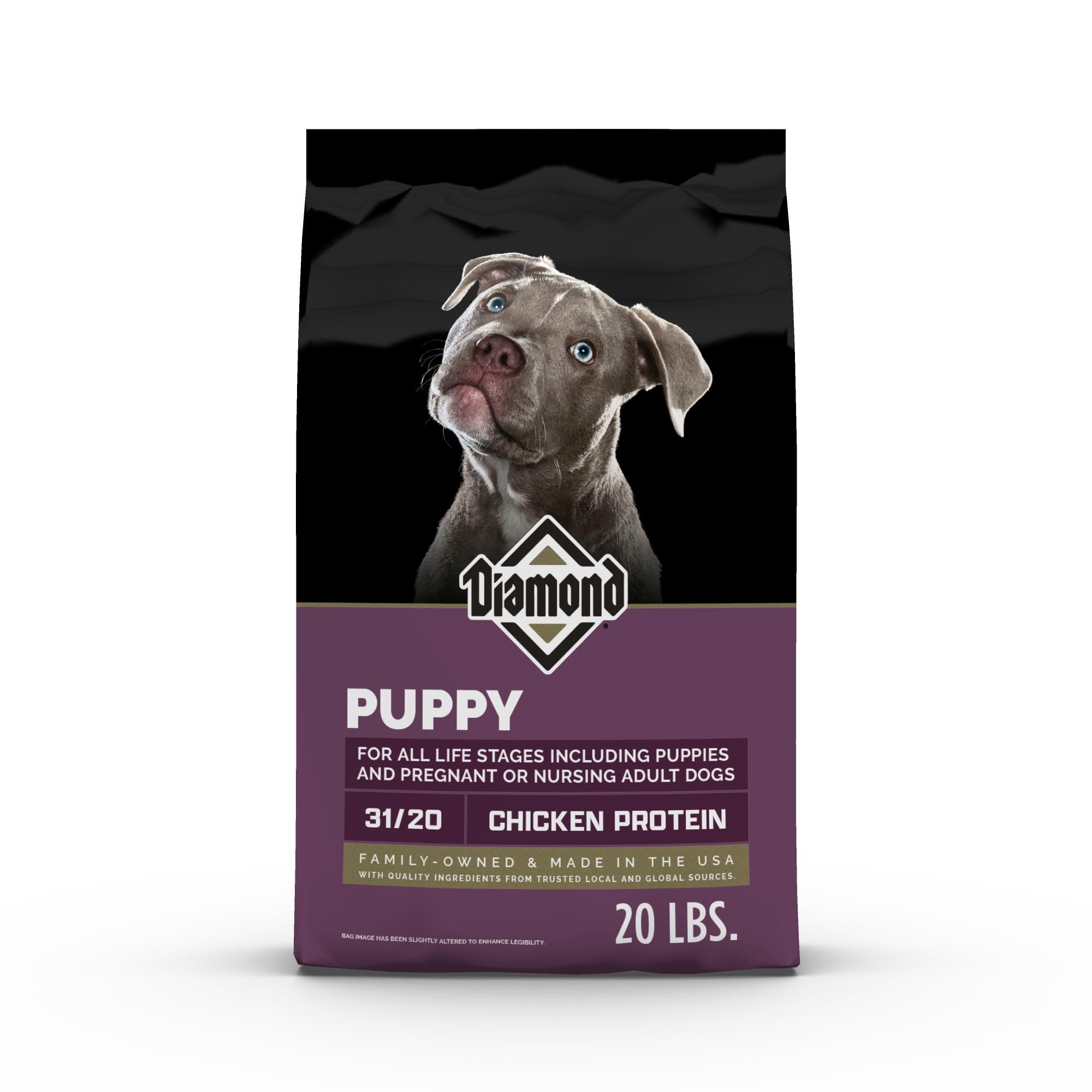
Decent protein numbers and a small kibble size at a price that is easy on the wallet
The Diamond Puppy formula hits 31% protein and 20% fat, putting it in the same league as the Bully Max on protein but trailing on fat by 5%. The first ingredient is chicken to support muscle development, and the recipe includes DHA for brain and vision development in the puppies through the mother’s milk. It is supplemented with a science-backed probiotic blend and antioxidants to support healthy digestion and a strong immune system — both critical during the physical stress of lactation. The smaller kibble size is specifically designed for growing puppies, which also makes it easier for a nursing mother to chew quickly between feedings.
This is the budget-tier option on the list. The 20-pound bag is smaller than the VICTOR (30 pounds) and Doc’s Choice (35 pounds), but the 31% protein is the joint-highest alongside the Bully Max. A key difference: Diamond labels this as a “Puppy” food that is also suitable for pregnant or nursing adult dogs, but unlike the VICTOR formula, it does not carry an “All Life Stages” label — it is specifically formulated for growth and reproduction rather than maintenance. Shoppers say that the food is well-tolerated even by sensitive stomachs during nursing and that the smaller kibble reduces the time the mother spends eating, which matters when she has to get back to the puppies quickly.
Strong value play
- 31% protein matches the highest in this comparison
- Small kibble size is easier for rapid eating between nursing sessions
- DHA and probiotics included for puppy brain and digestive health
Trade-offs to know
- 20-pound bag is smaller than the VICTOR (30 pounds) and Doc’s Choice (35 pounds)
- 20% fat is lower than the Bully Max’s 25% — less calorie density
The gentle entry point: This is a solid choice if you want the 31% protein number on a budget and your nursing dog has a less ravenous appetite.
Limitation to consider: With only 20 pounds and 20% fat, you will go through this bag faster and may need to top up calories sooner than with higher-fat competitors.
Understanding the Specs
Protein & Fat Percentages
These two numbers are your primary decision data. A lactating dog needs around 30% protein to provide the amino acids required for milk production without breaking down her own muscles. Fat at 20% or higher supplies the dense energy she burns at three to four times her normal rate. A formula with 31% protein and 25% fat, like the Bully Max, gives you the highest density. A formula with 30% protein and 20% fat, like VICTOR, is still effective but requires her to eat slightly more volume to get the same total energy.
Calories Per Cup
This number determines how much food she needs per day. A standard kibble delivers roughly 300-400 calories per cup. A high-density food like the Bully Max at 600 calories per cup means you feed her half the volume for the same energy. That matters because a nursing dog’s abdomen is under physical pressure, and a full bowl can be uncomfortable. Lower-calorie foods force larger portions, which can lead to her leaving food unfinished.
FAQ
Can I feed my lactating dog regular adult maintenance dog food?
How much more should a nursing dog eat compared to normal?
Will a puppy formula work for the mother during nursing?
Is wet food better than dry kibble for a lactating dog?
How long does a mother need special lactation food?
What is DHA and why does it matter in the mother’s food?
Should I add supplements to my nursing dog’s food?
Why do some foods list protein as a percentage and others do not?
Can I mix two different foods together for variety?
What is the “Power Pellet” process in Doc’s Choice?
Final Thoughts: The Verdict
For most owners, the best dog food for lactating dogs is the Bully Max Pro 2X because its 31% protein, 25% fat, and 600 calories per cup provide the highest energy density in the smallest feeding volume — exactly what a nursing mother needs when her appetite is reduced but her energy demand is at its peak. If you want a massive 30-pound bag with 30% protein and reliable All Life Stages labeling that supports the full weaning period without frequent reordering, grab the VICTOR Hi-Pro Plus. And for a nursing dog who has gone off dry food entirely, the Royal Canin Starter Mousse provides a soft, palatable texture that gets calories into her when nothing else will.
How We Picked
We do not accept paid placement. Every pick is matched to a real buyer and a real use-case; we do not hands-on test units.
Sources & Methodology
Specifications: manufacturer listings and product documentation. Review insights: verified customer reviews, as of July 2026. Pricing: not shown on this page (it changes often); check the current price via the retailer link.
As an Amazon Associate, WellFizz earns from qualifying purchases. This does not affect which products we feature.
Related Guides

Mo Maruf
I created WellFizz to bridge the gap between vague wellness advice and actionable solutions. My mission is simple: to decode the research and give you practical tools you can actually use.
Beyond the data, I am a passionate traveler. I believe that stepping away from the screen to explore new environments is essential for mental clarity and physical vitality.