Our readers keep the lights on and my smoothie glass nicely filled. As an Amazon Associate, I earn from qualifying purchases.
When your dog faces kidney disease, every meal becomes a medical decision. The wrong phosphorus level accelerates decline, while poor palatability means a sick dog simply won’t eat — creating a dangerous spiral of malnutrition and worsening renal values. Choosing a dog food for kidney issues isn’t about grain-free trends or protein content alone; it’s about precision phosphorus restriction, controlled sodium, and a bioavailable protein profile that preserves muscle without overworking damaged nephrons.
I’m Mohammad Maruf — the founder and writer behind WellFizz. I’ve spent hundreds of hours cross-analyzing veterinary renal diets, supplement formulations, and customer outcome data to find the products that actually stall creatinine and BUN progression.
This guide breaks down five renal-support products — from prescription wet foods to targeted supplements — so you can match the right approach to your dog’s lab numbers. If you’re searching for the best dog food for kidney issues, you’ll find options that extend quality time and stabilize bloodwork.
How To Choose The Best Dog Food for Kidney Issues
Selecting a renal-support product means abandoning general nutrition rules and narrowing in on four specific metrics: phosphorus percentage, protein bioavailability, omega-3 concentration, and palatability enhancers. These factors directly impact how long your dog maintains appetite and stable kidney function.
Phosphorus Restriction — The True Kidney Protector
Phosphorus is the single most important numeric to check on any renal diet label. Dogs with compromised kidneys cannot excrete excess phosphorus efficiently, leading to hyperphosphatemia that accelerates nephron damage. Look for dry foods with phosphorus below 0.6% on a dry-matter basis and wet foods below 0.4%. Veterinary therapeutic diets like Hill’s k/d and Royal Canin Renal are formulated with strict phosphorus ceilings, while some supplements help bind dietary phosphorus before absorption.
Protein Quality Over Quantity
Reducing protein too aggressively can trigger muscle wasting and lower albumin levels — a dangerous outcome for a sick dog. The goal is high-biological-value protein that provides essential amino acids with minimal nitrogenous waste. Look for named animal proteins like chicken or egg as the first ingredient, not plant-based concentrates that deliver less usable amino acid profiles. Therapeutic renal diets reduce total protein modestly but increase the quality so less waste enters the bloodstream.
Omega-3 Fatty Acids for Renal Blood Flow
Docosahexaenoic acid (DHA) and eicosapentaenoic acid (EPA) from fish oil reduce renal inflammation and decrease proteinuria (protein leaking into urine). A renal diet should include fish oil as a primary fat source rather than vegetable oils. The therapeutic effects are dose-dependent — aim for a combined EPA/DHA level of at least 0.5% of the diet on a dry-matter basis.
Quick Comparison
On smaller screens, swipe sideways to see the full table.
| Model | Category | Best For | Key Spec | Amazon |
|---|---|---|---|---|
| Hill’s Prescription Diet k/d | Prescription Wet Food | Complete renal nutrition with high palatability | <0.4% Phosphorus Dry Matter | Amazon |
| Royal Canin Veterinary Diet Renal Support S | Prescription Dry Food | Energy-dense dry kibble for low appetite | <0.6% Phosphorus Dry Matter | Amazon |
| Dr. Harvey’s Kidney Health | Herbal Supplement Powder | Mushroom-herb blend for kidney enzyme support | 8 medicinal mushroom species | Amazon |
| Azovast Kidney Restore Powder | Probiotic Supplement Powder | Gut-kidney axis with 50 billion CFU per scoop | 50B CFU + Beta Glucans | Amazon |
| Vetoquinol Renal K | Potassium Supplement | Correcting hypokalemia in renal patients | Potassium gluconate powder | Amazon |
In‑Depth Reviews
1. Hill’s Prescription Diet k/d Kidney Care Chicken & Vegetable Stew Wet Dog Food

Hill’s k/d is the most researched renal diet on the market — backed by clinical trials showing it extends quality of life in dogs with chronic kidney disease. The chicken and vegetable stew formulation uses a controlled phosphorus level below 0.4% on a dry-matter basis, which directly reduces the workload on compromised nephrons. The ActivBiome+ Kidney Defense blend adds prebiotics that feed beneficial gut bacteria, indirectly lowering uremic toxin production through the gut-kidney axis.
The wet food format delivers critical hydration — dogs with kidney disease often become dehydrated, and the gravy texture encourages voluntary fluid intake. Real customer outcomes include a dog that lived an extra 19 months on this diet combined with medication. The bite-sized chunks in broth maintain appetites even when dogs refuse dry kibble. Prescription status means a veterinarian has already vetted the nutrient profile for your dog’s specific stage of renal disease.
Chicken and vegetable stew is the most palatable flavor in the k/d line, with owners reporting their dogs finish the can without coaxing. The 12-pack provides a 12-day supply for a 50-pound dog at the typical feeding rate. If your dog needs complete nutrition with guaranteed phosphorus control and hydration support, this is the standard-setter.
Why it’s great
- Clinically proven to extend life in CKD dogs
- Low phosphorus (<0.4% DM) protects kidneys directly
- High moisture content supports hydration
- ActivBiome+ prebiotic formulation for gut health
Good to know
- Requires veterinarian prescription
- Premium pricing — cost adds up for large dogs
- May need to test multiple flavors if dog is picky
2. Royal Canin Veterinary Diet Canine Renal Support S Dry Dog Food
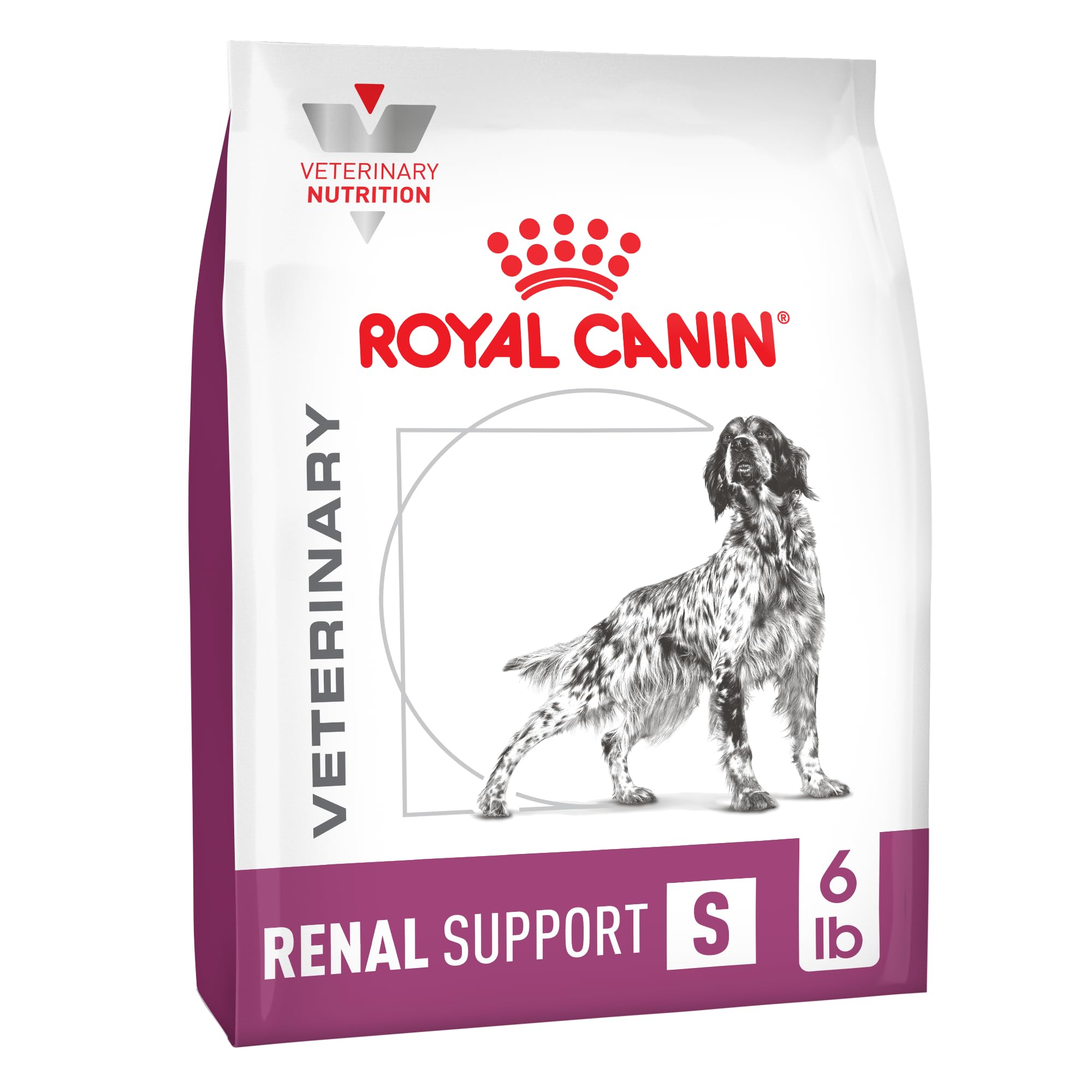
Royal Canin Renal Support S addresses a critical problem in kidney disease — appetite loss. The crescent-shaped kibble and high palatability formula are designed to stimulate eating even when dogs feel nauseous from uremia. Phosphorus is restricted to below 0.6% on a dry-matter basis, which is slightly higher than Hill’s k/d wet but appropriate for dry kibble where higher ingredient density is needed for extrusion. The energy-dense recipe means smaller meal volumes deliver sufficient calories — important for dogs that eat reluctantly.
The “S” designation stands for Savory, and the flavor profile uses chicken as the primary protein with targeted levels to support kidney function without causing excessive nitrogen waste. Owners report mixing warm water or broth to create a gravy that entices even picky Chihuahuas and labs alike. One customer with a dog on this diet noted that it kept their dog’s appetite strong when combined with wet renal food and added hydration — a practical approach for transitioning from exclusively dry food.
The 6-pound bag yields 27 cups, making it a more economical dry alternative to feeding solely wet prescription diets. However, some reviews flag variable pricing across retailers, with prices sometimes double elsewhere, so price checking matters. If your dog refuses wet food but needs controlled phosphorus and protein, this dry option maintains renal specifications while fitting standard kibble feeders.
Why it’s great
- Highly palatable crescent shape encourages eating
- Low phosphorus formulation for kidney protection
- Energy-dense requires smaller portions
- Chicken base is appealing to most dogs
Good to know
- Prescription required for purchase verification
- Price fluctuates significantly across sellers
- Dry food lacks the hydration benefit of wet diets
3. Dr. Harvey’s Kidney Health Supplement for Dogs

Dr. Harvey’s Kidney Health takes a non-prescription, whole-food approach to renal support using medicinal mushrooms and traditional Chinese herbs. The formula includes rehmannia root, a Chinese herb specifically used to strengthen kidney and adrenal function, plus organic reishi, shiitake, poria, and cordyceps mushrooms — all identified for their anti-inflammatory and immune-modulating properties. Owners managing their dog’s kidney disease without a full prescription diet can add this powder to their current food to target elevated kidney enzymes.
Customer results are striking — one German Shepherd with urine-smelling breath and elevated kidney values had perfect kidney health confirmed by a vet after two months on this supplement combined with Dr. Harvey’s Golden Years powder. When the supplement ran out, the ammonia breath returned and resolved again within a week of restarting, suggesting real biological activity. The micro-powder texture mixes easily into food and has a mild scent that most dogs accept — though one customer had a dog that refused to eat with it mixed in.
The 4-ounce jar lasts approximately 15 days at the recommended twice-daily dose for a large dog. It does not replace a low-phosphorus therapeutic diet but works alongside one. If you’re looking for a natural complement to veterinary care and your dog’s kidney numbers are not yet at end-stage, this herbal-mushroom blend offers a research-grounded supplement option with notable anecdotal results.
Why it’s great
- Organic reishi, shiitake, and cordyceps mushrooms target inflammation
- Rehmannia root supports traditional kidney strengthening
- No prescription needed — easy to add to current diet
- Visible results reported in lowering kidney enzymes
Good to know
- One jar lasts only ~15 days for large dogs
- Some dogs refuse food with the powder mixed in
- Not a complete diet — must be used with proper food
4. Azovast Kidney Restore Powder for Dogs & Cats

Azovast Kidney Restore operates on a different mechanism than most renal products — the gut-kidney axis. With 50 billion CFU per scoop across seven probiotic strains (including Lactobacillus acidophilus and Bifidobacterium longum), plus beta 1,3/1,6 glucans from yeast extract, it aims to reduce uremic toxin production in the gut before those toxins ever reach the kidneys. Niacinamide (Vitamin B3) is also included to help decrease phosphate levels, directly addressing a primary driver of kidney disease progression.
Customer feedback positions this as a direct alternative to Azodyl — a widely prescribed but expensive renal probiotic — at a significantly lower per-dose cost. One cat owner with a stage 2-3 feline kidney disease patient noted that Azovast capsules are smaller than Azodyl, making administration easier, and the powder requires no refrigeration. The chicken flavor is palatable enough that most dogs simply eat it sprinkled on their food. No titanium dioxide is used in the capsules, addressing concerns some owners have about inactive ingredients in the branded competitor.
The 4-ounce jar provides 175 scoops, translating to nearly three months of twice-daily dosing for a medium dog. No refrigeration is required, making it convenient for travel or multi-pet households. If your goal is to lower BUN and creatinine through microbiome modulation while also managing phosphorus absorption, this probiotic approach offers a science-backed complement to a low-phosphorus therapeutic diet.
Why it’s great
- 50 billion CFU per scoop targets gut-kidney toxin reduction
- Niacinamide helps lower phosphate levels
- No refrigeration needed — shelf-stable powder
- Cost-effective alternative to prescription Azodyl
Good to know
- Dosing instructions suggest empty stomach for best effect
- Some dogs may reject if food amount is large
- Not a standalone diet — use with restricted phosphorus food
5. Vetoquinol Renal K – Potassium Supplement Powder for Dogs & Cats
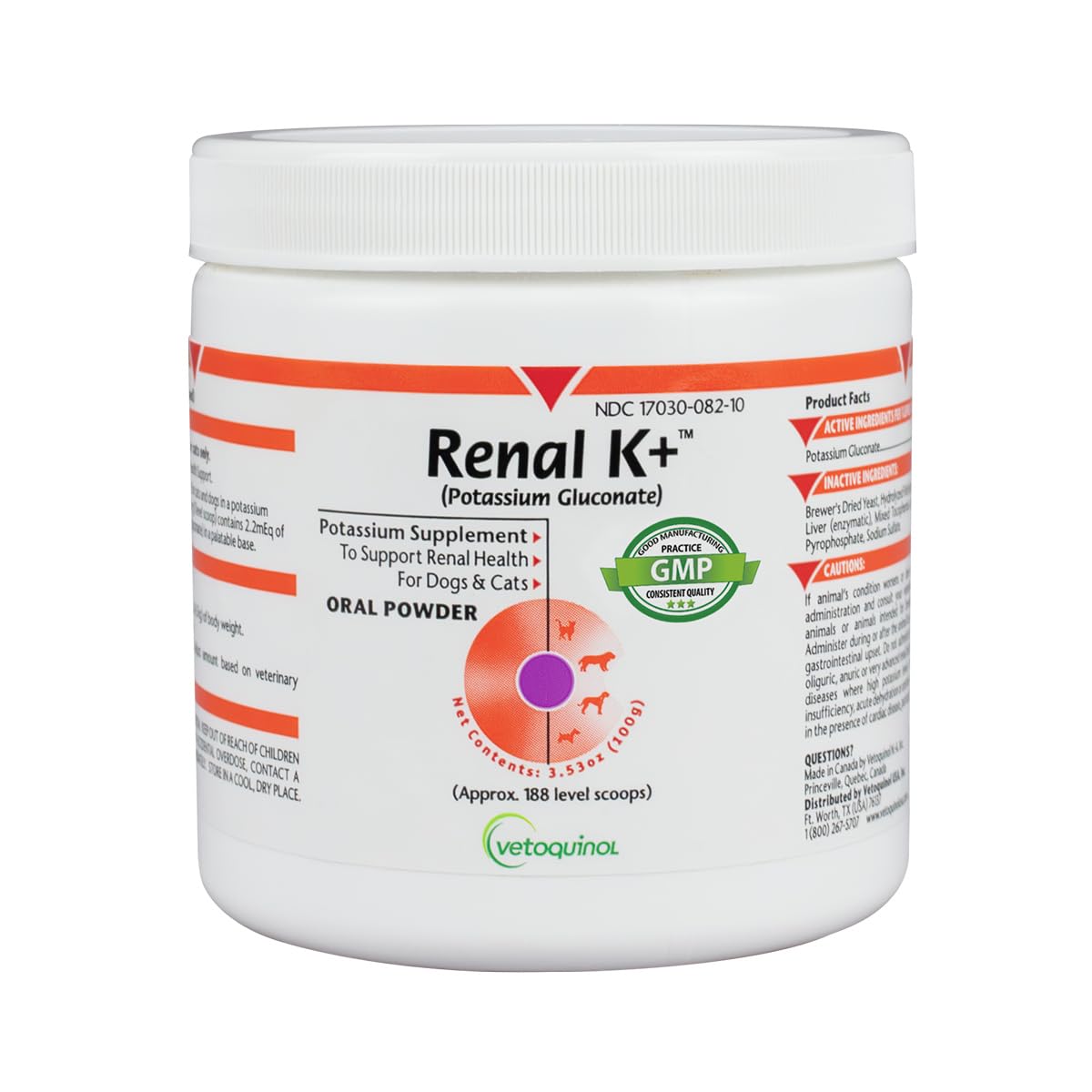
Vetoquinol Renal K addresses a specific and dangerous complication of chronic kidney disease — hypokalemia (low potassium). As kidney function declines, the kidneys waste potassium, leading to muscle weakness, lethargy, and in severe cases, cardiac arrhythmias. This unflavored potassium gluconate powder provides 85.8 mg of potassium per scoop, designed to restore serum potassium to normal levels. It also contains B-complex vitamins, biotin, and calcium D-pantothenate to support muscle and heart health alongside the primary electrolyte correction.
Customer reports show dramatic recovery from severe potassium deficiency. One owner of a 16.5-year-old Yorkie with end-stage kidney failure saw their dog improve within two days — regaining energy and climbing ramps again after starting a cautious dose. A cat with severe IBD who was near euthanasia due to hind leg failure came back to active life within six months on Renal K. However, multiple users caution that this is a maintenance supplement, not a high-potency correction tool — one cat with CKD needed 468 mg per scoop from a prescription product to reach target potassium levels.
The powder format is significantly easier to use than the tube gel version, which owners describe as stiff and difficult to squeeze. Mixing into food with a fishy smell helps compliance in cats and small dogs. A critical safety note: do not use this unless bloodwork confirms potassium deficiency, and always start at a lower dose than the label recommends — especially for end-stage patients where excess potassium can cause cardiac arrest.
Why it’s great
- Directly addresses hypokalemia — a common CKD complication
- Powder format is easier to administer than tube gel
- B-complex vitamins support overall muscle and heart health
- Safe to use with other renal diets and medications
Good to know
- Potency may be too low for severe hypokalemia cases
- Dangerous if used without confirmed potassium deficiency
- Must monitor blood levels closely during use
FAQ
Can I feed homemade food instead of prescription renal diets?
How do I transition a picky dog to low-phosphorus renal food?
Should I add supplements to a prescription renal diet?
Final Thoughts: The Verdict
For most users, the best dog food for kidney issues winner is the Hill’s Prescription Diet k/d Chicken & Vegetable Stew because it combines clinical longevity data with guaranteed low phosphorus and high hydration in a palatable wet format. If you want a dry kibble that maintains appetite and meets renal specifications, grab the Royal Canin Renal Support S. And for a supplement approach targeting the gut-kidney axis, nothing beats the Azovast Kidney Restore Powder.

Mo Maruf
I created WellFizz to bridge the gap between vague wellness advice and actionable solutions. My mission is simple: to decode the research and give you practical tools you can actually use.
Beyond the data, I am a passionate traveler. I believe that stepping away from the screen to explore new environments is essential for mental clarity and physical vitality.