Our readers keep the lights on and my smoothie glass nicely filled. As an Amazon Associate, I earn from qualifying purchases.
The diagnosis of chronic kidney disease in a dog changes everything about feeding time. Every kibble decision suddenly carries weight — too much phosphorus accelerates the damage, while inadequate protein leads to muscle wasting. The right renal diet balances these forces precisely, preserving kidney function without sacrificing the joy of a good meal.
I’m Mohammad Maruf — the founder and writer behind WellFizz. My research into this category involved cross-referencing phosphorus and protein specifications, analyzing hundreds of owner experiences with picky senior dogs, and evaluating the real-world palatability of veterinary diets against non-prescription alternatives.
Whether you are managing early-stage renal decline or advanced kidney failure, finding the right fuel is critical. This guide breaks down the top seven contenders for the title of best dog food for kidney disease based on phosphorus control, ingredient quality, and proven acceptance by finicky dogs.
How To Choose The Best Dog Food for Kidney Disease
Selecting a renal diet is not about finding the most expensive bag or the one with the most exotic protein. It is about matching the dog’s current disease stage with the right phosphorus ceiling, protein source, and palatability profile.
Phosphorus Is the Primary Target
Elevated phosphorus in the blood accelerates kidney damage. The core job of any renal diet is to keep phosphorus low — typically below 0.6% on a dry matter basis for advanced disease. Checking the guaranteed analysis for this number is the first filter.
Protein Quality Over Quantity
Reducing protein outright can cause hypoalbuminemia and muscle loss. Instead, look for highly digestible, high-biological-value proteins (like whole eggs, chicken, or fish) that yield less metabolic waste. Avoid low-protein junk — the body still needs essential amino acids.
Palatability Determines Compliance
Kidney disease often suppresses appetite, and a dog that refuses to eat risks hepatic lipidosis. The best renal food in the world is useless if the dog turns its nose up. Wet foods, stews, and small-kibble formats typically win over dehydrated or anorexic patients.
Quick Comparison
On smaller screens, swipe sideways to see the full table.
| Model | Category | Best For | Key Spec | Amazon |
|---|---|---|---|---|
| Hill’s k/d Kidney Care Stew | Wet Food | Advanced CKD management | Phosphorus 0.23% (as fed) | Amazon |
| Forza10 Renal Support | Dry Kibble | Non-prescription alternative | Hydrolyzed fish protein | Amazon |
| Royal Canin Renal Support S | Dry Kibble | Picky eaters, small kibble | Low phosphorus, crescent shape | Amazon |
| Pro Plan NF Kidney Function | Dry Kibble | Energy-dense nutrition | Restricted protein & sodium | Amazon |
| Blue Buffalo KS Kidney Support | Dry Kibble | Natural ingredient preference | Controlled phosphorus & sodium | Amazon |
| SquarePet VFS Low Phosphorus | Dry Kibble | Budget-friendly renal care | Turkey & whole egg protein | Amazon |
| Hill’s i/d Digestive Care | Wet Food | Concurrent digestive issues | ActivBiome+ prebiotic blend | Amazon |
In‑Depth Reviews
1. Hill’s Prescription Diet k/d Kidney Care Chicken & Vegetable Stew

Hill’s k/d stew is the clinical gold standard for a reason. Each can delivers extremely low phosphorus (0.23% as fed) and reduced sodium through a formula backed by years of veterinary research. The ActivBiome+ Kidney Defense prebiotic blend actively supports gut health, which indirectly reduces the systemic toxin load on compromised kidneys. The stew format with bite-sized chunks in gravy maximizes moisture intake — a critical factor for flushing toxins in dogs that resist drinking water.
Owner reports consistently describe dogs living months to years beyond initial prognosis when switched to this diet. One reviewer documented 19 additional months of quality life for an advanced-stage CKD dog. The wet food format also makes it easy to hide medications or mix with renal dry kibble for calorie-density. The 12.5-ounce cans are large enough for medium and large breeds but can be portioned and refrigerated for smaller dogs.
This is a veterinary-exclusive prescription diet, so a veterinarian’s authorization is required. The cost per can is premium-tier, and some owners report occasional dented cans during shipping due to the weight of the 12-pack. The chicken and vegetable stew flavor is widely accepted, though occasional picky eaters may prefer the beef variety. For advanced kidney disease management, this is the most effective nutritional tool currently available.
Why it’s great
- Clinically proven to extend quality of life in CKD dogs
- Extremely low phosphorus content (0.23% as fed)
- ActivBiome+ prebiotics support kidney defense
- High moisture content supports hydration
Good to know
- Requires a veterinary prescription
- Premium price per can
- Shipping damage possible with 12-pack weight
2. Forza10 Renal Support Dry Dog Food
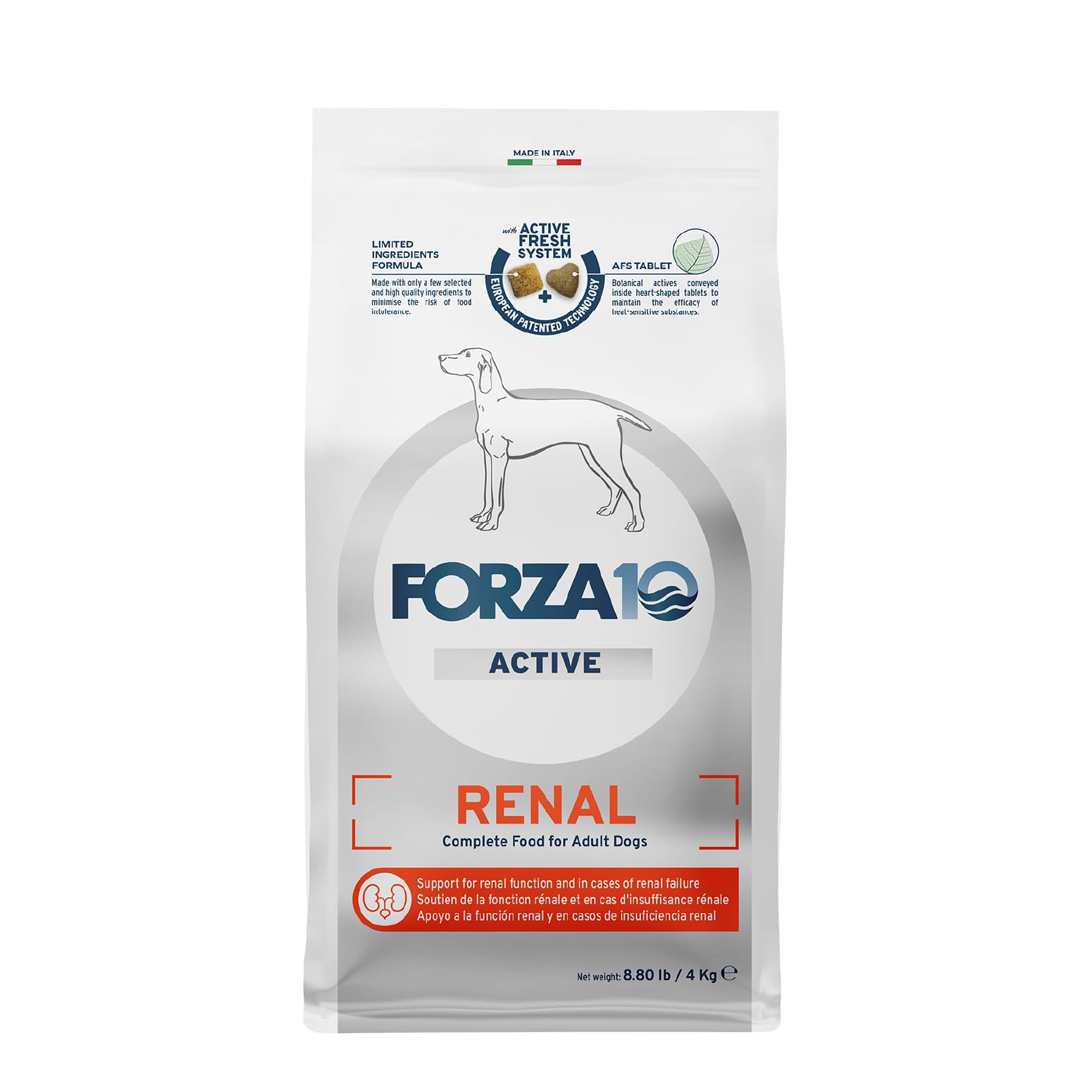
Forza10 fills a crucial gap in the market: a non-prescription renal diet that actually works. Made in Italy with hydrolyzed fish protein, cranberries, and dried dandelion, this formula supports kidney function without requiring a veterinarian’s authorization. The hydrolyzed protein reduces allergen reactivity while providing high-biological-value amino acids. The fish base delivers essential omega-3 fatty acids that combat the systemic inflammation common in renal disease.
Real-world results are striking. One owner of an 11-year-old German Shepherd with early-stage kidney disease reported complete resolution of itching, ear infections, and loose stools after switching from prescription kibble. Another reviewer noted improved blood work in a Lab with kidney issues. The kibble shape — dense squares and hearts — encourages chewing, though some small dogs may find it too large. The 8.8-pound bag size means it is consumed relatively quickly by larger breeds, leading to frequent reordering.
This is not a veterinary therapeutic diet, so the phosphorus and protein restriction may not be aggressive enough for late-stage disease. Some owners note the bag lacks a resealable closure, which can affect freshness over extended use. For early to mid-stage renal support without a prescription barrier, Forza10 is a standout option that treats the whole body, not just the kidneys.
Why it’s great
- No prescription required for purchase
- Hydrolyzed fish protein reduces allergen risk
- Omega-3s from fish support renal health
- Improved blood work results reported by owners
Good to know
- Bag size (8.8 lb) depletes quickly for large breeds
- No resealable closure on bag
- Phosphorus levels may be too high for advanced CKD
3. Royal Canin Veterinary Diet Canine Renal Support S
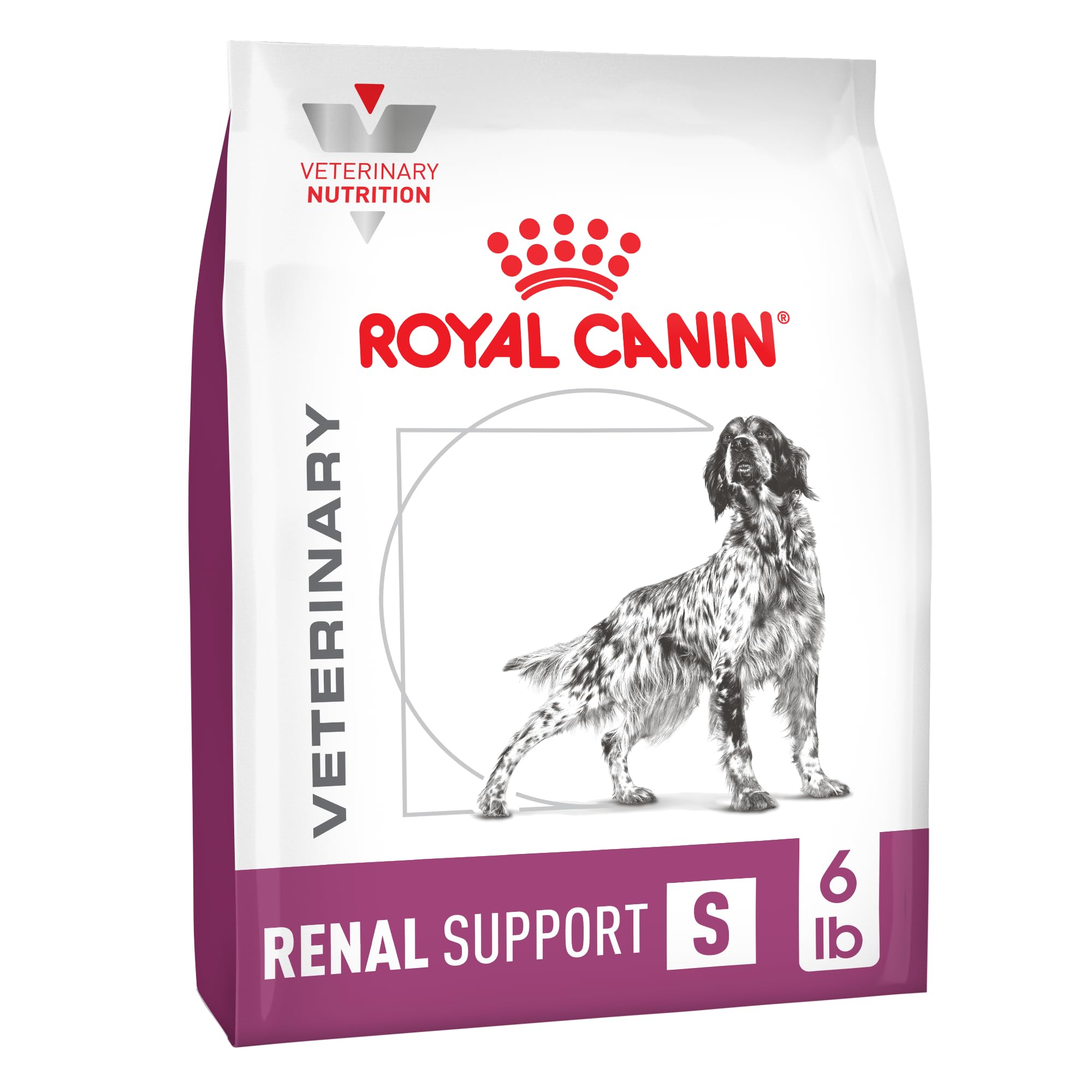
Royal Canin’s Renal Support S is engineered specifically for the anorexic kidney patient. The “S” stands for savory, and the crescent-shaped kibble is designed to stimulate appetite through aroma and texture. The formula features low phosphorus, a precise antioxidant complex, and fatty acids from fish oil — everything a renal diet needs. But the real achievement is the energy density: the dog can eat smaller volumes while still getting the calories required to prevent muscle wasting.
This diet works because it addresses the number one failure point for renal nutrition: refusal to eat. Owners of picky Chihuahuas and seniors who rejected home-cooked meals report that Royal Canin Renal Support is the only food their dogs will eat. The small kibble size is ideal for small breeds, though some owners of dogs with missing teeth still find it beneficial to soak the kibble in warm water before serving. The 6-pound bag yields about 27 cups of food, providing decent value for the prescription tier.
Royal Canin’s customer service provides detailed salt content information by request, which is helpful for owners managing concurrent heart conditions. The major drawback is cost variability — the same bag can be found at drastically different prices depending on the retailer, and some owners feel the brand overcharges. Still, when appetite is the primary battle, this formula consistently wins.
Why it’s great
- Crescent-shaped kibble designed to stimulate appetite
- Energy-dense formula reduces required meal volume
- Small kibble size suits small breed mouths
- Antioxidant complex supports kidney function
Good to know
- Price varies significantly between retailers
- Requires veterinary prescription
- Some picky dogs still refuse it
4. Pro Plan Veterinary Diets NF Kidney Function

Purina’s NF Kidney Function formula takes a pragmatic approach: restrict protein to a safe level, limit phosphorus and sodium, then pack the kibble with enough energy density that the dog doesn’t lose weight. This is especially useful for dogs with advanced kidney disease that are burning through calories. The formula includes antioxidants to combat oxidative stress, a common comorbidity in renal patients.
Owner feedback highlights the versatility of this diet. One 15-year-old Maltese with advanced heart failure and missing teeth survived for five months on this food after it was cut in half to accommodate dental limitations. Another owner reported their dog’s kidney function returned to nearly normal after a full year on NF, though the dog required soaked kibble after losing most of its teeth. The dry kibble is notably superior to the canned version, which lists by-products as the main ingredient after water.
The kibble size is medium, which can be problematic for toy breeds or dogs with missing teeth — owners often need to crush or soak the pieces. The vegetable flavor is less appealing than chicken-based competition, and some dogs prefer the canned version despite its lower ingredient quality. For dogs that tolerate it, NF provides reliable renal support with a strong calorie punch per serving.
Why it’s great
- Energy-dense formula prevents weight loss
- Antioxidant support for oxidative stress
- Proven improvement in kidney function over time
- Restricted sodium for concurrent heart issues
Good to know
- Kibble size too large for toy breeds/seniors
- Vegetable flavor less appealing than meat-based options
- Canned version has inferior ingredient list
5. Blue Buffalo Natural Veterinary Diet KS Kidney Support

Blue Buffalo’s KS formula appeals to owners who want a cleaner ingredient list within the prescription framework. Real chicken is the first ingredient, and the formula is free from corn, wheat, soy, artificial flavors, and preservatives. Controlled levels of phosphorus and sodium support kidney function without relying on excessive carbohydrate fillers. The 6-pound bag size is reasonable for initial trials.
This diet has been a lifesaver for dogs that reject Hill’s or Royal Canin renal options. One 14-year-old dog in renal failure that turned its nose up at the leading prescription diet willingly ate this formula, maintaining energy and experiencing no digestive upset. The kibble is larger than many small-breed options, however — owners of Yorkies and dogs with one tooth report needing to break it up. The packaging is also a pain point: the bag ships in a vinyl mailer rather than a box, risking tears during transit.
The prescription requirement adds a hurdle, and some owners found the vet authorization process cumbersome despite Amazon’s streamlined system. The kibble size is a significant limitation for small dogs — the product photo shows a Yorkie, but the actual kibble dimensions are closer to medium-breed size. For medium to large dogs that accept the taste, this is a solid natural-alternative renal diet.
Why it’s great
- Real chicken as first ingredient
- Free from corn, wheat, soy, and artificial additives
- Accepted by dogs that reject other renal diets
- Controlled phosphorus and sodium levels
Good to know
- Kibble too large for small breeds
- Ships in vinyl mailer, prone to damage
- Requires veterinary prescription
6. SquarePet VFS Low Phosphorus Formula

SquarePet VFS disrupts the renal diet market by offering targeted phosphorus, protein, and sodium restriction without a prescription. Cage-free turkey and whole eggs provide high-quality, easily digested animal protein with essential amino acids like taurine and L-carnitine. The formula is enriched with omega-3 and omega-6 fatty acids from salmon oil, plus antioxidants vitamins E and C. The 4.4-pound bag size is small, but the price point is significantly lower than equivalent prescription diets.
Owner stories demonstrate that this diet can be a genuine alternative to expensive veterinary brands. One owner of a 13-year-old Chinese Crested with pancreatitis and stage 3 CKD switched from Hill’s k/d after the dog refused to eat. The Chinese Crested lived past 16, with kidney values stable for over two years. Another owner feeding a 17.5-pound dog reported saving 40% compared to the monthly prescription food cost. The cage-free turkey flavor is widely accepted, even by dogs that previously rejected renal diets.
The 4.4-pound bag is small relative to the price per pound, and some owners have reported confusing pricing displays on Amazon. The formula is not as tightly controlled as prescription renal diets, so it may not be appropriate for late-stage disease without veterinary guidance. For early-stage CKD or owners seeking a budget-friendly alternative that dogs actually eat, this is a compelling option.
Why it’s great
- No prescription required
- High-quality turkey and whole egg protein
- Significant cost savings over prescription brands
- Omega-3s from salmon oil
Good to know
- Small bag size (4.4 lb) for the price
- Phosphorus control less strict than prescription diets
- Not suitable for late-stage CKD without vet input
7. Hill’s Prescription Diet i/d Digestive Care Wet Dog Food
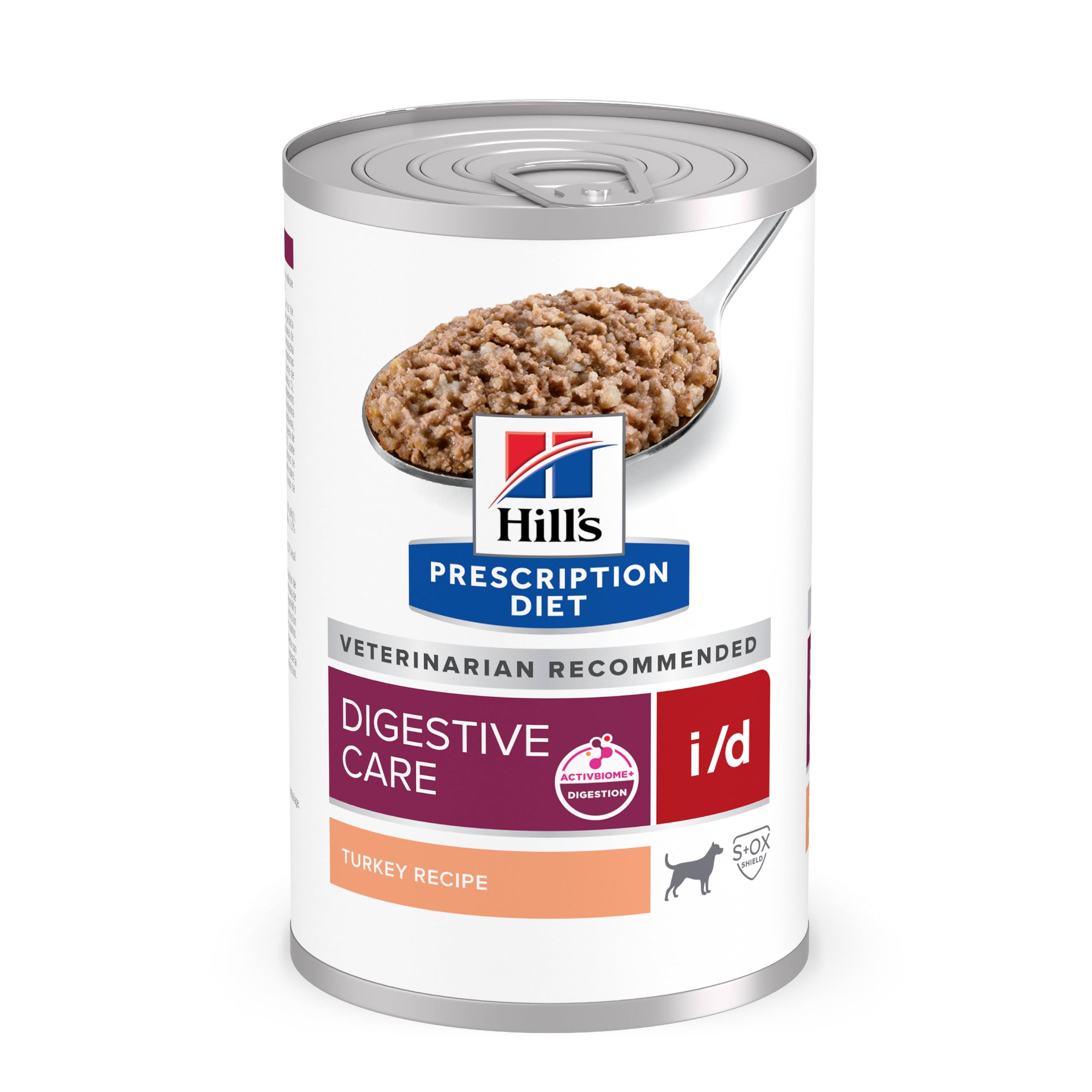
While i/d is a digestive care formula, not a renal-specific diet, it plays a critical supporting role for kidney patients. Kidney disease often causes gastrointestinal upset, nausea, and poor nutrient absorption. The ActivBiome+ Digestion prebiotic fiber blend rapidly activates the gut microbiome, improving nutrient uptake and reducing the systemic toxin load that further stresses the kidneys. High levels of B vitamins and added electrolytes help replace nutrients lost through digestive upset.
Owners use i/d as a complementary tool rather than a primary renal diet. Many owners mix it with renal dry kibble to create a higher-moisture, more palatable meal that also supports digestion. The pate-style texture makes it easy to hide pills — one owner creates small meatballs with medication inside. The turkey flavor is universally described as appealing, and the 13-ounce cans offer good value for a wet food with this level of formulation.
The primary limitation is that i/d is not designed for kidney disease — it lacks the strict phosphorus and protein restriction that renal diets offer. Using it as a sole food source for a CKD dog would be inappropriate. Shipping damage is a recurring issue with the 12-can pack weight, and the cost per can is premium-tier. As a digestive support tool in a multi-pronged renal management plan, however, it fills a very specific niche.
Why it’s great
- ActivBiome+ prebiotics support gut health
- Easy-to-digest formula for sensitive stomachs
- High moisture content aids hydration
- Excellent for hiding medication
Good to know
- Not formulated for renal disease specifically
- Requires veterinary prescription
- Shipping damage common with 12-pack weight
FAQ
Can I feed a homemade diet instead of prescription kidney food?
How do I transition my dog to a new kidney diet safely?
What happens if my dog with kidney disease eats normal dog food?
Is wet or dry kidney food better for renal disease?
Final Thoughts: The Verdict
For most users, the buying guide for the best dog food for kidney disease winner is the Hill’s Prescription Diet k/d Kidney Care Chicken & Vegetable Stew because it combines clinically proven phosphorus restriction with the high-moisture format that CKD dogs desperately need. If you want a non-prescription alternative that still delivers quality nutrition, grab the Forza10 Renal Support Dry Dog Food. And for a picky eater that refuses everything else, nothing beats the Royal Canin Veterinary Diet Canine Renal Support S with its appetite-stimulating crescent shape.

Mo Maruf
I created WellFizz to bridge the gap between vague wellness advice and actionable solutions. My mission is simple: to decode the research and give you practical tools you can actually use.
Beyond the data, I am a passionate traveler. I believe that stepping away from the screen to explore new environments is essential for mental clarity and physical vitality.