Our readers keep the lights on and my smoothie glass nicely filled. As an Amazon Associate, I earn from qualifying purchases.
Golden Retrievers pack a lot of dog into a frame that’s genetically prone to hip dysplasia, elbow problems, and a slow metabolism that turns extra kibble into extra pounds. The wrong food accelerates those risks; the right one supports bone density, coat shine, and energy levels without the weight creep that shortens lifespans in this breed.
I’m Mohammad Maruf — the founder and writer behind WellFizz. I’ve spent hundreds of hours cross-referencing ingredient panels, guaranteed analysis values, and AAFCO nutrient profiles to isolate exactly which formulations match the unique physiological demands of a large-breed retriever.
After analyzing the joint-support ratios, protein-to-fat balance, and digestibility markers across five leading contenders, I’ve narrowed the field to the most effective recipes currently available. Here’s my breakdown of the best dog food for golden retrievers based on concrete nutritional criteria rather than marketing claims.
How To Choose The Best Dog Food For Golden Retrievers
Golden Retrievers are large, active dogs with a tendency toward obesity and joint disorders. The ideal formula provides moderate protein (22–26%), moderate fat (12–16%), and controlled calcium levels (under 1.5% on a dry matter basis) to prevent skeletal overgrowth during puppyhood and weight stress during adulthood. You also want a guaranteed minimum of 400 mg/kg of combined glucosamine and chondroitin to support hip and elbow cartilage.
Joint-Support Nutrient Density
Look for foods that explicitly list glucosamine and chondroitin on the guaranteed analysis. For a 65–75 lb retriever, the effective daily dose sits around 500 mg of glucosamine and 400 mg of chondroitin. Omega-3 fatty acids from fish oil or flaxseed reduce inflammation around the joints — aim for a minimum of 0.5% combined EPA and DHA.
Protein Source and Digestibility
Chicken, beef, lamb, and fish are common first ingredients. What matters more is the amino acid profile. Whole-meat proteins (chicken, beef) contain taurine and carnitine naturally, supporting heart muscle and fat metabolism in a breed prone to dilated cardiomyopathy. Avoid foods where the first ingredient is a grain or a by-product meal with no named species.
Calorie Density and Weight Control
Golden Retrievers have a genetic variant that makes them feel less full after eating, meaning they overeat easily. Choose a food with 320–370 kcal per cup. Anything above 400 kcal per cup increases the risk of obesity unless the dog is extremely active. A weight-management formula or a large-breed adult maintenance formula typically hits the right calorie range.
Quick Comparison
On smaller screens, swipe sideways to see the full table.
| Model | Category | Best For | Key Spec | Amazon |
|---|---|---|---|---|
| Royal Canin Size Health Nutrition Large Adult | Premium | Joint & bone support for 56–100 lb dogs | 500+ mg/kg glucosamine + chondroitin | Amazon |
| Hill’s Science Diet Perfect Weight & Joint Support | Premium | Weight management + joint health | Omega-3 fish oil + L-carnitine | Amazon |
| Fromm Large Breed Adult Gold | Mid-Range | High-quality protein & digestion | Probiotics + salmon oil for coat | Amazon |
| Nutrish Rachael Ray Large Breed Real Beef | Budget-Friendly | Value large-breed with joint support | Glucosamine + chondroitin added | Amazon |
| IAMS Proactive Health Large Breed Beef & Rice | Budget-Friendly | Optimal calcium for bones & joints | Natural glucosamine + chondroitin | Amazon |
In‑Depth Reviews
1. Royal Canin Size Health Nutrition Large Adult Dry Dog Food

Royal Canin’s large-breed formula is engineered specifically for dogs weighing 56 to 100 lbs — the exact weight bracket most adult male and female Golden Retrievers occupy. The kibble shape is larger and textured to slow down gulping, which reduces bloat risk and encourages chewing. The blend of minerals, including calcium and phosphorus dialed to 1.0% and 0.8% respectively, supports skeletal integrity without overloading growth plates in younger adults.
The guaranteed analysis shows 26% minimum protein and 14% minimum fat, a ratio that maintains muscle mass without pushing calorie intake too high (roughly 370 kcal per cup). Prebiotics and clinically proven antioxidants (vitamins C and E) support gut health and immune function — a relevant factor for a breed that frequently develops food sensitivities and skin allergies.
Customer reports consistently mention improved stool quality and coat condition within two to three weeks of switching. A Doberman owner with a three-year history of feeding this formula noted zero digestive issues and strong joint mobility. The main trade-off is the premium-tier price point, but the precision of the nutrient profile makes it the most reliable choice for a breed-specific large adult diet.
Why it’s great
- Kibble texture and size encourage slower eating, reducing bloat risk
- Mineral ratios precisely calibrated for large-bone skeleton maintenance
- High digestibility minimizes loose stools and gas in sensitive retrievers
Good to know
- Premium-tier cost per bag compared to supermarket brands
- Single chicken protein source may not suit all allergy profiles
- Best suited for adult dogs over 18 months rather than puppies
2. Hill’s Science Diet Adult Perfect Weight & Joint Support Large Breed

Hill’s addresses two simultaneous challenges in adult Golden Retrievers — gradual weight gain and deteriorating joint function — within a single bag. The formula includes L-carnitine to support fat metabolism and clinically proven omega-3 fatty acids from fish oil to reduce inflammatory markers in the synovial fluid of hips and elbows. A two-bag per month feeding schedule for a 65-lb retriever provides the full joint-protection dose without needing separate supplements.
The calorie density is lower than standard large-breed foods, averaging around 330 kcal per cup, which allows owners to feed a satisfying volume without exceeding daily energy requirements. Over 70% of dogs in a controlled study lost weight within ten weeks when calorie intake was managed with this food. The kibble size remains appropriate for large jaws, and the chicken and brown rice base is generally well-tolerated.
One verified owner reported their 10-year-old golden dropped from 60 to 55 pounds while regaining mobility they had lost over two years. The main drawback is the cost — this is a premium veterinary diet, and the 25-lb bag feeds a large retriever for roughly two to three weeks. For owners whose golden is already carrying extra pounds or showing early joint stiffness, this dual-purpose formula delivers measurable results.
Why it’s great
- Combines weight management and joint support in a single formula
- Clinically tested omega-3 levels reduce joint inflammation
- High palatability despite lower fat and calorie content
Good to know
- Premium-tier cost; 25-lb bag is smaller than standard 30-lb bags
- Not ideal for highly active field retrievers needing more calories
- Veterinary diet classification may require vet approval for some buyers
3. Fromm Large Breed Adult Gold Premium Dry Dog Food

Fromm’s Gold formula is built around a chicken, duck, and lamb protein trio — a feature that provides a broader amino acid profile than single-protein recipes. For Golden Retrievers with sensitive digestive systems, the inclusion of probiotics (specifically Enterococcus faecium and Lactobacillus acidophilus) improves stool firmness and reduces the loose-stool episodes this breed is known for. The whole-grain blend (brown rice, oatmeal, barley) provides steady-release energy without the glycemic spike of corn or wheat.
The guaranteed analysis shows 24% protein and 15% fat, placing it in the moderate-protein, moderate-fat sweet spot for adult retrievers who aren’t elite working dogs. Salmon oil adds EPA and DHA for skin and coat quality — a must for a double-coated breed that sheds year-round. A 30-lb bag at the mid-range price point positions this as a premium-value option for owners who want ingredient quality without the veterinary-diet markup.
A verified reviewer with a Shepherd/Retriever mix noted that the food resolved bile vomiting and itching within a few weeks, a pattern consistent with improved gut microbiome balance. The 30-lb bag size works well for single-dog households, lasting roughly 25–30 days depending on portioning. Owners switching from grain-free diets should transition slowly, as the whole-grain content can cause initial gas if introduced too quickly.
Why it’s great
- Triple-protein source (chicken, duck, lamb) for complete amino acid profile
- Probiotic strains clinically linked to improved stool quality
- Salmon oil provides high EPA/DHA without fish-meal aftertaste
Good to know
- Transition period needed due to whole-grain fiber content
- Chicken is the primary protein, which may trigger sensitivities
- Not formulated for weight management — moderate calorie density
4. Nutrish Rachael Ray Large Breed Real Beef, Pea & Brown Rice Recipe
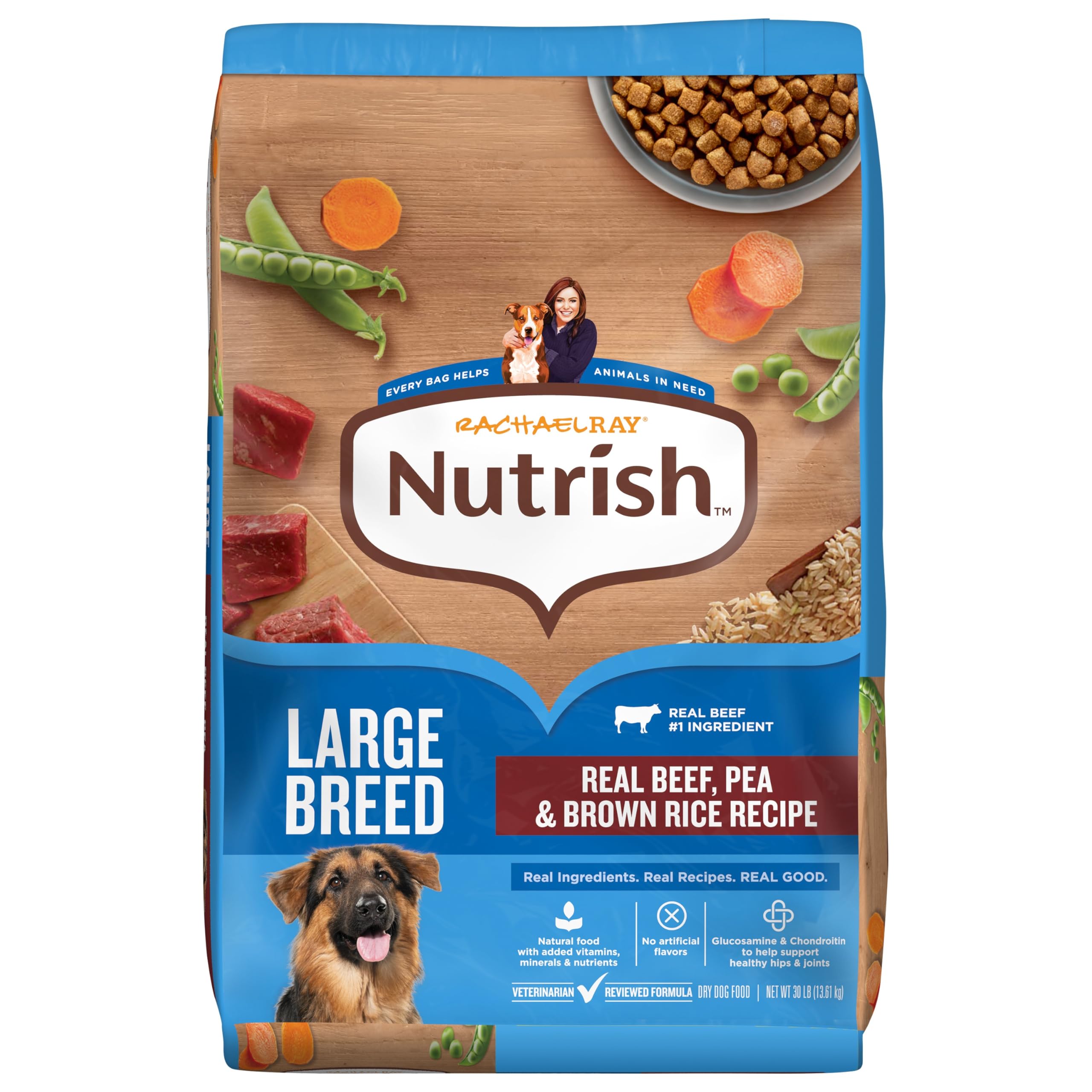
Nutrish delivers a surprisingly robust nutrient package for the lower price tier, with real beef listed as the first ingredient and glucosamine and chondroitin explicitly added for hip and joint support. The 30-lb bag feeds a 70-lb Golden Retriever for about a month, making it one of the most affordable large-breed options that still includes targeted joint nutrients. The beef, pea, and brown rice base omits corn and wheat, which reduces the risk of filler-related digestive upset.
The guaranteed analysis shows 26% protein and 14% fat — nearly identical to the premium formulas in terms of macronutrient ratios. The primary difference is the fat source (chicken fat rather than salmon oil) and the absence of probiotics or prebiotics. For a golden with no existing joint pain or digestive issues, this formula meets the breed’s core nutritional needs at a fraction of the cost of veterinary-exclusive brands.
Customer feedback consistently highlights palatability — multiple owners reported that their picky eaters cleaned the bowl after rejecting more expensive foods. An English Mastiff owner with three large dogs tested this food and found it gentle on stomachs, though they ultimately chose a different brand for personal preferences. The main limitation is the lack of breed-specific kibble shape; the chunk size is uniform but not designed to slow eating or encourage chewing as the Royal Canin kibble does.
Why it’s great
- Real beef as first ingredient at a budget-friendly price per pound
- Added glucosamine and chondroitin for joint support
- No corn, wheat, or artificial flavors reduces allergy triggers
Good to know
- Kibble shape not breed-specific — may not slow fast eaters
- Chicken fat is the primary fat source, not fish oil for omega-3
- No probiotics included for digestive microbiome support
5. IAMS Proactive Health Adult Large Breed Beef & Rice Recipe
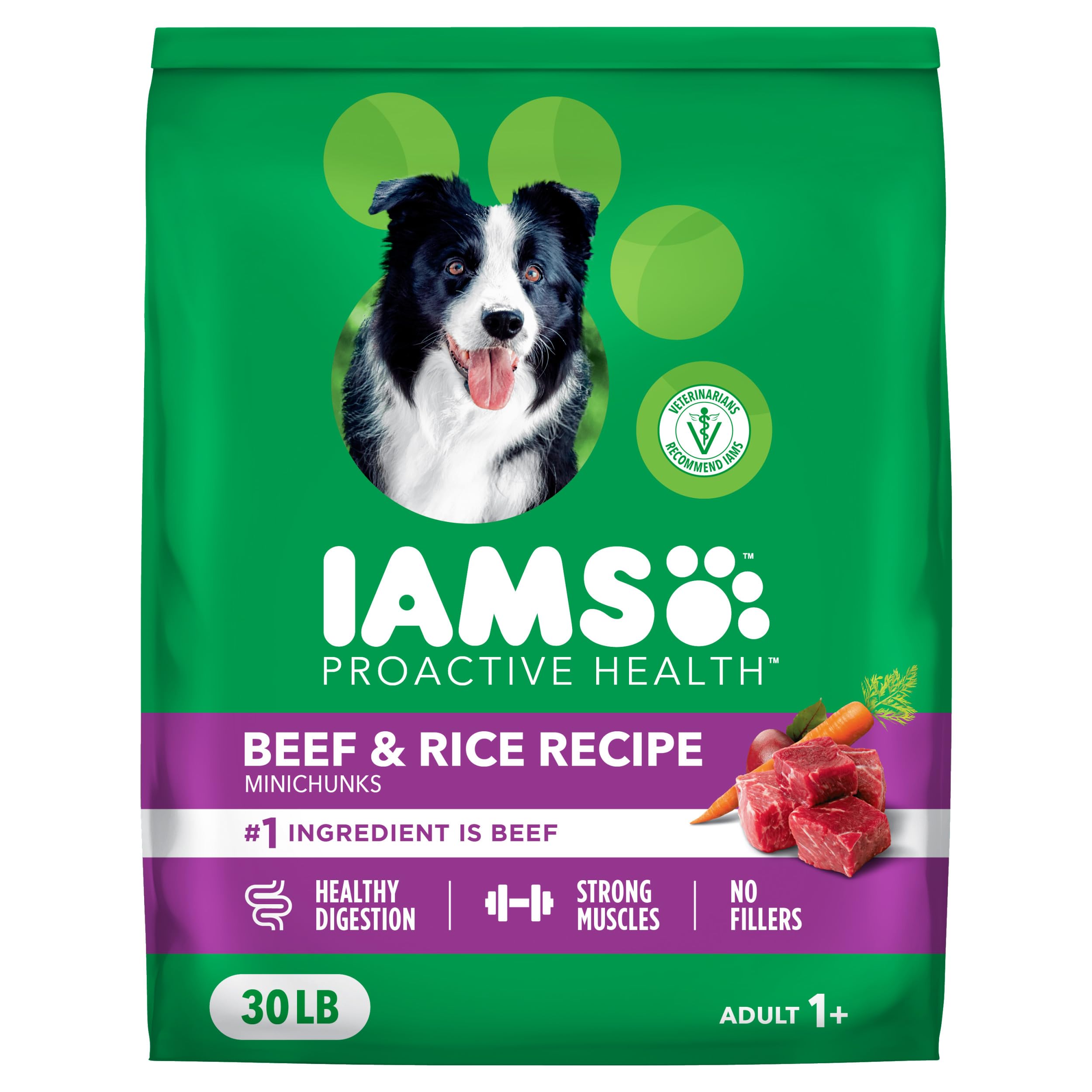
IAMS Proactive Health sets itself apart with optimal calcium levels specifically formulated for large-breed skeletal health, along with natural sources of glucosamine and chondroitin derived from beef and egg protein. The kibble size is designed for larger jaws, providing moderate chewing resistance that helps scrape tartar. The beef and rice base is simple and avoids the corn and soy that often trigger flatulence and loose stools in sensitive retrievers.
The formula delivers 22% protein and 12% fat, which is slightly leaner than the other entries on this list. For a less active golden or one that is prone to weight gain, this lower fat content helps maintain a healthy body condition score. The Association of American Feed Control Officials (AAFCO) approval ensures the nutrient profile is complete and balanced for adult maintenance. Egg protein adds additional taurine and lecithin for heart and coat health.
Veterinarians recommend IAMS as a reliable over-the-counter option for large breeds, and customer reviews reflect consistent satisfaction with the beef and rice flavor. One small-dog owner even noted that their Yorkie happily ate this food alongside larger breeds, indicating high palatability across sizes. The main consideration is the protein level: at 22%, it may be too low for highly active field retrievers or those doing regular agility work. This is best suited for a standard pet golden with moderate daily exercise.
Why it’s great
- Calcium levels optimized for large-bone skeletal development
- Natural glucosamine and chondroitin from protein sources
- Lower fat content ideal for weight-prone adult retrievers
Good to know
- 22% protein may be insufficient for high-activity working dogs
- No added probiotics or prebiotics for digestive health
- Some dogs may prefer higher-fat recipes for coat shine
FAQ
What protein percentage is ideal for an adult Golden Retriever?
Should I choose chicken or beef as the primary protein source?
How much glucosamine does a Golden Retriever need daily?
Can I feed grain-free food to my Golden Retriever?
At what age should I switch from puppy to adult food?
Final Thoughts: The Verdict
For most owners, the best dog food for golden retrievers winner is the Royal Canin Size Health Nutrition Large Adult because it delivers breed-specific kibble shape, precise mineral ratios for joint support, and clinically proven digestibility that reduces the digestive issues common in this breed. If you want weight management plus joint protection in one bag, grab the Hill’s Science Diet Perfect Weight & Joint Support. And for a budget-friendly option that includes glucosamine and real beef as the first ingredient, the Nutrish Rachael Ray Large Breed Recipe gives you the core nutritional foundation without the premium price tag.

Mo Maruf
I created WellFizz to bridge the gap between vague wellness advice and actionable solutions. My mission is simple: to decode the research and give you practical tools you can actually use.
Beyond the data, I am a passionate traveler. I believe that stepping away from the screen to explore new environments is essential for mental clarity and physical vitality.