Our readers keep the lights on and my smoothie glass nicely filled. As an Amazon Associate, I earn from qualifying purchases.
Watching your dog’s vision cloud over is one of the harder parts of caring for a senior pet. Cataracts don’t just dim their sight—they change how confidently your dog moves through the house, greets you at the door, or navigates the yard. The right nutritional support and topical care can slow that progression and support the lens clarity that keeps your dog active and aware.
I’m Mohammad Maruf — the founder and writer behind WellFizz. I spend my time analyzing veterinary ophthalmology protocols, grading supplement purity, and comparing antioxidant profiles to find the formulations that actually deliver measurable support for canine vision.
After combing through dozens of products and hundreds of verified owner reports, this guide to the best dog cataract eye drops isolates the five formulas that offer real nutritional backing for lens health, tear quality, and retinal protection.
How To Choose The Best Dog Cataract Eye Drops
Cataracts in dogs develop when the lens proteins denature and clump together, blocking light from reaching the retina. No drop reverses that damage, but the right combination of antioxidants and fatty acids can slow oxidation and support the surrounding eye structures. You need to look at three areas: the antioxidant payload, the form of administration, and whether the formula addresses secondary issues like dry eye or tear stain buildup that often accompany cataract progression.
Antioxidant Density and Bioavailability
Lutein, zeaxanthin, and astaxanthin are the three carotenoids most studied for lens and retinal support. Lutein accumulates in the lens and macula, filtering blue light and quenching free radicals. Zeaxanthin works alongside it in the central retina. Astaxanthin crosses the blood-retinal barrier more efficiently than any other carotenoid. A good cataract supplement lists specific milligram amounts of at least two of these, not just a proprietary blend.
Topical Versus Systemic Delivery
Eye drops provide direct moisture and surface-level soothing but cannot penetrate the lens capsule at therapeutic levels. They help manage irritation and secondary discharge. Oral chews or gelcaps deliver nutrients through the bloodstream to the lens and retina. For true cataract support, systemic supplementation is the primary lever; drops play a supporting role for comfort and hygiene.
Purity and Ingredient Sourcing
Avoid formulas with artificial preservatives, corn syrup, or unnamed filler oils. Look for non-GMO sourcing, vitamin E as natural d-alpha tocopherol, and omega-3s from fish oil or algae oil rather than vegetable sources. If a brand does not list the exact amount of lutein or astaxanthin per serving, assume the dose is too low to produce a measurable effect.
Quick Comparison
On smaller screens, swipe sideways to see the full table.
| Model | Category | Best For | Key Spec | Amazon |
|---|---|---|---|---|
| NOVEHA Golden Age Eyesight Chews | Soft Chew | Senior dogs needing zinc & astaxanthin | 90 chews, zinc-enriched, astaxanthin included | Amazon |
| Ocu-GLO Vision Supplement Small Dogs | Liquid Gelcap | Vet-recommended cataract protocol | 45 gelcaps, 12 antioxidants, grape seed extract | Amazon |
| Nutridog Vision Support Soft Chews | Soft Chew | Multi-pet households, tear stain defense | 120 chews, cod liver oil, DHA from algae | Amazon |
| Kinpur Clear Vision Eye Vitamins | Soft Chew | Picky seniors with dental issues | 120 chews, duck flavor, beta-carotene added | Amazon |
| PetSilver Eye Drops for Dogs & Cats | Topical Solution | Gentle eye wash for daily comfort | 4 oz, chelated silver, no alcohol or preservatives | Amazon |
In‑Depth Reviews
1. NOVEHA Golden Age Eyesight Chews
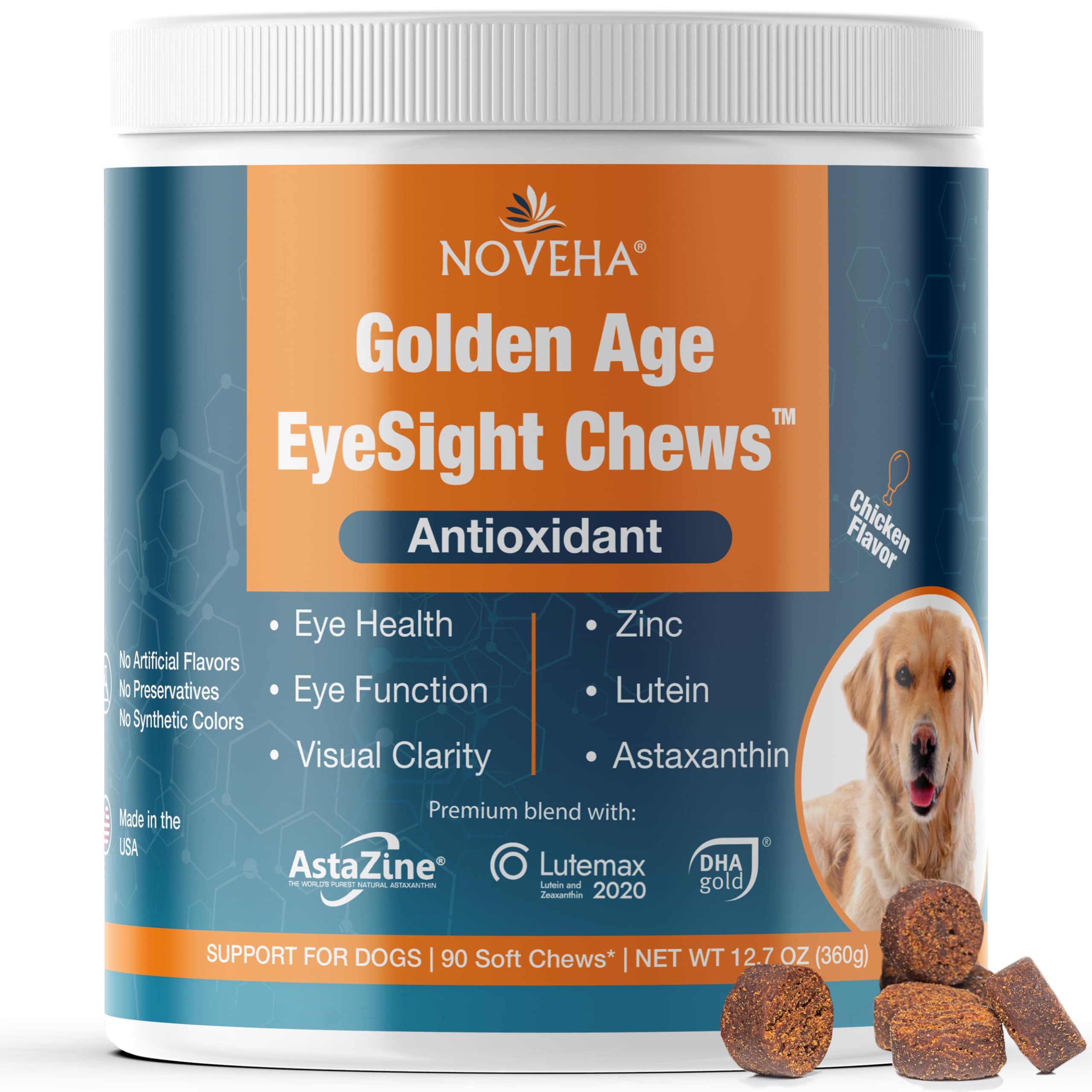
NOVEHA packs 90 soft chews with a targeted blend of lutein, astaxanthin, and zinc—each selected for its role in retinal metabolism and antioxidant defense. Zinc is often underdosed in pet vision chews, but here it appears at a level that supports enzyme function in the retinal pigment epithelium. Astaxanthin provides the broadest free-radical scavenging of the carotenoid family, making this formula particularly strong for dogs already showing early lens opacity.
Owners of senior and special-needs rescue dogs report noticeable improvements in eye clarity and comfort within four to six weeks. The chicken flavor masks any bitterness well, and the soft texture works for dogs with reduced chewing ability. A few users note a mild chemical aroma compared to simpler treats, but dogs accept them readily once accustomed.
This is a premium-tier chew that prioritizes active ingredient density over filler volume. For an owner seeking a daily systemic supplement specifically formulated to slow cataract progression, this is the most complete option on this list.
Why it’s great
- Zinc supports retinal enzyme function alongside lutein and astaxanthin
- 90 chews per container for extended daily use
- Made in USA with no toxic fillers
Good to know
- Some dogs need 7–10 days to adjust without digestive upset
- Mild chemical odor compared to simpler treat formulas
2. Ocu-GLO Vision Supplement for Small Dogs
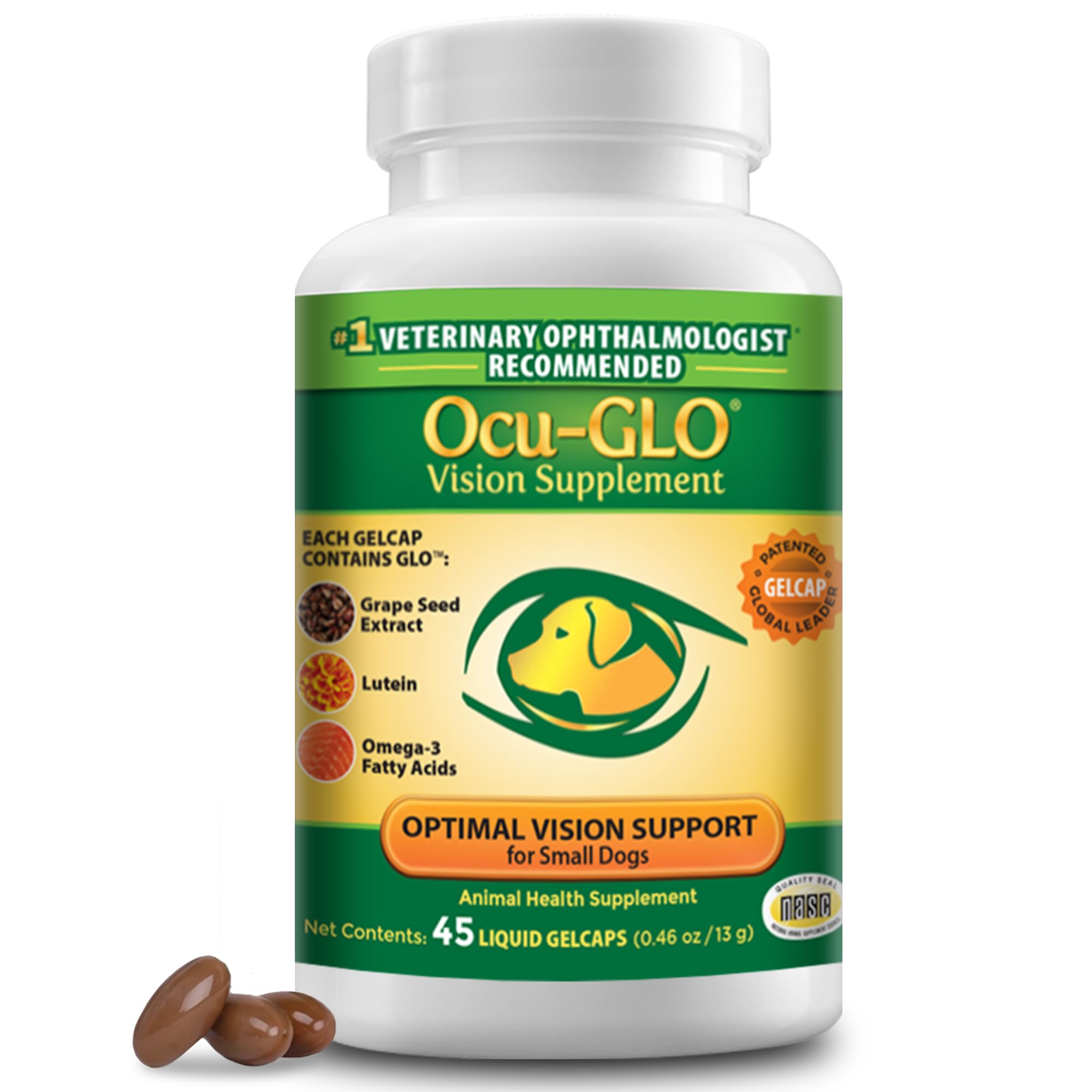
Ocu-GLO is the product most frequently recommended by board-certified veterinary ophthalmologists, and for good reason. Each liquid gelcap delivers 12 antioxidants including grape seed extract, lutein, and zinc in a base of omega-3 fatty acids. The gelcap format allows you to puncture the soft shell and squeeze the oil onto wet food, which solves the refusal problem many owners face with pills or chews.
Owner feedback consistently cites measurable results: reduced ocular discharge, improved lens clarity, and slowed cataract advancement in dogs as old as 15 years. The unflavored oil blends seamlessly into food, so pickiness is rarely an obstacle. This bottle contains 45 gelcaps, which at one per day means a 45-day supply—a shorter cycle than the 90-count chews, but the potency per dose is higher.
If your vet has recommended a specific cataract protocol or if you want the formulation with the strongest clinical backing, this is the supplement to choose. The price per dose sits at the premium end, but the ingredient transparency and veterinary endorsement justify the investment.
Why it’s great
- Veterinarian-recommended formula with 12 antioxidants
- Liquid gelcap can be snipped and mixed into wet food
- Grape seed extract provides additional capillary support for eye tissue
Good to know
- 45-count supply requires repurchase more frequently
- Slightly higher per-dose cost than chewable alternatives
3. Nutridog Vision Support Soft Chews
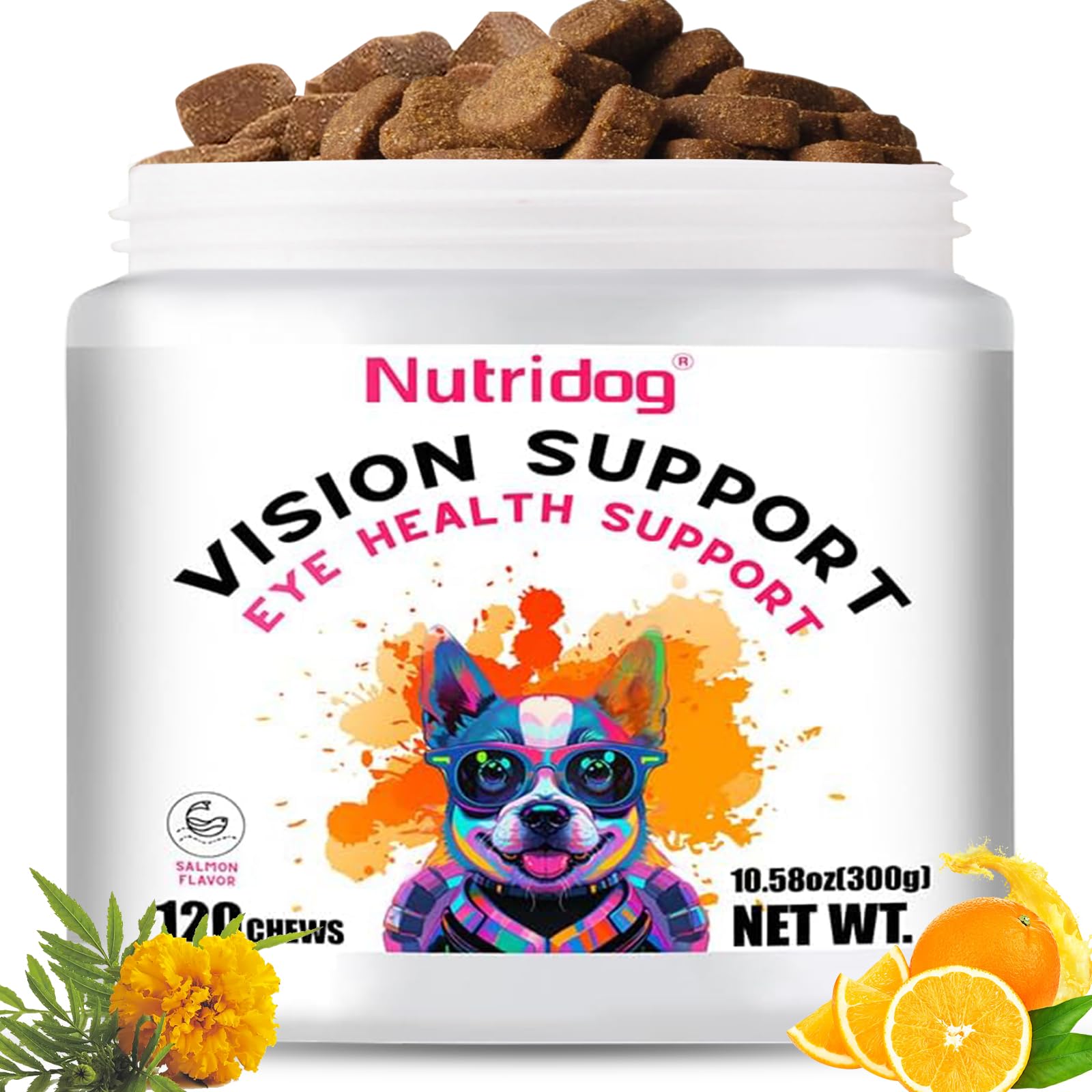
Nutridog’s 120-count jar delivers the highest serving volume on this list, making it the smartest choice for multi-pet households or owners who want uninterrupted daily supplementation. The formula includes cod liver oil for omega-3s, plus DHA from algae, bilberry extract, lutein, zeaxanthin, and astaxanthin. Cod liver oil also provides natural vitamin A, which supports corneal health directly.
Several owners of senior dogs report that the cloudiness in their pets’ eyes visibly cleared after several weeks on these chews. The salmon flavor is well-accepted even by picky eaters, and the soft texture works for dogs with dental issues. Some users note that tear stain reduction is marginal on its own, but that’s expected—this is a systemic antioxidant supplement, not a topical stain remover.
For the price per chew, you get a broader antioxidant profile than most competitors offer. It strikes a strong balance between ingredient density and affordability, making it a realistic long-term option for owners managing cataract risk in aging dogs.
Why it’s great
- 120 chews per jar for multi-pet or long-term use
- Cod liver oil supplies natural vitamin A for cornea support
- Includes DHA from algae, lutein, zeaxanthin, and astaxanthin
Good to know
- Tear stain reduction benefits are inconsistent
- Brown stains on white coats may persist despite use
4. Kinpur Clear Vision Eye Vitamins
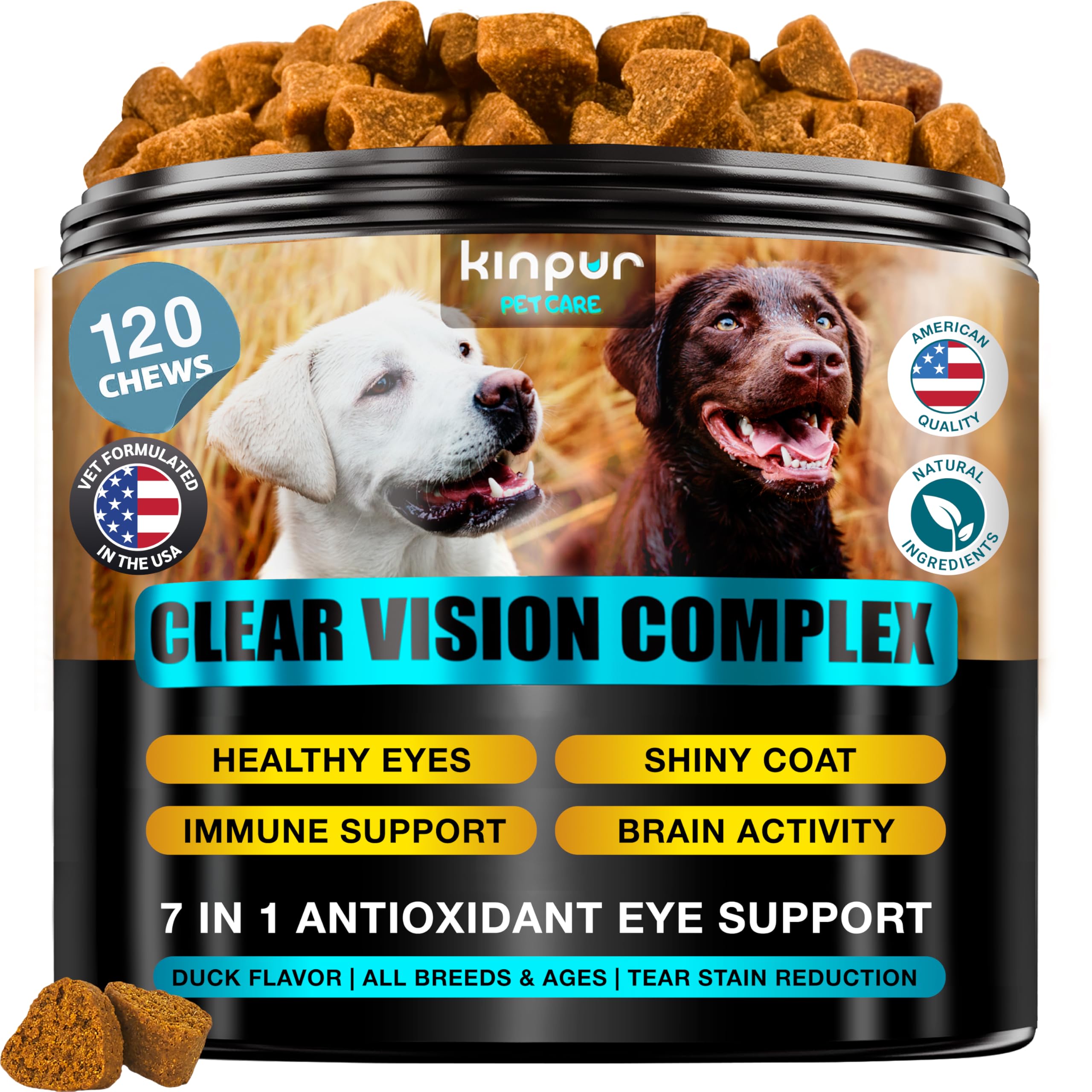
Kinpur’s Clear Vision chews are built around a 4-in-1 antioxidant stack: lutein, lycopene, beta-carotene, and vitamin C, supported by DHA fish oil. Lycopene is an unusual addition in canine eye supplements—it targets oxidative stress in the lens differently than lutein, making this a useful option for dogs whose cataracts are progressing rapidly. The duck and carrot flavor is notably savory, which helps with picky eaters who reject fish-based treats.
Senior dog owners report that these chews act almost like a multivitamin, with secondary benefits in coat softness and joint mobility. One reviewer noted improvement in recurring corneal ulcers after starting the supplement. The soft texture accommodates dogs with few or no teeth, and the 120-count supply supports consistent daily use without frequent reordering.
The main drawback is that the formula has generated relatively few direct reports of cataract regression compared to the higher-antioxidant-density options. It works best as a maintenance supplement for dogs in early cataract stages or for overall ocular health in aging pets.
Why it’s great
- Lycopene adds a unique antioxidant pathway beyond standard lutein formulas
- Duck flavor appeals to dogs that refuse salmon or chicken
- 120-count supply supports long-term daily use
Good to know
- Price has increased notably on the market
- Fewer cataract-specific success stories compared to higher-dose competitors
5. PetSilver Eye Drops for Dogs and Cats
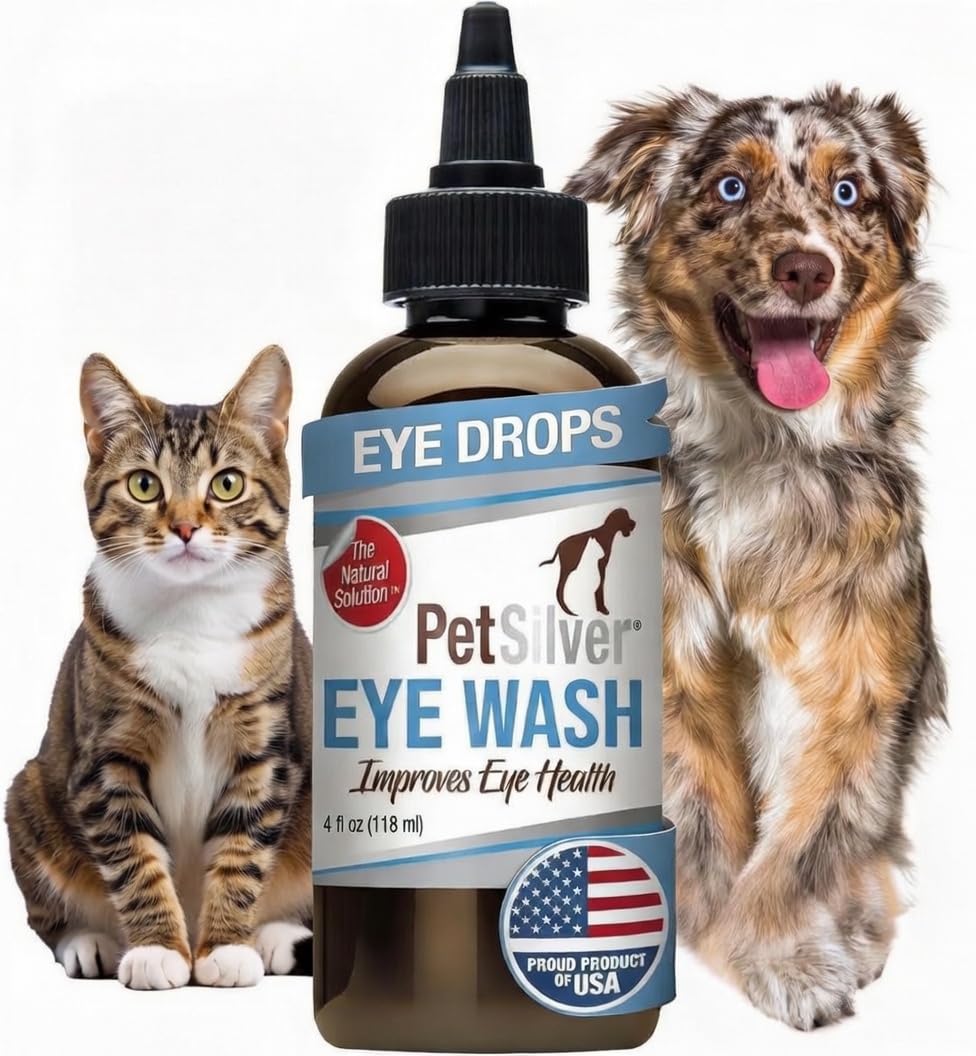
PetSilver is not a cataract-treatment drop in the therapeutic sense—no topical solution reverses lens opacity—but it serves an important supporting role. The chelated silver formulation acts as a gentle antimicrobial wash that flushes irritants, reduces tear stain buildup, and soothes surface inflammation that often accompanies dry eyes in dogs with cataracts. The ingredient list is just two items: chelated silver and distilled water. No alcohol, preservatives, or artificial scents.
Owners of breeds prone to eye discharge, such as Pugs and Yorkies, report fewer infections and easier daily cleaning when using this wash twice daily. One reviewer with a cat noted full resolution of a severe eye infection when using PetSilver alongside an antibiotic ointment. The twist-cap bottle delivers a stream rather than individual drops, which some owners find messy—but for flushing purposes, the stream design is effective.
Use PetSilver as a hygiene adjunct to your dog’s systemic cataract supplement. It keeps the eye surface clean and comfortable while the oral antioxidants address lens health from within. Avoid using it if your dog has a corneal ulcer or open sore on the eye.
Why it’s great
- Only two ingredients: chelated silver and distilled water
- Reduces tear stain buildup and surface irritation
- Safe for daily use up to three times per day
Good to know
- Squeeze bottle dispenses excess product—not a precision dropper
- Cannot treat cataracts directly; supports comfort and hygiene only
FAQ
Can eye drops reverse cataracts in dogs?
How long before I see improvement with a vision supplement?
What breeds benefit most from cataract supplements?
Final Thoughts: The Verdict
For most users, the dog cataract eye drops winner is the NOVEHA Golden Age Eyesight Chews because they deliver zinc, lutein, and astaxanthin in a soft chew format that senior dogs accept easily. If you want the strongest clinical backing and veterinarian endorsement, grab the Ocu-GLO Vision Supplement. And for long-term affordability in a multi-pet home, nothing beats the value of the Nutridog Vision Support Soft Chews.

Mo Maruf
I created WellFizz to bridge the gap between vague wellness advice and actionable solutions. My mission is simple: to decode the research and give you practical tools you can actually use.
Beyond the data, I am a passionate traveler. I believe that stepping away from the screen to explore new environments is essential for mental clarity and physical vitality.