Our readers keep the lights on and my smoothie glass nicely filled. As an Amazon Associate, I earn from qualifying purchases.
If you share your home with a short-haired dog, you know the paradox: the coat is low-maintenance, yet loose fur seems to magnetize itself to every sofa cushion, dark pair of pants, and carpet fiber in sight. The right brush doesn’t just collect that hair—it reaches the dense undercoat that standard bristle brushes glide right over, drastically cutting down on the tumbleweeds of fur rolling across your floor.
I’m Mohammad Maruf — the founder and writer behind WellFizz. I’ve spent hundreds of hours analyzing grooming tool specifications, blade geometries, and customer feedback to separate marketing claims from real-world performance in this specific category.
Whether you’re dealing with a heavy-shedding dachshund or a pit bull that leaves a fur coat on the couch daily, finding the right tool is key. This guide focuses entirely on the dog brush for short hair and highlights the five top-rated models that actually deliver on their promises.
How To Choose The Best Dog Brush For Short Hair
Short-haired dogs — such as beagles, boxers, bulldogs, and pit bulls — shed seasonally and year-round, but their hair lies flat against the skin, making it difficult for generic brushes to lift the loose undercoat. The wrong brush can scrape the skin or fail to penetrate the topcoat, leaving the shed hair trapped underneath. Here are the three critical factors that separate an effective tool from a frustrating one.
Blade Material and Edge Design
Stainless steel is the standard for de-shedding tools because it holds a sharp enough edge to cut through loose undercoat without snagging healthy guard hairs. Look for rounded or smooth-edged teeth — blunt tips prevent skin irritation. The edge length matters: a 2.5-inch blade works well on medium short coats, while longer edges can be cumbersome on small dogs. Avoid plastic-toothed combs that bend and fail to actually remove the dense undercoat.
Tooth Spacing and Grip Comfort
Short-haired breeds require teeth that are close enough together to trap fine hairs but not so tight that they pull on the topcoat. A spacing of roughly 1 to 1.5 millimeters is ideal for most short coats. The handle should have an ergonomic, slip-resistant grip — grooming sessions can last 10-15 minutes, and a wet or slick handle leads to accidental pressure that can scrape the skin. Rubberized or textured silicone handles offer the best control.
Versatility: Wet vs. Dry Use
Some tools, like silicone curry brushes, work both as a de-shedder during dry brushing and as a lather applicator during bath time. Others, like stainless steel razors, are strictly for dry coats. If your dog tolerates baths, a dual-purpose tool can reduce the number of grooming products you need to buy. However, for maximum shedding reduction, a dedicated dry-coat de-shedding tool typically outperforms a multi-use brush.
Quick Comparison
On smaller screens, swipe sideways to see the full table.
| Model | Category | Best For | Key Spec | Amazon |
|---|---|---|---|---|
| Warren London Deshedding Brush | Premium | Medium short-coat breeds | 2.5-inch stainless steel edge | Amazon |
| EasyGroomer EquiGroomer | Premium | Both short & long hair pets | Wave-style hardened steel blade | Amazon |
| Freshly Bailey Deshedding Brush | Mid-Range | Short to medium haired pets | Anti-slip plastic handle | Amazon |
| Sinko Deshedding Tool | Mid-Range | Double-sided rake comb | 5.31 x 4.13 x 1.97 inches | Amazon |
| Freshly Bailey Rubber Curry Brush | Budget-Friendly | Bath time & dry deshedding | 5.29 oz silicone construction | Amazon |
In‑Depth Reviews
1. Warren London Deshedding Brush
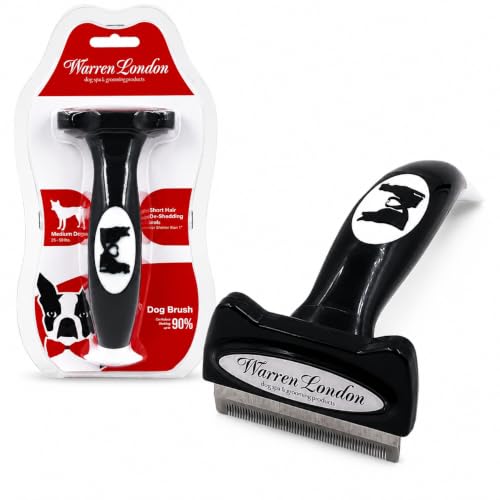
The Warren London brush is specifically engineered for medium, short-haired breeds like boxers, beagles, and bulldogs. Its 2.5-inch stainless steel edge is the defining spec here — it’s wide enough to cover larger body panels quickly but compact enough to maneuver around legs and the belly without poking. The rounded teeth glide through the topcoat and lift the loose undercoat without cutting healthy guard hairs, which is the precise failure point of cheaper plastic-toothed tools.
Users with pit bulls and dachshund mixes report that this is the only brush that actually works on their dog’s coat, even when used wet or dry. The handle is lightweight at just over 6 ounces, and the non-slip rubber grip gives you steady control during the long strokes needed to de-shed a shedding-heavy breed. The blade wipes clean in seconds — there are no buttons or fragile release mechanisms to break.
Compared to premium brands that cost double, the Warren London removes just as much undercoat without the premium price tag. One reviewer switched from a Furminator and noted this brush was easier to use and gentler on their dog’s skin. It’s a precise, durable tool that targets the exact problem of short-coat shedding.
Why it’s great
- Rounded stainless steel teeth prevent skin irritation
- Wide 2.5-inch blade covers large areas quickly
- Lightweight at 6.24 ounces with non-slip grip
Good to know
- Blade is fixed — no replaceable cartridge
- Best for medium-sized short-coat dogs; may be too wide for tiny breeds
2. EasyGroomer EquiGroomer

The EquiGroomer stands out for its wave-style hardened steel blade — a unique geometry that differs from the straight edge of most de-shedding tools. This wave pattern effectively traps both long and short loose hairs in a single pass, reducing the number of strokes needed. The blade is coated with epoxy to resist rust, a direct benefit for pet owners in humid climates or who occasionally use the tool after a damp bath.
The handle is made from lacquered wood with a thumb groove and slip-resistant design, giving it a premium feel that the all-plastic competition lacks. At roughly 4.5 out of 5 stars from over 14,000 ratings, it’s the most-reviewed tool in this guide. Cat owners in particular praise it for being tolerated by even the most brush-averse felines — one cat purred through an entire session. It’s recommended for dry coats only, and best results come during peak shedding seasons.
Some users note that on long-coated dogs like shelties, it doesn’t reach the deep undercoat effectively. But for short-haired cats and dogs, it pulls a shocking amount of fur without scraping the skin. The blade is sturdy enough to handle heavy-handed brushing, though a gentle touch is always advised to avoid over-grooming.
Why it’s great
- Wave-style blade traps more hair per stroke
- Epoxy coating resists rust and corrosion
- Ergonomic thumb groove handle for secure grip
Good to know
- Not for daily use — only removes shedding fur
- Can cause static flyaway hairs in very dry conditions
3. Freshly Bailey Deshedding Brush

The Freshly Bailey de-shedding brush brings the same core promise — reducing shedding by up to 95% — as tools that cost three times as much, making it a strong mid-range contender. It’s designed specifically for short to medium-haired pets, and its oblong plastic body features a slip-proof handle that arthritic hands can grip comfortably. The plastic bristles are firm but not sharp, which is important for dogs that flinch at metal contacts.
Owners of lab/pyrenees mixes and pit bulls report that it removes all dead hair and flakes in about two to three sessions per week. The comb’s head disassembles for easy storage and cleaning, a thoughtful touch that prevents fur from compacting around the hinge. One reviewer who previously spent on a PetSmart brand noted that this brush was easier to hold and didn’t bother their dogs during grooming.
The major trade-off is the plastic bristle material — while gentle, it won’t penetrate a heavy undercoat as deeply as a stainless steel blade. For dogs with moderate shedding and short coats, however, it delivers the same results at a significant cost savings. It’s best for owners who want an effective, comfortable tool without paying a premium for metal components.
Why it’s great
- Anti-slip handle great for arthritis sufferers
- Disassembles for compact storage
- Dogs tend to tolerate plastic bristles better
Good to know
- Plastic bristles less effective on very thick double coats
- May require more passes than a steel-blade tool
4. Sinko Deshedding Tool
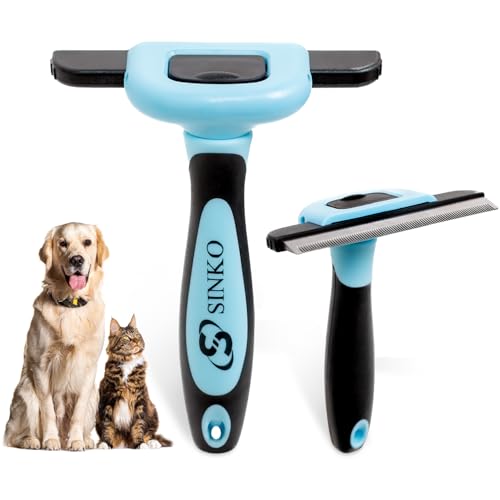
The Sinko tool takes a different approach — instead of a single edge, it features a double-sided deshedding rake comb with stainless steel blades. This allows you to switch between a finer rake for lighter grooming and a coarser side for heavier undercoat removal without swapping tools. The detachable head clicks on and off easily, and the rubber and metal construction feels durable in hand at just over 4 ounces.
Users with thick double-coated dogs like German Shepherds and Huskies report that this rake removes far more loose fur than their previous slicker brushes, without tugging or irritating the skin. One reviewer noted the ergonomic handle made grooming less fatiguing. However, a caution emerged in multiple reviews: because the stainless steel blades are sharp, you should use a gentle, slow stroke — applying pressure can cause pulling on short-haired dogs.
The manufacturer explicitly recommends brushing every 2-3 days, not daily, to avoid over-grooming. This makes it a specialized tool best suited for heavy shedders during peak seasons rather than a daily maintenance comb. It’s a solid mid-range option for owners who want the raw cutting power of steel but prefer adjustable raking density.
Why it’s great
- Double-sided rake for fine and coarse grooming
- Detachable head for easy cleaning
- Sturdy rubber and metal build
Good to know
- Sharp blades require slow, gentle strokes
- Not recommended for everyday use
5. Freshly Bailey Rubber Curry Brush
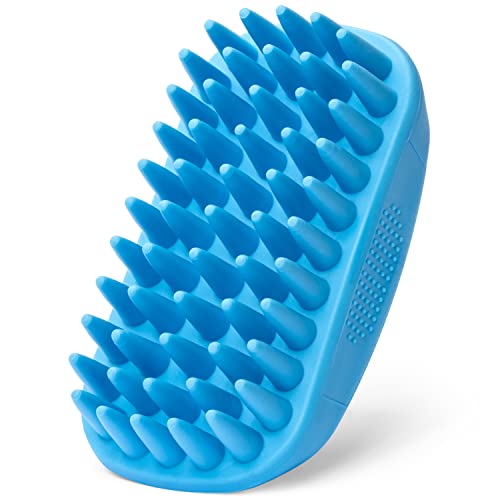
The Rubber Curry Brush is the entry-level, dual-purpose option in this guide, designed to work both as a dry de-shedder for short coats and as a lather tool during bath time. Its silicone rubber tips create a massaging effect that most dogs find calming, making it especially useful for pets that hate traditional metal brushes. At 5.29 ounces, it’s heavier than it looks, which translates to a solid, satisfying feel when working through a soapy coat.
Owners of Great Danes and other short-haired giants report that the brush removes a surprising amount of loose hair when used dry, though it works best on short to medium coats — it lacks the edge to penetrate longer or thicker double coats. The rubber tips are gentle enough that even cats tolerate it, and users with elderly dogs appreciate the soft pressure. One creative reviewer used it with dry shampoo when their dog had ear tubes, avoiding water while still de-shedding effectively.
The main downside is cleaning: fur tends to get trapped in the rubber nubs and can be slightly tedious to pick out. Also, while it’s effective for daily maintenance and deshedding at bath time, it won’t remove the deep undercoat like a stainless steel rake. For owners who prioritize a calming grooming experience and bath-time utility over sheer hair removal volume, it’s a fantastic entry-level choice.
Why it’s great
- Massaging effect soothes anxious pets
- Works as both a brush and bath lather tool
- Firm yet gentle on sensitive skin
Good to know
- Fur can be tricky to clean out of rubber tips
- Less effective for deep undercoat removal
FAQ
Can I use a de-shedding brush on a short-haired dog every day?
What is the difference between a slicker brush and a de-shedding tool?
Why does my short-haired dog still shed after using a regular brush?
Final Thoughts: The Verdict
For most users, the dog brush for short hair winner is the Warren London Deshedding Brush because its 2.5-inch stainless steel edge delivers maximum coverage without irritating your dog’s skin. If you want a versatile tool that works on both cats and dogs, grab the EasyGroomer EquiGroomer. And for a gentle, budget-friendly option that doubles as a bath brush, nothing beats the Freshly Bailey Rubber Curry Brush.

Mo Maruf
I created WellFizz to bridge the gap between vague wellness advice and actionable solutions. My mission is simple: to decode the research and give you practical tools you can actually use.
Beyond the data, I am a passionate traveler. I believe that stepping away from the screen to explore new environments is essential for mental clarity and physical vitality.