Our readers keep the lights on and my smoothie glass nicely filled. As an Amazon Associate, I earn from qualifying purchases.
Installing a mini split usually means a pricey HVAC contractor visit, but a new wave of ductless systems is changing the math for homeowners who can handle copper lines and electrical work themselves. The right pre-charged unit with a detailed manual turns a weekend project into permanent, zoned comfort without the overhead of central ductwork.
I’m Mohammad Maruf — the founder and writer behind WellFizz. I spend my time analyzing hardware specifications, SEER ratings, real-world customer failure points, and installation complexity to separate the systems that genuinely support a DIY install from those that still demand a technician’s vacuum pump.
This guide cuts through the marketing to compare pre-charged linesets, inverter efficiency, included installation kits, and warranty structures across the top contenders so you can confidently choose the right do it yourself mini split system for your space.
How To Choose The Best Do It Yourself Mini Split System
The most common mistake DIY buyers make is assuming a “pre-charged” unit is truly plug-and-play. In reality, you still need to evacuate the line set with a vacuum pump to remove moisture and air before releasing the refrigerant — skipping this step kills compressor life fast. Focus on units with clear, step-by-step installation support and a compatible installation kit that includes a full-length insulated copper line set, communication wire, and drain extension. Also, confirm the outdoor condenser is within reach of a standard 15- or 20-amp dedicated circuit to avoid expensive electrical panel upgrades.
BTU Capacity vs. Square Footage
Oversizing is the silent efficiency killer. A 12,000 BTU unit comfortably handles up to 550 square feet, while an 18,000 BTU model covers roughly 800–1,000 square feet depending on insulation and ceiling height. Higher BTU ratings don’t automatically mean better performance — a unit that’s too large will short-cycle, fail to dehumidify properly, and wear out its inverter compressor prematurely. Measure your room’s exact dimensions and use the manufacturer’s floor area rating as a hard ceiling, not a suggestion.
Quick Comparison
On smaller screens, swipe sideways to see the full table.
| Model | Category | Best For | Key Spec | Amazon |
|---|---|---|---|---|
| MRCOOL Easy Pro 18K | Premium DIY | True plug-and-play install | Pre-charged for 25 ft lineset | Amazon |
| Senville LETO 18K 230V | Premium | HVAC-proved reliability | 128°F heat output at 33°F outdoor | Amazon |
| DELLA Econo 23K | Mid-Range | Large spaces up to 1500 sq ft | 4D airflow / 23,000 BTU | Amazon |
| Cooper & Hunter 18K 230V | Mid-Range | Quiet, consistent comfort | 19.2 SEER2 / Smart Kit included | Amazon |
| Senville LETO 12K 110V | Mid-Range | 120V plug-in flexibility | 20.8 SEER2 / 12,000 BTU | Amazon |
| DELLA Vario 12K | Mid-Range | Small rooms, tiny homes | 23 SEER2 / 28 dB noise level | Amazon |
| ActiveTrail 18K | Budget-Friendly | Cost-conscious buyers | 21 SEER2 / WiFi + Voice | Amazon |
| ROVSUN 18K WiFi | Budget-Friendly | Garages and workshops | 32 dB mute mode / 20 SEER2 | Amazon |
| Mountman 18K | Budget-Friendly | Entry-level ductless cooling | 19 SEER / 26 dB quiet mode | Amazon |
In‑Depth Reviews
1. MRCOOL Easy Pro Series 18,000 BTU
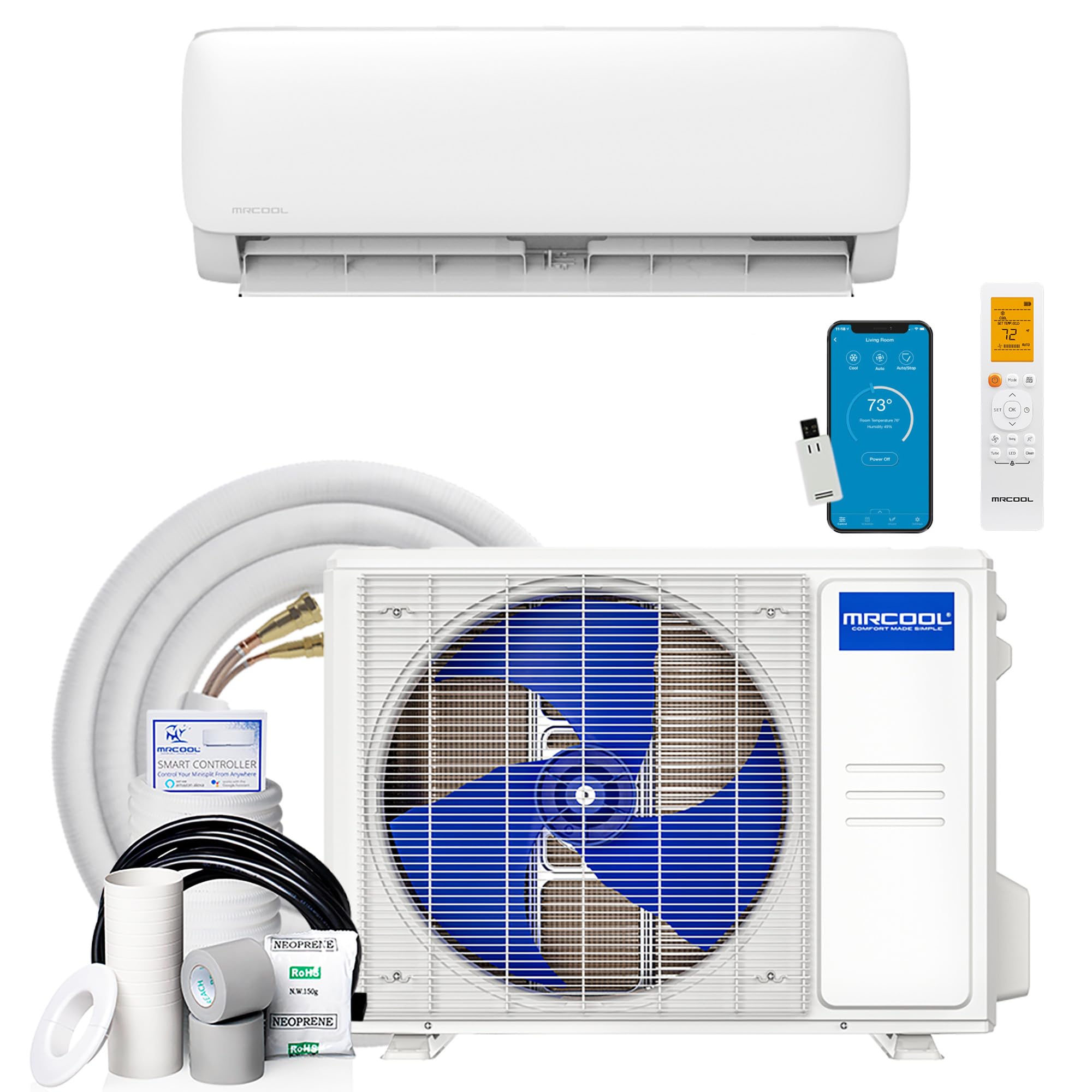
MRCOOL’s Easy Pro series lives up to its name with a pre-charged system that ships with enough refrigerant for a 25-foot line set — no additional charging required after vacuum and leak check. The 18,000 BTU capacity comfortably handles up to 800 square feet, and customers consistently report half-day installations when following the included step-by-step manual and YouTube tutorials. The inverter compressor ramps smoothly rather than cycling on and off, which translates to stable temperatures and noticeably lower monthly operating costs compared to traditional window units.
The wall-mounted air handler delivers a clean, low-profile look that blends into living spaces or home offices, and the remote control offers 4-in-1 mode switching (cool, heat, fan, dry) plus a 24-hour timer. Several reviewers noted the unit dramatically reduced electric heating bills — one reported dropping from to per month in a 2,600-square-foot home. The system arrives in two boxes; the outdoor condenser is heavy, so having a helper for mounting is recommended.
Warranty is 5 years on the compressor, though some users experienced difficulty with customer service response times on defective units. Despite a few isolated quality complaints, the overwhelming consensus points to a reliable, energy-efficient system that genuinely supports a DIY mindset without requiring a professional HVAC license to complete the install.
Why it’s great
- Pre-charged for up to 25 ft line set simplifies DIY installation
- Inverter compressor delivers consistent temperatures and energy savings
- Clean wall-mounted design fits home and commercial spaces
Good to know
- Requires two people to mount the heavy outdoor condenser safely
- Some users report inconsistent customer support for warranty claims
2. Senville LETO Series 18,000 BTU 230V

The Senville LETO 18K is a favorite among repeat buyers — several reviewers reported owning 8 or more units across multiple properties. The 18,000 BTU model operates on 208/230V and achieves a 19 SEER2 rating, delivering fast temperature response and surprisingly strong heat output: in 33°F outdoor conditions, the indoor unit was measured blowing 128°F air. The included 16-foot line set is pre-charged for up to 25 feet, but you still need to vacuum the lines before opening the service valves.
Noise levels are a standout — the outdoor condenser is nearly inaudible from inside, and the indoor unit produces only a gentle airflow sound. The 4-in-1 functionality (cool, heat, dry, fan) with turbo mode handles rapid temperature changes, and Alexa integration works seamlessly via the included Wi-Fi kit. A retired HVAC tech reviewer praised the factory-flared connections, noting they held a 24-hour vacuum without any leaks — a sign of consistent manufacturing quality.
The main downsides are the stubborn app and the lack of horizontal swing on the louver. The remote does not offer programmable scheduling beyond the 24-hour timer, and the “Follow Me” function requires line-of-sight between the remote and the indoor unit. Overall, it’s a quiet, efficient, and well-built system that justifies its premium positioning through proven long-term performance.
Why it’s great
- Factory flares held vacuum for 24 hours per HVAC pro review
- 128°F discharge air measured in freezing outdoor temps
- Extremely quiet operation — barely audible indoors
Good to know
- App is unreliable; Alexa integration works better
- No horizontal swing — air direction is vertical only
3. DELLA Econo Series 23,000 BTU
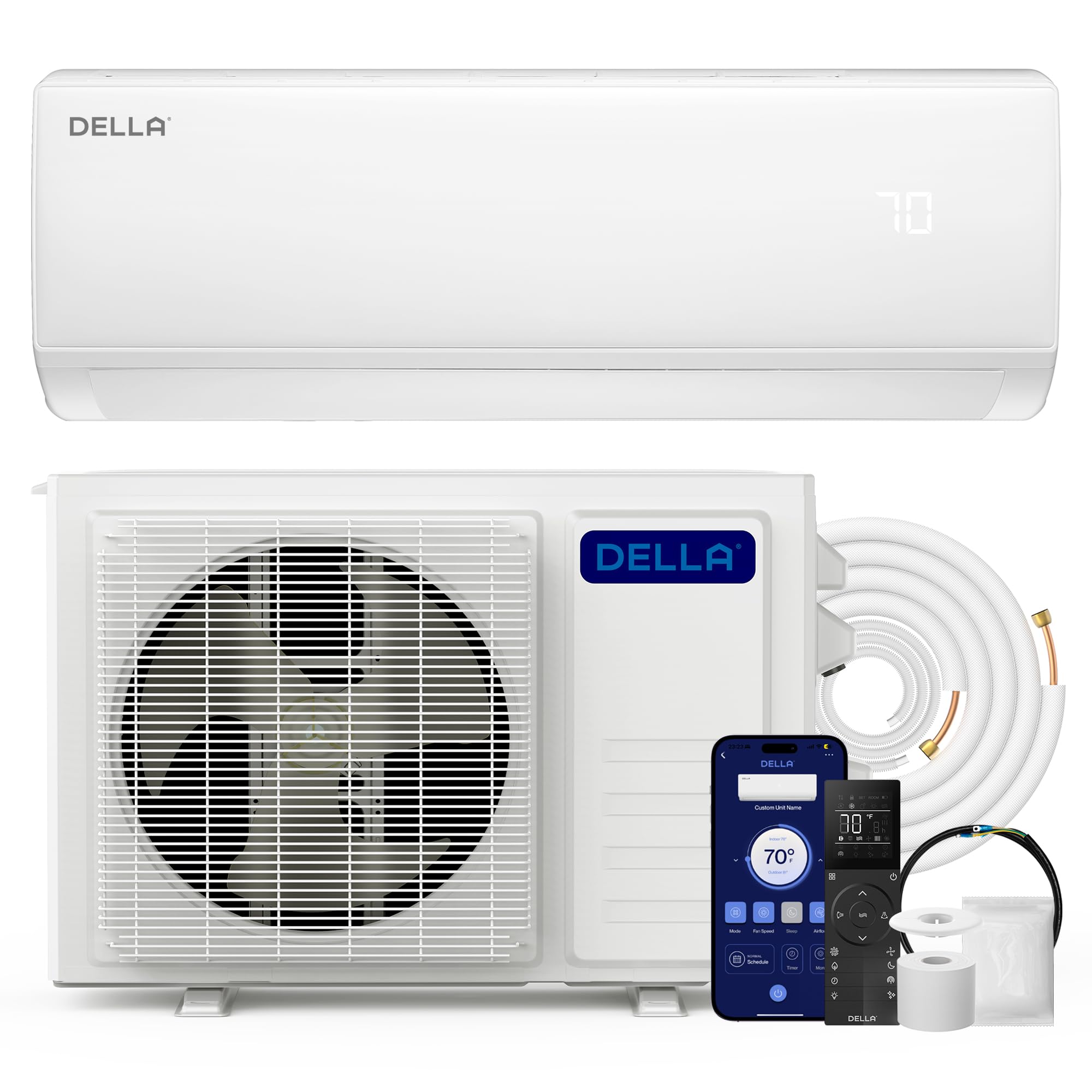
The DELLA Econo 23K is built for larger open-concept areas up to 1,500 square feet, making it an ideal choice for great rooms, finished basements, or commercial retail spaces. The 23,000 BTU output runs on a 208/230V circuit with a 25A maximum fuse size, and the 17 SEER2 rating is respectable for a unit this size — especially considering the DC inverter technology claims up to 30% power savings over non-inverter models. The included installation kit provides a 1/4″ and 1/2″ copper line set, which is thicker than standard 3/8″ lines and helps reduce refrigerant pressure drop over longer runs.
One of the most useful features here is the 4D airflow with independent up-down and left-right louver control, allowing you to direct conditioned air exactly where it’s needed without relying on room fans. The I Feel mode uses the remote’s built-in temperature sensor to prioritize comfort at your seating location rather than the wall-mounted unit’s placement. Several owners commented that the turbo mode cools the room noticeably faster than their previous split systems, and the heat pump remains effective down to 5°F ambient temperature.
The main complaint centers on installation documentation — the manual lacks a mounting template for the wall bracket, forcing you to transfer measurements manually from the bracket itself, which adds time and potential for misalignment. The line set copper is also relatively soft and can kink if bent too aggressively. Despite these frustrations, the unit’s cooling performance and quiet fan operation earn consistent praise from owners who have been running them since summer 2025 without issues.
Why it’s great
- 4-directional louver control provides customized airflow patterns
- Thicker 1/2″ line set reduces refrigerant pressure drop on long runs
- Turbo mode cools large rooms rapidly
Good to know
- No mounting template included — requires manual bracket measurement
- Copper line set is soft and prone to kinking if bent sharply
4. Cooper & Hunter 18,000 BTU 230V

Cooper & Hunter has carved out a reputation for quiet, well-built units, and the MIA Series 18K continues that trend with a 30 dB indoor noise floor — barely a whisper even at medium fan speed. The 19.2 SEER2 rating places it in the upper efficiency tier, and the system uses R-454B refrigerant, which has a lower global warming potential than R-410A. The package includes a Smart Kit for Wi-Fi control via smartphone, eliminating the need to buy a separate dongle or adapter.
Installation follows the standard pre-charged lineset process, and the 16-foot insulated copper lines and communication cable are included in the box. Several DIY owners reported completing the install in a few hundred dollars’ worth of tools and materials versus paying + for professional installation. The heat pump maintains comfortable output down to 5°F outdoor temperature, and the inverter compressor modulates smoothly to prevent temperature swings. One owner in Arizona ran the unit through a full summer of 100°F+ days and upgraded their rating to 5 stars after it performed flawlessly.
This is a minority report, but it’s worth noting if you plan to run the line set through a harsh exterior environment where physical protection might matter.
Why it’s great
- Smart Kit included for full Wi-Fi and app control
- 30 dB noise level is among the quietest in this BTU class
- R-454B refrigerant offers lower environmental impact than R-410A
Good to know
- Line set copper quality has drawn isolated durability complaints
- Warranty coverage excludes the line set as an “accessory”
5. Senville LETO Series 12,000 BTU 110/120V
The 12,000 BTU Senville LETO running on standard 110/120V power is a huge advantage for DIYers who don’t have a 230V circuit available. This 1-ton unit covers up to 700 square feet and achieves an impressive 20.8 SEER2 efficiency, making it one of the most energy-efficient options in the 120V class. It includes a 16-foot line set and communication wire, and the heat pump can operate in ambient temperatures as low as 5°F for year-round use.
Real-world performance is strong: one owner in Texas kept a 700-square-foot garage at 70°F during 95°F outdoor conditions with humidity below 40%, and the unit survived a polar vortex maintaining 60°F indoors with teens outside. The Alexa integration works reliably, though the manufacturer’s own Wi-Fi app has been widely panned as outdated and clunky — most users simply skip it and use voice control instead. The 5-year parts and compressor warranty provides peace of mind, though professional installation is required for warranty coverage.
On the noise front, the unit is quiet during normal operation, but a reviewer with 35 years of HVAC installation experience noted the fan is louder than expected at higher speeds, comparing it to an older LG design. The remote lacks a backlit display, making nighttime adjustments less convenient. For anyone who wants ductless cooling without running new 230V wiring, this is the most practical entry point in the lineup.
Why it’s great
- Runs on standard 120V outlet — no electrical panel upgrade needed
- 20.8 SEER2 delivers strong energy savings for a 1-ton unit
- Proven heat pump performance through winter conditions
Good to know
- App is outdated and unreliable; stick with Alexa voice control
- Fan noise is noticeable at higher speeds
6. DELLA Vario Series 12,000 BTU

The DELLA Vario series 12K is a strong contender for small spaces up to 550 square feet, offering a class-leading 23 SEER2 efficiency rating that directly translates into lower monthly operating costs. The 28 dBa noise level is genuinely silent — quieter than a library — making it an excellent choice for bedrooms, home offices, or tiny homes where ambient sound matters. The unit includes a 16.4-foot installation kit with standard 1/4″ and 3/8″ copper lines and a 78.7-inch drain hose.
Smart features include I Feel mode, where the remote control’s temperature sensor overrides the indoor unit’s sensor to maintain comfort at your actual location, and 24-hour programmable scheduling. Several owners installed the unit in studio apartments and 400-square-foot tiny homes, reporting that the dehumidification function alone was enough to keep humidity below 50% even in humid southern climates. The heat pump works down to -4°F, providing reliable heating in cold snaps without auxiliary resistance heat.
The durability record is mixed — some reviewers experienced refrigerant leaks in the indoor unit after two years, and the design makes those leaks unrepairable, effectively bricking the system. Line-set vacuuming is mandatory, and altering the line set length requires adjusting refrigerant levels, which adds complexity for DIYers. The manual explicitly states professional installation, but handy owners who understand HVAC basics have successfully self-installed with good results.
Why it’s great
- 23 SEER2 is the highest efficiency rating in this roundup
- 28 dBa noise floor is genuinely silent for undisturbed sleep
- Heat pump operates down to -4°F for cold-climate use
Good to know
- Reported indoor coil leaks after 2 years in some units
- Line set length changes require professional refrigerant adjustment
7. ActiveTrail 18,000 BTU
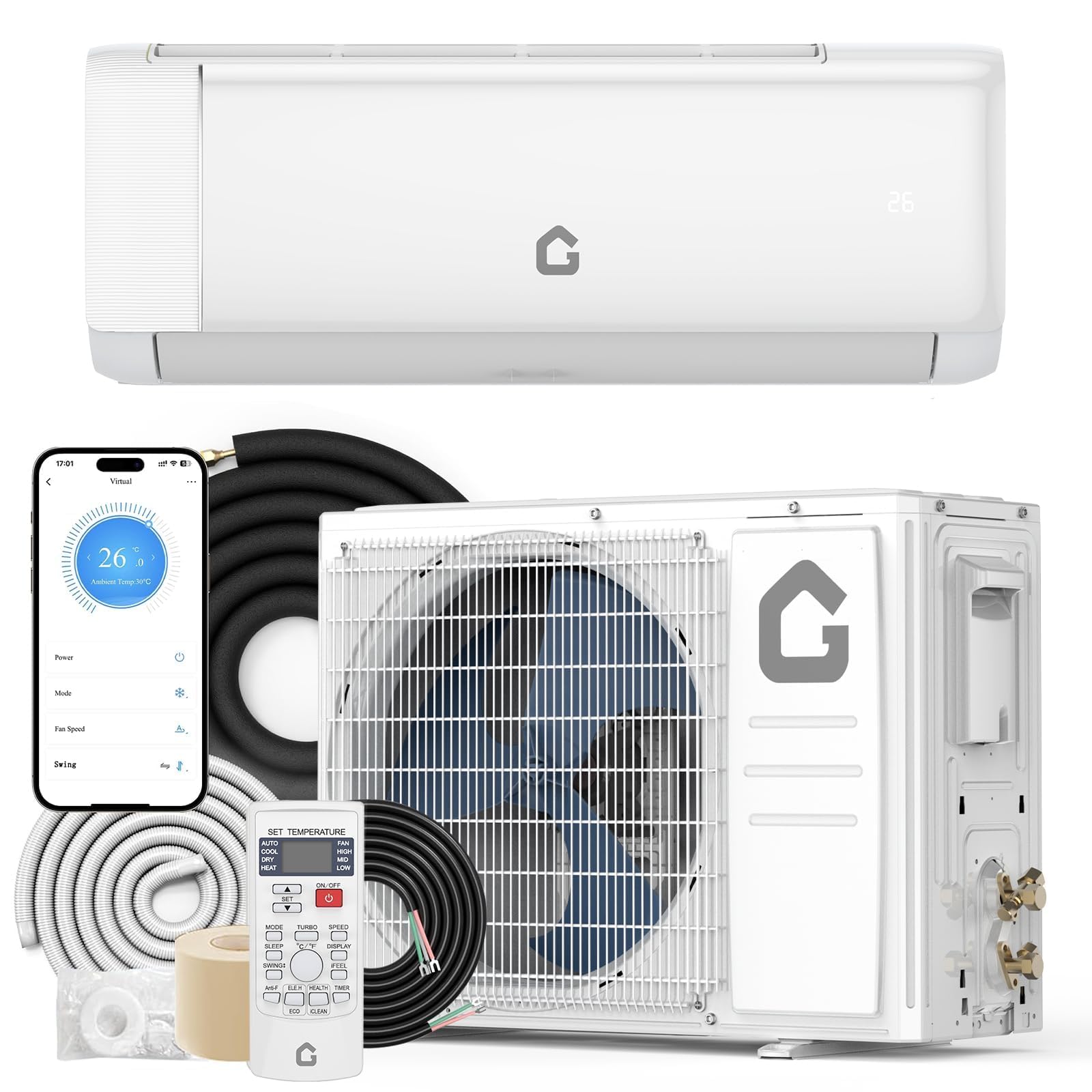
The ActiveTrail 18K punches above its price bracket with a 21 SEER2 rating and built-in WiFi and voice control — features typically found on more expensive units. The 18,000 BTU capacity covers up to 1,250 square feet, and the 576 kWh annual energy consumption estimate is competitive for this size class. The included installation kit has a 16-foot copper line set, and early adopters found the install straightforward with basic home tools, though they did need to pick up 3/8″ to 5/16″ flare adapters separately.
Noise levels are reasonable at 42 dB — not the quietest on this list but still appropriate for most living spaces. The 4-mode operation (cool, heat, dry, fan) covers all seasonal needs, and the 24-hour timer and sleep mode add convenience. Several reviewers commented that the unit pulls moisture from the air effectively even in humid environments, and the pre-charged refrigerant meant they only needed to vacuum the lines before opening the service valves.
The manual has some notable gaps — it doesn’t explain how to remove the front cover for service, doesn’t mention the °C/°F switch (hidden behind a QR code), and omits the step about opening the service valves after vacuuming. One reviewer explicitly warned the unit is NOT a true DIY system because it requires a vacuum pump and micron gauge. If you’re comfortable with HVAC basics and can fill in those documentation gaps with YouTube tutorials, the ActiveTrail delivers excellent value.
Why it’s great
- 21 SEER2 efficiency at a budget-friendly price point
- Built-in WiFi and voice control without extra dongles
- Covers up to 1,250 square feet effectively
Good to know
- Manual is missing critical installation and configuration steps
- Requires additional flare adapters (3/8 to 5/16) for standard connections
8. ROVSUN 18,000 BTU WiFi

ROVSUN’s 18K unit is optimized for residential and light commercial use, with a 20 SEER2 rating and a 32 dB mute mode that suits bedrooms, garages, and small offices. The inverter compressor adjusts speed based on indoor temperature changes, saving up to 35% energy compared to fixed-speed units. The 16.4-foot copper line set and signal cord are included, though you’ll need to supply the power cord separately.
Real-world testing in a Florida garage showed the unit maintained comfortable temps with a monthly electric bill increase of under — even with the thermostat set between 78°F and 82°F in summer. The WiFi and voice control (Alexa/Google Assistant) worked reliably, and the 4-way swing helped distribute air evenly in the workspace. The self-cleaning and auto-defrost functions reduce maintenance overhead, and the washable anti-dust filter is accessible with a simple rinse.
The main durability concern is longevity: one reviewer reported a complete failure after just two years with an F6 communication error, and the repair cost ( diagnosis + parts) made the unit uneconomical to fix. Another owner with a first-year unit had no problems. The installation instructions recommend professional HVAC installation, and the unit ships in two separate boxes that may arrive on different days, so plan your install timeline accordingly.
Why it’s great
- 32 dB mute mode is genuinely quiet for peaceful environments
- Less than /month in additional electric cost per Florida owner data
- Self-cleaning and auto-defrost reduce hands-on maintenance
Good to know
- Reported PCB failures after 2 years by multiple owners
- Power cord not included — must be purchased separately
9. Mountman 18,000 BTU
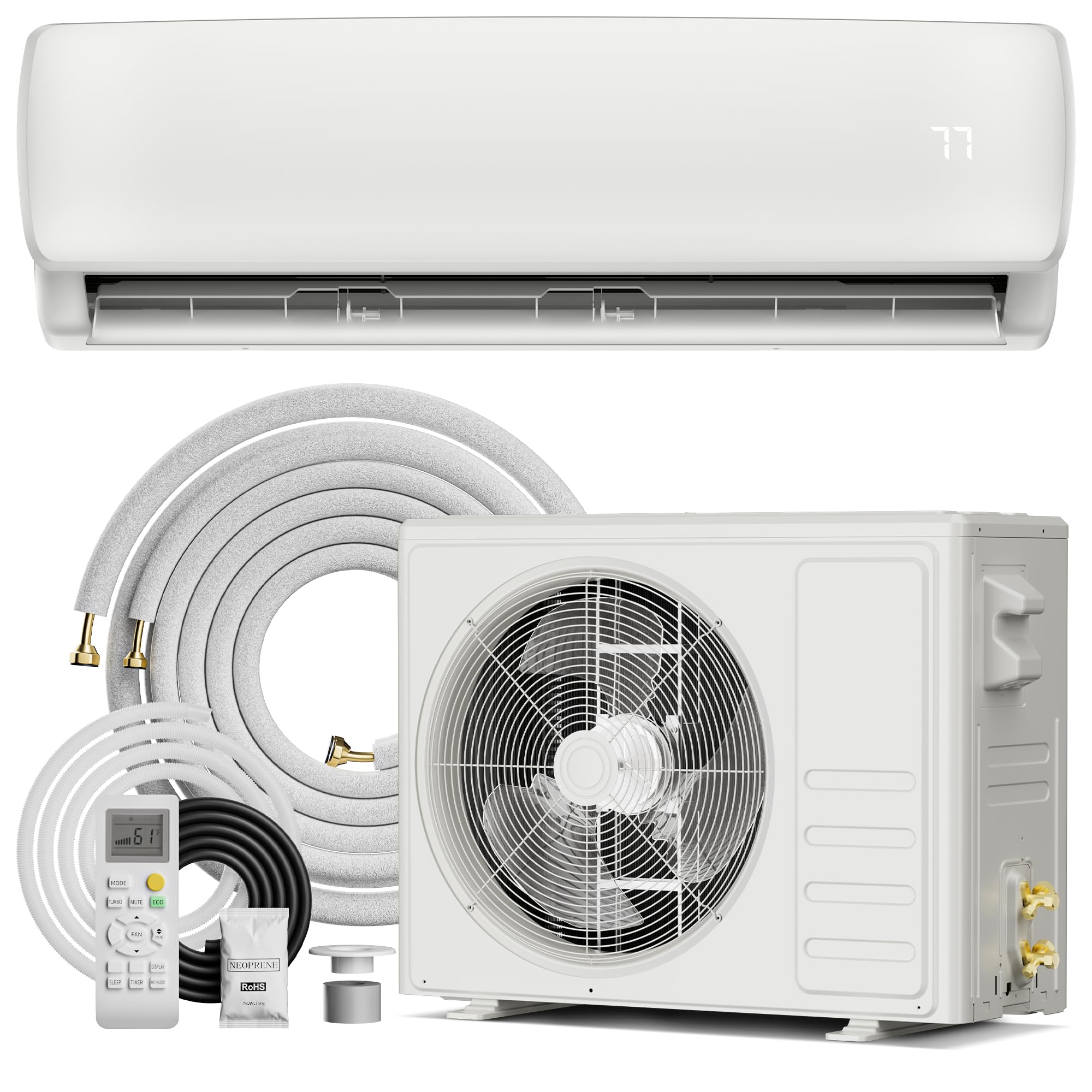
The Mountman 18K is positioned as a budget-friendly entry into ductless HVAC, offering 19 SEER efficiency and a whisper-quiet 26 dB noise floor — the lowest decibel rating in this comparison. The 18,000 BTU unit covers up to 1,250 square feet, and the R-32 refrigerant is both environmentally preferable to R-410A and more efficient at heat transfer. The included installation kit has a pre-charged condenser and all necessary hardware, though several reviewers noted the copper line set runs slightly short for some installations.
Customer feedback highlights the easy installation process, with one owner completing the setup in their metal shop (420 square feet) and reporting both perfect heating and cooling performance. The 4 fan speeds plus Sleep, ECO, and Turbo modes provide flexibility across seasons, and the auto-swing louver distributes air evenly. Remote operation with a 24-hour timer and auto-off display makes night use convenient. One reviewer measured the unit pulling approximately 12 amps full load, which is well within a standard 15A dedicated circuit.
The documentation is a weak point — the manual lacks certain charging and configuration details, and customer service was unresponsive to one owner’s inquiries. The wall plate uses 12-inch mounting centers, which don’t match standard 16-inch stud spacing, so you may need to add backer board or adjust your installation plan. The Mountman is a capable unit for the price, but the lack of support documentation puts more responsibility on the DIY installer to research proper evacuation and charging procedures independently.
Why it’s great
- 26 dB noise level is the quietest in the entire comparison
- R-32 refrigerant offers lower environmental impact and better efficiency
- Quick cooling and heating with Turbo and Sleep modes
Good to know
- Manual is missing critical charging and configuration information
- Wall plate uses 12-inch centers that don’t match standard framing
FAQ
Can I really install a mini split myself without any HVAC experience?
What is the difference between SEER and SEER2 ratings?
Do I really need to vacuum the line set on a pre-charged system?
Can a 120V mini split cool a room as well as a 230V unit?
Final Thoughts: The Verdict
For most users, the do it yourself mini split system winner is the MRCOOL Easy Pro 18K because it offers the most complete DIY-friendly package with a 25-foot pre-charged lineset, clear installation support, and reliable inverter performance. If you want the quietest possible operation and long-term durability proven by repeat buyers, grab the Senville LETO 18K 230V. And for a budget-conscious garage or workshop setup where noise isn’t critical, nothing beats the value of the ActiveTrail 18K with built-in WiFi and 21 SEER2 efficiency.

Mo Maruf
I created WellFizz to bridge the gap between vague wellness advice and actionable solutions. My mission is simple: to decode the research and give you practical tools you can actually use.
Beyond the data, I am a passionate traveler. I believe that stepping away from the screen to explore new environments is essential for mental clarity and physical vitality.