Our readers keep the lights on and my smoothie glass nicely filled. As an Amazon Associate, I earn from qualifying purchases.
Tracing your paternal lineage through DNA isn’t just about finding a cluster of percentages on a map. It’s about chasing a surname through centuries, placing a pin in the exact valley your great-grandfather left, and confirming biological ties when paper trails have gone cold. The right kit can split a Y-chromosome haplogroup down to a specific migration path or quietly resolve a half-sibling question with 99.99% statistical confidence.
I’m Mohammad Maruf — the founder and writer behind WellFizz. I’ve spent hundreds of hours cross-referencing marker counts, haplogroup resolution depths, database sizes, and turnaround windows to separate the real insights from the shallow estimates in this category.
Whether you’re rebuilding a broken family tree or verifying a direct male-line connection, picking the right kit comes down to understanding which database and which marker analysis actually serves your goal. This guide breaks down every relevant spec to help you find the best dna test for paternal lineage for your specific situation.
How To Choose The Best DNA Test For Paternal Lineage
Paternal lineage testing is fundamentally different from a general ancestry estimate. The Y-chromosome passes from father to son with relatively few changes, making it the most direct tool for tracking a surname line. But not every kit handles that chromosome with the same depth. You need to evaluate marker resolution, database reach, and whether the test separates maternal from paternal signals.
Marker Count and Haplogroup Resolution
A test that analyzes 30 to 50 Y-STR markers can assign a broad haplogroup, but a test using 100+ markers can narrow your paternal line to a specific subclade and a tighter geographic origin. The difference between being told you are R1b and being told you are R1b-L21 with known migration into the British Isles is the difference between a postcard and a documentary. For serious paternal tracing, higher marker density is the single most important spec.
Database Size and Relative Matching
Your paternal lineage is only as useful as the people you can match against it. A company with millions of DNA profiles in its database gives you a far higher probability of finding a match that traces back to a common paternal ancestor. Autosomal relative finders can also reveal paternal-side cousins, but only if the database is large enough. AncestryDNA and 23andMe hold the largest consumer databases, which dramatically increases your chance of a paternal connection.
Autosomal vs. Dedicated Y-DNA Testing
Most direct-to-consumer kits are autosomal, which test DNA inherited from both parents. While these can estimate paternal ethnicity and find paternal relatives through shared segments, they do not give you a Y-chromosome haplogroup unless the company uses a Y-chromosome inference algorithm. If your sole goal is deep paternal lineage, a dedicated Y-DNA test from a specialized lab offers much higher resolution, though it comes with a smaller database for matching.
Quick Comparison
On smaller screens, swipe sideways to see the full table.
| Model | Category | Best For | Key Spec | Amazon |
|---|---|---|---|---|
| 23andMe Ancestry Service | Autosomal + Paternal Line | Deep ethnic breakdown 4,500+ regions, Y-haplogroup | 4,500+ geographic regions, Y-haplogroup reporting | Amazon |
| AncestryDNA | Autosomal + Relative Matching | Largest database for paternal-side relative matches | 3,600+ regions, 25M+ database, SideView | Amazon |
| AncestryDNA + World Explorer | Autosomal + Records Access | Combining DNA with historical records for paternal tree | 3,600+ regions, 3-month World Explorer membership | Amazon |
| Choice DNA Sibling Test | Sibling Confirmation | Confirming full or half-sibling paternal relationship | 4 swabs per person, results in 2-6 days | Amazon |
| PaternityLab Sibling Test | Sibling Confirmation | Fast turnaround on half-sibling probability | Results in 1-2 days after sample arrival | Amazon |
| Genetrace Aunt/Uncle Test | Avuncular Confirmation | Establishing paternal aunt/uncle relationship | Up to 27 genetic markers, AABB/ISO 17025 lab | Amazon |
| HomePaternity Aunt/Uncle Test | Avuncular Confirmation | High accuracy at 34 markers for avuncular testing | Up to 34 genetic markers, 6+ lab certifications | Amazon |
| HomePaternity Grandparent Test | Grandparent Confirmation | Direct paternal grandparent verification without father | Up to 34 genetic markers, 99.999%+ confidence | Amazon |
| Genetrace Cousin Test | Cousin Confirmation | Confirming first-cousin paternal relationship | Up to 27 genetic markers, AABB/ISO 17025 lab | Amazon |
In‑Depth Reviews
1. 23andMe Ancestry Service
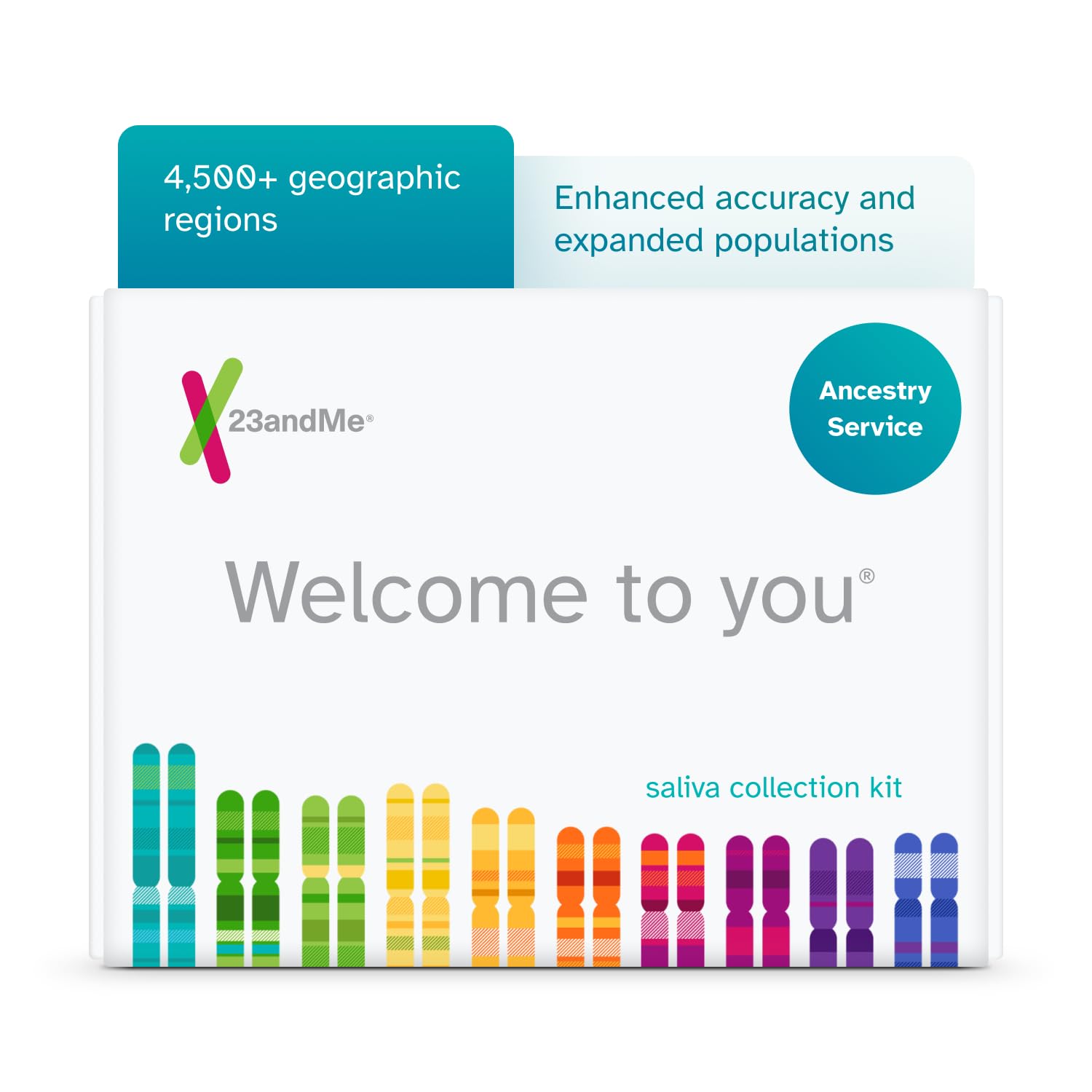
23andMe delivers a Y-haplogroup assignment that cuts through vague continental labels and lands on a specific paternal migration path. With 4,500+ geographic regions, the breakdown can pinpoint ancestral origins down to a particular valley or village, which is critical when you are trying to trace a surname that branches off from a small settlement. The Ancestry Timeline further helps date when your most recent paternal ancestors lived in those regions.
The DNA Relative Finder is especially strong for paternal lineage because it can connect you with distant cousins who share your Y-chromosome signature. The automatic Family Tree visualization shows how those connections relate to you, which saves hours of manual triangulation. Customers have reported solving multi-decade family mysteries by matching with previously unknown paternal relatives through this feature.
One limitation is that raw data from 23andMe shows less granular Y-STR detail than a dedicated Y-DNA test. Serious surname researchers may want to upload the raw data to GEDmatch for additional free analysis. The saliva collection is straightforward, and results typically arrive in 4 to 5 weeks. The privacy controls are robust, and you decide exactly which data to share with relatives.
Why it’s great
- Deepest geographic breakdown at 4,500+ regions improves paternal origin specificity
- Y-haplogroup reporting provides direct paternal lineage information
- DNA Relative Finder connects you with paternal-side cousins automatically
- Strong privacy controls and encrypted data storage
Good to know
- Y-STR resolution is not as deep as a dedicated Y-DNA test
- Relative Finder limited by users who choose to hide their profile
- Results can take up to 8 weeks during peak periods
2. AncestryDNA
AncestryDNA holds the largest consumer DNA database by a wide margin, and that massive pool of profiles directly impacts your ability to find paternal-side relatives. When you want to trace a surname back through genetic matches, the sheer number of potential cousins in the system dramatically increases the probability of a hit. The SideView technology then separates your matches and ethnicity estimates into maternal and paternal sides without requiring either parent to test.
The ethnicity breakdown covers 3,600+ regions, which gives you a broad but still useful view of paternal ancestry origins. The user interface is intuitive and beginner-friendly, with a built-in family tree builder that integrates seamlessly with your matches. Many users report finding second and third cousins on the paternal side within the first month, which then provides enough DNA overlap to triangulate a shared ancestor.
Advanced users sometimes find the analysis tools limited compared to third-party platforms like GEDmatch. The ethnicity estimates are probabilistic rather than absolute, so a small percentage should always be interpreted cautiously. No health data is included, and a subscription unlocks deeper historical record access. The saliva collection and prepaid return process is simple, with results averaging four to six weeks.
Why it’s great
- Largest DNA database maximizes chance of paternal relative match
- SideView automatically separates paternal ethnicity and matches
- Integrated family tree builder links DNA matches to records
- Regular database updates improve ethnicity granularity over time
Good to know
- No Y-haplogroup reporting in standard kit
- Ethnicity estimates are probabilistic, not exact
- Full records access requires an additional subscription
3. AncestryDNA + 3-Month World Explorer
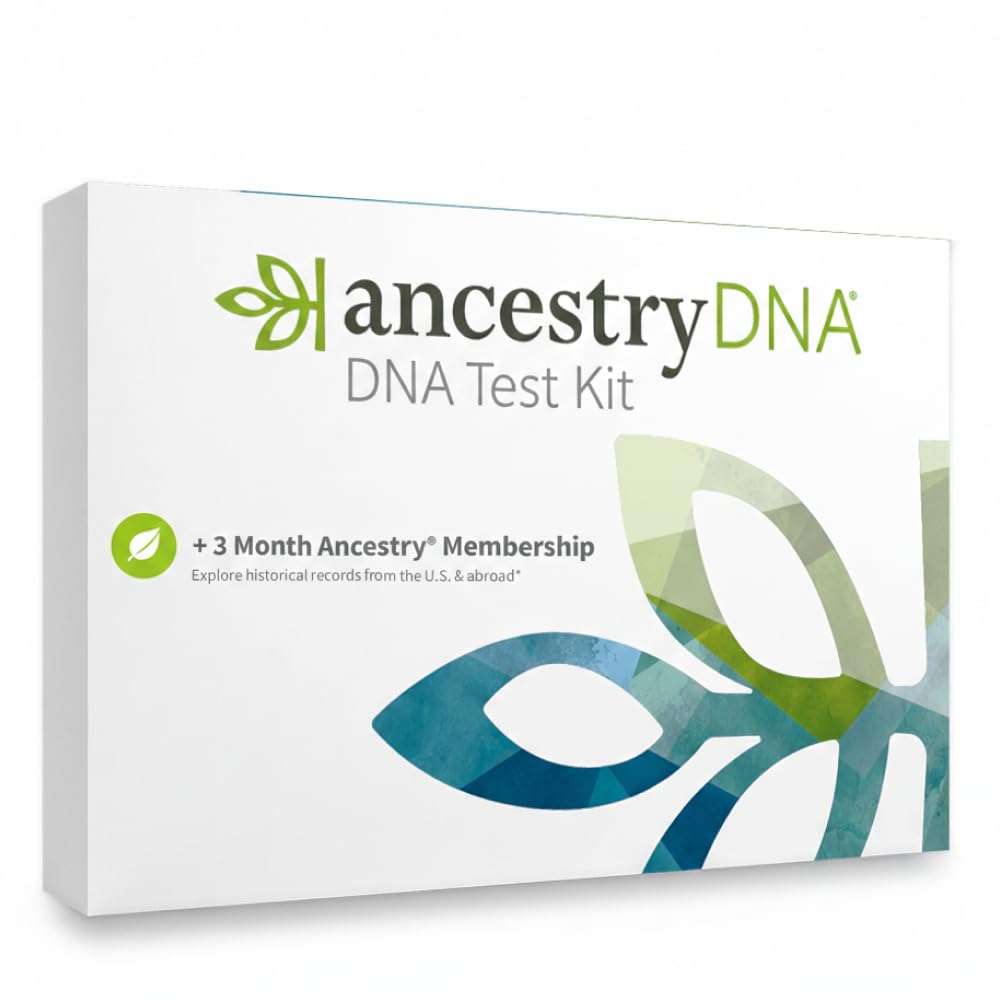
This bundle takes the core AncestryDNA test and adds a three-month World Explorer membership, which unlocks billions of historical records from around the globe. For paternal lineage research, this is a powerful combination because it lets you cross-reference your DNA matches against census records, immigration documents, and newspaper archives. If you match a paternal relative with a shared surname, you can immediately search for that surname in ship manifests or birth certificates.
The World Explorer tier includes records from the United Kingdom, Ireland, Canada, Australia, and select European countries. That geographic reach is directly relevant to paternal lines that migrated across continents. The DNA results still include the same 3,600+ region ethnicity estimate and SideView technology, so you get the same autosomal advantages plus deep historical context.
The membership must be redeemed during the activation process and will auto-renew unless you cancel. Some users find the interface navigation complex when juggling both DNA matches and tree records simultaneously. The kit itself is the same saliva-based collection as the standard AncestryDNA, with results in four to six weeks. The value proposition is strongest if you intend to actively research during the three-month window.
Why it’s great
- Combines DNA matches with billions of historical records for deeper paternal tree
- World Explorer tier includes international records for cross-border lineages
- SideView still separates paternal matches automatically
- Largest database plus record access is the most complete research package
Good to know
- Membership auto-renews after three months
- No Y-haplogroup data included
- Some country records are incomplete for recent decades
4. Choice DNA Full or Half Sibling Test

When the question is whether you share a father with another person, the Choice DNA Sibling Test provides a direct answer through cheek-swab analysis. Each participant receives four swabs to ensure sufficient DNA collection, which reduces the risk of inconclusive results that can occur with single-swab kits. The lab processes the samples in two to six days, making it one of the faster options for sibling confirmation.
Customers have reported results that resolved long-standing paternity assumptions. One user discovered their sons were full siblings despite a contrary paternity belief, which directly clarified the paternal lineage for that family. The test is designed for both full and half-sibling scenarios, and the report clearly states the probability of each relationship type. The instructions are straightforward, and the prepaid return envelope keeps the process private.
Some users have reported delays in receiving results beyond the stated window. The customer service response time has been inconsistent based on feedback. The kit does not provide genealogical information or haplogroup data, so it is strictly a relationship confirmation tool. If you need a quick sibling confirmation for a paternal lineage question, this kit is efficient, but verify the current estimated turnaround before ordering.
Why it’s great
- Four swabs per person improves sample quality and reduces inconclusive results
- Fast 2-6 day turnaround after sample arrival
- Distinguishes between full and half-sibling relationship probabilities
- Discreet processing with no clinic visits required
Good to know
- Some reports of results taking longer than stated window
- Customer service response times vary
- No haplogroup or genealogical data provided
5. PaternityLab DNA Sibling Test

PaternityLab focuses on speed without sacrificing clarity. The sibling test kit is self-explanatory and arrives with all the materials needed for two participants. The lab turnaround of one to two business days after sample receipt is among the fastest in this category, which matters when you are waiting on an answer that affects family dynamics. One verified customer received a 99.39% probability of half-sibling relationship, which gave them the definitive paternal connection they needed.
The communication throughout the process is a strong point. Users receive notifications when the sample arrives at the lab and when testing begins. The results are presented in clear language with the statistical probability clearly stated. The kit uses cheek swabs with no blood or needles, and the return envelope is prepaid. The process is entirely at-home, which maintains privacy for sensitive family inquiries.
The test is specifically designed for sibling relationships and does not provide any ancestral information, haplogroup assignments, or broader genealogical data. It answers one precise question about biological relationship shared through a parent. Some users have noted that the test expects you to understand the difference between full and half-sibling before ordering, and the instructions assume you know which relationship you are testing for.
Why it’s great
- Results in just 1-2 days after sample arrives at lab
- Excellent communication at every step of the process
- Clear statistical probability statements in results report
- Simple cheek-swab collection with prepaid return
Good to know
- No ancestral or haplogroup information provided
- Only tests sibling relationships, not broader paternal lineage
- Assumes user knows which relationship type to select
6. Genetrace DNA Aunt/Uncle Test

When the alleged father is unavailable for testing, an aunt or uncle on the paternal side can provide the next best genetic evidence. Genetrace analyzes up to 27 genetic markers and runs the test twice in an AABB, ISO 17025, and CLIA accredited laboratory. That triple certification ensures the results meet a court-admissible standard of accuracy, even if the kit itself is used for non-legal peace of mind.
Users have reported that this test helped them locate biological fathers and close family mysteries that had lingered for years. The turnaround of one to two business days after testing begins is competitive, and the communication throughout the process keeps you informed. The kit includes materials for one potential aunt or uncle and one niece or nephew, with no hidden fees for return shipping or lab processing.
Some customers have encountered inconclusive results, particularly when the child is an infant and the instructions about avoiding milk before swabbing were not clear. The maximum 27 markers, while standard for avuncular testing, can sometimes fall short of the 34-marker tests offered by competitors. The sample collection is non-invasive, but the swabs are smaller than some other kits, which can make collection slightly more fiddly for adults.
Why it’s great
- Tests run twice in triple-accredited lab for high accuracy
- Fast 1-2 day results after testing begins
- Clear communication and tracking throughout process
- No hidden fees for lab processing or return shipping
Good to know
- 27 markers is lower than some competitors using 34 markers
- Inconclusive results more likely with infant samples if instructions not followed
- Swabs are smaller, requiring more care during collection
7. HomePaternity Aunt/Uncle DNA Test

HomePaternity pushes the marker count to 34 for avuncular testing, which gives a statistical edge when trying to confirm a paternal aunt or uncle relationship. The lab runs each test twice and holds over six certifications, including AABB accreditation. The kit also includes the option to test the mother at no additional charge, which can strengthen the probability calculation by providing a clearer exclusion of maternal DNA contribution.
The company has been in the DNA testing space for over 25 years and has processed more than 20 million tests, which gives some institutional weight behind the results. The packaging is discreet, and the report does not include names, which provides an extra layer of privacy. The return mailer is prepaid, and the instructions are clearly written for at-home collection.
Customer service experiences have been mixed. Some users reported weeks of delays and poor communication when samples were lost in transit. Because the kit does not include tracking on the return envelope, there is a risk of the package being delayed or lost without notification. The results are not intended for legal use, so if you need court-admissible documentation, this is not the appropriate choice.
Why it’s great
- 34 genetic markers increase accuracy over standard 27-marker tests
- Mother can be included at no extra charge for better probability calculation
- Lab has over 25 years of experience and 20 million+ tests processed
- Discreet packaging and anonymous reporting for privacy
Good to know
- No return tracking on envelope creates risk of lost samples
- Customer service response times reported as inconsistent
- Results are not for legal or court submission
8. HomePaternity Grandparent DNA Test

When the alleged father is absent, testing the paternal grandparents directly can confirm or exclude a biological relationship with the child. HomePaternity analyzes up to 34 genetic markers and claims a confidence level of 99.999% or higher for grandparent testing. The kit includes materials for the child and two grandparents, or one grandparent and the mother, depending on your situation. The lab is the same internal facility with six certifications that processes millions of tests annually.
The sample collection uses mouth swabs and the return envelope is prepaid via USPS. Results are posted in a secure online portal within five business days after the sample arrives. Customers have reported receiving results three days early, which is a welcome surprise when waiting for a definitive answer. The cost includes all lab fees with no hidden charges.
The kit is not available for shipment to New York State due to local regulations, which excludes a significant population. Some users have reported delays when the return envelope got wet during transit, potentially compromising the sample. The results are for informational use only and are not admissible in court. For paternal lineage questions that skip a generation, this test provides a direct answer without requiring the father’s participation.
Why it’s great
- Direct grandparent testing solves paternal lineage questions without father available
- 34 markers provide high statistical confidence at 99.999%+
- Fast 5-business day turnaround with some results arriving early
- All lab fees included with no hidden charges
Good to know
- Not available for New York State residents
- Return envelope lacks waterproofing, risking sample damage
- Results are informational only, not court-admissible
9. Genetrace DNA Cousin Test

First-cousin relationships can be difficult to confirm through paper records alone, especially when surnames change across generations. Genetrace specifically tests for first-cousin biological relationships using up to 27 genetic markers. The lab is AABB, ISO 17025, and CLIA accredited, and each test is performed twice. If you suspect a shared paternal grandfather but lack direct male-line testing options, this kit provides a probabilistic answer.
Users have reported that the test clearly indicated a strong non-relationship when cousins turned out not to share the expected paternal line. That clarity can redirect research onto the correct branch. The turnaround is one to two business days after testing begins, which is standard for this lab. Customer service has been noted as helpful in explaining the results and answering follow-up questions.
The test is limited to first-cousin relationships only and will not provide information about more distant cousin connections. The 27-marker panel is adequate for this relationship type, but some users wish for deeper analysis. The kit does not include any genealogical data or haplogroup information. If you need a quick confirmation about a specific paternal cousin link, this is the most direct option available.
Why it’s great
- Specifically designed for first-cousin paternity-line verification
- Triple-accredited lab runs each test twice for accuracy
- Fast 1-2 day results turnaround after testing begins
- Supportive customer service helps interpret results
Good to know
- Only tests first-cousin relationships, not broader paternal lineage
- 27 markers is standard but lower than some sibling/grandparent tests
- No haplogroup or genealogical analysis included
FAQ
Can an autosomal DNA test trace my paternal lineage?
What is the difference between a haplogroup and a subclade?
How many genetic markers do I need for a reliable sibling test?
Final Thoughts: The Verdict
For most users, the dna test for paternal lineage winner is the 23andMe Ancestry Service because it combines the deepest geographic breakdown at 4,500+ regions with direct Y-haplogroup reporting and a DNA relative finder that regularly connects paternal-side cousins. If you want the largest database for paternal-side relative matches, grab the AncestryDNA. And for a sibling or avuncular confirmation with fast turnaround and clear probability, nothing beats the PaternityLab DNA Sibling Test.

Mo Maruf
I created WellFizz to bridge the gap between vague wellness advice and actionable solutions. My mission is simple: to decode the research and give you practical tools you can actually use.
Beyond the data, I am a passionate traveler. I believe that stepping away from the screen to explore new environments is essential for mental clarity and physical vitality.