Our readers keep the lights on and my smoothie glass nicely filled. As an Amazon Associate, I earn from qualifying purchases.
Tracing Jewish ancestry through paper records alone often hits a wall—lost shtetls, anglicized surnames, and migration gaps leave entire branches of the family tree unaccounted for. A targeted genetic test cuts through that fog by comparing your DNA against reference populations with deep roots in Ashkenazi, Sephardic, and Mizrahi communities, offering a path around the genealogical dead ends that standard research tools cannot solve.
I’m Mohammad Maruf — the founder and writer behind WellFizz. I’ve spent hundreds of hours analyzing autosomal DNA panels, reference population sizes, and regional breakdown granularity to separate the tests that deliver real genealogical resolution from those that only offer vague continental percentages.
Whether you want to confirm a family legend or identify specific ancestral villages, the best dna test for jewish ancestry depends on database depth, geographic specificity, and the ability to connect you with living relatives who share your Ashkenazi, Sephardic, or Mizrahi heritage.
How To Choose The Best DNA Test For Jewish Ancestry
Jewish genetic genealogy presents unique challenges that standard European ancestry tests were not designed to handle. Endogamy, small founder populations, and historic migrations mean the test you choose must handle Ashkenazi reference panels with care and provide tools to separate recent cousins from distant tribal matches. Here are the factors that separate a useful result from a frustrating one.
Database Depth and Ashkenazi Reference Populations
The size of a company’s reference panel for Ashkenazi, Sephardic, and Mizrahi populations directly determines how precise your regional breakdown will be. A database with thousands of confirmed Ashkenazi samples can identify specific Eastern European subregions, while a shallow panel may only report “European Jewish” as a single bucket. Look for tests that list the number of reference samples per Jewish subgroup.
Endogamy-Aware Matching Algorithms
Ashkenazi populations are genetically tight-knit, so a standard DNA relative finder might return thousands of matches that all appear to be second cousins when most are actually distant. The best platforms either display a “percent DNA shared” metric that accounts for endogamy or allow you to filter matches by segment size. This prevents you from chasing false close relatives.
Side-by-Side Parental Inheritance
Tests that separate your ethnicity results by maternal and paternal side—without requiring either parent to test—are especially valuable for Jewish ancestry. This feature, sometimes called SideView or similar, lets you see which segments came from your Jewish parent versus your non-Jewish parent, isolating the genetic footprint of the lineage you care about most.
Data Portability and Third-Party Tools
Raw DNA data export is non-negotiable. Uploading your file to GEDmatch, MyHeritage, or FamilyTreeDNA opens access to databases that specialize in Jewish genetic projects and chromosome browsers. If a test locks your data behind a paywall or restricts downloads, your ability to cross-reference against community-specific databases is severely limited.
Quick Comparison
On smaller screens, swipe sideways to see the full table.
| Model | Category | Best For | Key Spec | Amazon |
|---|---|---|---|---|
| 23andMe Ancestry Service | Mid-Range | Detailed Ashkenazi regional breakdowns | 4,500+ geographic regions | Amazon |
| AncestryDNA + World Explorer | Premium | Building a full family tree alongside DNA | 3,600+ regions + 3‑mo subscription | Amazon |
| AncestryDNA Genetic Test | Mid-Range | Largest relative-matching database | 3,600+ regions, SideView tech | Amazon |
| Choice DNA Sibling Test | Mid-Range | Confirming full vs half sibling relationship | 4 swabs per person, 2‑6 day result | Amazon |
| HomePaternity Sibling DNA Test | Budget | Quick sibling relationship verification | 34 genetic markers tested | Amazon |
| PaternityLab DNA Sibling Test | Budget | Rapid half-sibling confirmation | Results in 1‑2 days | Amazon |
| Genetrace DNA Aunt/Uncle Test | Budget | Avuncular relationship verification | 27 genetic markers, CLIA lab | Amazon |
In‑Depth Reviews
1. 23andMe Ancestry Service
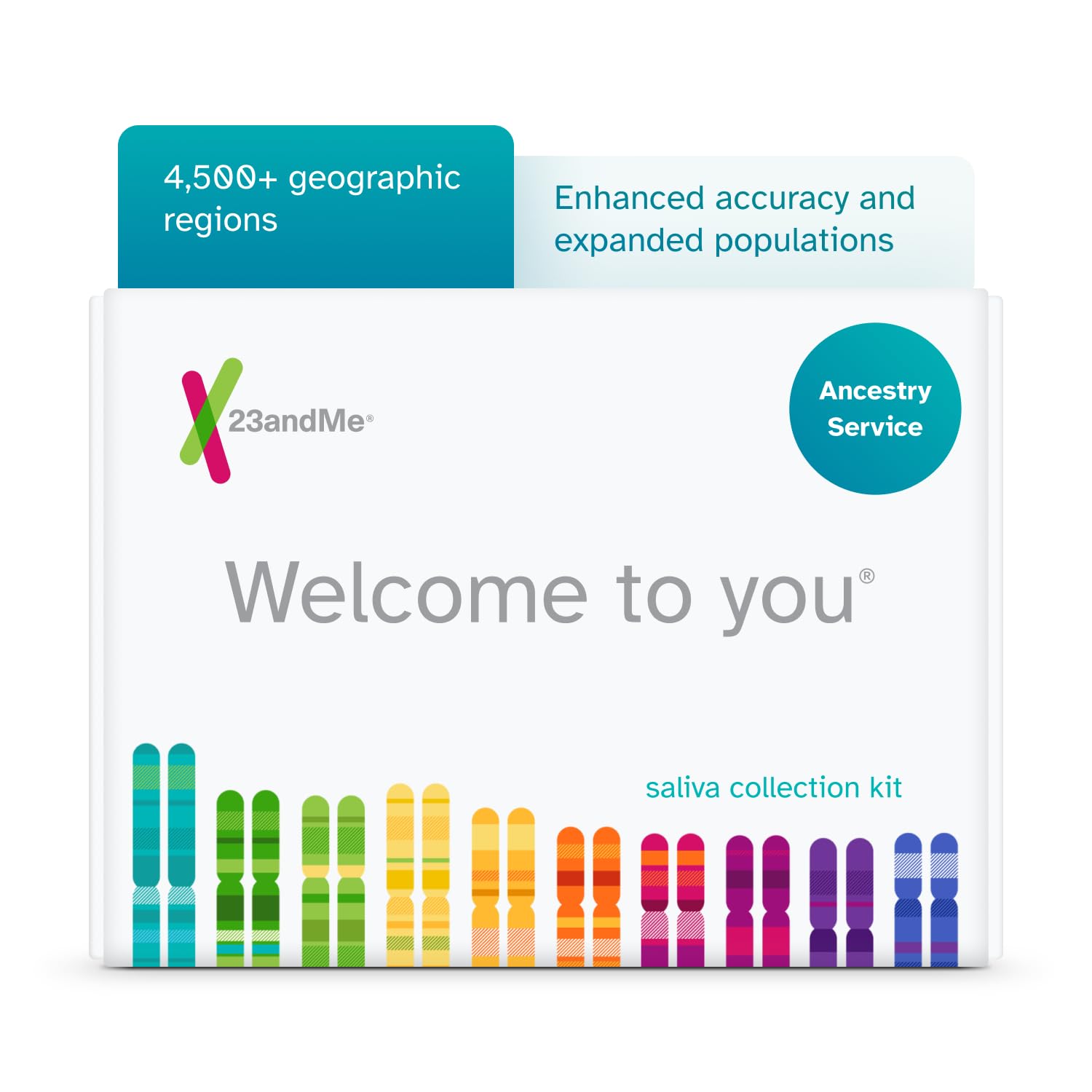
The 23andMe Ancestry Service stands out for Jewish genealogists because it covers 4,500+ geographic regions, often drilling down to the specific valley or shtetl your Ashkenazi ancestors left behind. The Ancestry Timeline estimates when your most recent ancestors from each population lived, which is critical for separating a grandmother who emigrated in 1880 from a great-great-grandfather who left in 1750. Users consistently report that the ethnicity breakdown catches trace Ashkenazi and Sephardic percentages that broader tests miss.
The DNA Relative Finder and automatic Family Tree components are especially useful for Jewish users who know their family surname was changed at Ellis Island. By matching against distant cousins who share your Ashkenazi segments, you can reconstruct the original family name and the specific Eastern European town. The Neanderthal ancestry report is a bonus curiosity, but the real value lies in the granularity of the European Jewish reference set.
One reviewer noted that raw data exported to GEDmatch revealed Native American and South Asian traces that 23andMe’s algorithm did not show, highlighting the importance of data portability. The test took four to five weeks for most users, and the simple saliva collection was universally praised. The privacy controls are robust, with encrypted storage and opt-in sharing for relative matching.
Why it’s great
- Exceptional regional depth for Ashkenazi and Sephardic populations.
- Ancestry Timeline shows when each ancestor population lived.
- DNA Relative Finder connects you with cousins who share Jewish segments.
- Raw data export to GEDmatch for further analysis.
Good to know
- Does not include a subscription to historical records.
- Relative Finder limited by users who keep profiles private.
- Haplogroup detail is sparse in the basic interface.
2. AncestryDNA Genetic Test Kit + 3-Month World Explorer
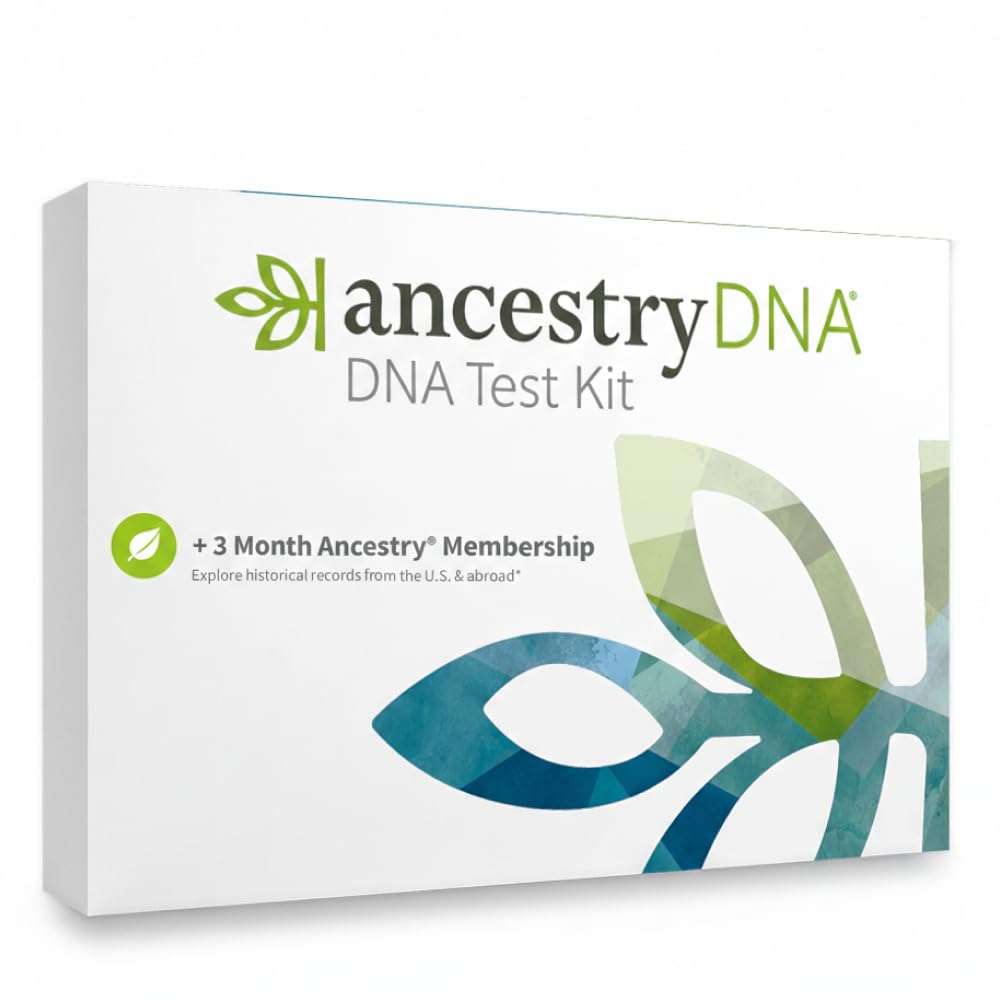
This bundle pairs AncestryDNA’s top-selling autosomal test with a three-month World Explorer membership, giving you access to billions of historical records—passenger lists, naturalization documents, census data—that are essential for verifying Ashkenazi migration routes. The test itself analyzes over 3,600 regions and uses SideView technology to separate your ethnicity results by maternal and paternal side, allowing you to isolate the genetic contribution of a single Jewish grandparent.
The membership unlocks Ancestry’s collection of Eastern European Jewish records, including synagogue registers and Yizkor books that are digitized but not available to non-subscribers. Users who paired DNA results with the tree-building tools reported breaking through brick walls that had stood for decades, especially when they matched with distant cousins who had already built out the same branch. The three-month window is sufficient for an intensive research push.
One reviewer noted that some region-specific matches were missing compared to a separate test, and the tongue-rolling and cilantro taste predictions seemed inaccurate. However, the consensus among genealogists is that AncestryDNA’s database size—over 25 million users—makes it the most likely place to find a cousin whose research you can use. The privacy controls are clear, and raw data can be downloaded for GEDmatch uploads.
Why it’s great
- World Explorer membership grants access to Jewish historical records.
- SideView separates maternal and paternal Jewish ancestry.
- Largest consumer DNA database for cousin matching.
- Build a family tree integrated with DNA results.
Good to know
- Subscription auto-renews unless billing info is withheld.
- Ethnicity estimates are probabilistic, not absolute.
- Some trait predictions were contradicted by user experience.
3. AncestryDNA Genetic Test
The standalone AncestryDNA test is the go-to for Jewish ancestry research because its user base is the largest in the consumer genetics space, which translates directly into more potential matches for Ashkenazi, Sephardic, and Mizrahi cousins. The SideView feature—which shows ethnicity by parental side without needing a parent to test—is especially powerful when you suspect one parent is Ashkenazi and the other is not, as it isolates the Jewish segments visually.
The ethnicity breakdown covers over 3,600 regions, and while the test does not drill into the specific shtetl level that 23andMe sometimes achieves, the sheer volume of relatives in the database compensates for slightly less geographic precision. Users reported finding second and third cousins who had already traced the family back to pre-Holocaust records, effectively piggybacking on their research. The user interface is beginner-friendly, though serious genealogists may find it lacking in analytical depth.
One reviewer emphasized that the real power of AncestryDNA is unlocked when you combine the DNA data with the tree-building feature and the free trial of the membership. The test typically takes four to six weeks for results, and the instructions are straightforward. Privacy is handled through encrypted databases, and you can delete your data at any time. For pure cousin-matching volume, this kit remains the industry standard.
Why it’s great
- Largest database for Jewish relative matching.
- SideView identifies which parent contributed Jewish ancestry.
- Ethnicity maps with historical migration context.
- Simple saliva collection with no additional equipment needed.
Good to know
- Some detailed analysis tools require a subscription.
- No health or trait reports included in this tier.
- Ethnicity updates can shift region percentages unexpectedly.
4. Choice DNA Full or Half Sibling DNA Test

When your goal is not ethnicity breakdown but relationship verification—confirming whether you and a potential sibling share one or both parents—this kit from Choice DNA delivers rapid lab results in as little as two days after the sample arrives. The kit includes four swabs per person, which reduces the risk of insufficient DNA collection, and the lab completes the analysis without requiring samples from either parent.
For Jewish families where adoption, name changes, or generational rifts have created uncertainty, this test provides a clear yes-or-no answer about sibling status. The results are emailed directly, maintaining privacy, and the process is entirely at home with no clinic visits. Users appreciated the fast turnaround and the clear communication at each step, with one reviewer receiving results in just over two weeks from the order date.
The primary limitation is scope: this test does not provide ancestry composition, haplogroup information, or any ethnicity breakdown. It is strictly a sibling relationship test, so if you need both ancestry and sibling verification, you will need to purchase a separate autosomal test from another provider. The app interface was noted as non-functional by one reviewer, but results were still accessible through email.
Why it’s great
- Fast results within 2-6 days of lab receipt.
- Four swabs per person ensures sample quality.
- No parent sample needed for sibling comparison.
- Direct email results for privacy.
Good to know
- No ethnicity or ancestry breakdown included.
- App interface reported as non-functional.
- Some users experienced delays beyond the stated window.
5. HomePaternity Sibling DNA Test

The HomePaternity Sibling DNA Test analyzes up to 34 genetic markers to determine whether two individuals are full siblings, half siblings, or unrelated, with no hidden fees for lab processing or shipping. For Jewish families navigating inheritance questions or reconnecting after separations, this test offers a quick resolutions with results typically delivered in under two weeks.
The mouth swab collection is straightforward and works for adults and children alike. One reviewer used the kit to confirm paternity after a court-related sample mix-up, and the results were clear enough to settle the question without requiring the father’s sample. The lab is AABB-accredited, which adds credibility for legal or personal documentation purposes.
However, a significant complaint involved extremely poor customer service, with one user reporting a month of unanswered emails and no results after paying over . This inconsistency makes the test a risk if you require guaranteed turnaround. For users who had a smooth experience, it was fast and effective. For Jewish ancestry research, this is a supplemental tool—use it only if you need sibling confirmation, not ancestry composition.
Why it’s great
- 34 genetic markers for high sibling discrimination accuracy.
- No hidden costs for lab fees or shipping.
- AABB-accredited lab for reliable results.
- Easy cheek swab collection suitable for all ages.
Good to know
- Inconsistent customer support with reported long wait times.
- No ethnicity breakdown or ancestry information.
- Some users never received results despite payment.
6. PaternityLab DNA Sibling Test

PaternityLab’s Sibling Test is built for speed: the lab processes samples in one to two business days after arrival, with all shipping and analysis fees included in the kit. For Jewish genealogists who need to verify a half-sibling relationship quickly—perhaps before a family reunion or legal deadline—this is among the fastest at-home options available.
The test confirmed a half-sibling relationship with 99.39% probability for one reviewer, who praised the clarity of the results. The instructions are self-explanatory, and the company provides clear notifications when the sample arrives at the lab and when testing begins. Users consistently noted that the turnaround time matched the stated one-to-two-day window.
Like the other sibling-focused tests on this list, there is no ancestry component. You will not discover your Ashkenazi percentage or connect with distant cousins. The test is solely for establishing a biological relationship between two assumed siblings. For that specific use case, especially when time is a factor, PaternityLab delivers consistent results.
Why it’s great
- Results in 1-2 business days after sample arrival.
- All lab fees and return shipping included.
- Clear notification at each testing stage.
- High probability confirmation for half siblings.
Good to know
- No ancestry or ethnicity data provided.
- Limited to sibling relationship testing only.
- No haplogroup or deep lineage analysis.
7. Genetrace DNA Aunt/Uncle Test

When the alleged parent is unavailable for DNA testing—common in Jewish genealogy cases where the older generation has passed away—this avuncular test from Genetrace determines whether an aunt or uncle is biologically related to a niece or nephew. The analysis examines up to 27 genetic markers and is performed twice in an AABB, ISO 17025, and CLIA-accredited laboratory, ensuring results that hold up to scrutiny.
One reviewer used this test to identify their biological father’s family, closing a chapter they had been unable to resolve through paper records alone. The mouth swab collection requires no blood or needles, and the prepaid return envelope makes submission simple. Results are delivered within one to two business days after testing begins, which is significantly faster than the weeks-long wait for ancestry-focused tests.
A notable complaint involved an inconclusive result when the infant participant was not warned to avoid milk before swabbing, which degraded the sample. This highlights the importance of following the pre-test instructions carefully, especially for children. For Jewish families where a father passed away before the child was born, or where adoption separated a child from a paternal line, this test provides a legal-grade answer.
Why it’s great
- Triple-accredited lab for maximum reliability.
- Tests avuncular relationship without the parent present.
- Results in 1-2 business days from lab receipt.
- Painless cheek swab collection.
Good to know
- Inconclusive results possible if pre-test guidelines are missed.
- No ancestry composition or ethnicity report.
- Limited to avuncular testing; not for full ancestry.
FAQ
Which DNA test has the largest Ashkenazi reference database?
How does endogamy affect my DNA match list?
Can a sibling or avuncular test confirm Jewish ancestry?
Why should I export my raw DNA data to GEDmatch?
Final Thoughts: The Verdict
For most users, the best dna test for jewish ancestry winner is the 23andMe Ancestry Service because its 4,500+ region database provides the most granular breakdown of Ashkenazi subregions and its Relative Finder connects you with cousins who share your specific Jewish genetic signature. If you want to build a full family tree alongside your DNA results, grab the AncestryDNA + World Explorer bundle. And for confirming a sibling or avuncular relationship quickly, nothing beats the PaternityLab DNA Sibling Test with its one-to-two-day turnaround.

Mo Maruf
I created WellFizz to bridge the gap between vague wellness advice and actionable solutions. My mission is simple: to decode the research and give you practical tools you can actually use.
Beyond the data, I am a passionate traveler. I believe that stepping away from the screen to explore new environments is essential for mental clarity and physical vitality.