Our readers keep the lights on and my smoothie glass nicely filled. As an Amazon Associate, I earn from qualifying purchases.
Painting a room, fence, or piece of furniture with a brush or roller is slow, tiring, and often leaves behind an uneven texture. A dedicated sprayer changes that dynamic entirely, laying down a smooth, even coat in a fraction of the time with less physical effort. But the market is flooded with models that promise pro results yet deliver clogs, sputters, and frustrating cleanup, making the choice surprisingly tricky for a first-time buyer.
I’m Mohammad Maruf — the founder and writer behind WellFizz. I’ve spent hundreds of hours analyzing the specs, customer feedback, and real-world performance of electric paint sprayers to separate the tools that actually save you time from those that just create more work.
Whether you are painting cabinets, fences, walls, or furniture, choosing the right tool comes down to nozzle options, motor power, and ease of cleaning. This guide breaks down the seven top contenders to help you find the absolute best diy paint spray gun for your specific project.
How To Choose The Best DIY Paint Spray Gun
Selecting the right spray gun for your next project requires understanding how the tool’s specs match the paint you are using and the surface you are covering. The right choice saves you time, paint, and frustration.
Nozzle Size and Range
The nozzle diameter determines the viscosity of paint the gun can handle. A 1.0mm to 1.5mm nozzle works well for thin materials like stain, varnish, and sealer. A 2.0mm to 3.0mm nozzle is necessary for thicker latex, chalk, and milk paints. Models that include four or more brass nozzles give you the flexibility to switch between projects without buying a second tool.
Motor Power and Atomization
Measured in watts (W) or horsepower, the motor determines how finely the paint is broken into droplets. Higher wattage (700W or more) produces finer atomization, which reduces orange peel texture and provides a smoother finish. For unthinned latex, you want a motor that delivers enough air volume to avoid sputtering.
Ease of Cleaning and Maintenance
Paint sprayers that are difficult to clean quickly become unusable. Look for models with a cleaning connector that allows you to flush water through the system, a disassembly design that requires no tools, and included brushes and needles for clearing nozzle clogs. A gun that takes 15 minutes to clean is far more likely to get reused than one that takes an hour.
Quick Comparison
On smaller screens, swipe sideways to see the full table.
| Model | Category | Best For | Key Spec | Amazon |
|---|---|---|---|---|
| Wagner Flexio 595 | HVLP | Unthinned latex on large walls | X-Boost turbine, 9 speed settings | Amazon |
| Tilswall Shark 800W | HVLP Split | Large-area spraying with reduced arm fatigue | 800W motor, 6.5ft split hose design | Amazon |
| Batavia 700W | HVLP Split | Versatile spraying with anti-backflow design | 700W motor, ETL certified, 4 nozzles | Amazon |
| InoKraft HVLP | HVLP | Reduced overspray with 360° magnetic feed | 15.8 GPH max flow, 3 brass nozzles | Amazon |
| Tilswall Dreamer400 | HVLP | Budget-friendly small jobs with high flow | 1200 mL/min max spray, 1000ml cup | Amazon |
| PULENDY PL42 | HVLP | Entry-level use with dust blowing function | 4 brass nozzles, 3 spray patterns | Amazon |
| WIBENTL W60 | HVLP | Best value for novice DIYers | 4 brass nozzles, 800ml container | Amazon |
In‑Depth Reviews
1. Wagner Flexio 595
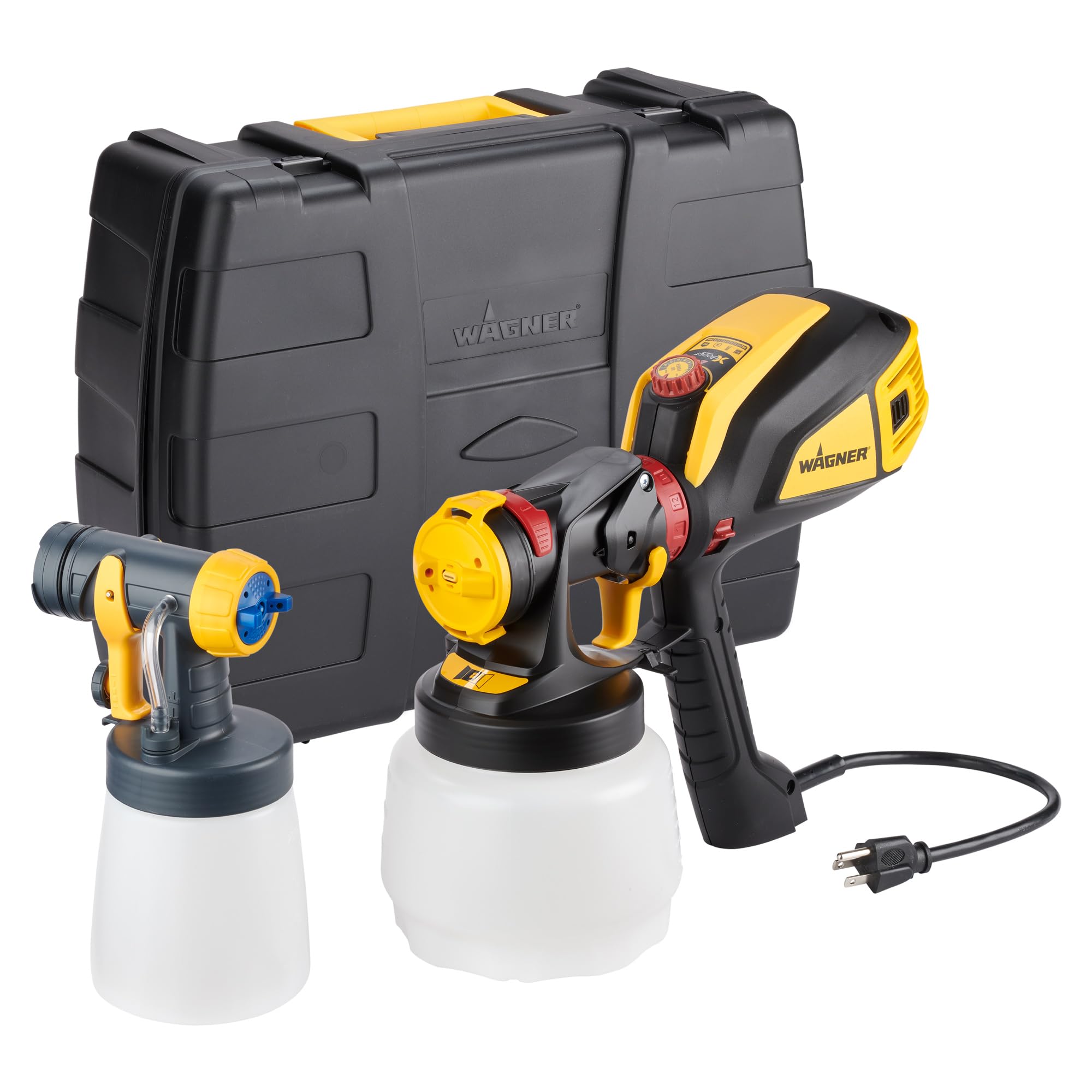
The Wagner Flexio 595 is the gold standard for DIYers who want to spray unthinned latex straight from the can. Its X-Boost turbine generates enough air volume to atomize thick paint without sputtering, delivering a smooth finish on walls, ceilings, and exterior siding. The nine speed power settings let you fine-tune the airflow for everything from a fine mist on furniture to heavy coverage on a fence.
The included iSpray nozzle handles large jobs efficiently — an 8×10 wall takes roughly five minutes — while the Detail Finish nozzle switches over for cabinets, trim, and small projects. The variable paint flow control and adjustable spray width give you professional-level control over the pattern. The cup liner makes cleanup significantly faster by reducing the amount of disassembly required between color changes.
The 1.5-quart tank holds enough paint for medium-sized rooms without constant refills. Users report that heavy stains like Cabot Deck Correct spray beautifully with no thinning, though the tip may clog after extended use — keeping soapy water nearby solves the issue mid-project. The weight is 10% lighter than previous Flexio models, reducing arm fatigue during longer sessions.
Why it’s great
- Sprays unthinned latex with no issues
- Two specialized nozzles for different project sizes
- Nine speed settings for precise control
- Cup liner simplifies color changes and cleanup
Good to know
- Not suitable for low-viscosity stains without adjustment
- Larger learning curve due to multiple settings
- Tip clogs can occur during long sessions with thick stains
2. Tilswall Shark 800W

The Tilswall Shark 800W brings serious power with an 800-watt motor that handles high-viscosity materials up to 120 din-s. Its innovative side-feed design lets you add paint without unscrewing the container, making it easier to use every last drop from the can. The split head and main body design, combined with a 2.5-meter hose and shoulder strap, reduces the weight on the handheld gun to just the spray head, which dramatically cuts arm fatigue for large projects.
Four brass nozzles (1mm, 1.5mm, 2mm, 3mm) provide the range needed for everything from thin sealers to thick latex. The three spray patterns — horizontal oval, vertical oval, and round — cover a wide variety of surface shapes. The HVLP adjustable flow knob gives you fine control over paint output. Users report achieving a glass-smooth finish on furniture with proper thinning and the smallest nozzle setting.
The 8.2-foot hose and 9.8-foot power cord give you a combined reach of about 18 feet, letting you move freely around a room without dragging the motor unit. Cleanup requires disassembly of the nozzle and flushing the system, but the included brush and needle make quick work of blockages. The 1.3-liter cup capacity is generous for furniture and cabinet work without being unwieldy.
Why it’s great
- 800W motor provides excellent atomization
- Side-feed design reduces paint waste
- Split design with shoulder strap reduces arm strain
- Compatible with high-viscosity paints
Good to know
- Thicker paints require proper thinning for best results
- Hose length may feel restrictive in large rooms
- Clunkier assembly initially compared to all-in-one units
3. Batavia 700W HVLP

The Batavia 700W HVLP delivers pro-level features without the premium price tag, making it a strong contender for serious DIYers. Its 700W motor generates twice the power of many competing units in its class, resulting in finer paint particle size and a smoother final finish. The separate motor and spray gun design with a shoulder strap shifts the weight off your arm, keeping the handheld portion at just one pound.
Four nozzle sizes (1mm, 1.5mm, 2mm, 3mm) give you the range to handle sealers, varnishes, and thick latex. The 360° anti-backflow design prevents paint from leaking into the air hose, which reduces clogs and makes cleanup quicker. The visible anti-backflow window lets you see when the system is clean, eliminating guesswork during maintenance. The 6.5-foot flexible air hose provides enough freedom to cover a 12×12 foot space in about six minutes.
ETL certification assures electrical safety and quality compliance, which is rare at this price point. The 24-month warranty is longer than most competitors offer. Users note that while the unit delivers professional results for furniture, cabinets, and fences, the 40-fluid-ounce tank can feel heavy when full, and overspray requires proper masking and ventilation. Build quality feels solid, with users reporting no clogging issues during extended use.
Why it’s great
- 700W motor produces very fine atomization
- Separate design with shoulder strap reduces fatigue
- 360° anti-backflow prevents clogs
- ETL certified with 24-month warranty
Good to know
- Tank is heavy when full
- Overspray requires careful masking
- Refilling the 40 oz container can be challenging mid-project
4. InoKraft HVLP
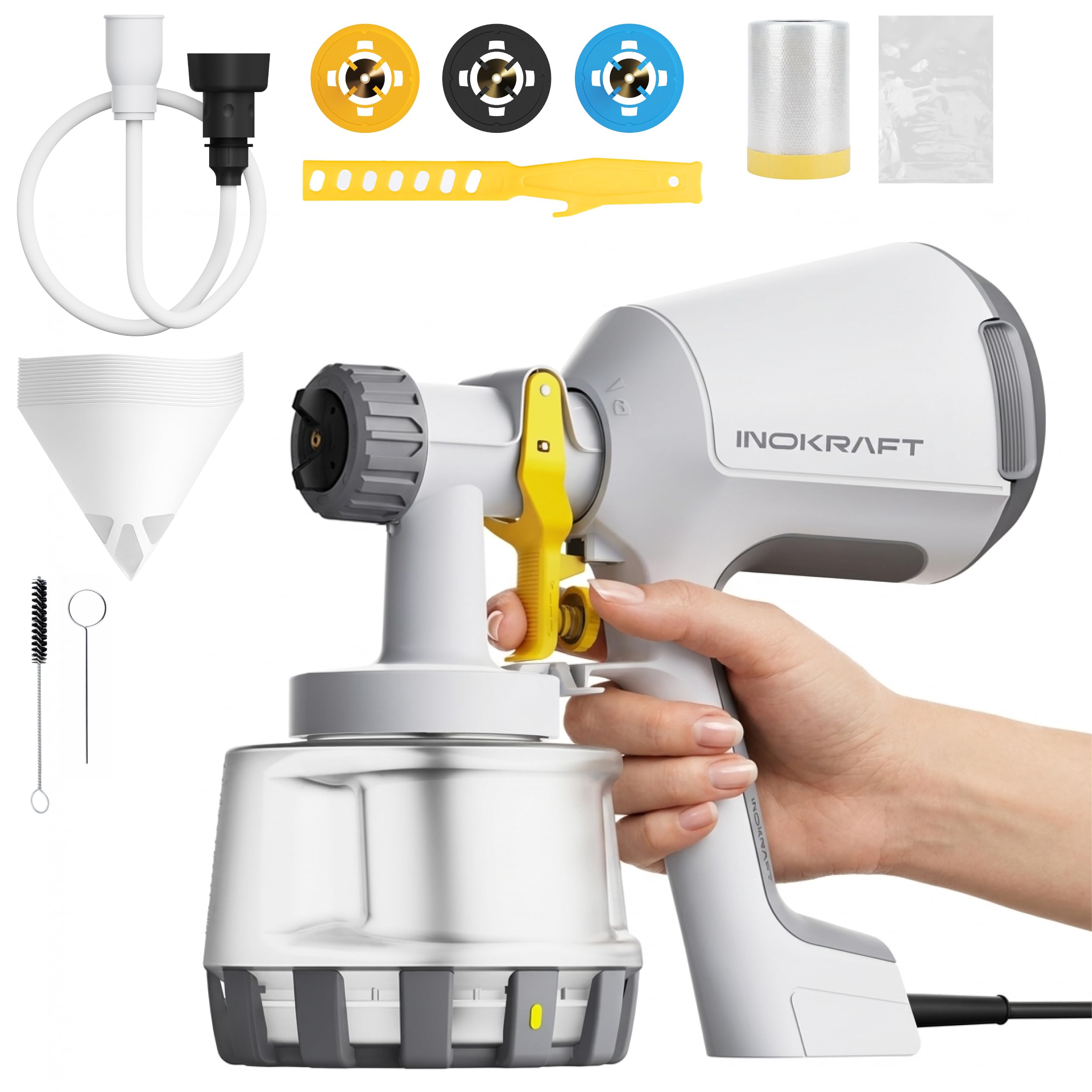
The InoKraft HVLP sprayer, recognized by the Bob Vila Awards, stands out for its innovative magnetic base system. The suction hose rotates 360°, allowing you to spray at any angle without manually repositioning the tube. This design ensures continuous paint flow from bottom to top in a single pass, eliminating stops and drips. The powerful motor delivers up to 15.8 GPH of flow and atomizes most paints without thinning, reducing clogging and overspray.
Three brass nozzles (1.0mm, 1.8mm, 2.6mm) cover everything from fine finishing on furniture to medium-sized wall jobs. The 1.27-quart translucent container has a clear scale for easy mixing, and the included disposable bag eliminates washing the container between colors — just swap the bag and keep spraying. The QuickFlush adapter connects to the feed tube for a fast, deep system flush.
The 6.56-foot power cord is adequate for most indoor rooms. Users consistently praise how simple the tool is to assemble and clean, though a few report that the paper strainers feel like the weakest component. The 1-year warranty and comprehensive video manuals provide enough support for beginners. This sprayer is ideal for furniture makeovers and closet doors where speed and convenience matter more than raw power.
Why it’s great
- Magnetic 360° feed hose prevents paint starvation
- Disposable bag system for instant color change
- QuickFlush adapter simplifies deep cleaning
- Sprays most paints without thinning
Good to know
- Paper strainers can tear under heavy usage
- Not suitable for automotive spraying
- Feed system can be finicky without liners
5. Tilswall Dreamer400
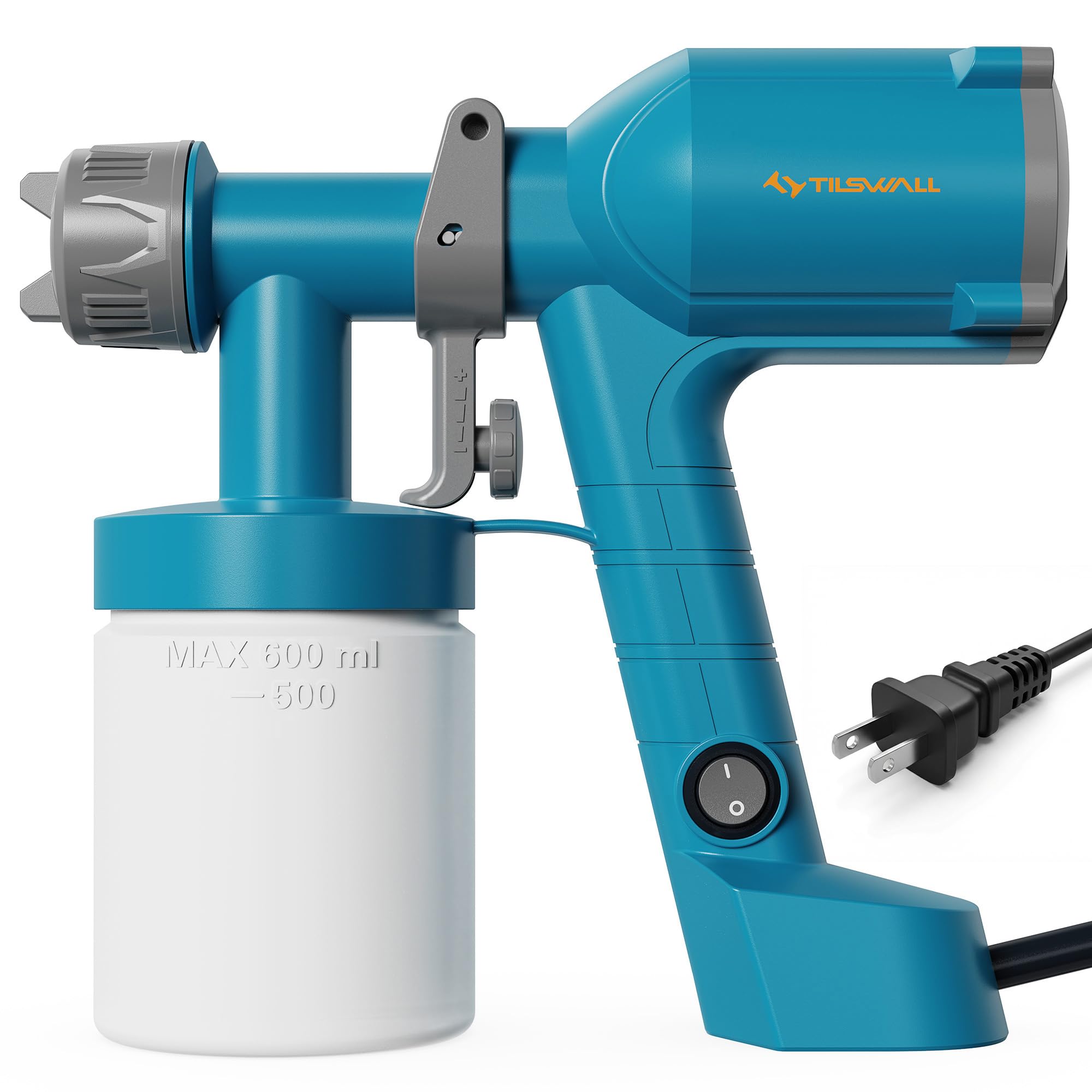
The Tilswall Dreamer400 offers impressive output for its price point, with a maximum spray volume of 1200 mL/min. The large 1000-milliliter paint container handles large-area tasks like walls, fences, and furniture without constant refilling. The high-power motor atomizes paint effectively for a plastic-bodied sprayer, though users note that it runs louder than many competitors — something to accept for the flow rate you get.
Three nozzle sizes (1.3mm, 1.8mm, 2.6mm) cover the most common DIY scenarios. The 1.8mm nozzle works well for thin paints like sealers and varnish, while the 2.6mm nozzle handles thicker latex and chalk paints. Three spray patterns — vertical, horizontal, and circular — give you flexibility for different surface orientations. The adjustable flow control knob lets you dial in the paint output for finer control.
The included five 190-micron filter papers help catch impurities that cause clogs. The kit also comes with a cleaning needle, thru needle, and brush. Users strongly recommend thinning paint to 120 DIN viscosity for best results and emphasize cleaning within 15 minutes of use to prevent blockages. This sprayer is best suited for outdoor projects and small home remodeling where noise is less of a consideration.
Why it’s great
- High flow rate for rapid coverage on large surfaces
- Large 1000ml cup reduces refill frequency
- Three nozzle sizes cover common paint types
- Very affordable for the power output
Good to know
- Runs noticeably louder than more expensive models
- Constant air blow when idle can be annoying
- Requires prompt cleaning to avoid clogs
6. PULENDY PL42
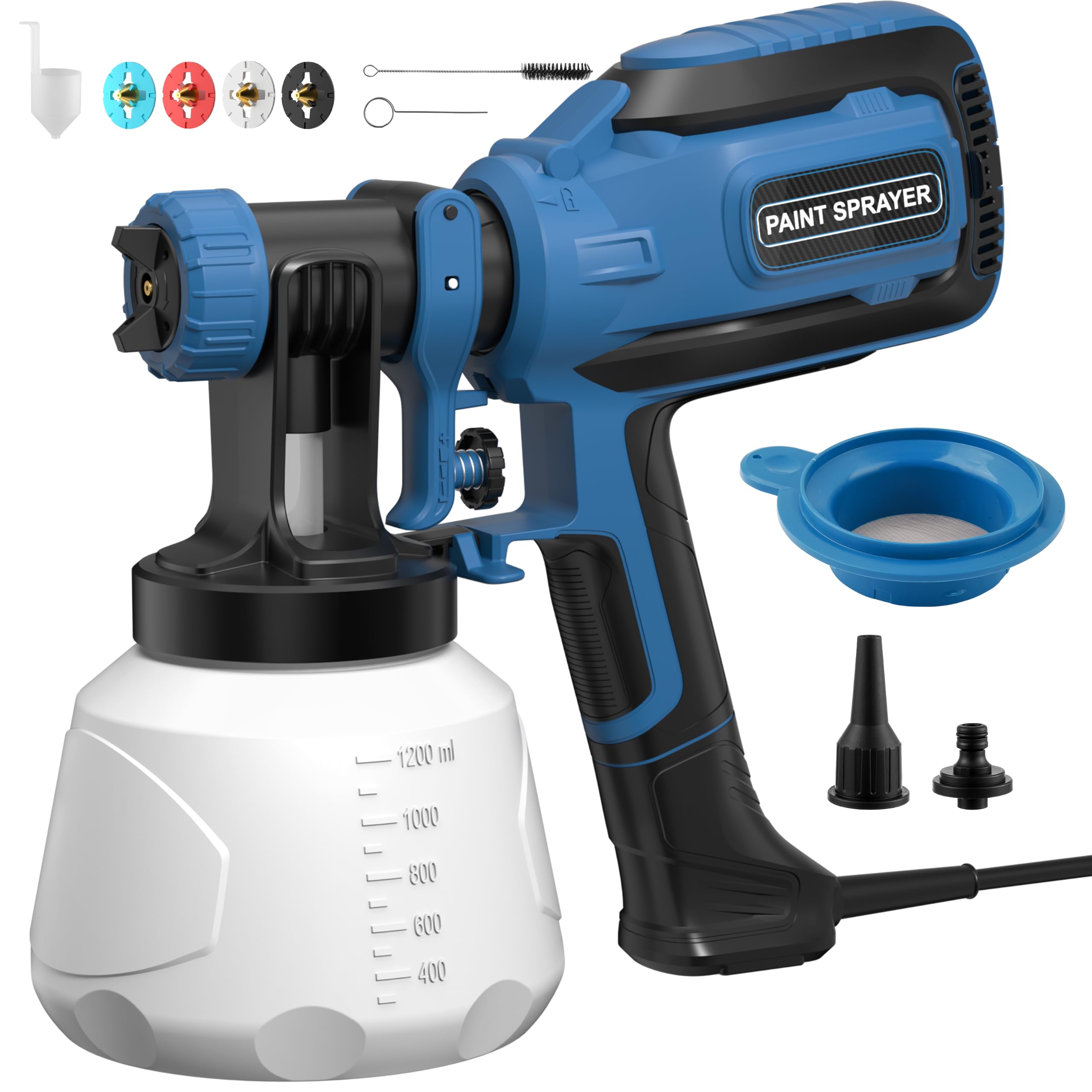
The PULENDY PL42 is built for the absolute beginner, with tool-free assembly that takes about 10 seconds out of the box. Its four brass nozzles (1mm, 1.5mm, 2mm, 3mm) match the range of more expensive models, making it suitable for everything from thin stains to thick latex when properly thinned. Three spray patterns — horizontal, vertical, and circular — cover most surface types.
A unique inclusion is the dust blowing joint, which lets you blow debris off surfaces before painting, a small but thoughtful feature that improves adhesion. The adjustable flow control knob helps reduce overspray and paint waste, which is especially useful for beginners still learning trigger control. The cleaning connector attaches directly to a faucet for easy flushing.
Users who took the time to thin latex paint to a 3:1 ratio (paint to water) and use the 1mm tip achieved professional-looking results on furniture and cabinets. The instruction booklet is sparse, but a quick YouTube search for “How to Use A HVLP Paint Sprayer” with the yellow sprayer fills in the gaps. Heavy users report only one minor clog over seven hours of spraying, which is excellent for an entry-level unit.
Why it’s great
- Extremely easy assembly for first-time users
- Dust blowing joint improves surface prep
- Four brass nozzles cover a wide paint range
- Includes cleaning brush, needle, and filter
Good to know
- Thicker paints require proper thinning before use
- Instruction booklet could be more detailed
- Not ideal for heavy commercial applications
7. WIBENTL W60
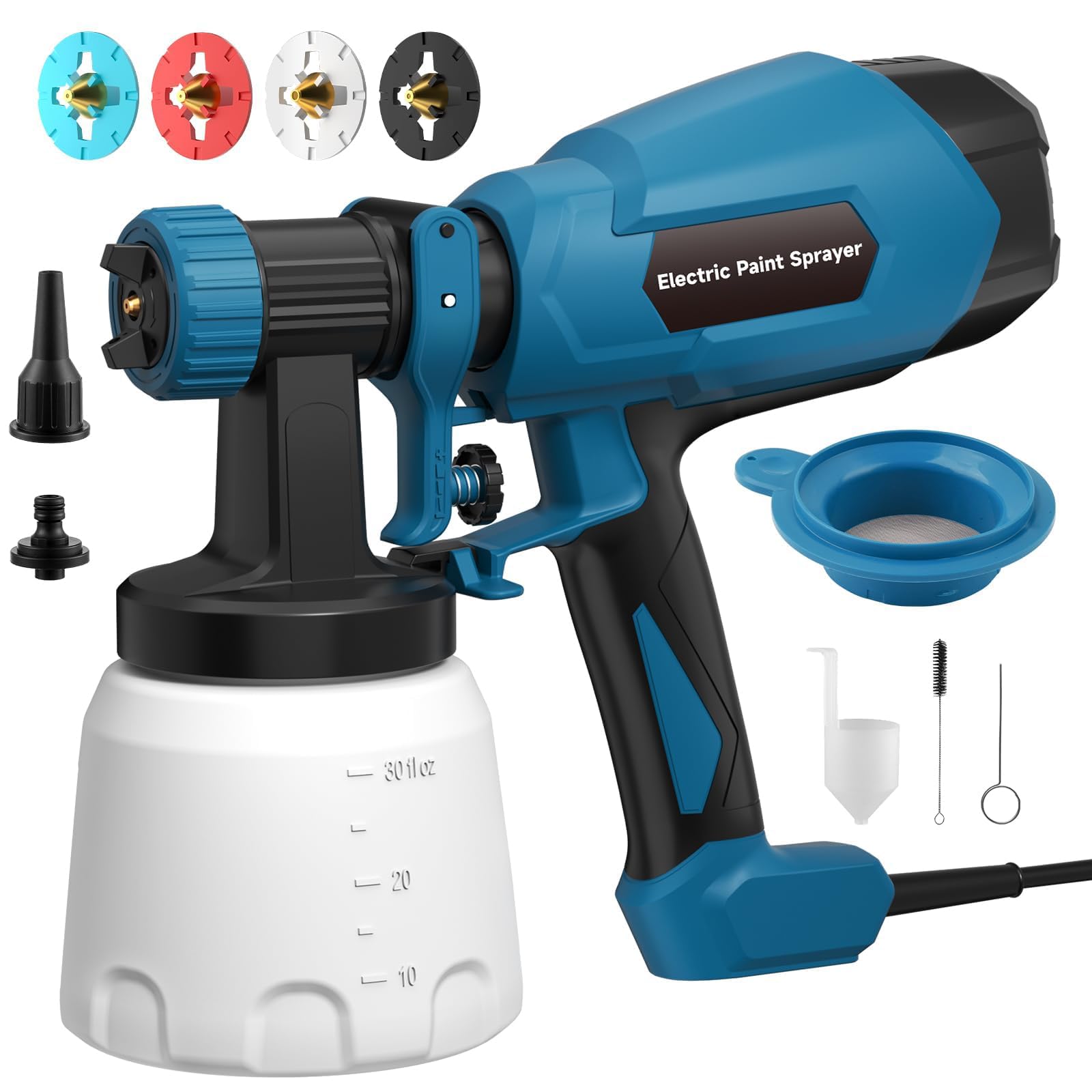
The WIBENTL W60 is the most budget-friendly option in this lineup, but it doesn’t skimp on the essentials. It includes the same four brass nozzle sizes as units costing significantly more, giving you the ability to switch between thin stains and thick latex without an upgrade. The 800-milliliter container is adequate for medium-sized projects like fence panels, furniture, and cabinets.
Three spray patterns give enough flexibility for flat walls and contoured surfaces. The adjustable flow control knob helps beginners manage paint output and reduce waste. The included cleaning brush, needle, dust blowing joint, and cleaning connector mean you don’t need to buy any extra accessories to start spraying. The viscosity cup lets you measure paint thickness for consistent results.
Users consistently describe this sprayer as an incredible value for the price. DIYers have used it to stain 24×36 foot barns and paint entire house sidings with impressive results. The tool is lightweight — perfect for ladder work — and cleans up easily when you hook it up to a garden hose. It won’t match a professional-level unit costing ten times as much, but for a novice tackling weekend projects, it delivers a fantastic return on a small investment.
Why it’s great
- Extremely affordable entry point for new users
- Four brass nozzles provide professional-level range
- Lightweight design ideal for ladder work
- Complete accessory kit included out of the box
Good to know
- Not as durable or precise as premium units
- Requires immediate cleaning to prevent clogs
- Can struggle with unthinned heavy latex
FAQ
Do I really need to thin paint before using a HVLP sprayer?
How long does it take to clean a DIY paint spray gun?
Final Thoughts: The Verdict
For most users tackling a variety of home projects, the best diy paint spray gun winner is the Wagner Flexio 595 because it sprays unthinned latex reliably, includes specialized nozzles for different job sizes, and offers advanced adjustability without requiring professional experience. If you want a powerful split-body design that reduces arm fatigue for large areas, grab the Tilswall Shark 800W. And for the best value combination of power and features, the Batavia 700W delivers outstanding atomization and ETL certification at a mid-range price.

Mo Maruf
I created WellFizz to bridge the gap between vague wellness advice and actionable solutions. My mission is simple: to decode the research and give you practical tools you can actually use.
Beyond the data, I am a passionate traveler. I believe that stepping away from the screen to explore new environments is essential for mental clarity and physical vitality.