Our readers keep the lights on and my smoothie glass nicely filled. As an Amazon Associate, I earn from qualifying purchases.
Nothing ruins a quiet evening on the patio faster than the high-pitched drone of a mosquito. You can douse yourself in chemical sprays, but the yard itself remains a breeding ground, turning every backyard gathering into a gamble. The right approach doesn’t just mask the problem for a few hours — it creates a barrier so effective that mosquitoes look for a different zip code.
I’m Mohammad Maruf — the founder and writer behind WellFizz. I’ve spent hundreds of hours analyzing the hardware specs, chemical formulations, and coverage math behind the most common residential pest control solutions to separate the real yard defenders from the overpriced water bottles.
From natural essential-oil concentrates to high-voltage solar traps and professional-grade misting adapters, this guide breaks down the landscape of the best diy mosquito control options available today.
How To Choose The Best DIY Mosquito Control
Mosquito control isn’t a one-size-fits-all purchase. The ideal solution depends entirely on your yard size, the local mosquito pressure, and your tolerance for handling chemical concentrates. Before you pick a product, run through these three factors to narrow your options.
Coverage Area vs. Application Method
Hose-end spray bottles are fast for large lawns up to 5,000 square feet, but the coverage is a broad mist that drifts with the wind. Concentrates you mix in a pump sprayer give you more control over where the liquid lands — critical if you need to target the underside of bushes where mosquitoes rest during the heat of the day. Fogging attachments for leaf blowers push the solution deep into vegetation, but they require a separate tank sprayer and a compatible blower. The best choice is the one that matches your typical application route: a simple perimeter walk-around or a deep-treatment mode through dense foliage.
Active Ingredient Family: Synthetic vs. Botanical
Most botanical sprays rely on cedar oil, lemongrass oil, or garlic extract. These solutions break down faster in sunlight and rain, which means you reapply every 14 to 30 days depending on the concentration and your local weather. Synthetic pyrethroids (like those found in Black Flag fogging insecticide) persist longer on leaf surfaces and knock down a broader spectrum of flying insects, but they also affect bees and beneficial insects if sprayed directly on blooms. If you have a pollinator garden or free-roaming pets that graze on grass, botanical options offer a wider safety margin — but you trade away residual longevity.
Passive Traps vs. Active Spraying
A solar bug zapper is a passive device: it attracts mosquitoes with UV light and kills them on a high-voltage grid, but it does nothing to treat the resting areas where mosquitoes breed. Zappers work best as a supplementary tool around a seating area, not as a primary defense for a half-acre yard. Active spraying treats the actual surfaces where mosquitoes land and rest. If your main goal is to sit outside without being bitten tonight, a spray product will give you immediate relief. If you want ongoing population reduction over a season, combine a barrier spray with a zapper to cover both the resting and the active flying phases of the mosquito life cycle.
Quick Comparison
On smaller screens, swipe sideways to see the full table.
| Model | Category | Best For | Key Spec | Amazon |
|---|---|---|---|---|
| Cedarcide YardSafe | Natural Hose Spray | Pet-safe perimeter treatment up to 5,000 sq. ft. | 32 oz ready-to-spray | Amazon |
| Eco Defense Spray | Natural Hose Spray | Flea and tick prevention with mosquito reduction | Covers up to 5,000 sq. ft. | Amazon |
| EcoGuard Plus Concentrate | Natural Concentrate | Large-area coverage using a pump sprayer or fogger | Super concentrate; 8 oz treats 43,560 sq. ft. | Amazon |
| Black Flag 64 oz Fogging Insecticide | Synthetic Fogger | Heavy mosquito/fly knockdown with propane fogger | 64 oz x 2; for use in fogging machines | Amazon |
| MIST-PRO+ Mosquito Mister | Fogger Adapter Kit | Converting a leaf blower into a backpack-style fogger | 2-gallon tank; sprays up to 40 ft. | Amazon |
| PhatroyYee 4500V Solar Bug Zapper | Solar Zapper | Zapper coverage up to 1/2 acre | 4500V grid; 365-395nm dual LED | Amazon |
| PhatroyYee 4-in-1 Upgraded Solar Bug Zapper | Solar Zapper | Indoor/outdoor use with 1-acre coverage | 4500V; 4000mAh battery; 10W solar panel | Amazon |
In‑Depth Reviews
1. Cedarcide YardSafe
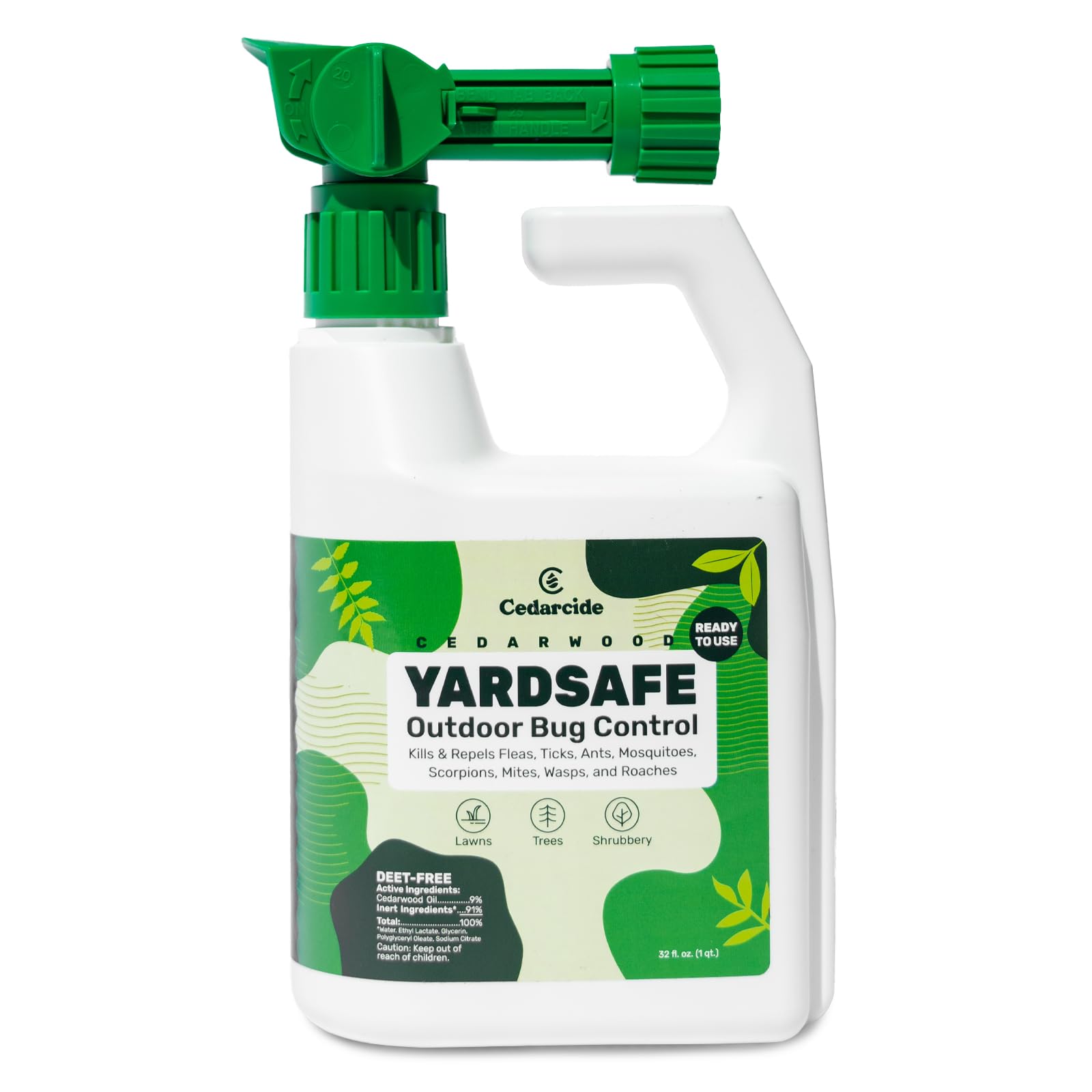
Cedarcide uses a blend of natural cedar oil and lemongrass essential oil to kill and repel mosquitoes, ticks, fleas, and chiggers. The 32-ounce quart connects directly to a standard garden hose and covers up to 5,000 square feet without requiring any mixing or downtime — you can let kids and pets back onto the lawn the moment the spray dries. The cedar scent is strong during application but fades within a couple of hours, leaving no chemical residue odor.
Customer feedback shows consistent success against chiggers and fleas, though results against high-pressure mosquito populations in humid southern states have been mixed — some users in North Carolina and Louisiana reported needing multiple bottles per treatment to see meaningful reduction. The formula is food-safe and plant-based, which makes it a strong choice for households with grazing pets and edible garden beds bordering the spray zone.
One notable inconsistency: Amazon listing photos and actual received product can differ between a white bottle (lemongrass-dominant formula) and a blue bottle (9% cedar oil formula). If you are sensitive to scent strength, check the bottle color upon arrival. Overall, this is the safest entry point for families who want immediate, chemical-free coverage around the immediate perimeter.
Why it’s great
- Zero-downtime application — safe for kids and pets once dry
- Natural essential oil formula that smells pleasant during application
- Covers up to 5,000 square feet per bottle
Good to know
- May require multiple applications per season in high-humidity regions
- Bottle version inconsistency can cause confusion on arrival
- Not a long-residual barrier; reapplications every 14 days recommended
2. Eco Defense Flea, Tick, and Mosquito Spray

Eco Defense targets fleas and ticks as its primary claim, with mosquito reduction as a secondary benefit. The ready-to-spray bottle attaches to a standard hose and requires no mixing or measuring. Coverage tops out at 5,000 square feet, and the manufacturer suggests reapplying every 30 to 45 days for ongoing yard maintenance. The formula relies on plant-derived oils that are safe around kids, pets, and ornamental plants.
Users consistently report excellent flea and tick suppression — dogs stay clear of these pests even after two weeks post-treatment. Mosquito reduction is less dramatic: several reviewers noted a clear drop in total mosquito count but not complete elimination, especially in areas with dense mosquito populations like Louisiana. One reviewer described the state bird as the mosquito and felt the product couldn’t keep up with that level of pressure.
The main advantage here is the simplified maintenance schedule. If you primarily want to stop fleas and ticks from riding your dog into the house, this spray delivers consistent results with minimal effort. Just be prepared to supplement with a fogger or zapper if mosquitoes remain your chief concern.
Why it’s great
- Excellent flea and tick control for pet households
- Very easy hose-end application with no mixing required
- Safe formula for kids, pets, and garden plants
Good to know
- Mosquito reduction is noticeable but not complete
- 30-45 day residual may be shorter in rainy climates
- Not designed for heavy mosquito pressure zones
3. EcoGuard Plus Concentrate

EcoGuard Plus is a super-concentrated botanical formula that packs the punch of a full acre (43,560 square feet) into an 8-ounce bottle. You measure and pour the concentrate into your own pump sprayer or fogger, mix with water, and apply. The active ingredients are plant-based essential oils that kill mosquitoes and ticks on contact without staining foliage or leaving visible residue on patio furniture. The cedar scent is strong during application but dissipates within two hours.
Customer reviews from Alaska to the lower 48 highlight excellent knockdown when applied correctly — focusing on the underside of bushes, shaded grass, and other mosquito resting spots. Many users pair it with a fogging machine for deep-vegetation coverage. The downside is longevity: mosquitoes that were gone within an hour can return by the next evening, especially if you only applied a light perimeter mist rather than a thorough foliage soak. Reapplication after rain is mandatory.
The concentrated format is cost-effective per treatment compared to ready-to-spray bottles, but you do need a quality sprayer to apply it evenly. Users who owned a backpack pump sprayer or a propane fogger reported the best results. The manufacturer backs the product with responsive customer service — several reviewers noted the owner personally called to discuss application technique.
Why it’s great
- Extreme coverage — 8 oz treats a full acre
- Non-staining and safe for all plant material
- Very effective when applied with a fogger or quality pump sprayer
Good to know
- Not a long residual — mosquitoes can return by next evening
- Requires a separate sprayer or fogger to apply
- Reapplication necessary after heavy rain
4. Black Flag 64 oz Fogging Insecticide
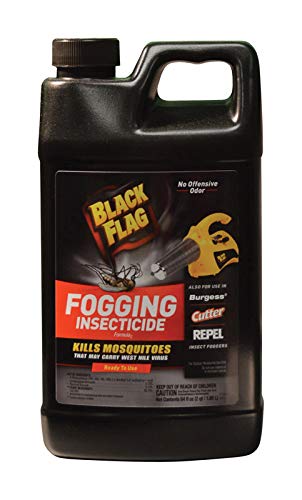
Black Flag 64 oz is a synthetic fogging insecticide designed specifically for use with propane foggers. You pour it into the fogger tank, and the machine generates a thick, visible fog that settles on foliage and hard surfaces. The active ingredient is a pyrethroid that provides broad-spectrum knockdown of mosquitoes, biting flies, and other flying insects. The two-pack gives you 128 total ounces, which translates to several full treatments depending on your fogger’s output rate.
Users who run Black Flag through a propane fogger consistently report dramatic improvement — one reviewer described switching from expensive flying insect spray cans to this fogger fuel as a major money saver with better results. The fog is dense enough to roll along the ground with the wind, settles into low-lying vegetation where mosquitoes rest, and stays effective for the duration of a typical outdoor evening event. Best results come from fogging on still days so the cloud lingers rather than disperses immediately.
The major trade-off is environmental selectivity: synthetic pyrethroids kill beneficial insects on contact, so avoid fogging directly over flowering plants or pollinator beds. This product is not for use as a hose-end spray; it requires a thermal or ULV fogger. If you already own a fogging machine and want a potent, cost-effective fuel, this two-pack is a solid buy.
Why it’s great
- Creates thick, lingering fog that penetrates vegetation
- Cost-effective alternative to aerosol bug sprays
- Fast knockdown of mosquitoes, flies, and gnats
Good to know
- Requires a separate propane or ULV fogger machine
- Kills beneficial insects on contact — avoid flowering plants
- Synthetic pyrethroid not ideal for organic gardens
5. MIST-PRO+ 2-Gallon Tank Sprayer Kit
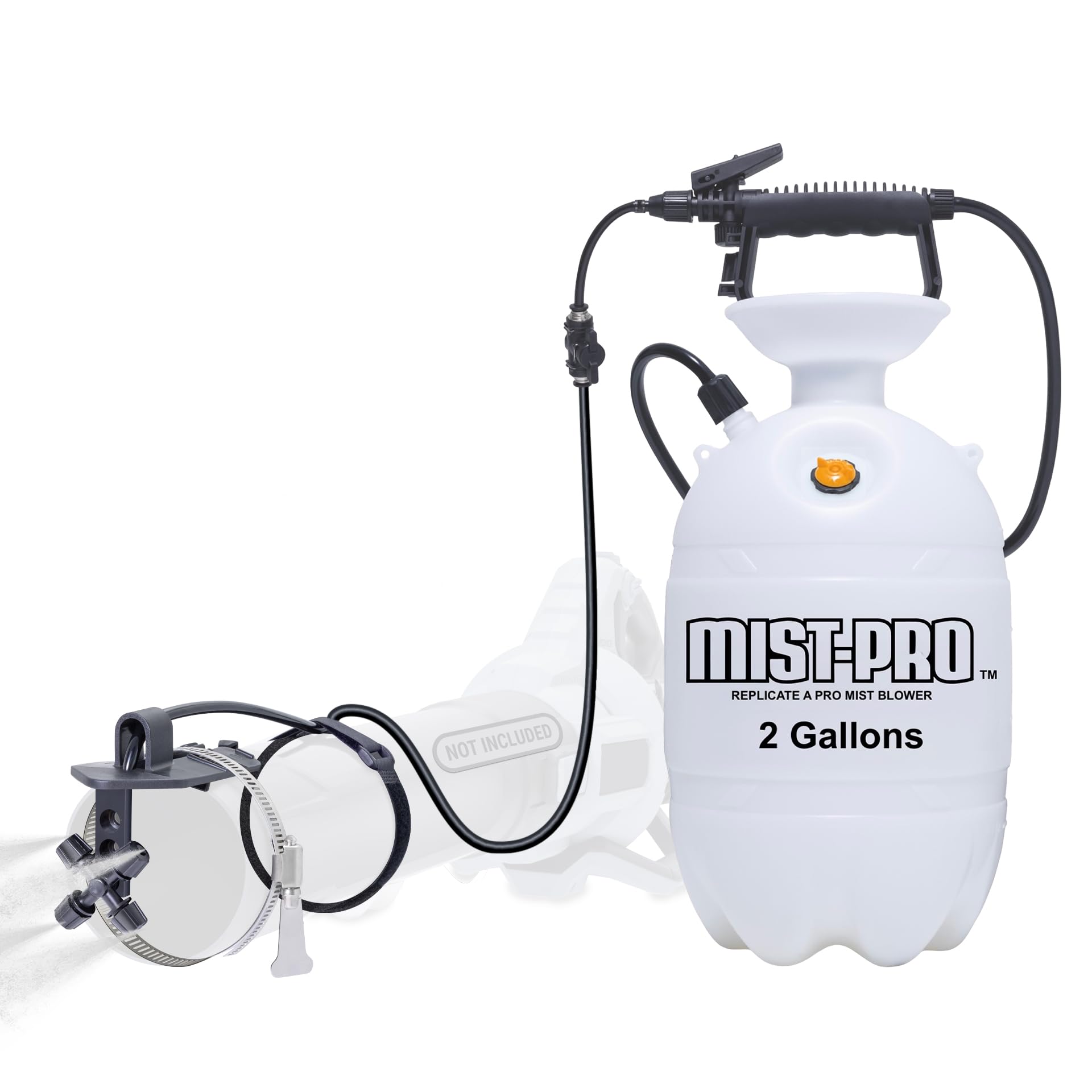
The MIST-PRO+ kit turns any standard leaf blower and a 2-gallon tank sprayer into a backpack-style mist blower. You mount the adapter to the blower nozzle, connect the sprayer line, and the blower’s air stream atomizes the liquid into a fine mist that reaches up to 40 feet. The pressurized system forces the solution into the underside of leaves where mosquitoes rest — an area hose-end sprays typically miss. The 2-gallon tank provides enough capacity to treat a half-acre property in about 30 minutes.
User feedback highlights two standout features: the lock-on spray trigger, which eliminates hand fatigue during long treatments, and the manufacturer’s after-sale support — multiple reviewers mentioned the owner called them personally to ensure setup went smoothly. The kit works with any pesticide, herbicide, or fungicide you already own, so you are not locked into a proprietary chemical brand. The maximum pressure of 45 PSI is sufficient for residential-scale fogging but won’t match a dedicated commercial mist blower.
One limitation: the mist pattern struggles to project further than a few feet from the blower nozzle in breezy conditions. At close range (under 10 feet), the coverage is dense and effective. If you already own a leaf blower and want to upgrade your mosquito control without buying a dedicated fogger, this kit is a smart mid-range investment.
Why it’s great
- Converts a common leaf blower into a backpack fogger for a fraction of the cost
- Lock-on spray trigger for comfortable extended use
- Works with any tank sprayer solution — no proprietary chemicals
Good to know
- Range drops off significantly in breezy conditions
- Requires a separate leaf blower and tank sprayer to function
- Not as powerful as a dedicated commercial mist blower
6. PhatroyYee 4500V Solar Bug Zapper
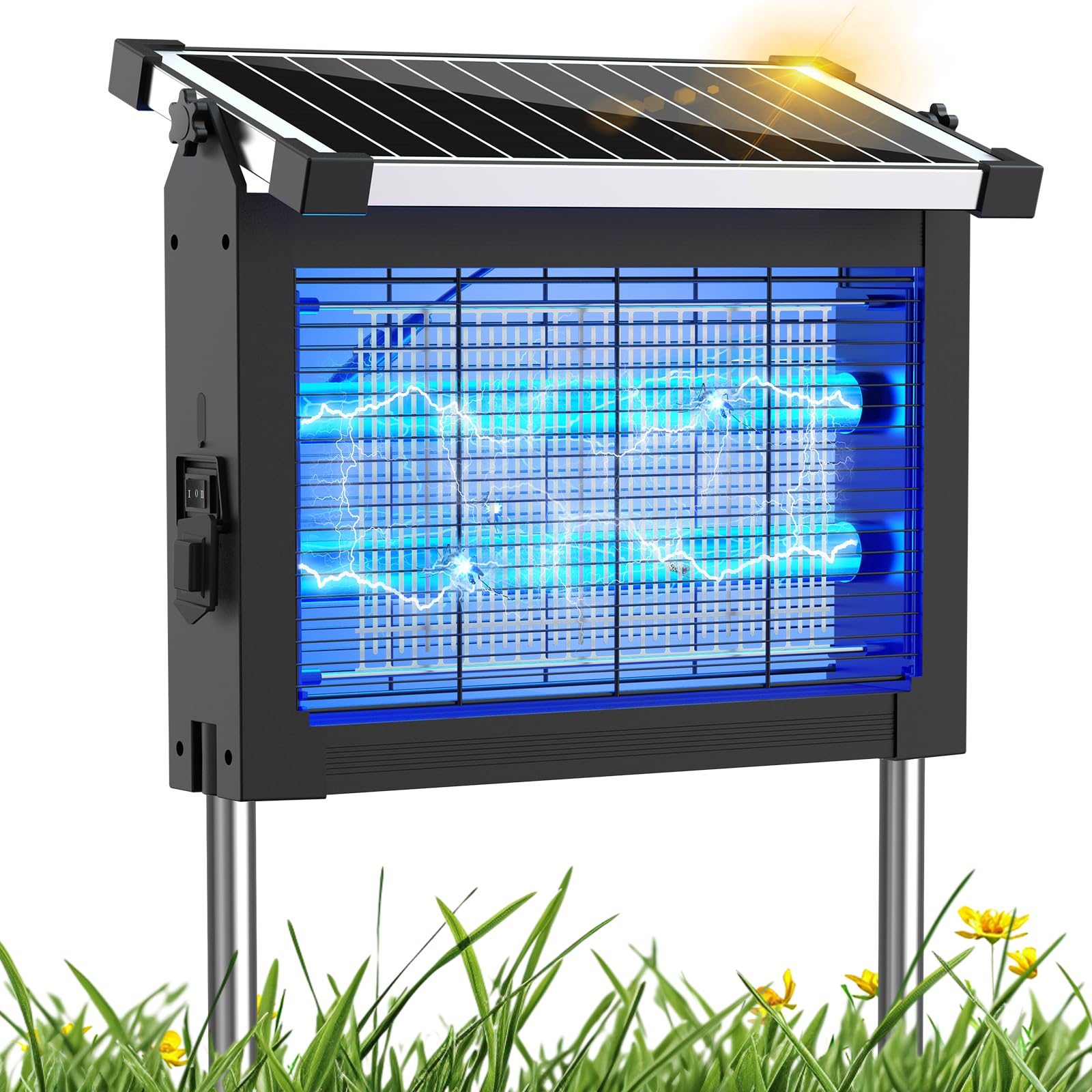
This solar-powered zapper uses a 365-395nm UV LED to attract mosquitoes, gnats, and flies within a 1/2-acre radius and kills them on a 4500-volt electrified grid. The built-in light sensor switches the unit on at dusk and off at dawn, so it charges via the solar panel during daylight hours and activates automatically at night. A USB-C charging option provides a full charge in 4 hours if solar conditions are poor, and the battery lasts up to 12 hours per cycle. The IPX5 waterproof rating means rain won’t short the electronics.
Users in high-mosquito zones like South Texas report collecting significant volumes of dead insects daily — the grid needs cleaning every few days during peak season. The zap sound is described as a quiet, satisfying crackle that doesn’t disturb outdoor conversation. The included stake and hanging hook offer flexible placement options around patios, decks, and camping setups. The primary durability concern reported by a handful of reviewers is rust formation on the metal grid after roughly a year of outdoor exposure, despite the waterproof rating.
As a standalone tool, this zapper works best as a perimeter shield around a seating area, not as a yard-wide solution. Position it 20–40 feet away from where people sit so it draws mosquitoes away rather than toward your gathering. Pair it with a barrier spray for full-yard control.
Why it’s great
- Solar-powered with USB backup — no ongoing consumable costs
- Dusk-to-dawn automation requires no daily attention
- Quiet, effective zap that doesn’t disrupt outdoor activity
Good to know
- Long-term rust on the metal grid after one year of outdoor exposure
- Does not replace barrier spraying for full-yard treatment
- Battery life drops in cloudy weather without USB top-up
7. PhatroyYee 4-in-1 Upgraded Solar Bug Zapper

The upgraded version of the PhatroyYee zapper ships with a larger 10-watt solar panel, a 4000mAh rechargeable battery that delivers up to 13 hours of runtime, and a 4500-volt grid that covers a full acre. The 4-in-1 label refers to its ability to function as a solar zapper, an indoor plug-in unit, a portable cordless trap, and a camping bug light. The package includes two grounding stakes, a 2.6-foot hanging chain, and a 10-foot extension cord for the solar panel, giving you flexible placement options around the yard, deck, or even inside a garage or barn. Dual blue-violet LED bulbs emit light at the 365-395nm wavelength proven to attract a wide range of flying pests.
Customer reviews consistently praise the build quality — the ABS plastic and stainless steel construction resists rust better than the standard version. Users report excellent mosquito reduction around seating areas and appreciate the Type-C charging option for cloudy days. The auto mode is straightforward: charge during the day, activate at dusk. Manual mode lets you run the unit 24/7 if needed. The zapper is EPA registered, which matters for buyers who want regulatory validation of the safety and efficacy claims.
The main quirk: the zapper attracts and kills most flying insects effectively, but the grid spacing is wide enough that very small insects like fruit flies can pass through unharmed. Also, the solar panel charges best when positioned in direct sunlight — partial shade during the day will shorten the night’s runtime. For the price, this is the most feature-complete solar zapper on the list, especially if you need the flexibility to move it between indoor and outdoor spaces.
Why it’s great
- EPA registered for safety and efficacy validation
- Stainless steel grid resists rust better than standard zappers
- Versatile placement: stake, hang, or tabletop with included accessories
Good to know
- Grid spacing allows small insects like fruit flies to escape
- Solar panel needs direct sun for full 13-hour runtime at night
- Less effective in daylight — optimized for dusk-to-dawn operation
FAQ
Can I use botanical mosquito spray around my vegetable garden?
How often should I reapply a natural barrier spray during mosquito season?
Does a solar bug zapper eliminate the need for yard spraying?
Final Thoughts: The Verdict
For most users, the best diy mosquito control winner is the Cedarcide YardSafe because it balances immediate family-safe coverage with a straightforward no-mix application that works on the average-sized yard. If you want maximum coverage per dollar and already own a sprayer, grab the EcoGuard Plus Concentrate. And for whole-yard knockdown using a propane fogger with thick, persistent fog, nothing beats the Black Flag 64 oz Fogging Insecticide.

Mo Maruf
I created WellFizz to bridge the gap between vague wellness advice and actionable solutions. My mission is simple: to decode the research and give you practical tools you can actually use.
Beyond the data, I am a passionate traveler. I believe that stepping away from the screen to explore new environments is essential for mental clarity and physical vitality.