Our readers keep the lights on and my smoothie glass nicely filled. As an Amazon Associate, I earn from qualifying purchases.
A jagged crack across your garage floor or driveway isn’t just an eyesore — it’s an open invitation for water to seep beneath the slab, accelerate freeze-thaw damage, and turn a simple line into a crumbling chasm. The right repair kit makes the difference between a permanent fix and a seasonal redo, but the wrong choice leaves you with a brittle patch that fails before winter hits.
I’m Mohammad Maruf — the founder and writer behind WellFizz. My research process for this guide involved comparing the chemical composition, application methods, and real-world durability data from hundreds of verified user experiences across five popular kits to isolate the specific material science that actually holds concrete together through thermal cycling and heavy traffic.
Whether you are sealing a hairline stress fracture or a wide settlement gap, finding the right formulation is critical. This guide breaks down the five best contenders to help you identify the best diy concrete crack repair kit for your specific project conditions and skill level.
How To Choose The Best DIY Concrete Crack Repair Kit
Selecting the correct kit depends entirely on the mechanics of your crack. A sprawling, shallow hairline crack needs a thin-viscosity sealer that wicks into the pores, while a deep, wide gap demands a bulking agent that won’t shrink as it cures. The three specs below will steer you toward the right chemistry.
Material Chemistry & Elasticity
Thermoplastic rubber rods melt into a flexible, watertight seal that moves with the slab during temperature swings. Polyurethane and silane-resin gels cure to a rubbery state that resists re-cracking but can slump on vertical surfaces. Dry granular powders rely on water activation to form a cementitious bond that matches the texture and color of the surrounding concrete, making them ideal for cosmetic matches on horizontal slabs.
Application Method & Working Time
Gels in caulking-style tubes offer precise control for narrow, straight cracks and tack-free times as short as 2-3 hours. Granular powders require a multi-step process of pouring, tamping, and misting that takes minutes but yields a color-matched, ridge-free finish. Thermoplastic rods demand a heat source — typically a propane torch or heat gun — and are best suited for users comfortable with hot-melt application for a permanent, monolithic seal.
Weathering & Traffic Tolerance
Any kit destined for a driveway or walkway must withstand UV exposure, standing water, and freeze-thaw cycling without cracking or peeling. Look for kits that explicitly state resistance to extreme temperatures and heavy traffic. High-elasticity formulations that remain flexible down to freezing temperatures are essential for outdoor concrete in colder climates, while water-resistant granular fills are often sufficient for sheltered garage or basement floors.
Quick Comparison
On smaller screens, swipe sideways to see the full table.
| Model | Category | Best For | Key Spec | Amazon |
|---|---|---|---|---|
| Gray 1.4 LB Magic Crack Filler Bottle | Granular Powder | Small to medium hairline cracks on driveways and patios | 22.4 oz weight, 1.5 lbs per bottle | Amazon |
| Cement Crack Sealant – MuzeFansi | Polyurethane Gel | Waterproof sealing on horizontal concrete joints | 2-Pack, 2-hour tack free, 24-48hr cure | Amazon |
| Concrete Crack Filler – Autosel | Silane Resin Gel | High-elasticity repairs on driveways and sidewalks | 2-Pack, 2.21 lbs, self-leveling, <1 inch gaps | Amazon |
| Magic Crack Filler 2.5LB – FIRE ROSE | Granular Powder | Large cracks up to 1 inch on concrete slabs | 32 oz container, dry powder, no shelf life | Amazon |
| PLI-STIX 60 Ft. – Dalton Enterprises | Thermoplastic Rod | Permanent watertight seals on blacktop and concrete | 60 ft length, 1/4 inch diameter, propane-heated | Amazon |
In‑Depth Reviews
1. Gray 1.4 LB Magic Crack Filler Bottle
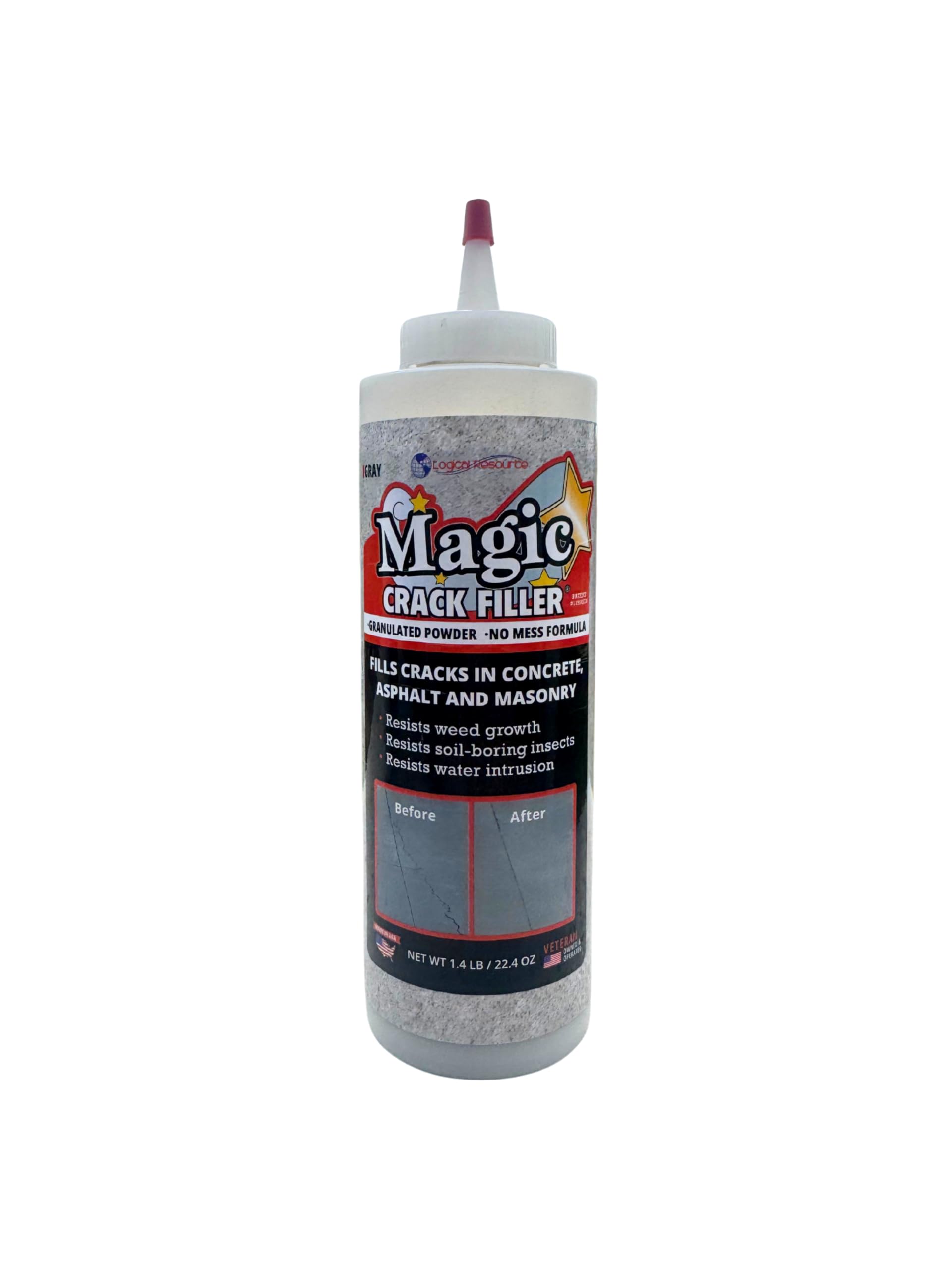
This dry granular formula stands apart because it eliminates the guesswork of mixing — you simply pour the powder into the crack, tamp it down, and spritz with water to activate the cementitious bond. Multiple users report that after two months of exposure to rain and vehicle traffic, the fill remained solid without any peeling or re-opening, a testament to its weather-resistant synthetic rubber composition.
At 1.5 pounds, the bottle covers a surprising number of small to medium hairline cracks, and the gray color blends naturally with most cured concrete tones. The application process is forgiving: you can tap the powder deeper with a rubber mallet, refill until flush, and then mist to finish. The kit is also veteran-owned and made in the USA, which adds a quality-assurance layer for those who prioritize domestic manufacturing.
While the product excels on horizontal surfaces, it is not designed for vertical wall cracks, and the dry powder requires careful troweling to avoid ridges if you over-water the surface. Some users note that large gaps exceeding 1/4 inch may need a sand pre-fill to conserve product and prevent shrinkage, but for standard driveway and patio lines, this kit delivers a near-invisible, durable seal.
Why it’s great
- No mixing or measuring — just pour, tamp, and mist with water.
- Blends naturally with gray concrete and dries solid under heavy traffic.
- Withstood rain and freeze-thaw cycles without cracking after two months of use.
Good to know
- Not suitable for vertical wall cracks or gaps wider than 1/2 inch without a filler base.
- Requires careful troweling to avoid a raised ridge on the surface.
2. Cement Crack Sealant – MuzeFansi
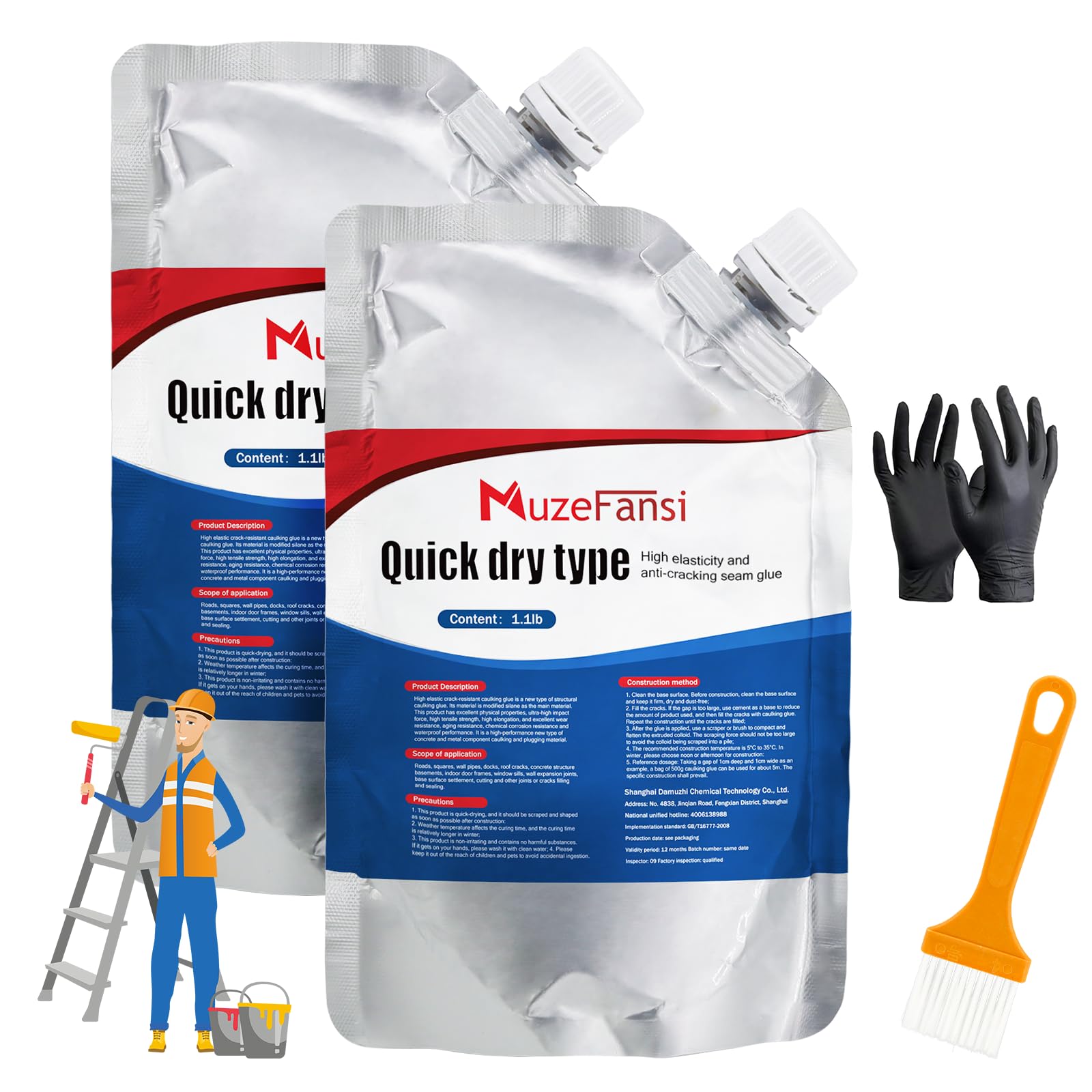
MuzeFansi’s cement crack sealant uses a high-performance polyurethane resin that cures tack-free in as little as two hours, a significant advantage for homeowners who need the driveway usable the same day. The two-pack provides enough material for multiple moderate-length joints, and the included caulking nozzle allows for precise bead control on straight, narrow cracks — making it a solid choice for slab joints and sidewalk expansion gaps.
The formula is designed to remain flexible after curing, so it moves with the concrete during thermal contraction and expansion rather than snapping brittle. Users report that it adheres strongly to the crack edges and forms a watertight seal that holds up against standing water and light traffic. The 24- to 48-hour full cure window is reasonable, and the gel’s self-leveling property reduces the need for extensive smoothing tools.
The primary trade-off is that the gel can be challenging to extract completely from the pouch, with some reviewers noting that roughly a third of the product becomes inaccessible inside the bag toward the end of application. Additionally, the gray color does not always match older, weathered concrete exactly, and the material can crack open in extreme cold if applied in a thick bead. Pre-warming the pouch and surface can improve flow and bonding.
Why it’s great
- Fast tack-free time of just 2-3 hours speeds up project turnaround.
- Self-leveling polyurethane gel fills cracks with minimal tooling effort.
- Includes two full tubes plus application accessories for immediate use.
Good to know
- Difficulty extracting the last third of material from the pouch can waste product.
- May crack in extreme cold if applied too thick or without surface pre-warming.
3. Concrete Crack Filler – Autosel
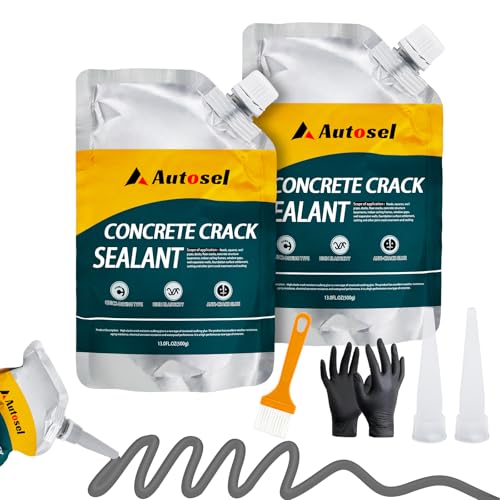
Autosel’s kit is built around a silane-resin gel that boasts high elasticity, meaning it stretches with ground movement rather than fracturing. This makes it particularly well-suited for driveways that experience vehicle loading and for sidewalks on expansive clay soils that shift seasonally. The self-leveling formula flows into horizontal cracks without air pockets and dries to a smooth, flat surface that doesn’t catch debris or shoe soles.
The two-pack includes brush accessories and gloves, and the gel applies easily through a standard caulking nozzle. Reviewers note that the filler survived rain exposure within 24 hours without peeling, and the gray finish blends well with newer concrete slabs. Because the material remains slightly rubbery after curing, it resists the brittle cracking that plagues cement-based fillers in freeze-thaw climates.
On the downside, the product is rebranded from a Chinese manufacturer, and the dark gray finish can appear glossy and attract dust and debris until it weathers naturally. Gaps wider than one inch require a backer rod or sand pre-fill, and full cure can take up to two weeks in cool, humid conditions. Some users advise mixing the bag thoroughly before cutting the nozzle, as the resin can settle and cause inconsistent flow at the start of application.
Why it’s great
- High-elasticity silane resin moves with ground shifts without re-cracking.
- Self-leveling and waterproof, ready for rain exposure within 24 hours.
- Includes two tubes plus brushes and gloves for a complete repair kit.
Good to know
- Dark gray glossy finish attracts dust before it weathers down.
- Not suitable for gaps wider than one inch; longer cure time in cold weather.
4. Magic Crack Filler 2.5LB – FIRE ROSE
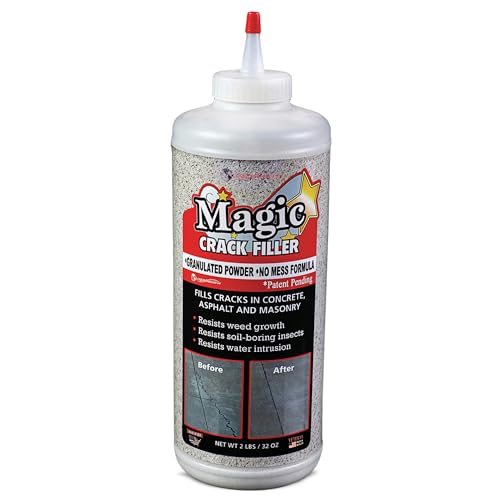
Stepping up to the 2.5-pound container from FIRE ROSE gives you enough granular filler to tackle larger cracks and multiple repair sites without reordering mid-project. Like the smaller Magic Crack Filler bottle, this is a dry powder that activates with water, forming a cementitious bond that matches concrete texture closely. The larger quantity is ideal for driveways with a network of stress cracks or for filling a single wide gap that requires a sand base topped with the filler.
Users report that this filler handles gaps up to one inch when combined with a sand pre-fill, and that it hardens sufficiently overnight to survive a thunderstorm the following day. The gray color blends well with raw concrete, leaving repairs that are mostly unnoticeable after a few weeks of weathering. Because the product has no shelf life, you can store the remainder for future touch-ups without worrying about expiration.
The trade-off is that the powder requires more surface prep than a gel: you must clean the crack thoroughly, apply the powder, tamp it down, and mist multiple times over 20 minutes for best results. Larger cracks also need a filler base to avoid wasting the premium material. For small hairline cracks, the powder can leave a slightly raised surface if not troweled flush immediately after misting.
Why it’s great
- Large 2.5-pound container covers multiple cracks or one wide gap with sand pre-fill.
- No shelf life means leftover filler stays usable for future repairs.
- Color blends naturally with raw concrete and dries hard enough for traffic overnight.
Good to know
- Requires thorough surface prep and multiple misting rounds for best results.
- Wide gaps over 1/2 inch need a sand base to prevent material waste.
5. PLI-STIX 60 Ft. – Dalton Enterprises
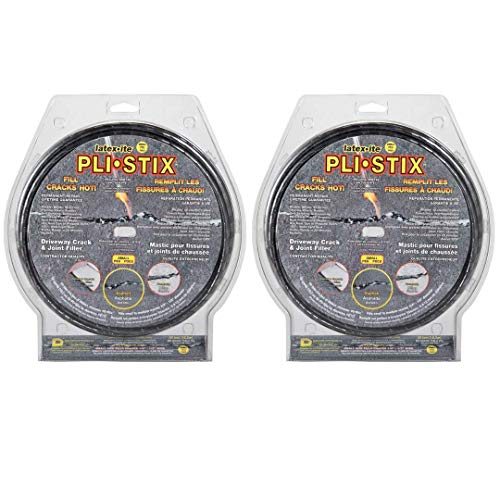
The PLI-STIX system takes a fundamentally different approach: it uses a thermoplastic rubber rod that you melt into the crack using a propane torch or heat gun. The material self-levels upon heating and forms a monolithic, 100% watertight seal that bonds chemically to both concrete and asphalt. This is the only kit in the roundup that produces a permanent seal that remains flexible and crack-free through multiple winters without reapplication.
The 60-foot coil provides enough material for a substantial network of cracks, and the 1/4-inch diameter is optimized for standard joint widths. Users report that the adhesion is tighter than any latex or acrylic filler they have tried, and that the seal survived one full winter without cracking. The rod can be layered and reheated, so you can build up deeper cracks in passes. After full cure, the seal is black in color, which blends well with asphalt but can be less cosmetic on light gray concrete.
The main drawback is the labor: heating each short section (1-5 inches at a time) takes patience, and using a heat gun is generally safer and more controlled than a propane torch. The cost per linear foot is higher than pourable fillers, and the final color is black, which may not be acceptable for homeowners who want a seamless gray finish. Additionally, the packaging states 60 feet but some users report receiving slightly less, so measure before assuming the full length.
Why it’s great
- Permanent, flexible bond that remains watertight through freeze-thaw cycling.
- Self-leveling thermoplastic rubber can be layered and reheated for deep cracks.
- Contractor-grade material used for professional asphalt and concrete repairs.
Good to know
- Requires a heat gun or propane torch, adding time and equipment cost.
- Black color is a cosmetic mismatch for light gray concrete slabs.
FAQ
Can I use a granular powder filler on a vertical wall crack?
Will a self-leveling gel crack if the temperature drops below freezing after application?
How do I prepare a crack wider than 1 inch for a DIY repair kit?
Do concrete crack fillers expire in the bottle?
Final Thoughts: The Verdict
For most users, the best diy concrete crack repair kit winner is the Gray 1.4 LB Magic Crack Filler Bottle because its water-activated granular formula delivers a color-matched, durable repair with no mixing and minimal tooling — ideal for the standard driveway or patio crack. If you want a fast-curing gel that sets tack-free in two hours, grab the Cement Crack Sealant from MuzeFansi. And for a permanent, freeze-thaw-proof seal on asphalt or blacktop, nothing beats the PLI-STIX 60 Ft. from Dalton Enterprises.

Mo Maruf
I created WellFizz to bridge the gap between vague wellness advice and actionable solutions. My mission is simple: to decode the research and give you practical tools you can actually use.
Beyond the data, I am a passionate traveler. I believe that stepping away from the screen to explore new environments is essential for mental clarity and physical vitality.