Our readers keep the lights on and my smoothie glass nicely filled. As an Amazon Associate, I earn from qualifying purchases.
Turning a pile of components into a functioning speaker is one of the most satisfying projects in electronics. But the wrong kit can turn that excitement into frustration with confusing instructions, flimsy parts, or audio that simply disappoints. The key is finding a kit that balances a rewarding build with genuinely good sound.
I’m Mohammad Maruf — the founder and writer behind WellFizz. I’ve spent countless hours dissecting the specifications, reading through user builds, and comparing the real-world output of the most popular DIY Bluetooth speaker kits on the market.
Whether you’re a parent looking for a STEM project, a beginner wanting to learn soldering, or a hobbyist building a custom boombox, this guide to the best diy bluetooth speaker kit will help you find the perfect match for your skill level and audio expectations.
How To Choose The Best DIY Bluetooth Speaker Kit
The ideal kit depends entirely on your goal: are you learning to solder, teaching STEM concepts to a child, or building a high-fidelity component for a custom speaker cabinet? Each path requires a different type of kit, which we break down below.
Skill Level and Assembly Complexity
Kits range from no-solder, screw-together acrylic enclosures perfect for ages 8 and up, to advanced amplifier boards that require you to source your own speakers, enclosure, and power supply. A beginner-friendly kit includes pre-programmed control boards and clearly labeled components, while an intermediate project will demand careful soldering and the ability to read a schematic.
Amplifier Chip and Power Output
The amplifier chip is the heart of the sound. For a simple room-filling speaker, the TPA3116 (50W x 2) is reliable and efficient. For higher volume and cleaner bass, a chip like the TPA3251 (220W x 2) or TDA7498E (160W x 2 + subwoofer channel) offers substantially more headroom. Higher power also demands a stronger external power supply, which is rarely included.
Input Versatility vs. Simplicity
Some kits include only a Bluetooth receiver and a 3.5mm AUX input, which is perfect for a simple wireless speaker. Others add USB drive playback, TF card slots, FM radio, and even recording functions. Decide if you want a dedicated project with multiple features, or a pure amplifier board you can integrate into a larger sound system.
Quick Comparison
On smaller screens, swipe sideways to see the full table.
| Model | Category | Best For | Key Spec | Amazon |
|---|---|---|---|---|
| DAMGOO T220HS | Amplifier Board | High-fidelity custom builds | 440W (220W x 2) TPA3251 Chip | Amazon |
| Fosi Audio BT10A | Mini Integrated Amp | Desktop hi-fi with passive speakers | 50W x 2 TPA3116 Chip | Amazon |
| ZK-HT21 | Amplifier Board | 2.1 channel stereo with subwoofer | 540W (160W x 2 + 220W Sub) TDA7498E | Amazon |
| BANRIA DIY Speaker Kit | Complete Project Kit | Soldering practice with multiple features | USB/TF/AUX/FM/Recording/Remote | Amazon |
| Swhmc STEM Speaker Kit | Kids STEM Kit | No-solder learning for ages 8-16 | Transparent Acrylic Case, 20 LEDs | Amazon |
In‑Depth Reviews
1. DAMGOO T220HS 440W Amplifier Board
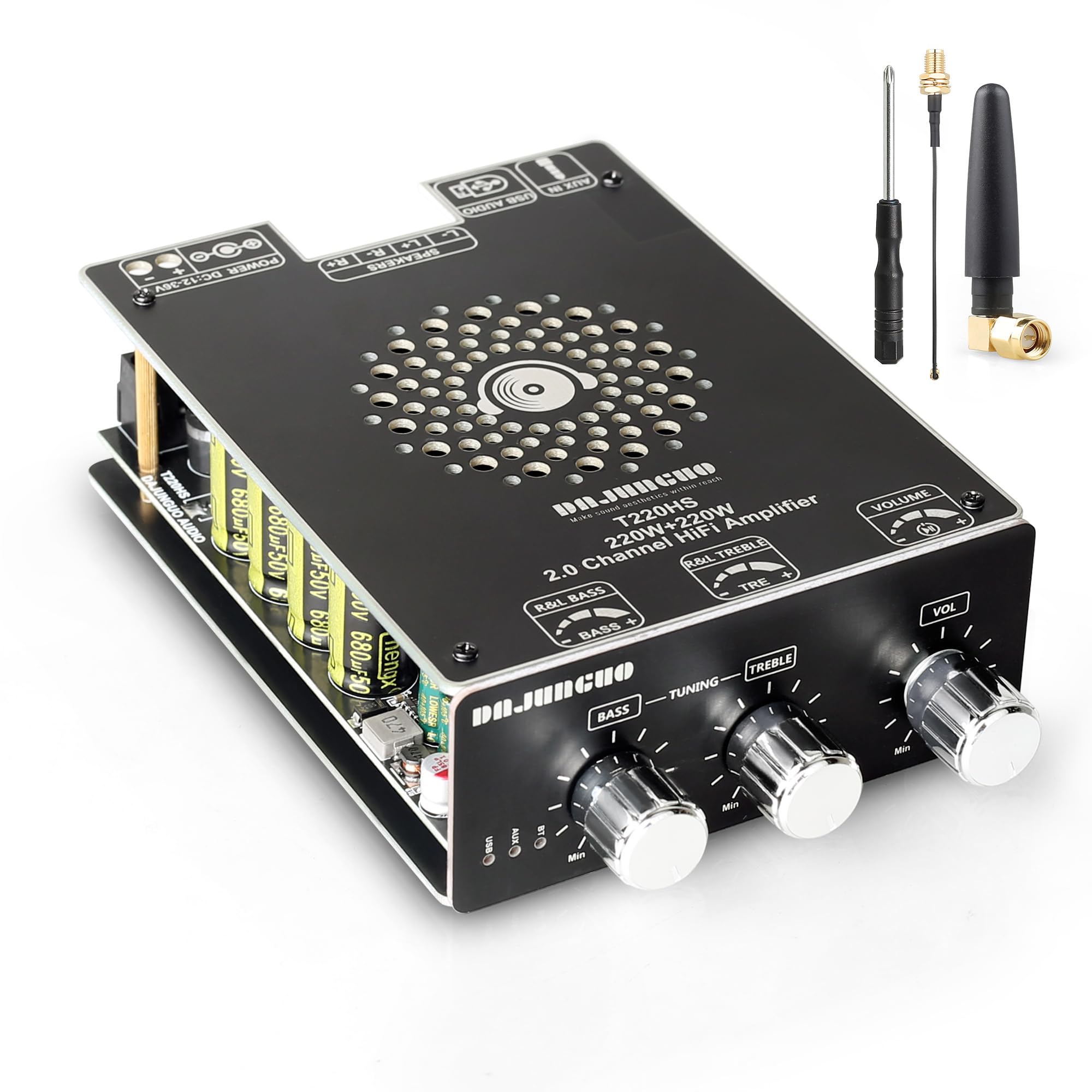
This board is built around two TPA3251 chips, delivering a robust 220 watts per channel into 4-8 ohm speakers. The Class D design runs efficiently and cool, even at high volumes, making it an ideal foundation for a serious DIY bookshelf or outdoor speaker build. You get independent treble and bass knobs, plus a multifunction volume dial that handles pause, skip, and power.
It supports Bluetooth 5.2, AUX, USB sound card, and USB flash drive playback, covering almost every modern source. The smart protection system guards against short circuits, overheating, and voltage issues, which provides peace of mind when experimenting with different power supplies. Reviewers consistently note how loud and clean the output is, even when powered by a modest 12V supply.
Just remember that a power adapter is not included. You will need to source a DC supply between 12V and 36V — reviewers recommend a 24V to 36V adjustable unit for peak performance. This is a premium component for builders who already have speakers and an enclosure ready.
Why it’s great
- Massive clean power from the TPA3251 chipset.
- Versatile inputs including USB sound card.
- Independent treble and bass control for tuning.
Good to know
- Power supply sold separately.
- Requires external speakers and enclosure.
- Not a complete beginner project kit.
2. Fosi Audio BT10A Mini Amplifier

This is the easiest path to upgrading passive bookshelf speakers into a wireless stereo system. The BT10A uses the proven TPA3116 chip to deliver 50 watts per channel in a tiny, solid metal chassis. Setup takes about four minutes: connect your speakers, plug in the included power supply, and pair your phone via Bluetooth 5.0.
Unlike bare amplifier boards, this unit comes fully enclosed with front-panel knobs for volume, bass, and treble. The Bluetooth range extends up to 50 feet and reconnects automatically to paired devices. Reviewers compare its sound quality favorably against integrated amps costing ten times as much, noting a dead-silent background with no hiss or hum.
The trade-off is power: 50W per channel is plenty for a desktop or small room, but it won’t drive large floor-standing speakers to party volume. It also lacks a subwoofer output. For a clean, reliable, no-hassle introduction to DIY hi-fi, this is the premium pick.
Why it’s great
- Plug-and-play with power supply included.
- Dead-silent background, no audible noise.
- Strong metal build with bass and treble controls.
Good to know
- Limited to 50W per channel.
- No subwoofer output for 2.1 setups.
- Volume knob lacks fine-grained control.
3. ZK-HT21 2.1 Channel Amplifier Board
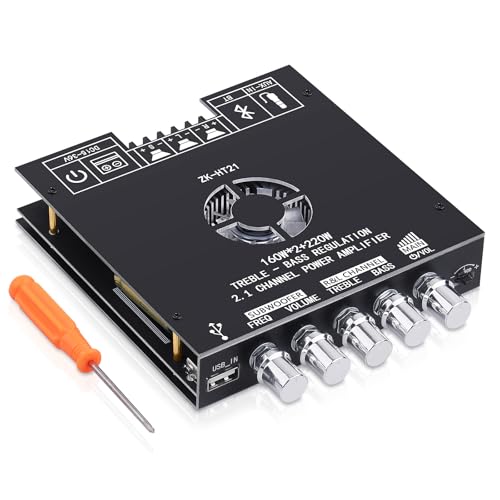
This board is built for a 2.1 channel setup, meaning it delivers dedicated left and right channels at 160W each, plus a separate 220W subwoofer channel. The TDA7498E chip is a workhorse for deep, punchy bass. It supports Bluetooth 5.0, AUX, and USB inputs, and features a multifunction dial that switches modes and controls volume.
Users report that this amp can drive two tower speakers and a 12-inch subwoofer cleanly, with no ground noise or overheating even during extended outdoor use. The protection circuit is robust, covering overvoltage, undervoltage, overheating, and short circuits. It is an excellent choice for building a compact but powerful home theater or portable party speaker.
The main catch is that no power cord is included, and the board requires a beefy DC supply (24V or higher) to reach its full potential. A weak power supply will cause distortion or shutdown. It is a mid-range component that demands a bit more planning but rewards with impressive audio presence.
Why it’s great
- Dedicated subwoofer channel for powerful bass.
- Solid protection circuit for safe operation.
- Compact size, drives large speaker setups.
Good to know
- Power supply not included (needs 24V+).
- Knobs feel a bit cheap according to users.
- Minor audio delay reported during silent gaps.
4. BANRIA DIY Bluetooth Speaker Kit

This is a complete all-in-one project kit that delivers far more than just Bluetooth playback. It includes an FM radio with automatic station scanning, a one-button recording function that captures audio from a USB or TF card source, and LED voice-activated spectrum lights that pulse to the music. The preassembled main board simplifies the build, leaving the soldering focus on the LED bargraph and connecting wires.
Assembly takes about two hours for a careful beginner, helped by a printed manual and a QR code linking to a more detailed online guide. The sound quality is genuinely surprising for a kit this size, with several audio engineers noting it sounds better than expected from such a small enclosure. The remote control works with phone playback, and the FM tuner is sensitive and stable.
Be aware that it is USB-powered and does not include a battery, so it must stay plugged in. The acrylic case is functional but the plastic can be fragile, with some users reporting cracks during assembly if screws are over-tightened. It is a fantastic soldering practice kit that results in a genuinely useful gadget.
Why it’s great
- Multi-function: Bluetooth, FM, recording, LED lights.
- Surprising audio quality for a kit.
- Good soldering practice with clear instructions.
Good to know
- No internal battery; must be USB powered.
- Acrylic case is delicate; screws strip easily.
- Wires are fragile and may need resoldering.
5. Swhmc STEM Bluetooth Speaker Kit
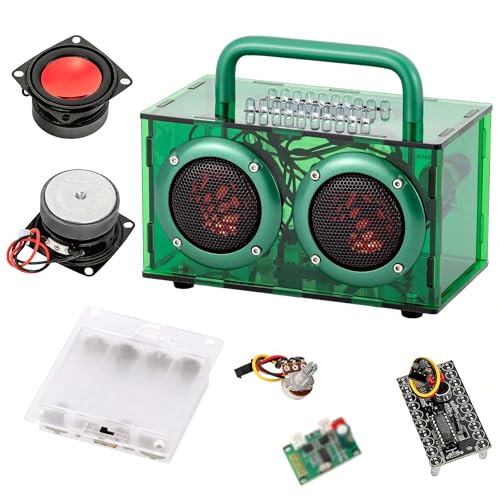
Designed specifically for kids and teens, this STEM-certified kit requires zero soldering and includes pre-drilled acrylic panels, labeled components, and clear pictorial instructions. The transparent green case allows children to see the speaker driver and circuit board inside, turning the assembly process into a live electronics lesson. It includes 20 LED lights and a convenient carrying handle.
The Bluetooth 5.0 module pairs instantly with any phone or tablet, and the sound quality is decent for a compact, unpowered enclosure. Reviewers note that the project is engaging for ages 10 and up, though younger children (8-9) will need significant adult assistance with the small screws and careful alignment of the panels. The kit includes everything except batteries.
While the audio output won’t compete with the amplifier boards above, it achieves what it sets out to do: provide a fun, rewarding building experience that sparks curiosity about circuits and sound. It is a budget-friendly entry point for families wanting a shared project with a functional result.
Why it’s great
- No soldering required, safe for kids.
- Transparent acrylic case aids learning.
- Fun LED light effects and carry handle.
Good to know
- Requires high patience; tough for ages 8-10 alone.
- Sound quality is moderate, not high-fidelity.
- Batteries not included for power.
FAQ
Can I use a DIY Bluetooth speaker kit without soldering experience?
Do I need to buy additional speakers for these kits?
Final Thoughts: The Verdict
For most users, the best diy bluetooth speaker kit winner is the Fosi Audio BT10A because it combines the satisfaction of a DIY component build with the convenience of a complete, high-quality amplifier that works perfectly out of the box. If you want the pure power and flexibility to build a custom high-fidelity system, grab the DAMGOO T220HS. And for a no-solder family STEM project that teaches electronics while creating a functional speaker, nothing beats the Swhmc STEM Bluetooth Speaker Kit.

Mo Maruf
I created WellFizz to bridge the gap between vague wellness advice and actionable solutions. My mission is simple: to decode the research and give you practical tools you can actually use.
Beyond the data, I am a passionate traveler. I believe that stepping away from the screen to explore new environments is essential for mental clarity and physical vitality.