Our readers keep the lights on and my smoothie glass nicely filled. As an Amazon Associate, I earn from qualifying purchases.
Placing a mask that fogs instantly or lets in a steady trickle of cold seawater is a fast way to ruin a dive. The difference between a frustrating session and one where you forget you’re wearing gear comes down to the seal, lens quality, and a few often-overlooked specs that separate budget masks from the real performers.
I’m Mohammad Maruf — the founder and writer behind WellFizz. For this guide, I’ve analyzed hundreds of verified diver reviews, cross-referenced material specifications against real-world conditions, and broken down exactly which design choices deliver leak-free, fog-free performance at every price tier.
The seven models below represent the most reliable options currently available, and this roundup of the best diving goggles focuses on the specific engineering details that actually matter when you’re underwater.
How To Choose The Best Diving Goggles
Selecting a dive mask is not about brand loyalty — it is about how the individual components work on your face. The three elements that define performance are the lens material, the skirt composition, and the strap adjustment system. Ignoring any one of them almost guarantees a compromised fit.
Lens Material: Tempered Glass vs. Polycarbonate
Tempered glass is the standard for serious diving because it resists scratches, does not distort vision, and handles pressure changes without warping. Polycarbonate lenses save weight and cost less, but they scratch easily and can distort your view underwater. For repeated use in salt water, tempered glass is the only sensible choice.
Silicone Skirt Quality and Fit
The skirt is the seal. Look for medical-grade or food-grade liquid silicone, which stays supple in cold water and conforms to facial contours better than rubber or PVC. A double-edged lip on the inner skirt — found on premium masks like the Cressi A1 — drastically improves sealing pressure without requiring overly tight straps that cause discomfort.
Field of View and Lens Configuration
A single-lens mask removes the central nose bridge from your line of sight and gives a wide, uninterrupted view. Three-window designs add peripheral windows, which help you spot marine life and keep track of your dive buddy. Frameless masks, like the Cressi F1, reduce bulk and pack flat, but they can feel less sturdy than framed models.
Quick Comparison
On smaller screens, swipe sideways to see the full table.
| Model | Category | Best For | Key Spec | Amazon |
|---|---|---|---|---|
| Cressi A1 | Premium | Advanced divers needing zero-fog optics | Factory anti-fog treatment on lens | Amazon |
| SeaDive Oceanways Superview | Premium | Color-critical reef and wreck diving | SeeSharp HD glare-reducing lens | Amazon |
| Scuba Prime Pano 3 | Mid-Range | Wide peripheral vision for reef exploration | Three-window 180° panoramic design | Amazon |
| Cressi F1 Frameless | Mid-Range | Travelers who need a pack-flat mask | Frameless, folds flat for storage | Amazon |
| Aquasphere Seal 2.0 | Mid-Range | Pool and open-water lap swimmers | Softer silicone with ergonomic skirt | Amazon |
| Freela Adult Snorkel Mask | Value | Beginners wanting a complete set at low cost | 180° single-lens tempered glass | Amazon |
| NSSIW Swim Goggles 3-Pack | Budget | Casual swimming and backup goggles | Three-pack with UV protection | Amazon |
In‑Depth Reviews
1. Cressi Anti-Fog Wide, Single Lens Scuba Diving and Freediving Mask A1

The Cressi A1 stands apart because it treats the lens with a factory-applied anti-fog layer that certified divers report surviving 20 or more dives before requiring reapplication. Most masks require you to burn or toothpaste-prep the glass on day one — this one comes ready to go. The inverted teardrop lens shape angles downward, giving you better visibility of your chest-mounted gear without tilting your head.
The soft silicone skirt uses a double-edged internal lip that seals aggressively against the skin, which is critical for freedivers who equalize frequently and need zero water intrusion. The buckles attach to the frame via a flexible silicone flap rather than a rigid hinge, reducing drag and the risk of snapping under pressure.
Two real drawbacks: the anti-fog coating is fragile — scratching it with a fingernail or abrasive cloth will ruin the effect. And the yellow-tinted lens (on the Graphite version) boosts contrast at depth but can feel dim in dark caves or low-visibility conditions. For open-water diving and freediving, this is the benchmark.
Why it’s great
- Factory anti-fog coating eliminates prep work
- Double-edged silicone skirt provides exceptional seal
- Inverted teardrop lens improves downward visibility
Good to know
- Anti-fog coating can peel if handled roughly
- Yellow tint may reduce visibility in dark water
2. SeaDive Oceanways Superview/HD Anti-Fog Mask

What makes the SeaDive Oceanways unique is its SeeSharp High Definition lens, which hardens faint edges and filters out UV glare. The lens has a blueish tint on white silicone masks and an orange tint on black silicone — both render colors more vivid while reducing the harsh white light that causes eye strain during long dives. Divers with 500-plus dives report this is the clearest mask they have worn.
The skirt is made from high-quality silicone that seals well on most face shapes, and the frameless design keeps weight to about a quarter of a pound. It comes with a rigid plastic storage box, which protects the HD lens from scratches when you are not using it. The single-lens configuration provides an unobstructed forward view without a central bridge.
Some users with high eyebrow ridges report that the skirt presses uncomfortably on that area after extended wear. It is not a universal issue, but if you have prominent brows, you should test the fit before buying. For divers who prioritize optical clarity and color fidelity, this is a top contender.
Why it’s great
- HD lens sharpens edges and reduces glare
- Ultra-light frameless design at 0.25 lbs
- Comes with protective storage box
Good to know
- Skirt may press on high eyebrow ridges
- HD lens tint changes color between mask colors
3. Scuba Prime Pano 3 Scuba Diving Mask
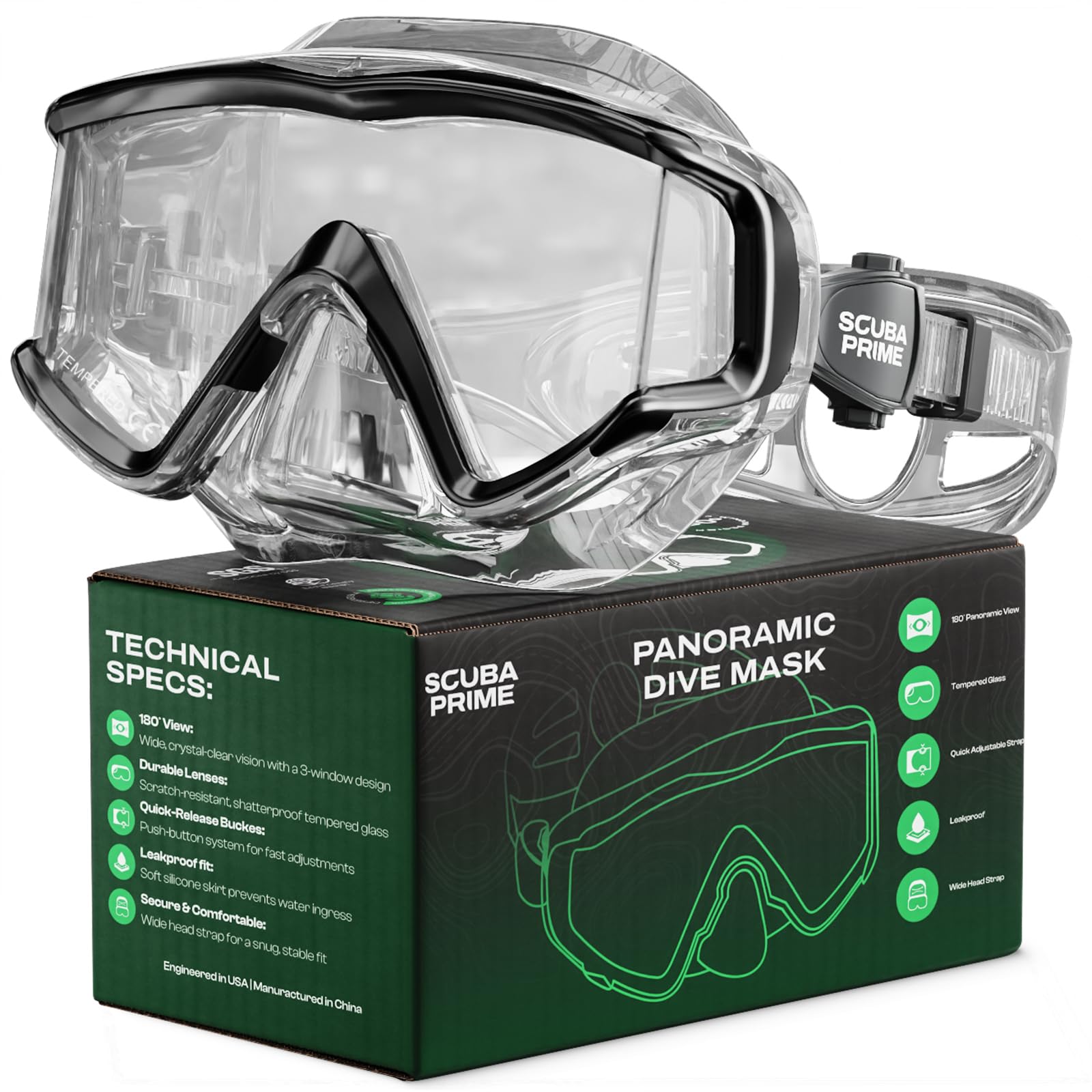
The Pano 3 uses a three-window configuration — a large central pane flanked by two smaller side windows — to deliver true peripheral vision. This matters most when you are reef exploring or spear fishing, because it lets you spot movement coming from the side without turning your head. The tempered glass is shatter-resistant and passed out-of-water seal tests from experienced divers.
Food-grade liquid silicone forms the skirt and frame, and the material stays soft even in colder water. The quick-fit buckles allow one-hand adjustment, and the entire mask weighs about 13.4 ounces, which is noticeably heavier than a frameless mask due to the three glass panes. A mesh bag is included for rinsing after saltwater use.
A minority of users report minor peripheral distortion from the side windows, which is common with multi-window designs. The mask also sits heavier on the face than single-lens models. For divers who prioritize awareness of their surroundings over absolute minimal bulk, this is a strong pick.
Why it’s great
- Three-window design offers 180° panoramic view
- Food-grade liquid silicone seals comfortably
- Quick-fit buckles for easy one-hand adjustment
Good to know
- Heavier than frameless single-lens masks
- Slight peripheral distortion from side windows
4. Cressi F1 Frameless Snorkel Mask

The Cressi F1 is one of the few dive masks that folds flat enough to slip into a beach bag pocket without a bulky case. The frameless construction removes the rigid plastic frame, so the tempered glass lens sits directly in a silicone surround that flexes to conform to different face shapes. Divers with narrow faces consistently report a perfect seal without over-tightening.
The single-lens design offers a wide field of view with no distortion. Users with facial hair have successfully achieved leak-free seals because the soft silicone molds around the hair rather than letting water channel through. The quick-adjust buckles are integrated into the silicone, so there are no metal or plastic parts that could corrode or snap.
Because the strap is two separate pieces (not a continuous loop as shown in some marketing images), you need to adjust each side independently. This is a minor inconvenience compared to the overall performance. At the mid-range price point, the F1 delivers reliability that rivals masks costing twice as much.
Why it’s great
- Folds flat for easy travel and storage
- Soft silicone seals well even with facial hair
- Excellent field of view from single-lens design
Good to know
- Strap has two separate pieces requiring independent adjustment
- No frame means less structural rigidity
5. Aquasphere Seal 2.0 Swimming Goggle

The Aquasphere Seal 2.0 is technically a swim goggle, but its oversized soft silicone skirt creates a seal that many divers prefer for warm-water snorkeling and pool training. The skirt is noticeably softer than typical dive masks, which reduces the pressure rings that form around the eyes after long sessions. Several repeat buyers report owning pairs that lasted close to two decades before the silicone yellowed but never cracked.
The curved lens provides a broad field of view and the low-profile design reduces drag when swimming on the surface. The quick-release buckles make strap adjustment simple, and the one-size-fits-most design works for both men and women. Users who previously wore TYR goggles often switch to the Seal 2.0 for better fit on narrower faces.
Quality control appears inconsistent — some units leak from day one, while others last for years without issue. The skirt design can also leave a painful dent between the eyes on some face shapes. It is best for surface snorkeling and lap swimming rather than deep scuba diving, where a true dive mask’s rigid frame provides more stability.
Why it’s great
- Extremely soft silicone improves long-wear comfort
- Low-profile design reduces drag in the water
- Consistently praised for durability over many years
Good to know
- Some units arrive with day-one leaking issues
- Skirt can leave pressure marks on certain face shapes
6. Freela Adult Snorkel Diving Mask with Nose Cover
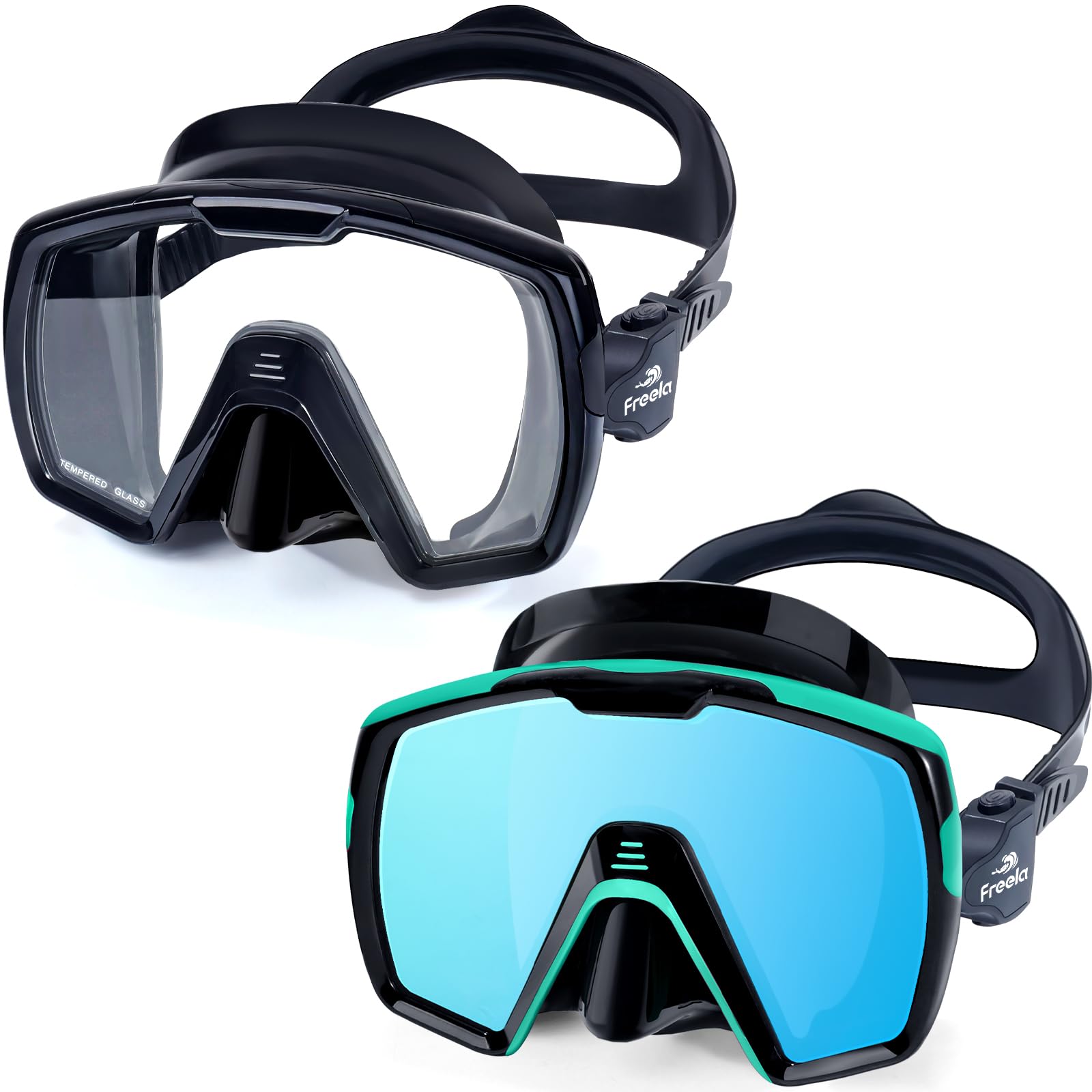
The Freela mask offers entry-level pricing but skips the polycarbonate shortcuts that ruin budget masks. It uses tempered glass with an anti-fog coating and a built-in explosion-proof film for safety. The single oversized flat lens provides a 180-degree panoramic view without the fish-eye distortion that cheaper curved lenses create.
The integrated nose cover is made from food-grade soft silicone, and it allows you to equalize by exhaling through your nose without breaking the seal — a feature normally reserved for masks costing twice as much. The widened silicone skirt distributes pressure across a larger area, which reduces the compression marks that new divers often dislike.
The included snorkel in the set has drawn complaints about leaking, with some users reporting water intrusion on the first use. The mask itself performs well, but the snorkel quality is inconsistent. For the price, you are getting a capable mask that needs a separate, quality snorkel to reach its full potential.
Why it’s great
- Tempered glass with anti-fog coating at an affordable price point
- Integrated nose cover allows easy pressure equalization
- Widened silicone skirt reduces facial compression marks
Good to know
- Included snorkel may leak on some units
- Return window is short for some sellers
7. NSSIW Swim Goggles 3-Pack with Anti-Fog and UV Protection
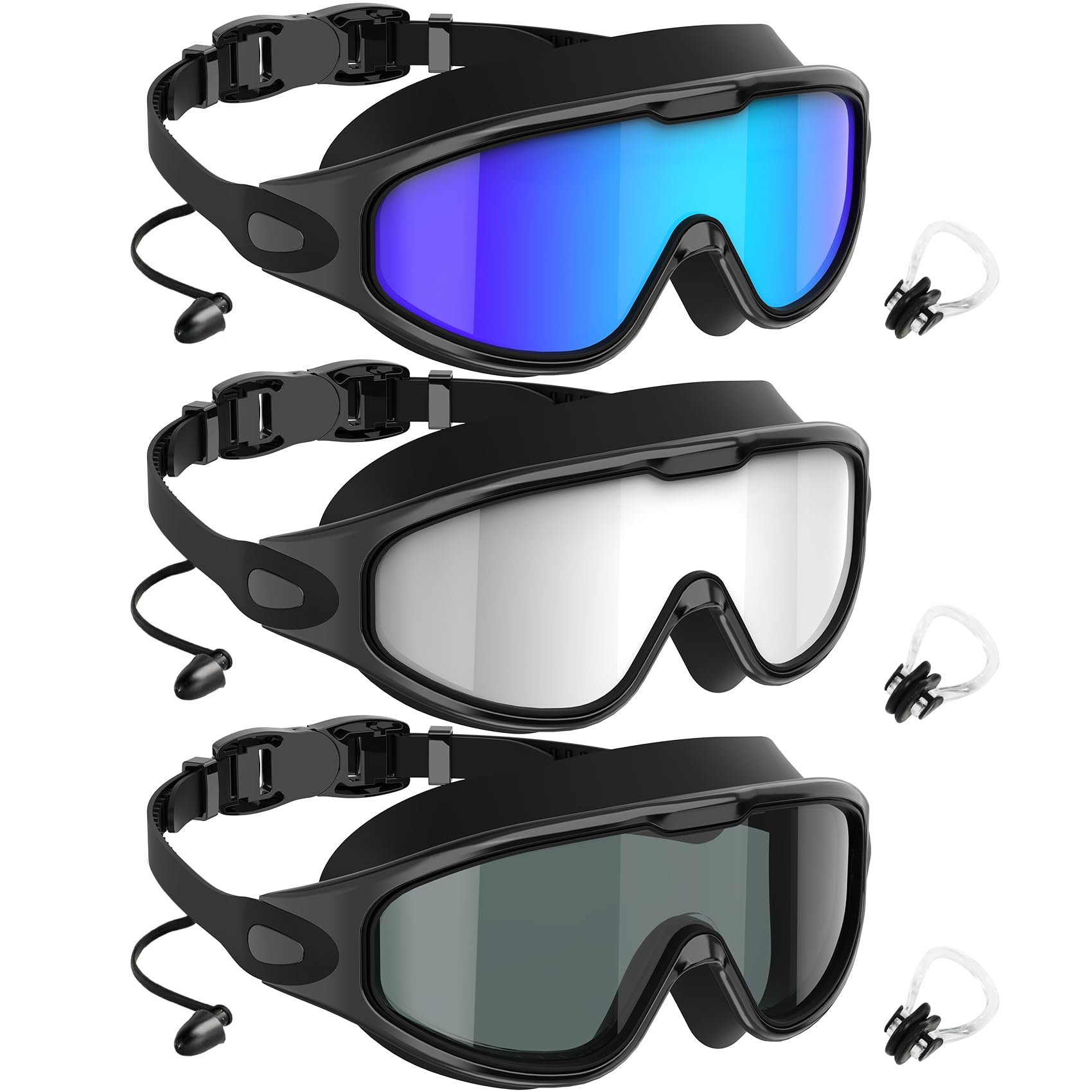
The NSSIW three-pack is built for casual pool swimming and shallow snorkeling rather than open-water diving. Each goggle uses a polycarbonate lens with UV protection and an anti-fog coating that works well for the first few months but degrades faster than tempered glass masks. The value is in the quantity — you get three pairs, which is useful for families or as backups.
The silicone gaskets are soft enough for average face shapes, but the seal is not as dependable as the dedicated dive masks in this guide. Several users report that the goggles fit comfortably and provide a clear view, while others note that the water seal fails on narrower faces. The clip-style back closure is easy to adjust and includes earplugs.
These are not intended for scuba diving or freediving. The polycarbonate lenses will scratch after repeated use, and the anti-fog coating loses effectiveness faster than tempered glass alternatives. For budget-conscious swimmers who need a spare set or a disposable option for travel, they serve their purpose.
Why it’s great
- Three pairs provide great value for families or backups
- UV-protected lenses help reduce eye strain in sunlit pools
- Soft silicone gaskets fit most average face shapes
Good to know
- Polycarbonate lenses scratch easier than glass alternatives
- Anti-fog coating degrades faster than tempered glass masks
- Water seal can be inconsistent on narrower faces
FAQ
Can I use swimming goggles for scuba diving?
How do I stop my diving goggles from fogging up?
What does frameless mean in a dive mask?
Final Thoughts: The Verdict
For most users, the best diving goggles winner is the Cressi A1 because it combines a factory anti-fog coating, a double-edged sealing skirt, and an inverted teardrop lens that improves downward visibility — all at a price that undercuts much of the premium competition. If you want a pack-flat design for travel, grab the Cressi F1 Frameless. And for wide peripheral vision during reef exploration, nothing beats the Scuba Prime Pano 3.

Mo Maruf
I created WellFizz to bridge the gap between vague wellness advice and actionable solutions. My mission is simple: to decode the research and give you practical tools you can actually use.
Beyond the data, I am a passionate traveler. I believe that stepping away from the screen to explore new environments is essential for mental clarity and physical vitality.