Our readers keep the lights on and my smoothie glass nicely filled. As an Amazon Associate, I earn from qualifying purchases.
Checking a mechanical SPG on every breath breaks your rhythm, forces your eyes off the reef, and adds drag. An integrated dive computer streams tank pressure directly to your wrist, letting you monitor remaining gas, consumption rate, and true remaining bottom time without reaching for a console. The shift from glancing at a hose to reading a screen changes how you manage your gas.
I’m Mohammad Maruf — the founder and writer behind WellFizz. I have spent hundreds of hours cross-referencing transmission protocols, algorithm choices, display brightness specs, and battery endurance figures to build this guide around real diver feedback and published technical data.
Whether you are moving up from a basic air-only model or buying your first wrist-mounted unit with wireless pressure monitoring, choosing the best dive computer with air integration requires matching your diving style to the right communication method, algorithm, and form factor.
How To Choose The Best Dive Computer With Air Integration
Air-integrated dive computers combine a wrist-mounted computer with a wireless transmitter screwed into your first-stage high-pressure port. Not all systems talk the same language, and the transmission method directly impacts how reliably your wrist unit receives pressure data.
Radio vs. Sonar Transmission
Traditional air integration uses radio-frequency transmitters (typically 2.4 GHz or a proprietary band). Radio works reliably but water attenuates the signal, limiting effective range to about one meter. A transmitter against your body or a tank can weaken reception. Sonar-based systems like Garmin’s SubWave use acoustic pulses that travel farther through water — up to 10 meters — and can read multiple transmitters simultaneously for buddy air monitoring. Sonar draws more power, but the range advantage matters for tech divers and group diving.
Algorithm and Dive Mode Support
The decompression algorithm is the core safety logic that translates depth, time, and gas mix into no-stop limits and mandatory deco stops. Most modern units run a version of Bühlmann ZHL-16 with gradient factors. If you dive nitrox or trimix on open-circuit, or plan to move into closed-circuit rebreather diving, confirm the computer supports those modes natively. Some budget models cap at 50% nitrox and lack trimix or CCR modes.
Display Readability Underwater
Readability varies dramatically between a high-contrast AMOLED, a color TFT, and a monochrome LCD. AMOLED screens offer vibrant colors and deep blacks that remain legible in low-light wrecks but can wash out in direct sunlight. Color TFT displays, like those on the Suunto Eon Core, show large digits with strong contrast but may struggle with surface glare. Monochrome LCDs use less power and are easier to read in bright sun, but lack color for quick gas-switch identification.
Quick Comparison
On smaller screens, swipe sideways to see the full table.
| Model | Category | Best For | Key Spec | Amazon |
|---|---|---|---|---|
| Garmin Descent Mk3i | Premium | Tech & group diving | SubWave sonar, 30m diver messaging | Amazon |
| Garmin Descent Mk2i | Premium | Multi-sport / everyday wear | SubWave sonar, 5-tank monitoring | Amazon |
| Shearwater Research Teric | Premium | Technical and CCR diving | Bühlmann ZHL-16c, full-color AMOLED | Amazon |
| Oceanic Pro Plus X | Premium | Console-style with compass | TFT color display, integrated digital compass | Amazon |
| Suunto Eon Core | Mid-Range | Recreational & nitrox diving | Color display, 3D tilt-compensated compass | Amazon |
| SCUBAPRO Luna 2.0 AI | Mid-Range | Entry-level air integration | Bühlmann ZH-L16 ADT, Bluetooth | Amazon |
| SUUNTO Tank POD | Accessory | Adding AI to Suunto computers | Wireless transmitter, 2-year battery | Amazon |
In‑Depth Reviews
1. Garmin Descent Mk3i
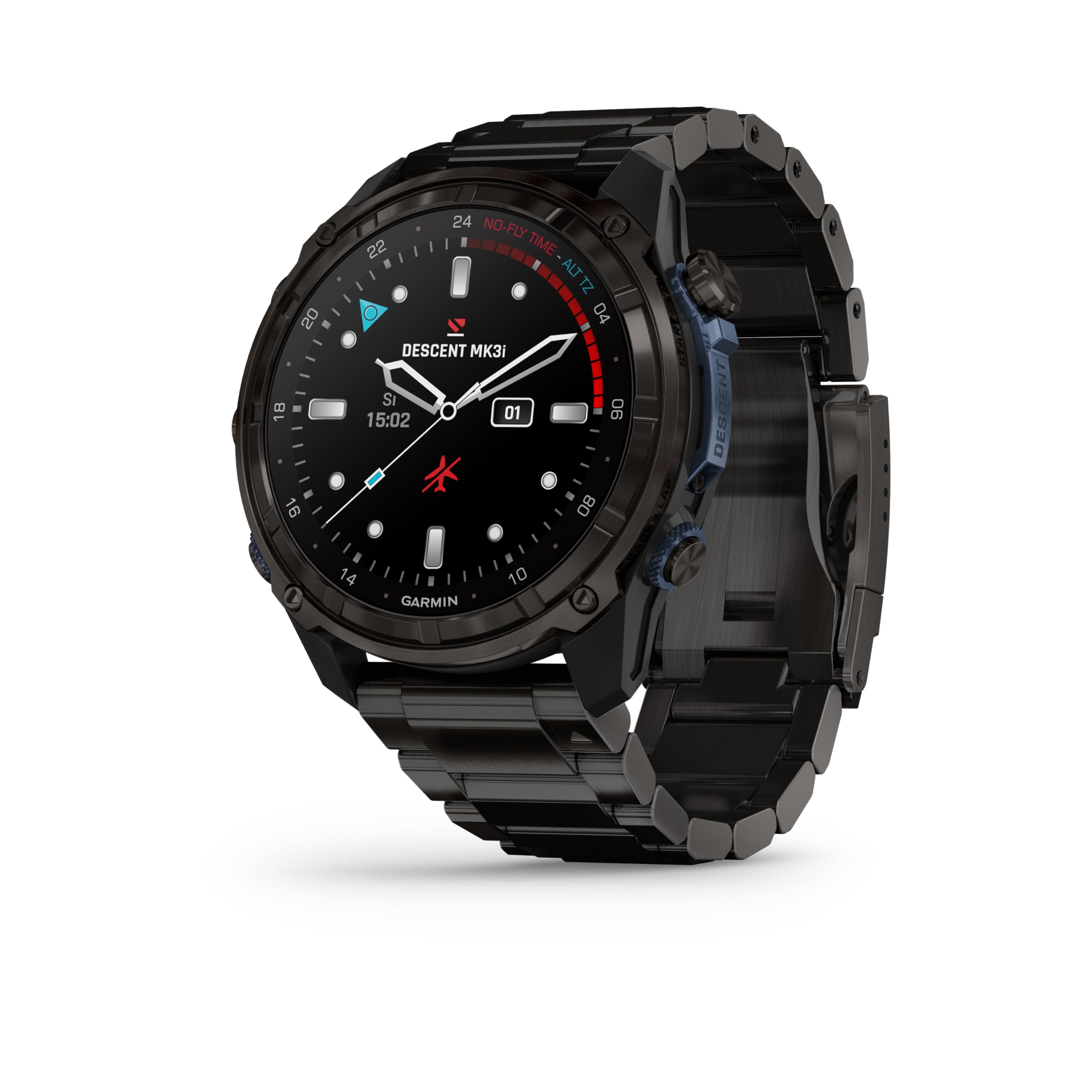
The Mk3i represents Garmin’s current flagship with a 1.4-inch AMOLED display that provides excellent contrast in dark water, though it can wash out in direct surface glare. The titanium bezel and sapphire lens give it a premium feel that also handles 200-meter depth ratings. The SubWave sonar network is the standout feature — it can monitor tank pressures for up to eight divers within 10 meters and send preset diver-to-diver messages up to 30 meters when paired with the Descent T2 transceiver.
The dive readiness tool pulls data from sleep, exercise, and stress to estimate your body’s preparedness for diving — a unique metric that no other computer in this list offers. Multi-band GPS provides precise surface entry/exit coordinates, and the built-in LED flashlight with red and white modes adds utility for low-light wreck penetration. The rechargeable battery delivers enough endurance for a full week of mixed use including GPS activities and multiple dives.
Owners report that the buttons are easy to press accidentally, and the five required dives for the dive readiness tool to calibrate means it’s not immediately useful out of the box. The T2 transmitter is sold separately and adds a significant cost for the full air integration experience. For divers who want the broadest feature set — from tec diving to daily fitness tracking — the Mk3i is the most complete package available.
Why it’s great
- SubWave sonar reaches 10m range for multi-diver air monitoring
- AMOLED display with scratch-resistant sapphire lens
- Built-in LED flashlight with white and red modes
Good to know
- Buttons are vulnerable to accidental presses
- Dive readiness tool needs several dives to calibrate
- Transceiver sold separately at premium price
2. Garmin Descent Mk2i

The Mk2i was the first Garmin to bring SubWave sonar air integration to a watch form factor, and it remains a strong choice for divers who want a capable daily smartwatch that also handles technical diving. The 1.4-inch color sunlight-readable display is 36 percent larger than the previous Mk1, and the titanium construction keeps the weight manageable for all-day wear. Battery life reaches 80 hours in dive mode and 16 days in smartwatch mode, which is better than the Mk3i in some metrics.
Air integration with the Descent T1 transmitter supports monitoring up to five tanks, showing remaining air time and consumption rate for the wearer and up to four buddies. The watch also includes wrist-based heart rate, Pulse Ox, and full multi-sport training profiles. The dive log stores 200 dives with GPS entry/exit coordinates, and the companion app allows detailed post-dive review.
The Mk2i does not have the built-in flashlight or the dive readiness tool of the Mk3i. For divers who split time between the office, the gym, and the reef, the Mk2i delivers SubWave safety without the latest flagship price.
Why it’s great
- SubWave sonar tracks up to five tanks simultaneously
- 80-hour dive mode battery
- Full multisport and smartwatch features
Good to know
- Transmitter sold separately
- No built-in flashlight
- Battery life slightly less than original Mk1
3. Shearwater Research Teric
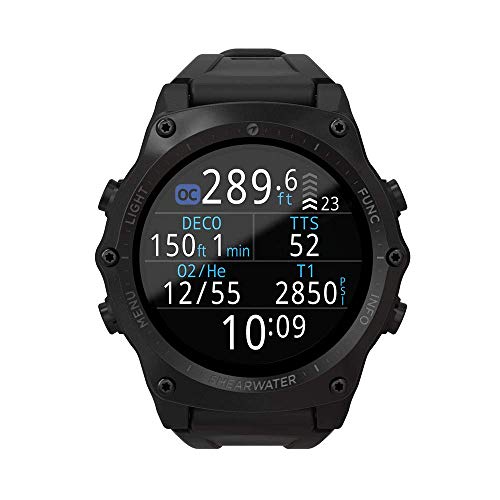
Shearwater has earned a fierce reputation among technical divers, and the Teric brings that algorithmic precision into a wrist-watch form factor. The full-color AMOLED display is widely praised for its readability underwater, even by divers who normally need reading glasses. The Bühlmann ZHL-16c algorithm with configurable gradient factors gives tec divers control over their conservatism, and the computer supports open-circuit, fixed PO2, gauge, and freediving modes.
Optional wireless tank pressure transmitters allow air integration, and the vibration alarm ensures you feel critical alerts even when visibility drops. The customizable home screen lets you arrange data fields, and the 2-3 day battery life with wireless charging is reasonable for a computer this capable. Gas switching across up to five mixes is straightforward.
Some users report that the total time to surface cannot be removed from the home screen, which clutters the display for those who prefer a cleaner layout. The battery life is shorter than watch-style competitors like the Garmin Mk2i. For divers who prioritize decompression algorithm accuracy and color clarity over fitness tracking, the Teric is the gold standard.
Why it’s great
- Bühlmann ZHL-16c with adjustable gradient factors
- Vibration and audible alarms for critical alerts
- Easy gas switching for up to five mixes
Good to know
- TTS cannot be removed from the home screen
- 2-3 day battery life is shorter than Garmin options
- Air integration requires separate transmitter purchase
4. Oceanic Pro Plus X
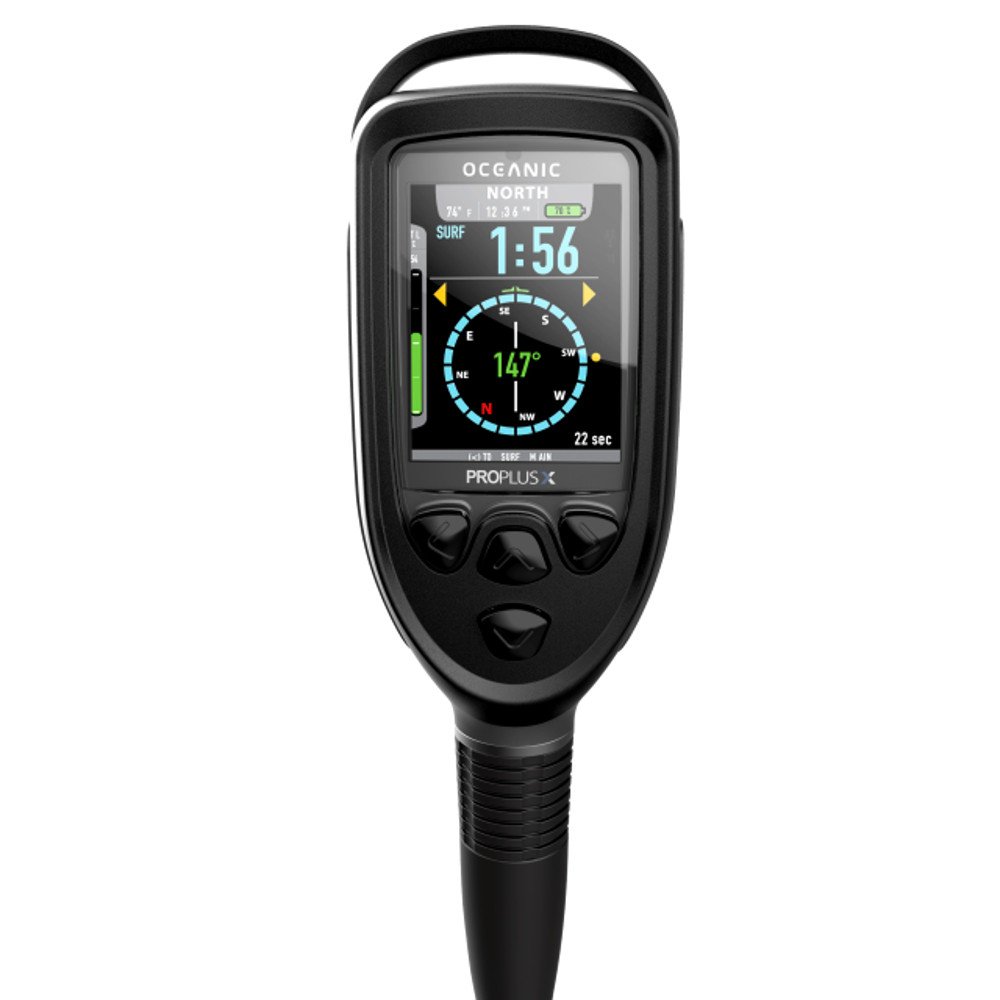
The Oceanic Pro Plus X takes a different approach by packaging air integration into a console form factor with a detachable hose mount. The thin-film transistor color display offers a large viewing area with color-coded interface logic that makes gas monitoring intuitive. The integrated digital compass eliminates the need for a separate wrist compass, and the unit supports nitrox mixtures from 21 to 50 percent.
The color-coded interface uses green, yellow, and red zones to clearly indicate no-stop time, deco obligation, and oxygen toxicity limits. Some users find the display gorgeous and the interface completely intuitive for setup. The multiple profile feature is useful for divers who switch between different gas blends or dive with different conservatism settings.
Several owners report serious reliability issues including units becoming unresponsive after a night dive, failing to reset to surface mode, and refusing to turn on after as few as 15 dives. The console form factor increases drag compared to wrist-mounted computers. For divers who prefer the traditional console layout and are willing to risk reliability concerns, the Pro Plus X offers a large, color-coded display.
Why it’s great
- Large color TFT display with intuitive color coding
- Integrated digital compass
- Detachable hose mount for flexibility
Good to know
- Serious reliability concerns reported by multiple users
- Console form factor creates drag
- Not suitable for tec diving or trimix
5. Suunto Eon Core

The Suunto Eon Core delivers a clear color display with large, prominent digits and intuitive menu logic at a mid-range price point that includes the transmitter in the box. The 2-inch screen shows tank pressure from paired transmitters and provides real-time remaining bottom time calculations. The on-board digital compass is tilt-compensated to 45 degrees, which reduces the need to hold the computer perfectly level for accurate heading readings.
Dive modes cover air, nitrox, trimix, and CCR (fixed point), giving recreational and tech divers a single computer that grows with their skill level. The rechargeable battery provides 10 to 20 hours of dive time, and Bluetooth connectivity allows software updates and log syncing. The Eon Core can wirelessly monitor tank pressure for up to 10 divers when paired with multiple transmitters.
Several owners note that the Bluetooth pairing between the transmitter and the computer can be inconsistent, requiring a purge of air to re-establish the connection. The color LED screen is hard to read in bright sunlight near the surface, and the low battery lockout restricts use for 48 hours. The deep stop and safety stop screens lack a countdown timer, requiring multiple button presses to cycle through.
Why it’s great
- Includes transmitter for air integration out of the box
- Tilt-compensated 3D digital compass
- Supports trimix and CCR fixed-point modes
Good to know
- Bluetooth pairing can be inconsistent
- Screen glare in shallow, sunny conditions
- 48-hour lockout on low battery
6. SCUBAPRO Luna 2.0 AI

The SCUBAPRO Luna 2.0 AI offers a straightforward path into air integration at a lower cost than premium rivals. The slim thermoplastic housing uses oil fill technology for reliable depth sensing, and the two-button interface simplifies menu navigation underwater. The wireless air integration provides true remaining bottom time calculations that adapt based on your actual breathing rate, giving a more accurate gas plan than simple time or pressure projections.
Two algorithm options — Predictive Multi-Gas Bühlmann ZH-L16 ADT MB PMG or the more traditional ZH-L16+GF with gradient factors — let you choose between the standard SCUBAPRO approach or a more conservative model. The high-contrast black and white LCD display with LED backlight prioritizes battery efficiency over color flash. Bluetooth connectivity allows log transfer to a smartphone.
The display brightness has drawn criticism, with several users describing the backlight as weak and difficult to read in low-light conditions. There are reports of units arriving used or with half-drained batteries. For divers who want air integration at a budget-friendly price and prioritize battery life over display quality, the Luna 2.0 AI serves as a capable entry point.
Why it’s great
- Wireless air integration with workload-adjusted RBT
- Two algorithm options for different conservatism levels
- Compact and lightweight housing
Good to know
- Backlight brightness is considered weak by many users
- Reports of used units sold as new
- Monochrome display lacks color coding
7. SUUNTO Tank POD

The SUUNTO Tank POD is not a standalone dive computer — it is the wireless pressure transmitter that adds air integration to Suunto’s D5, EON Steel, and EON Core computers. The unit screws into any standard 3/8-16 UNC first-stage high-pressure port and transmits tank pressure via radio frequency. A green LED confirms data is transmitting, and the sealed battery delivers up to two years of use at 100 dives per year.
The Tank POD uses radio waves rather than sonar, which means reliable range is limited to about one meter through water. The transmitter works reliably once paired, though initial Bluetooth pairing between the pod and the computer can be inconsistent and sometimes requires purging air to establish the connection. Multiple units can be paired to a single computer for multi-tank or buddy monitoring.
Some users note that radio-based transmission is older technology compared to Garmin’s SubWave sonar, and may be less reliable at greater distances or through a diver’s body. The plastic housing is durable but not as rugged as a full metal construct. For Suunto owners who want to retrofit air integration to their existing computer, the Tank POD is the only OEM option.
Why it’s great
- Direct OEM compatibility with Suunto D5, EON Steel, and EON Core
- Two-year battery life at typical dive frequency
- Green LED confirms active data transmission
Good to know
- Radio frequency range is limited to about one meter underwater
- Bluetooth pairing can be finicky
- Plastic housing less durable than metal alternatives
FAQ
Can I use a Garmin transmitter with a Suunto or Shearwater computer?
Does air integration replace the need for a SPG?
How accurate is the remaining bottom time calculation with air integration?
Final Thoughts: The Verdict
For most users, the best dive computer with air integration winner is the Garmin Descent Mk3i because SubWave sonar provides reliable multi-diver air monitoring, the AMOLED display is excellent in low-light conditions, and the dive readiness tool adds a genuinely useful safety layer. If you want dedicated tec diving algorithm precision in a watch form factor, grab the Shearwater Research Teric. And for a mid-range bundle that includes the transmitter and supports trimix and CCR modes, nothing beats the Suunto Eon Core.

Mo Maruf
I created WellFizz to bridge the gap between vague wellness advice and actionable solutions. My mission is simple: to decode the research and give you practical tools you can actually use.
Beyond the data, I am a passionate traveler. I believe that stepping away from the screen to explore new environments is essential for mental clarity and physical vitality.