Our readers keep the lights on and my smoothie glass nicely filled. As an Amazon Associate, I earn from qualifying purchases.
Swollen, red, or itchy hands after just a few minutes of wearing gloves is a specific frustration—one that turns a simple task into a painful chore. For anyone with reactive skin, the wrong disposable glove triggers contact dermatitis, hives, or a lingering burning sensation that makes protection feel like punishment. The solution isn’t just any glove; it’s one formulated without common irritants like latex, chemical accelerators, or powder.
I’m Mohammad Maruf — the founder and writer behind WellFizz. I’ve spent hundreds of hours analyzing glove material formulations, dermatological testing data, and customer feedback patterns to separate genuinely skin-safe options from those that just claim to be.
This guide breaks down the five most reliable choices for reactive skin, based on material purity, comfort under extended wear, and measurable hypoallergenic validation. These are my picks for the best disposable gloves for sensitive skin today.
How To Choose The Best Disposable Gloves For Sensitive Skin
Selecting a disposable glove for sensitive skin is not just about checking a “latex-free” label. Most skin reactions come from hidden chemicals—accelerators, sulfur-based vulcanizing agents, and residual powder—that slip past basic marketing claims. You need to evaluate three core elements: the glove’s base material, its chemical processing, and any added skin-soothing ingredients inside the glove.
Base Material: Why Nitrile Beats Vinyl and Latex
Latex contains natural rubber proteins that are a primary cause of Type I allergic reactions—symptoms can escalate from itching to anaphylaxis. Vinyl gloves are cheap and latex-free, but they contain plasticizers (phthalates) and offer little barrier protection. Nitrile is the optimal choice: it’s synthetic, completely free of latex proteins, and far more puncture-resistant than vinyl, making it the standard for medical and food-handling use when skin sensitivity is a concern.
Accelerator-Free vs. Standard Nitrile
Standard nitrile gloves often contain chemical accelerators (thiurams, carbamates) to speed up the manufacturing process. These are a leading cause of Type IV contact dermatitis. Some premium brands now offer accelerator-free formulations, such as using zinc oxide or sulfurless curing, which drastically reduce the risk of chemical irritation. If you have known chemical allergies or eczema, prioritize a glove with a low-dermatitis or accelerator-free designation.
Internal Coatings: Aloe, Oatmeal, and Powder-Free Care
Powder inside gloves (cornstarch) absorbs moisture and acts as a carrier for allergens. Always choose powder-free. The best sensitive-skin gloves go a step further by coating the interior with colloidal oatmeal or aloe vera. These ingredients form a protective layer that moisturizes and buffers the skin against friction and irritation, making extended wear tolerable for those with eczema or contact dermatitis.
Quick Comparison
On smaller screens, swipe sideways to see the full table.
| Model | Category | Best For | Key Spec | Amazon |
|---|---|---|---|---|
| Medline Restore Nitrile Exam Gloves | Premium | Severe irritation & eczema | Colloidal oatmeal coating | Amazon |
| HCS 250 Nitrile Gloves | Premium | Chemical & fentanyl protection | Accelerator-free, 4 mil | Amazon |
| Medline AloeTouch Ice Nitrile | Mid-Range | Blue nitrile allergy relief | Aloe vera inner coating | Amazon |
| HALYARD Sterling SG Nitrile | Mid-Range | Hospital-grade durability | 3.7 mil thickness | Amazon |
| SAFESKIN Nitrile Exam Gloves | Budget | Light duty & value | 3.5 mil thickness | Amazon |
In‑Depth Reviews
1. Medline Restore Nitrile Exam Gloves
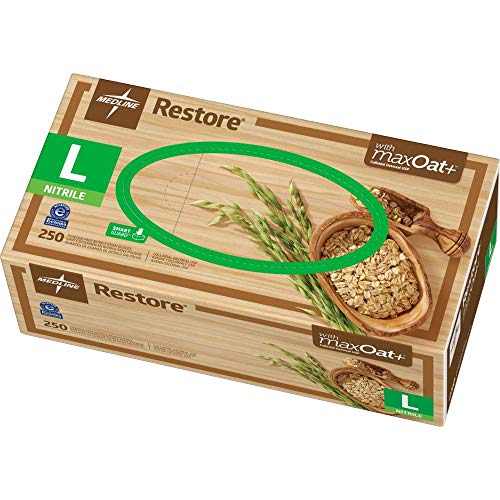
These gloves from Medline incorporate colloidal oatmeal—MaxOat+—directly into the interior surface, turning each wear into a gentle moisturizing session. For users with eczema or those who break out in hives from standard nitrile, this internal coating provides a buffer that reduces friction and calms irritation. The 3.5 mil nitrile material offers reliable puncture resistance for medical tasks, food prep, and cleaning without sacrificing tactile feedback.
Customer reports from healthcare workers and lab technicians confirm that these gloves last a full shift without tearing, even when dealing with sharp instruments or fingernails. The off-white color is discreet enough for public use, and the powder-free design eliminates the cornstarch residue that can trigger further dryness. Many users with latex allergies specifically noted a complete elimination of their previous symptoms after switching to this model.
The fit runs true to size, though some users reported that the interior oatmeal coating requires a slightly more deliberate donning motion compared to uncoated gloves. The price sits at the higher end of the category, but the combination of skin-soothing technology and hospital-grade durability justifies the investment for those whose skin reacts to virtually every other glove.
Why it’s great
- Colloidal oatmeal coating actively soothes irritated skin
- Exceptional durability for extended wear (full day rated)
- Powder-free and latex-free with medical-grade certification
Good to know
- Oatmeal coating can make donning slightly slower
- Premium price compared to standard nitrile gloves
2. HCS 250 Nitrile Gloves

HCS has engineered these gloves with a specific focus on chemical sensitivity, using an accelerator-free manufacturing process that earned a Dermatest 5 Star Seal for low dermatitis potential. At 4 mil thick, they are noticeably more robust than the average exam glove, providing enhanced barrier protection against fentanyl and chemotherapy agents while still allowing for textured fingertip grip. The cobalt blue color is a visual cue of their medical-grade origin.
User feedback highlights their durability—no tears or rips reported even during heavy-duty tasks—and their reliable fit across medium and large sizes. The absence of thiuram and carbamate accelerators means that users who develop contact dermatitis from standard nitrile gloves can wear these for hours without redness or itching. The textured fingertips offer excellent dexterity for jewelry making, lab work, and dental procedures.
The one consistent note from users is that the material can grip the skin tightly during donning, sometimes requiring a small amount of talc-free powder for a smoother slip. This is a minor trade-off for the superior chemical protection and accelerator-free formulation. The 250-count box offers strong value for the premium-tier performance.
Why it’s great
- Dermatest certified for low dermatitis potential
- 4 mil thickness offers superior tear and puncture resistance
- Accelerator-free for users with chemical allergies
Good to know
- Nitrile can stick to dry skin; some users add powder
- Premium price per glove compared to entry-level nitrile
3. Medline AloeTouch Ice Nitrile Exam Gloves

These gloves address a specific and often overlooked issue: allergic reactions to the blue dye used in standard nitrile gloves. The AloeTouch Ice uses a lighter, undyed nitrile material and coats the interior with aloe vera to moisturize the skin during wear. For users who get red, itchy hands specifically from blue nitrile, this solution eliminates the dye-based trigger while still providing the tactile sensitivity of a thin exam glove.
The medium size runs slightly smaller than average, which is ideal for users with smaller hands or those who prefer a snug, second-skin fit. The aloe coating leaves hands feeling softer after removal—a detail that nurses and caregivers who change gloves dozens of times daily consistently praise. The 200-count box offers good value, and the powder-free, latex-free construction makes it a reliable choice for everyday use.
Some users noted that the Large size fits snugly, so sizing up may be necessary for men with larger hands. The gloves are not as thick as premium options like the HCS or Restore, but they hold up well for light medical tasks, cleaning, and food handling. The aloe coating is a genuine skin-saving feature for those with mild to moderate sensitivities.
Why it’s great
- Aloe vera coating moisturizes and calms irritated skin
- Dye-free for users allergic to blue nitrile pigments
- Snug fit for improved dexterity
Good to know
- Sizing runs small; many users need to size up
- Not as puncture-resistant as 4 mil gloves
4. HALYARD Sterling SG Nitrile Exam Gloves
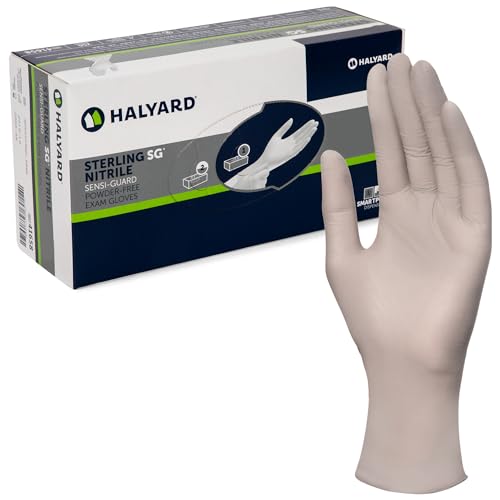
The HALYARD Sterling SG Nitrile gloves are a proven performer in hospital environments, where durability and tactile sensitivity are non-negotiable. At 3.7 mil, they provide a balanced thickness that resists tears from blood draw needles and sharp instruments while maintaining enough thinness for fine motor control. The gray color is professional and less clinical than bright blue, making it a preferred choice for professionals who want discretion.
Medical professionals—including registered nurses in the Air Force—routinely rate these as their top choice for everyday clinical use. The powder-free construction and latex-free nitrile formulation make them suitable for users with Type I latex allergies. The 9.5-inch length provides solid wrist coverage without binding, and the polymer coating inside makes donning easy without powder.
These gloves are not specifically marketed as “hypoallergenic” for severe chemical sensitivities, meaning users with known accelerator allergies should verify tolerance before bulk purchase. Some users reported that the medium size runs larger than other brands, so ordering a sample pack first may be wise. Nonetheless, for a general-use sensitive skin glove that prioritizes strength and reliability, this is a top contender.
Why it’s great
- Exceptional tensile strength for medical-grade durability
- Easy donning without powder or talc
- Professional gray color suitable for public-facing roles
Good to know
- Not explicitly accelerator-free; may irritate severe chemical allergies
- Sizing runs slightly larger than average
5. SAFESKIN Nitrile Exam Gloves
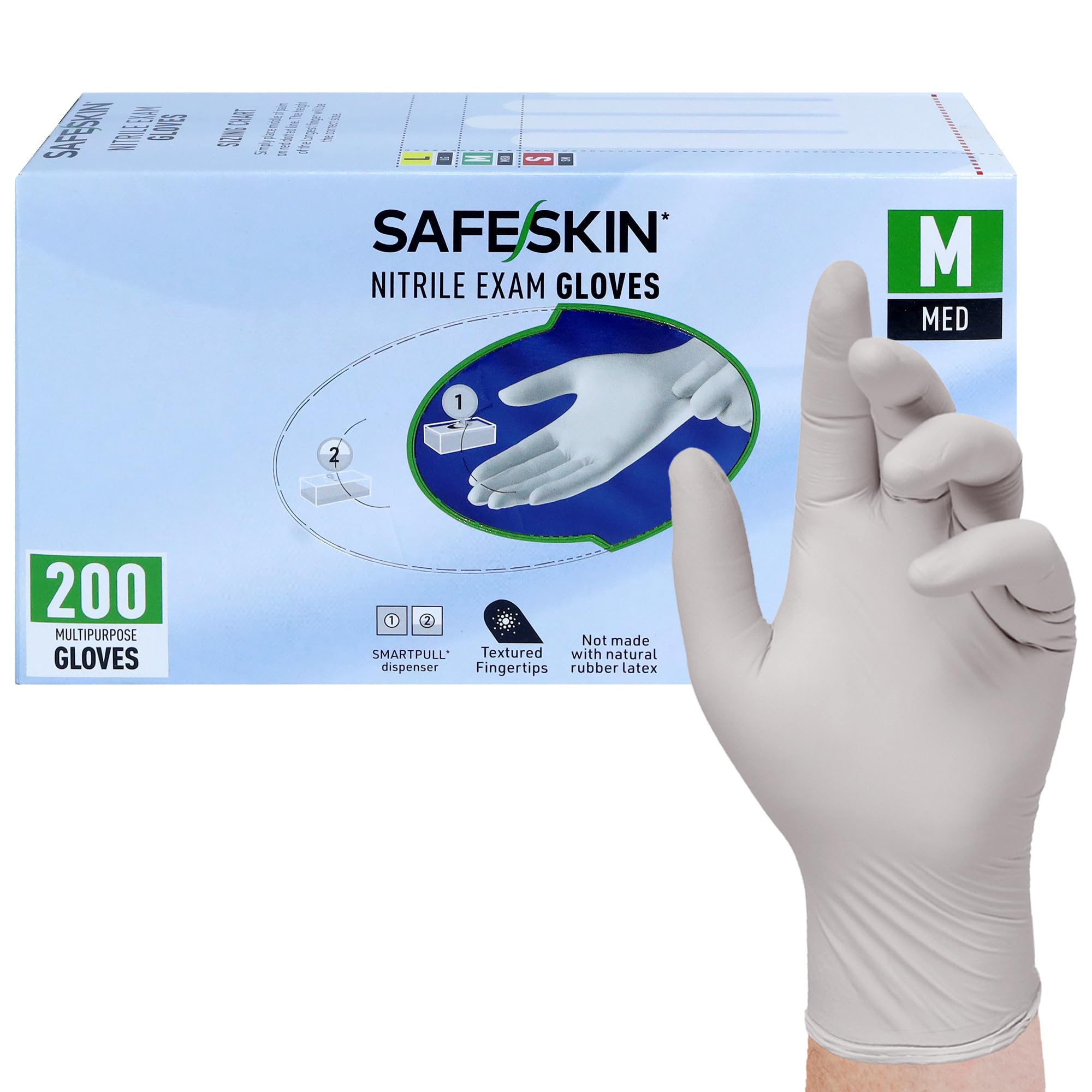
SAFESKIN offers a solid entry-level nitrile glove that works well for light to medium duty tasks without the high cost of premium brands. The 3.5 mil thickness is adequate for wound dressing changes, food preparation, cleaning, and general home care. The gray color is similar to the HALYARD model and resists looking dirty quickly. Users consistently compare the quality to popular Costco gloves at a comparable price per glove.
Customer feedback highlights the ease of donning and doffing, as well as the lack of any irritating powder residue. For users with mild latex allergies or general skin reactivity, these gloves provide a safe barrier without triggering immediate reactions. The fit is true to size, and the material holds up well for short to moderate wear sessions without tearing at the fingertips.
The primary limitation is that the material is not as durable as the 4 mil options—it will tear if snagged on sharp objects like broken glass or metal filing edges. Users with severe chemical allergies or eczema may still experience minor irritation from standard nitrile accelerators. For budget-conscious buyers or those who need a large volume of gloves for low-risk tasks, this is a solid, skin-safe choice that doesn’t break the bank.
Why it’s great
- Excellent value for the price per glove
- Powder-free and latex-free for general sensitivity
- True-to-size fit with easy donning
Good to know
- Not as puncture-resistant as premium 4 mil options
- May not be suitable for severe chemical allergies
FAQ
Can disposable gloves cause contact dermatitis even if they are latex-free?
What is the difference between medical exam gloves and food-safe gloves for sensitive skin?
Final Thoughts: The Verdict
For most users, the disposable gloves for sensitive skin winner is the Medline Restore Nitrile Exam Gloves because the colloidal oatmeal coating directly addresses irritation while maintaining hospital-grade durability. If you want accelerator-free chemical protection with a higher tear resistance, grab the HCS 250 Nitrile Gloves. And for a gentle, everyday option that eliminates blue-dye allergies at a fair price, nothing beats the Medline AloeTouch Ice Nitrile.

Mo Maruf
I created WellFizz to bridge the gap between vague wellness advice and actionable solutions. My mission is simple: to decode the research and give you practical tools you can actually use.
Beyond the data, I am a passionate traveler. I believe that stepping away from the screen to explore new environments is essential for mental clarity and physical vitality.