Our readers keep the lights on and my smoothie glass nicely filled. As an Amazon Associate, I earn from qualifying purchases.
Standard dish soap lifts grease, but it rarely eliminates dangerous pathogens like norovirus, E. coli, or salmonella that can linger on plates, cutting boards, and utensils. True kitchen hygiene demands a dedicated sanitizing step after the wash—one that kills bacteria and viruses without forcing you to scrub again or leave behind harmful residues.
I’m Mohammad Maruf — the founder and writer behind WellFizz. I’ve spent hundreds of hours analyzing commercial-grade sanitizers, lab test data, and real-world consumer feedback to identify the formulas that genuinely neutralize microbes on food-contact surfaces without requiring a second rinse.
Whether you’re restocking a home kitchen, a daycare, or a commercial prep station, this guide will help you navigate the chemistry, safety certifications, and application methods to find the right disinfectant for dishes that fits your routine and health standards.
How To Choose The Best Disinfectant For Dishes
A true dish disinfectant must kill bacteria and viruses on hard, non-porous surfaces without leaving a chemical residue that requires a second rinse. The wrong product can either fail to neutralize pathogens or introduce flavors and chemicals that transfer to your next meal.
No-Rinse Certification
The most important distinction is whether the formula is EPA-registered as a no-rinse food-contact sanitizer. These products are proven to be safe when left to air-dry on dishes, cutting boards, and countertops. Avoiding the rinse step ensures the sanitizer has the contact time needed to kill pathogens without contaminating the next use.
Active Ingredient: Quaternary vs. Bleach
Quaternary ammonium compounds (quats) are the industry standard for commercial dish sanitizers. They are odorless, non-corrosive at proper dilution, and leave no chemical taste. Bleach-based sanitizers are effective but can corrode metal utensils over time and leave a noticeable chlorine smell. Quat-based formulas are gentler on skin and surfaces.
Dilution and Concentration
Pre-diluted sprays offer convenience but cost more per ounce. Concentrated tablets or refill gallons let you mix exactly the solution strength required—typically 200 ppm quat solution for food-contact sanitizing. A test strip kit confirms you’ve hit the correct concentration, which is critical for both safety and code compliance.
Surface Compatibility
Not all sanitizers are safe for porous materials like unsealed wood, cast iron, or non-stick coatings. Always verify the product is labeled for use on the surfaces you clean. A food-contact sanitizer designed for glass, ceramic, and stainless steel is the safest bet for most dishware.
Quick Comparison
On smaller screens, swipe sideways to see the full table.
| Model | Category | Best For | Key Spec | Amazon |
|---|---|---|---|---|
| CloroxPro Anywhere Daily Disinfectant | No-Rinse Spray | Everyday food-contact surfaces | 128 oz refill, no-rinse | Amazon |
| Steramine Sanitizing Tablets | Quat Tablets | Commercial & large-volume use | 450 tablets, 1 per gallon | Amazon |
| Purell Foodservice Surface Sanitizer | Fragrance-Free | Households with kids & pets | 128 oz, fragrance-free | Amazon |
| Clorox Antibacterial Dish Soap | Antibacterial Liquid | Daily hand-washing + bacteria kill | 6-pack, lemon scent | Amazon |
| Dawn Powerwash Spray | Grease Remover | Baked-on messes & presoaking | 64 oz total, 4 units | Amazon |
In‑Depth Reviews
1. CloroxPro Anywhere Daily Disinfectant and Sanitizer

The CloroxPro Anywhere Daily holds a premium position because it carries an EPA registration for no-rinse food-contact sanitizing while being gentle enough for everyday household surfaces. Users report that it kills cold and flu viruses and 99.9% of bacteria including E. coli and Salmonella in just one minute, yet leaves absolutely no chemical taste or residue on dishes.
The 128-ounce refill gallon connects to the Clorox Pro spray system for convenient dispensing, but the formula works just as well with a standard spray bottle. Customers consistently praise the lack of harsh chemical odor — a light bleach scent dissipates within seconds — making it suitable for homes with children and pets. The no-rinse directive is the biggest timesaver; you spray, wipe, and air-dry without a second wash step.
One minor inconvenience is the adapter cap designed for a proprietary system. Users note you need to remove a small center piece before fitting it to a standard bottle. Despite this, the gallon delivers months of use and is far more economical than smaller spray bottles. For a middle-of-the-market price, this offers the best balance of certified efficacy and daily convenience.
Why it’s great
- EPA-registered no-rinse food-contact sanitizer.
- Kills 99.9% of bacteria in one minute.
- Gentle scent, no lingering chemical residue.
Good to know
- Adapter cap requires modification for standard spray bottles.
- Not a degreaser — surfaces should be pre-washed.
2. Steramine Quaternary Sanitizing Tablets
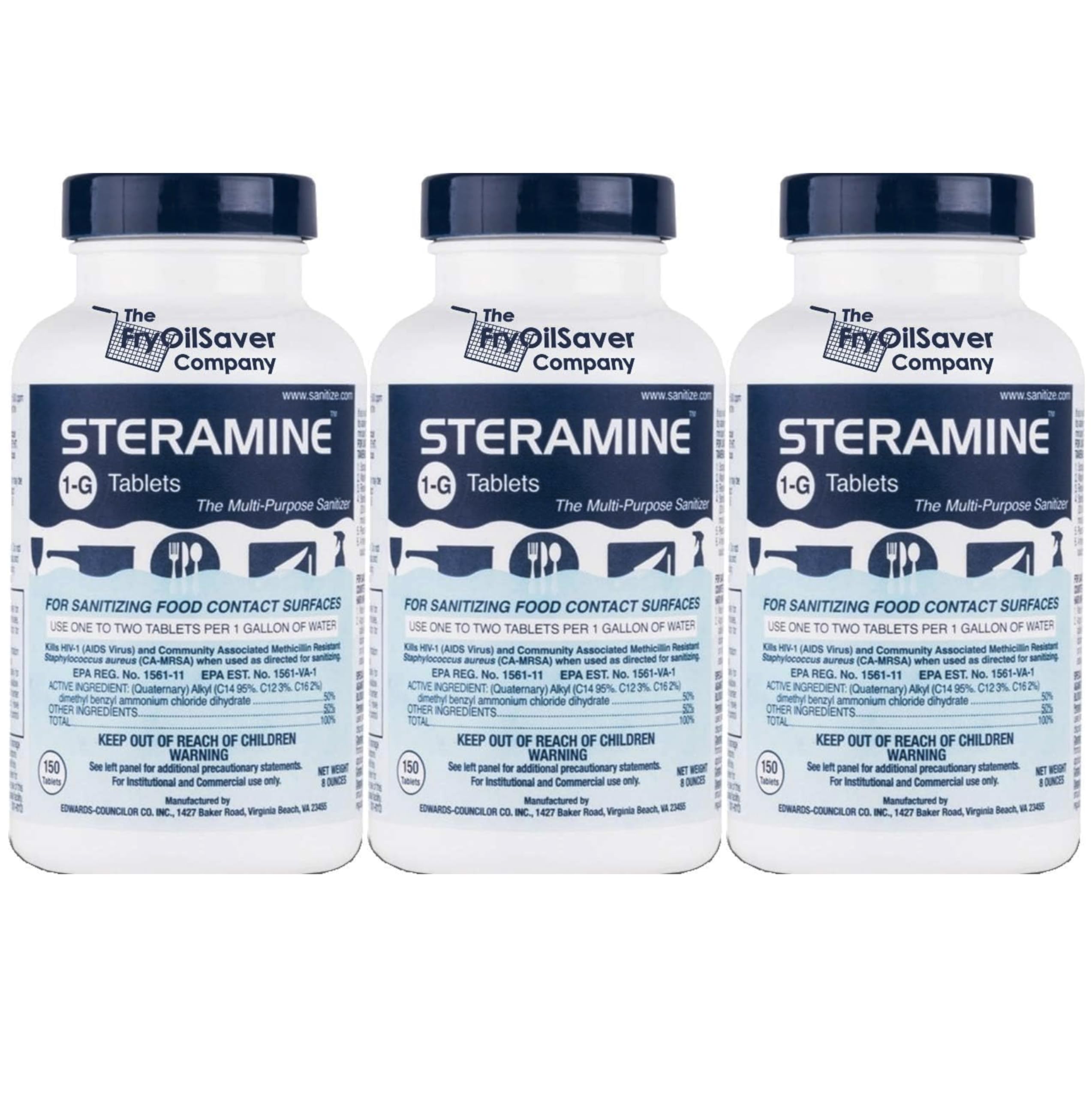
Steramine tablets are the gold standard for commercial kitchens and serious home setups. Each tablet dissolves completely in one gallon of water to produce a 200 ppm quaternary ammonium solution — the exact concentration required for no-rinse food-contact sanitizing. The blue tint acts as a visual confirmation that the solution is active, and test strips ensure you stay within safe limits.
Users transitioning from bleach appreciate that Steramine is odorless and non-corrosive. Dishes dry faster without any chemical smell, and the solution can be used in a three-compartment sink routine for utensils, cutting boards, and glassware. The 450-tablet pack (three bottles of 150) lasts heavily used households or small restaurants for months. The tablets are also effective for sanitizing water bottles, toys, and other hard surfaces.
The main drawback is that the quat solution can irritate sensitive skin upon direct contact — gloves are recommended. Additionally, dry tablets are toxic if ingested, so proper storage away from children is essential. For anyone looking to replicate restaurant-grade sanitation at home, this is the most cost-effective and concentrated format available.
Why it’s great
- Pre-measured tablets for consistent 200 ppm quat solution.
- Odorless, no-rinse, and residue-free on dishes.
- Extremely economical — one tablet per gallon.
Good to know
- Quat solution can irritate skin; wear gloves.
- Tablets are toxic if ingested; store safely.
3. Purell Foodservice Surface Sanitizer

Purell’s foodservice sanitizer earns its place as a fragrance-free, no-rinse formula that is particularly effective against norovirus — a key concern for households with young children. Users report that it kills viruses and bacteria on contact surfaces without leaving any sticky residue or overpowering smell. The gallon jug includes a funnel for easy refilling of spray bottles.
Customers highlight its dual role: it works as a disinfectant for dishes and countertops, and also handles soft surfaces like upholstery without damage. The fragrance-free nature makes it ideal for those with chemical sensitivities or scent allergies. Reviews consistently mention that a single gallon lasts about a year with regular use, offering strong value.
The formula is flammable, so it must be kept away from open flames and hot surfaces — not ideal for use near a gas stove. A few users also noted a slight haze on some materials after drying, requiring a quick wipe with a dry cloth. For a budget-friendly entry point into certified no-rinse sanitizing, this is a solid, low-odor option.
Why it’s great
- Fragrance-free and gentle on sensitive skin.
- Effective against norovirus and bacteria.
- Good value — one gallon lasts up to a year.
Good to know
- Flammable; keep away from heat and flames.
- May leave a slight haze on some surfaces.
4. Clorox Liquid Dish Soap | Antibacterial OXY Powered
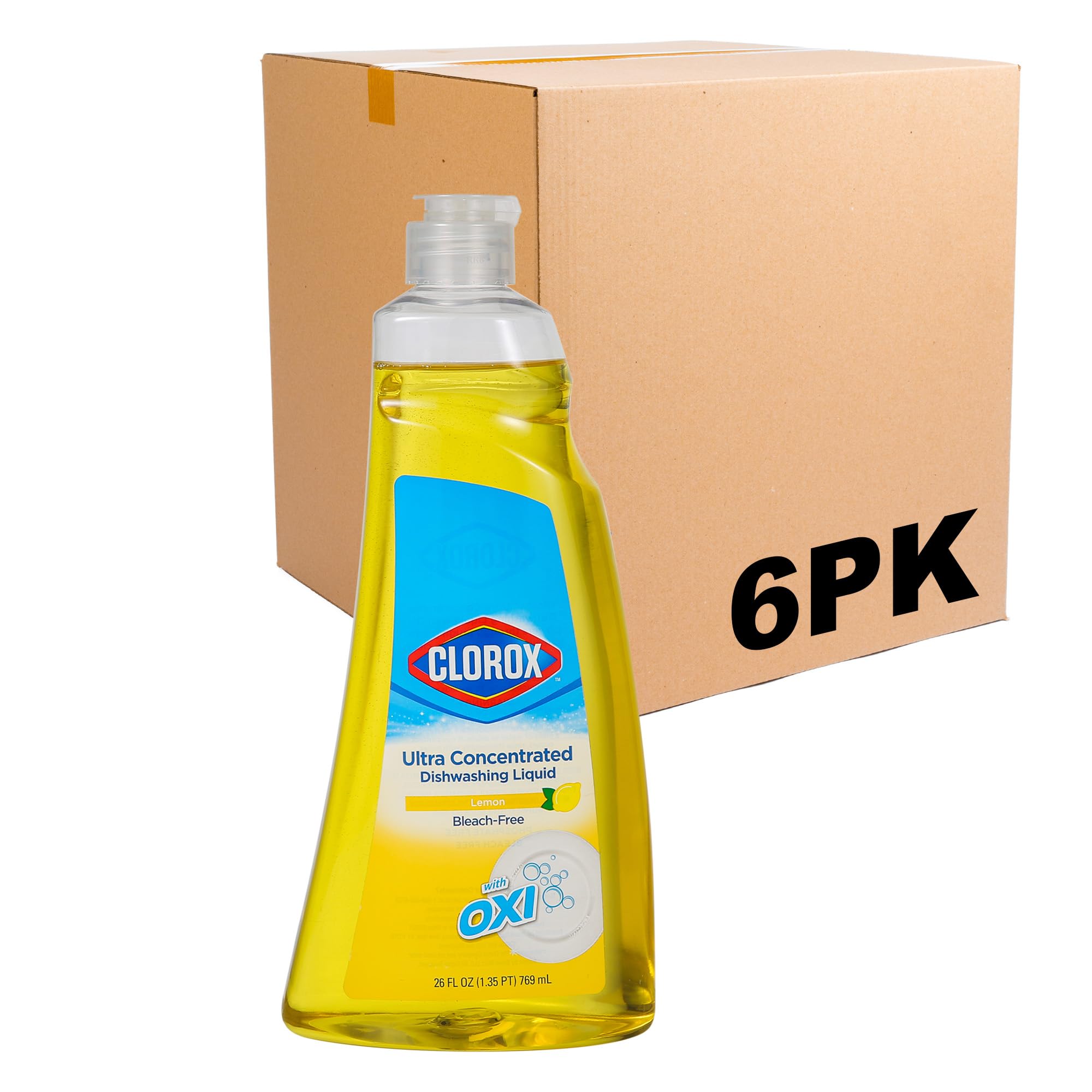
Clorox’s antibacterial dish soap blends traditional grease-fighting surfactants with oxygen-powered stain lifters and an antibacterial agent, all in a dermatologist-tested, bleach-free formula. Users report it powers through grease and lifts coffee and tea stains from mugs without the harshness of bleach-based alternatives. The lemon scent is refreshing but mild.
While this soap offers antibacterial protection during hand-washing, it is not a no-rinse sanitizer in the same category as the quat-based products above. The antibacterial action occurs during the wash phase but requires thorough rinsing before air-drying. For daily dish duty with an added layer of protection against bacteria, it works well — especially for households that want simplicity without an extra sanitizing step.
The ultra-concentrated formula means a little goes a long way; the six-bottle pack lasts heavy users many weeks. Some reviewers note that the soap produces fewer suds than traditional liquids, but this does not affect its cleaning performance. It is better suited for routine washing than for sanitizing high-risk items like raw meat cutting boards.
Why it’s great
- Antibacterial action during the wash cycle.
- Bleach-free and gentle on hands.
- Concentrated formula offers plenty of washes per bottle.
Good to know
- Requires rinsing — not a no-rinse sanitizer.
- Lower suds than traditional dish soaps.
5. Dawn Powerwash Spray, Dish Soap, Lemon

Dawn Powerwash is not a disinfectant in the EPA-registered sense, but it earns a spot here because of its ability to remove the grease and food residue that harbor bacteria. The spray foam activates on contact without water — you spray suds directly onto dishes, wipe, and rinse. Users report it cuts through baked-on grime on pans and coffee mug stains in minutes, often replacing overnight soaking.
For everyday dish cleaning, the convenience is undeniable. The starter kit plus three refills gives 64 total ounces of diluted soap at a budget-friendly price point. Customers note that a single bottle lasts weeks because the foam delivers concentrated soap with minimal runoff. It is especially useful for items that cannot go in the dishwasher, like chef’s knives and insulated tumblers.
The limitation is that Powerwash is a cleaner, not a sanitizer. After degreasing, you would still need a separate sanitizing step if your goal is pathogen elimination. However, for most home kitchens where the main concern is removing bacteria-harboring grease, this product does the heavy lifting efficiently.
Why it’s great
- Spray-on foam eliminates soaking time for grease.
- Very economical — foam reduces soap waste.
- Refill bundle offers long-term value.
Good to know
- Not registered as a disinfectant or sanitizer.
- Requires rinsing after application.
FAQ
Can I use regular bleach to sanitize dishes?
Do I need to rinse dishes after using a no-rinse sanitizer?
Will a sanitizer ruin my cast iron or non-stick pans?
Final Thoughts: The Verdict
For most users, the disinfectant for dishes winner is the CloroxPro Anywhere Daily because it combines EPA-registered no-rinse efficacy with a nearly odorless formula that works on all dishware. If you want commercial-grade dilution control and the lowest cost per use, grab the Steramine tablets. And for fragrance-free, norovirus-killing power in a family-friendly package, nothing beats the Purell Foodservice Sanitizer.

Mo Maruf
I created WellFizz to bridge the gap between vague wellness advice and actionable solutions. My mission is simple: to decode the research and give you practical tools you can actually use.
Beyond the data, I am a passionate traveler. I believe that stepping away from the screen to explore new environments is essential for mental clarity and physical vitality.