Our readers keep the lights on and my smoothie glass nicely filled. As an Amazon Associate, I earn from qualifying purchases.
Cleaning a surface only to wonder if the germs are still there is a nagging feeling that doesn’t go away with soap and water alone. A true disinfectant cleaner requires the right chemistry — a measured contact time — to break down viral envelopes and bacterial cell walls on hard, non-porous surfaces.
I’m Mohammad Maruf — the founder and writer behind WellFizz. I’ve spent hundreds of hours analyzing EPA-registered disinfectant chemistries, comparing contact times on pathogen kill claims, and reviewing real-world user feedback on residue, odor, and surface compatibility.
This guide breaks down the top-performing formulas for household and professional use, so you can pick a disinfectant cleaner for killing germs that actually works with your routine.
How To Choose The Best Disinfectant Cleaner For Killing Germs
Not every spray or wipe on the shelf is a true disinfectant. Many household labels are sanitizers, which reduce bacteria to safe levels but don’t necessarily inactivate viruses and fungi. To get genuine germ kill, the product must be EPA-registered and you must follow the specified contact time — the period the surface stays visibly wet.
Contact Time: The Make-or-Break Metric
Every disinfectant lists a contact time on its label. Some formulas kill bacteria in 30 seconds, while tougher pathogens like C. difficile spores may require 2 minutes or longer. If you wipe the surface dry before the clock runs out, the kill may not happen. Choose a product whose contact time fits your patience level and the microbes you’re targeting.
Active Chemistry: Bleach vs. Quaternary vs. Hydrogen Peroxide
Bleach is powerful but corrosive, fades fabrics, and leaves a strong odor. Quaternary ammonium compounds (quats) are gentler on surfaces and leave a residual barrier, but may not kill spores. Hydrogen peroxide disinfectants are bleach-free, low-odor, and safe on soft surfaces, but can be pricier per ounce. Your choice depends on surface sensitivity and the specific germ you’re fighting.
Residual Protection vs. Instant Kill
Some disinfectants provide a sustained antimicrobial coating that keeps killing germs for up to 24 hours after drying. Others only kill during the wet contact time and leave no active residue. For high-touch areas like door handles and light switches, a residual formula reduces reapplication frequency. For food-contact surfaces, a no-rinse formula that leaves no residue is safer.
Quick Comparison
On smaller screens, swipe sideways to see the full table.
| Model | Category | Best For | Key Spec | Amazon |
|---|---|---|---|---|
| Microban Multi-Purpose Cleaner | Residual Spray | Everyday surfaces, 24-hour protection | 24-hour residual kill claim | Amazon |
| Metrex CaviCide | Hospital-Grade Quat | Professional clinics, high-risk zones | 2-3 minute contact time | Amazon |
| Clorox Healthcare Fuzion | Hypochlorous Bleach | C. diff spore elimination | 2-minute C. diff kill time | Amazon |
| LYSOL Disinfecting Wipes | Multi-Surface Wipe | Quick sanitizing on electronics | 10-second sanitize claim | Amazon |
| Clorox Healthcare H2O2 Refill | Bleach-Free Refill | Soft surfaces, no-odor cleaning | 30-second soft surface kill | Amazon |
In‑Depth Reviews
1. Microban Multi-Purpose Cleaner, 32 oz., 2 Pack
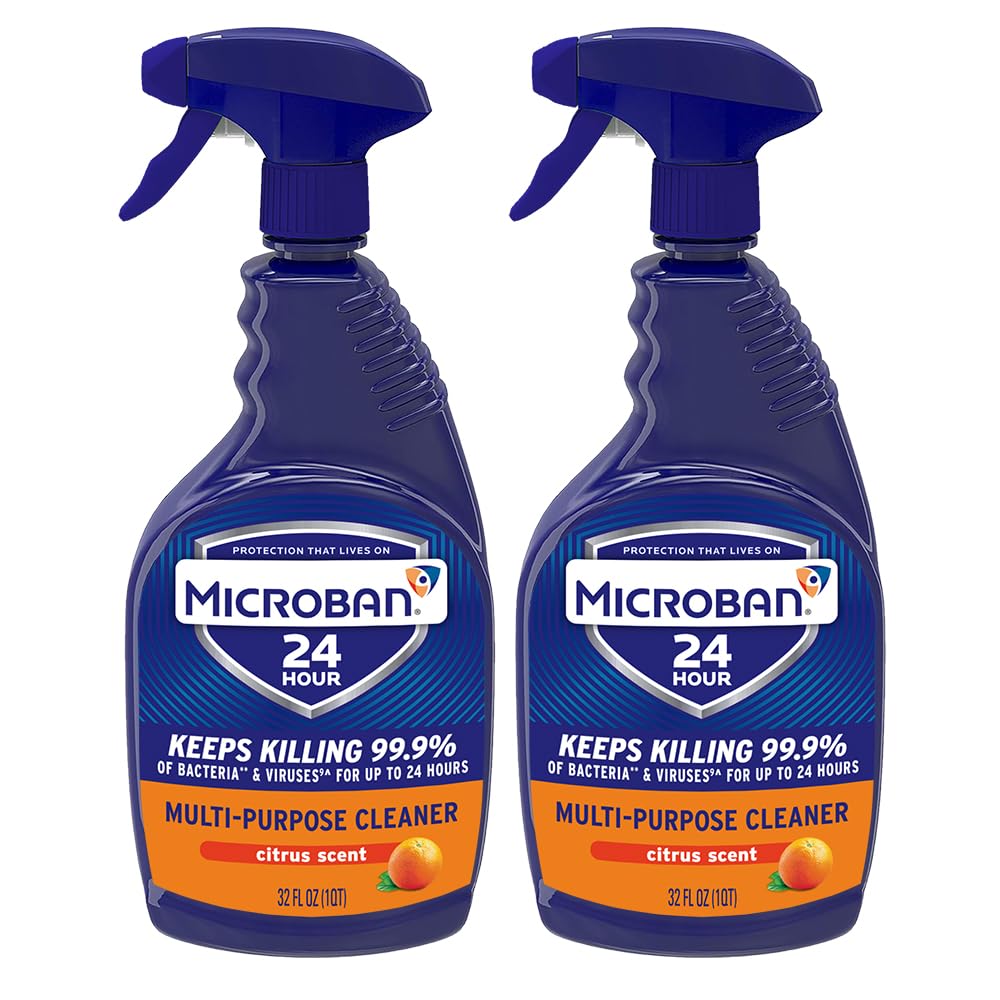
Microban distinguishes itself with a claim few household cleaners make: it keeps killing 99.9% of bacteria and viruses for up to 24 hours after the surface dries. That residual shield means you can spray a countertop in the morning and still have active protection after lunch, reducing the need for constant reapplication. The formula penetrates soap scum and greasy soils during the initial clean, so it works as a degreaser and a disinfectant in one pass. Users consistently praise its mild citrus scent compared to the chemical burn of bleach or the heavy perfume of some quat-based sprays.
On non-porous surfaces like sealed granite, glazed tile, and stainless steel, the solution leaves no sticky film. The two-pack provides 64 ounces total, which translates to roughly 4-6 weeks of daily kitchen and bathroom use for an average household. It’s also safe on fabric surfaces for mold and mildew prevention, though the residual claim applies only to hard surfaces. For anyone who wants a cleaner that keeps working between cleaning sessions, this is the most practical option on the shelf.
The main limitation is that Microban cannot be used on food-contact surfaces like cutting boards or inside the refrigerator — a rinse step is still required if the spray drifts near plates. The 24-hour protection also requires the surface to remain undisturbed; heavy traffic or wet mopping will break the barrier. Still, for high-touch points like light switches, door handles, and remote controls, this delivers peace of mind that a standard spray cannot.
Why it’s great
- 24-hour residual kill claim on hard surfaces
- Powerful degreaser that cuts through soap scum
- Mild, non-overpowering citrus scent
Good to know
- Not for use on food-contact surfaces
- 24-hour barrier can be disrupted by moisture
2. Metrex CaviCide Germicidal Surface Disinfectant Spray, 24 fl oz
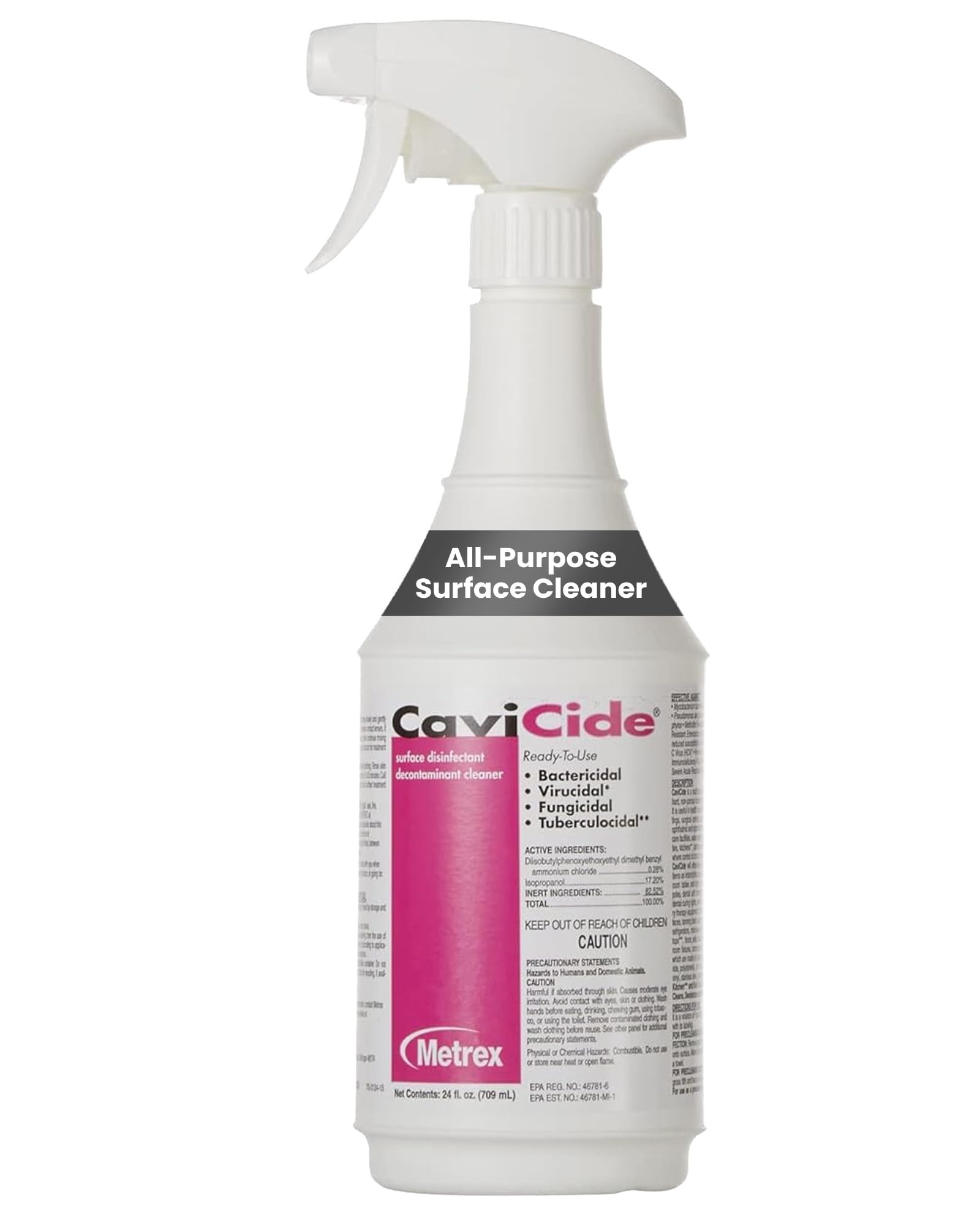
This bottle is a staple in dental offices, veterinary clinics, and tattoo studios for a reason. CaviCide uses a quaternary ammonium and alcohol blend that meets OSHA Bloodborne Pathogen standards and stays effective even in the presence of blood and serum — a critical feature for professional settings. It kills MRSA, VRE, Tuberculosis, and Influenza A with labeled contact times of just 2 to 3 minutes depending on the organism. The ready-to-use trigger spray means no mixing, no dilution, and no guesswork.
On medical-grade stainless steel, plastic, glass, and Formica, the residue is minimal. Users switching from bleach-based disinfectants report a clean smell without the sharp burn. The 24-ounce size is compact enough for a bathroom cabinet or salon station but still covers several full-room wipe-downs. For home use, it excels in areas where cross-contamination risk is highest — bathroom counters, pet feeding stations, and diaper-changing surfaces.
The trade-off is that CaviCide is designed exclusively for hard, non-porous surfaces. It cannot be used on upholstery, carpets, or fabric. Some users note that the alcohol content evaporates quickly, so you must saturate the surface thoroughly to maintain the full contact time. If you need a hospital-grade result without the corrosive effects of bleach, this is the most trusted middle-ground option in professional disinfection.
Why it’s great
- Effective against MRSA, VRE, and TB
- Ready-to-use, no dilution required
- Stays active in the presence of blood/serum
Good to know
- Hard surfaces only — avoid fabric
- Alcohol formula requires thorough saturation
3. Clorox Healthcare Fuzion Cleaner Disinfectant Spray, 32 oz

Fuzion is built around hypochlorous acid bleach technology — a different chemistry from traditional sodium hypochlorite bleach that delivers faster kill with far less odor and residue. Its most compelling claim is killing C. difficile spores in just 2 minutes, which is the fastest time available for a sporicidal agent. For anyone dealing with recurrent C. diff infections in a household member, this makes Fuzion the go-to product. It also eliminates more than 60 pathogens total, including MRSA and VRE, with contact times of two minutes or less.
The pH-neutral formula is easy on surfaces compared to standard bleach. Users report that it doesn’t etch stainless steel or discolor grout the way Clorox Regular-Bleach does. The low-odor profile is a major advantage — you can spray a bathroom and walk back in immediately without coughing. The spray pattern covers well, and the 32-ounce bottle goes surprisingly far given that hypochlorous disinfectants are often used in spray-and-wipe fashion.
One important caveat: this product is labeled for healthcare settings only. It is not sold in standard grocery stores and should not be used on food-contact surfaces. For home users willing to handle it as a clinical-grade tool, it’s unmatched for serious spore problems. But for light routine cleaning, the higher price and limited availability make it more than most households need.
Why it’s great
- Fastest C. diff spore kill at 2 minutes
- Low odor and minimal residue
- pH-neutral, gentle on surfaces
Good to know
- Labeled for healthcare settings only
- Not for food-contact surfaces
4. LYSOL Disinfecting Wipes, Lemon & Lime Blossom, 80 ct (4 Pack)
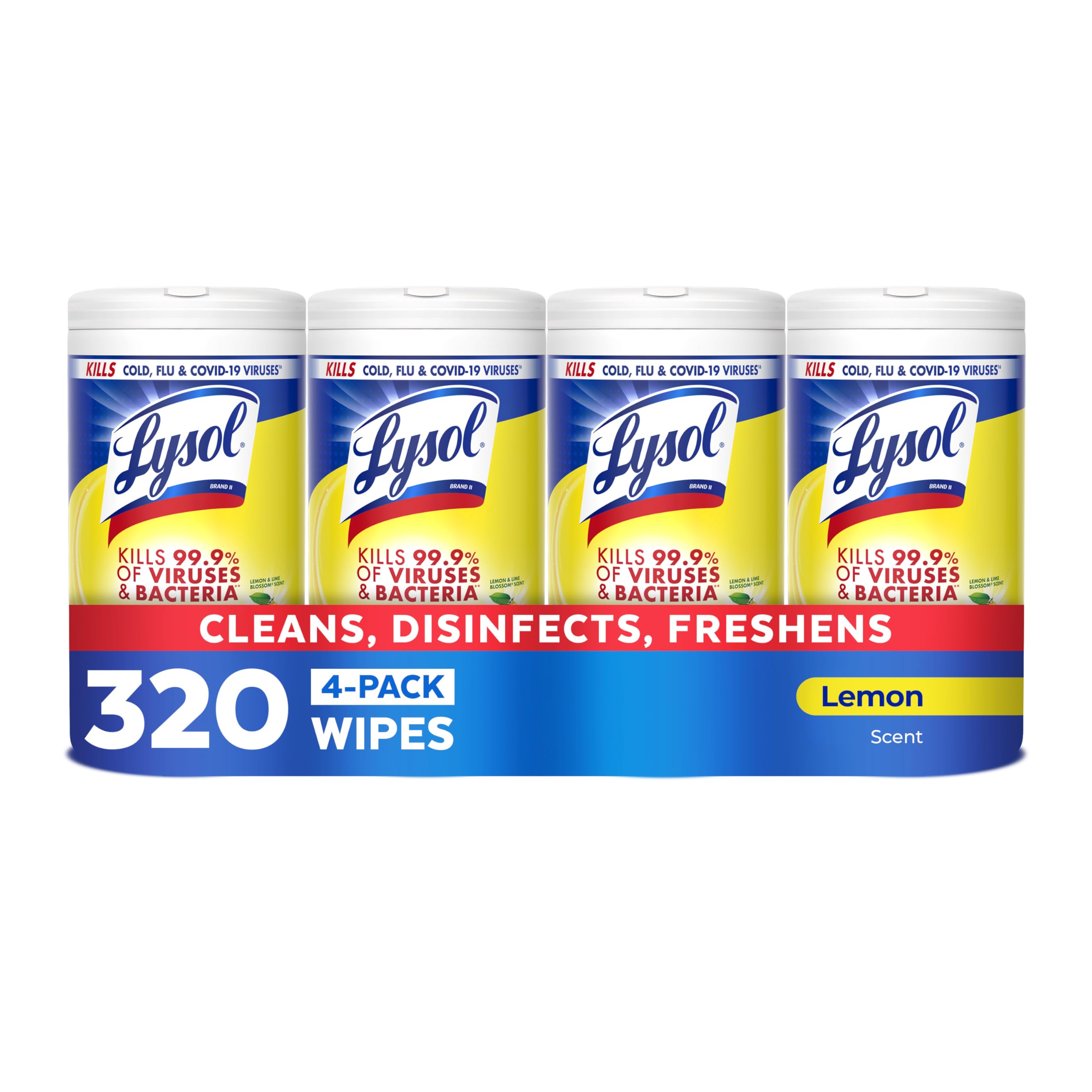
Lysol wipes remain the household standard because they solve the biggest friction point of disinfecting: requiring a surface to stay wet for several minutes. With a 10-second sanitize claim for bacteria and a 15-second kill against SARS-CoV-2, these wipes let you clean a counter, a phone screen, and a light switch in under a minute total. The 80-count four-pack means you get 320 wipes, which for a family of four typically lasts two to three weeks across the kitchen, bathroom, and office. Users consistently mention that these wipes are thicker than store-brand alternatives and stay moist until the very last sheet.
The multi-surface compatibility is comprehensive — sealed wood, stainless steel, glass, countertops, and electronics all fare well with no bleach or ammonia damage. The Lemon & Lime Blossom scent is bright without being cloying. For allergy-sensitive users, these also remove pet dander, pollen, and dust mite debris from hard surfaces, effectively making them a dual-purpose cleaner and allergen reducer. The textured wipe surface traps and lifts grease and grime better than a paper towel and spray cleaner combination.
The downside is that wipes generate more plastic waste than a spray and reusable cloth. Some users report that the sheets are not individually sealed, so the pack can dry out over time if the resealable lid isn’t pressed firmly shut. For deep disinfection of porous surfaces or large floor areas, a spray is more efficient. But for speed and convenience during daily touch-point cleaning, wipes remain the most practical approach.
Why it’s great
- 10-second sanitize time for bacteria
- Safe on electronics and sealed wood
- Removes common allergens from surfaces
Good to know
- One-time use generates plastic waste
- Package must be resealed to prevent drying
5. Clorox Healthcare Hydrogen Peroxide Cleaner Disinfectant Refill, 128 oz
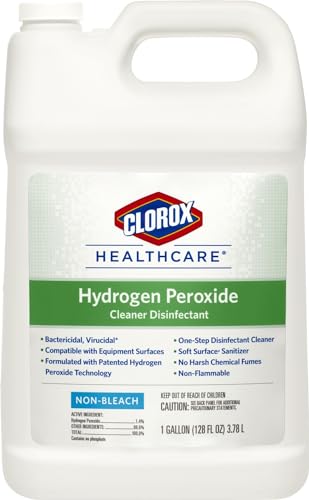
Hydrogen peroxide disinfectants are the hidden gems of the germ-killing world — they offer a broad kill claim without the odor, corrosion, or staining of bleach. This Clorox Healthcare refill kills 40 microorganisms in 1 minute or less, including C. auris in 3 minutes and norovirus in 1 minute. What makes it stand apart is the EPA registration for soft surface sanitization: you can spray clinic curtains, upholstery, and even mattress covers and kill bacteria in 30 seconds without damaging the fabric. The bleach-free chemistry leaves almost no residue, and the lack of added fragrance makes it ideal for people with chemical sensitivities or asthma.
The 128-ounce refill is designed to top off smaller spray bottles, reducing plastic waste. Users who keep a trigger bottle in the kitchen and another in the bathroom report the refill lasts two to three months with daily use. The hydrogen peroxide solution is also effective for laundry — add it to the rinse cycle to disinfect linens without hot water. For mopping, it cleans grout and sealed floors without leaving a slick film that attract dirt later. The clinical scent is mild and fades quickly, which is a relief after years of bleach-heavy disinfectants.
On the downside, this is a healthcare-labeled product, so it may not be in your local supermarket. The gallon jug is bulky, and the hydrogen peroxide solution works best when stored away from heat and light to maintain potency. Some users find that it leaves a slight film on glass surfaces, requiring a water rinse for streak-free results. Still, for anyone who needs a bleach-free, low-odor, high-efficacy disinfectant that works on both hard and soft surfaces, this refill delivers the best cost per application.
Why it’s great
- Bleach-free with fast kill times (1 min for norovirus)
- EPA-registered for soft surface sanitization
- No added fragrance — suitable for sensitive users
Good to know
- Requires proper storage away from light
- May leave slight film on glass surfaces
FAQ
Can I use a disinfectant spray on my phone screen?
How long does a quaternary ammonium disinfectant stay active on dry surfaces?
Does hydrogen peroxide disinfectant stain clothes or upholstery?
Final Thoughts: The Verdict
For most users, the disinfectant cleaner for killing germs winner is the Microban Multi-Purpose Cleaner because its 24-hour residual protection extends the value of every spray, and it tackles grease and soap scum in the same pass. If you need a professional-grade solution for high-risk pathogens without bleach burn, grab the Metrex CaviCide. And for bleach-free sanitization on soft surfaces and a massive refill that reduces plastic waste, nothing beats the Clorox Healthcare Hydrogen Peroxide Refill.

Mo Maruf
I created WellFizz to bridge the gap between vague wellness advice and actionable solutions. My mission is simple: to decode the research and give you practical tools you can actually use.
Beyond the data, I am a passionate traveler. I believe that stepping away from the screen to explore new environments is essential for mental clarity and physical vitality.