Our readers keep the lights on and my smoothie glass nicely filled. As an Amazon Associate, I earn from qualifying purchases.
The wrong outsole pattern or an overly cushioned midsole bleeds torque, reduces control during the spin, and can shorten an athlete’s competitive career through unstable landings. Choosing correctly means understanding sole rigidity, heel-to-toe drop, and lateral support specific to rotational throwing events.
I’m Mohammad Maruf — the founder and writer behind WellFizz. I’ve spent hundreds of hours analyzing track and field footwear specifications, reading competition rules on sole thickness, and comparing outsole compounds used by elite throwers to separate authentic performance gear from general training shoes that lack the necessary structural features.
After reviewing customer feedback on fit, durability, and real-world ring performance, these seven models represent the spectrum of options worth considering this season. This guide breaks down what makes a throwing shoe effective for the spin and names the top contenders for the title of best discus throwing shoes you can buy right now.
How To Choose The Best Discus Throwing Shoes
Not every flat shoe works for the discus circle. The spin places unique demands on the footwear’s sole stiffness, heel-to-toe drop, and upper lockdown. A shoe built for sprinting or general training lacks the torsional rigidity needed to prevent the foot from rolling over the edge of the outsole during the middle of the turn. Focus on these three criteria to narrow your options.
Sole Thickness and Heel Drop
World Athletics limits sole thickness to 20mm at the heel and 12mm at the forefoot for competition throwing shoes. A lower heel-to-toe drop (4mm or less) keeps the thrower closer to the ground, improving stability and balance during rotational acceleration. Shoes with excessive cushioning lift the center of mass and delay ground contact feedback, which hurts timing in the power position.
Outsole Grip Pattern
The discus circle is typically concrete or synthetic with a painted surface. A smooth or lightly textured rubber outsole provides enough grip without catching and locking the foot during the pivot. Deep aggressive treads common on trail or cross-training shoes can cause the foot to stick during the turn, increasing injury risk and reducing rotational flow. Look for flat rubber outsoles with minimal tread channels.
Upper Construction and Heel Lock
Throwing generates lateral forces that pull the foot sideways inside the shoe. A upper made from synthetic leather or engineered mesh with a reinforced heel counter keeps the foot planted during the rotational phase. Lace-lock systems or asymmetric lacing can provide additional midfoot cinching. A loose heel leads to blisters and lost power transfer during the block.
Quick Comparison
On smaller screens, swipe sideways to see the full table.
| Model | Category | Best For | Key Spec | Amazon |
|---|---|---|---|---|
| ASICS Throw PRO 3 | Mid-Range | Competitive throwers needing wide sizing | Split-sole design for flexibility | Amazon |
| adidas Adizero Throws | Premium | Elite-level torque and speed | Lightstrike midsole for low drop | Amazon |
| VELAASA Stones | Premium | Large feet / wide fit athletes | Breathable mesh with flat heel | Amazon |
| Under Armour Centric Grip | Mid-Range | Dual-event (shot / discus) practice | Rubber outsole for ring grip | Amazon |
| Nike Zoom SD 4 | Budget-Friendly | Entry-level throwers on a budget | Adjustable lace fit for wide feet | Amazon |
| adidas Throwstar | Budget-Friendly | High school season / first pair | Lightweight textile upper | Amazon |
| ASICS Hyper Throw 3 | Entry-Level | Wide-foot beginners / practice use | Full-rubber outsole coverage | Amazon |
In‑Depth Reviews
1. ASICS Unisex Throw PRO 3
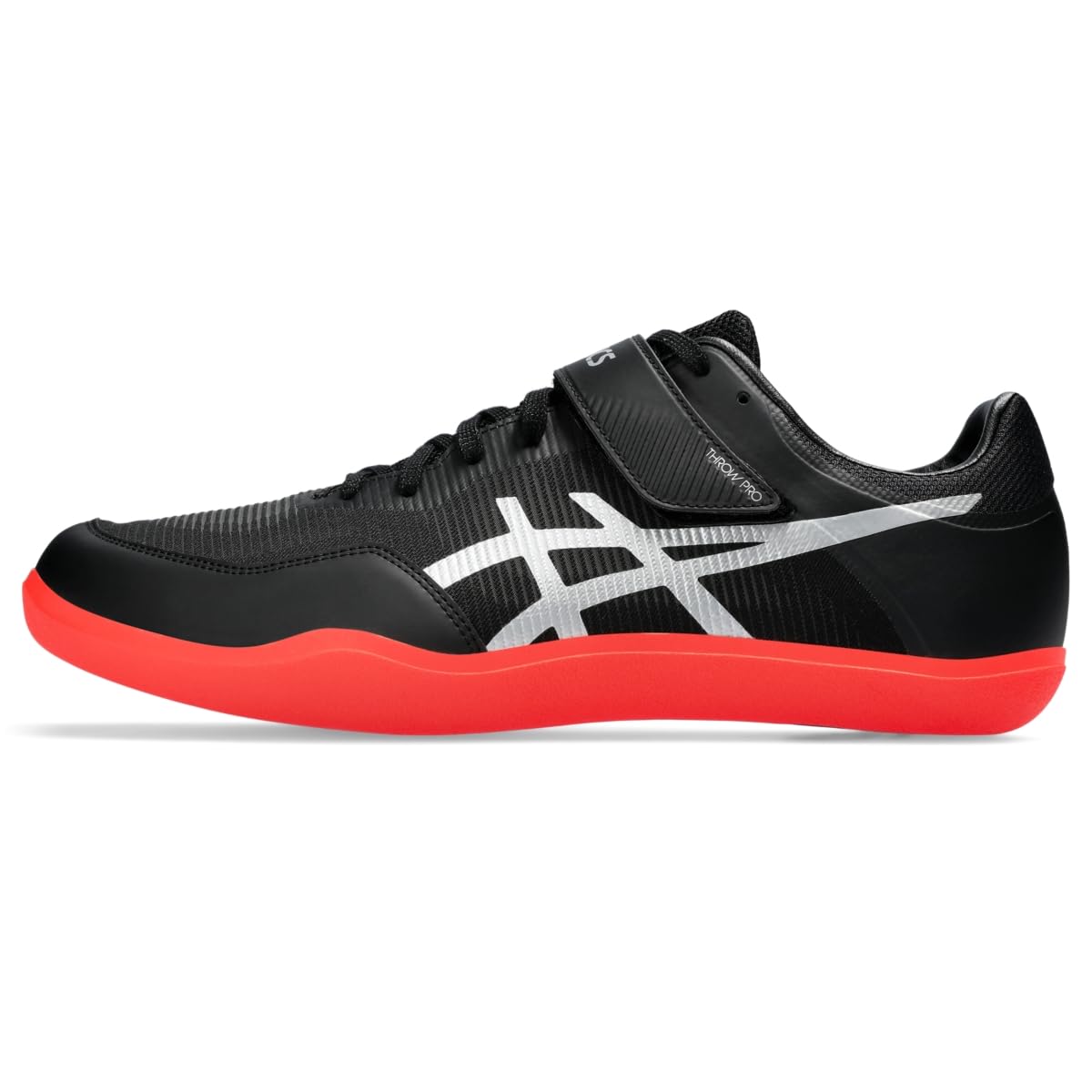
The ASICS Throw PRO 3 uses a split-sole construction that separates the forefoot from the heel, allowing the shoe to bend naturally at the metatarsal joint without losing lateral rigidity. This design helps throwers maintain ground contact through the full rotational arc while reducing the risk of the shoe twisting off-axis. The upper is made from a stiff synthetic mesh that resists stretch even under the high sideways forces generated during the middle of the spin.
Customer feedback consistently highlights the spacious toe box and wide-foot compatibility — several buyers noted that the PRO 3 fits true to size for feet that typically require a D or 2E width in training shoes. The outsole uses a flat rubber compound with minimal tread interruption, providing enough grip on painted concrete circles without locking or catching during the pivot. Multiple reviews from state-level competitors confirm the shoe holds up for a full season of daily practice without midsole compression or upper tearing.
For throwers who compete in both shot put and discus, the PRO 3 offers the structural stiffness needed for the glide and the flexibility needed for the spin. The lace system runs high enough on the instep to allow a secure midfoot lock, and the heel counter includes a subtle internal cup that prevents slippage during the power position. If you need one reliable shoe for throws practice and competition, this is the model to beat.
Why it’s great
- Split sole design improves natural foot flexion during rotation
- Excellent width accommodation for throwers with wide feet
- Flat outsole delivers consistent grip on concrete rings
Good to know
- Upper stiffness takes a few sessions to break in
- Not ideal for throwers who prefer a sock-like fit
2. adidas Men’s Adizero Throws Track & Field Shoes

The adidas Adizero Throws sits at the top of the weight-to-performance ratio in this category. It uses Lightstrike foam in the midsole — a lightweight EVA blend that provides impact absorption without adding vertical stack height. The heel-to-toe drop measures approximately 4mm, keeping the thrower’s center of mass low and allowing rapid ground feel feedback during each rotational phase. The outsole uses a thin rubber skin with a smooth texture that slides freely on the ring while maintaining enough friction to push off from the rear of the circle.
Buyers with wide feet frequently report that the Adizero fits well for an adidas model, with a forefoot that accommodates natural toe splay without pinching. The upper is a lightweight mono-mesh with welded overlays that reduce weight while providing targeted support around the midfoot. One reviewer noted the shoe held up through more than half a season of heavy training with no signs of delamination or outsole wear. The lace system includes a top eyelet that allows a runner’s lock to secure the heel firmly in place.
For advanced throwers who generate high rotational speeds, the Adizero’s low mass means less energy is wasted accelerating the shoe itself. The flat outsole geometry gives a stable platform for both the glide and spin techniques, though the minimal cushioning means this shoe is best for competition days rather than all-day practice on hard surfaces. It is a performance-focused tool that rewards good technique.
Why it’s great
- Ultra-lightweight construction for faster rotation
- Low 4mm drop keeps the foot close to the ground
- Mono-mesh upper breathes well in warm conditions
Good to know
- Minimal cushioning limits all-day comfort on concrete
- Premium price reflects competition-ready design
3. VELAASA Stones Throwing Shoe
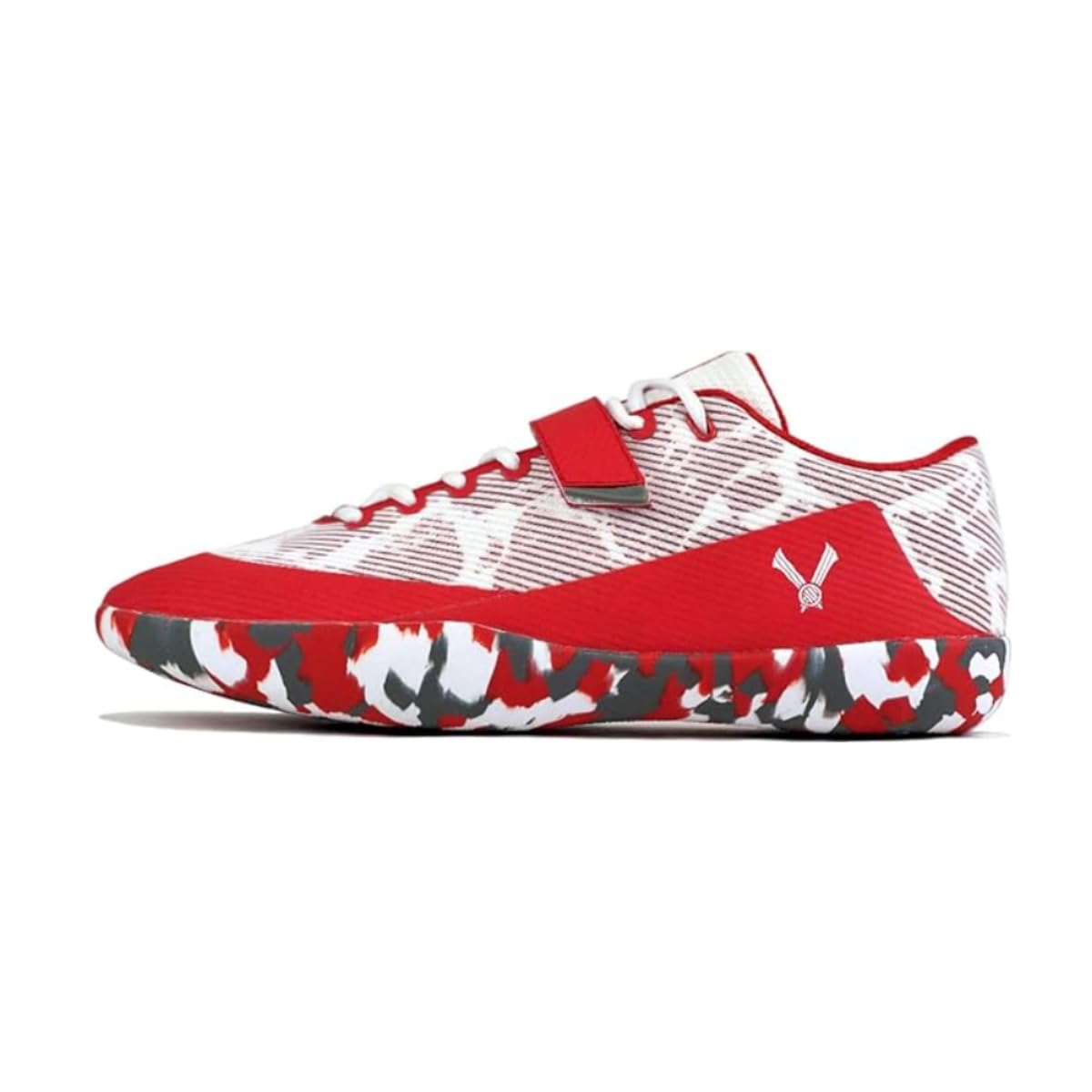
VELAASA designed the Stones specifically for rotational throwing events, and it shows in the geometry. The heel is completely flat with no raised wedge, creating a zero-drop platform that puts the thrower’s foot in direct contact with the circle surface. The outsole uses a dense rubber compound with a micro-textured pattern that grips concrete rings without grabbing — a balance that is hard to achieve at this price point. The toe box is noticeably wider than most throwing-specific shoes, accommodating foot shapes that need extra room in the metatarsal area.
Reviews from parents of high school throwers consistently praise the sizing accuracy for larger feet — several buyers mentioned the Stones fit perfectly for shoe sizes above 13, including those who normally require a wide width. The upper uses a layered breathable mesh that resists stretching while keeping the foot ventilated during long practice sessions. One reviewer noted that the shoes are somewhat difficult to get on and off due to the stiff heel counter, but once laced, the lockdown is secure and the foot does not shift inside the shoe during the rotational phase.
Durability is a strong point for the Stones. The outsole rubber extends up the toe cap to protect against drag during the release stance, and the stitching around the lace eyelets shows no fraying after a full season of use. For throwers who need a wide platform with a flat sole and do not want to pay the premium for major brand names, the VELAASA Stones deliver comparable ring performance at a more accessible price.
Why it’s great
- Zero-drop flat sole for maximum ground feel
- Wide toe box fits large and wide feet well
- Toe cap reinforcement prevents drag wear
Good to know
- Stiff heel counter makes initial entry tight
- Camouflage pattern may not suit all preferences
4. Under Armour UA Centric Grip Track Shoes
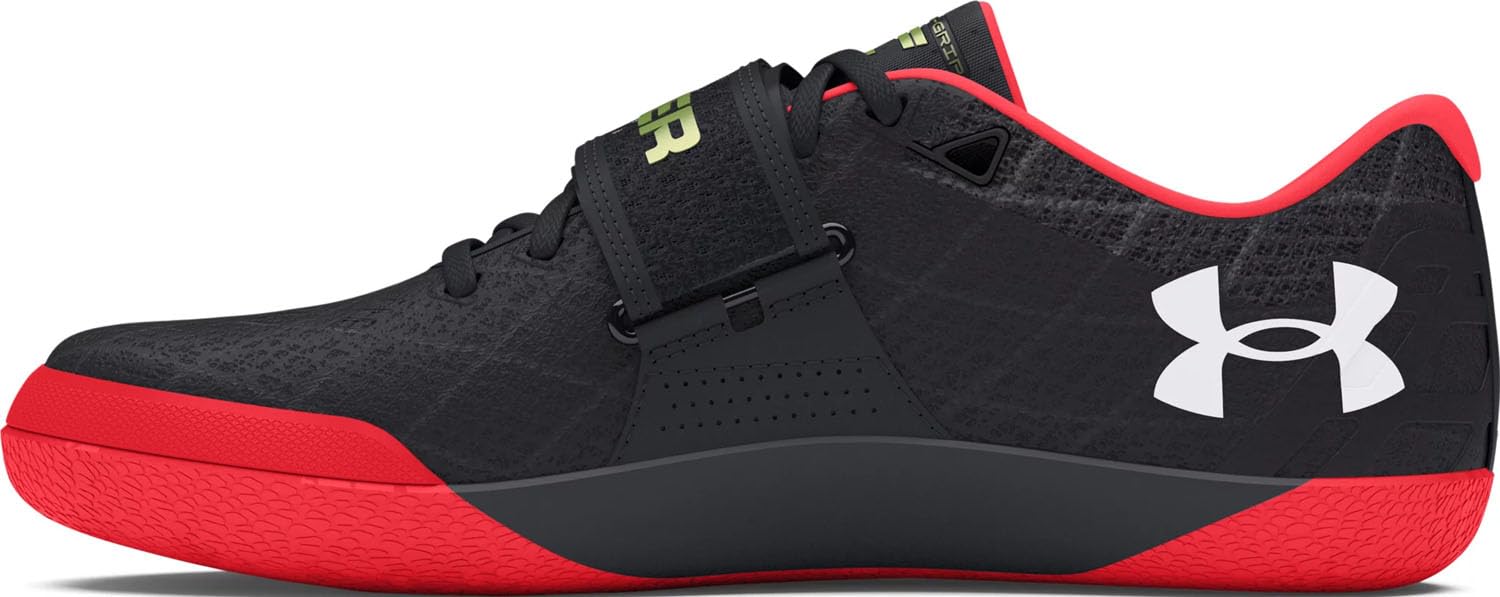
The Under Armour Centric Grip is built around the concept of multi-event versatility — it works for discus, shot put, and hammer without sacrificing performance in any single event. The outsole uses a full-coverage rubber compound with a subtle tread pattern that provides adequate grip for the spin without being too aggressive. The midsole is firmer than typical training shoes, which helps prevent energy loss during the power position push-off. The heel-to-toe drop sits around 6mm, slightly higher than dedicated throw shoes but still low enough to maintain stability.
Buyers report that the Centric Grip fits true to size with a medium-volume footbed that works well for athletes who need to wear thicker socks during cold-weather meets. The upper combines a synthetic leather heel overlay with a textile forefoot, giving a balance of structure and flexibility. One coach reviewer mentioned that his athletes appreciated the shoe’s ability to handle both grass warm-up areas and concrete circles without needing to switch footwear. The lace system includes a webbing loop at the heel for easy pull-on.
Durability is reasonable for the price tier — outsole wear appears after several months of heavy use, but the upper construction holds up well with no reported lace-tongue tearing or heel counter collapse. The Centric Grip is a solid option for throwers who train multiple events and want a single shoe that does not compromise ring performance while remaining comfortable enough for warm-ups and drills.
Why it’s great
- Versatile outsole works for multiple throwing events
- Medium-volume fit accommodates thicker socks
- Firm midsole prevents energy loss during push-off
Good to know
- 6mm drop is higher than pure throwing shoes
- Outsole wear may show after extended use
5. Nike Zoom SD 4 Track Field Throw Shoes
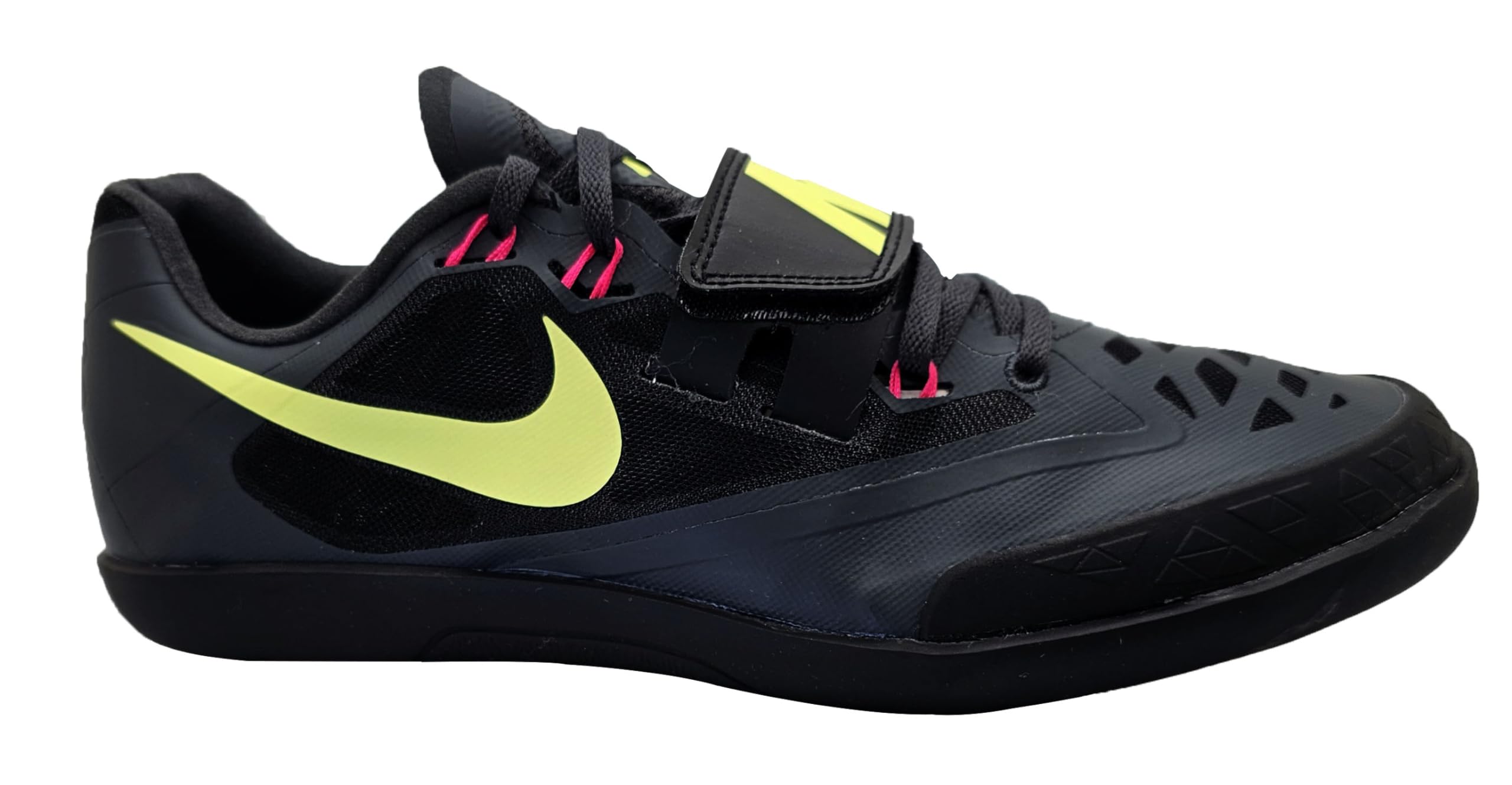
The Nike Zoom SD 4 carries a reputation as a reliable entry point for new throwers. The outsole uses a flat rubber base with a smooth finish that does not interfere with rotational mechanics. The upper is built from a flexible synthetic material with a lace system that extends far enough down the forefoot to allow independent tension adjustment across the toe box — a feature that helps accommodate wider feet without causing pressure points on the top of the foot. The heel counter includes a subtle external clip that adds lateral stability during the turn.
Multiple buyers note that the SD 4 fits well for athletes with slightly wider feet, especially when going up half a size from their normal training shoe. One coach reported that his athletes found the shoe comfortable enough to wear for entire practice sessions without hot spots or blisters. The midsole uses a simple EVA foam layer that provides basic impact protection without adding noticeable stack height. The overall weight is moderate — not the lightest throwing shoe available, but not heavy enough to hinder rotational speed.
The SD 4 is not built for elite-level torque; advanced throwers may find the upper lacks the stiffness needed to resist lateral stretch during maximum-effort spins. But for high school athletes building their technique or throwers who compete occasionally, the SD 4 offers a solid balance of price, fit, and ring performance. The bright color options also make the shoe easy to spot during crowded meet warm-up areas.
Why it’s great
- Adjustable lace system for customized forefoot fit
- Flat outsole works well for both glide and spin
- Budget-friendly entry into proper throwing footwear
Good to know
- Upper flexibility may limit performance at high torque
- Moderate weight penalizes very fast rotators
6. adidas Men’s Throwstar Track Throwing Shoes
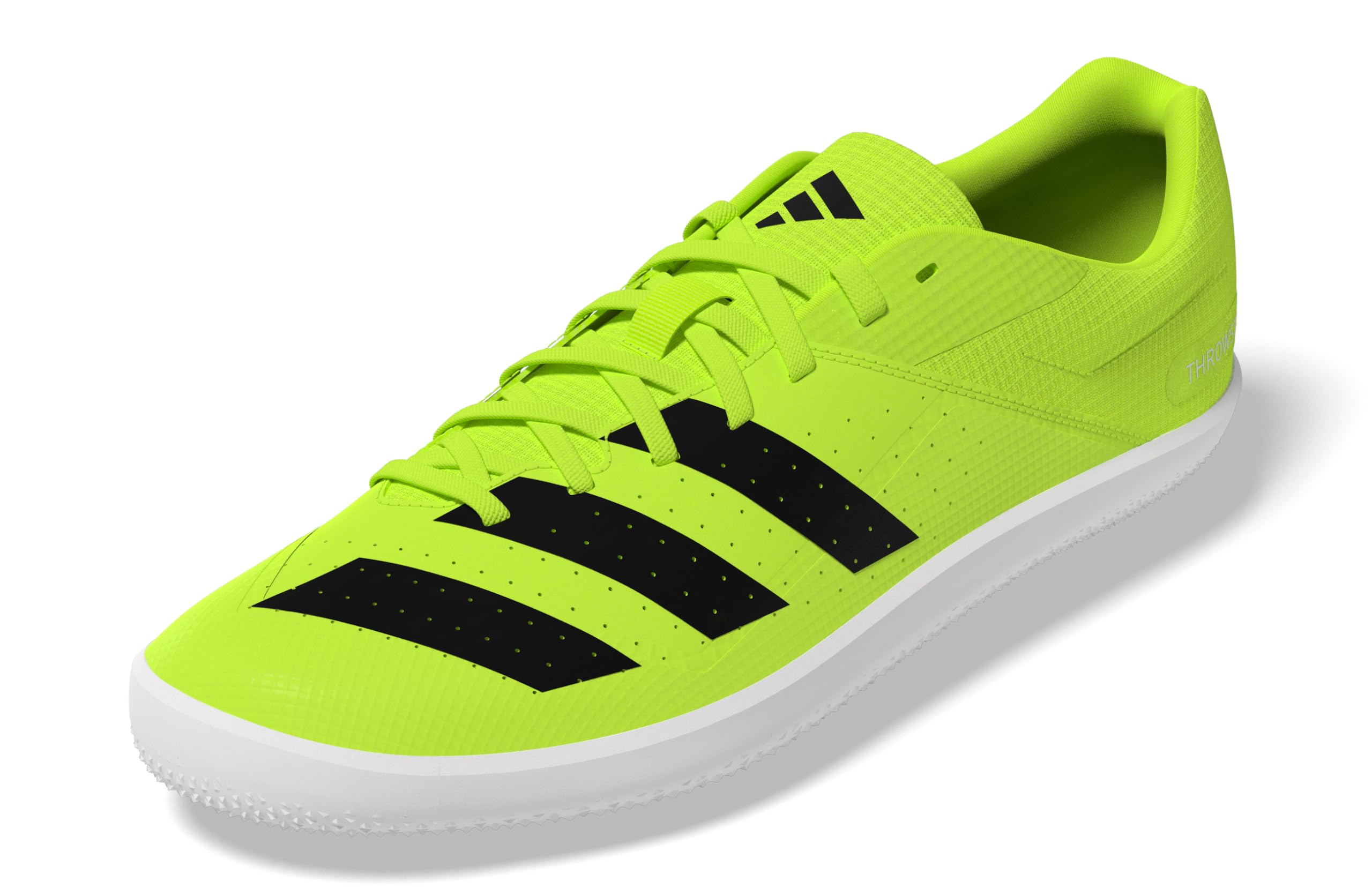
The adidas Throwstar is designed as an affordable entry into throwing-specific footwear. The upper uses a lightweight textile material that keeps the overall weight low and allows the shoe to breathe during warm-weather meets. The outsole is a full-length rubber piece with a simple flat profile that provides consistent grip on the ring surface without adding unnecessary thickness. The heel-to-toe drop is minimal, though adidas does not publish an exact specification — testers report it feels close to a 4-5mm drop.
Buyer feedback consistently highlights the Throwstar’s comfort for long wear sessions. Several parents noted that their teenage athletes could keep the shoes on for hours during multi-hour meets without complaints. The fit runs true to size with a medium-width volume that works for most foot shapes. One review specifically mentioned that the shoe lasted a full year of regular practice with no outsole detachment or upper tearing. The styling is subtle enough that the shoe can double as a casual trainer, though it lacks the lateral support of higher-end models.
The trade-off at this price point comes in sole rigidity. The Throwstar’s midsole is softer than premium throwing shoes, which means some rotational energy is absorbed by the foam rather than transferred to the ground. Advanced throwers creating high torque may feel the shoe flex under load, reducing power transfer during the release. For beginner and intermediate throwers still developing their spin technique, the Throwstar provides a functional platform at a budget-friendly price.
Why it’s great
- Lightweight textile upper reduces foot fatigue
- Comfortable for all-day wear at competitions
- Durable construction holds up through a season
Good to know
- Soft midsole absorbs some rotational power
- Limited lateral support for high-torque throwers
7. ASICS Men’s Hyper Throw 3 Track & Field Shoes
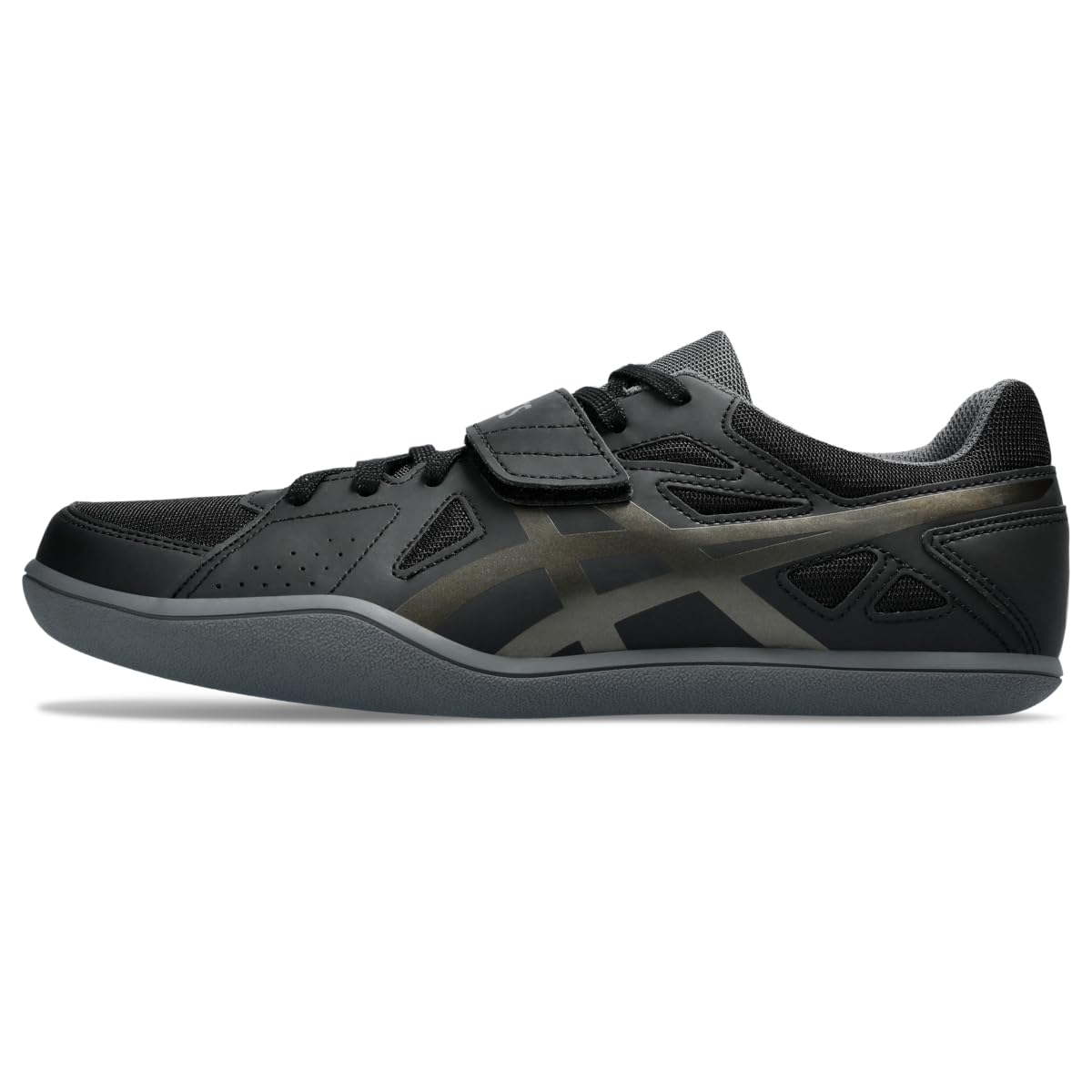
The ASICS Hyper Throw 3 is the most accessible model in this list, built specifically for athletes taking their first steps into competitive throwing. The outsole uses a full-coverage rubber compound that wraps slightly up the toe area, providing protection against drag during the release stance. The midsole is firmer than a typical running shoe but softer than dedicated competition throw shoes, which makes the Hyper Throw 3 comfortable for warm-ups, drills, and general training without sacrificing ring performance entirely.
Customer feedback highlights the shoe’s generous fit for wide feet — several reviews from parents of throwers with E-width feet confirm that the Hyper Throw 3 accommodates without needing to size up. The upper uses a synthetic leather and mesh combination that provides reasonable lateral support for the price tier. One coach mentioned that his athletes appreciated the grip pattern on the outsole, which provides enough traction on painted concrete circles without locking up during the pivot. The lace system includes a top eyelet for a heel lock lacing option.
The Hyper Throw 3 is not designed for elite or even varsity-level competition. The upper lacks the rigid structure needed to resist stretch under maximum rotational force, and the midsole compression is noticeable during hard power-position pushes. But for middle school throwers, beginners learning the spin, or athletes who need a shoe that can handle both practice and occasional meets without breaking the bank, the Hyper Throw 3 delivers reliable function. It is a genuine throwing shoe, not a converted training shoe, which gives it a real advantage over generic flat sneakers.
Why it’s great
- Full rubber outsole with toe wrap for drag protection
- Accommodates wide feet without sizing up
- Genuine throwing-specific design at entry price
Good to know
- Upper flexibility limits high-torque performance
- Midsole compresses under heavy power-position loads
FAQ
Can I use running shoes for discus throwing?
How do I know if a throwing shoe is competition legal?
Should I size up for throwing shoes if I have wide feet?
Are discus throwing shoes worth the investment for a beginner?
Final Thoughts: The Verdict
For most users, the best discus throwing shoes winner is the ASICS Throw PRO 3 because it delivers a competition-ready split-sole design, reliable wide-foot sizing, and durable construction that holds up through a full season of training and meets. If you want ultra-lightweight performance for high-speed rotation, grab the adidas Adizero Throws. And for throwers with large or wide feet who need a zero-drop platform at a reasonable price, nothing beats the VELAASA Stones.

Mo Maruf
I created WellFizz to bridge the gap between vague wellness advice and actionable solutions. My mission is simple: to decode the research and give you practical tools you can actually use.
Beyond the data, I am a passionate traveler. I believe that stepping away from the screen to explore new environments is essential for mental clarity and physical vitality.