Our readers keep the lights on and my smoothie glass nicely filled. As an Amazon Associate, I earn from qualifying purchases.
Tomatoes demand more than just sunlight and water — the entire yield swings on the quality of the ground they sit in. The wrong mix locks roots in soggy clay or starves them of nutrients, turning a summer of rich harvests into a season of split skins and blossom end rot.
I’m Mohammad Maruf — the founder and writer behind WellFizz. I spent hundreds of hours analyzing soil chemistry, drainage rates, and organic certification data to separate the real performers from the bagged dirt that just looks good on a shelf.
Every reliable option in this curated roundup of the best dirt for tomatoes balances aeration, moisture retention, and a nutrient profile that supports heavy fruiting without burning tender roots.
How To Choose The Best Dirt For Tomatoes
Tomato roots are sensitive — they need consistent moisture without ever sitting in standing water. A bag labeled “tomato soil” should deliver three things: a porous structure that lets excess water drain fast, organic matter that feeds the plant slowly over weeks, and a pH range between 6.0 and 6.8. Many all-purpose garden soils compact too heavily in containers, while cheap compost blends often introduce weed seeds or lack the calcium tomatoes require to prevent blossom end rot. The right choice depends on whether you’re filling raised beds, topping off containers, or amending existing in-ground soil.
Texture & Drainage
Tomato roots thrive when the soil feels crumbly and loose. A mix with perlite, pumice, or coarse sand creates micro-pockets that let oxygen reach the root zone and allow water to exit in hours rather than days. Heavy clay or dense peat-only blends hold too much moisture, which encourages root rot and fungal diseases. Squeeze a handful of moist soil — if it holds a fist shape and crumbles when touched, the texture is right. If it forms a tight muddy ball, avoid it for tomatoes.
Organic Certifications & Raw Ingredients
Tomatoes absorb whatever is in the soil, so synthetic fertilizers and chemical wetting agents can alter flavor and stress the plant. Look for OMRI-listed or clearly organic blends that list ingredients like composted manure, sphagnum peat moss, earthworm castings, and kelp meal. These components release nitrogen, phosphorus, and potassium slowly, which matches the steady demands of a maturing tomato plant. Avoid bags that only list “organic material” without specifics — the source quality varies dramatically.
NPK Ratio & Calcium Content
Fruiting plants need a fertilizer or soil mix with higher phosphorus and potassium than nitrogen. An NPK ratio like 5-7-3 or 4-6-2 signals the soil is built for flowers and fruit rather than bushy green leaves. Calcium deserves special attention — it stabilizes cell walls and prevents blossom end rot, a common curse of tomato growers. If the base dirt doesn’t include calcium, you may need a separate supplement or a top dress midway through the season.
Quick Comparison
On smaller screens, swipe sideways to see the full table.
| Model | Category | Best For | Key Spec | Amazon |
|---|---|---|---|---|
| Coast of Maine Organic | Complete Mix | Heirloom tomatoes in containers | 20 quart bag with composted manure | Amazon |
| FoxFarm Happy Frog Fertilizer | Granular Supplement | Amending existing soil for fruit production | 4 lb, 5-7-3 NPK with mycorrhizae | Amazon |
| Down To Earth 4-6-2 Mix | Granular Supplement | Feeding in-ground beds and containers | 5 lb box, OMRI listed 4-6-2 | Amazon |
| Brut Cow Compost | Soil Amendment | Enriching beds and mixing into weak soil | 10 quart, 100% composted cow manure | Amazon |
| Espoma Organic Potting Mix | Complete Mix | Large container plants and repotting | 2 cubic foot bag, Myco-Tone added | Amazon |
In‑Depth Reviews
1. Coast of Maine Organic & Natural Planting Soil

This 20-quart bag hits the sweet spot between performance and volume. The blend combines composted manure with sphagnum peat moss to create a mix that holds moisture through a hot afternoon yet drains completely within hours. Gardeners growing heirloom tomatoes in containers report that the lightweight consistency prevents the root zone from turning into a heavy, waterlogged block — a common failure point with cheaper potting soils.
The texture includes small bits of aromatic cedar wood, which acts as a gentle deterrent to fungus gnats and other soil pests. Nutrient levels are high enough that the mix can be used standalone without immediate fertilization, though heavy feeders will want a supplemental dose four to six weeks after transplanting. Some users note that the Cedar content creates a noticeable woodsy scent when first opening the bag, but it fades quickly.
A few reviews mention fungus gnat larvae appearing after watering, which suggests the compost batch may occasionally carry eggs. Letting the soil sit uncovered in dry air for a day before planting, or pre-moistening with a diluted neem oil solution, eliminates that risk. For the price per quart, this remains the most balanced all-in-one bag for small to medium tomato gardens.
Why it’s great
- Excellent moisture retention without waterlogging
- Lightweight texture ideal for container growth
- Natural cedar content deters soil insects
Good to know
- Can harbor fungus gnat eggs in some batches
- Not cost-effective for large raised beds
2. FoxFarm Happy Frog Tomato & Vegetable Fertilizer

This 4-pound granular fertilizer is not a standalone dirt — it is a targeted supplement designed to fix the two most common nutritional gaps in tomato soil: inadequate phosphorus for flowering and insufficient calcium to prevent blossom end rot. The 5-7-3 ratio shifts the plant’s energy toward fruit set rather than leaf production, which is exactly what tomatoes need after the first flowers appear.
The inclusion of mycorrhizal fungi expands the root system’s effective reach, allowing the plant to pull more water and nutrients from the surrounding soil. Users report that non-producing tomato plants often begin setting fruit within days of application. The granules mix easily into the top layer of soil or dissolve in water for a fast-acting tea. There is no chemical odor or fishy smell, making it tolerable for balcony and patio gardeners who dislike strong organic fertilizers.
It works best when paired with a high-quality base dirt like Espoma or Coast of Maine rather than being sprinkled onto plain garden clay.
Why it’s great
- Contains calcium to prevent blossom end rot
- Mycorrhizae improve root nutrient uptake
- Fast-acting on non-producing plants
Good to know
- Relatively expensive for large gardens
- Requires a good base soil to be fully effective
3. Down To Earth Organic All Purpose Tomato & Vegetable Mix

Down To Earth packages a 4-6-2 NPK ratio in a 5-pound box, making it a cost-effective choice for feeding multiple crops across a season. The formula draws from fish bone meal, blood meal, feather meal, rock phosphate, langbeinite, and kelp meal — a broad spectrum of organic sources that release nutrients slowly without burning roots. It is OMRI-listed, which matters for growers who want assurance that no synthetic chemicals touch their soil.
Users note that pale, flimsy tomato plants often green up and begin vigorous growth within two weeks of a single application. The blend also greensand and humates, which improve soil structure over time rather than just dumping a quick shot of nitrogen. The granules have a noticeable smell when first applied — a natural result of the fish and blood meals — but it fades within a few days and does not attract pests when worked into the top inch of soil.
Because this is a fertilizer rather than a complete potting mix, it requires a base dirt to work with. Gardeners who already have a decent soil but want to boost fruiting performance will find this delivers strong results without the premium price tag of FoxFarm. A single box can cover dozens of plants across an entire season if used as a monthly side dressing.
Why it’s great
- Broad organic ingredient profile for steady feeding
- Cost-effective for covering many plants
- OMRI listed for organic certification
Good to know
- Strong initial odor from fish and blood meal
- Not a standalone soil — needs a base mix
4. Brut Cow Compost – Composted Cow Manure
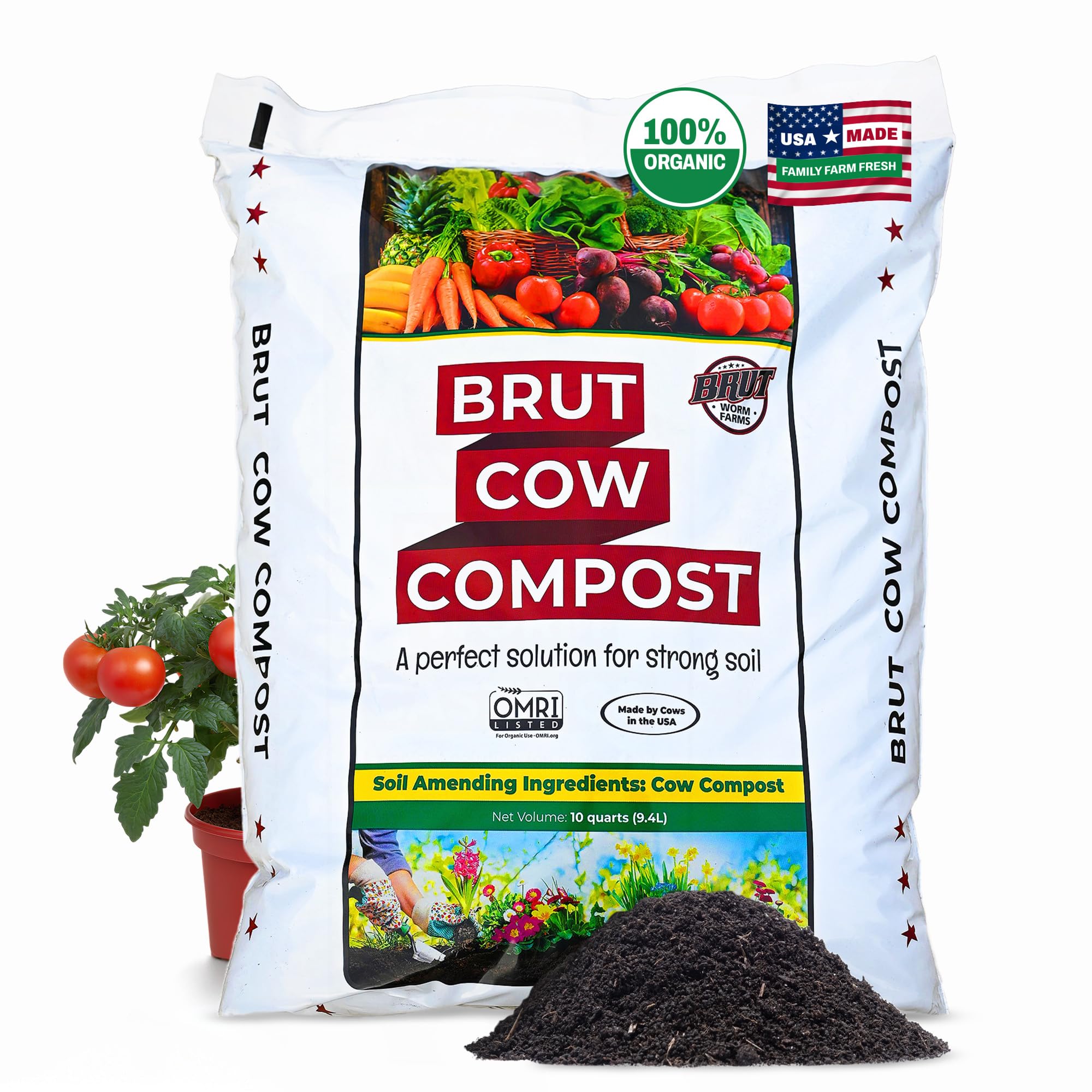
This 10-quart bag is 100 percent composted cow manure — no fillers, no peat, no perlite. It is a soil amendment rather than a complete growing medium, designed to be mixed at roughly a 3:2 ratio of base soil to compost. The texture is finely sifted and uniform, which integrates evenly without leaving large clumps that disrupt root spread.
Cow manure is naturally rich in nitrogen, calcium, and iron, all of which support leafy growth and fruit firmness. Because the material is fully composted and aged, it does not burn roots and emits virtually no odor — a major advantage over raw manure or fish-based fertilizers. Users report using a 3:2 ratio of this compost to regular potting soil for growing tomatoes from seed, noting fast germination and sturdy stems within weeks.
The main limitation is volume: 10 quarts is enough to amend a few large containers or a small raised bed, but larger gardens will need multiple bags. It also lacks the drainage structure of a perlite-rich mix, so it must be blended with a light base soil rather than used alone. For growers who want to inject microbe-rich organic matter into tired or clay-heavy dirt, this is an efficient and clean option.
Why it’s great
- Pure composted cow manure with no additives
- Odor-free and gentle on seedlings
- Rich in nitrogen and calcium
Good to know
- Small bag size limits large-scale use
- Must be mixed with aerated base soil
5. Espoma Organic Potting Soil Mix

The Espoma Organic Potting Soil Mix delivers a generous 2 cubic feet of material — enough to fill multiple large pots or a sizeable raised bed. The blend combines sphagnum peat moss, humus, perlite, earthworm castings, alfalfa meal, and kelp meal. Its texture is loamy and chunky rather than powdery, which keeps water channels open and prevents the crusting problem that plagues many bagged soils.
The proprietary Myco-Tone adds both endo and ecto mycorrhizae, giving tomato roots a biological head start on nutrient cycling. Users with houseplants and container tomatoes consistently report that this mix outperforms cheaper alternatives for long-term growth — the soil structure holds up across multiple seasons without turning into a dense clay-like mass. It contains no synthetic fertilizers, so it works as a true base that won’t force too much early leaf growth at the expense of fruit.
The premium price is the main trade-off, but the bag size makes the per-quart cost competitive with mid-range options. The mix is clean, with no large sticks or weed seeds. For growers who want a ready-to-use base dirt that already includes beneficial fungi and a rich organic profile, this bag eliminates the guesswork.
Why it’s great
- Large 2-cubic-foot volume for multiple containers
- Loamy texture prevents crusting and compaction
- Myco-Tone supports root efficiency
Good to know
- Premium price compared to budget mixes
- May drain too quickly for very hot, dry climates
FAQ
Should I use garden soil or potting mix for container tomatoes?
How often should I reapply fertilizer to my tomato soil?
Can I reuse last season’s potting soil for new tomatoes?
Final Thoughts: The Verdict
For most users, the best dirt for tomatoes winner is the Coast of Maine Organic & Natural Planting Soil because it delivers a complete, lightweight mix with composted manure and excellent drainage right out of the bag. If you want to boost fruit production in an existing soil, grab the FoxFarm Happy Frog Fertilizer. And for large container gardens where long-term soil structure matters most, nothing beats the Espoma Organic Potting Soil Mix for volume and biological activity.

Mo Maruf
I created WellFizz to bridge the gap between vague wellness advice and actionable solutions. My mission is simple: to decode the research and give you practical tools you can actually use.
Beyond the data, I am a passionate traveler. I believe that stepping away from the screen to explore new environments is essential for mental clarity and physical vitality.