Our readers keep the lights on and my smoothie glass nicely filled. As an Amazon Associate, I earn from qualifying purchases.
Choosing a bag of dirt for planting feels simple until you open it at home and find twigs, a sour smell, or a dense block that repels water. The wrong mix suffocates roots, attracts fungus gnats, or dries into a hard crust within weeks. The right mix, on the other hand, stays fluffy, drains well, and feeds your plants from day one.
I’m Mohammad Maruf — the founder and writer behind WellFizz. I’ve spent hundreds of hours cross-referencing soil science, reading verified buyer feedback, and breaking down the ingredient labels so you get honest recommendations instead of marketing fluff.
Whether you are filling a raised bed, potting an indoor fig tree, or starting tomatoes from seed, the best dirt for planting must balance aeration, moisture retention, and nutrient density without introducing pests or synthetic fillers.
How To Choose The Best Dirt For Planting
Not all bags of dirt are created equal. The cheapest option often contains large wood chips, fills up with dust, or lacks the organic matter young roots need. Knowing what is inside the bag before you buy saves you from losing plants and wasting money.
Check the Ingredient Blend
Look for a mix that includes sphagnum peat moss or coco coir for moisture, perlite or vermiculite for drainage and aeration, and compost or worm castings for nutrients. Avoid bags that list “forest products” or “aged bark” as the first ingredient — these break down slowly and steal nitrogen from your plants.
Match the Texture to Your Use Case
Container plants need a light, fluffy mix that holds water without getting soggy. In-ground beds benefit from a denser blend that stays anchored during heavy rain. For seed starting, you want a fine, screened texture without large chunks that could block tiny roots.
Consider Organic Certification
OMRI-listed or certified organic soil guarantees no synthetic pesticides, herbicides, or chemical fertilizers were used. This matters most when growing edible crops like tomatoes, peppers, and herbs where you do not want chemical residues absorbed into the plant.
Quick Comparison
On smaller screens, swipe sideways to see the full table.
| Model | Category | Best For | Key Spec | Amazon |
|---|---|---|---|---|
| Coast of Maine Bar Harbor Blend | Premium | Container vegetables & flowers | 16 qt bag; lobster & kelp meal blend | Amazon |
| Michigan Peat All Purpose | Premium | Large pots & raised beds | 50 lb; reed sedge peat & perlite | Amazon |
| Espoma Organic Potting Mix | Mid-Range | Indoor containers & herbs | 8 qt bag; Myco-Tone root boosters | Amazon |
| Coast of Maine Tomato & Veggie | Mid-Range | Garden tomatoes & vegetables | 20 qt bag; composted manure & peat | Amazon |
| Midwest Hearth Potting Soil | Budget | Small pots & seed starting | 8 qt bag; pH-controlled blend | Amazon |
In‑Depth Reviews
1. Coast of Maine Bar Harbor Blend Potting Soil
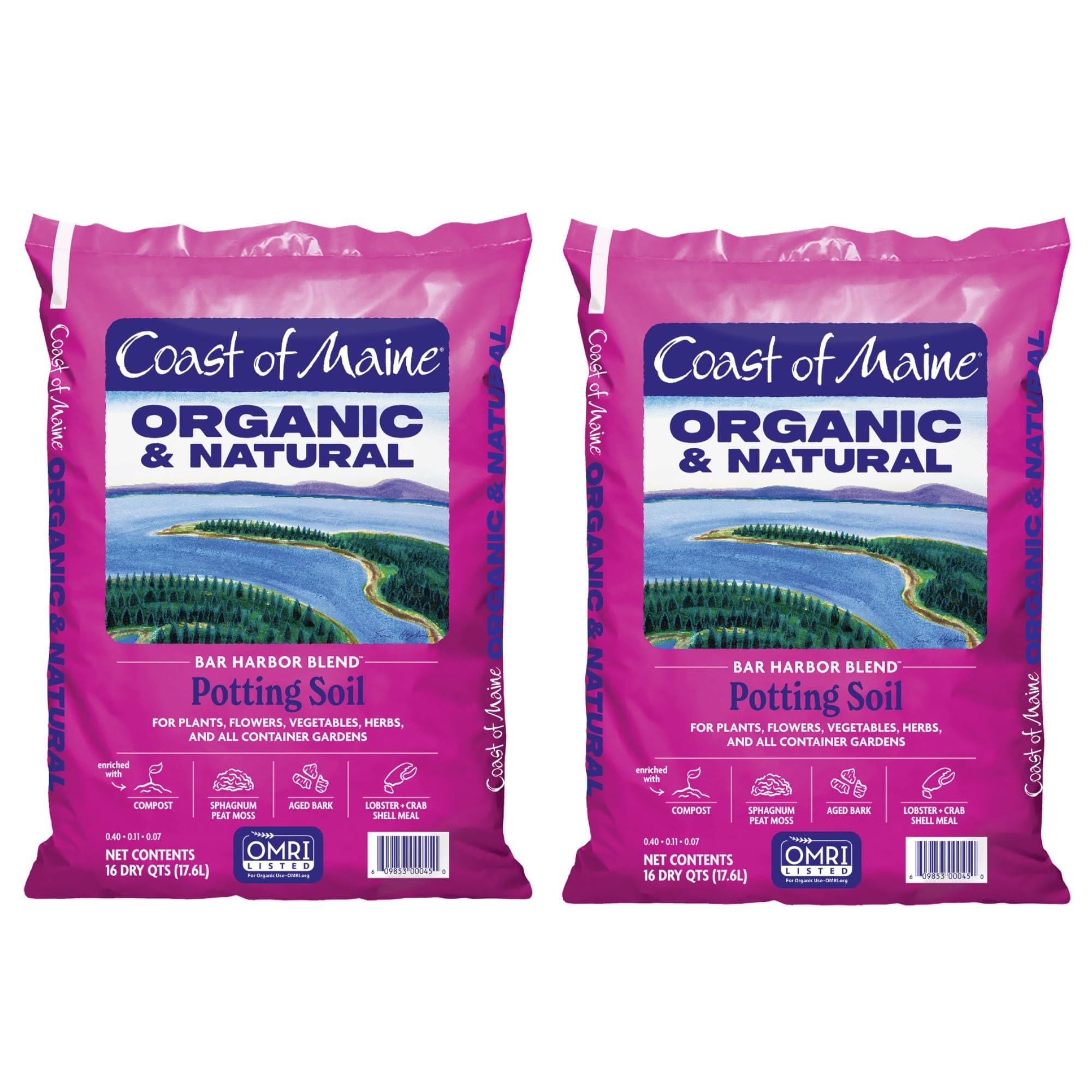
This blend stands out because of its unique marine-based ingredients — lobster and crab shell meal provide slow-release nitrogen and chitin, which naturally deters soil-borne pests. The dark, crumbly texture comes from compost rather than excessive peat, so it holds moisture without becoming waterlogged. Gardeners consistently report vigorous growth in tomatoes, peppers, and even potatoes planted in containers.
The 16-quart bag offers excellent value for premium organic soil without the heavy weight of traditional topsoil. The mix includes perlite for aeration and kelp meal for micronutrients that promote strong root development. Multiple reviewers noted that their plants outperformed those grown in national brand soils they had used for years.
One caution: the bag is sold as a two-pack, so make sure you have enough storage if you only need one bag. The soil arrives moist and ready to use, but some users found the shipping weight around 14 pounds surprisingly heavy for the volume.
Why it’s great
- Marine-based organic ingredients provide unique pest resistance
- Dark compost texture holds moisture without turning soggy
- Balanced perlite blend prevents root compaction
Good to know
- Comes in a two-pack only; no single-bag option
- Heavier shipping weight compared to peat-only mixes
2. Michigan Peat General All Purpose Premium Potting Soil

When you need to fill multiple large pots or a small raised bed, this 50-pound bag gives you the volume without sacrificing quality. The blend uses reed sedge peat rather than sphagnum peat, which provides a denser base that holds structure well in outdoor conditions. Perlite and sand are mixed in to improve drainage, preventing the waterlogging that kills roots in deep containers.
Starter and slow-release fertilizers are already incorporated, so you do not need to add nutrients for the first few weeks. This makes it a good option for beginner gardeners or anyone who wants a straightforward, ready-to-use soil for vegetables, flowers, and bulbs. The texture arrived moist in most reviews, which means it will not repel water on the first watering.
A small number of buyers reported fungus gnats emerging from the bag after opening, which is a known risk with compost-heavy products. Letting the soil dry slightly between waterings or mixing in a layer of sand on top can mitigate this issue.
Why it’s great
- Large bag size covers big projects affordably
- Includes slow-release fertilizer for sustained feeding
- Reed sedge peat provides stable structure for outdoor use
Good to know
- Some bags may introduce fungus gnats
- Heavier and denser than lightweight potting mixes
3. Espoma Organic Potting Soil Mix

Espoma has a strong reputation among indoor gardeners who need a clean, predictable mix. The formula combines sphagnum peat moss, humus, and perlite with Myco-Tone — a proprietary blend of endo and ecto mycorrhizae that colonize root systems and improve nutrient uptake. This is especially valuable for transplanted seedlings that need to establish quickly in a new pot.
Earthworm castings, alfalfa meal, kelp meal, and feather meal provide the organic nutrients that support steady leaf and stem growth. The texture is fine and even, making it suitable for small pots and propagation trays. African violet owners and herb gardeners report excellent results with no burning or salt buildup.
The main trade-off is that the bag can feel dry upon opening. Some users noted that the soil repelled water initially and required thorough pre-moistening before use. The 8-quart twin pack is convenient but priced per volume higher than bagged garden soils, so it is best suited for indoor containers rather than large outdoor beds.
Why it’s great
- Myco-Tone root boosters improve transplant survival
- Fine texture works well for seedlings and small pots
- Organic ingredients with no synthetic chemicals
Good to know
- Bag may arrive too dry and repel water initially
- Higher cost per quart makes it less ideal for large projects
4. Coast of Maine Organic & Natural Planting Soil for Vegetables & Tomatoes

This mix was purpose-built for heavy-feeding plants like tomatoes and peppers. Composted manure provides a rich nitrogen source, and the sphagnum peat moss base keeps the structure light enough for root penetration. The blend includes cedar or aromatic wood fines, which some reviewers say deters common soil insects.
The 20-quart bag hits a sweet spot between price and volume for the home gardener with a few large containers or an in-ground plot. Drainage is noticeably better than generic garden soil, and the organic certification means you do not have to worry about chemical residues on edible crops. Heirloom tomato growers specifically praised how well it handles the consistent moisture needed to prevent blossom-end rot.
The main downside reported by multiple buyers is the presence of fungus gnats, which can be a problem with any compost-rich product. Disinfecting the soil in the oven or using neem oil as a drench before planting can eliminate this issue. For larger gardens, the per-bag cost may add up quickly.
Why it’s great
- Composted manure provides high nitrogen for fruiting vegetables
- Includes aromatic wood fines that may deter insects
- Drains well enough to prevent root rot in containers
Good to know
- Fungus gnats reported in some batches
- Expensive per bag for large-scale gardening
5. Midwest Hearth Premium Potting Soil Mix

For small planting jobs — a few houseplants, seed germination, or repotting a jade plant — this budget-friendly bag hits exactly the right notes. The blend features sphagnum peat moss, vermiculite, and perlite in a formulation that mimics the balance professional growers use. The pH is controlled to fall in the neutral range, which suits most plants without requiring amendments.
The texture is light and fluffy, making it easy to work into small containers without compacting. Vermiculite adds water-holding capacity while perlite ensures excess moisture drains away, a combination that reduces the risk of overwatering in indoor pots. Made in the USA, the soil arrives clean with no visible debris or sticks.
The bag size is only 8 dry quarts, limiting its use to small-scale projects. For larger container gardens or raised beds, you would need multiple bags, which makes the per-quart cost less competitive than bulk options. The resealable bag design is a nice touch for storing leftovers without spillage.
Why it’s great
- Lightweight, fluffy texture perfect for small pots
- pH balanced and free of debris
- Resealable bag keeps unused soil fresh
Good to know
- Small bag size requires multiple purchases for larger projects
- Less nutrient-rich than compost-based blends
FAQ
Can I reuse potting soil from last year for new planting?
What is the difference between potting soil and garden soil?
Final Thoughts: The Verdict
For most users, the best dirt for planting winner is the Coast of Maine Bar Harbor Blend because its marine-based organic ingredients provide natural pest resistance and consistent nutrient release. If you want a massive bag for raised beds, grab the Michigan Peat All Purpose. And for indoor containers and seedlings, nothing beats the Espoma Organic Potting Soil with its Myco-Tone root boosters.

Mo Maruf
I created WellFizz to bridge the gap between vague wellness advice and actionable solutions. My mission is simple: to decode the research and give you practical tools you can actually use.
Beyond the data, I am a passionate traveler. I believe that stepping away from the screen to explore new environments is essential for mental clarity and physical vitality.