Our readers keep the lights on and my smoothie glass nicely filled. As an Amazon Associate, I earn from qualifying purchases.
Garden dirt is not just soil — it is the living foundation of every single seed you drop, and most bagged options suffocate roots before they ever have a chance. The difference between a wilted transplant and a bumper harvest often comes down to what fills your raised bed or container.
I’m Mohammad Maruf — the founder and writer behind WellFizz. I’ve spent hundreds of hours analyzing organic certifications, peat versus coir debates, and the nitrogen-release profiles of compost blends so you can skip the growing pains.
The single most reliable best dirt for garden must balance moisture retention against root-drowning risk, supply slow-release nutrients, and stay free of synthetic fillers that collapse after one season.
How To Choose The Best Dirt For Garden
Not all garden dirt behaves the same once it hits your beds. The wrong mix can become waterlogged clay or dusty, nutrient-poor sand within weeks. Focus on the three factors that actually drive root health and plant vigor.
Organic Matter and Compost Content
The dirt you buy should contain a visible percentage of decomposed organic material — compost, earthworm castings, or aged manure. High organic content feeds soil microbes that convert nutrients into forms roots can absorb. Bags that list only peat and perlite lack the biological engine needed for sustained vegetable growth.
Drainage versus Moisture Retention
Container gardens require dirt that drains fast to prevent root rot. In-ground beds need enough water-holding capacity to survive dry spells. Look for perlite, sand, or coco coir in the ingredients — these create pore spaces. Heavy peat-dominant blends hold moisture too long for pots but work well mixed into native clay soil.
Certifications and Fillers
OMRI-listed organic certification guarantees no synthetic pesticides or fertilizers. Avoid bags that list “forest products” or “composted bark” as the first ingredient — those break down quickly and rob nitrogen from your plants. Stick to brands that disclose specific compost sources and mycorrhizae content.
Quick Comparison
On smaller screens, swipe sideways to see the full table.
| Model | Category | Best For | Key Spec | Amazon |
|---|---|---|---|---|
| Coast of Maine Bar Harbor Blend | Premium Organic | Container veggie gardens | Lobster & crab shell meal, kelp | Amazon |
| Espoma Organic Vegetable & Flower | Mid-Range Organic | In-ground beds & transplants | Myco-tone endo/ecto mycorrhizae | Amazon |
| Coast of Maine Tomato & Vegetable | Mid-Range Organic | Heirloom tomatoes & containers | OMRI listed, 20-qt volume | Amazon |
| Michigan Peat General Purpose | Premium Value | Large raised beds & heavy use | 50-pound bag, slow-release fert | Amazon |
| Avalution Organic Coir Bricks | Budget-Friendly | Seed starting & soil amendment | Expands to 36 quarts, 1.4 lbs | Amazon |
In‑Depth Reviews
1. Coast of Maine Bar Harbor Blend
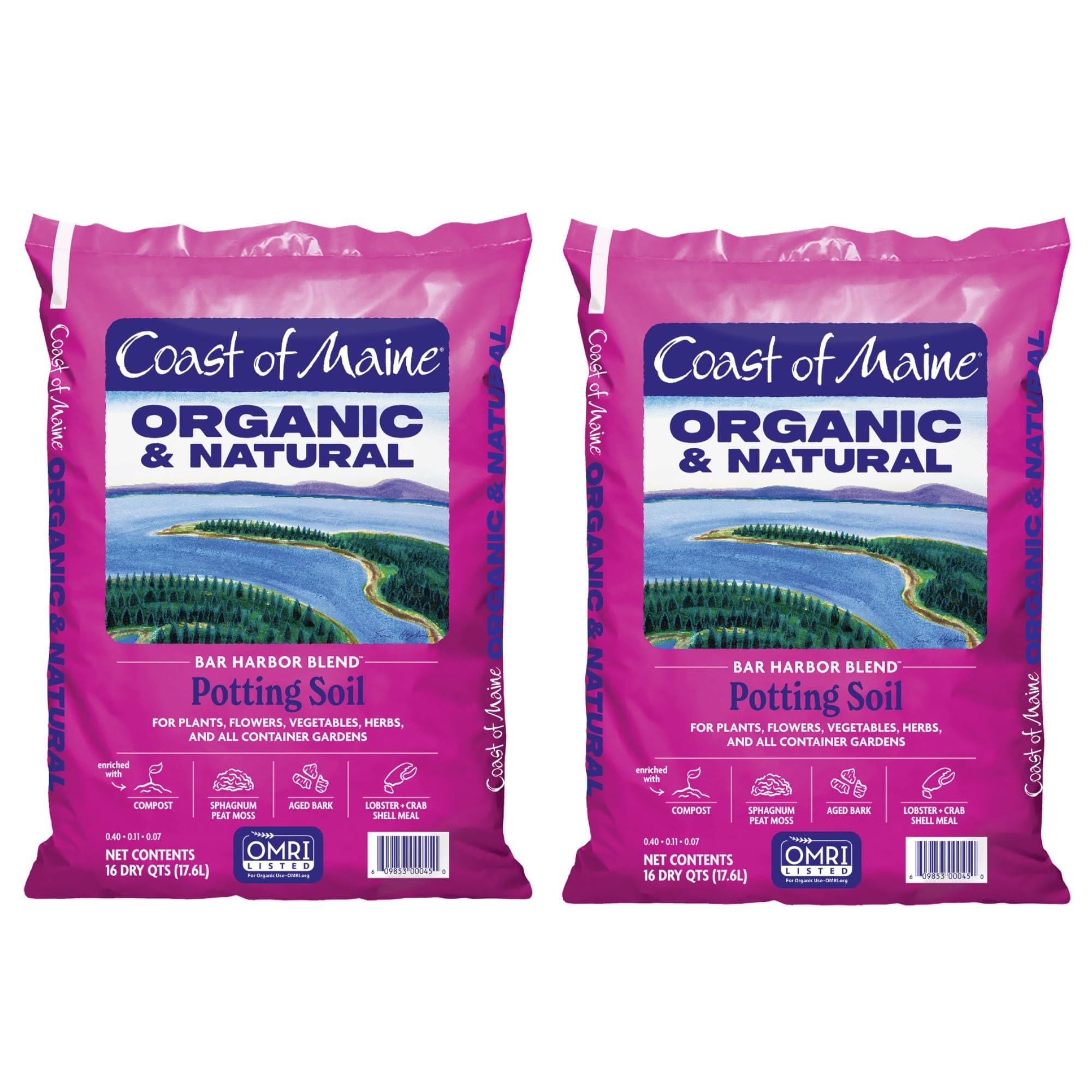
The Bar Harbor Blend is the richest, most biologically active dirt in this lineup. It combines sphagnum peat moss, compost, perlite, lobster and crab shell meal, and kelp meal — all OMRI-listed organic. That marine-based nitrogen source feeds plants steadily without burning tender roots. The texture feels dark and crumbly, not dusty or clumpy.
Users report that tomatoes, peas, and potatoes grown in this mix outpace anything from mass-market brands. The perlite fraction creates enough air space for container drainage while the compost holds moisture for in-ground use. Two bags mound eight potato plants with room left for extra planters.
This is the premium choice for gardeners who want one bag that handles vegetables, herbs, and flowering baskets without additional amendments. The only reason to hesitate is the higher cost per quart compared to generic potting soil, but the harvest results justify the difference.
Why it’s great
- Slow-release marine-based organic nutrients
- Excellent structure for both containers and raised beds
- No synthetic fillers or weed seeds reported
Good to know
- 16-qt bag is smaller than many value options
- High price per bag for large-scale gardens
2. Espoma Organic Vegetable & Flower Garden Soil

Espoma earned its reputation through a blend of earthworm castings and their proprietary Myco-tone — a mix of endo and ecto mycorrhizae that colonize root systems and dramatically improve nutrient uptake. This is not a complete potting mix; it is designed to be mixed with native garden soil when planting or transplanting. The recommendation is to blend thoroughly with your existing dirt before setting in starts.
Customer comparisons show that tomatoes and marigolds grown with this product outperform those in a standard organic mix by a visible margin. The texture is rich and well-structured without being heavy or compacted. Multiple buyers noted that the bags arrived free of pests or weed seeds, which is a common complaint in lower-tier soils.
Use this when you need to upgrade poor native soil rather than fill an entire container. The one-cubic-foot bag goes a long way when mixed at a one-to-one or one-to-two ratio with garden dirt.
Why it’s great
- Mycorrhizae blend boosts root absorption naturally
- Enriched with earthworm castings for trace minerals
- No synthetic chemicals or fillers
Good to know
- Must be mixed with native soil — not a standalone potting mix
- Some indoor plants showed gnat sensitivity if overwatered
3. Coast of Maine Organic Tomato & Vegetable Planting Soil

Coast of Maine delivers again with a dirt formula specifically tuned for tomato families and general vegetables. The composted manure and sphagnum peat moss base creates a lightweight, fluffy texture that water penetrates without pooling. The 20-qt bag gives you enough volume for a medium container garden or several in-ground planting holes.
Reviews consistently praise how well it holds moisture while still draining sharply — heirloom tomatoes, which rot easily in dense soil, thrive in this mix. One seasoned gardener noted the presence of cedar and aromatic wood particles that help deter soil insects. A few users reported fungus gnats, which can happen with any organic compost, but they controlled it easily with neem oil.
For the price per quart, this hits a sweet spot between premium performance and everyday affordability. It works equally well for transplanting, seeding, or topping off existing containers.
Why it’s great
- Lightweight structure with excellent drainage
- Aromatic wood chips help repel insects
- OMRI-listed organic guarantee
Good to know
- Fungus gnats possible in damp indoor conditions
- Cost per bag adds up for large gardens
4. Michigan Peat General All Purpose Premium Potting Soil

When you need to fill a large raised bed or several big containers without breaking the bank, this 50-pound bag from Michigan Peat (branded BACCTO) delivers massive volume. The blend of rich dark reed sedge peat, perlite, and sand creates a loamy texture that holds together without turning to mud. It comes pre-mixed with starter and slow-release fertilizers, so you can use it straight from the bag.
The consistency is ideal for general potting — flowers, bulbs, vegetables, and herbs all respond well. Users say it arrives moist and has perfect crumb structure for immediate planting. The downside is the same that affects many large-volume organic blends: some batches have introduced fungus gnats. This is a minor issue solved by letting the dirt dry slightly between waterings.
For budget-conscious gardeners who need pure bulk, the cost per pound here beats every other option. The bag is heavy, so factor in handling. This is not the richest soil in micronutrients, but it provides a solid blank canvas for your own compost and fertilizer additions.
Why it’s great
- Massive 50-pound bag at a low cost per pound
- Includes starter and slow-release fertilizers
- Ready to use without mixing
Good to know
- Heavy bag may be difficult to transport
- Fungus gnats reported in some bags
5. Avalution Premium Organic Coconut Coir Bricks
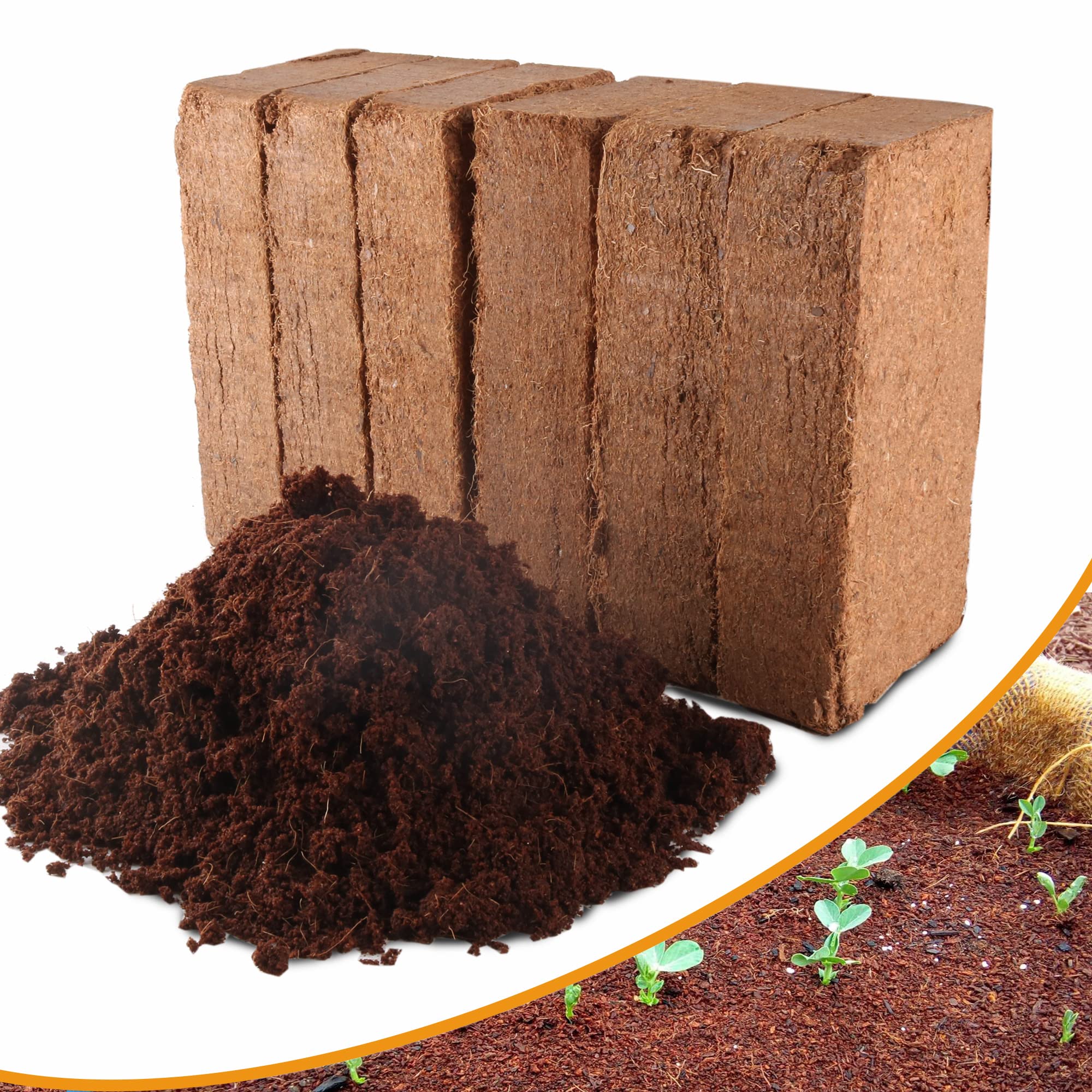
This is not a pre-mixed dirt substitute — it is a soil amendment that unlocks huge volume from a tiny footprint. Six compressed coir bricks weigh only 1.4 pounds total but expand to 36 quarts when hydrated. Coconut coir absorbs up to ten times its weight in water, making it an exceptional tool for improving moisture retention in sandy soil or loosening up heavy clay.
The low EC (electrical conductivity) and balanced pH around 5.5–6.5 make it safe for seed starting and sensitive seedlings. Users report that soaking the bricks overnight in warm water breaks them apart easily into a fluffy, fibrous texture. Mixing coir with topsoil or compost creates a custom dirt blend that retains water without becoming soggy.
For gardeners who want complete control over their soil composition, this is the most economical starting point. It lacks the nutrients of a finished potting mix, so you will need to add fertilizer. But for deep raised beds that need bulk without the weight, compressed coir bricks are hard to beat.
Why it’s great
- Compact shipping — 36 quarts from six small bricks
- Excellent water absorption for drought-prone beds
- pH balanced and low EC for seed starting
Good to know
- No nutrients included — must add compost or fertilizer
- Requires soaking and manual mixing before use
FAQ
Can I use coco coir bricks alone for growing vegetables?
Why does my garden dirt have fungus gnats after opening?
Is premium bagged dirt worth the extra cost over bulk garden soil?
Final Thoughts: The Verdict
For most users, the best dirt for garden winner is the Coast of Maine Bar Harbor Blend because it packs marine-sourced organic nutrients, excellent drainage, and a texture that works in containers and raised beds alike. If you want to improve poor native soil with beneficial fungi, grab the Espoma Vegetable & Flower Garden Soil. And for filling deep raised beds on a budget, nothing beats the Avalution Organic Coir Bricks mixed with your own compost.

Mo Maruf
I created WellFizz to bridge the gap between vague wellness advice and actionable solutions. My mission is simple: to decode the research and give you practical tools you can actually use.
Beyond the data, I am a passionate traveler. I believe that stepping away from the screen to explore new environments is essential for mental clarity and physical vitality.