Our readers keep the lights on and my smoothie glass nicely filled. As an Amazon Associate, I earn from qualifying purchases.
The difference between a flower bed that struggles and one that explodes with color starts a foot below the surface. Most garden failures aren’t due to watering schedules or sunlight exposure — they’re rooted in the soil itself. A poor mix that compacts, drains badly, or lacks organic matter will sabotage even the most well-intentioned planting plan.
I’m Mohammad Maruf — the founder and writer behind WellFizz. For this guide, I spent hours digging into manufacturer formulations, cross-referencing customer grow reports, and analyzing ingredient lists to separate true flower bed soil from overpriced bags of filler.
Whether you’re refreshing a raised bed or filling new containers, the right foundation makes all the difference. That is why I put together this breakdown of the best dirt for flower beds based on nutrient content, drainage structure, and real-world results from home gardeners.
How To Choose The Best Dirt For Flower Beds
Flower bed soil is not a one-size-fits-all purchase. The right bag for a raised bed full of perennials might be completely wrong for a shallow container of annuals. Focus on three variables: texture, nutrient source, and drainage capacity. A mix that feels heavy and clumps when squeezed will drown fine root hairs. A mix that runs through your fingers like sand will leave plants thirsty by mid-afternoon.
Organic Matter vs. Synthetic Fertilizer
Organic blends like those containing composted manure, kelp meal, or crab shell meal release nutrients slowly and improve soil structure over time. Synthetic fertilizers deliver a quick green burst but do nothing for the long-term biology of your bed. If you plan to plant the same space season after season, organic matter rebuilds the soil rather than depleting it.
Drainage and Aeration Components
Look for perlite, vermiculite, coarse sand, or peat moss in the ingredient list. These create air pockets that allow oxygen to reach roots and excess water to escape. A bag that lists only “compost” and “topsoil” with no aeration agent will compact into a brick within weeks, especially in pots and raised beds where natural earthworm activity is absent.
pH Balance and Nutrient Profile
Most flowering plants prefer a slightly acidic to neutral pH between 6.0 and 7.0. Some premium mixes include lime to buffer pH, while others rely on the natural acidity of peat moss. If you are planting acid-loving flowers like azaleas or hydrangeas, seek a mix with a lower pH rather than trying to amend neutral soil after the fact.
Quick Comparison
On smaller screens, swipe sideways to see the full table.
| Model | Category | Best For | Key Spec | Amazon |
|---|---|---|---|---|
| Coast of Maine Bar Harbor Blend | Organic Premium | High-nutrient container gardens | 16 qt. with lobster & kelp meal | Amazon |
| Coast of Maine Tomato & Veggie | Organic All-Purpose | In-ground raised beds | 20 Qt. with composted manure | Amazon |
| Midwest Hearth Potting Mix | Balanced All-Purpose | Seed starting & small pots | 8 qt. pH controlled blend | Amazon |
| Michigan Peat All-Purpose | Budget-Friendly Bulk | Large flower beds & bulk planting | 50 lb. with slow-release fertilizer | Amazon |
| Miracle-Gro Potting Mix 3-Pack | Synthetic Feed | Convenient container refills | 8 qt. feeds up to 6 months | Amazon |
In‑Depth Reviews
1. Coast of Maine Bar Harbor Blend Potting Soil
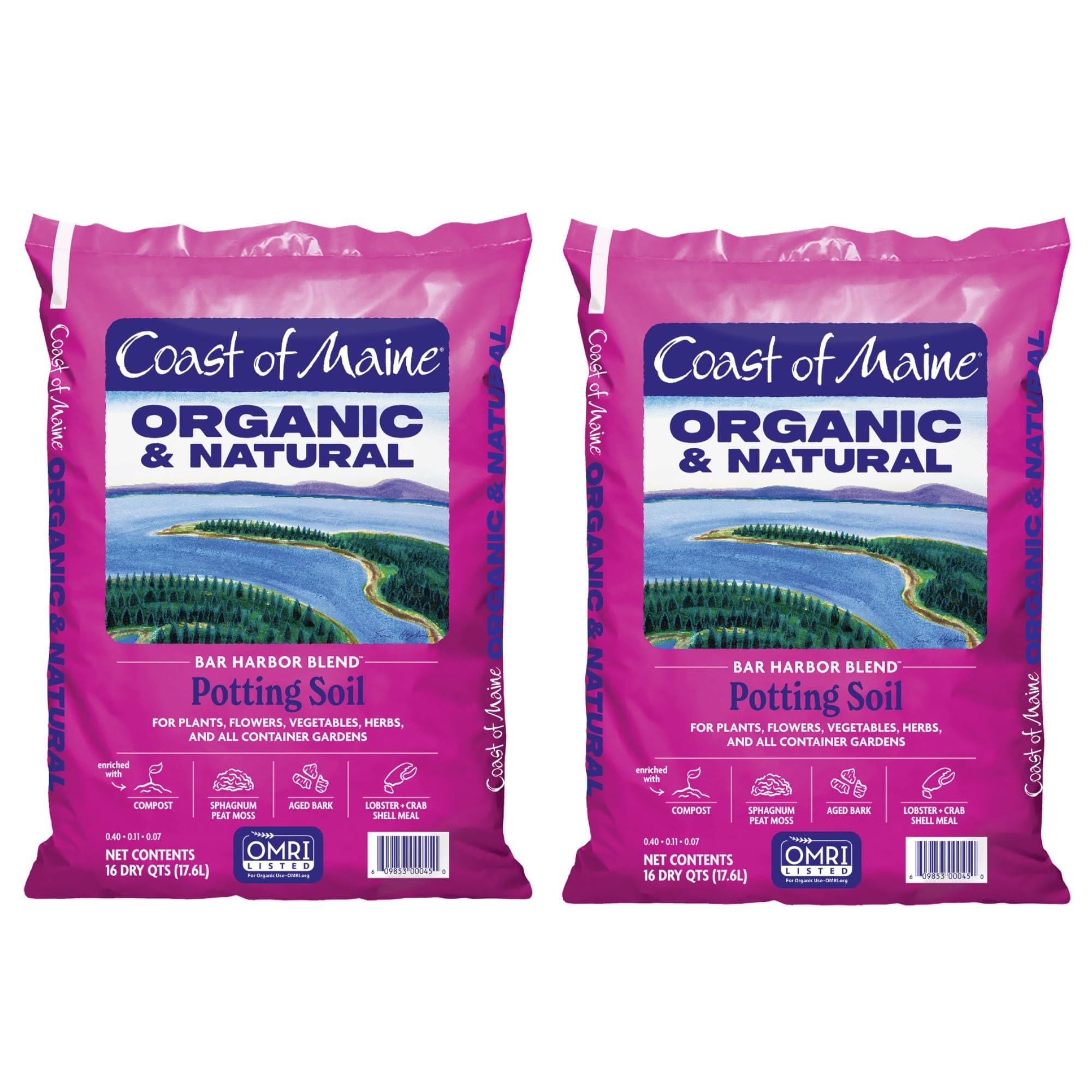
This is not ordinary potting soil. Coast of Maine’s Bar Harbor Blend combines sphagnum peat moss, compost, perlite, lobster shell meal, crab shell meal, and kelp meal into a dark, nutrient-dense mix that feels alive in your hands. The marine-based ingredients provide slow-release nitrogen and trace minerals that container flowers, herbs, and vegetables crave. Customers report visibly greener foliage and more abundant blooms compared to generic bagged soil.
The texture strikes an excellent balance between moisture retention and drainage. The perlite content keeps the mix light and aerated, preventing the compaction that plagues heavier soils. For raised beds, hanging baskets, or patio containers, this blend supports aggressive root development without waterlogging. The darker color indicates a high compost ratio and less reliance on plain peat moss, which translates to richer nutritional content from day one.
Some users have noted the price point sits above standard potting mixes, but the performance justifies it for serious flower bed enthusiasts. The organic certification appeals to those avoiding synthetic inputs. If you are growing heavy-feeding annuals like petunias or vegetables in the same bed, this soil reduces the need for frequent supplemental feeding.
Why it’s great
- Rich organic base with marine meals for slow-release feeding
- Excellent aeration and drainage from perlite blend
- No weeds, sticks, or filler material reported by buyers
Good to know
- Premium price compared to standard all-purpose mixes
- Mild natural odor from compost that dissipates quickly
2. Coast of Maine Organic & Natural Planting Soil

Formulated specifically for tomatoes and vegetables, this Coast of Maine offering performs equally well in flower beds where strong root development is the goal. The blend incorporates composted manure and sphagnum peat moss to create a lightweight mix that retains moisture without becoming soggy. Gardeners consistently note that their plants show less transplant shock and establish faster compared to cheaper store brands.
The cedar and aromatic wood content is a unique differentiator — it acts as a natural insect deterrent, reducing pest pressure around tender seedlings. The 20-quart bag size is generous enough to fill several large pots or refresh a modest raised bed. Customers growing heirloom tomatoes inside this soil report excellent drainage that prevents common root rot issues during wet spells.
A number of users have mentioned encountering fungus gnats after opening the bag, a common issue with rich organic compost mixes. Pre-treating the soil with neem oil or letting it dry slightly before planting can mitigate this. For gardeners seeking an OMRI-listed organic product with proven results in both vegetables and ornamentals, this is a reliable mid-range choice.
Why it’s great
- Lightweight texture with excellent moisture-drainage balance
- Natural cedar scent helps repel common garden insects
- OMRI listed for certified organic gardening
Good to know
- Fungus gnats may appear; air out or treat before planting
- Not the most economical choice for very large beds
3. Midwest Hearth Premium Potting Soil Mix

Midwest Hearth delivers a straightforward, well-engineered blend of peat moss, vermiculite, and perlite that mirrors what professional growers use. The pH is pre-balanced for a broad spectrum of plants, removing guesswork for home gardeners. The 8-quart size is compact enough to store easily but sufficient for multiple small pots, seed starting trays, or refreshing a few container plants.
The texture is light and fluffy, promoting rapid root penetration and consistent moisture distribution. Customers using it for germinating seeds report high germination rates and sturdy seedlings with minimal damping off. The resealable bag keeps unused soil fresh, preventing mold growth between uses — a practical detail that larger bags often lack.
Some reviewers have flagged the price per quart as higher than bulk options, but for small-scale planting where consistency matters, the quality justifies the cost. This mix does not contain added fertilizers, so pairing it with a liquid feed regimen is recommended for heavy bloomers. For those starting a new flower bed from seed or cuttings, this soil provides a clean, weed-free foundation.
Why it’s great
- Light, fluffy texture perfect for fragile root systems
- pH balanced for a wide range of flowering plants
- Resealable bag maintains moisture and freshness
Good to know
- No added fertilizer; plan a feeding schedule
- Higher cost per quart than economy bulk bags
4. Michigan Peat General All Purpose Premium Potting Soil

For covering large flower beds without breaking the bank, Michigan Peat’s 50-pound bag offers serious volume at a competitive price. The blend combines rich dark reed sedge peat with perlite and sand, plus starter and slow-release fertilizers included right in the mix. It arrives ready to use with no additional mixing required, which saves time when you are filling multiple containers or a new raised bed.
The texture is consistent and workable, though it tends to arrive moist due to the peat content. Customers appreciate the convenience of having fertilizer pre-loaded, especially for annual flower beds where a steady nutrient supply matters across the growing season. The sand component adds weight and stability, making this a good choice for top-heavy planters that might tip in lighter mixes.
Several buyers have noted that this soil can harbor fungus gnats, a risk with any peat-based product stored in warm conditions. Airing the soil out before use or applying a light layer of diatomaceous earth on the surface helps. For budget-conscious gardeners who need volume without complex amendments, this bag delivers dependable results for flowers, vegetables, and bulbs alike.
Why it’s great
- Large 50-pound bag covers extensive planting areas
- Pre-loaded starter and slow-release fertilizers included
- Ready to use straight from the bag with no mixing
Good to know
- Peat base may contain fungus gnat eggs; air out before planting
- Heavier texture due to sand content; less airy than premium blends
5. Miracle-Gro Potting Mix 3-Pack

Miracle-Gro is the household name in potting soil for a reason — consistency. This 3-pack of 8-quart bags delivers a uniform, well-draining mix that works across container flowers, vegetables, shrubs, and perennials. The formula includes added fertilizer that feeds plants for up to six months, reducing the need for regular liquid feeding during the peak growing season.
The texture is noticeably lighter than many economy soils, with good initial aeration that helps roots spread quickly. The smaller bag size is a practical advantage for gardeners who struggle with heavy 40-pound sacks, and the three-pack provides enough volume to fill several large containers without committing to a bulky single bag. Customers switching from cheaper alternatives report larger blooms and greener foliage within weeks.
As a synthetic-fertilizer-based product, it does not build long-term soil biology the way an organic compost blend would. Repeated use in the same bed without supplementing organic matter may lead to nutrient depletion over multiple seasons. For seasonal container refreshes where convenience matters more than soil building, this remains a reliable, grab-and-go solution.
Why it’s great
- Built-in fertilizer feeds container plants for 6 months
- Light, fluffy texture ideal for quick root establishment
- Small bags easy to carry and store compared to bulk sacks
Good to know
- Synthetic fertilizer does not improve long-term soil structure
- Not OMRI certified; not suitable for organic gardening
FAQ
Can I use vegetable soil for flower beds?
How deep should the soil be in a flower bed?
Why does my potting soil have fungus gnats?
Final Thoughts: The Verdict
For most users, the dirt for flower beds winner is the Coast of Maine Bar Harbor Blend because it delivers the richest organic nutrient profile and the best drainage-aeration balance for container and raised bed flowers alike. If you want a soil that builds long-term fertility without synthetic shortcuts, grab the Coast of Maine Planting Soil. And for covering large beds on a budget, nothing beats the sheer volume and ready-to-use convenience of the Michigan Peat All-Purpose bag.

Mo Maruf
I created WellFizz to bridge the gap between vague wellness advice and actionable solutions. My mission is simple: to decode the research and give you practical tools you can actually use.
Beyond the data, I am a passionate traveler. I believe that stepping away from the screen to explore new environments is essential for mental clarity and physical vitality.