Our readers keep the lights on and my smoothie glass nicely filled. As an Amazon Associate, I earn from qualifying purchases.
Your four-stroke dirt bike engine lives a brutal life—high RPMs, extreme heat, and clutch engagement that demands perfect friction control. Picking the wrong oil means sludged rings, a grabby clutch, or worse, a seized top end. This guide dissects five proven formulas so you can match the right viscosity and additive chemistry to your specific ride and riding style.
I’m Mohammad Maruf — the founder and writer behind WellFizz. I’ve spent hundreds of hours analyzing laboratory data, JASO certification tables, real-world owner reports, and viscosity breakdown curves across dozens of 4-stroke motorcycle oils to separate legit formulations from marketing hype.
If you want a single reliable recommendation that protects your wet clutch, resists thermal thinning, and keeps your dirt bike shifting smoothly, you need to start with a proven best dirt bike oil 4 stroke that matches your engine’s specific operating demands.
How To Choose The Best Dirt Bike Oil 4 Stroke
Four-stroke dirt bike oil must simultaneously lubricate the engine, cool critical components, and protect the wet clutch pack from slipping or dragging. That triple duty means you can’t grab any off-the-shelf passenger car oil — the friction modifier profile is completely different. Understanding three core specs will prevent a costly mistake.
JASO MA / MA2 Certification
The Japanese Automotive Standards Organization created the MA and MA2 ratings specifically for 4-stroke motorcycle engines with integrated wet clutches. MA2 oil has a tighter friction coefficient range than MA, meaning it delivers consistent clutch engagement under high load without excessive slip. If the bottle lacks a JASO MA or MA2 badge, do not pour it into your dirt bike — it’s designed for cars and will ruin your clutch plates.
Viscosity Grade: 10W-40 vs 5W-50 vs 10W-50
10W-40 is the standard recommendation for most air-cooled and liquid-cooled 250cc-450cc four-stroke dirt bike engines. A 5W-50 like the Quicksilver gives you a broader viscosity spread — thinner cold starts for easier kicking or electric starting, yet thicker high-temp film strength for modified or desert-running engines. The TRIAX XTerra uses a 10W-40 with shear-stable VIIs (viscosity index improvers) that resist permanent breakdown even after extended high-RPM pulls.
Base Oil Type: Full Synthetic vs Conventional
Full synthetic esters, like those in the Royal Purple Max Cycle and TRIAX XTerra, provide significantly higher oxidation resistance and thermal stability than conventional or semi-synthetic blends. Synthetics resist thickening and sludge formation at sustained temperatures above 230°F, which is common in air-cooled 4-stroke singles during summer singletrack or motocross sessions. For budget-conscious riders, a conventional Yamalube still exceeds API SL standards but will need more frequent changes under severe duty.
Quick Comparison
On smaller screens, swipe sideways to see the full table.
| Model | Category | Best For | Key Spec | Amazon |
|---|---|---|---|---|
| Royal Purple Max Cycle 10W-40 | Premium | High-heat / modified engines | Synerlec additive technology | Amazon |
| TRIAX XTerra 4T 10W-40 | Premium | Race-ready / all-season performance | 100% synthetic ester formulation | Amazon |
| Lucas Oil High Performance 10W-40 | Mid-Range | Quieting noisy valvetrains | JASO MA certified, 2-quart pack | Amazon |
| Yamaha Yamalube 10W-40 FS | Mid-Range | OEM-recommended for Yamaha bikes | JASO MA / API SL certified | Amazon |
| Quicksilver 5W-50 Full Synthetic | Budget | Cold-start ease / broad temp range | 5W-50 viscosity grade | Amazon |
In‑Depth Reviews
1. Royal Purple Max Cycle 10W-40

The Royal Purple Max Cycle uses proprietary Synerlec additive chemistry that creates a microscopic layer of protection on metal surfaces. Real-world data from a highly modified, desert-racing XR650L showed oil temperatures dropping from over 300°F down to the 210-225°F range after switching to this oil, extending the top-end rebuild interval from 5,000 miles to nearly 10,000 miles. That kind of thermal margin matters when you’re pinned in sixth gear across a dry lake bed.
Clutch engagement is equally impressive. A CBR 600F4i owner at 48,000 miles reported that switching to Max Cycle completely eliminated rough warm shifting and clutch slip, turning a bike that was about to be sold into a buttery-smooth daily rider. The oil’s high flash point of 204°C means it resists evaporation and coking on hot piston undersides.
This is the best option if you ride a modified or air-cooled 4-stroke that sees sustained high loads in hot environments. The per-quart cost is higher than commodity oils, but the extended rebuild intervals and reduced engine noise more than offset the premium for serious riders.
Why it’s great
- Reduced oil temps by up to 90°F in extreme conditions
- Noticeably quieter valve train and smoother clutch shifts
- Proven to extend top-end rebuild intervals significantly
Good to know
- Higher cost per quart than blended alternatives
- May be overkill for low-stress recreational trail bikes
2. TRIAX XTerra 4T 10W-40
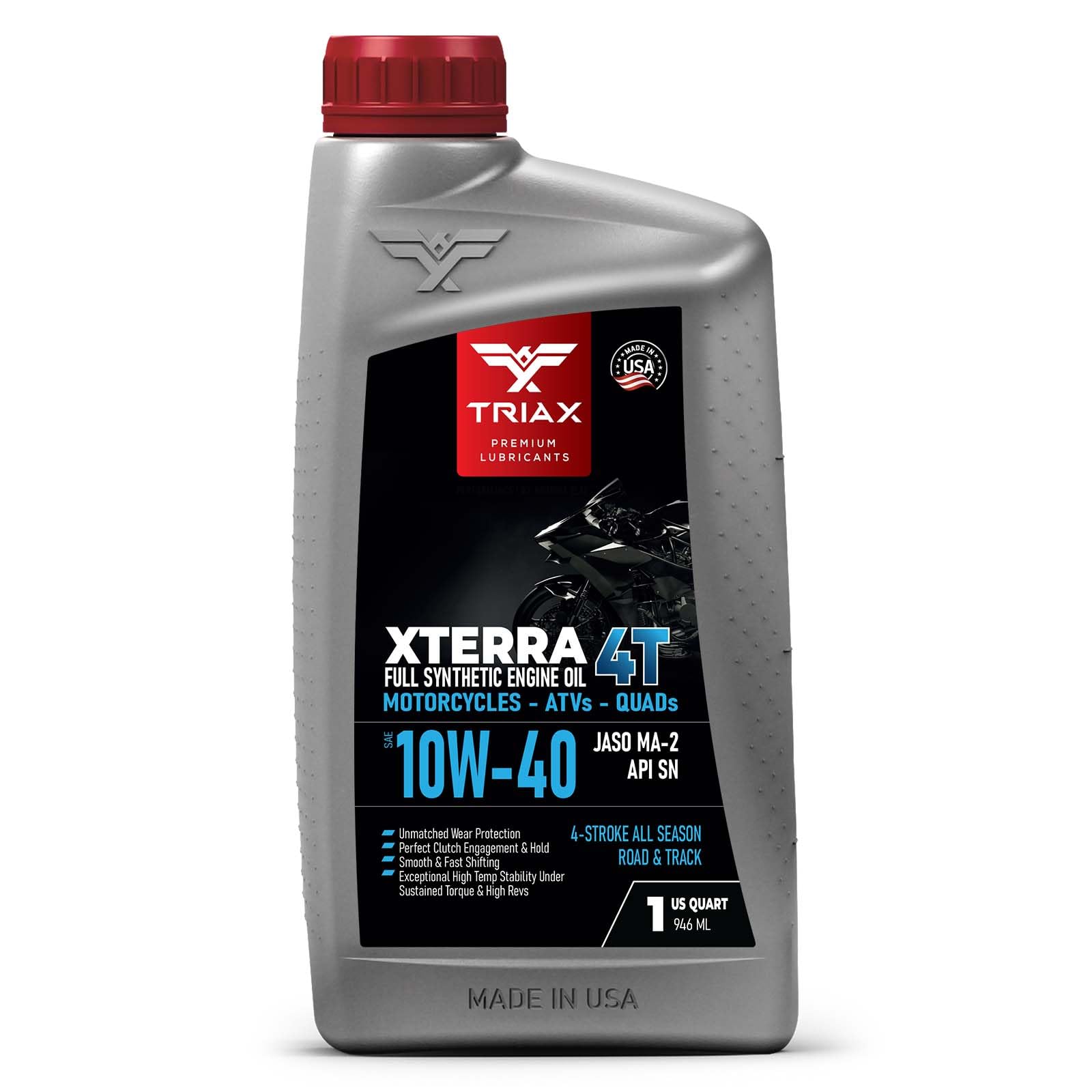
TRIAX built the XTerra 4T around a full synthetic ester base — the same chemistry used in racing-only lubricants. The ester molecules are polar, meaning they bond electrostatically to metal surfaces and stay put even after the engine is shut off, reducing dry-start wear. The formulation exceeds JASO MA2 specifications, which is the most stringent wet-clutch friction standard available.
Real owners report that their Kawasaki, Honda, and Yamaha engines run “noticeably smoother” after switching. The shear-stable viscosity index improvers in this oil resist permanent thinning better than cheaper alternatives, so the 10W-40 grade stays stable even after multiple heat cycles in a motocross race. The cap design also earns praise for clean, drip-free pouring.
If you race motocross, hare scrambles, or push your bike through high-RPM cross-country terrain, TRIAX delivers competition-grade protection at a surprisingly accessible price point. It bridges the gap between pricey boutique synthetics and basic OEM oils without sacrificing thermal stability.
Why it’s great
- Full ester base provides excellent high-temp film strength
- Exceeds JASO MA2 for consistent wet-clutch feel
- Shear-stable VIIs resist viscosity breakdown
Good to know
- 1-quart bottle only — need multiple for larger sumps
- Not as widely available as Yamalube or Lucas at local dealers
3. Lucas Oil High Performance 10W-40
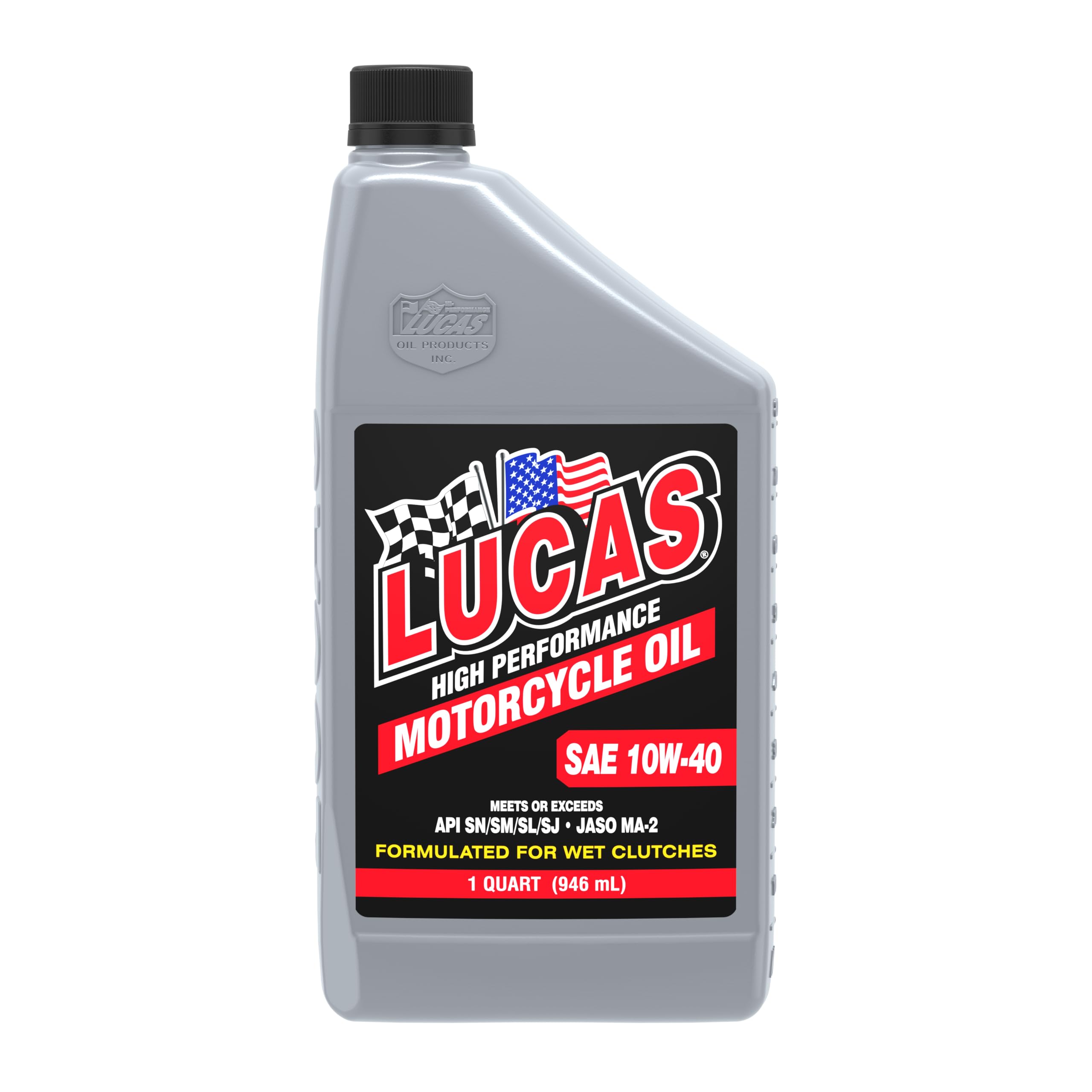
Lucas Oil has been a staple in the powersports world for years, and their High Performance Synthetic 10W-40 lives up to the reputation. Owners consistently mention that it makes their four-stroke engines run quieter and reduces valve-train clatter. The formulation meets JASO MA specifications, making it safe for integrated wet clutches in ATVs, quads, and dirt bikes.
The pack of 2 quarts is a smart buy if your bike takes around 1.5 quarts per change — you get a full change with leftover for top-offs. Lucas uses a robust additive package designed to lower oil temperatures and reduce friction-related heat buildup, which directly translates to longer component life. A 1973 Honda TL125 owner specifically called it a “great lubricant to help keep old iron alive.”
This is not the most advanced synthetic on the list — it lacks the ester base of the TRIAX or Royal Purple — but for a reliable, budget-friendly mid-range option that quells engine noise and meets OEM specs, Lucas delivers predictable performance with a rabidly loyal following.
Why it’s great
- Notably reduces engine and valvetrain noise
- Pack of 2 fits common 4-stroke sump capacities perfectly
- Trusted brand with 15-year track record in powersports
Good to know
- Not a full ester synthetic — less thermal headroom
- Some riders report needing more frequent changes under race conditions
4. Yamaha Yamalube 10W-40 FS

Yamalube is the factory-fill recommendation from Yamaha Motor Corporation, and the 10W-40 Full Synthetic version is engineered specifically for Yamaha’s 4-stroke engines — though it works perfectly across other brands too. The fully synthesized base oil provides excellent thermal stability, helping engines maintain consistent operating temperatures during sustained high-RPM riding.
One owner logged over 40,000 miles on a 2017 Yamaha FJ-09 Tracer using this oil, changing it every 3,500 miles. They reported no issues across temperature swings from 30°F to 110°F, though they noticed slight clutch slip on aggressive upshifts when the oil approached the end of its service interval. That’s a normal warning sign that viscosity has degraded, not a flaw in the oil itself.
For riders who want the peace of mind of an OEM-formulated oil that meets JASO MA and API SL standards, Yamalube FS is a solid choice. Buying by the gallon at the same time as your order saves money over individual quarts. It’s not the highest-performing synthetic on the shelf, but its factory-engineered compatibility makes it a safe and reliable pick for Yamaha owners especially.
Why it’s great
- Formulated specifically for Yamaha 4-stroke engines
- Strong thermal stability across wide temperature range
- Gallon purchase option reduces per-change cost
Good to know
- Clutch slip may appear near end of oil-change interval
- Not as extreme-duty oriented as ester-based synthetics
5. Quicksilver 5W-50 Full Synthetic

The Quicksilver 5W-50 stands out for its unusually wide viscosity range — a 5W cold rating that flows readily at near-freezing temperatures, combined with a 50-weight hot rating that maintains a thick oil film under extreme heat. That’s especially useful if you ride in varying climates or own a big-bore ATV or UTV that sees both cold morning starts and hot afternoon hill climbs.
Owners praise this oil for making engines start easily even after sitting in cold garages. The full synthetic formula minimizes performance-robbing deposits inside the combustion chamber and on valve faces. Multiple long-term users reported their ATVs showing no engine wear, starting easily, and making great power after years on Quicksilver. The 1-liter bottle is close to a standard quart, but check your sump capacity before buying.
This is the most budget-friendly option in this list. It works well for 4-stroke ATVs and dual-sport bikes that don’t live at redline all day. If you ride a modified, air-cooled bike that sees heavy desert or motocross duty, step up to the Royal Purple or TRIAX — but for general trail riding and utility use, Quicksilver offers solid protection at a compelling price.
Why it’s great
- Broad 5W-50 range for cold starts and high-temp protection
- Full-synthetic deposit control keeps engines clean
- Competitively priced for a full synthetic
Good to know
- 1-liter volume is slightly less than a full quart
- Better for ATV/UTV duty than high-RPM motocross use
FAQ
Can I use car oil in my 4-stroke dirt bike?
How often should I change 4-stroke dirt bike oil?
Is 10W-40 always the right viscosity for a 4-stroke dirt bike?
Final Thoughts: The Verdict
For most riders, the best dirt bike oil 4 stroke winner is the Royal Purple Max Cycle 10W-40 because it delivers the highest thermal margin, longest rebuild interval, and smoothest clutch feel of any oil in this test. If you want JASO MA2-certified ester chemistry at a mid-range price point, grab the TRIAX XTerra 4T 10W-40. And for a quiet, dependable mid-range option that pairs well with ATVs and recreational trail bikes, nothing beats the Lucas Oil High Performance 10W-40 pack of 2 — especially if engine noise reduction is your priority.

Mo Maruf
I created WellFizz to bridge the gap between vague wellness advice and actionable solutions. My mission is simple: to decode the research and give you practical tools you can actually use.
Beyond the data, I am a passionate traveler. I believe that stepping away from the screen to explore new environments is essential for mental clarity and physical vitality.