Our readers keep the lights on and my smoothie glass nicely filled. As an Amazon Associate, I earn from qualifying purchases.
Choosing the right dirt bike helmet isn’t just about matching your bike’s graphics—it’s about trusting a shell to do its one job when your body is tumbling through rocks and hard-packed clay. A helmet that fits poorly, fogs up on the first hill climb, or lacks rotational impact management can turn a routine ride into a serious hospital visit. The market is flooded with options that look the part but skimp on the core safety features that actually matter after the front end washes out.
I’m Mohammad Maruf — the founder and writer behind WellFizz. I’ve spent hundreds of hours analyzing composite layups, EPS densities, MIPS integration, and ventilation channel designs to separate legitimate head protection from helmets that are all paint and no substance.
Whether you’re ripping through desert single-track, hitting the MX track on weekends, or dual-sporting through backcountry fire roads, this guide covers the best dirt bike helmet options that balance real-world safety certification, weight management, and rider comfort.
How To Choose The Best Dirt Bike Helmet
Dirt bike helmets must absorb both blunt force and rotational energy from crashes that happen at unpredictable angles on uneven terrain. Unlike street helmets, off-road models prioritize massive airflow, peak visor field, and goggle compatibility over aero efficiency. The wrong pick leaves you with a sauna on your head and a blind spot right when you need it most.
Safety Certifications: DOT is the Floor, ECE is the Benchmark
DOT FMVSS 218 is the minimum legal standard in the US, testing impact energy absorption at two drop heights on a flat and hemispherical anvil. ECE 22.06 is significantly more rigorous, adding oblique impact testing that simulates rotational forces. A helmet certified to both offers broader assurance. Snell ratings, common in auto racing, use higher drop energies but are not specifically designed for the off-road impacts a dirt bike helmet faces.
Shell Composition: Balance of Weight, Strength, and Energy Transfer
ABS shells are the most affordable and work well for entry-level riders, but they transfer more impact energy to the EPS liner compared to fiberglass or carbon fiber composites. Fiberglass and KPA offer better weight-to-strength ratios, absorbing energy progressively without the bulk. Carbon fiber is the lightest option, reducing neck fatigue on long trail days, but the premium cost is substantial. Multi-layer composite shells combine materials for a tuned stiffness profile.
Ventilation and Liner Design
Off-road helmets rely on large intake ports and deep exhaust channels to pull hot air out while you’re moving at low speeds on technical terrain. The EPS liner should have carved ventilation channels that align with the shell’s intake to avoid dead air zones inside the helmet. Removable, washable moisture-wicking liners prevent bacterial buildup and maintain hygiene across multiple rides.
Quick Comparison
On smaller screens, swipe sideways to see the full table.
| Model | Category | Best For | Key Spec | Amazon |
|---|---|---|---|---|
| Fox Racing V3 | Premium | MIPS off-road protection | 1400g, MIPS, ECE 22.06 | Amazon |
| LS2 Blaze II | Mid-Range | Adventure/dual-sport riding | KPA shell, drop-down sun shield | Amazon |
| O’Neal 1SRS | Mid-Range | MX track and trail riding | 1600g, multi-density EPS | Amazon |
| VCOROS H637 | Budget | Entry-level ATV/dirt riding | ABS shell, removable visor | Amazon |
| OUMURS Dual Sport | Budget | Budget dual-sport with accessories | ABS shell, dual visor system | Amazon |
| ILM Snell SA2025 | Premium | Auto racing/track days | Fiberglass, Snell SA2025, HANS ready | Amazon |
| LS2 Advant X Carbon | Premium | Modular adventure with integrated Bluetooth | Carbon fiber, 1470g, ECE 22.06 | Amazon |
In‑Depth Reviews
1. Fox Racing Unisex V3 Motocross Dirt Bike Helmet
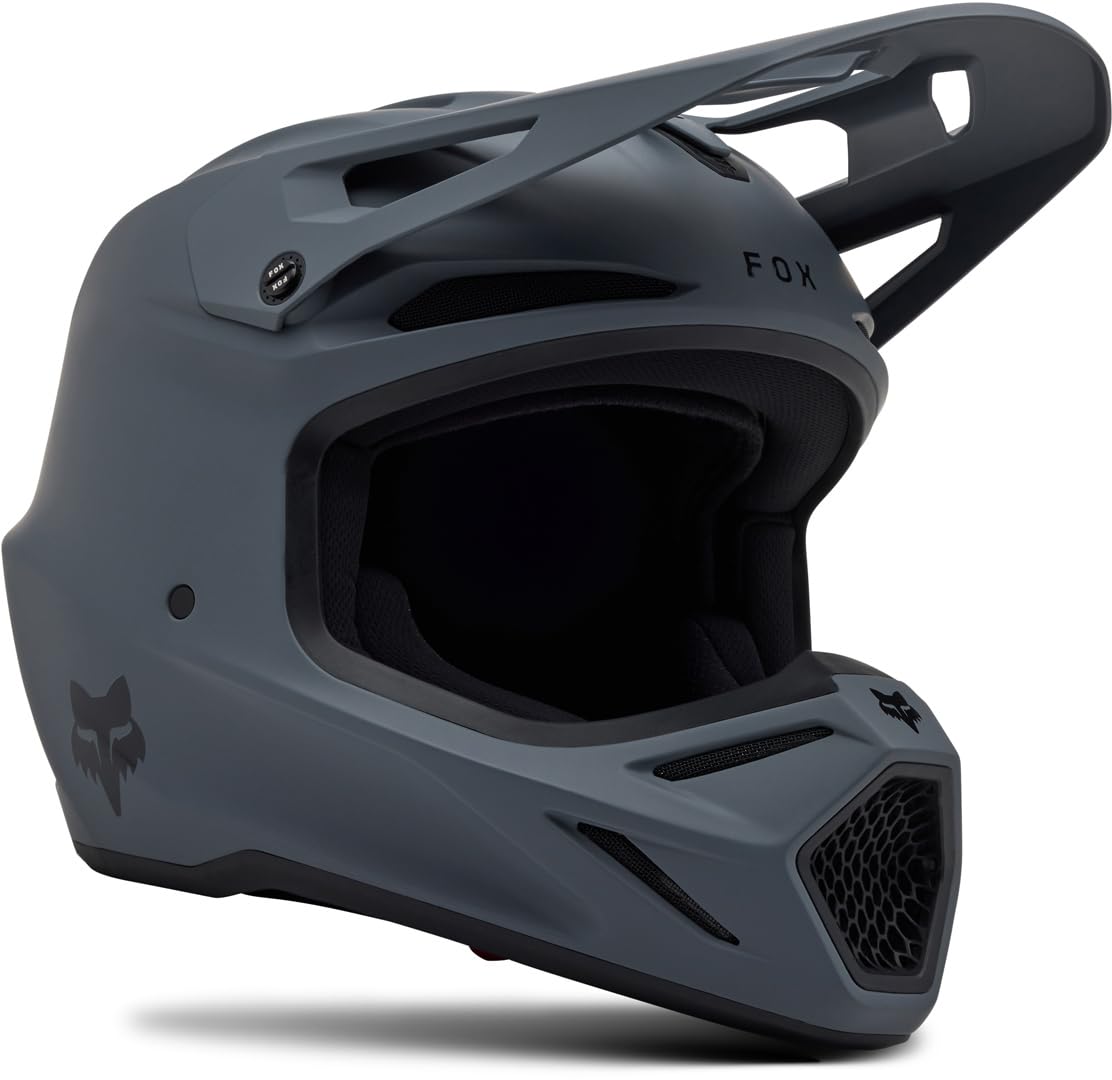
The Fox Racing V3 is a premium off-road helmet built around Multi-Directional Impact Protection System (Mips), which adds a low-friction layer between the liner and the head to reduce rotational forces during angled impacts. The composite shell pairs fiberglass with EPS and EPP layers to manage energy absorption across a wide range of crash severities. At 1400 grams, it stays light enough for long motos without neck fatigue, and the ECE 22.06 certification confirms it passes Europe’s more demanding oblique impact tests.
Ventilation is aggressive—large front intake ports and rear exhaust scoops create strong airflow through the EPS channels, keeping you cool even during slow technical climbs. The removable and washable liner prevents odor buildup after repeated sweaty sessions. Fox includes a clip-on visor extension and spare visor hardware, plus hydration routing that lets you drink without breaking your goggle seal.
Sizing runs small, especially for riders with rounder head shapes. Several verified buyers report that the cheek pads are extremely tight even when following the size chart, with some needing to size up or swap to thinner pads. If you measure at the top of a size bracket, order the next size up and consider third-party cheek pads for a proper fit.
Why it’s great
- Genuine MIPS low-friction layer reduces rotational brain injury risk
- Lightweight composite shell with ECE 22.06 certification
- Hydration routing and speaker recesses for comms integration
Good to know
- Runs very small — size up at least one step from your normal fit
- Cheek pads are aggressive for round head shapes
- Premium price point limits it to committed riders
2. LS2 Helmets Blaze II Adventure Motorcycle Helmet

The LS2 Blaze II uses Kinetic Polymer Alloy (KPA), a proprietary multi-polymer composite that sits between ABS and fiberglass in weight and energy absorption. The shell is paired with an integrated drop-down sun shield that eliminates the hassle of swapping face shields when transitioning from forest shade to open desert light. The EPS liner channels air through multiple intake and exhaust ports, and the fit is notably spacious for larger head shapes—a relief for riders who find Bell or Shoei profiles too claustrophobic.
An emergency release system allows first responders to pull the cheek pads outward in a crash, reducing neck strain during helmet removal. The quick-release snap chin strap is secure but less fiddly than a double D-ring, especially with gloved hands. DOT and ECE approval means it is certified on both sides of the Atlantic.
Anti-fog performance is a weak spot—the Pinlock insert that works with the main face shield is difficult to source for this model, and owners report fogging in cold or humid conditions. Wind noise is moderate for an ADV helmet, but not class-leading.
Why it’s great
- Integrated drop-down sun shield is smooth and blocks glare effectively
- Emergency release cheek pads for safer paramedic removal
- Spacious fit suits long-distance ADV riders with larger head circumferences
Good to know
- Pinlock anti-fog inserts are scarce for this visor design
- Wind noise is noticeable above highway speeds
- Visor lock mechanism feels less positive than premium competitors
3. O’Neal 1SRS Adult Dirt Bike Helmet
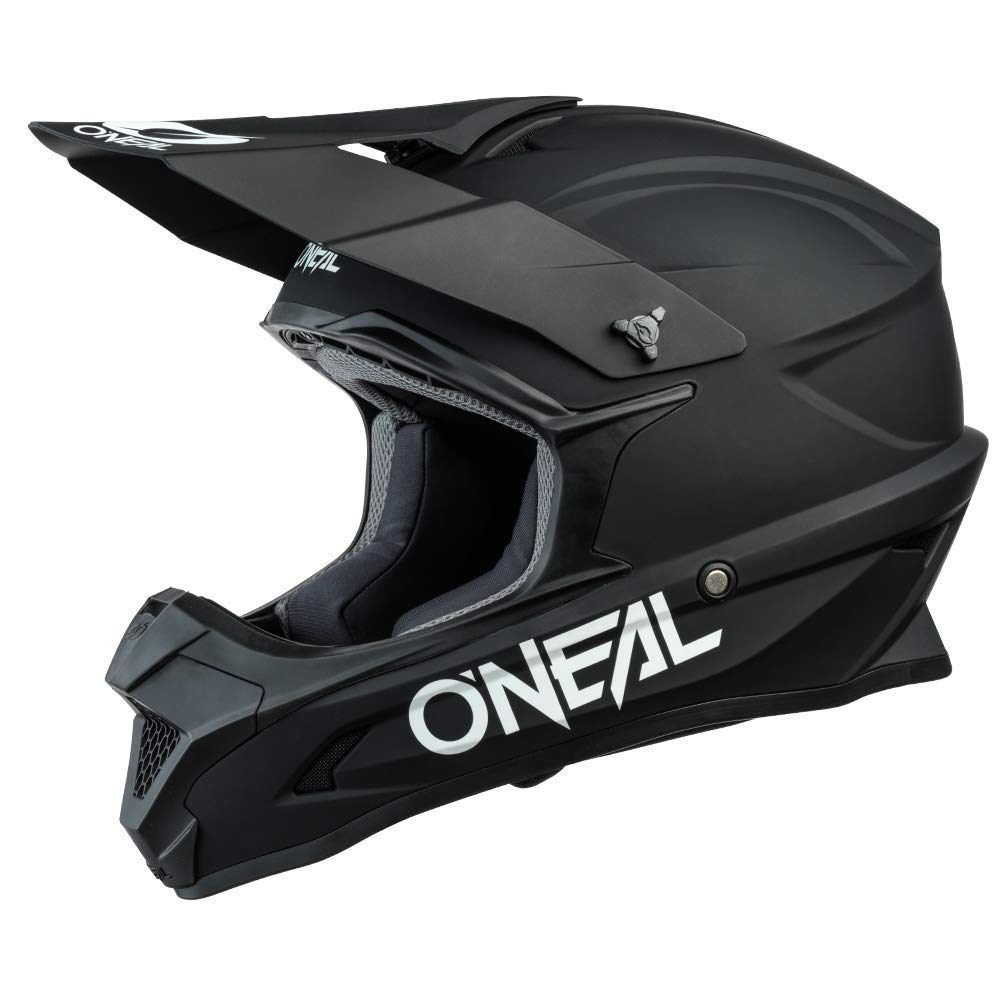
The O’Neal 1SRS is a mid-range motocross helmet that punches above its price tier with multi-density EPS foam and a solid ABS shell. The fit is designed for the intermediate oval head shape common among MX riders, and the removable moisture-wicking liner handles the sweat and dust of a full day at the track. At around 1600 grams it is heavier than composite-shell helmets, but the weight is well distributed and does not cause neck strain during standard motos.
The visor sits high enough to clear off-road goggles without pinching your field of view, and the large chin bar vents push air directly onto the face shield to reduce fogging. Multiple intake ports on the crown and brow channel air through the EPS, and the rear exhaust scoops pull hot air out efficiently at speed. Riders who have crashed in this helmet report that it held up well at impact speeds around 20 mph, with the shell absorbing the energy without transmitting dangerous forces to the neck.
Visor replacement parts are hard to find directly from O’Neal, and the screws can strip if over-tightened. Some owners describe the helmet as heavy compared to fiberglass options, though for pure trail and track riding it remains a workhorse choice.
Why it’s great
- Multi-density EPS liner absorbs a broader range of impact speeds
- Goggle-friendly visor position and chin vent airflow reduce fogging
- Proven crash protection at moderate trail speeds
Good to know
- Visor replacement parts are not widely available
- Heavier than fiberglass or carbon composite helmets
- No MIPS or rotational energy management system
4. VCOROS H637 Adult Motocross Helmet
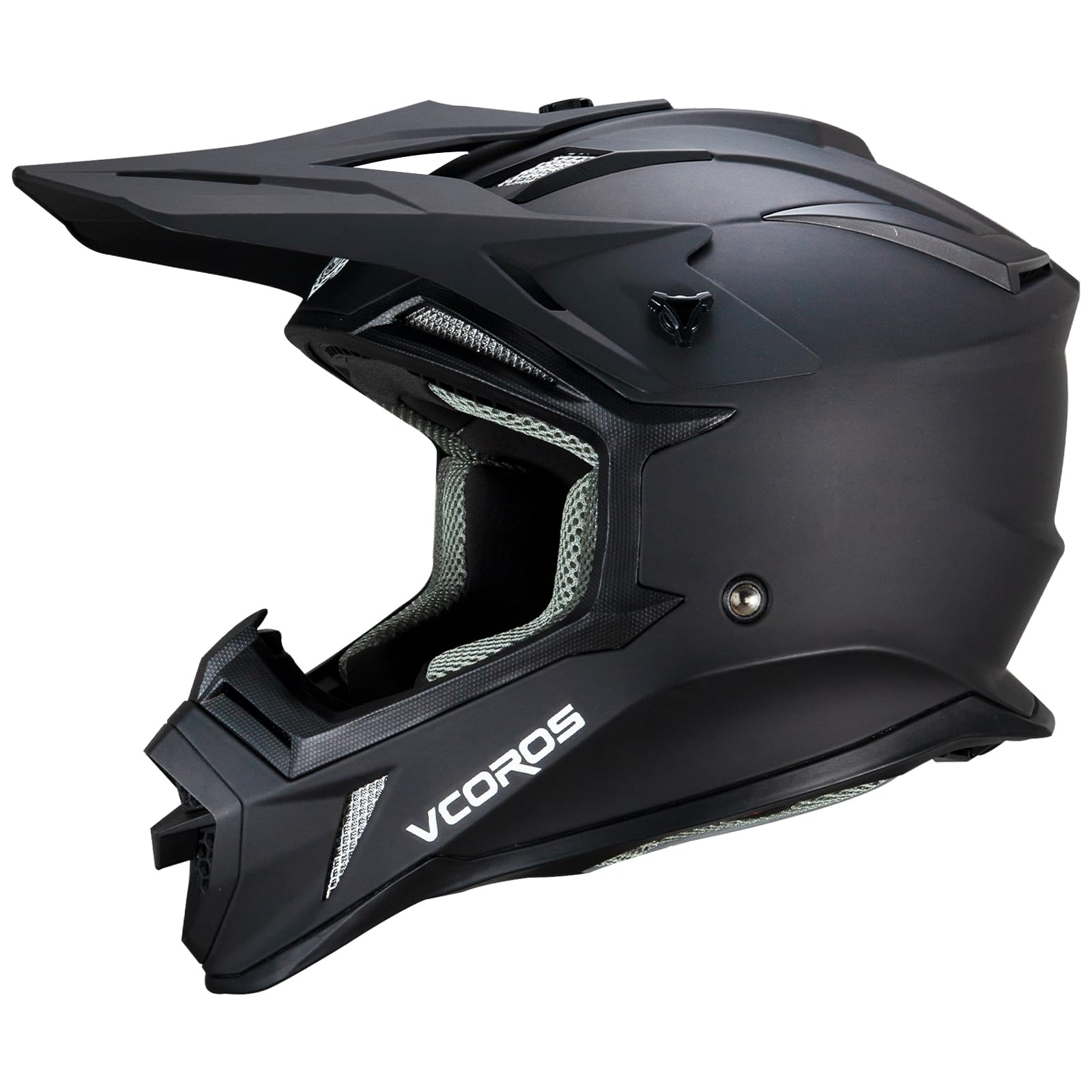
The VCOROS H637 is an entry-level full-face helmet built around an ABS shell and competition-grade double D-ring strap system. The shell meets DOT FMVSS 218, and the multi-density EPS liner provides basic impact protection for off-road riding at moderate speeds. The liner is fully removable and machine-washable, which is a practical feature for riders hitting dusty trails or muddy tracks every weekend.
The sun visor is adjustable and removable, letting you tune the brim height to match your goggle position. Ventilation is handled by a front intake port and rear exhaust, though the airflow is not as aggressive as helmets with carved EPS channeling. The double D-ring closure is secure and passes the standard safety pull test, and the chin strap sits comfortably against the skin without rough edges.
Some owners note that the helmet sits slightly crooked on certain head shapes despite proper sizing, which suggests the shell mold has a slight asymmetry. The ABS shell is heavier than composite options, and the paint finish on high-contrast colorways can chip if the helmet is dropped on rocks.
Why it’s great
- Fully removable and washable liner for trail hygiene
- Adjustable sun visor height to clear goggles
- Double D-ring strap for secure, race-style closure
Good to know
- Shell asymmetry reported on some units from owners
- Paint chips easily on high-contrast color options
- Ventilation is adequate but not competitive with premium channel designs
5. OUMURS Off Road Dual Sport Helmet

The OUMURS Dual Sport Helmet is an entry-level full-face with a dual visor system—a clear outer shield for wind and debris protection and an internal drop-down dark visor for sun glare. The ABS shell is DOT certified and paired with an EPS liner that passes the FMVSS 218 impact standard. The helmet comes bundled with a pair of gloves and a face mask, making it a convenient starter kit for riders new to off-road gear.
Ventilation is handled by large air vents on the crown and chin bar. While the openings are generous, the EPS liner lacks deeply carved channeling, so airflow feels modest at low trail speeds. The quick-release buckle is easy to operate with gloved hands, and the visor pops up to accommodate goggles. Peripheral visibility is better than typical ATV helmets that require bulky goggles.
Multiple verified owners report the shell developed small cracks after major crashes, which is acceptable for disposable safety gear but indicates the ABS shell lacks the fracture toughness of composites. The included gloves and mask are basic and will need upgrading after a few rides. The glossy finish shows scratches easily, and the visor seal adhesive can degrade over time.
Why it’s great
- Dual visor system with internal sun shield for variable light
- Includes gloves and mask for a complete entry-level kit
- Quick-release buckle is gloved-hand friendly
Good to know
- ABS shell cracked in crash tests reported by owners
- Included accessories are budget-tier and short-lived
- Visor seal adhesive may peel after extended use
6. ILM Snell SA2025 Full Face Auto Racing Helmet

The ILM Model 890 is a Snell SA2025 certified fiberglass full-face helmet designed primarily for auto racing and track days, but it is also used by riders who want Snell-level impact protection. The shell uses Glass Fiber Reinforced Plastic (GFRP), which is lighter and stiffer than ABS while still being affordable to manufacture. Threaded M6 inserts are pre-installed for HANS device compatibility, though the HANS posts themselves are sold separately.
The shield has tear-off post buttons for racing use and a 40 mm sunshade film at the top to reduce glare. The EPS liner is fire-retardant, and the double D-ring closure matches the safety requirements of most racing organizations. Ventilation is functional but not as aggressive as true motocross helmets—the shell is designed more for car cockpit airflow than open-face trail riding.
Some units have been shipped with older Snell SA2020 certification despite being advertised as SA2025, so buyers should verify the certification sticker inside the liner before accepting delivery. The helmet is tight for round head shapes and runs small compared to typical motocross brands.
Why it’s great
- Snell SA2025 certification for rigorous impact protection
- HANS threaded inserts pre-installed for neck restraint systems
- Fire-retardant EPS liner adds a safety margin for track use
Good to know
- Not designed for street riding—lacks typical off-road ventilation
- HANS posts sold separately
- Certification discrepancy between SA2020 and SA2025 may affect race eligibility
7. LS2 Advant X Carbon Fiber Modular Helmet

The LS2 Advant X Carbon is a modular helmet built with a 9K carbon fiber shell that weighs only 1470 grams, making it one of the lightest flip-front helmets on the market. It is dual ECE 22.06 certified for both open and full-face configurations, and it meets DOT FMVSS 218. The helmet integrates a Cardo 4X Universal Serial Communication (USC) Bluetooth system with a 1.2 km intercom range, Bluetooth 5.2, and natural voice control for music and calls.
The ventilation system is engineered for adventure touring, with a top intake scoop and rear exhaust scoops that flow air through the EPS even when the chin bar is flipped up. The shield uses a quick-release system and includes a Pinlock Max insert to prevent fogging. The liner is made of removable technical fabric, and the cheek pads are 3D laser-cut for a precise intermediate oval fit. The Advanced Rotational Energy Management (AREM) system provides an extra layer of protection against oblique impacts.
Sizing runs very small—multiple owners report needing to go up at least one full size from their standard measurement. The chin strap closure uses a hook-and-loop system that some find difficult to fasten securely, especially with a beard. The Cardo unit started disconnecting from other intercoms for some users after six months of use, requiring a replacement unit.
Why it’s great
- Ultra-light carbon fiber construction at 1470g reduces neck load
- Integrated Cardo Bluetooth with 1.2 km intercom range
- Dual ECE 22.06 certification for open and full-face mode
Good to know
- Runs extremely small — size up at least one full size
- Hook-and-loop chin strap is fiddly and hard to secure
- Cardo intercom reliability issues after several months
FAQ
Does a dirt bike helmet expire if it has never been dropped?
Can I use a dirt bike helmet for street riding?
How do I measure my head for the correct dirt bike helmet size?
What is the difference between DOT and ECE certification for dirt bike helmets?
Final Thoughts: The Verdict
For most riders, the best dirt bike helmet winner is the Fox Racing V3 because it pairs genuine MIPS protection with ECE 22.06 certification and a lightweight composite shell that does not punish your neck on long trail days. If you want an adventure helmet with an integrated drop-down sun shield and KPA shell versatility, grab the LS2 Blaze II. And for riders on a budget who need solid DOT-certified protection with a removable liner, the VCOROS H637 offers the best balance of safety features and cost containment.

Mo Maruf
I created WellFizz to bridge the gap between vague wellness advice and actionable solutions. My mission is simple: to decode the research and give you practical tools you can actually use.
Beyond the data, I am a passionate traveler. I believe that stepping away from the screen to explore new environments is essential for mental clarity and physical vitality.