Our readers keep the lights on and my smoothie glass nicely filled. As an Amazon Associate, I earn from qualifying purchases.
That grainy, distant shot of your kid scoring the winning goal or the blurred bird at the feeder isn’t a memory you want to keep. A digital WiFi camera bridges the gap between smartphone convenience and the optical reach, sensor quality, and manual control that actually captures the scene as you saw it. You get the instant sharing of Wi-Fi with the true zoom lens and larger sensor your phone just cannot fit.
I’m Mohammad Maruf — the founder and writer behind WellFizz. I’ve spent hundreds of hours analyzing sensor specs, optical zoom ranges, stabilization systems, and Wi-Fi transfer speeds to separate the cameras that genuinely upgrade your photography from those that just add a connectivity sticker.
Whether you are framing a wildlife shot from fifty feet away or setting up a vlog in your living room, choosing the right best digital wifi camera means balancing megapixel counts against lens quality and wireless features that actually save you time.
How To Choose The Best Digital WiFi Camera
The term ‘digital WiFi camera’ covers a broad range from compact bridge cameras to interchangeable-lens mirrorless systems. Your decision hinges on three core factors: how far away your subjects are, how much light you shoot in, and how much control you want over the final image. Pin down these three elements first, and the right model becomes obvious.
Sensor Size and Megapixel Reality
More megapixels is not automatically better. A 24-megapixel APS-C or full-frame sensor collects significantly more light per pixel than a 64-megapixel smartphone-sized sensor, yielding cleaner images in dim conditions and more pleasing background blur. Entry-level bridge cameras often use smaller 1/2.3-inch sensors, while mirrorless cameras offer APS-C or full-frame. For general use, a 20-24 megapixel APS-C sensor hits a sweet spot between resolution and low-light capability.
Optical Zoom vs. Digital Zoom
Optical zoom uses the lens to magnify the image without losing quality. Digital zoom simply crops and enlarges the pixels, resulting in soft, noisy images. If you shoot wildlife, sports, or distant landscapes, a camera with 20x or higher optical zoom is essential. Bridge cameras like the Kodak PIXPRO AZ528 offer 52x optical zoom, far outstripping any mirrorless kit lens. Mirrorless cameras allow you to swap lenses, giving you flexibility but requiring an investment in telephoto glass for reach.
Image Stabilization: IBIS vs. Lens-Based
Camera shake is the enemy of sharp images, especially at telephoto focal lengths and in low light. In-body image stabilization (IBIS) shifts the sensor to compensate for movement and works with any lens you attach. Lens-based stabilization (OIS) uses moving elements inside the lens. The best systems combine both, like the Panasonic Lumix G85 with 5-axis Dual I.S. 2. For handheld video, IBIS is a major advantage; for stationary tripod work, it’s irrelevant.
Wi-Fi and Connectivity Features that Matter
Not all Wi-Fi implementations are equal. Some cameras simply transfer JPEGs to a phone app after shooting, while others allow full remote control of settings, shutter release, and live view. Bluetooth for constant background connection is a convenience upgrade, keeping your camera paired without draining the phone battery. If you plan to share directly to social media or use the camera as a webcam, verify that the app is stable and the transfer speed is fast enough for your workflow.
Quick Comparison
On smaller screens, swipe sideways to see the full table.
| Model | Category | Best For | Key Spec | Amazon |
|---|---|---|---|---|
| Panasonic Lumix G85 | Mirrorless | Hybrid photo/video with stabilization | 16 MP MFT, 5-Axis IBIS, 4K Video | Amazon |
| Canon EOS R100 | Mirrorless | Entry-level mirrorless with RF mount | 24.1 MP APS-C, DIGIC 8, Eye AF | Amazon |
| Canon EOS RP | Full-Frame | Travel & landscape full-frame | 26.2 MP Full-Frame, RF Mount, 4K | Amazon |
| OM System E-M10 Mark IV | Mirrorless | Compact travel & selfie photography | 20 MP MFT, 5-Axis IBIS, Flip Screen | Amazon |
| Sony a7 III | Full-Frame | Professional hybrid shooting | 24.2 MP Full-Frame BSI, 693 AF Points | Amazon |
| Canon EOS M200 | Mirrorless | Vlogging and casual selfies | 24.1 MP APS-C, 180° Touch Screen | Amazon |
| Kodak PIXPRO AZ528 | Bridge | Wildlife & distant action shots | 52x Optical Zoom, 16 MP BSI CMOS | Amazon |
| NBDDIGITAL 8K 64MP | Bridge | Budget all-in-one kit | 64 MP, 16x Digital Zoom, 8K Video | Amazon |
| Panasonic Lumix S9 | Full-Frame | Compact full-frame for social media | 24.2 MP Full-Frame, Open Gate, LUT | Amazon |
In‑Depth Reviews
1. Panasonic LUMIX G85 4K Digital Camera

The Panasonic Lumix G85 delivers a near-perfect balance of video and still performance, anchored by its class-leading 5-axis in-body image stabilization. This Dual I.S. 2 system works in tandem with the 12-60mm Power O.I.S. kit lens to produce sharp handheld shots at shutter speeds that would blur on unstabilized cameras. The magnesium alloy body and weather sealing give it a rugged feel absent from most entry-level models.
Its 16-megapixel Micro Four Thirds sensor omits the low-pass filter, boosting fine detail capture. The 4K Photo mode lets you extract 8-megapixel stills from 30 fps bursts, and the Post Focus feature lets you adjust the focus point after shooting. The 3-inch tilt-and-touch LCD and OLED viewfinder make framing intuitive, even in bright sunlight.
The G85 is a hybrid shooter’s dream at this price bracket, though the 16 MP sensor is lower resolution than many APS-C competitors. The Wi-Fi app is functional but not the fastest for large file transfers. For those prioritizing stabilization and 4K video capability without jumping to full-frame, this is the standout choice.
Why it’s great
- Exceptional 5-axis in-body stabilization for both photo and video
- Weather-sealed magnesium alloy body at a mid-range price
- 4K Photo and Post Focus offer creative flexibility
Good to know
- 16 MP sensor is lower resolution than typical APS-C competitors
- No headphone jack for audio monitoring during video
- Wi-Fi app can feel sluggish transferring large files
2. Canon EOS R100 Mirrorless Camera

The Canon EOS R100 packs a 24.1-megapixel APS-C sensor and the DIGIC 8 processor into the smallest and lightest body in the EOS R series. Dual Pixel CMOS AF covers 143 zones with Eye Detection AF available even in Servo AF mode, making it reliable for portraits and moving subjects. The RF-S 18-45mm kit lens keeps the package extremely portable for daily carry.
Despite its affordability, the R100 does not skimp on image quality. The 24.1 MP sensor delivers sharp, color-accurate images with good dynamic range for its class, and the camera can shoot continuous bursts at 6.5 fps. Wi-Fi and Bluetooth are built-in for quick image transfer to a smartphone, and the camera works as a high-quality webcam via the EOS utility software.
The trade-offs are a fixed rear screen with no touch functionality and a single autofocus point layout that lacks the coverage of higher-end models. The battery drains faster than DSLRs when left idle, a common mirrorless trait. For a budget-conscious entry into the RF ecosystem, this is a compelling start.
Why it’s great
- Excellent image quality from 24.1 MP APS-C sensor
- Fast and reliable Dual Pixel CMOS AF with Eye Detection
- Smallest and lightest EOS R series body
Good to know
- No touchscreen or vari-angle LCD
- Battery drains relatively quickly when not in use
- Autofocus point coverage is not as wide as pro models
3. Canon EOS RP Full-Frame Mirrorless Camera

The Canon EOS RP is one of the most affordable full-frame mirrorless cameras, and it brings the depth-of-field control and low-light performance of a 35mm sensor to a compact body. Paired with the RF 24-105mm F4-7.1 IS STM kit lens, it covers a versatile zoom range with up to 5 stops of lens-based stabilization. The 26.2-megapixel sensor delivers noticeably richer tonal gradation than smaller sensors.
Autofocus uses Canon’s Dual Pixel CMOS AF with 4,779 selectable positions, providing fast, accurate focus for both stills and video. The vari-angle touchscreen is excellent for composition from awkward angles, and the menu system is Canon-clear for those upgrading from a Rebel series DSLR. The clean HDMI output also lets it function as a 4K webcam.
The kit lens, while handy, has a variable f/4-7.1 aperture that challenges low-light shooting. 4K video is subject to a 1.6x crop, and the 5 fps burst rate is modest for action. This is a spectacular entry to full-frame for landscapes and travel, not for high-speed sports or professional-grade video.
Why it’s great
- Outstanding image quality and low-light performance from full-frame sensor
- Compact and lightweight for a full-frame system
- Excellent Dual Pixel AF with wide coverage and touchscreen
Good to know
- 4K video has a 1.6x crop factor
- Kit lens aperture is slow for low light
- Continuous shooting is limited to 5 fps
4. OM SYSTEM Olympus E-M10 Mark IV

The OM System E-M10 Mark IV is a small, stylish Micro Four Thirds camera that prioritizes portability without sacrificing core performance. Its 20-megapixel sensor is a meaningful upgrade over the 16 MP MFT cameras, and the 5-axis in-body image stabilization offers 4.5 stops of compensation — enough to shoot sharp handheld shots in dim rooms. The flip-down monitor with dedicated selfie mode is a rare and welcome feature for vloggers and social content creators.
The camera comes with the M.Zuiko 14-42mm EZ pancake lens, which collapses down to an impressively slim profile for jacket-pocket storage. The 121-area contrast-detect autofocus is quick and reliable for everyday shooting, and the 4K video is clean and stabilized. The Bluetooth connection keeps the camera paired with your phone for quick image pulls.
The contrast-detect AF system occasionally hunts in very low light, and the lack of a USB-C port and external charger are notable omissions in 2025. The Wi-Fi app is also on the slower side. For a compact travel camera that excels in family and lifestyle photography, this is a strong contender.
Why it’s great
- Excellent 5-axis IBIS for handheld sharpness
- Very compact with retractable kit lens
- Dedicated selfie mode with flip-down monitor
Good to know
- No USB-C charging and no external charger included
- Contrast-detect AF can hunt in low light
- Wi-Fi app is slow for transferring images
5. Sony a7 III Full-Frame Mirrorless Camera

The Sony a7 III is a benchmark full-frame hybrid camera with exceptional autofocus and battery life. The 24.2-megapixel back-illuminated sensor delivers 15 stops of dynamic range, clean images up to ISO 3200, and 14-bit RAW files. Its 693 phase-detection AF points cover 93% of the sensor area, providing reliable tracking for fast-moving subjects. The 10 fps continuous shooting with silent shutter gives it sports and wildlife credentials.
In-body image stabilization provides 5 stops of shake correction, complemented by the 28-70mm f/3.5-5.6 kit lens. The NP-FZ100 battery is rated for 710 shots per charge, a major upgrade over earlier Sony bodies. The 4K video from the full-frame readout is sharp and detailed, with the option for S-Log color profiles for advanced grading. The Wi-Fi and NFC make file transfer simple, and the camera works as a USB streaming device.
The menu system is famously complex, and the rear LCD is not touch-responsive for menu navigation. The kit lens is decent but soft in corners and slow for low light. This is the all-arounder for the serious photographer who shoots a mix of events, portraits, and travel.
Why it’s great
- Industry-leading autofocus with 693 phase-detection points
- Outstanding battery life for a mirrorless camera
- Excellent dynamic range and low-light performance from BSI sensor
Good to know
- Complex menu system can be overwhelming at first
- Touchscreen only works for focus point selection
- Kit lens is decent but not optically remarkable
6. Canon EOS M200 Compact Mirrorless Vlogging Camera

The Canon EOS M200 is purpose-built for vloggers who need a compact camera with a flip-up touchscreen. The 3-inch LCD tilts 180 degrees for self-framing, and the Dual Pixel CMOS AF with eye detection keeps faces sharp during video recording. The 24.1-megapixel APS-C sensor delivers significantly better image quality than any phone, with pleasing background separation from the EF-M 15-45mm kit lens.
It records 4K video (though with a crop) and 4K time-lapse movies, and supports vertical video output for social media platforms. Wi-Fi and Bluetooth are built-in for automatic image transfer to your phone — a useful feature for quick sharing. The camera body is light at 299 grams, making it easy to hold on a gimbal or selfie stick for extended periods.
The M200 lacks an electronic viewfinder, and the burst buffer fills quickly during continuous shooting. The EF-M lens system has a limited native selection compared to RF or E-mount. This is a dedicated content creation tool, not a general-purpose all-rounder.
Why it’s great
- Excellent Dual Pixel AF with face and eye tracking for video
- 180-degree flip-up touchscreen for selfie and vlog framing
- Very compact and lightweight body
Good to know
- No electronic viewfinder
- Slow continuous shooting buffer
- Limited lens selection in EF-M mount system
7. Kodak PIXPRO Astro Zoom AZ528
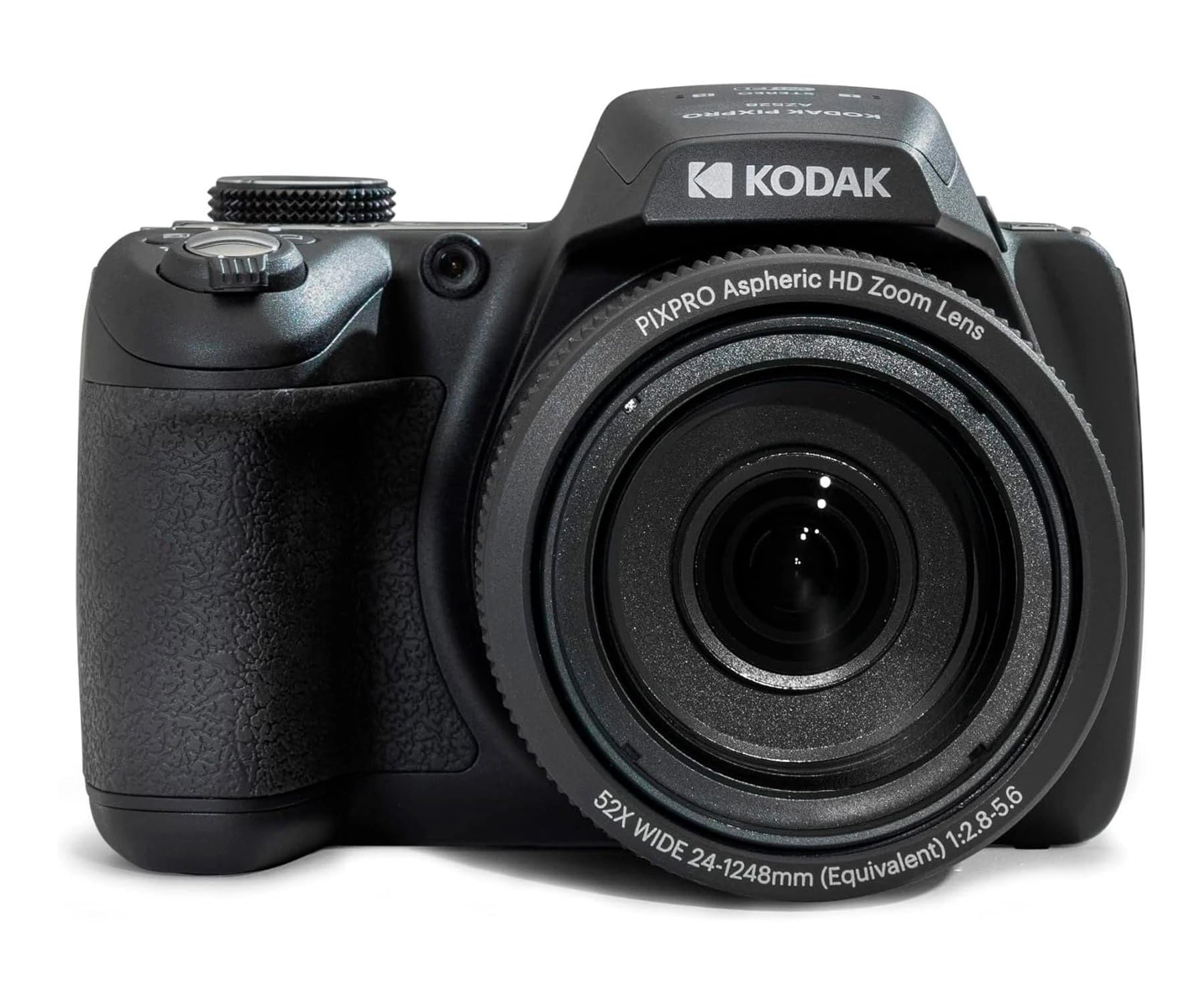
The Kodak PIXPRO AZ528 is a bridge camera that leverages a massive 52x optical zoom to bring distant subjects into clear view. The 24mm wide-angle to 1248mm telephoto equivalent range is unmatched by any interchangeable lens kit under a thousand dollars. The 16-megapixel BSI CMOS sensor works with optical image stabilization to keep telephoto shots reasonably sharp, although a tripod is advisable at maximum zoom.
Built-in Wi-Fi allows you to transfer images to a smartphone and use the phone as a remote viewfinder. The camera shoots 1080p Full HD video at 30 fps and captures bursts at 6 fps to catch fast action. The 3-inch LCD screen is clear and responsive, and the electronic viewfinder is useful for bright outdoor framing. The lens has a consistent f/2.8 at wide-angle, which helps in moderate light.
The camera struggles in low light beyond the wide end of the zoom, and the plastic body lacks weather sealing. The autofocus is contrast-detect and can be slow in dim conditions. This is the right tool for outdoor nature observation and daytime sports, not for indoor events or professional work.
Why it’s great
- 52x optical zoom reaches subjects most cameras cannot
- Built-in Wi-Fi for remote control and file transfer
- Good value for the zoom range offered
Good to know
- Struggles in low light at long zoom
- Plastic build and no weather sealing
- Autofocus hunts in low contrast scenes
8. NBDDIGITAL 8K 64MP Digital Camera

The NBDDIGITAL 8K 64MP camera is a budget-friendly kit designed for beginners and casual users. The package includes two 2000mAh batteries, a 64GB TF card, charger, and a wide-angle lens adapter — everything you need to start shooting immediately. The camera claims 8K video and 64-megapixel stills via software interpolation, which provides usable results in good light for social media and personal albums.
The 2.8-inch 180-degree flip screen is practical for selfies, and the built-in Wi-Fi allows direct transfer to a phone. Multiple shooting modes including time-lapse and slow motion add creative options. The hot shoe supports an external flash, and the micro HDMI output lets you connect to a monitor or use the camera as a webcam for live streaming.
Image quality is limited by the small sensor, and the 16x zoom is entirely digital, meaning it degrades resolution quickly when zoomed in. The 4K mode is upscaled from a lower resolution. This is an accessible entry point for young photographers or family vacation documentation, but it will not satisfy serious image quality standards.
Why it’s great
- Complete kit with dual batteries, charger, and memory card
- 180-degree flip screen for selfie framing
- Wi-Fi transfer and webcam functionality included
Good to know
- Sensor and lens limit image quality significantly
- Zoom is entirely digital, reducing image sharpness
- 4K video is upscaled, not native resolution
9. Panasonic LUMIX S9 Full-Frame Mirrorless Camera
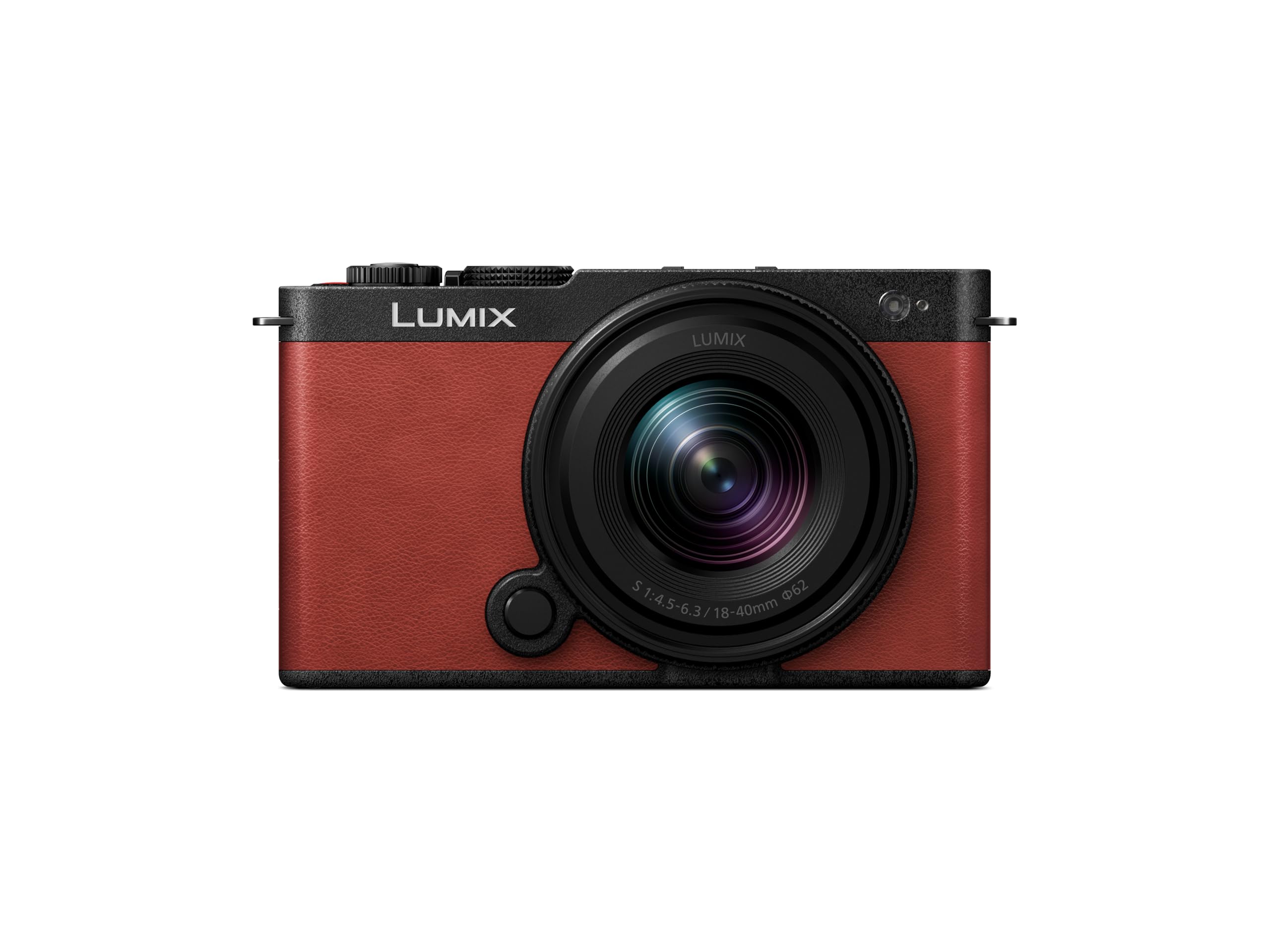
The Panasonic Lumix S9 is a full-frame mirrorless camera designed around social media workflow. Its 24.2-megapixel sensor delivers professional-grade stills and video, and the Open Gate recording mode captures the full sensor area so you can output vertical or horizontal video without re-framing. The LUMIX Lab app provides ultra-fast Wi-Fi transfer with direct edit and share capability directly from the app.
The S9 comes with the compact S 18-40mm F4.5-6.3 lens that collapses for travel-friendly dimensions. In-body image stabilization keeps handheld video smooth, and the camera supports unlimited 4K recording after a firmware update. The LUT button allows real-time color grading preview, a powerful tool for content creators who want consistent looks in-camera.
The S9 lacks a built-in flash, a hotshoe for traditional flash units, and an electronic viewfinder. The battery is smaller than Sony’s NP-FZ100, and the 18-40mm kit lens is slow at the tele end. This is a specialized tool for the creator who values portability and instant social sharing over full photographic versatility.
Why it’s great
- Open Gate recording for easy vertical and horizontal output
- Very compact full-frame body with fast Wi-Fi transfer
- Real-time LUT color grading in camera
Good to know
- No built-in flash, no hotshoe, and no EVF
- Kit lens aperture is slow (f/4.5-6.3)
- Battery life is shorter than competitors like the Sony a7 III
FAQ
What is the real advantage of a digital WiFi camera over my phone?
How does optical zoom differ from digital zoom in a bridge camera?
Can I use a digital WiFi camera as a webcam for streaming?
Do I need a full-frame camera for good Wi-Fi image transfer?
Final Thoughts: The Verdict
For most users, the best digital wifi camera winner is the Panasonic Lumix G85 because it bundles excellent in-body stabilization, weather sealing, 4K video, and a flexible kit lens into a well-priced mirrorless body. If you want the ultimate optical reach for wildlife without buying separate lenses, grab the Kodak PIXPRO AZ528. And for a compact full-frame that prioritizes social media workflow, nothing beats the Panasonic Lumix S9.

Mo Maruf
I created WellFizz to bridge the gap between vague wellness advice and actionable solutions. My mission is simple: to decode the research and give you practical tools you can actually use.
Beyond the data, I am a passionate traveler. I believe that stepping away from the screen to explore new environments is essential for mental clarity and physical vitality.