Our readers keep the lights on and my smoothie glass nicely filled. As an Amazon Associate, I earn from qualifying purchases.
A stethoscope that only delivers muffled sounds is not a diagnostic tool — it is a frustration. When you need to detect subtle lung crackles, faint heart murmurs, or the exact pitch of Korotkoff sounds during a blood pressure reading, the acoustic pathway from chestpiece to eartips must be clean, consistent, and free of signal loss. A well-chosen model does not just amplify; it preserves the frequency range your ears rely on to make clinical decisions.
I’m Mohammad Maruf — the founder and writer behind WellFizz. I spend hundreds of hours analyzing stethoscope specifications, comparing acoustic response curves, chestpiece materials, tubing construction, and noise cancellation ratings to separate real performance from marketing hype.
Whether you practice in a quiet clinic or a roaring emergency department, selecting the right best digital stethoscope means understanding what your specific environment demands from a diagnostic instrument.
How To Choose The Best Digital Stethoscope
Picking a stethoscope involves more than brand loyalty. The right choice balances chestpiece construction, sound amplification method, tubing architecture, and the environment where you practice most often. Below are the key factors that separate a reliable diagnostic instrument from one that leaves you second-guessing every auscultation.
Chestpiece Construction and Diaphragm Type
The chestpiece is the first point of contact with the patient and the most critical component for sound capture. Stainless steel chestpieces offer superior acoustic transfer compared to aluminum or epoxy alternatives. Tunable diaphragms allow you to switch between low and high frequencies by adjusting pressure — a valuable feature when moving from heart sounds (low frequency) to lung sounds (high frequency) without changing the chestpiece head.
Amplification and Noise Cancellation
Digital stethoscopes can amplify sound up to 40 times, but raw amplification without filtering introduces background noise. Active noise cancellation (ANC) reduces ambient sounds like monitor alarms, conversation, or ventilation systems, allowing you to focus on the patient’s internal sounds. If you work in an emergency department, ICU, or ambulance, ANC is a non-negotiable feature. In quieter environments, a high-fidelity analog scope may suffice.
Tubing Length and Lumen Configuration
Standard tubing lengths range from 22 to 28 inches. Shorter tubing (22 inches) delivers slightly better acoustic transmission because sound travels a shorter distance, but it makes neck-wearing and reaching across a bed more awkward. Longer tubing (27–28 inches) offers flexibility but can introduce minor signal loss. Dual-lumen tubing separates the sound channels for each ear, reducing the rubbing noise that single-lumen tubes often produce during movement.
Quick Comparison
On smaller screens, swipe sideways to see the full table.
| Model | Category | Best For | Key Spec | Amazon |
|---|---|---|---|---|
| 3M Littmann CORE Digital | Digital | Loud environments with app integration | 40x amplification, ANC, Bluetooth | Amazon |
| 3M Littmann Cardiology IV | Analog Cardiology | Critical care without digital features | 2x louder, 40% larger chestpiece | Amazon |
| Welch Allyn Harvey DLX | Premium Analog | Physicians wanting vintage acoustics | Brass bell, 28″ length, chrome binaurals | Amazon |
| Welch Allyn Harvey Elite | Analog Cardiology | Full-range auscultation on a budget | Dual lumen, stainless steel chestpiece | Amazon |
| MDF ProCardial Titanium | Premium Analog | Lightweight cardiology with titanium build | Titanium chestpiece, 34-channel tubing | Amazon |
| MDF ProCardial Stainless Steel | Analog Cardiology | Dual adult/pediatric convertible head | 15-degree angled headset, convertible bell | Amazon |
| ADC Adscope 602 | Analog Cardiology | EMS and ambulance use | Surgical stainless steel, deep bell | Amazon |
| ADC Adscope 606 | Ultralight Analog | Long shifts with minimal neck strain | 130 grams, tunable AFD technology | Amazon |
| Withings BeamO | Multi-Function Digital | Home health and telemedicine checks | 1-lead ECG, thermometer, digital scope | Amazon |
In‑Depth Reviews
1. 3M Littmann CORE Digital Stethoscope
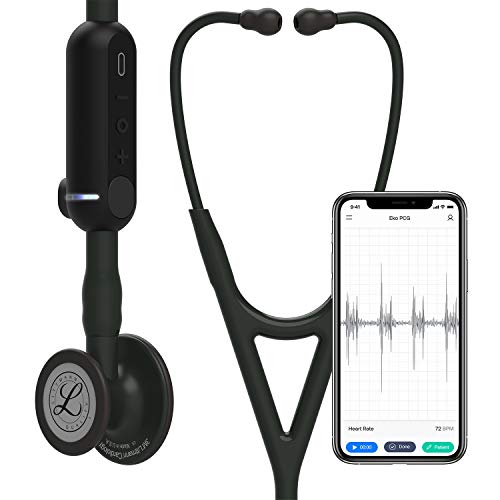
The 3M Littmann CORE Digital Stethoscope marks a significant leap in diagnostic capability, combining up to 40x sound amplification with active noise cancellation to filter out ambient distractions. This means you can auscultate in a busy ICU or during a chaotic ambulance ride without losing the faintest diastolic murmur or wheeze. The tunable, dual-sided stainless steel chestpiece provides the open or closed bell configuration, while the Eko software integration allows you to visualize and record sound waveforms on a smart device for later review or remote consultation.
Weighing only 87 grams, the CORE is lighter than many analog cardiology scopes despite packing a digital amplification module. The soft-sealing ear tips create an excellent acoustic seal, and the 27-inch dual-lumen tubing delivers clean sound channels to each ear independently. Users with hearing impairments especially benefit from the adjustable amplification, which compensates for personal hearing loss without compromising sound fidelity.
The ability to toggle between analog and amplified listening modes means you are never locked into a single sound profile. Some advanced features, such as waveform analysis and sharing, require a subscription, but the core hardware performs at a level that justifies the investment for clinicians who demand every audible detail.
Why it’s great
- Up to 40x amplification with active noise cancellation
- Very lightweight for a digital scope
- Bluetooth connectivity for waveform recording and sharing
- Toggle between analog and digital modes
Good to know
- Some app features require a paid subscription
- Smart device not included
2. 3M Littmann Cardiology IV Diagnostic Stethoscope

The Littmann Cardiology IV is the analog flagship for clinicians who want the best passive acoustics without digital components. With a chestpiece that is 40% larger than the Classic III and a bell that is 60% deeper, this scope captures low-frequency sounds like S3 and S4 gallops and Korotkoff sounds with exceptional clarity. The tunable diaphragm responds to light pressure for low frequencies and firm pressure for high frequencies, making it a versatile tool in critical care settings.
The 22-inch tubing is shorter than most, which improves sound transmission by reducing the distance sound travels, but it can feel restrictive when hooking around the neck or reaching across a patient bed. The soft-sealing ear tips provide excellent occlusion, and the dual-sided stainless steel chestpiece includes a non-chill bell sleeve for patient comfort. Many users report hearing subtle changes in patient status earlier than with other analog scopes.
This model is built for the ED, ICU, and cardiac step-down units where ambient noise is high but digital features are not required. The 7-year warranty from 3M Littmann adds confidence, though some users prefer the 27-inch version for better reach.
Why it’s great
- Exceptional low-frequency sound capture
- Large, deep bell for cardiology work
- Durable build with 7-year warranty
- Lightweight for its class
Good to know
- 22-inch tube may be too short for some users
- No digital recording or amplification
3. Welch Allyn Harvey DLX Stethoscope

The Welch Allyn Harvey DLX is a direct descendant of the original Tycos stethoscope, retaining the brass bell and flat diaphragm design that generations of physicians trusted for its warm, natural sound signature. The chrome-plated brass chestpiece and binaural give it heft and a premium feel, while the rotatable binaural and interchangeable comfort-sealing ear tips allow for a custom fit. The 28-inch length provides ample reach without creating awkward tension around the neck.
Acoustically, the Harvey DLX is often compared favorably to modern electronic scopes in blind tests. The brass bell delivers a round, full low-frequency response that makes heart sounds feel immediate and less mechanical. Users consistently report that this scope outperforms many digital alternatives for pure clarity in quiet environments, making it a favorite for internal medicine and cardiology attendings.
The double-head chestpiece includes both a bell and a flat diaphragm, and pediatric chestpieces are available separately. The only common complaint is that the bell rim can loosen over time, but this is manageable with occasional tightening. For clinicians who value acoustic purity over gadgetry, the Harvey DLX remains a gold standard.
Why it’s great
- Brass bell for exceptional low-frequency warmth
- 28-inch length for comfortable reach
- Rotatable binaural for personalized fit
- Proven durability over decades
Good to know
- Heavy compared to modern titanium scopes
- Bell rim may loosen with heavy use
4. Welch Allyn Harvey Elite Adult Cardiology Stethoscope
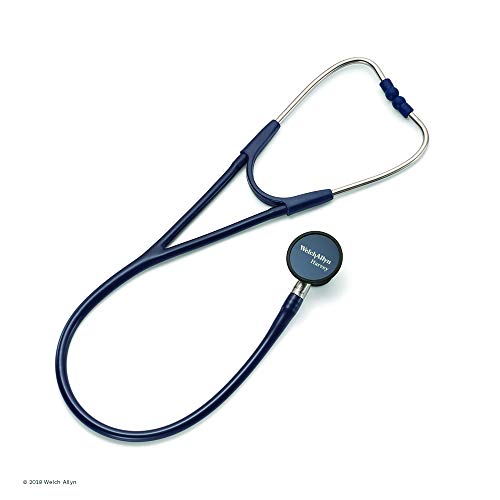
The Welch Allyn Harvey Elite offers a more accessible entry point into the Harvey family while retaining the core acoustic philosophy. The double-head chestpiece uses a flat diaphragm and bell, constructed from stainless steel rather than brass, which reduces weight while still delivering clean sound. The dual-lumen tubing separates sound channels for each ear, eliminating the rubbing noise that can interfere with single-lumen designs during movement.
Clinicians report that the Elite distinguishes S3 and S4 sounds and subtle murmurs with a clarity that matches or exceeds the Littmann Classic III. The interchangeable comfort-sealing ear tips create a reliable seal, and the rotatable stainless steel binaural adjusts easily for different ear angles. The 28-inch length is ideal for those who prefer not to lean too close to the patient.
The main trade-off is that the non-chill rim and diaphragm components can come loose with extended use, and replacement parts are relatively expensive. Some users have resorted to gluing parts in place. Still, for the acoustic performance at this tier, the Harvey Elite is a strong contender for physicians who want Welch Allyn quality without the DLX price.
Why it’s great
- Excellent sound isolation and clarity
- Dual-lumen tubing reduces noise
- Comfortable, adjustable binaural
- Proven Harvey acoustic lineage
Good to know
- Parts may loosen over time
- Earpieces can be uncomfortable for some users
5. MDF ProCardial Titanium Cardiology Stethoscope

The MDF ProCardial Titanium line addresses the classic trade-off between sound quality and weight by constructing the chestpiece from acoustically superior titanium. The extra-deep diaphragm and bell capture both high and low frequencies without the heft of brass or steel. The Realtree Edge camo pattern adds a rugged aesthetic that appeals to EMS and field medics, though the acoustic performance is what keeps it in the cardiology conversation.
The C34 tubing features 34 internal channels etched into the wall to direct sound waves without interference, and the tubing is thicker and more flexible than standard models. The ErgonoMax headset is pre-angled at 15 degrees, which helps achieve a precise ear fit without constant adjustment. MDF backs this scope with a full lifetime warranty and their Free-Parts-for-Life program, which is rare at this price point.
Some users report that the sound quality does not quite match a Littmann Cardiology IV in side-by-side comparisons, particularly in the mid-range frequencies. The thin diaphragm covers also give a less premium tactile feel. However, for clinicians who prioritize weight savings and warranty coverage, the MDF Titanium remains a compelling option.
Why it’s great
- Titanium construction reduces weight without acoustic loss
- Lifetime warranty with Free-Parts-for-Life
- Ergonomic pre-angled headset
- 34-channel tubing for clean sound transmission
Good to know
- Sound quality may not match top-tier Littmann models
- Thin diaphragm covers feel less robust
6. MDF ProCardial Stainless Steel Stethoscope
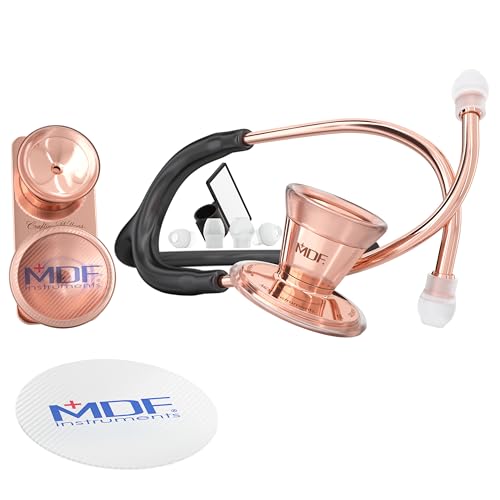
The MDF ProCardial Stainless Steel (MDF797DD) is a dual-head cardiology scope with a convertible pediatric diaphragm that flips the chestpiece from adult to pediatric sizing without swapping heads. This makes it especially useful for clinicians who treat a mix of adult and pediatric patients during the same shift. The stainless steel chestpiece delivers solid acoustic transfer, and the dual-leaf spring construction in the headset provides twice the durability of single-spring designs.
Sound quality is described as loud and clear, often outperforming the Littmann Classic II by several points in clarity and volume. The heavier weight of the stainless steel chestpiece gives it a substantial feel, though some users find it requires careful head tilting for optimal ear positioning. The 15-degree pre-angled ErgonoMax headset reduces the need for manual adjustment once you find your fit.
The rose gold and black color option stands out visually, but the real draw is the dual-lumen tubing that keeps sound channels separate and the convertible feature that eliminates the need for a separate pediatric scope. The earpiece durability has been a concern for some users, with reports of the plastic snapping after roughly 1.5 years of heavy use in a bag.
Why it’s great
- Convertible pediatric diaphragm for dual use
- Louder and clearer than many Littmann models
- Dual-leaf spring for headset durability
- Attractive color options with stainless steel build
Good to know
- Earpiece may crack under heavy bag storage
- Heavier than titanium or lightweight models
7. ADC Adscope 602 Cardiology Stethoscope

The ADC Adscope 602 is built for the roughest environments — specifically, the back of an ambulance. Its surgical stainless steel chestpiece is machined to tight tolerances, and the extra-deep bell provides low-frequency response that excels in noisy environments. Users consistently report that it amplifies lung sounds better than other cardiology scopes without introducing road noise, making it the top pick for EMTs and paramedics.
The chestpiece weight is noticeable; the heavy steel component can feel unbalanced on the tube. However, that mass contributes to the acoustic seal and vibration transfer that makes low-frequency sounds pop. The non-chill bell and diaphragm retaining rim improve patient comfort, and a spare diaphragm is included in the box. The shorter overall length compared to some competitors also reduces signal loss.
The 602 has won head-to-head tests against both cardiology and electronic scopes from more expensive brands. For clinicians who need a scope that survives drops, temperature swings, and constant use in a moving vehicle, the ADC Adscope 602 offers an unbeatable balance of price and performance.
Why it’s great
- Best-in-class lung sound amplification in noisy settings
- Surgical stainless steel construction
- Extra-deep bell for low-frequency response
- Spare diaphragm included
Good to know
- Heavy chestpiece feels unbalanced on tube
- Shorter length than some competitors
8. ADC Adscope 606 Ultralight Cardiology Stethoscope

At only 130 grams, the ADC Adscope 606 is among the lightest cardiology stethoscopes on the market — up to 40% lighter than competing models. The proprietary adjustable frequency design (AFD) technology enhances acoustic performance by letting you use light pressure for low frequencies and firm pressure for high frequencies, making the single chestpiece effectively tunable without moving parts.
The cardiology headset uses dual-channel phthalate-free tubing with large-bore aluminum alloy binaurals and Adsoft Plus snap-on silicone eartips. The combination delivers a comfortable fit and good acoustic seal, even during extended shifts. Users praise the clarity of breath sounds, noting that cardiac sounds come through loud and clear on the bell side. The 27-inch length provides a comfortable reach without excessive tubing bulk.
After years of daily use, some users report that the earpieces deform and the diaphragm may warp slightly from heat exposure, though the scope remains functional. ADC includes two extra pairs of eartips, a storage pouch, and a scope ID tag. For clinicians who prioritize neck comfort during long shifts without sacrificing sound quality, the Adscope 606 is a smart choice.
Why it’s great
- Ultralight design reduces neck fatigue
- Tunable AFD technology for frequency switching
- Includes spare eartips and storage pouch
- Clear sound quality for the weight class
Good to know
- Earpieces may deform after extended use
- Diaphragm can warp with heat exposure
9. Withings BeamO Smart Digital Thermometer, ECG and Stethoscope
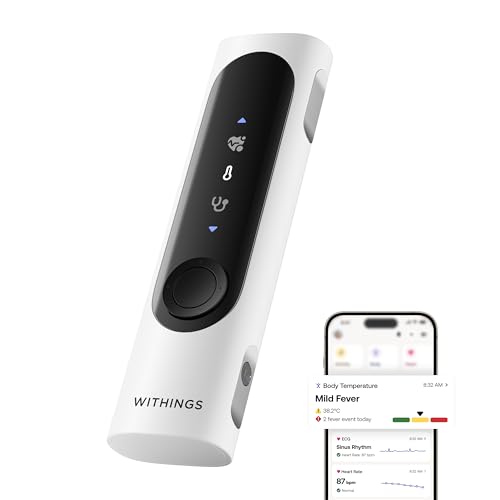
The Withings BeamO is not a traditional stethoscope — it is a multi-scan device that combines a contactless thermometer, a 1-lead ECG monitor, and a digital stethoscope into a single handheld unit. Designed for home health monitoring, it captures temperature, heart rhythm, and lung sounds in under one minute and shares the data through the Withings app for telemedicine consultations. This is a tool for families and caregivers, not for hospital-based auscultation.
The digital stethoscope function records heart and lung sounds digitally, allowing waveform analysis and sharing via Health Link. The 30-second ECG provides insights into heart rhythm with an option to upgrade for a cardiologist review. The contactless thermometer is accurate within 0.1°F when used correctly, though sweat or uneven swipe speed can affect readings. The app integration with Apple Health and similar platforms makes longitudinal tracking straightforward.
The BeamO is compact at 5.3 inches and weighs only 80 grams, making it truly portable. The trade-off is that the stethoscope function does not rival the acoustic fidelity of dedicated analog or digital stethoscopes like the Littmann CORE. It is best understood as a comprehensive home health screening device rather than a clinical diagnostic instrument.
Why it’s great
- Combines thermometer, ECG, and stethoscope in one device
- Easy data sharing for telemedicine
- Compact and lightweight for home use
- Seamless app integration with health platforms
Good to know
- Stethoscope function not comparable to clinical scopes
- Requires account creation for app use
- Batteries may need immediate replacement
FAQ
How does a digital stethoscope differ from an analog one in daily use?
What does active noise cancellation actually filter out?
Can I use a cardiology stethoscope for pediatric patients?
Why do some stethoscopes use dual-lumen tubing?
What does a tunable diaphragm actually do?
Final Thoughts: The Verdict
For most clinicians, the best digital stethoscope winner is the 3M Littmann CORE Digital Stethoscope because it combines powerful amplification, active noise cancellation, and app integration without adding excessive weight. If you prefer a pure analog experience with proven low-frequency performance, grab the 3M Littmann Cardiology IV. And for home health monitoring that includes temperature and ECG alongside digital auscultation, nothing beats the Withings BeamO as a versatile family care device.

Mo Maruf
I created WellFizz to bridge the gap between vague wellness advice and actionable solutions. My mission is simple: to decode the research and give you practical tools you can actually use.
Beyond the data, I am a passionate traveler. I believe that stepping away from the screen to explore new environments is essential for mental clarity and physical vitality.